

Shubhashish Homes enters into purchase agreement to buy 2.2 acres of land, marks their entry in Jaipur’s Jagatpura

Shubhashish Homes is further targeting to make it cross Rs 1100 crores over this period only.
Georgia Senate approves property tax bill aiming to rein in rising rates
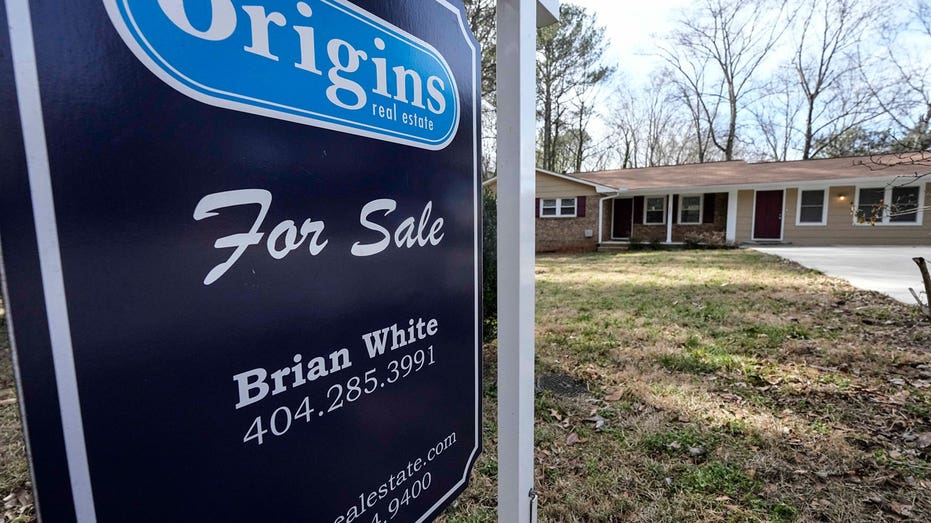
Georgia senators want to limit how much assessed home values can rise for tax purposes, in an election-year effort to hold down property taxes. The state Senate voted 42-7 on Thursday for Senate Bill 349, which would limit increases in a home’s value, as assessed for property tax purposes, to 3% per year. The limit would last as long as owners maintain a homestead exemption, typically as long as they own a home. Voters would have to approve the plan in a November referendum. RISING RENT PRICES PUSH RECORD NUMBER OF AMERICANS TOWARD HOUSING CRISIS, PROMPTING LEGISLATIVE ACTION “It is to prevent people from being taxed out of their homes,” said Senate Finance Committee Chairman Chuck Hufstetler, the Rome Republican sponsoring the measure. “Their income is often not going up with the taxes, which are going up by the hundreds or thousands of dollars.” Property taxes are a hot issue for many Georgia lawmakers this year, facing complaints that bills have steadily risen along with home values. And Georgia is far from the only state where lawmakers are reacting to voter discontent over higher levies, with states including Texas, Kansas, Colorado and Pennsylvania seeing the issue take center stage over the past year. But it’s not clear if the Senate approach will pass, in part because the House has a different property tax cut plan. House members earlier this month voted 162-0 for a bill that would increase the statewide homestead tax exemption to $4,000 from the current $2,000. That could save some homeowners $100 a year on the tax bills, but it would not apply in some counties that already have local homestead tax exemptions. It’s unclear how many homeowners the measure would benefit. Key House lawmakers have said they don’t want to impose a statewide cap on valuations, instead allowing such decisions to made locally. Another bill progressing in the House would allow an optional 3% value cap in any county without further legislation. Republicans in Georgia have long pushed local governments to roll back tax rates to keep bills level, even requiring advertisements labeling a failure to do so as a tax increase. Supporters say a cap on homes’ taxable value would keep school districts, cities and counties from increasing tax revenues by relying on rising values. “If they raise taxes now, they would have to do it through the front door, and not the back door,” Hufstetler said. Already, at least 39 Georgia counties, 35 cities and 27 school systems have adopted local laws limiting how much assessed values can rise, according to the Association of County Commissions of Georgia. Some of those limits only benefit homeowners 65 or older. While the county commissioners’ group has endorsed the plan, the Georgia School Board Association opposes it, saying decisions should be made locally. For most taxpayers, school taxes are the largest part of the property tax bill. Many governments and school districts have spent the windfall from rising values to increase employee pay and cover inflation-swollen expenses. A 3% cap could mean that governments would have to raise tax rates instead. In states including California and Colorado, property tax limits have been blamed for hamstringing local governments. “Their concern is districts are going to have a challenge keeping teacher salaries in line with inflation,” said state Sen. Nikki Merrit, a Lawrenceville Democrat who opposed the measure. School districts could raise tax rates to make up for lost growth in property values, but most school districts can’t raise tax rates above a certain level. According to data kept by the Georgia School Superintendents Association, some districts are already at or near the tax rate cap. Statistics show overall property tax collections rose 41% from 2018 to 2022 in Georgia. During that same period, total assessed value of property statewide rose by nearly 39%. Those Georgia Department of Revenue figures represent not only existing property but also new buildings. So they don’t clearly state how much valuations rose on existing homes. Because the caps could hold down values more the longer someone owns a home, they could result in long-term residents paying lower taxes than newcomers. That’s already the case in some Georgia communities with local caps.
House Republicans push Biden to take cognitive test after Hur report: ‘Obvious mental decline’
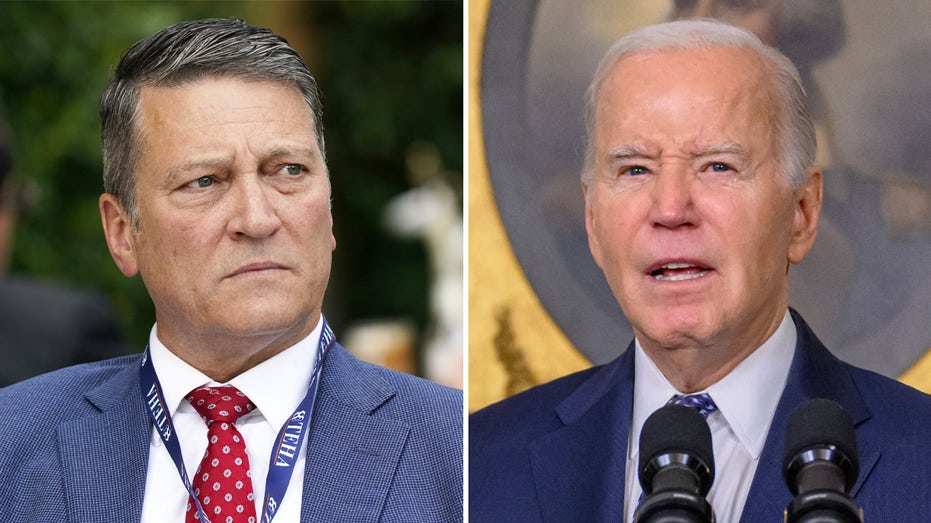
FIRST ON FOX: House Republicans are appealing directly to President Biden demanding that he take a cognitive test to prove his mental fitness for office. Rep. Ronny Jackson, R-Texas, the former White House physician who served as chief medical adviser to former President Trump, led a letter to the president co-signed by 83 House Republicans, including House GOP Conference Chair Elise Stefanik and Chief Deputy Whip Guy Reschenthaler, arguing that the president’s many public “gaffes” are a “national security concern.“ “Following the recent report from Special Counsel Robert Hur, we write to express our grave concerns with your current cognitive state and ability to successfully execute the duties of the Presidency, including as Chief Executive, Head of State, and Commander in Chief,” the lawmakers wrote. “The President of the United States must demonstrate sound mental abilities, regardless of gender, age, or political party, which you have not.” BIDEN BLISTERED BY MAINSTREAM MEDIA AFTER ‘DISASTER’ PRESS CONFERENCE It comes as Biden’s critics continue to seize on a recent report by special counsel Robert Hur regarding the president’s handling of classified documents before he took office. Hur’s 388-page report cleared President Biden of wrongdoing despite having “willfully retained and disclosed classified materials.” Hur said Biden came off “as a sympathetic, well-meaning, elderly man with a poor memory” and that “it would be difficult to convince a jury that they should convict him-by then a former president well into his eighties-of a serious felony that requires a mental state of willfulness.” Biden and his allies have aggressively pushed back on Hur’s assessment and denied his age being an issue. BIDEN LASHES OUT AT REPORTERS ASKING ABOUT AGE CONCERNS AFTER SPECIAL COUNSEL REPORT The GOP lawmakers wrote to him, “If you are too mentally impaired to stand trial, as your own Department of Justice claims, then we are concerned that your mental state is not at a competent level to serve as the leader of the free world. Therefore, we call on you to submit to a clinically validated cognitive screening assessment and make those results available to the public.” This is the fifth such request by Jackson. He said his previous four inquiries went unanswered. “This is the fifth time we’ve sent a letter to the White House demanding Biden take a cognitive exam, however while the administration has chosen to ignore each of these requests, it is becoming clearer each day that the President is not cognitively fit,” Jackson told Fox News Digital in a statement. “I am proud to be joined by Conference Chairwoman Stefanik, Chief Deputy Whip Guy Reschenthaler and dozens of my House colleagues in this effort.” The GOP lawmakers’ letter continued, “Over the past three years, your mental decline and forgetfulness has become even more apparent. It is a common occurrence to see you shuffling your feet, stumbling while walking, slurring your words, forgetting names, losing your train of thought, and appearing confused or asleep when making public appearances here at home and on the world stage.” They pointed out that Biden recently confused French President Emmanuel Macron with a predecessor who died decades prior, and that he also mixed up German leaders’ names and mistakenly referred to the president of Egypt as the president of Mexico. SPECIAL COUNSEL CALLS BIDEN ‘SYMPATHETIC, WELL-MEANING, ELDERLY MAN WITH A POOR MEMORY,’ BRINGS NO CHARGES “While the prevalence of your ‘gaffes’ continues to increase and creates a serious national security concern, President Xi Jinping and the Chinese Communist Party continue to modernize their military at an alarming rate while showing a clear indication of an intent to invade Taiwan in the near future,” the letter said. “Unfortunately, we fear that your perceived cognitive deterioration is inviting Beijing to take this military action, as there is significant doubt surrounding your ability to execute the duties required of the President of the United States and prevent further global conflicts from arising or escalating.” When asked for comment on Jackson’s public demand on Wednesday that Biden take a cognitive test, the White House sent Fox News Digital an image of Dr. Nick Riviera, a character from “The Simpsons” known for poor medical practices and maiming patients. The White House sent another image of “Dr. Nick” when reached by Fox News Digital on Friday morning. Earlier this week, White House press secretary Karine Jean-Pierre told reporters that Biden would not be taking a cognitive test as part of his regular physical exam.
Why is a planned ground attack in Rafah causing alarm?

NewsFeed The UN and international aid groups have warned of a ‘slaughter’ if Israel launches a ground attack in Rafah, where more than one million displaced Palestinians currently are sheltering. Published On 16 Feb 202416 Feb 2024 Adblock test (Why?)
‘Brutally murdered’: World reacts to Alexey Navalny’s death in prison

Leaders say Putin critic ‘paid for his courage with his life’ and that they hold Russia responsible for his death. Imprisoned Russian opposition leader Alexey Navalny has died after collapsing and losing consciousness in the remote penal colony north of the Arctic Circle where he was serving a long sentence, the federal prison service said. Kremlin spokesperson Dmitry Peskov said on Friday that Vladimir Putin has been briefed on the death of Navalny, a fierce critic of the Russian president. Kira Yarmysh, a spokesperson for Navalny, said his lawyer was on the way to the IK-3 penal colony, located in Kharp, in the Yamalo-Nenets region. Navalny aide Leonid Volkov said Russian authorities published “a confession that they killed” him in prison. Maria Zakharova, the spokesperson for the Russian foreign ministry, wrote on her Telegram channel that the West has already arrived at “conclusions” without forensic evidence. She said the immediate reactions “in the form of direct accusations against Russia are self-revealing”. Ukraine President Volodymyr Zelenskyy said Navalny was “obviously killed by Putin”. Speaking from Berlin, where he was signing a security deal with Germany, he added that Putin does not care who dies as long as he maintains his position at the top. Czech Republic Jan Lipavsky, the minister of foreign affairs, wrote on X that Russia is treating its citizens like it treats its foreign policy. “It has turned into a violent state that kills people who dream of a better future, like Nemtsov or now Navalny – imprisoned and tortured to death for standing up to Putin,” he said, referring to assassinated Putin critic Boris Nemtsov. France “Alexei Navalny paid with his life for his resistance to a system of oppression,” French foreign minister Stephane Sejourne said on X. “His death at a penal colony reminds us of the reality of Vladimir Putin’s regime,” Sejourne said, expressing condolences to Navalny’s family and the Russian people. European Union European Council President Charles Michel said the Russian dissident “fought for the values of freedom and democracy” and made the ultimate sacrifice. “The EU holds the Russian regime for sole responsible for this tragic death.” Germany Chancellor Olaf Scholz said Navalny paid for his courage with his life. Scholz recalled occasions when he had spoken with Navalny about the “great courage” that prompted him to return to Russia after recovering in Berlin from a poisoning attack. “He has now paid for this courage with his life,” said Scholz. NATO Secretary-General Jens Stoltenberg said he was “deeply saddened and disturbed” by the reports of Navalny’s death. “We need to establish all the facts, and Russia needs to answer all the serious questions about the circumstances of his death.” Sweden Swedish foreign minister Tobias Billstrom said if the “dreadful news” about Navalny is true then it “represents another terrible crime by Putin’s regime”. “The ruthlessness against Navalny shows again why it is necessary to continue to fight against authoritarianism.” United Kingdom Prime Minister Rishi Sunak said: “This is terrible news. As the fiercest advocate for Russian democracy, Alexei Navalny demonstrated incredible courage throughout his life. “My thoughts are with his wife and the people of Russia, for whom this is a huge tragedy.” Latvia Latvian President Edgars Rinkevics said in a post on X: “Whatever your thoughts about Alexey Navalny as the politician, he was just brutally murdered by the Kremlin.” Whatever your thoughts about Alexey @Navalny as the politician, he was just brutally murdered by the Kremlin. That’s a fact and that is something one should know about the true nature of Russia’s current regime. My condolences to the family and friends. — Edgars Rinkēvičs (@edgarsrinkevics) February 16, 2024 Norway “The Russian Government bears a heavy responsibility,” wrote Espen Barth Eide, the foreign minister of Norway, on X, adding that he was saddened by the news of Navalny’s death in prison. Nobel winner Dmitry Muratov Nobel Peace Prize laureate Dmitry Muratov told the Reuters news agency that Navalny’s death constituted “murder”. The editor-in-chief of Russia’s most famous independent newspaper, Novaya Gazeta, said he believes prison conditions led to his demise. Adblock test (Why?)
It is time for a new Africa beyond borders and boundaries

African leaders will be convening in Ethiopia’s capital, Addis Ababa, for the 37th summit of the African Union on Saturday. During the two-day gathering, the Heads of State and Government of the African Union will discuss issues of peace, development and integration against the backdrop of resurgent coups, global food and commodity crises and heightened geopolitical competition across the continent. The integration agenda holds particular significance as global powers vie for influence over African states, evident in the growing number of “Africa summits” hosted by individual countries outside the continent in recent years. Africa faces several complex and multifaceted challenges, yet the urgent priority today must be continental integration which would remove barriers to labour and capital mobility. To this end, I urge the leaders gathered in Addis Ababa to rise above customary speechmaking and confront this challenge head-on. They can draw inspiration from the unwavering resolve of AU founders who united to alleviate the adverse effects of colonialism. To this end, the summit must take concrete and practical steps to accelerate the implementation of the African Continental Free Trade Area (AfCFTA), a trade regime that aims to establish a tariff-free market for goods and services. In addition, the summit should lay the groundwork for the creation of a “Made in Africa” economic corridor that would augment the continental efforts towards a pan-African marketplace. I have witnessed such promises made in the past. In May 2022, during the Extraordinary AU Summit in Malabo, Equatorial Guinea, I was part of the Ethiopian delegation led by Prime Minister Abiy Ahmed. That trip took us to Kenya, Nigeria and Equatorial Guinea. As minister of minerals and energy, I attended ministerial meetings and AU sessions that seemed routine, rather than practical steps to address real challenges. As we flew across the continent and during the summit, a single question kept percolating in my head: Why can’t Africa and its leaders join hands and realise the prosperity that our people so richly deserve? Are there, perhaps, some invisible chains holding us back? If so, what are they? Then, I remembered the fable of the elephant rope: the story of a young man who, while travelling through the forest, stumbles across a camp of elephants; he finds the mighty elephants tied to a small tree with thin pieces of rope and unable to roam freely. The elephants, the man later learns, had been held in place by the same chain since childhood, conditioned as they were, believing they could never break free. It is an apt metaphor for the structural impediments and systems of thought that still hinder the age-old dream of integrated Africa. The truth is our continent is filled with big elephants now: a young and rapidly growing population; proliferating technological and economic innovations; vast reserves of human and material resources that are yet to be fully explored and utilised; and a growing consumer base for global goods and commodities. However, it seems Africa is still being held back by a tiny rope: post-colonial artificial borders and a governance model that keeps it in shackles. The convergence of colonial borders and leadership failures continues to push African countries into internal conflicts, civil wars, border disputes, and fragile political, economic, and institutional predicaments. Kenyan-American scholar Makau W Mutua has argued for a return to the pre-colonial map – to a world before European colonisers divided our overlapping communities. But, this, of course, poses more questions than it answers: who would initiate or even be trusted to embark on such a controversial project? Are colonial borders truly the root causes of African conflicts and barriers to its integration? Across Africa, the boundaries of ethnic and cultural groups are often fluid and porous. It would be challenging indeed to determine where one group’s territory ends and another’s begins. Additionally, redrawing the map of Africa would likely lead only to more conflicts. It might increase economic disparities and language barriers. Importantly, doing away with post-colonial borders would not promote the goal of a united and prosperous Africa. We must think differently. Let us take a step back a few decades. At the inaugural summit of the Organization of African Unity (OAU), the forerunner of AU, in 1963, the founding fathers laid down a resounding vision for continental integration, unity and solidarity. They stressed the critical need for Africans to unite in order to overcome their shared difficulties and shape the continent’s future. There was a strong sense of optimism, resolve and dedication to cooperating for the advancement and welfare of African people. The leaders articulated a shared vision of a united Africa, free from conflict, division, and underdevelopment. They set up African states to assume their rightful place as influential, independent nations. The aspiration for unity, integration and intercontinental solidarity has been a recurring theme in AU policy blueprints and the rhetoric of African leaders since the 1960s. The chorus of calls often stresses the need for a single African organisation through which Africa’s voice could be heard on the global stage and its problems resolved. One key question continues to reverberate: could African unity be achieved through top-down or bottom-up approaches, or by winning the hearts and minds of African people in the march to dismantle postcolonial national boundaries? Here are some modest proposals. First, our leaders need to show the resolve and determination of their 1960s predecessors to alleviate the adverse effects of colonialism, which still persist. Now, as then, the goal of unifying and integrating Africa requires removing barriers, not redrawing borders. We need to think bigger. To this end, we should eliminate restrictions on the flow of labour and capital within the continent of Africa. This must be accompanied by major public and private investment in quality products in sectors ranging from agriculture, minerals and natural resources, renewable energy, technology and innovation, and tourism. The sluggish productivity of our small-holder farmers, for instance, can only be enhanced through the removal of barriers and the promotion of large-scale commercial farming agriculture. Second, we should
Inside details of Asia’s highest Shiv Mandir, it was constructed in 40 years, located in…

Built in South-Dravidian style, this temple is believed to be the highest Shiva temple in Asia.
Former special forces soldier seeking to flip Virginia House seat lands veteran GOP lawmaker’s endorsement

FIRST ON FOX: Former U.S. Army Special Forces Green Beret and combat veteran Derrick Anderson has landed another prominent endorsement in his bid to flip one of the nation’s most competitive House seats from blue to red. Rep. Jen Kiggans, R-Va., a former helicopter pilot for the U.S. Navy, announced Friday that she will support Anderson’s bid to represent Virginia’s 7th Congressional District. Currently held by Rep. Abigail Spanberger, D-Va., the district is one of the GOP’s top 2024 targets to try and strengthen the party’s narrow majority in the House. “I am honored to endorse Derrick Anderson who is running to represent Virginia’s 7th Congressional District,” Kiggans said in a statement to Fox News Digital. “Derrick’s commonsense conservative approach is exactly what Washington needs. As a fellow veteran, I know Derrick will work tirelessly to advocate for a strong military and the mission of strengthening our great nation.” FORMER SPECIAL FORCES SOLDIER LAUNCHES CAMPAIGN IN VIRGINIA TO FLIP SWING HOUSE SEAT FROM DEMOCRATS Offering his appreciation for Kiggans’ support, Anderson told Fox News Digital that the congresswoman has proved that sending a “fighter to Congress pays off” for the commonwealth. “I appreciate the support from Congresswoman Kiggans, a fellow Virginia veteran,” he said. “Congresswoman Kiggans has proven that sending a fighter to Congress pays off for our state, and I look forward to working closely with her to help Virginia grow and prosper.” “There’s so much to do right now — we have to secure the border, fight inflation and spending, restore America’s standing in the world, and the list goes on and on. I’m ready to hit the ground running and bring conservative values to Congress,” he added. In addition to Kiggans, Anderson has received endorsements from several other veterans currently serving in Congress, including Rep. Derrick Van Orden, R-Wis., a former Navy SEAL; Rep. Brian Mast, R-Fla., an Army veteran; Rep. Mike Waltz, R-Fla., a former Green Beret; and Sen. Tom Cotton, R-Ark., a former Army Ranger. FORMER SPECIAL FORCES SOLDIER GETS ANOTHER BIG NAME ENDORSEMENT IN RACE TO FLIP SWING HOUSE SEAT FROM DEMS Anderson, who served in the Army from 2006 to 2014 and deployed on six tours of duty throughout the Middle East as part of the Global War on Terror, launched his congressional campaign in September. He first ran for the seat in 2022 but narrowly lost the Republican primary to former congressional candidate Yesli Vega. Spanberger, a former CIA operative, went on to defeat Vega in the general election by just under 5%, securing her third term. In November, Spanberger announced she would not be seeking re-election to her post in the House and would instead make a run for governor of the state. Anderson is one of nine candidates vying for the Republican nomination for the district. Republicans currently hold a slim three-seat majority in the House of Representatives and are hoping to build on that next year, partly by capitalizing on the unpopularity of President Biden. The party gained control of the chamber following the 2022 midterm elections, but performed well below expectations. The GOP, however, has become increasingly concerned following Republican candidate Mazi Pilip’s loss to former Rep. Tom Suozzi, D-N.Y., in the special election to represent New York’s 3rd Congressional District. That election was held after nearly all Democrats and 105 Republicans voted to expel then-GOP Rep. George Santos late last year.
Nebraska bill would stop corporations from buying up houses

A Nebraska lawmaker whose north Omaha district has struggled for years with a housing shortage is pushing a bill that, if passed, could make Nebraska the first in the country to forbid out-of-state hedge funds and other corporate entities from buying up single-family properties. Sen. Justin Wayne’s bill echoes legislative efforts in other states and in Congress to curtail corporate amassing of single-family homes, which critics say has helped cause the price of homes, rent and real estate taxes to soar in recent years. Wayne said that has been the case in his district, where an Ohio corporation has bought more than 150 single-family homes in recent years — often pushing out individual homebuyers with all-cash offers. The company then rents out the homes. Experts say the scarcity of homes for purchase can be blamed on a multitude of factors, including sky-high mortgage interest rates and years of underbuilding modest homes. RISING RENT PRICES PUSH RECORD NUMBER OF AMERICANS TOWARD HOUSING CRISIS, PROMPTING LEGISLATIVE ACTION Wayne’s bill offers few specifics. It consists of a single sentence that says a corporation, hedge fund or other business may not buy single-family housing in Nebraska unless it’s located in and its principal members live in Nebraska. “The aim of this is to preserve Nebraska’s limited existing housing stock for Nebraskans,” Wayne said this week at a committee hearing where he presented the bill. “If we did this, we would be the first state in the country to take this issue seriously and address the problem.” A 14-page bill dubbed the End Hedge Fund Control of American Homes Act has been introduced in both chambers of Congress and would impose a 10-year deadline for hedge funds to sell off the single-family homes they own and, until they do, would saddle those investment trusts with hefty taxes. In turn, those tax penalties would be used to help people put down payments on the divested homes. Democratic lawmakers in a number of other states have introduced similar bills, including in Minnesota, Indiana, North Carolina and Texas, but those bills have either stalled or failed. The housing squeeze coming from out-of-state corporate interests isn’t just an Omaha problem, said Wayne Mortensen, director of a Lincoln-based affordable housing developer called NeighborWorks Lincoln. Mortensen said the recession of 2008 and, more recently, the economic downturn driven by the COVID-19 pandemic made single-family housing a more attractive corporate investment than bond markets. “When that became the case, housing was commoditized and became just like trading any stock,” he said. “Those outside investors are solely interested in how much value they can extract from the Lincoln housing market.” Those corporations often invest no upkeep in the homes, he said. “And as a result of that, we’re seeing incredible dilapidation and housing decline in many of our neighborhoods because of these absentee landlords that have no accountability to the local communities,” Mortensen said. Currently, about 13% of single-family homes in Lincoln are owned by out-of-state corporate firms, he said. As in other states, Wayne’s bill likely faces an uphill slog in the deep red state of Nebraska. At Monday’s hearing before the Banking, Insurance and Commerce Committee, several Republican lawmakers acknowledged a statewide housing shortage, but they cast doubt on Wayne’s solution. “You know, you can set up shell companies, you set up different layers of ownership. You can move your domicile base. There’s just a ton of workarounds here,” Omaha Sen. Brad von Gillern said. “I also — as just as a pure capitalist — fundamentally oppose the idea.”
Murray State and Eastern Kentucky get KY House approval for new veterinary, medical programs
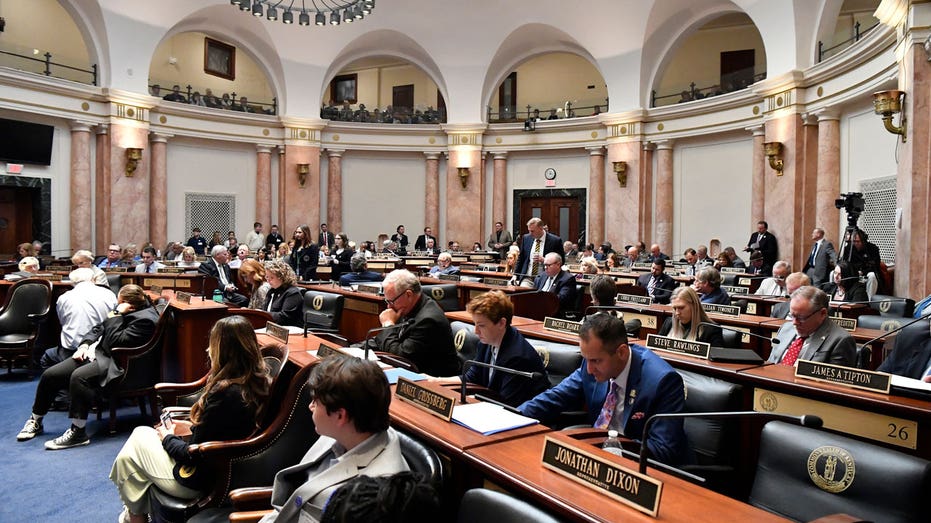
Two universities wanting to carve out ambitious new roles to help overcome shortages of doctors and veterinarians won overwhelming support from the Kentucky House on Thursday. The House passed separate bills that would allow Murray State University to create a school of veterinary medicine and Eastern Kentucky University to offer medical degrees in osteopathic medicine. The authorization bills now head to the Senate. Another key issue to be resolved is whether the proposed academic programs will receive the state funding needed to get established. That could be decided next month when lawmakers hash out the final details of the state’s next two-year budget. The new programs also would have to gain approval from the state Council on Postsecondary Education. KENTUCKY SENATE APPROVES BILL TO CURB DEI INITIATIVES AT PUBLIC UNIVERSITIES The House action moved Murray State closer to achieving its longstanding ambition of becoming the first Kentucky school to offer doctorate-level veterinarian degrees. An in-state school would be crucial in fixing a broad shortage of veterinarians, especially in treating large animals, supporters said. Kentucky has a large and diversified farm economy, but it lacks a “crucial component in our agriculture infrastructure –- a veterinary school,” said Republican Rep. Richard Heath, the bill’s lead sponsor. The Bluegrass State has a long-running partnership with Auburn University in Alabama that allows students from Kentucky to be classified as in-state residents in Auburn’s veterinary program. A veterinary medicine school at Murray State could work in combination with the existing out-of-state partnership to supply the veterinarians needed to meet demand across Kentucky, supporters said. Democratic Rep. Chad Aull said the issue isn’t where to establish an in-state veterinary school but whether such a school should be developed at all. It could someday be viewed as a financial hardship in lean fiscal times to have both an in-state school and an out-of-state agreement, he said. “I really hope that when we get into an economic downturn in eight or 10 years, and we go into a recession and we are faced with a challenging budget, that we do not cut those slots at Auburn because they are critical and vital for the health of our veterinarian community,” he said. Murray State officials say reliance on out-of-state programs alone won’t solve the veterinary shortage. “It’s a basic math problem,” Murray State President Bob Jackson said at a recent committee hearing. “There’s not enough slots or seats in the vet schools that exist today to meet the growing demand of veterinarians in this country and in this state. Yes, we can buy more slots. But it’s not going to fix the shortage issue that we’re dealing with today.” Meanwhile, the bill that would allow Eastern Kentucky to offer medical degrees for practice in osteopathic medicine sailed through the House without any resistance. Supporters pointed to a shortage of primary care physicians in Kentucky. The state’s three existing medical schools enrolled a combined 510 students last year out of more than 13,000 applicants, said House Speaker Pro Tem David Meade, the bill’s lead sponsor. The proposed College of Osteopathic Medicine at Eastern Kentucky University would increase the pipeline of physicians practicing in the state, supporters said. “We all know that rural Kentucky is struggling with access to health care, and we’ve challenged our universities to come with solutions,” Meade said. “And that’s what EKU is trying to do right here is meet that challenge.” Republican Rep. Deanna Frazier Gordon, another primary bill sponsor, said Eastern Kentucky’s program would help contribute to the health of Kentuckians, especially in areas lacking enough health care providers. The university wants to play a role in overcoming the shortage of primary care physicians, especially in rural Kentucky, school President David McFaddin told a recent legislative committee hearing. “We are proud of this proposal,” he said. “We are trying to address Kentucky’s needs. We are leaning into our strengths, and we are trying to differentiate as an institution.”