

As early results come in, could Pakistan election spring a surprise?
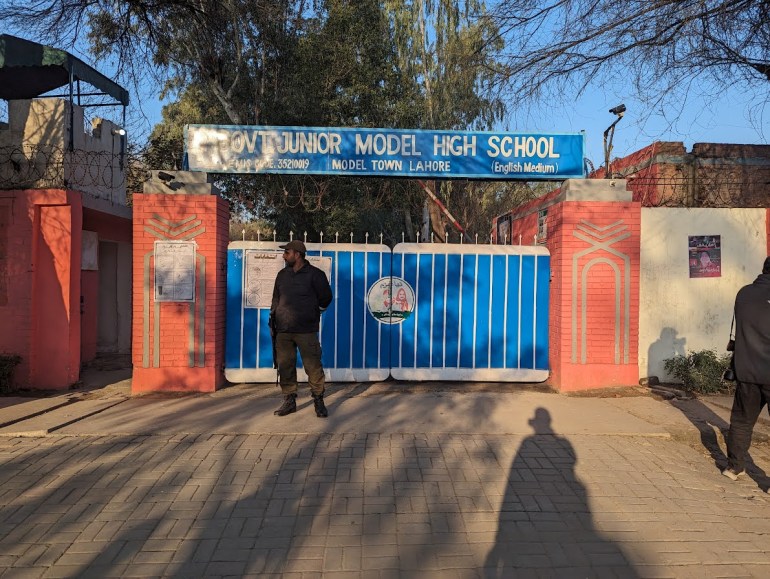
Lahore, Pakistan: When I stepped out on a cool Thursday morning to cover Pakistan’s 12th general election, there was an air of inevitability about the whole exercise. Most respectable analysts had already expressed predictions that the ground was set for the return of three-time former Prime Minister Nawaz Sharif to power. Even if it was plain as daylight that the path had been paved by Pakistan’s military establishment that had once helped Sharif’s political rival Imran Khan rise to power at Sharif’s expense. Even if that same establishment had not once, but twice, been Sharif’s tormentor — first when he was removed as PM in a 1999 coup by Pervez Musharraf, and then when he was forced out of office in 2017 and subsequently sentenced in corruption cases. The tables appeared to have turned, with relations between Khan and the military souring, and the cases against Sharif being dropped. More than 24 hours after I started visiting polling stations and talking to voters, one thing has become clear to me: The outcome of this election is anything but clear. Whatever the eventual results, this election has been closer than analysts had predicted on poll eve. The early results bear that out. Khan’s Pakistan Tehreek-e-Insaf (PTI) party has been denied the use of its election symbol, the cricket bat. The charismatic Khan, former cricket captain and philanthropist, was sentenced on multiple counts days before the election. He has been in jail since last August. Still, as of 11:30am local time (06:30 GMT) on Friday, the PTI was running neck and neck with Sharif’s Pakistan Muslim League-Nawaz (PMLN), even though candidates from Khan’s party were forced to contest as independents. Candidates affiliated with Khan’s PTI had won nine seats, while the PMLN had won 10, with the third major contender, the Pakistan People’s Party (PPP), had won six. After what I saw and heard on Thursday, I’m not entirely surprised. It all started with my phone. Despite all advance warnings by the government and a hunch I had, it was still a bit of a shock when I found out that mobile internet connectivity was switched off. Security concerns were the official reason, but clearly, those in power were concerned that the script they had planned needed tech interventions. My first stop was at Lahore’s upscale locality of Model Town, also the area where Nawaz Sharif’s younger brother Shehbaz Sharif, himself a former prime minister, was expected to vote. A polling station in Lahore’s Model Town on Thursday, February 8, 2024 [Abid Hussain/Al Jazeera] With 15 minutes to go before the polling started at 8am (03:00 GMT), two small queues were forming, one each for female and male voters. Saadia, a 29-year-old doctor was the first in line on the female side. Wearing a face mask, she told me that despite suffering from a bout of flu, it was very important for her to come out and vote. “It is our national duty and a responsibility,” she said in a determined manner. “If we don’t do our bit, we won’t have a right to complain.” The group of women behind also seemed enthusiastic and eager to vote, but as one of them had just started to express her support for Khan and the PTI, a male member of her family intervened. “We don’t want to talk to any media. We don’t trust who you are,” he told me brusquely, and instructed the women of his family to avoid talking as well. This was the first inkling about the kind of day I was about to witness. As I traversed diverse constituencies and polling stations, nearly two dozen, a stark reality emerged: A muted roar replaced the usual election day fervour. The PTI faithful, though seemingly fewer, were vocal. Young families, men and women, even a frail 72-year-old in a wheelchair, rallied behind Khan. “If the PMLN will come, we know how they can ruin the economy and everything else. But Khan is clear-eyed. He has done wonders for us in the world, and increased our respect by his speeches,” a bespectacled 19-year-old Ahmed Malik told me. Another group of young men was playing cricket behind the iconic Badshahi Mosque in Lahore, near a polling station. When I asked one of them, Zafar, if he had voted he nodded in negative. “We had a match in the morning, but once we finish, we will all go together,” he said, pointing towards the rest of his teammates. “We have to vote for skipper [in reference to Khan, who was captain of the Pakistan cricket team],” he added. Young men playing cricket behind the iconic Badshahi Mosque in Lahore, Pakistan, on Thursday, February 8, 2024 [Abid Hussain/Al Jazeera] Their conviction painted a stark contrast to the PMLN’s quiet confidence, bordering on complacency. Two days before the polling, on the last day of campaigning, I did not meet a single PMLN party person canvassing for votes in Lahore’s older neighbourhoods. One of the party officials who did speak to me confided that the party had “completed” its campaign and was confident that people would come out to vote for it. This almost sounded like hubris. However, on February 8, the numbers shared by the Election Commission of Pakistan (ECP) officials at some polling stations, particularly in the middle-class and working-class neighbourhoods, showed a voter turnout which ranged between 20 and 30 percent. Officials belonging to the special branch for investigations deployed at the polling stations told Al Jazeera it appeared that the removal of the cricket bat symbol for the ballot papers and the crackdown on Khan might have convinced PTI supporters to not come out. When I asked about how that might reflect in the results, one of them said: “We will see when it comes that. Our responsibility was to ensure a smooth, free and fair election.” All said without a hint of irony. Across Lahore’s different localities, I noticed that PMLN supporters, while coming out to vote, appeared to lack the organised voting
Indian Army Agniveer Recruitment 2024: Registration begins, check how to apply

Candidates interested in applying for a seat in the Agniveer recruitment program can register themselves on the official website at joinindianarmy.nic.in. The last date to apply for it has been set on March 21.
White paper debate in Lok Sabha: FM Sitharaman says UPA put ‘family first’, left India in ‘dire straits’ in 2014

FM Sitharaman said White Paper is for record of posterity and the youth should know what efforts PM Modi has put in to restore India’s past glory.
UAE in talks to develop $22bn beach land in Egypt

Such a major agreement could boost the Egyptian economy, which is facing a dire foreign exchange crisis. The United Arab Emirates is in advanced talks to purchase and develop a large piece of land on Egypt’s Mediterranean coast in a deal that could bolster the troubled economy of the North African nation. An UAE consortium has been picked to work with Egyptian partners to develop the land in Ras el-Hekma, about 350km (217 miles) northwest of Cairo, an Egyptian official was quoted by CNBC Arabia on Wednesday as saying. Hossam Heiba, the chief executive officer of the state-run General Authority for Investment and Free Zones, told the broadcaster that the initial estimate for the total project was $22bn and that an agreement was expected soon. He did not provide further details, nor name any companies or entities. On Thursday, Egypt’s cabinet said the government was preparing to announce new projects that will “earn huge amounts of foreign currency” and create hundreds of thousands of new jobs in an apparent reference to a multibillion-dollar development planned along the Mediterranean coast in an area of upscale luxury resorts. The emirate of Abu Dhabi, one of seven in the UAE and the country’s capital, is involved in the project, according to unnamed people familiar with the talks quoted by US outlet Bloomberg, which also reported that Egypt may retain ownership of about 20 percent of the vast territory spanning 180 million square metres. It said the minority stake would include a share for the Talaat Moustafa Group, a real estate developer, and some Egyptian state entities, adding that no final decision has been taken. The major deal could strengthen ties between Egypt and the UAE, a chief backer of Egyptian President Abdel-Fattah el-Sisi that has previously offered economic support in the form of investments or other assistance. Egypt is dealing with its worst foreign exchange crisis in decades, having undergone several currency devaluations, and is expected to enact another one soon – its fourth since early 2022. A foreign currency boost could also positively impact Egypt’s talks with the International Monetary Fund (IMF) on a major loan, that may bring in other partners and secure some $10bn in financing. Egypt is due to repay heavy foreign debts this year and the IMF has been pushing it to sell state assets, make space for the private sector and allow its currency to trade flexibly. An IMF team was in Egypt last month to negotiate the revival and possible expansion of a $3bn loan agreement which faltered soon after it was signed in December 2022. Egypt, along with Qatar, is a key mediator in talks aimed at ending Israel’s war on Gaza, starting with another pause in hostilities and the exchange of Palestinian prisoners held in Israeli jails for captives being held in the enclave. Adblock test (Why?)
Israeli bombs target Gaza’s overcrowded Rafah

The Israeli military has bombed targets in overcrowded Rafah, hours after United States officials warned Tel Aviv against expanding its ground offensive to the southern city, where more than half of the Gaza Strip’s 2.3 million people have sought refuge. US President Joe Biden called Israel’s conduct in the war “over the top” in the harshest criticism yet from Washington of its close ally amid concerns about the soaring civilian death toll in the enclave. With the war now in its fifth month, Israeli ground forces are still focusing on the city of Khan Younis, just north of Rafah, but Israeli Prime Minister Benjamin Netanyahu has repeatedly said Rafah will be next, creating panic among hundreds of thousands of displaced people there. Netanyahu has ordered soldiers to prepare for a ground entry into Rafah, alarming Egypt, which has said any ground operation in the Rafah area or mass displacement across the border would undermine its 40-year-old peace treaty with Israel. The mostly sealed Gaza-Egypt border is also the main entry point for humanitarian aid. An estimated 1.2 million people have fled to Rafah, heeding Israeli evacuation orders ahead of the military’s continuously expanding bombardments and ground offensive. Evacuation orders now cover two-thirds of the besieged territory although an estimated 300,000 Palestinians remain in the northern half of Gaza, which civilians were ordered to leave early in the war. Even in areas Israel had declared “safe zones”, such as Rafah, it routinely launches air strikes against what it says are Hamas targets. It holds the Palestinian group responsible for civilian casualties in Gaza, saying it operates from civilian areas. Adblock test (Why?)
Russia and Ukraine exchange 100 prisoners each after UAE mediation

President Zelenskyy says a total of 3,135 Ukrainians were freed from Russian captivity and hopes exchanges continue. Russia and Ukraine have exchanged 100 prisoners of war (POWs) each following mediation by the United Arab Emirates. In announcing the exchange as a “success”, the Gulf nation’s Ministry of Foreign Affairs said on Friday that it was its third mediation effort between Moscow and Kyiv since December as it called for dialogue and de-escalation. Ukrainian President Volodymyr Zelenskyy said his country “will make every effort to continue prisoner exchanges”, in a Friday post on X. Ukraine returns its people and will make every effort to continue prisoner exchanges. So that our people can come back home. I thank everyone who assists us in this and ensures this outcome. pic.twitter.com/2YakQePeM6 — Volodymyr Zelenskyy / Володимир Зеленський (@ZelenskyyUa) February 9, 2024 Russia’s Ministry of Defence, in a post on Telegram, noted the UAE’s “humanitarian mediation”. So far, 3,135 Ukrainian POWs have been freed from Russian captivity, Zelenskyy said on social media on Thursday night. Kyrylo Budanov, head of the intelligence directorate at the Ukrainian Ministry of Defence, urged Ukrainians to disregard scepticism about the time involved in a complicated process. “As you can see, it has taken a bit of time, but the only thing that matters is the result. Look over there and you have the answer to your question,” Budanov said at the undisclosed site of the servicemen’s return. A Ukrainian prisoner of war speaks on a mobile phone after the exchange, February 8, 2024 [Handout/Ukrainian Presidential Press Service via Reuters] In January, the two countries exchanged 195 POWs each, in the first prisoner swap since the crash of a Russian military transport plane that Moscow said was carrying 65 Ukrainian soldiers. The Il-76 transport plane was downed in Russia’s Belgorod region. Russian President Vladimir Putin accused Ukraine of downing the plane using a US Patriot missile. Ukraine has neither confirmed nor denied that it downed the plane and has demanded proof of who was on board. Both sides have carried out periodic prisoner swaps via intermediaries since the war began nearly two years ago, despite the absence of any peace talks between them since the early months of the conflict. The biggest exchange was on January 3, when they traded a total of 478 captives following mediation by the UAE. Putin warned in an interview that defeating Russia in Ukraine was “impossible by definition”, but insisted he was not seeking to expand the war to neighbouring countries such as Poland and Latvia. He repeated his claim that invading Ukraine was necessary to stop the country from threatening Russia by joining NATO, denied that he had territorial ambitions across Europe, and insisted he would only send troops into neighbouring countries if attacked first. Adblock test (Why?)
At least five killed in protest over mosque demolition in north Indian town
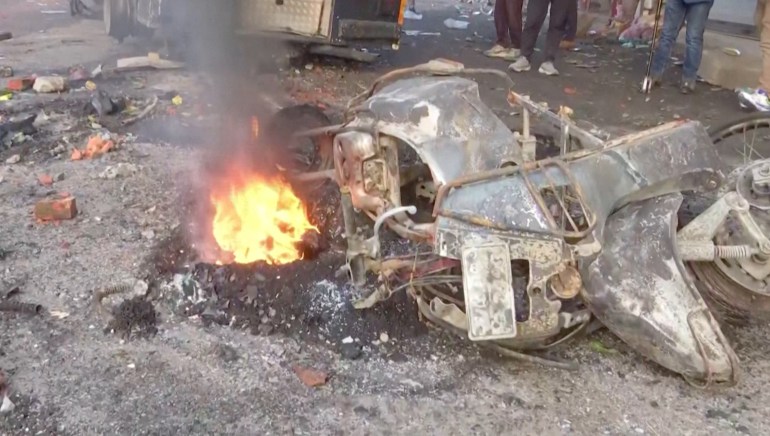
Authorities in Uttarakhand state’s Haldwani town bulldoze a mosque and religious school, triggering anger among the residents. At least five people have been killed and dozens others injured during a protest sparked by the demolition of a mosque and a religious school in India, the latest in a spate of demolitions targeting Muslim structures. Municipal authorities in Haldwani town in the northern state of Uttarakhand bulldozed the buildings on Thursday, saying they had been built without permission. Police said Muslims torched vehicles and threw stones at them in the protest that followed, prompting them to fire live ammunition and tear gas in response. Vandana Singh, the district magistrate of Nainital district, where Haldwani is located, said at a news conference the demolition and its aftermath were “not communal and should not be seen as such”. She said the protest was linked to a government drive to demolish a “property that is neither registered as religious site nor has it been given any such recognition”. “Some call the structure a madrassa,” she added. But residents said the mosque and the school in Haldwani’s Banphoolpur area were nearly two decades old and had been unfairly targeted. A top police official in Uttarakhand on Friday told The Indian Express newspaper five people were killed in the protest, but did not identify them. Officials said dozens of others, including police officers, were wounded and are being treated in various hospitals of the city. A vehicle burns following the protests in Haldwani [Reuters] Authorities in Haldwani have given shoot-on-sight orders, imposed a curfew, suspended internet services, closed schools and banned large gatherings. Sumit Hridayesh, a state legislator from the opposition Indian National Congress party who represents Haldwani, said the violence was a result of “hasty action” by the administration. He said locals in the area, including Muslim leaders, should have been notified before the demolition was carried out. Uttarakhand’s chief minister, Pushkar Singh Dhami, said the government would take the “strictest action against rioters and miscreants”. “Police have been given clear instructions to deal strictly with unruly elements,” he said in a statement. “Every rioter who indulged in arson and stone pelting is being identified. No miscreant who disturbs harmony and peace will be spared.” In January last year, there were widespread protests in Haldwani, a Himalayan town about 270km (170 miles) northeast of New Delhi, after authorities ordered the demolition of nearly 4,000 homes that had allegedly encroached on land owned by the state-run railways. The drive was stayed by the Supreme Court, which said 50,000 people “cannot be uprooted overnight”. Hindu supremacist groups have been emboldened in their campaign against Muslims and their religious structures since Prime Minister Narendra Modi took office a decade ago. Last month, Modi inaugurated a Hindu temple in the northern city of Ayodhya, built on the site of a centuries-old Mughal-era mosque that was destroyed by Hindu zealots in 1992. Muslim groups have also accused governments controlled by Modi’s Bhartiya Janata Party (BJP) of using bulldozers to illegally demolish the homes and businesses of people accused of violence. In two reports published together this week, the human rights group Amnesty International documented the “punitive” demolition of at least 128 Muslim properties from April to June 2022, rendering at least 617 people either homeless or without livelihoods. “The unlawful demolition of Muslim properties by the Indian authorities, peddled as ‘bulldozer justice’ by political leaders and media, is cruel and appalling. … They are destroying families – and must stop immediately,” Agnes Callamard, Amnesty International’s secretary-general, said in a statement on Wednesday. Rights groups have also accused Modi of looking the other way and sometimes enabling hate speech against Muslims, who comprise 14 percent of India’s 1.4 billion people. Modi’s BJP denies the accusations. Adblock test (Why?)
Houston-area Democrats line up in competitive primary to succeed John Whitmire in the Senate

Whitmire held the Senate seat for four decades. Six Democrats are now competing for the seat in the upper chamber.
Texas conservatives test how far they can extend abortion and gender-transition restrictions beyond state lines

Recent state and local legal maneuvers signal that Texas’ conservative movement could be wading into a complicated Constitutional morass the country hasn’t dealt with since before the Civil War.
‘UPA put family first during 2008 global financial crisis, sent economy nosediving’, says FM Nirmala Sitharaman
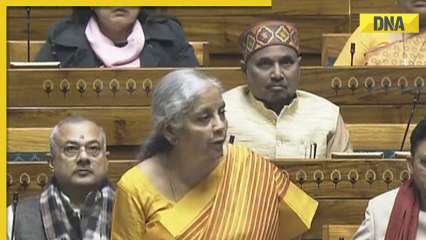
Union Finance Minister Nirmala Sitharaman criticized the UPA during a debate on the ‘White Paper on Indian Economy,’ accusing them of economic mismanagement during the 2008 global financial crisis.