

Senate to vote on funding for Israel and Ukraine as immigration deal set to go down in flames

Just days after the long-awaited text of the border bill was released, it is on track to die after its first procedural vote in the Senate on Wednesday afternoon. Howerver, Senate Majority Leader Chuck Schumer, D-N.Y., has another plan. According to a Senate Democrat aide, Schumer told the caucus he is planning to put the supplemental package — which includes billions of dollars of aid to Ukraine, Israel, Taiwan and humanitarian assistance to Gaza — on the floor without the border security portion of the legislation after the expected failed cloture vote. “Schumer told members of his caucus and the White House last week that if the Republicans scuttled the bipartisan border and supplemental agreement, he had prepared a plan to use the motion to reconsider to force Republicans to vote on the foreign aid without the border,” the aide said. The bill, negotiated by Sens. James Lankford, R-Okla., Krysten Sinema, I-Ariz., and Chris Muprhy, D-Conn., has drawn backlash from more than 20 GOP senators since its release, who argue it would not stem the historic levels of illegal migrant crossings. Several Democrats also oppose the bill, saying it would hurt migrants seeking asylum. SEN. RAND PAUL SLAMS GOP LEADERSHIP FOR ‘DRAGGING’ CAUCUS INTO ‘DEAD’ BIPARTISAN BORDER BILL WITH DEMOCRATS Sen. Minority Leader Mitch McConnell, R-Ky., a strong supporter of aid to Ukraine, was initially optimistic about the bill’s passage, but his outlook appeared grim by Tuesday afternoon as mounting opposition from his conference came to a head. “I think, in the end, even though the product is approved by the border council that adores President Trump, most of our members feel that we’re not going to be able to make a law here,” said McConnell, a strong supporter of aid to Ukraine. “And if we’re not going to be able to make a law, they’re reluctant to go forward. There are other parts of this supplemental that are extremely important as well — Ukraine, Israel, Taiwan. We still, in my view, tackle the rest of it because it’s important,” McConnell added. “Not that the border isn’t important, but we can’t get an outcome. So, that’s where I think we ought to head up to Sen. Schumer to decide how to repackage this if, in fact, we don’t hold onto it.” Schumer told reporters at their weekly press conference on Tuesday the package “is so important for the security of America at the border for the security of Ukraine and Israel” when asked if the Senate would consider repackaging the foreign aid provisions and move forward on just those items without the border bill. “We’re going to keep at it,” Schumer said. “This is not the last Republicans will hear from us. We’re going to keep at it. We will have a vote tomorrow. We will move forward.” IMMIGRATION HAWKS WARN CONGRESS THAT SENATE DEAL WILL HANDCUFF FUTURE ADMINISTRATIONS ON SECURING BORDER A standalone funding bill for Ukraine faces an uphill battle in the Senate. Republican Sen. Mike Lee of Utah wrote in letter posted to X on Wednesday that the Republican conference “agreed and has repeatedly stated that it would not vote to give another penny to Ukraine until our border is secure.” The immigration portion of the doomed Senate bill, appended to the $118 billion national security supplemental package, includes heightened asylum restrictions and gives President Biden the authority to suspend the bill on an emergency basis. The emergency bill introduces a new three-year authority, akin to COVID-era Title 42, enabling officials to shut down entries into the U.S. at the southern border. This provision occurs when there is a seven-day average of 5,000 daily encounters or 8,500 in a single day. DHS must then expel all migrants, except unaccompanied children, until encounters drop at least 25% for seven consecutive days, with a 14-day deadline for ending the authority. However, the bill states that if the president “finds that it is in the national interest to temporarily suspend the border emergency authority, the President may direct the Secretary to suspend use of the border emergency authority on an emergency basis.” Essentially, the “border emergency” triggered at 5,000 crossings per day within a week can be overturned by Biden. SENATE RELEASES LONG-AWAITED BORDER LEGISLATION, MAJOR ASYLUM CHANGES Republicans quickly took aim at the number of encounters within hours of the bill’s release, arguing that there should be zero crossings. Former President Trump, the lead GOP presidential contender, also urged senators not to pass the bill. It would also require migrants to prove “reasonable possibility” of persecution if returned to their home country when seeking asylum, rather than “significant possibility.” It also moves consideration of bars to asylum, including a criminal conviction, into the initial screening stage rather than later in the process. Lankford, the lead Republican negotiator, also indicated this week he is considering voting against the package even though he supports it, which House Republicans have already vowed to tank. Fox News’ Adam Shaw contributed to this report.
Florida Supreme Court will decide whether abortion amendment belongs on November ballot

Florida’s attorney general is expected to ask the state Supreme Court to keep an abortion-rights measure off November’s ballot on Wednesday, saying it misleads voters and could be used to expand abortion rights in the future. Proponents of the proposed amendment say the language is clear and concise and that Attorney General Ashley Moody is playing politics instead of letting voters decide whether to protect access to abortions. The case will be a test on whether Republican Gov. Ron DeSantis, who appointed five of the seven judges, has changed the direction of a court that in past years has interpreted a privacy clause in the state constitution to strike down some abortion restrictions. No decision is expected Wednesday. ATTEMPTED ARSON OF ILLINOIS ABORTION CLINIC GETS MAN 5 YEARS IN PRISON The proposed amendment would allow abortions to remain legal until the fetus is viable. Moody has argued that abortion rights proponents and opponents have differing interpretations as to what viability means. Those differences along with the failure to define “health” and “health-care provider,” are enough to deceive voters and potentially open a box of legal questions in the future, she previously told the court. The arguments come as both sides of the abortion debate wait for the Florida Supreme Court to rule on whether to uphold a 15-week abortion ban passed two years ago. Last year, lawmakers went further and passed a ban at six weeks, which is before many women even know they are pregnant, but it won’t take effect if the court throws out the 2022 ban signed by DeSantis. If the question is allowed on the ballot, 60% of voters would have to approve it. Any change in abortion access in Florida would be felt out of state as well because the Sunshine State traditionally has been a haven for women in the southeastern U.S. seeking abortions. Nearby Alabama, Louisiana and Mississippi have bans on abortion at all stages of pregnancy, and Georgia has a ban on terminating pregnancies after cardiac activity can be detected.
Antolin will manufacture advanced lighting, HMI systems and electronics in its new Chakan facility

Antolin India, part of global automotive market player Antolin, expanded its operations by opening a new manufacturing facility in Pune Chakan on 18 January 2024.
Nebraska bill seeks to allow armed teachers in schools statewide

A bill that would allow teachers and other staff in schools to be armed in the hopes of deterring school shootings drew dozens of people and some emotional testimony to the Nebraska Legislature’s Education Committee on Tuesday. State Sen. Tom Brewer’s bill is among the latest in GOP-led state legislatures across the country embracing bills expanding gun rights. The Nebraska bill is made up of three parts. It would give local school boards the ability to allow off-duty law enforcement to carry guns onto school property and create detailed maps of schools’ buildings and grounds to give to local law enforcement and first responders to use in the event of a school shooting. OHIO SCHOOL DISTRICT ALLOWS STAFF TO BE ARMED: ‘OUR SCHOOLS WILL NO LONGER BE SOFT TARGETS’ It would also allow for teachers or other school staff to be armed, as long as they undertook gun handling and safety training. The bill is needed in Nebraska’s rural districts, Brewer said, where schools can be many miles away from the nearest law enforcement and rarely have access to resource officers that are prevalent in cities like Omaha and Lincoln. At least 32 states have laws allowing teachers or other school staff to be armed during school hours, according to the Giffords Law Center to Prevent Gun Violence. That includes all of Nebraska’s neighboring states, including Iowa, Missouri, Kansas, Colorado, Wyoming and South Dakota. “We are an island that has decided not to protect our children,” he said. Most of those testifying in favor of the bill focused on its school mapping provision. Even opponents of the bill said they supported its school mapping. But the sanctioning of armed school staff drew some emotional testimony, including from one teacher who was present for a deadly school shooting in Omaha 13 years ago. Tim Royers, president of the Millard Education Association, told the committee he was in his school’s lunchroom overseeing students on Jan. 5, 2011, when someone announced over the school’s speakers, “Code Red.” Royers and other teachers scrambled to gather as many students as possible and search for a room in which to hide. “I will never forget the looks on those students’ faces,” he said. Authorities later said that a 17-year-old student — the son of an Omaha police detective — had been suspended from Millard South High School, but he returned that same day with his father’s service revolver. He fatally shot the assistant principal and wounded the school’s principal before fatally shooting himself. RED STATE’S NRA-BACKED BILL TO ALLOW ARMED TEACHERS IN CLASSROOM ONE STEP CLOSER TO PASSAGE In the years since, he has never heard any educators express a desire to be armed, Royer said. “But I’ve had plenty of them tell me that a provision like this would drive them out of the profession,” he said to the committee. Brewer said those opposing the bill aren’t being fair to schools in rural areas that “are unable to fill law enforcement positions, let alone resource officer positions.” Brewer has long been an opponent of laws regulating guns. A bill that he pushed since he was first elected in 2016 to allow Nebraska residents to carry concealed guns without a permit was passed and enacted last year. Similar to other so-called constitutional carry laws in other states, it allows people to carry guns hidden in their clothing or vehicle without having to pay for a government permit or take a gun safety course.
Four West Virginia GOP governor candidates vie for party nomination at debate

Three candidates with deep family ties in West Virginia politics and one who moved to the state two decades ago staked their claims in a debate Tuesday night to being the best choice in the Republican primary for governor. In a deeply red state that twice overwhelmingly voted for former President Donald Trump, Attorney General Patrick Morrisey, ex-state delegate Moore Capito and car dealer Chris Miller called themselves the most conservative candidate in the May 14 primary contest. “I think West Virginia needs a proven conservative with a record of getting things done,” Morrisey said. WEST VIRGINIA LAWMAKERS ADVANCE BALLOT MEASURE FOR NONCITIZEN VOTING BAN Secretary of State Mac Warner, though, said the governor’s race “isn’t about being the most conservative. This is about serving the people of West Virginia.” The four men took turns supporting additional income tax cuts, pay raises for teachers, the death penalty for fentanyl traffickers, and the state’s current restrictions on abortion. They gave differing views on way’s to grow the economy and stop the state’s decadelong exodus of residents. From 2010 to 2020, West Virginia lost a higher percentage of its residents than any other U.S. state. The winner of the May 14 GOP primary will face Democrat Steve Williams in the November general election. Williams, who is mayor of Huntington, is running unopposed in his party’s primary. Republican Gov. Jim Justice is prohibited by law from seeking a third consecutive term. Morrisey moved to the state from New Jersey in 2006 and was elected to the first of three terms as attorney general in 2012. To grow the state’s economy, he envisions a “robust” competition with bordering states through an examination of policies such as taxes, regulations, workforce and licensing rules, and teacher pay. “That alone is going to drive economic growth,” Morrisey said. Last year Justice signed a 21% cut in the state’s personal income tax. Miller wants to eliminate the tax altogether — and quickly, saying he’d do it as soon as he becomes governor. He said businesses and prospective workers are attracted to states with no such tax, such as Tennessee, Texas and Florida. “Capital flows like water to the places it’s most welcome,” Miller said. “You have to unleash capitalism.” Miller’s mother, Carol Miller, is a longtime state delegate who is seeking her fourth term in the U.S. House. His grandfather is the late U.S. Rep. Samuel Devine of Ohio. Capito, the son of U.S. Sen. Shelley Moore Capito, is hoping to join his late grandfather, Arch A. Moore Jr., as governor. Arch Moore is the only governor elected to three terms. Capito said completing roads, water and other infrastructure projects are one key to growing the state’s economy. He pointed to his record in the House of Delegates, “and as your governor, we’ll continue to get things done.” Capito resigned his seat in the House of Delegates in December to run for governor, drawing criticism from Warner. “That’s a quitter,” Warner said. “Nobody likes a quitter. You don’t walk away.” Warner’s brother, Kris, is a former state GOP chairman who is running for secretary of state. Other brothers are Monty Warner, a GOP candidate for governor in 2004, and former U.S. attorney Kasey Warner. Mac Warner said education is the way “to get West Virginia off the bottom.” He emphasized funding early education initiatives and further opening up opportunities in the career technical fields. Warner said he sees the primary as a “two-person race” between himself and Miller. In referring to Morrisey, he said, “No respectful Republican in West Virginia is going to vote for an out-of stater who comes in as an opportunist.” Warner also pointed out that former state Democratic Party chairman Larry Puccio, who was chief of staff to then-Gov. Joe Manchin, is a donor to Capito’s campaign. “I am not for sale,” Warner said. The debate was hosted at a resort in Daniels by the Raleigh County Republican Executive Committee and aired on West Virginia radio network MetroNews. Two other GOP candidates were not in attendance: Kevin Christian of Chloe, Calhoun County, and Mitch Roberts of Poca. It wasn’t known whether they were invited. A message left with a county GOP official wasn’t returned.
EC allots ‘Nationalist Congress Party-Sharadchandra Pawar’ as name for Sharad Pawar-led faction

The allotment comes a day after the polling body held that the NCP faction led by Maharashtra Deputy Chief Minister Ajit Pawar is the “real NCP” based on its legislative strength.
Uttarakhand becomes first Indian state to pass Uniform Civil Code Bill

The Uniform Civil Code Bill, which was introduced by Chief Minister Pushkar Singh Dhami-led state government, was passed in the House on Wednesday.
Alabama governor announces support for gambling vote, education vouchers, absentee ballot crackdown

Alabama Gov. Kay Ivey called Tuesday night for the creation of a limited school voucher program and announced support for two controversial measures before lawmakers this year: gambling legislation and absentee ballot restrictions. Lawmakers kicked off the 2024 legislative session with key votes on gambling, elections and education looming. Ivey used her annual State of the State address to lay out priorities for the year. The Republican governor announced her support for gambling legislation being developed in the Alabama House of Representatives that would authorize a statewide vote on a state lottery and a select number of casino sites. There has not been a statewide vote on gambling since former Gov. Don Siegelman’s proposed lottery failed in 1999. Bills have stalled under a mix of conservative opposition to legalized gambling as a revenue source and disputes over who would get casino licenses. ATLANTIC CITY CASINOS NOT OBLIGED TO STOP COMPULSIVE GAMBLERS, JUDGE DETERMINES “Now is the time for Alabama voters to have another say on this issue,” Ivey said Tuesday night. Lawmakers who have seen draft versions of the bill said it would authorize a lottery and up to 10 casino sites in the state. Republican Rep. Chris Blackshear, who is sponsoring the gambling legislation, said a bill could be introduced as soon as Wednesday but noted that “everything with this is day by day.” “We’ve kicked the can down the road too long,” he said. “All we are trying to do is put a good package together that allows the citizens of Alabama to decide what they want. Ultimately, their votes decide.” The bill would need to garner bipartisan support to win approval. The Alabama Constitution currently bans lotteries and casinos. To change that, the measure would have to be approved by three-fifths of members in both legislative chambers and then a majority of voters in a statewide vote. Democratic Rep. Kelvin Lawrence, of Hayneville, whose district includes a long-running gambling hall, said he hopes the legislation provides “equitable treatment and fairness” to locations where voters previously approved some type of gambling. He said he wants to review the full bill before committing to voting yes. “The devil is always in the details,” Lawrence said. Ivey also announced a proposal for the creation of an education savings account that will allow families to tap public funds for private school tuition or other expenses. The proposed $100 million fund would provide up to $7,000 tuition vouchers initially aimed at low- and middle-income families and families of students with disabilities. It is smaller than a $500 million proposal introduced last year that critics said would drain too much from public education. “My goal is to put us on a trajectory to make our program fully universal, while also maintaining our full and total support for public education,” Ivey said. The bill, titled the Creating Hope and Opportunity for Our Students’ Education Act, or the CHOOSE Act, would allow families earning up to 300% of the federal poverty level — which would be about $77,460 for a family of three — to access the public dollars for private school tuition or other expenses. The income cap would go away after three years, but lower-income families and families with students with disabilities would have priority for receiving funds. “I think we’ve landed at a very good place, a healthy but manageable amount for initiating the education savings accounts,” bill sponsor state Sen. Arthur Orr said, adding that he anticipates the bill will be in committee next week. Democrats have expressed concern about using public dollars for private schools, while some Republicans may want a more sweeping proposal. A rival bill introduced Tuesday, similar to the one introduced last year, would provide up to $400 million in vouchers. Ivey also voiced support for a Senate bill, up for a committee vote Wednesday, that would make it a crime to help someone vote by absentee ballot unless they are close family or a household member. Similar legislation sparked heated debate last year. Opponents have called it an attempt to make it harder for people to vote. Republican supporters say the change is needed to combat voter fraud. The bill would make it a misdemeanor offense to order, prefill, request, collect or deliver an absentee ballot for someone who is not a household member or family. The penalty increases to a felony if the person is paid. The bill provides an exemption for election officials to help people and for those who are blind, disabled or who cannot read to ask someone for help. Ivey said the bill would close “loopholes that allow unaccountable, paid political operatives to pressure folks through the absentee voting process.” Senate Minority Leader Bobby Singleton, D-Greensboro, questioned the need for the bill. “I think this is a national Republican issue. I think the state is jumping on something,” Singleton said. “Ballot harvesting is not an issue in this state.”
Biden’s latest climate rules crack down on manufacturing, ignoring industry warnings of economic devastation
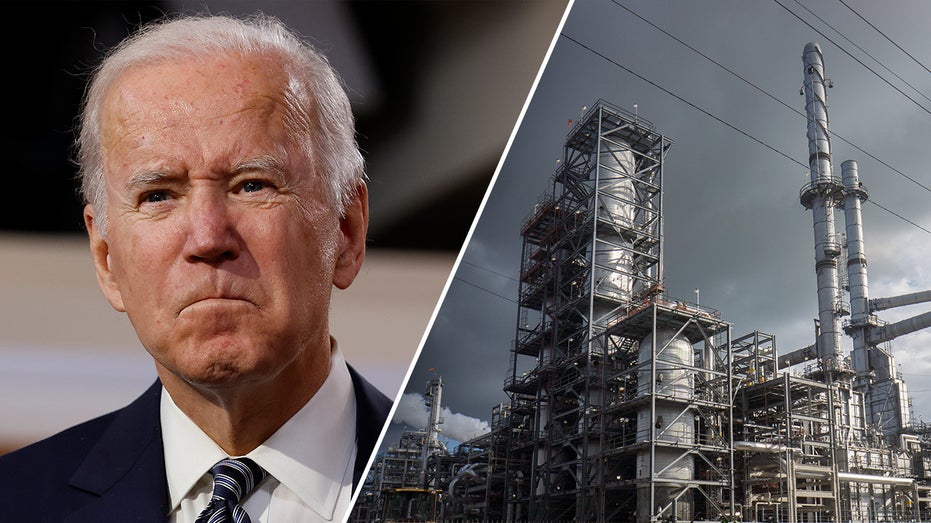
The Biden administration finalized regulations severely tightening restrictions on fine particulate matter that the manufacturing and energy sectors are legally allowed to emit, an action that industry said would have devastating economic consequences. The Environmental Protection Agency (EPA) unveiled the regulations Wednesday morning in a joint announcement with environmental activists, saying limiting particulate matter known as PM2.5 or soot would have health benefits for Americans nationwide. The rulemaking lowers the annual PM2.5 standard from a level of 12 micrograms per cubic meter to a level of 9 micrograms per cubic meter. “Today’s action is a critical step forward that will better protect workers, families and communities from the dangerous and costly impacts of fine particle pollution,” EPA Administrator Michael Regan told reporters in a call. “The science is clear. Soot pollution is one of the most dangerous forms of air pollution and is linked to a range of serious and potentially deadly illnesses, including asthma and heart attacks.” “The stronger standard is designed to ensure clear, routine pathways for industry to continue to upgrade and build while maintaining cleaner, healthier air,” Regan continued. “We know that cleaner air and a strong and bustling economy go hand in hand.” BIDEN ADMIN PROBED AFTER FOX NEWS DIGITAL SHOWS IT MAY HAVE FABRICATED PAPER TRAIL TO SHUTTER CHEMICAL PLANT According to EPA, the regulations will prevent up to 4,500 premature deaths and 290,000 lost workdays while yielding up to $46 billion in net health benefits by 2032. And the agency further estimated that, for every $1 spent complying with the PM2.5 regulations, there could be up to $77 in human health benefits by 2032. And the agency noted that as PM2.5 concentrations have decreased 42% since 2000, the U.S. gross domestic product has increased 52%. MORE THAN 150 REPUBLICANS TAKE AIM AT BIDEN’S MORATORIUM ON NATURAL GAS EXPORTS “The Biden administration is taking life-saving action to protect people and rein in deadly pollution,” said Abigail Dillen, the president of the left-wing eco group Earthjustice. “This federal standard will ensure that states respond to the ongoing public health and environmental justice crisis, saving thousands of lives and avoiding 800,000 asthma symptom cases every year.” However, industry associations such as the U.S. Chamber of Commerce, National Association of Manufacturers (NAM) and American Petroleum Institute (API) have warned of the potentially wide-ranging impacts of more restrictive particulate matter restrictions. In a September letter to Regan, those groups and 30 other industry associations said the regulations could lead to onerous permitting requirements that would “freeze manufacturing and supply chain investments.” They also pointed to a May 2023 study conducted by Oxford Economics and commissioned by NAM that concluded more restrictive PM2.5 regulations would threaten between $162.4 and $197.4 billion of economic activity while putting 852,100 to 973,900 current jobs at risk. “Tightening the NAAQS PM2.5 standard will grind permits to a halt for a large portion of our country,” Marty Durbin, the senior vice president for policy at the U.S. Chamber of Commerce, said Wednesday. “EPA’s new rule is expected to put 569 counties out of compliance and push many others close to the limit, which threatens economic growth.” “Compliance with the new standard will be very difficult because 84% of emissions now come from non-industrial sources like wildfires and road dust that are costly and hard to control,” he continued. “While EPA states there are exemptions for wildfires, 70% of those requests haven’t been granted in the past, and the process for seeking one is time-consuming and difficult for states to manage.” FOSSIL FUEL INDUSTRY UNLEASHES ON BIDEN FOR HALTING KEY NATURAL GAS PROJECTS Durbin added that EPA should have maintained the previous standard of 12 micrograms per cubic meter and focused its attention instead on reducing non-industrial emissions. The regulations Wednesday, he said, punish counties and the private sector “for situations largely out of their control.” The regulations, meanwhile, will make the U.S. PM2.5 standards among the world’s most burdensome. While Australia and Canada have annual standards lower than 9 micrograms per cubic meter, Japan has a standard of 15 micrograms per cubic meter, and the U.K. and European Union both have a standard of 20 micrograms per cubic meter. China and India have annual standards of 35 micrograms per cubic meter or greater. “Protecting public health and the environment is a top priority for our industry, and America has seen significant air quality improvements and reduced emissions over the past decades under the existing EPA standards,” said API Vice President of Downstream Policy Will Hupman. “Yet, today’s announcement is the latest in a growing list of short-sighted policy actions that have no scientific basis and prioritize foreign energy and manufacturing from unstable regions of the world over American jobs, manufacturing, and national security,” Hupman continued. “As we review the final standard, we will consider all our options.” Additionally, Democrats such as Kentucky Gov. Andy Beshear and Kansas Gov. Laura Kelly have each expressed concern about tighter PM2.5 standards since EPA first proposed the regulations early last year. Both governors recently penned letters to President Biden, warning of the negative consequences of rapidly implementing the regulations without a “glide path.” “Although particulate matter in the air is a recognized health concern for our citizens, a sharp reduction in the standard without a sufficient glide path or compliance window for regulatory agencies and affected industries may result in significant implementation challenges and a negative impact on industry and future job growth in our state,” Kelly wrote to Biden on Jan. 31.
CBP migrant encounters already exceed 1 million since October

U.S. Customs and Border Protection has tracked over 1 million migrant encounters since Oct. 1st, when fiscal year 2024 began, a CBP source told Fox News Digital on Wednesday, the earliest this mark has ever been reached. The number is roughly 100,000 encounters higher than the same period last year, when the U.S. saw 908,000 encounters. This is the earliest the U.S. has ever reached the 1 million encounter mark, according to the CBP source. The U.S. is also tracking a higher number of Chinese migrants crossing the border. Chinese illegal immigrants made up the fastest-growing group of border crossers last year, and fiscal year 2024 is on track to shatter that record. The CBP encountered over 37,000 Chinese migrants last year, but they have already encountered nearly 20,000 since October. The CBP source says they have encountered roughly 150 Chinese migrants per day this fiscal year. GOP SENATORS RALLY AGAINST BIPARTISAN BORDER DEAL, CITING BIDEN’S POWER TO SUSPEND ‘EMERGENCY’ BILL The news comes just after a bipartisan immigration bill crashed and burned in Congress this week. Sen. Ted Cruz, R-Texas, and other critics of the bill argued that it would “normalize” 5,000 border encounters each day. MAYORKAS LASHES OUT AT ‘BASELESS’ GOP ALLEGATIONS AHEAD OF KEY IMPEACHMENT VOTE “That works out to 1.8 million a year. That works out to about 6 million illegal immigrants over the three years of Biden…. So the idiotic Republican proposal was let’s be for two thirds of the border invasion that Biden has allowed,” Cruz told Fox News on Tuesday. The House of Representatives also failed to impeach Homeland Security Secretary Alejandro Mayorkas in a vote on Tuesday. The House voted mostly along party lines, but Republicans suffered a number of defections that torpedoed the 216-214 vote. Four Republicans ultimately voted no: Rep. Tom McClintock, R-Calif., Ken Buck, R-Colo., Mike Gallagher, R-Wis., and Blake Moore, R-Utah, who switched his vote at the last minute in a procedural move to be able to bring the resolution back to the floor. GOP LAWMAKER ON KEY IMMIGRATION SUBCOMMITTEE SLAMS MAYORKAS IMPEACHMENT Lawmakers voted on a resolution combining two articles of impeachment that accused Mayorkas of having “refused to comply with Federal immigration laws” and the other of having violated “public trust.” A Cabinet secretary has not been impeached since 1876, when Secretary of War William Belknap was impeached. Border crossings have set several records in recent months. December saw 302,000 migrant encounters alone, the highest total for a single month ever recorded. It was also the first time a monthly total had exceeded 300,000. Fox News’ Adam Shaw and Elizabeth Elkind contributed to this report