

Republicans unveil effort barring China, Russia from buying US land

FIRST ON FOX: House Republicans unveiled legislation that would prohibit Chinese, Russian, North Korean and Iranian nationals from purchasing public or private real estate in the U.S. The American Land and Property Protection Act, introduced by Rep. Mark Alford, R-Mo., and cosponsored by seven fellow House Republicans, orders the president to take action prohibiting nonresidents, businesses, agents, trustees or fiduciaries associated with the governments of China, Russia, North Korea and Iran from purchasing U.S. land. The prohibition would extend to any entity designated as a foreign terrorist organization by the State Department. “Foreign adversaries have no business owning American real estate,” Alford told Fox News Digital in a statement. “Right now, if Americans wanted to travel to Moscow, Beijing or Havana, we would not be allowed to buy property. FORMER CIA DIRECTOR LEON PANETTA WARNS CHINA MAY USE MICHIGAN EV PLANT FOR ESPIONAGE “Why is the reverse scenario permissible? Our legislation will change that,” he continued. “In an ever-changing global landscape, we must take the necessary steps to secure our homeland. Our bill is a crucial first step in accomplishing that.” Reps. Guy Reschenthaler, R-Pa.; Scott DesJarlais, R-Tenn.; Randy Weber, R-Texas; Alex Mooney, R-W.Va.; August Pfluger, R-Texas; Jeff Duncan, R-S.C.; and Marjorie Taylor Greene, R-Ga.; were listed as cosponsors on the American Land and Property Protection Act. The effort comes as Republicans continue to raise the alarm about the growing share of American real estate purchased and owned by foreign entities. Lawmakers have argued such purchases could threaten U.S. national security, agricultural production and, sometimes, military interests if the land is located near a military base. FORD PLANS TO HIRE CHINESE MILITARY SOFTWARE SUPPLIER FOR EV FACTORY IN US: GOP INVESTIGATORS In January, the U.S. Government Accountability Office issued a report showing the Department of Agriculture (USDA) has failed to consistently share timely data on foreign investments in U.S. agricultural land as required under the 1978 Agricultural Foreign Investment Disclosure Act. Further, Pentagon officials told investigators the USDA needs to regularly provide more up-to-date and specific data. “This report confirms one of our worst fears — that not only is the USDA unable to answer the question of who owns what land and where, but that there is no plan by the department to internally reverse this dangerous flaw that affects our supply chain and economy,” Congressional Western Caucus Chairman Dan Newhouse, R-Wash., said after the report was published Jan. 18. “Food security is national security, and we cannot allow foreign adversaries to influence our food supply while we stick our heads in the sand,” Newhouse added. USDA’s most recent data suggests that, as of 2021, foreign investment in U.S. agricultural land grew to approximately 40 million acres. Additionally, Chinese agricultural investment in the U.S. increased tenfold between 2009 and 2016 alone. 17 RETIRED MILITARY OFFICIALS RAISE ALARM ON BIDEN’S ELECTRIC VEHICLE PUSH In February 2023, officials in Grand Forks, North Dakota, rejected a Chinese company’s proposed corn mill that received significant local pushback over concerns about its proximity to a U.S. Air Force base in the area. While the company, Chinese-owned Fufeng Group, was able to purchase 300 acres of land in the area, the local government rejected its building permits, effectively killing the project. Air Force Assistant Secretary Andrew Hunter said prior to the Grand Forks City Council decision that the project would pose a “significant threat” to national security, but that the Committee on Foreign Investment (CFIUS) concluded it did not have jurisdiction in the case. CFIUS is an interagency task force overseen by the Department of the Treasury and tasked with reviewing certain foreign investments that may pose a national security threat. In August, a subsidiary of Chinese green energy firm Gotion High-Tech purchased 270 acres of land, including some zoned for agricultural use, in Green Charter Township, Michigan. The land is slated to be used to build an electric vehicle battery component factory but is located within 60 miles of military armories and within 100 miles from Camp Grayling, the largest U.S. National Guard training center in the country. Like its determination in the Fufeng Group case, CFIUS ruled in April 2023 that Gotion’s plans in Michigan are not covered transactions.
Hispanic business owner, GOP candidate rips Dem crime policies after drug addicts torch his Las Vegas property

A local Hispanic business owner running for public office isn’t parsing words when it comes to Democrats’ soft-on-crime policies after one of his properties was torched by drug addicts over the weekend. Rafael Arroyo, a Las Vegas Republican running for the Nevada Assembly in the 41st district, operates a small business that partners with the state DMV for emissions testing and vehicle registration. He awoke to news on Saturday that one of his office locations had partially burned down after yet another break-in, something he says is so frequent he no longer attempts to file police reports. “There’s no point in filing a police report because they’re never going to get caught,” Arroyo told Fox News Digital in an interview. “That’s something that if the laws were there to back up small businesses, then they would be worth it, but they’re not.” Arroyo said the area where that particular property was located was “not the best” side of town and that there is a plethora of mentally ill, homeless and drug-addicted people who roam the surrounding streets and have frequently broken into his business. He says the 7-Eleven next door blasts classical music just to try and mitigate the loiterers, and that police patrols and cameras aren’t enough to make a significant difference. OBAMA VETERAN WHO BOASTED ABOUT USING ‘KNOW NOTHING’ REPORTERS TO PUSH IRAN DEAL RE-LAUNCHES ANTI-TRUMP GROUP “The cops have been called hundreds of times, hundreds of times, to get those people out of there,” noting the individuals had begun lighting fires at night, but would only get “a slap on the wrist” if they were ever caught doing anything illegal. Arroyo suspects that when a shuttle bus he uses as a mobile office was broken into once again on Friday night by people who use it to get high, the perpetrators, who he does not know, this time decided to light a fire on the inside. It appeared to then get out of control before completely burning and causing damage to the surrounding infrastructure. He explained that he didn’t have the video footage with an angle showing how the fire spread because police were reviewing it as part of their investigation, something he was told “could take up to a couple of months.” TIM SCOTT RESPONDS TO TRUMP CONSIDERING HIM FOR VICE PRESIDENT: ‘THE ONLY THING I CAN TELL YOU IS…’ “When you have an addiction problem, and you get to a certain point, like you’re not mentally well, and they do things that make no sense. There’s no explanation for it,” Arroyo said. “These people — they need help. Some of them are to the point where they need real professional help.” “Those are the type of things we have to focus on instead of just saying, hey, we’re going to give you a slap on the wrist, and it’s okay for you to stay here,” he said. “I understand trying to have compassion because it’s true, they’re humans, and you want to have compassion for them, but sometimes it goes from compassion to enabling.” Arroyo pointed to major cities in states like California, and all across the West Coast, where he said the consequences of letting things go like that were evident in businesses deciding to shut down because they couldn’t operate in a safe environment and protect their employees. SWING DISTRICT DEMOCRAT WITH CLOSE TIES TO LARGEST TEACHERS UNION SILENT ON CALLS TO RESCIND BIDEN ENDORSEMENT “So, for my opponent to bring these same exact policies here, it doesn’t make any sense. We already have the proof that they don’t work,” he said, referencing Nevada Assembly Majority Leader Sandra Jauregui, a Democrat, and noting legislation the body passed to reduce penalties for controlled substances. “At the end of the day, if you’re just giving people a slap on the wrist, they’re going to continue to use drugs, and it’s going to affect them mentally, and then you get to a point where you’re at. You can see this in Portland, Seattle, Oakland, San Francisco, L.A. Like you see this stuff happening all up and down the West Coast, and they’re trying to bring it here,” he said. Arroyo was born in Puerto Rico, but moved with his family to Las Vegas in the early 1990s and saw the city grow exponentially over the years. He says the homeless and crime problem really started to get worse in the early 2010s, and that he jumped into the race because he doesn’t believe in complaining from the sidelines. HOUSE DEM ACCUSED OF ACCEPTING ‘ILLEGAL’ CAMPAIGN DONATIONS FROM CONTROVERSIAL MARIJUANA DISPENSARY CHAIN “I’m not going to sit here and allow our state to be taken over by bad policies from California. There’s a lot of good people that moved here from California. I welcome them. But don’t bring bad policies. You just left there for a reason. You got to be able to connect those two things together,” he said. He stressed that this year’s local elections were important because the Democrat-controlled state Senate was only one seat away from being able to override any veto by Republican Gov. Joe Lombardo, and that electing candidates to both houses of the state legislature who would stand up to these soft-on-crime policies was critical to preventing Nevada becoming the next California. “We’re one seat away from that. I can’t allow that to happen. I grew up here, I established myself here, my family’s here. I’m not just going to run. I’m not going to run to Texas or Florida or wherever. I’m not doing that. No. We’re here. We’re going to fight,” he said. The 41st district in which Arroyo is a candidate is viewed by many across the state as a top target for Republicans to flip. Democrats currently hold a 14-seat majority in the 42-seat state Assembly, and a 5-seat majority in the 21-seat state Senate. Get the latest updates from the 2024 campaign trail, exclusive interviews and more at our Fox News Digital election hub.
Georgia bill requiring cash bail for 30 crimes, including misdemeanors, heading to governor’s desk

A Georgia bill requiring cash bail for 30 crimes, including some that are often misdemeanors, is on its way to Gov. Brian Kemp’s desk after receiving final approval in the House on Tuesday. Senate Bill 63 was approved in the Republican-led House by a 97-69 vote after senators passed the measure with a 30-17 vote on Thursday. The bill is in direct opposition to a law championed by former Gov. Nathan Deal in 2018 allowing judges to release most people accused of misdemeanors without bail. If enacted into law, the bill would require bail for those accused of misdemeanor battery or a second or later misdemeanor offense of reckless driving or criminal trespass. Bail would also be required for those charged with failure to appear in court for a traffic ticket if it’s at least the second offense. The measure also limits the ability for charitable organizations and individuals to bail more than three people out of jail in a year – the restriction does not apply to bail bond companies who meet the legal requirements to be classified as such. GEORGIA CONSIDERS REQUIRING CASH BAIL FOR A WIDER ARRAY OF CRIMES Republican Rep. Houston Gaines, who sponsored the bill in the House, said the measure makes it clear that “Georgia is not going down the path of failure seen by other states and communities that have eliminated cash bail.” He wrote on X, formerly Twitter, on Tuesday that Georgia is “keeping criminals accountable” by requiring cash bail for more crimes. Gaines also criticized bail funds, describing them as “unaccountable,” and noted that leaders of the fund that freed those arrested while rioting against the planned Atlanta police training center have been indicted. Gaines added that a part of the 2018 measure requiring judges to consider a person’s ability to pay when setting bail would remain a law. Speaker of the House Jon Burns, also a supporter of the bill, praised lawmakers for passing it on X on Tuesday. “The facts are clear: cash bail prevents repeat offenses and keeps bad actors off the streets. Today the House took a strong stand by requiring cash bail for certain offenses—and we will keep working to make Georgia communities as safe as possible!” he wrote. GEORGIA LEGISLATORS APPROVE BILL DEFINING ANTISEMITISM IN STATE LAW Other lawmakers who oppose the bill believe it targets poor defendants and could potentially strand them in jail for crimes that may not result in time behind bars if ultimately convicted. Rep. Tanya Miller, a Democrat from Atlanta, described the measure as a “criminalization of poverty” and said there is no proof it would make communities safer. “This bill would require incarceration for many [offenses] that once the person is fully vetted through due process, if they are convicted, they would not even receive incarceration,” Miller said. She continued: “What is most scary about this bill is the criminalization of churches and religious institutions that have historically been on the front lines of social justice and civil rights.” Though Kemp has said he is in favor of more restrictive bail conditions, he has not announced if he will sign the bill once it arrives at his desk. The Associated Press contributed to this report.
‘India Out’ campaigns simmer in Bangladesh amid election fallout
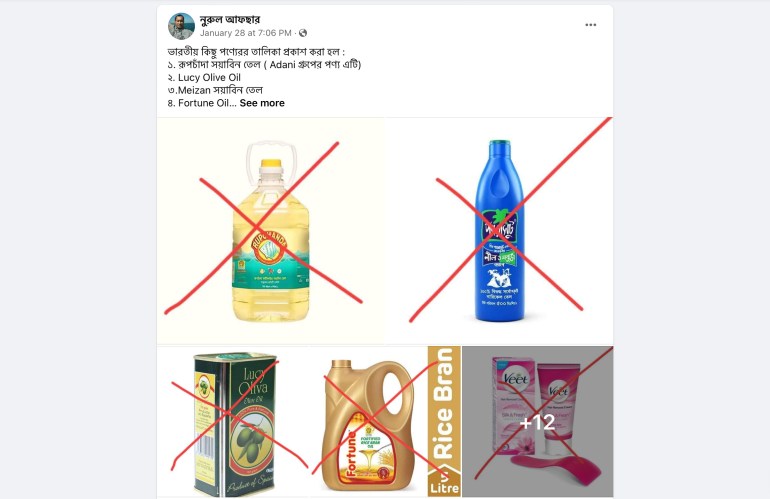
Dhaka, Bangladesh – Amid allegations of Indian interference in national elections, there’s a call to boycott Indian goods in Bangladesh. Last week, a supplier for the Indian consumer goods giant Marico faced a chilly reception in Dhaka’s Panthapath area. Grocery shops, usually eager to stock their shelves with its hair oil, cooking oil, body lotion and other products, refused to take new deliveries. “Sales of Parachute oil, a Marico bestseller, have plummeted to almost zero in recent weeks,” local shopkeeper Aman Ullah said. “Indian products just aren’t moving. We’re stuck with unsold stock and won’t be restocking.” Another shop owner who requested anonymity revealed a deeper reason: “I don’t want to sell Indian products any more.” He cited YouTube videos advocating a boycott of Indian goods, which he wholeheartedly supported. Simmering anti-India sentiment in Bangladesh has boiled over in the past decade, culminating in public displays such as celebrations in Dhaka last year after India’s loss in the Cricket World Cup final. But after last month’s elections in Bangladesh, in which Prime Minister Sheikh Hasina secured a fourth term while the opposition boycotted the polls, a massive “India Out” campaign was launched, alleging Indian interference in Bangladesh politics. The Bangladeshi diaspora and opposition groups have fuelled this anti-India movement and advocated boycotts of Indian products. This movement mirrors similar campaigns in the Maldives, where Mohamed Muizzu capitalized on anti-India sentiment to win the presidential election. In Dhaka, the campaign was launched against the backdrop of India’s traditionally strong ties with Hasina’s government and its strained relationship with the opposition, leading many to believe India favoured the status quo. Exiled Bangladeshi physician Pinaki Bhattacharya, who fled alleged government harassment in 2018, has emerged as the key figure in this burgeoning social media movement accusing India of interfering in Bangladesh’s recent elections to keep Hasina in power. Through his more than two million followers across social media platforms, Bhattacharya launched the #BoycottIndia campaign in mid-January, urging them to join “this monumental endeavour”. His call, emphasizing love of homeland and determination to break free from perceived shackles, resonated with thousands. The anti-India movement has surged online, fuelled by user-generated content. Photos of crossed-out Indian products like Amul butter and Dabur honey are circulating alongside barcode identification tips to boycott these goods. A single post highlighting the 890 prefix used in barcodes for Indian products garnered more than 1,000 shares, showcasing the movement’s online reach. Why did the campaign gain traction? The Indian High Commission in Dhaka declined Al Jazeera’s request for a comment on this anti-India campaign. At a Mumbai forum on January 30 with Indian External Affairs Minister S Jaishankar, attendees raised concerns about India’s foreign policy amid perceived shifts in regional dynamics, particularly the growing pull of major rival China on neighbouring countries like Bangladesh and the Maldives. Jaishankar downplayed concerns about foreign policy shortcomings but conceded the competitive reality. He pointed out that China’s geographical proximity naturally grants it influence over neighbouring countries like the Maldives, Sri Lanka and Bangladesh. Screengrab from Facebook of online movements advocating boycott of Indian products State Minister of Information and Broadcasting and lawmaker from the ruling Awami League Mohammad A Arafat, too, dismissed the concerns saying Bangladesh had received global attention because of the unprecedented fact of a fourth term for the ruling government. “If I have to talk about other country’s interest in our local politics, then the first name I would mention is the United States which even declared a Visa restriction policy based on Bangladesh election. On the other hand, India, from the very onset officially stated that Bangladesh’s election is its internal matter and it has no say in it,” Arafat said. Obaidul Quader, general secretary of Awami League told Al Jazeera that the “India out” campaign is run by opposition parties who instead of taking part in the election blaming “India for their misfortune.” “They [the opposition parties] have this trump card of bashing India if anything goes against them,” said Quader, “I don’t think common people of Bangladesh support this campaign. They know that Awami League will never work against the interest of people.” The burgeoning anti-India campaign, meanwhile, is finding traction within Bangladesh’s domestic political landscape, raising concerns about potentially destabilising Bangladesh’s economy and impacting regional relations. Gono Odhikar Parishad, a rising political force aligned with the Bangladesh Nationalist Party (BNP)-led opposition, is promoting the boycott movement. Party leader Nurul Haque Nur declared at a recent rally in Dhaka that “We all have to start an ‘India Out’ campaign’” while alleging Indian interference in the recent elections. Rumeen Farhana, international affairs secretary of the BNP, told Al Jazeera that the people of Bangladesh never liked India’s interference in Bangladesh politics. “It’s now crystal clear that India did everything possible to keep the regime in power since 2014,” she alleged. Resentment against India reached a boiling point in Bangladesh after Hasina’s Awami League secured a resounding victory in the January 7 elections, capturing 223 seats out of 300 in parliament. Critics alleged the process lacked legitimacy due to the opposition’s boycott and the presence of numerous Awami League-backed independent candidates, raising questions about the fairness of the vote. Indian Prime Minister Narendra Modi offered swift congratulations to both Hasina and “the people of Bangladesh for the successful conduct of elections”, endorsing the outcome. In contrast, Western governments expressed reservations, highlighting the boycott and the lack of a strong opposition presence. Facebook Screengrab of calls for a boycott of Indian products in favour of Bangladeshi products Farhana said anti-India public sentiment in Bangladesh goes beyond politics. “The border killing, unresolved water sharing of 53 rivers including Teesta, trade deficit all play roles to that,” she said. Around 1,276 Bangladeshis have been killed and 1,183 injured by India’s border forces since 2010, according to human rights organisation Odhikar. Then there are the decades-old unresolved water-sharing agreements for 53 transboundary rivers in addition to Bangladesh’s massive trade deficit with India, all of which have raised concerns about Bangladesh’s sovereignty and economic independence.
Flowers, tears, tree planting in Adiyaman to remember Turkey’s earthquake

Adiyaman, Turkiye – The clock tower standing above the rubble and debris, frozen in time with its watch hands stopped at 4:17am, had become a symbol of Adiyaman’s destruction. But a year later, it is finally ticking again as usual. On the first anniversary of a double-fold earthquake that killed more than 50,000 people and left three million people displaced in Syria and Turkey, hundreds have gathered beneath Adiyaman’s clock tower – a point of reference for the city – just a few minutes before 4am. Survivors left flowers and observed a few moments of silence to mourn Adiyaman’s 8,387 victims, making it the third most affected province in Turkey after Hatay and Kahramanmaras. After an early morning spent sitting around fires warming up this cold day and recalling their traumatic memories from last year, at 7am attendees headed together to plant 100 trees, a symbol of rebirth after so much death and destruction. “We thought it was important to honour our dead, but also celebrate all those who’ve given their helping hands over the past year,” says Berfin Kilic, a native of Sanliurfa, another province of the earthquake zone. Kilic decided to move to Adiyaman a year ago to help. As her city was spared major destruction, unlike elsewhere in the region, she started volunteering for Dayanisma Insanlari, a civil society organisation coordinating humanitarian aid cooperation in the disaster area, including food distribution to survivors in tented settlements. She and a few other volunteers helped organise this commemoration, followed by a distribution of warm meals to survivors across the city, just like they did a year ago today. “Even though we have lived through a year that included pain, loss and solidarity, we have seen that we grow stronger together and give hope to each other,” says Mehmet Yilmaz, another volunteer, as he helps distribute the meals. Nejla Arslan, 30, a geography teacher and one of Adiyaman’s survivors, explains she immediately escaped the city on the morning of February 6 and found refuge at her brother’s apartment in Ankara, the capital. “I still try to be far from my city as much as possible,” she says, adding that she only returned for a few days just in time for the memorial function. Kilic says that the tragedy sparked widespread solidarity across Adiyaman, where rescue and aid came slower than in other areas, pushing locals to support each other as they could through grassroots citizen initiatives like Dayanisma Insanlari. “That gives me hope,” Kilic says smiling, as still a year later thousands of people in this Kurdish-majority city are living in temporary shelters, making them reliant on the kindness of others. Adblock test (Why?)
‘Guerilla jalsa’: How Imran Khan is fighting Pakistan election from jail

Lahore, Pakistan — It was a eureka moment for Jibran Ilyas. Like much of his party, the Pakistan Tehreek-e-Insaf (PTI), Ilyas had been swamped by a sense of uncertainty. Their charismatic leader, former Prime Minister Imran Khan, has been in jail for months. Senior party officials are in hiding. Campaigning in any meaningful way for the February 8 elections to the National Assembly and provincial legislatures appeared difficult, if not near-impossible. Then an idea struck the Chicago-based social media lead for PTI. It was December when Ilyas and his team sent across a message to Khan in jail, through the party’s lawyers. “We saw the suppression against our party. We saw how depressed the people were. We saw some of our rallies scuttled by the authorities. It made us think, what if we try to hold a ‘virtual rally’ and dodge this ban on us,” Ilyas told Al Jazeera. “He [Khan] was unclear what a virtual rally meant, and thought we would do something on Zoom. But we explained what we will do, that we will show testimonials from PTI chapters globally, and when we explained our idea, he gave the go-ahead,” the social media lead added. On December 17, the PTI held what was arguably the first “virtual rally” in Pakistan, using a platform called StreamYard, reaching an audience of over five million across various platforms. Ilyas and his team did not stop there. They had one more surprise lined up. “When we go to a PTI rally, no matter who the other speakers are, people are there to listen to our leader. With him in jail for three months, people hadn’t heard him at all. So instead, we used AI [artificial intelligence] to generate his audio clip, and played it in the virtual rally,” Ilyas said. The four-minute-long address by Khan was generated using AI, which was interspersed with clips from his past speeches, as well as video montages, and was based upon handwritten notes Khan had sent to Ilyas and his team from jail. The response, Ilyas says, was overwhelmingly positive. It was an example of how the PTI remains the technologically savviest party in the country. At a time when the PTI has faced a devastating crackdown, barred from even using its party symbol — the cricket bat — in the polls on Thursday, it is such digital tools that are helping it compete in elections that many critics have described as unfair, even engineered. “We are very driven people, and party leadership, especially our leader Khan, gave us [the social media team] free rein over how to operate. That allows us to respond quickly, and stay on top of the game,” Ilyas added. After Khan was removed from power in April 2022, his party has been protesting against the removal, which it blames on a US-led conspiracy, in collusion with Pakistan’s powerful military establishment. The crackdown further intensified last year, when Khan was arrested in May in a corruption case, which resulted in thousands of PTI supporters pouring out on the streets. They went on a rampage demanding the release of their leaders and damaged government buildings and military installations, including the house of a top commander in the eastern city of Lahore. Retribution by the military, which was once viewed as having backed Khan to power in 2018, was swift and harsh. Thousands of PTI workers were arrested, party leaders were forced to quit the party, and eventually, Khan himself was imprisoned in August last year, where he has remained since. While Khan continues to remain behind bars, as he received three convictions in multiple cases last week, his PTI has continued to persevere, despite the obstacles. When the election commission banned the party’s use of a symbol for the elections, it meant that each PTI candidate in effect would have to contest with a different symbol — and without the party’s name — in effect like independent candidates. With a literacy rate of less than 60 percent in the entire country, symbols or pictorial identifiers remain the most important markers for the public to identify the candidate or their party of choice. So, Ilyas said, the party decided to intensify its guerilla tactics. “Within a night our team came up with the idea of setting up a portal online where users can enter in the constituency number and they would receive the name of the candidate, and their symbol,” he said. Traditionally, election campaigns in Pakistan involve candidates and their teams holding street corner meetings, visiting constituents door to door to spread their message, and speaking to voters and supporters in large rallies. They put up banners and posters, and distribute pamphlets with their agendas. Others, who possess more financial resources, also advertise on mainstream media including both television and print. With most institutions of the Pakistani state cracking down on them, those options have been limited for the PTI this time, say party leaders. “We had to be nimble and think on our feet to turn this negativity around and use it as strength,” says Taimur Jhagra, a senior PTI leader, who is contesting for a provincial seat from Peshawar, the capital of the northwestern province of Khyber Pakhtunkhwa, where the party has been in power since 2013. “When my posters were torn apart in a neighbourhood in Peshawar, I made a video with those torn posters, and told my team to upload it on our social media platforms and let the torn posters stay in place to let them speak for themselves,” Jhagra told Al Jazeera. As a result, Jhagra says, the video enabled him to attract a large number of people for what was supposed to be only a small corner meeting in another neighbourhood of his constituency. “It was a guerrilla jalsa,” Jhagra said. “We had planned to hold a small event, with barely 100 people expected to attend it. But we ended up with over a couple of thousands of people, which speaks volumes about how much
Karnataka CM Siddaramaiah, DK Shivakumar arrive at Jantar Mantar for tax devolution protest against Centre
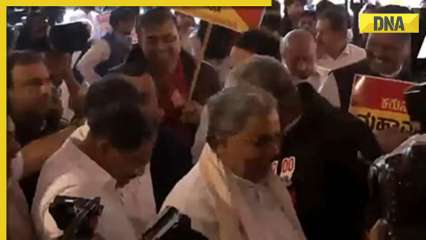
Meanwhile, the Bharatiya Janata Party Karnataka MPs are holding simultaneous protests in front of the Gandhi statue in Parliament over the alleged misuse of funds by the Siddaramaiah government.
‘ED officials didn’t conduct searches, sat in living room of Delhi CM Kejriwal’s PA’s house’: AAP minister Atishi

The ‘panchnama’ document showed that the ED team took with it just two Gmail account downloads and three family phones from Kumar’s house, Atishi claimed.
‘Person who does good work never gets respect’: Nitin Gadkari
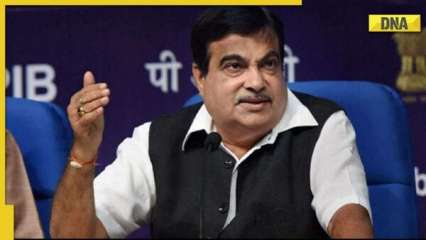
Gadkari said politicians come and go but it is the work they have done for the people of their respective constituencies that eventually matters and brings them respect.
ED raids multiple locations linked to ex-Uttarakhand Minister Harak Singh Rawat

During Harak Singh Rawat’s tenure as the state forest minister, Rawat and some of his departmental officers came under serious allegations related to their involvement in illegal tree cutting.