

Gyanvapi mosque case: What is ‘Vyas ji ka Tahkhana’?

What is the ‘Vyas ji ka tahkhana’? Know about the Hindu worship chamber in Kashi’s Gyanvapi mosque.
‘Rahul Gandhi’s car window pane smashed due to…’: Congress clarifies after security lapse charge in Malda

Earlier today, state Congress president Adhir Ranjan Chowdhury had claimed that the car was allegedly ‘pelted with stones’ by unidentified individuals during Bharat Jodo Nyay Yatra in Malda.
North Carolina changes same-day voter registration rules after former process ruled unconstitutional

North Carolina election officials are trying to fine-tune the way the state handles same-day voter registration as Republican legislators seek to make it easier to toss out ballots and critics argue they’re making it too hard for voters to access the polls. On Tuesday, lawyers for state election officials unveiled amended rules for verifying the addresses of people who register to vote and cast a ballot on the same day. The changes came in response to a court ruling that said people need a formal way to appeal being removed from the voter rolls if election officials send them a single piece of mail that comes back as undeliverable. The State Board of Elections sent county election offices an updated memorandum about how to conduct same-day registration and submitted it to federal court. North Carolina offers the option to simultaneously register to vote and immediately cast a ballot during a 17-day period before a primary or general election. WISCONSIN JUDGE ORDERS ELECTIONS OFFICIALS TO QUICKLY IMPLEMENT EXPANDED ABSENTEE BALLOT CRITERIA The state’s primaries are March 5, with the early voting period that includes same-day registration starting Feb. 15. In October, the Republican-controlled General Assembly passed a wide-ranging voting law that in part told officials to remove a same-day registrant’s ballot from the count if just one mailed notice to the person’s address is returned as undeliverable. The previous law required counties to send two mailers, and disqualify ballots if both pieces of mail came back as undeliverable. A ruling in a previous lawsuit discouraged local election boards from challenging such votes before the final count. The Democratic party and voter advocacy groups sued to block the 2023 law after the General Assembly enacted it over Democratic Gov. Roy Cooper’s veto. U.S. District Judge Thomas Schroeder last week ruled that it was likely unconstitutional to toss out someone’s ballot without alerting them to the problem and giving the person another chance to verify their address. Schroeder cited the potential of U.S. Postal Service delays and data-entry errors by election officials that could result in a registrant being disenfranchised by mistake. Schroeder wrote Jan. 21 that his preliminary injunction would remain in force until due process concerns are addressed. It wasn’t immediately clear Tuesday whether the updated rules would satisfy the judge. Over 100,000 new registrants have sought same-day registration in North Carolina during each of the last two presidential general elections, and about 2,150 new same-day registration applicants failed the address verification in the November 2020 election. Slight adjustments in the same-day rules could affect this fall’s elections for president, governor and other statewide positions, which in recent cycles have been very close. The latest guidance from state elections Executive Director Karen Brinson Bell, dated Monday, lays out how counties should handle same-day registration. It would apply when an address verification card is returned as undeliverable no later than two days before a county’s final ballot count. Election workers should first examine whether addresses on the card and the registration applications match. Otherwise, applicants should be contacted by mail, email and phone to give them the opportunity to submit a new identification document or to appeal in person to the county elections board on the day of the final count.
VA Democrats reject GOP Gov. Youngkin’s nominations for parole board, vision impaired board
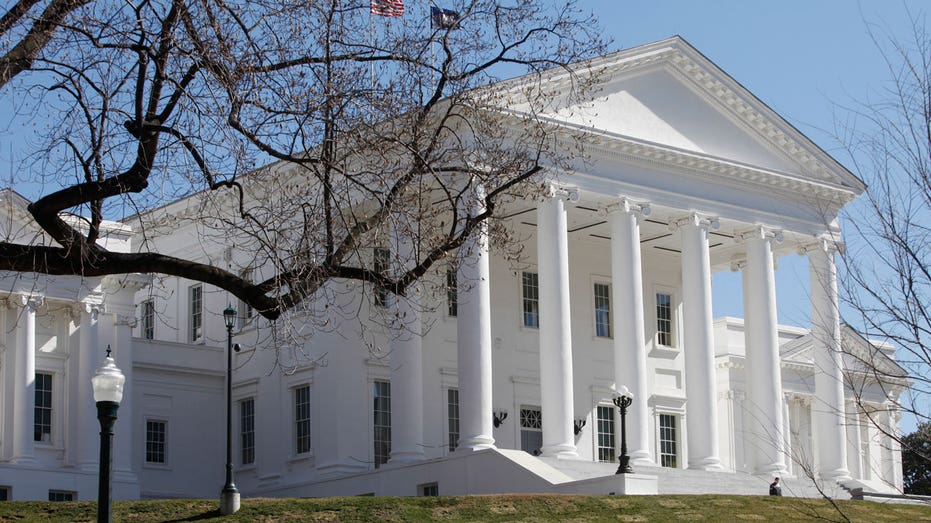
A Democrat-controlled committee in the Virginia Senate voted Tuesday against approving Republican Gov. Glenn Youngkin’s pick to lead the state’s parole board, Patricia West. Without offering an explanation, the Privileges and Elections Committee voted to remove West’s name from a resolution containing a long list of appointees requiring General Assembly approval, the Richmond Times-Dispatch and TV station WRIC reported. The resolution now moves to the full Senate, where Democrats have a narrow majority, and an attempt could be made to restore West to the list of appointees. NORTHERN VIRGINIA COULD GET CASINO AS BILL TO ALLOW FAIRFAX COUNTY REFERENDUM ADVANCES Youngkin announced West’s appointment to the job in September, after tapping former parole board chair Chadwick Dotson to become director of the Virginia Department of Corrections. West, who had previously served as a judge on the State Corporation Commission, also held high-level jobs in GOP Gov. George Allen’s administration and worked under former Republican Attorney General Ken Cuccinelli. When West was elected to the State Corporation Commission in 2019, Democrats raised concerns about some of her rhetoric, including social media posts, according to news accounts from the time. The Associated Press left a phone message seeking comment from West at the office of the parole board, which makes decisions about whether to grant, deny or revoke parole to inmates. Youngkin’s press office did not immediately respond to a request for comment. The same committee also voted to reject Youngkin’s appointment of Garren Shipley, communications director for House Republican Leader Todd Gilbert, to serve on the Board for the Blind and Vision Impaired. The panel cited “caucus concerns,” the Times-Dispatch reported. Shipley sought out a vacancy on the board because of his family’s experience helping his younger brother navigate a rare eye disorder that left him functionally blind at birth, he said in an interview. Shipley recalled his parents struggling to find resources for his brother, who is now an attorney in Tennessee, and said the board exists in part to aid Virginia families who are similarly situated. “I just wanted to help, and it seemed like a place where I could do it,” he said.
Kentucky bill would downgrade college IDs as voter identification

College-issued student ID cards won’t carry the same weight as a form of photo identification at polling places if a bill that advanced Tuesday in Kentucky’s legislature becomes law. The Senate voted to revise the state’s voter identification law by removing those student IDs from the list of primary documents to verify a voter’s identity. The bill — which would still allow those student IDs as a secondary form of identification — won Senate passage on a 27-7 vote and heads to the House. Republicans have supermajorities in both chambers. KENTUCKY SENATE REVIEWS BILL AIMED AT IMPROVING STUDENT TRANSPORTATION Republican Secretary of State Michael Adams, a key supporter of the state’s 2020 voter ID law, has expressed opposition to the new legislation. Supporters of the bill insist that the change would be no impediment to students’ ability to vote. Students have other forms of primary documents, such as a driver’s license, to present at polling places, they said. If the bill becomes law, college ID cards could be used as a secondary form of identification enabling them to cast a ballot after attesting to their identity and eligibility to vote, supporters said. “Anybody in college can read that affidavit and sign it and vote,” Republican Sen. Gex Williams said. “So there is absolutely, positively no impediment to voting with a student ID as a secondary ID.” Republican Sen. Adrienne Southworth, the bill’s lead sponsor, said it makes a needed change to tighten the list of primary documents, which enable Kentuckians to “show it, no questions asked” at polling places. “We need to be more careful about what we just have listed out there as approved without question,” Southworth said in an interview afterward. “It’s our job to make the election system as good as possible.” Adams — whose mantra while in office has been to make it easier to vote and harder to cheat — has raised concerns about the bill’s potential impact on the voter ID law enacted in 2020. Adams has said the voter ID law was carefully crafted to try to ensure success against any court challenges. “Secretary Adams is concerned that if this bill becomes law it could put the current photo ID law in jeopardy,” his spokeswoman, Michon Lindstrom, said in a statement Tuesday. Senators opposing the bill said the Bluegrass State’s election system is working well and expressed concerns about what impact the change would have on voter participation among college students. “We are sending the wrong signal to our young people,” said Sen. Gerald Neal, the top-ranking Democrat in the Senate. Kentucky has avoided the pitched fights over election rules that have erupted elsewhere in the country. During that time, Kentucky successfully expanded voting and avoided claims of significant voter irregularity, Democratic Sen. Karen Berg said Tuesday. In 2021, Democratic Gov. Andy Beshear signed GOP-passed legislation allowing three days of no-excuse, early in-person voting before Election Day. The new bill would make another change to Kentucky’s election law by no longer allowing credit or debit cards to be used as a secondary document to prove a voter’s identity.
Chinese hackers preparing to ‘wreak havoc’ on American citizens, communities, FBI director warns

FBI Director Christopher Wray is set to warn lawmakers on Capitol Hill Wednesday that Chinese hackers are preparing to “wreak havoc and cause real-world harm to American citizens and communities.” Wray and other government officials are set to testify in front of the House Select Committee at 11 a.m. for a hearing titled “The Chinese Community Party Cyber Threat to the American Homeland and National Security.” “There has been far too little public focus on the fact that People’s Republic of China hackers are targeting our critical infrastructure — our water treatment plants, our electrical grid, our oil and natural gas pipelines, our transportation systems. And the risk that poses to every American requires our attention – now,” Wray is expected to tell lawmakers in an excerpt from his remarks. “China’s hackers are positioning on American infrastructure in preparation to wreak havoc and cause real-world harm to American citizens and communities, if or when China decides the time has come to strike,” he will add. NEW GROUP LAUNCHES TO COMBAT CHINESE COMMUNIST PARTY INFLUENCE ACROSS US Wray is also expected to say that “today, and literally every day” Chinese hackers are “actively attacking our economic security, engaging in wholesale theft of our innovation, and our personal and corporate data.” “And they don’t just hit our security and economy. They target our freedoms, reaching inside our borders, across America, to silence, coerce, and threaten our citizens and residents,” Wray will add in his testimony. CHINESE HACKERS OUTNUMBER FBI CYBER PERSONNEL ‘BY AT LEAST 50 TO 1,’ WRAY TESTIFIES Wray previously testified in April last year that FBI agents are outnumbered by “at least 50 to 1” when attempting to address the threat China poses to critical infrastructure through its cyber hacking practices, and said Beijing has stolen more personal and corporate data from the U.S. than any other nation. “They’ve got a bigger hacking program than every other major nation combined and have stolen more of our personal and corporate data than all other nations – big or small combined,” he said during a House Appropriations Committee hearing at the time. “To give you a sense of what we’re up against, if each one of the FBI’s cyber agents and intel analysts focused exclusively on the China threat – on nothing but China – Chinese hackers would still outnumber FBI cyber personnel by at least 50 to 1,” Wray testified. Fox News’ David Spunt and Brooke Singman contributed to this report.
Wisconsin judge orders elections officials to quickly implement expanded absentee ballot criteria

A Wisconsin judge on Tuesday ordered the state elections commission to implement his ruling allowing election clerks to accept absentee ballots that have partial witness addresses, a decision that is expected to expand the number of ballots that will be counted in the battleground state. Each of the last two presidential elections in Wisconsin was decided by fewer than 23,000 votes. Polls show another razor-tight race this year between President Joe Biden and former President Donald Trump. Ever since Trump’s defeat in Wisconsin in 2020, Republicans have been fighting in court to tighten the rules to limit how many absentee ballots can be accepted. WISCONSIN REPUBLICANS WOULD MAINTAIN MAJORITY IN PROPOSED LEGISLATIVE MAPS, BUT WITH REDUCED DOMINANCE State law requires absentee ballots to be submitted with a witness’ signature and address on the outside envelope that contains the ballot. Three separate lawsuits were filed related to those rules. Dane County Judge Ryan Nilsestuen earlier this month ruled, in two cases brought by liberals, that a ballot can still be accepted even if a witness address omits municipalities and ZIP codes, or simply say “same” or “ditto” if the witness lives with the voter. The Republican Legislature fought to have the case dismissed. Nilsestuen on Tuesday ordered the elections commission to approve guidance no later than Feb. 9 that would direct clerks on what ballots can be accepted. Nilsestuen stressed that he wanted to move quickly given the upcoming Feb. 20 primary for local elections. Wisconsin’s presidential primary and spring general election is April 2. The Republican-dominated Legislature’s attorney, Kevin LeRoy, said he planned to ask for the ruling to be put on hold pending an appeal. The judge scheduled a Friday hearing on that. The case is expected to go to the Wisconsin Supreme Court. But first, the state elections commission will likely vote Feb. 8 on approving guidance for Wisconsin’s more than 1,800 local clerks in line with the judge’s order. The local clerks are the ones who run elections and receive the absentee ballots that don’t always have all of the witness address information. “We’ll try to turn it around as fast possible,” Thomas Bellavia said. “WEC wants this system to work.” The elections commission published guidance in 2016 saying that a witness address “contain at a minimum, a street number, street name and municipality,” but that clerks could fill in missing address information, known as ballot curing. The practice was unchallenged until after Trump’s narrow loss in 2020 when he tried to have more than 220,000 absentee ballots tossed out in an unsuccessful attempt to overturn his defeat. Among those he wanted to not count were about 5,500 absentee ballots where clerks filled in missing information on the witness’ address. The Wisconsin Supreme Court ruling in December 2020 rejecting Trump’s lawsuit noted that state law wasn’t clear on what constitutes an address for witnesses. A Waukesha County judge sided with Republicans in 2022 and ruled that election clerks can’t fill in missing address information on absentee ballot envelopes. The elections commission withdrew its guidance following that ruling. However, the judge did not say in that order what constitutes an address. That led to the filing of a pair of related lawsuits in Dane County, which argued that because there was no longer any state guidance, and the Waukesha County ruling didn’t say what counts as a complete address, clerks didn’t know what to do. The lawsuits were filed by Rise Inc., a liberal group that mobilizes young voters, and the League of Women Voters of Wisconsin. The judge on Tuesday spelled out four ways a witness address could be accepted with some missing information. WISCONSIN GOP TO PROPOSE TAX CUTS FOR FAMILIES EARNING UP TO $200K He said that a witness address can be accepted if it includes the street number, street name and municipality, but neither a state name nor a ZIP code or with everything except a municipality and state name. It would also be acceptable if the witness includes the same street number and street name as the voter, but no other address information is provided. And it would also be allowed if the witness indicates their address is the same as the voter’s by saying “same,” “same address,” “same as voter,” “same as above,” “see above,” “ditto,” or by using quotation marks or an arrow or line pointing to the other address. The Legislative Audit Bureau in 2021 reviewed nearly 15,000 absentee ballot envelopes from the 2020 election across 29 municipalities and found that 1,022, or about 7%, were missing parts of witness addresses. Only 15 ballots, or 0.1%, had no witness address. Auditors found that clerks had corrected addresses on 66 envelopes, or 0.4% of the sample.
Lagos ban on styrofoam and plastics brings applause and concern

From trash-strewn pavements to street vendors packing meals in polystyrene containers, plastic waste is a constant menace in the urban landscape of Lagos, Nigeria’s economic capital and the continent’s most populous city. That image could soon change if the local Lagos State government manages to implement its recent ambitious ban on the use of polystyrene and single-use plastics. The announcement of the ban on styrofoam boxes and single-use plastics, “with immediate effect”, by Tokunbo Wahab, the state’s commissioner for environment, took many Lagosians by surprise, especially those who earn a living in the informal sector. “Styrofoam boxes are cheaper than reusable plastic ones,” said Cecilia Mathew, 20, who sells dishes of rice, meat and garri – or cassava flour – on the streets of the popular district of Obalende in Lagos. “It does not make sense to put food inside poly bag [plastic bag],” said another food vendor, Funmilayo Oresanya, 43. For environmentalists, the Lagos State move was a welcome one that could not only cut down on waste but also reduce carbon emissions. But other critics questioned the feasibility of an immediate ban on such commonly used products, especially for businesses. “It’s too sudden,” said Kehinde Bakare, 61, a polystyrene box seller. “There are people that are using it as a means of living so what will they be doing? How about the production people?” she said, asking that they be offered “substitutes”. Nigerian fast-food chain Food Concepts, known for its popular restaurants Chicken Republic, PieXpress, and The Chopbox, “applauded” the measure, saying in a statement it was “beginning its transition” to end polystyrene boxes and encouraging its customers “to come with their own containers”. Bakare Kehinde, a retired principal, holds various types of plastic plates in her store in Lagos. [Benson Ibeabuchi/AFP] Action plan Folawemi Umunna, co-founder of the NGO Initiative for Climate and Ecological Protection, said the decision to eliminate non-biodegradable materials was positive if Lagos State properly manages its action plan. On his X account, Wahab published a video on Tuesday showing health workers carrying out checks in the city. In 2019, Nigerian MPs passed a law banning plastic bags but it hit a dead end because it did not complete its legislative process. Other African countries have also attempted to ban plastic bags with mixed success. But in Lagos, a megacity of more than 20 million inhabitants, the issue of waste management is key as rubbish regularly blocks sewers and evacuation routes, particularly during the rainy season, causing floods and encouraging the proliferation of mosquitoes, vectors of malaria, in stagnant water. Nigeria is Africa’s second-largest importer of plastics, according to the German Heinrich-Boell Foundation, representing 17 percent of the total plastic consumption on the continent, and more than 130,000 tonnes of plastic ends up in Nigerian waters each year. If nothing is changed, imports and consumption of plastics will exceed 40 million tonnes by 2030, it warned in a 2020 report. Lagos State Waste Management Authority (LAWMA) staff clean up waste from the roadside in Lagos. [Benson Ibeabuchi/AFP] ‘Socio-economic consequences’ Plastic microparticles are ingested by animals and can be found in human beings, said Temitope Olawunmi Sogbanmu, environmental toxicologist at the University of Lagos, pointing to the “non-degradable” nature of these materials. But if the ban on polystyrene and single-use plastic is “good news” for climate and sustainability, Sogbanmu says she still worries about “the socio-economic consequences” of this measure on “those whose livelihood depends on this value chain”. Climate benefits may be offset by the impact on vendors of food and water in plastic bags as well as waste collectors who are part of the informal economy in a country which is already undergoing an economic crisis with a tripling of fuel prices since President Bola Ahmed Tinubu came to power in May. The annual inflation rate stood at almost 29 percent in December. “There will be more people impoverished and it will become even harder for people to get the basic things,” said Sogbanmu, who recommends the implementation of “strategic interventions” especially for the poor. Environmental activist Oluwaseyi Moejho said the Lagos government took a bold step, but agreed that state officials must ask people what they want and how it can support them. “There was once a Nigeria without plastic, and we survived it. It is very much possible,” she said. “I understand the convenience of plastics, it’s quite blinding, but convenience at the cost of our lives and future is too expensive.” Adblock test (Why?)
Thousands of protesting farmers have France’s government in a bind

Convoys of tractors have edged closer to Paris, Lyon and other locations in France as thousands of protesting farmers have appeared to ignore warnings of police intervention if they cross red lines laid down by the government. Farmers unions, unimpressed by concessions offered by President Emmanuel Macron’s government, encouraged their members on Wednesday to fight on for improved pay, less bureaucracy and protection from foreign competition. “I’m so proud of you,” Serge Bousquet-Cassagne, the head of the farmers association in the southwestern Lot-et-Garonne department, told protesters headed for the wholesale Rungis market south of Paris, a key food distribution platform for the capital. “You are fighting this battle because if we don’t fight, we die,” he said. The government has warned farmers to stay away from Rungis and large cities. Interior Minister Gerald Darmanin, who has ordered police so far to tread lightly, said police stood ready to defend strategic spots. “They can’t attack police. They can’t enter Rungis. They can’t enter the Paris airports or the centre of Paris,” Darmanin told the France 2 broadcaster. “But let me tell you again that if they try, we will be there.” Despite the warning, a convoy of tractors that started in the southwest resumed its drive towards Rungis early on Wednesday after spending the night at farms along the way. Police units with armoured vehicles have been deployed along the A6 motorway leading to the food market in anticipation of its arrival. The government has scrambled to offer concessions with Prime Minister Gabriel Attal telling parliament on Tuesday that it was ready to resolve the crisis as he praised the agriculture sector as “our force and our pride”. But farmers said the promises, including assurances of higher payouts under the European Union’s Common Agricultural Policy, did not go far enough. “Several of these measures will take three or four years to be implemented,” said Johanna Trau, a grain and cattle farmer in Ebersheim in eastern France. “I’ll believe it when I see it.” Darmanin said there were 10,000 protesting farmers on French highways on Wednesday, blocking 100 spots on major roads. In addition to moving on Paris, the convoys were also trying to encircle Lyon, France’s third-biggest city. In Toulouse in the southwest, protesting farmers tried to blockade the local wholesale food market but were removed by police. The uproar by farmers has been widening across Europe with Spanish farmers saying on Tuesday that they would join protests by their French, German, Polish, Romanian, Belgian and Italian counterparts. Adblock test (Why?)
Ukraine war critic submits bid to challenge Putin for Russia’s presidency

Putin win seen as forgone conclusion, but Boris Nadezhdin’s opposition to Russia’s war in Ukraine has won him significant support. Boris Nadezhdin, a prominent critic of the Kremlin, has submitted the documents needed to register as a candidate for Russia’s presidential elections in March. The 60-year-old local councillor, who has promised to end Russia’s war in Ukraine, said on Wednesday that he had collected more than 100,000 signatures of support across 40 regions and submitted them and other documents to the Central Election Commission (CEC), which is technically enough to challenge President Vladimir Putin. Election officials will next check the authenticity of the signatures submitted by Nadezhdin and other potential candidates and announce next month who will join Putin on the ballot for the March 15-17 elections. The electoral body has in the past uncovered what it claimed were irregularities in signatures or documents collected by some candidates and disqualified them. Putin, who will be running as an independent rather than as the candidate of the ruling United Russia party, needs 300,000 signatures but has already collected more than 3.5 million, according to his supporters. In December, the 71-year-old incumbent announced his decision to seek to extend his rule. He is almost certain to win a fifth term as president, extending his 24-year leadership of Russia, including eight years as prime minister. Nadezhdin, who has criticised the invasion of Ukraine in February 2022 as a “fatal mistake”, was born in Soviet-ruled Uzbekistan to a Jewish mother who was a music teacher and a physicist father. He has spent the last 30 years in Russian politics, working as a councillor in the town of Dolgoprudny outside Moscow. He will be standing as a candidate for the Civic Initiative party. He shot to fame with his calls to end the war, bringing out crowds of Russians across the country eager to add their signatures to his bid to get on the ballot. After a series of heating outages across Russia during an unusually cold winter, Nadezhdin said earlier this month that the country would be able to afford to spend more on its citizens if it was not pouring so much money into the military. He described the war as “catastrophic” in an interview with the AFP news agency, and said he wanted to “free political prisoners” in Russia. “This is my pride,” he said of the signatures collected, as he thanked his supporters in a statement posted on his official Telegram account. “The work of thousands of people going without sleep over many days. The result of the queues you stood in, in the cold, is in the boxes. It will be very difficult for the CEC and the authorities to say: ‘I didn’t notice the elephant in the room’!” He also posted a video from the CEC’s headquarters showing papers containing the signatures piled up on tables ready to be checked by officials, describing which region each stack had come from. Nadezhdin’s bid raises the question of just how far the Kremlin would let him go, at a time when speaking out against the conflict is politically fraught, often landing critics in prison. Putin has not allowed real electoral opposition in his 24-year rule, with rivals such as opposition leader Alexei Navalny behind bars. Navalny’s wife Yuliya signed her name in support of Nadezhdin in a symbolic photo posted by the jailed critic’s ally. Adblock test (Why?)