

India’s Vibrant Startup Ecosystem Takes Center Stage at Pioneering Silicon 24 Hackathon

Silicon 24 is India’s first fully remote hackathon focused on catalyzing artificial intelligence solutions.
In the Panhandle, a conservative vision for higher education takes root at West Texas A&M

University president Walter Wendler’s plan to promote “Panhandle values” has conservatives cheering. But he’s not without critics.
West Texas A&M turned to leading conservatives to build out institute for “Panhandle values”

Emails obtained by The Texas Tribune suggest the new center is more closely aligned with influential conservative actors than publicly discussed.
New Jersey Democrats seeking to cover out-of-pocket abortion costs

New Jersey Gov. Phil Murphy and the state’s Legislature are pushing efforts to cover out-of-pocket costs for women who decide to have an abortion. The Garden State is one of several Democrat-led states attempting to make it easier for women to get an abortion as Republican-led states look to restrict access to the procedure following the Supreme Court’s overturning of Roe v. Wade in 2022. Ten states, including New Jersey, require health insurers to cover abortion services, but it is the only one of those states that allows out-of-pocket costs, according to nonprofit KFF, which researches health care issues. Murphy, a Democrat, called for an end to these out-of-pocket costs in his annual address earlier this month. SURROGATE MOM REFUSES ABORTION DESPITE PARENTS’ DEMANDS OVER COVID-19 CONCERNS Supporters of the effort argue that even women with insurance coverage might not reach their deductible, which can vary, but often exceeds $1,000. The cost of an abortion depends on several factors, including whether it is medication-induced or surgical. A medication-induced abortion typically costs between $600 to $800 and a surgical procedure could cost up to $2,000, according to Planned Parenthood. “We don’t want those having to make the decision between paying for groceries or having the care that they need,” Planned Parenthood Action of New Jersey executive Kaitlyn Wojtowicz said. The governor’s push for the legislation comes after Democrats expanded their majority in the Legislature and during a presidential election year in which the party hopes the issue of abortion will propel their candidates across the country to victory in November. Democrats in New Jersey have looked to expand abortion services in the state and attempted to weaken the impact of the Supreme Court’s decision to overturn Roe v. Wade. FIRST LADY JILL BIDEN INVITES TEXAS WOMAN WHO SOUGHT ILLEGAL ABORTION TO STATE OF THE UNION ADDRESS New Jersey has already enshrined abortion rights in law, increased funding for abortion services and required regulated health insurance plans to cover the procedure. “New Jersey will always be a safe haven for reproductive freedom. Period,” Murphy recently told state lawmakers. “I am asking you to join me in doing more to protect reproductive rights.” The leaders of both legislative chambers support abortion access, but it is unclear how much it would cost to pass the law, how the measure would be funded and whether it could cause insurance premiums to increase. For example, California eliminated insurance charges, such as co-payments and deductibles, in 2022 and the measure was expected to increase insurance premiums. New Jersey Senate Majority Leader Teresa Ruiz spoke about expanding access to abortion and said it is expected to come in the form of a broader budget discussion. “My daughter, who is 7, has less body autonomy in this country than my mother has had in her lifetime,” Ruiz said. Legislative Republicans are skeptical of the governor’s proposal. Assembly Minority Leader John DiMaio said his party is focused on “pocketbook issues” that impact all residents in the state and state Sen. Declan O’Scanlon called the issue a “red herring” since state law already protects abortion access. The Associated Press contributed to this report.
Taking Modi on: Can a crumbling opposition alliance beat India’s PM?

New Delhi, India — Over the weekend, a popular joke on Indian social media featured Nitish Kumar, the 72-year-old nine-time chief minister of the east Indian state of Bihar. Kumar’s Janata Dal (United) party, or just JD(U), had been a part of the INDIA opposition bloc – a group of more than two dozen political outfits that hopes to take on the Prime Minister Narendra Modi-led Bharatiya Janata Party (BJP) in national elections between March and May. But on Sunday, he broke away and instead joined hands with the National Democratic Alliance (NDA), a coalition of parties led by the BJP. He resigned as chief minister, then was sworn in again, this time with his new partners — all within hours. The joke (when translated) read: “Nitish Kumar is the only chief minister, who while being chief minister, resigns as chief minister so that he can remain chief minister.” The BJP and its allies might well be laughing. Two months before nearly a billion Indians vote to elect their next government, Kumar’s exit from the INDIA alliance serves as a blow to the opposition’s chances of challenging Modi, who is aiming for a third term as prime minister. It also reveals deeper fissures in the opposition alliance. Also last week, Mamata Banerjee, the chief minister of the neighbouring state of West Bengal and leader of the Trinamool Congress (TMC) party, pulled out of the alliance, which is led by India’s principal opposition party, the Congress. Apart from the Congress, the alliance primarily consists of regional, state-specific parties. Both Banerjee and Kumar cited rifts with the Congress for their exit from the alliance. The main bone of contention: who gets to contest how many of the 543 parliamentary seats in the country. Congress vs regional parties The INDIA bloc is hoping to leverage India’s first-past-the-post electoral system by fielding one joint opposition candidate against the BJP and NDA in all parliamentary constituencies. Such a move, opposition parties argue, would ensure that the anti-BJP votes are consolidated and not divided among various opposition players. But agreeing on consensus candidates is easier said than done. “The charges all the regional parties are making is that Congress is trying to put a lot of pressure on them and demanding a larger number of seats than they should get,” Sanjay Kumar, political analyst and psephologist, told Al Jazeera. That assertion was corroborated by KC Tyagi, general secretary of JD(U). Speaking to Al Jazeera, he said the Congress was keen on occupying political space but did not want to cede space to regional parties. “In the states where Congress is strong, they are not parting with even one seat. And then in the states where regional parties are strong, they want a disproportionate number of seats,” said Tyagi. “It’s not just us but all constituents of the alliance were uncomfortable with them.” Similarly, TMC’s Banerjee, while announcing her decision to break away from the alliance, cited a failure in seat-sharing talks with the Congress as one of the reasons for going into the polls solo. What has also irked the TMC and the JD(U) is that Rahul Gandhi, a Congress parliamentarian and scion of the Gandhi family that has headed the party for decades, has embarked on a journey from the east to the west of the country, without adequately consulting them. The journey is called the Bharat Jodo Nyay Yatra, which loosely translates into Uniting India through Justice March, a sequel to Gandhi’s Bharat Jodo Yatra last year where he walked more than 4,000km (2,485 miles) from the south to the north of India. Both Banerjee and Nitish Kumar said they were not asked about the route of the yatra that goes through the states they rule. The JD(U) further said that instead of a Congress programme – which only builds Gandhi’s image – the party should have organised a nationwide programme under the INDIA banner. The constituents of the alliance also accuse the Congress of delaying seat-sharing talks. Over the last year, the Congress won provincial elections in the crucial southern state of Karnataka and in the hilly northern state of Himachal Pradesh. While this provided the party (and India’s opposition) with some momentum against Modi, losses in the three crucial north Indian states of Madhya Pradesh, Chhattisgarh and Rajasthan in December came as a blow for the Congress. Banerjee and Kumar have said the Congress postponed seat-sharing talks in the hope of winning these three states where it was in a one-on-one contest with the BJP. A win in these states would have put the Congress in a better bargaining position in the alliance. INDIA vs INDIA The alliance also faces a challenge in states like Punjab and Kerala, where INDIA partners are the main rivals and the BJP has a negligible presence. In Punjab, the Aam Aadmi Party (AAP), an INDIA constituent, is the governing party and the Congress is the main opposition party. The AAP also runs the government in the national capital territory of Delhi. Similarly, in Kerala, the Left Front rules the state, while the Congress is in opposition. While Banerjee and Kumar were making their exits last week, the AAP chief minister of Punjab, Bhagwant Mann, announced that his party will go solo in the state and will not ally with the Congress. Officially, however, the AAP says that while seat negotiations in Punjab are a work in progress, it has reached a preliminary understanding with the Congress in a few other states, including Delhi. “We have had two meetings with the Congress which were attended by their senior leaders. We had a very constructive dialogue with them and had discussions on some of the states,” Saurabh Bharadwaj, an AAP spokesperson and legislator in Delhi, told Al Jazeera. “We’ll soon close the discussion.” “With respect to Punjab, our state unit is not very keen to have an alliance. But we have not taken our final call yet”, he added. Negotiating the interests of the state units with
Israel’s war on Gaza: List of key events, day 115

EXPLAINER Iran denies involvement in drone attack that killed US troops and Israel continues to hamper delivery of aid to Gaza. Here’s how things stand on Monday, January 29, 2024: Latest developments Three United States troops were killed and dozens others injured in a drone strike on Sunday near a US military base close to the Jordan-Syria border. The Islamic Resistance in Iraq, an umbrella organisation of Iran-backed armed groups, has claimed responsibility. Only eight planned United Nations missions to northern Gaza have successfully gone ahead since the beginning of January. Some 29 aid convoys were denied permission by Israeli authorities, while other deliveries were impeded by “excessive delays”, the UN’s humanitarian agency in the occupied Palestinian territories said on Sunday. Complaints of anti-Muslim and anti-Palestinian discrimination and hate in the US rose by about 180 percent in the first three months of Israel’s war on Gaza, the Council on American-Islamic Relations (CAIR) said on Monday. Hundreds of members of the Israeli settler community gathered for a convention in Jerusalem on Sunday calling for Israel to rebuild settlements in Gaza. The so-called “Return to Gaza” conference called for the “voluntary migration” of Palestinians from the enclave. Palestine’s Ministry of Foreign Affairs condemned the Jerusalem convention, which was also attended by 11 ministers of Israel’s new right-wing coalition government and 15 Knesset members, according to Palestinian news agency Wafa. Human impact and fighting The Palestine Red Crescent Society said on Sunday it has buried three people in the courtyard of the al-Amal Hospital in Khan Younis in southern Gaza as Israeli forces besiege the area. Israeli forces shot and killed a man in the town of al-Yamoun, west of Jenin in the occupied West Bank, early on Monday, according to Al Jazeera Arabic. Israel’s war against Hamas could last “10 years, or even an entire generation”, Benny Gantz, a senior member of Netanyahu’s government, was quoted as saying by The Times of Israel citing an interview with Channel12. About 200 people, many of them journalists, took part in a vigil in Cape Town on Sunday evening to express solidarity with Palestinian journalists and remember media workers killed in Gaza since October 7, reported South African news outlet GroundUp. Diplomacy On Monday, Iran denied any involvement in the drone strike that killed three US soldiers near the Jordan-Syria border. During an event to honour Israeli soldiers killed in Gaza on Sunday, Israeli President Isaac Herzog accused the International Court of Justice of twisting his words in its interim ruling ordering Israel to take measures to prevent genocide in Gaza. Japan announced on Sunday that it will suspend additional funding to the UN Relief and Works Agency for Palestinian refugees (UNRWA) while it awaits the outcome of the agency’s investigation into allegations that several of its staff participated in Hamas’s October 7 attacks in Israel. Tokyo’s decision follows similar funding pauses by at least 10 Western countries, including Australia, Canada, Germany, the United Kingdom and the US. Jordan, Turkey, the World Health Organization (WHO) and Amnesty International have called on countries to reinstate funds for UNRWA. Adblock test (Why?)
Iranian FM in Pakistan to mend ties following mutual air strikes

Tehran and Islamabad have moved to de-escalate amid high concern that the Gaza war could spill out across region. Iran’s foreign minister arrived in Pakistan as the two countries seek to calm tensions, which have risen amid the conflict in Gaza. Hossein Amirabdollahian landed in Islamabad before dawn on Monday for “in-depth talks” with Pakistani counterpart, Jalil Abbas Jilani, Pakistan’s Ministry of Foreign Affairs said. Tehran and Islamabad are seeking to calm relations after carrying out tit-for-tat air strikes on each other’s territories earlier this month. The attacks, which each country claimed targeted terrorists in border regions and killed at least 11 people, came as Israel’s bombardment of Gaza escalated tension across the region. However, the elevated threat of a full-blown conflict appeared to send Islamabad and Tehran scrambling to pull back and rebuild diplomatic relations. The two ministers insisted following their meeting that close relations between Pakistan and Iran are an important source of stability for the region, and resolved to expand political and security cooperation. Both spoke of respect for one another’s sovereignty and territorial integrity. The pair agreed to confront the “menace of terrorism” together, especially in the mountainous region on their shared border, which was the location of both air strikes. They also pledged to lift the regions economically. Iran’s Amirabdollahian added that “terrorists” in the border areas are supported by third countries. He did not offer any details on the claim. Western countries accuse Tehran of supporting several groups that they designate as terrorist. Iran’s foreign minister is also set to meet Pakistan’s caretaker Prime Minister Anwaar-ul-Haq Kakar during his visit. Amirabdollahian said that Iran’s President Ebrahim Raisi will visit Pakistan soon, adding that a date was yet be determined. Tit-for-tat Iran and Pakistan have long been wary of armed groups in their borderlands, and it is thought that internal political pressures, as well as the spillover of Israel’s war with Hamas in Gaza, helped push them over the edge. Tension reached a nadir on January 17, when Iran struck a target in Pakistan’s southwestern Balochistan province. Tehran said it was a hideout for anti-Iran armed group Jaish al-Adl (the Army of Justice). Pakistan said two children were killed and three others were injured. Islamabad, in retaliation, recalled its ambassador from Tehran. Two days later it launched an air strike against what it alleges were hideouts of armed groups in Iran’s Sistan-Baluchestan province. Pakistan said it targeted Baloch groups with separatist aims, in an attack that killed at least nine people. The attacks sent concern spiking regarding a regional escalation of the Gaza war. Iran and Pakistan, however, quickly made a joint decision to de-escalate tensions and resume diplomatic links, with their respective ambassadors returning to their posts and Amirabdollahian’s visit arranged. During his trip, the Iranian official will also discuss Saturday’s killing of nine Pakistani labourers by gunmen in Iran’s Sistan-Baluchestan province, which Islamabad called “horrifying and despicable”. The families of the victims rallied on Sunday to demand their bodies be brought home. Pakistan has said that arrangements are being made with Iran’s help. Adblock test (Why?)
‘Parents should avoid running commentary which creates pressure on students’: PM Modi at ‘Pariksha Pe Charcha’ 2024

The Prime Minister made these remarks during an interaction with students at the seventh edition of ‘Pariksha Pe Charcha’, a programme where he attempts to create a stress-free atmosphere for youngsters who are preparing to give their exams.
Rajya Sabha elections for 56 seats in 15 states to be held on February 27; check list of states
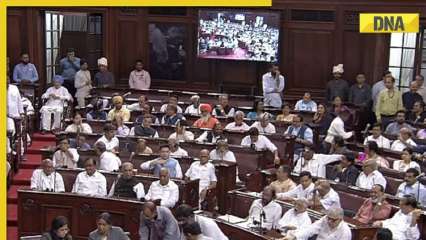
As per Election Commission’s letter, nominations will start from February 8. The last date for nomination for Rajya Sabha elections is February 15.
NSA purchases Americans’ internet browsing data without warrants, senator’s documents show

The National Security Agency has been accused of buying Americans’ internet browsing information from commercial data brokers without warrants, according to documents released by Sen. Ron Wyden, D-Ore. In a letter to Wyden, NSA director Paul Nakasone provided newly unclassified documents revealing that the agency buys Americans’ data, including information about the websites they visit and the apps they use. The letter, dated Dec. 11, was made public on Thursday. Wyden, a privacy and internet freedom advocate who sits on the Senate Intelligence Committee, called on U.S. intelligence officials to end unlawful use of Americans’ personal data without their knowledge and consent. “The U.S. government should not be funding and legitimizing a shady industry whose flagrant violations of Americans’ privacy are not just unethical, but illegal,” Wyden wrote to Director of National Intelligence Avril Haines on Thursday. A SECRET PHONE SURVEILLANCE PROGRAM IS SPYING ON MILLIONS OF AMERICANS The senator had blocked the appointment of incoming NSA Director Timothy Haugh until the agency responded to his questions about collecting Americans’ internet and location data. Wyden said in a news release that he pushed for nearly three years to publicly release information showing the NSA is purchasing Americans’ internet records. “Such records can identify Americans who are seeking help from a suicide hotline or a hotline for survivors of sexual assault or domestic abuse,” he wrote in his letter to Haines. Nakasone confirmed the purchases, saying in his letter to Wyden that the data collected “may include information associated with electronic devices being used outside – and, in certain cases, inside – the United States.” DEM LAUNCHES CAMPAIGN TIKTOK ACCOUNT AFTER SUGGESTING THE PLATFORM ‘MAY BE’ A NATIONAL SECURITY THREAT The NSA attempted to defend the purchases by arguing that the information has significant value for national security and cybersecurity missions, and is used sparingly. “At all stages, NSA takes steps to minimize the collection of U.S. person information, to include application of technical filters,” a spokesperson for the agency said. Obtaining these records of Americans’ browsing data violates U.S. Federal Trade Commission standards, Wyden said to Haines. An FTC order earlier this month prohibited Virginia-based data broker Outlogic, formerly known as X-Mode Social, from selling sensitive location data that helps track a person’s location. “Until recently, the data broker industry and the intelligence community’s purchase of data from these shady companies has existed in a legal gray area, which was in large part due to the secrecy surrounding the practice,” Wyden wrote. “App developers and advertising companies did not meaningfully disclose to users their sale and sharing of personal data with data brokers nor seek to obtain informed consent.” CLICK HERE TO GET THE FOX NEWS APP Wyden requested in his letter to Haines that the U.S. intelligence community build an inventory of all the personal data of Americans that the NSA has, and purge any of the data that does not comply with the FTC’s standards. “Should IC elements have a specific need to retain the data, such need, and a description of any retained data, be conveyed to Congress and, to the greatest extent possible, to the American public,” Wyden wrote. Reuters contributed to this report.