

Georgia Republican House speaker proposes additional child income tax cut
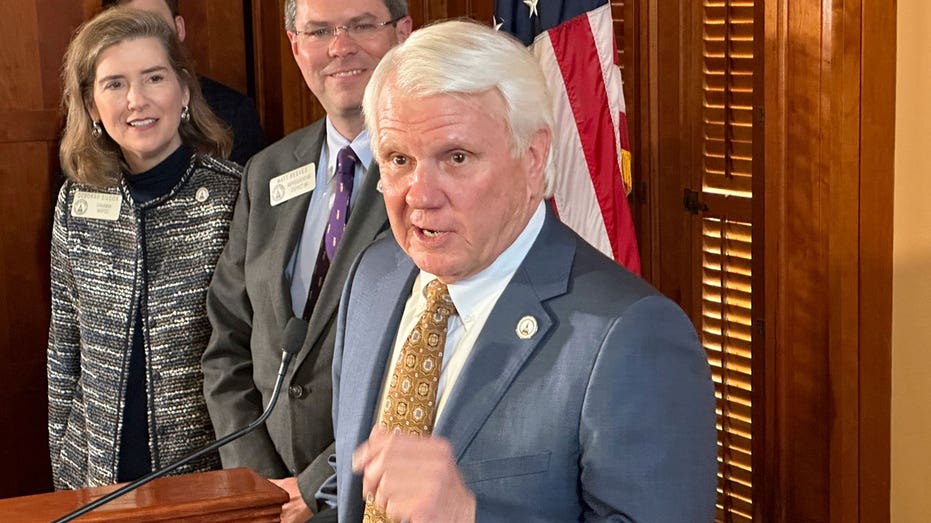
Georgia House Republicans are proposing an additional tax cut for parents. House Speaker Jon Burns on Wednesday said his GOP caucus will back a plan to raise the amount that parents can deduct per child from their yearly state income taxes to $4,000 from the current $3,000. With Georgia’s income tax rate currently at 5.49%, that works out to as much as $55 more per child, or about $150 million statewide. “While rising child care costs are here with us every day, we’re hoping this extra $1,000 deduction per child will help alleviate some of those costs for the parents,” Burns, of Newington, told reporters at a news conference. ATTEMPT BY GEORGIA ELECTIONS BOARD TO INVESTIGATE SECRETARY OF STATE SPARKS LEGAL DEBATE The new tax cut proposal comes as Burns and the other 235 representatives and senators face reelection later this year. The speaker also reiterated his earlier proposal to increase the state homestead exemption from $2,000 to $4,000. That amount could save homeowners nearly $100 million statewide, according to projections. Senators have countered with a plan that would cap the rate at which assessed property values could rise for tax purposes, which could limit future property tax increases. Voters statewide would have to approve the increased exemption in a November referendum if the measure passes. Burns is also backing a plan announced by Republican Gov. Brian Kemp in December to speed up an already-planned cut in the state income tax rate. As of Jan. 1, Georgia has a flat income tax rate of 5.49%, passed under a 2022 law that transitioned away from a series of income brackets that topped out at 5.75%. The income tax rate is supposed to drop 0.1% a year until reaching 4.99%, if state revenues hold up. The plan announced in December would retroactively drop the rate to 5.39% as of Jan. 1. The total change is projected to cost the state $1.1 billion in foregone revenue, including an extra $300 million for the cut from 5.49% to 5.39%. Burns also unveiled a plan to move all of Georgia’s unallocated surplus cash into its rainy day account, a bill also being pushed by Kemp. Georgia had $10.7 billion in unallocated surplus at the end of the last budget year, in addition to a rainy day fund filled to the legal limit of $5.4 billion, or 15% of the prior year’s tax revenue. Burns said the move would “allow the state to save responsibly, build our reserves, and provide more taxpayer relief to Georgia families both in the short term and the long term when our financial situation may not be as strong.” Garrison Douglas, a spokesperson for Kemp, said in a statement that by designating the money as savings “we are keeping to our commitment to the smart fiscal management that allows us to responsibly address future needs and priorities.” It’s unclear what the practical effect of putting all the surplus cash into the rainy day fund would be. Lawmakers can only spend up to the amount Kemp allows, whether from the rainy day fund, the unallocated surplus, or regular revenue. However, it could reduce political pressure to spend the unallocated surplus, a move Kemp has mostly resisted before allocating $2 billion of it for spending in his current budget proposal. Democrats have attacked the surplus, saying the state is piling up cash while ignoring critical needs. “We’re starting this year with a $16 billion surplus, $11 billion in unallocated funds,” Democratic Sen. Nabilah Islam Parkes of Lawrenceville said at a news conference last week. “This isn’t Monopoly money. This is hard-earned tax dollars that should be reinvested in improving the life of every Georgian.”
From $1 to Success: Experts Rated Forex Brokers With No Minimum Deposit

The Traders Union guide will assist in choosing the right broker without a minimum deposit.
Haley projects optimism despite wave of top South Carolina pols siding with Trump in her home state
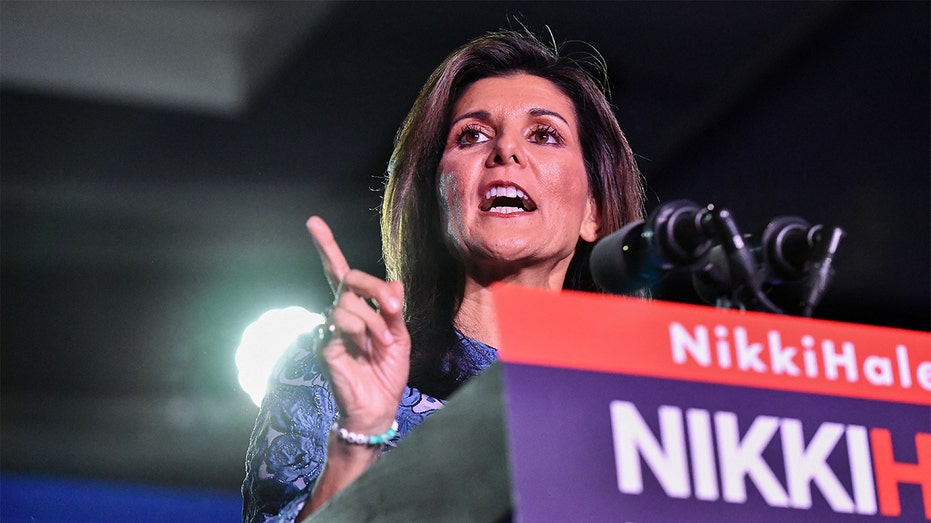
Nikki Haley projected optimism as the former South Carolina governor began campaigning in her home state Thursday. Nevertheless, Haley appears to have few allies in the upper echelon of the South Carolina GOP and the Republican Party, with both of her state’s senators endorsing Trump and RNC head Ronna McDaniel all but declaring Trump the victor in the 2024 primary. Rep. Nancy Mace, R-S.C., also congratulated Haley on a well-run campaign but endorsed Trump earlier this week. “South Carolina is Trump country and he is crushing it right now,” Mace told Fox News on Wednesday. “I want to say that Nikki Haley ran a great race. She made it deep into the playoffs, but the playoffs are now over and it’s time to start the Superbowl. We have got to take on Joe Biden right now if we’re going to take our country back.” DONALD TRUMP DOMINATES AGAIN, AS FORMER PRESIDENT EASILY BEATS NIKKI HALEY IN NEW HAMPSHIRE GOP PRIMARY Joining Mace in endorsing Trump are fellow GOP South Carolina Reps. Russell Fry, Joe Wilson, William Timmons and Jeff Duncan. South Carolina Gov. Henry McMaster has also endorsed the former president. TRUMP ‘HONORED’ BY NEW HAMPSHIRE WIN, SAYS REPUBLICAN PARTY IS ‘VERY UNITED’ Haley vowed to keep pressing forward during a campaign appearance in the state on Wednesday, however. “This is a choice between more of the same, or going forward. More of the same is not just Joe Biden, more of the same is Joe Biden and Donald Trump,” she told supporters in Charleston. “So we are not going to sit there and just give up.” Haley’s optimism has visibly enraged Trump, who attacked her as “delusional” on social media Wednesday night. He then took the issue onto the stage at a campaign event. “Who the hell was the impostor that went up on the stage before and, like, claimed a victory?” Trump said, referencing Haley’s reaction to her New Hampshire performance. While Haley lost the state 43% to 54%, she insisted the result was a major step in the right direction.
Michigan Gov. Whitmer advocates for education investments ahead of key term
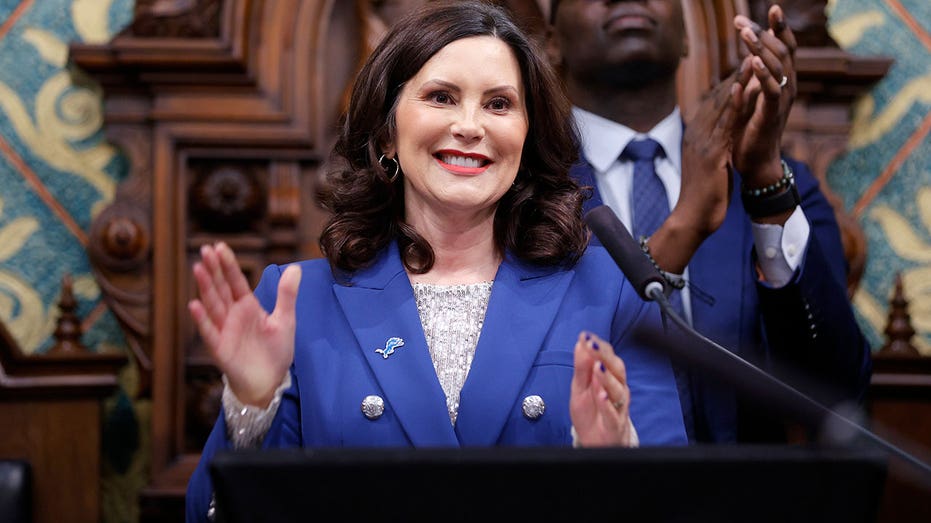
Michigan Gov. Gretchen Whitmer called for increased investments in education through initiatives such as free community college for all high school graduates and free preschool for 4-year-olds in a State of the State speech Wednesday night focused on cutting costs for residents. The second-term Democratic governor’s speech preceded a legislative session that may require lawmakers on both sides of the aisle to work together for the first time since Democrats took full control of the state government last January. The state House will be tied 54-54 until at least April, when special elections for two open seats are set to be held. Whitmer’s speech highlighted an investment of over a billion dollars to build or rehabilitate housing in the state, saying they planned to “build, baby, build.” She also called on lawmakers to pass a tax credit of up to $5,000 for caregiving expenses including counseling, transportation, and nursing or respite services. DEMOCRATIC GOV. GRETCHEN WHITMER WARNS BIDEN COULD FACE PROTESTERS IN MICHIGAN WHEN HE VISITS “We will build a Michigan where if you get knocked down, you have the support you need to get back up. Lowering costs on the biggest items in your budget, improving education so your kids can thrive, ensuring you can ‘make it’ no matter who you are or what you’ve been through,” said Whitmer. The governor also used the opportunity to highlight policies implemented by Democrats in 2023, their first year with full control of the agenda in over four decades. Democrats worked to repeal a union-restricting law known as “right-to-work,” overhaul gun laws in the state and further protect both LGBTQ+ and abortion rights. Much of work highlighted in Whitmer’s speech aligned with the key issues that national Democrats are stressing ahead of the November election. Voter sentiment toward the party’s agenda in Michigan could prove vital for an upcoming presidential election that could hinge on the battleground state’s results. “I cannot solve global inflation alone. No one person can — not even the President,” said Whitmer, who is the co-chair of President Joe Biden’s reelection campaign. The governor underscored Biden’s policies multiple times in her speech, saying they had driven a “manufacturing renaissance” in Michigan. Republican leaders criticized Whitmer for what they said has been five years without substantive improvements in education, infrastructure or economic development in the state. Rep. Matt Hall, the House minority leader, described Whitmer’s agenda as “short–term ideas that are designed to generate a lot of press and attention toward perhaps national political ambitions.” “What we saw in the speech tonight is really a long list of promises that only have short-term funding,” Senate Minority Leader Aric Nesbitt told reporters after the speech. Hall and Nesbitt each pointed to a report released in December by a bipartisan commission focused on growing the state’s population that was formed last year by Whitmer. According to the report, Michigan ranks near the bottom of all states in population growth, median income and new housing. Whitmer has focused on addressing these issues through economic development. On Wednesday, she proposed the implementation of a research and development tax credit and an innovation fund to invest in high-growth startups. MICHIGAN GOV WHITMER SIGNS SWEEPING GREEN ENERGY BILL FORCING TRANSITION FROM FOSSIL FUELS Many of the proposals, including the free community college plan and Whitmer’s call for free pre-K for 4-year olds by the end of the year, will require funding in the upcoming state budget. It remains to be seen how soon, if at all, Whitmer’s initiatives will be brought before state lawmakers. Several key proposals that Whitmer called for last year, including paid family and medical leave, have yet to receive approval from lawmakers and remained absent from her speech Wednesday. The state House is set to remain deadlocked until special elections in April, and questions linger over each party’s appetite for bipartisanship. While the 2024 legislative session began on Jan. 10, few votes have occurred so far. Two Democratic representatives vacated their seats late last year after winning mayoral races, and special elections for the seats are slotted to take place on April 16. Democrats are expected to win both seats easily, which would allow them to push through their agenda beginning in late April.
‘Don’t need to sound poll bugle, people do it for me’: PM Modi in Bulandshahr

PM Modi also inaugurated multiple development projects worth Rs 19,100 crore in Bulandshahr, UP.
Why some Texas election leaders are scrambling to find more polling locations, machines and workers

The new law requires counties that allow residents to vote at any polling location to increase the number of locations.
Texas could swap land in Boca Chica State Park with SpaceX

The Texas Parks and Wildlife Commission is scheduled to vote in March on a deal that environmental advocates, the Esto’k Gna Tribal Nation of Texas and local officials oppose.
Burkina Faso army strikes killed dozens of civilians, says HRW

The army’s fight against rebels has been criticised as heavy-handed, with the HRW report being the latest instance of that criticism. International watchdog Human Rights Watch (HRW) on Thursday accused the Burkina Faso army of killing at least 60 civilians in drone strikes which the government said targeted armed groups. The deaths occurred in three military drone strikes since August, two at crowded markets and another at a funeral, the rights group said in a new report. Since becoming head of state after a 2022 coup, Captain Ibrahim Traore has focused on a strong security response in reclaiming swathes of territory controlled by armed groups affiliated with al-Qaeda and the ISIS (ISIL) group. But those efforts have often been criticised as heavy-handed, with the HRW report being the latest instance of that criticism. HRW said it interviewed dozens of witnesses between September and November 2023 and analysed photographs, videos and satellite images. “The Burkina Faso military used one of the most accurate weapons in its arsenal to attack large groups of people, causing the loss of numerous civilian lives in violation of the laws of war,” the New York-based group said in its report. The drone strikes “violated laws-of-war prohibitions against attacks that do not discriminate between civilians and military targets and were apparent war crimes,” it added. A series of drone attacks On August 3, Burkina’s government-run Radiodiffusion Television du Burkina (RTB) channel reported a “successful” air operation against a group of armed fighters in the northern town of Bouro. RTB showed a video of a guided munition striking dozens of people and animals in a glade. Locals told HRW that 28 men were killed and many wounded in a packed market. They added that the al-Qaeda-affiliated Group to Support Islam and Muslims (GSIM) controlled Bouro and surrounding areas. Three survivors said four motorbikes ridden by rebels, entered the market at the moment of the strike, when hundreds of civilians were present. On November 18, a military drone hit another crowded market, across the border in Mali, near the town of Boulkessi, according to the report. It said at least seven men were killed and at least five others injured. An RTB reporter described the target as a “logistics base” for rebel fighters. But a 69-year-old man, who lost two sons aged 20 and 40 in the strike, told HRW: “My sons had gone to the market to sell their products. They were traders, civilians, not fighters.” Three days later, in the northern Burkinabe town of Bidi, a drone strike reportedly hit a tent where around a hundred people had gathered for a funeral, killing 24 men and a boy. In its report, HRW says that residents are sometimes forced to collaborate with the rebels who control the areas. The rights group said in the report that the Burkina government should “urgently and impartially investigate these apparent war crimes, hold those responsible to account, and provide adequate support for the victims and their families”. Beyond the drone attacks, there have also been other instances of government forces acting with impunity in counterinsurgency operations. In April 2023, 136 people including women and infants in the northern village of Karma were killed by security personnel, as reported by the NGO the Collective against Impunity and Stigmatisation of Communities (CISC). Adblock test (Why?)
Victims of Rwandan genocide still being found 30 years on

With shovels and garden hoes, villagers stood this January digging where a house once stood in Rwanda to reveal a mass grave filled with bones – victims of the genocide still being found 30 years on. Around 100 volunteers, many wearing face masks and rubber gloves turn over the red soil in Ngoma village in the country’s south, with a sombre determination as a crowd watches on from a slope above. Skulls, teeth and other shards of bone are placed carefully into plastic bags while shoes and tattered clothing – possible clues to identify loved ones never found – are collected elsewhere. The remains of 119 people had been unearthed over three days, said Napthali Ahishakiye, president of the genocide survivors’ group Ibuka. Andre Kamana, deputy mayor of the wider Huye district in the country’s south, said there was no telling how many more might be found. “Every time they dig deeper, they find more layers of soil with remains,” he said grimly. Discoveries of mass graves are remarkably frequent even three decades after the 1994 slaughter instigated by the Hutu extremist regime in Rwanda at the time. The United Nations estimates that around 800,000 people, mostly from the Tutsi minority, were killed over 100 days in an ethnic pogrom that turned neighbours against each other in the tiny East African nation. Villagers and volunteers looking for human remains under the foundations of a house in Ngoma [Guillem Sartorio/AFP] ‘Family secret’ In Ngoma, a three-hour drive from the capital Kigali, roadblocks were erected and Tutsis dragged from their cars and murdered, said Goreth Uwonkunda, a 52-year-old who has lived her entire life in the village. “The history here is terrible… this is clearly one of the mass graves where they were dumped,” she told AFP. “The killers buried victims on top of others. We found big bones, some intact, even whole skulls.” The mass grave was discovered beneath a family home. Five of the family members have been arrested on suspicion of complicity in genocide and concealment of evidence. The investigation began last October when a whistleblower tipped off the authorities about the likelihood of a mass grave on the unremarkable rural property on a hillside off a main road. “It is suspected that those who lived in that house knew what was underneath them, and it was a family secret,” Ibuka’s Ahishakiye said. The appalling discovery has horrified those living near the graves all these years. “I knew the people who lived in this house, and I am quite shocked that they comfortably slept on top of bodies every night and were alright with it. It is shameful and shocking,” said Uwonkunda. The remains of 119 people have been found in Ngoma since January 21, 2024 [Guillem Sartorio/AFP] ‘Decent burial’ But such graves are still being found across the country with grim regularity, underscoring the sheer scale of the slaughter between April and July 1994. Last April, in the western district of Rusizi, 1,100 bodies were discovered in mass graves located on a plantation belonging to a Catholic parish. Three years earlier, in April 2020, a pit believed to contain as many as 30,000 bodies was exhumed near a dam in the east of the country. Six months later, 5,000 bodies were discovered in Gatsibo district. Ibuka says the remains of more than 100,000 genocide victims have been unearthed across Rwanda in the past five years alone. “We suspect that similar mass graves remain undiscovered across the country, because there are survivors looking for their loved ones, 30 years after the genocide,” said Ahishakiye. “The biggest challenge is that vital information about the location of these mass graves is held by people who took part in the killings, or relatives of the killers, and are adamant against revealing such information.” One still searching for answers is Celestin Kambanda, a 70-year-old farmer who has found none of the seven children he lost in the genocide. In Ngoma, he keeps vigil and waits for any sign among the scraps of cloth and bone being prised from the mud. “I came here to see if I could recognise any of my children, maybe from the clothing they wore when they disappeared,” he told AFP. “I would hope to give them a decent burial one day.” Adblock test (Why?)
Woman rescued from flood after 15 hours on overturned car

NewsFeed A helicopter crew rescued a woman in California who spent 15 hours on top of her car waiting for help, after it overturned as she tried to get through a flooded creek. Local officials said the woman was unharmed. Published On 25 Jan 202425 Jan 2024 Adblock test (Why?)