

Biden’s top outside group hauls in over $200M to aid uphill re-election fight

The primary outside group throwing its weight behind President Biden raked in over $200 million as he heads into the 2024 elections facing a difficult re-election battle. Future Forward, which the Biden team chose as the central outside organization to raise money to boost his prospects after its work in the 2020 elections, raised $208 million between its nonprofit and super PAC arms in 2023. The massive sums, which the group first shared with Politico, indicate Biden will benefit from a substantial amount of dark money from anonymous benefactors leading up to the 2024 elections. Future Forward’s nonprofit, which obscures its donors, has transferred tens of millions to its super PAC for electoral activity in recent years. UPENN, WHICH HOSTS BIDEN’S THINK TANK, SEES CHINESE DONATIONS SOAR, INCLUDING FROM CCP-LINKED SOURCES “The same Joe Biden who once said ‘dark money erodes public trust’ is now being propelled by millions in dark money,” Caitlin Sutherland, executive director of Americans for Public Trust, previously told Fox News Digital. “It’s this type of blatant political hypocrisy that the American people can’t stand.” Fox News Digital previously reported that a considerable amount of its cash was passed through a web of nonprofits overseen by the Arabella Advisors consulting firm, which manages a billion-dollar dark money network. These actions add another layer of secrecy that additionally conceals its original supporters. One of the dark money groups, the Impetus Fund, had flown entirely under the radar. The Impetus Fund sent most of its undisclosed cash – $55.8 million – to Future Forward USA Action during the last presidential cycle, according to tax documents. BIDEN HAS BEEN SECRETLY MEETING WITH DONORS TO EASE CONCERNS, INCLUDING HIS AGE AND ENERGY: REPORT Future Forward USA Action transferred $77 million to the Future Forward PAC between the 2020 election and June 2023, making up more than 40% of the $181 million the PAC raised during that time. Those donors are unknown. After disbursing $141 million on independent expenditures in the last presidential cycle, senior White House adviser Anita Dunn said Future Forward “really earned its place as the pre-eminent super PAC” to back Biden this time. “In 2020, when they really appeared from nowhere and started placing advertising, the Biden campaign was impressed by the effectiveness of the ads and the overall rigorous testing that had clearly gone into the entire project,” Dunn previously told The New York Times. Future Forward did not immediately respond to a Fox News Digital request for comment. Get the latest updates from the 2024 campaign trail, exclusive interviews and more at our Fox News Digital election hub.
Republican-led Kentucky House panel approves ‘three-strikes’ anti-crime bill
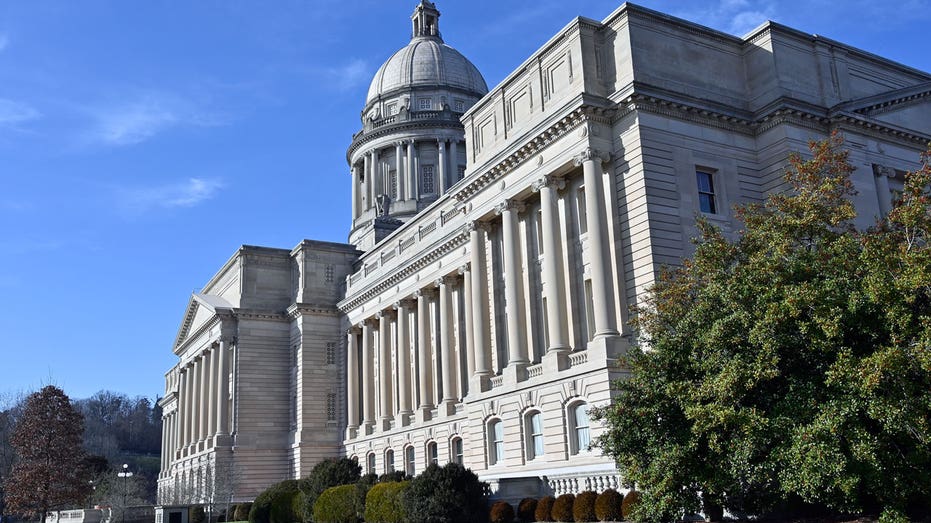
Sweeping legislation that would keep felons locked up after a third violent offense won approval Thursday from a Kentucky House committee that heard mixed reviews about its potential to combat crime. The measure has emerged as a top priority this year in the Republican-dominated House. The proposal cleared the House Judiciary Committee after a long and at times emotional hearing. Lawmakers heard heart-wrenching testimony from people who lost loved ones as a result of violent crimes. “With this bill, we are reasserting some basic and simple truths, and that is that criminals — not society — are accountable for their actions,” said Republican Rep. Jared Bauman, the bill’s lead sponsor. “And society has the right to protect itself from the criminal element.” KENTUCKY SENATE APPROVES PROPOSAL TO END ODD-YEAR ELECTIONS FOR STATE OFFICE The bill’s critics raised doubts about whether it would make a dent in crime. They said it fails to address the many complex issues that can lead to criminal activity. “It is not going to deter criminals who are going to do those crimes because we are not addressing any of these underlying reasons for those crimes in this bill,” said Democratic Rep. Nima Kulkarni. The measure advanced on a 13-5 committee vote and now heads to the full House. In a clear sign of the bill’s popularity, its cosponsors total slightly more than half of the chamber’s entire membership. The measure would head to the GOP-led Senate if it passes the full House. A key component of the bill is its three-strikes provision. People convicted of three violent felonies would face life in prison. The bill would increase penalties for several other crimes as well. Democratic Rep. Keturah Herron expressed doubts that the tougher provisions would make people safer. “No time in the state of Kentucky, or in our nation, have we been able to incarcerate ourselves out of any issue — ever,” Herron said. Bauman disagreed, saying that increasing incarceration of violent offenders would reduce crime. Republican Rep. Jason Nemes, another leading supporter of the bill, said it was unfair to claim that Kentucky is trying to “incarcerate ourselves out” of the crime problem. He noted that Kentucky has significantly increased the number of treatment beds for people struggling with addiction. “That is what we are about — recovery, helping folks who need to be recovered,” Nemes said. “But we’re also about people who commit violence on our people, putting them away for a long time. That’s what this bill is supposed to do.” The legislation also seeks to crack down on the prevalence of fentanyl — a powerful synthetic opioid seen as a key factor in the state’s high death toll from drug overdoses. The bill would toughen penalties for knowingly selling fentanyl or a fentanyl derivative that results in a fatal overdose. The measure also would create a standalone carjacking law and increase penalties for several crimes, ranging from attempted murder to fleeing or evading police. Other provisions aim to crack down on drive-by shootings and would offer both workers and business owners civil and criminal immunity in cases where they tried to prevent theft or protect themselves and their stores. It also would limit bail payments by charitable bail organizations.
Haley turns up the heat on Trump as she tries to close the gap in the New Hampshire primary
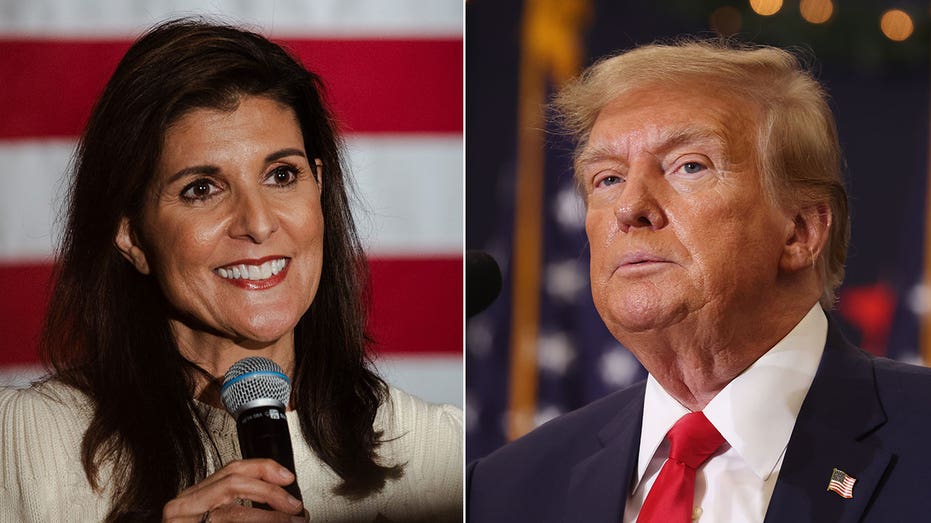
Nikki Haley, down by double digits to former President Trump in the latest surveys four days ahead of the New Hampshire GOP primary, is taking every chance she has to blast the GOP front-runner. “You look at Iowa. I mean President Trump won a state of three million people with 56,000 votes. We had a very low turnout in Iowa. We’re going to have a really good turnout in New Hampshire,” Haley told reporters at her first retail stop Friday morning as she pilloried Trump’s landslide victory in Monday’s Iowa caucuses. A day earlier at a stop in Hollis, New Hampshire, the former South Carolina governor, who served as U.N. ambassador in the Trump administration, blasted the former president for GOP losses at the ballot box in recent election cycles. “The reality is, who lost the House for us? Who lost the Senate? Who lost the White House?” Haley emphasized as she held a rare question and answer session with reporters on Thursday. “Donald Trump, Donald Trump, Donald Trump.” HALEY ARGUES DESANTIS IS ‘INVISIBLE’ – STRESSES ‘IT’S TRUMP WE’RE GOING AFTER’ Trump called Haley a “disaster” at a rally in Atkinson, New Hampshire, on Tuesday night. The next night, in Portsmouth, New Hampshire, Trump claimed that Haley will “never secure the border” and that she “wants to gut Medicare and Social Security.” Firing back during a campaign event in Rochester, New Hampshire, Haley criticized Trump for his past support for increasing the federal gas tax and raising the retirement age and accused him of lying about her own record. DESANTIS CAMPAIGNS IN NEW HAMPSHIRE, BUT MOST OF HIS STAFF DECAMPS IN SOUTH CAROLINA “He honestly thinks if he says something, it just becomes true,” she told the crowd. She told Fox News that Trump “knows we’re a threat” and is “throwing temper tantrums.” Additionally, Haley’s campaign posted a video stocked with past clips of Trump praising her. SFA Fund Inc., a super PAC aligned with Haley, is also targeting Trump with TV ads and mobile billboards, charging Trump as a liar and spotlighting the “chaos and drama” surrounding him. According to the media tracking firm AdImpact, the super PAC has shelled out over $6 million to run commercials in New Hampshire since the beginning of the year, making it the biggest spender in the state. Haley is also getting a big assist in taking on Trump from her top surrogate and adviser in the state, Republican Gov. Chris Sununu. Sununu, who endorsed Haley last month and who has joined her at each stop on the campaign trail, has long been a vocal GOP critic of the former president. Haley’s also blasting Trump on her social media page on X. After Trump falsely claimed this week that Democrats could vote on Tuesday in the New Hampshire Republican primary, she fired back. “Another reason we need to move on from Trump: too many lies. Democrats can’t vote in the NH primary. They haven’t been able to change their registration for months,” Haley posted. The Trump campaign, responding, pointed to Haley’s third place finish in Iowa, far behind Trump and narrowly behind Florida Gov. Ron DeSantis. “After her embarrassing third place finish in Iowa, Nikki Haley is getting desperate as she realizes using money from Democrat donors and trying to appeal to Democrat voters is no way to win a Republican primary,” Trump campaign spokesperson Karoline Leavitt argued in a comment to Fox News. Haley has repeatedly argued all week that it is a two-person race in New Hampshire, with DeSantis a distant third in the single digits in public opinion surveys. However, the big question is whether Haley’s increased attacks on Trump, and her hustling on the campaign trail, can help her close the gap with the former president. The latest Suffolk University tracking poll of likely Republican primary voters in New Hampshire, which was released early Friday morning, indicated Haley down by 17 points to the former president. Haley’s picking up the pace on the campaign trail in the closing days ahead of Tuesday”s primary, with five stops on Friday ahead of an evening rally. “This is it. Stop to stop. Person to person. Town to town. Small business to small business,” Sununu told Fox News, as he spoke in his hometown of Newfields. “This is it. This is how we’re successful in New Hampshire year after year.” And Haley emphasized “it’s touching every hand. It’s making sure we get out there…We’re going to hit every single place we can. This is about making sure people know they have a choice. This is our chance. Don’t complain about what happens in a general election if you don’t play in this primary.” And pointing to a warmer and favorable weather forecast for primary day, Haley said “I think we will have a good turnout. It looks like it’s going to be 40 degrees and sunny. That’s what we want to see. ..We’re going to have a really good turnout in New Hampshire. So we feel good about it.” Get the latest updates from the 2024 campaign trail, exclusive interviews and more at our Fox News Digital election hub.
House GOP heads for showdown after conservatives promise revenge for bipartisan spending deal
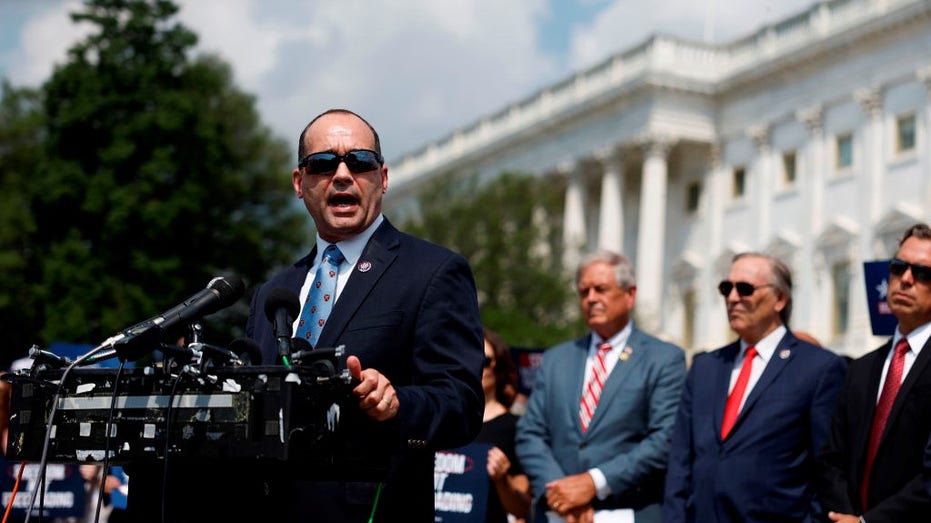
Conservative lawmakers are promising revenge against House GOP leaders and their rank-and-file colleagues after they were sidelined for a bipartisan deal to avoid a government shutdown this week. The House of Representatives passed a short-term government spending bill known as a continuing resolution (CR) on Thursday to extend last year’s federal funding through early March, in order to give congressional negotiators enough time to set priorities for fiscal year 2024. With dozens of Republicans having come out against another CR already and just a thin two-seat majority, House leaders bypassed a normally partisan procedural vote to bring the bill up under suspension of the rules, meaning it needed a two-thirds majority for passage. “Once again, we passed a significant piece of legislation that keeps in place, with predominately Democrat votes, policies that were ran against and campaigned against,” House Freedom Caucus Chairman Bob Good, R-Va., told Fox News Digital after the vote. HOUSE VOTES TO AVOID GOVERNMENT SHUTDOWN AFTER SPEAKER JOHNSON BUCKS GOP REBELS “If you don’t need our votes for the significant pieces of legislation that impact the country, that fund the government, and you’re going to pass those with Democrat votes on suspension, then you shouldn’t presume that you’ve got our votes for the meaningless messaging bills that are dead on arrival in the Senate.” Hours before the vote, Good made a last-ditch appeal to Speaker Mike Johnson, R-La., to put the bill through the House Rules Committee, so it could be attached to a border security bill – called H.R.2 – that’s backed by most Republicans but was called a nonstarter by Democrats. GOP REBELS ADMIT DEFEAT IN SHORT-TERM SPENDING FIGHT AS JOHNSON STICKS BY BIPARTISAN DEAL The standoff would’ve almost certainly led to a government shutdown. “If they don’t want to shut down the border, then it’s on them to shut down the government…the discussion is that if the speaker isn’t going to take some of those reasonable, conservative asks, then why are we going to continue this charade?” Freedom Caucus member Rep. Eric Burlison, R-Mo., said. “We need to discuss it as a whole, but the idea is…hold up bills until they decide that H.R.2 is the priority.” GOP hardliners have weaponized the normally sleepy procedural votes that most bills go through, known as rule votes, several times during the 118th Congress. Rule votes normally fall along partisan lines, with even lawmakers who object to the bill itself voting with their party to pass the rule. Prior to last year, one had not failed since 2002. But they’ve been used more recently as a vehicle for House Republicans among Johnson’s right flank to protest House leadership decisions, usually with rule votes linked to bills that toe the GOP party line. CONGRESSIONAL LEADERS STRIKE DEAL TO PUNT GOVERNMENT SHUTDOWN DEADLINES It’s prompted speculation over whether House GOP leaders intend to pass their fiscal 2024 spending bills under suspension of the rules, further sidelining their rebellious faction. “I hope he doesn’t. He doesn’t need to do that. I mean, his base is conservatives and Speaker Johnson is a conservative,” Freedom Caucus member Rep. Ralph Norman, R-S.C., said. “But I don’t like the suspension. I don’t like using Democrats to pass bills.” Asked whether he and other hardliners could stage more protest votes down the line in response, Norman said the Freedom Caucus would “discuss that.” “We urged Mike to put an amendment that ties H.R.2 minus e-Verify and let us vote on it,” Norman said. “And he didn’t want to do that.” Rep. Mary Miller, R-Ill., another Freedom Caucus member, refused to say whether she would sink rule votes in exchange for the CR’s package. When asked whether Johnson would face consequences, however, she said, “There’s always repercussions to everything we do. But the biggest thing to focus on is that the border is open. It is a disaster. It’s hard to come up with the adequate terms to describe how ruinous it is to our country, and to future generations. The impact is incalculable.” The new CR passed the House Thursday evening 314 to 108. It nearly split the GOP in half, with 107 voting for it and 106 against.
Christian Zionist cowboys: American and Israeli affinities laid bare

In early November, a photograph of four white men in cowboy hats at JFK airport was uploaded to social media with the caption, “These cowboys from Arkansas and Montana were at JFK today on their way to help out at the farms in Israel. They are not Jewish.” By the time the cowboys landed in Tel Aviv, a Jerusalem Post commentator declared, “they were already a social media sensation”. Indeed, since then they have netted thousands of likes and comments such as “God bless Israel! I will always stand with her” and “The Jewish people are so grateful to have friends.” Israeli and American media outlets have also celebrated the cowboys through interviews and updates about their work and time in Har Bracha, a Jewish settlement in “Judea and Samaria” – the term for the West Bank used by those who believe the land belongs to the Jewish people. Yet the cowboys are also a conduit to understanding a fundamental likeness between white American and Jewish Israeli society, namely their settler projects intent on the erasure of dehumanised “natives”. The men volunteer through the Christian Zionist organisation HaYovel, or “The Jubilee”; according to the organisation’s website, this biblical term “looks forward to a day of worldwide redemption and a fully restored land of Israel.” As Christian Zionists, the cowboys and their sponsors believe that four millennia ago, God promised the land to the Jewish people, who will rule it until the rapture and, ultimately, the second coming of Christ. In this scenario, Christians will be saved and ascend to heaven while those adhering to other religions will be sent to hell. While not all evangelical Christians in the United States (approximately a quarter of the population) hold these Christian Zionist convictions, polls show that a large majority believe that the modern state of Israel and the gathering of millions of Jewish people there are “fulfillments of Bible prophecy that show we are getting closer to the return of Jesus Christ”. Many Christian Zionists also believe in the “prosperity gospel,” which contends that blessing Israel results in personal and financial gain. These tenets compel Christian Zionists to support Israel’s settlements and other expansionist policies through donations, lobbying, and, as in the case of the cowboys, labour. For two decades, HaYovel has brought hundreds of volunteers each year to work in settlement agriculture. With many foreign workers fleeing since Hamas’s attack on October 7 as well as Palestinians barred from working in settlements and Jewish Israelis called up for military duty, more Christian Zionists like the cowboys are filling in. As one American worker told Israeli channel i24, “I can’t go into Gaza and fight, so I’m gonna help here on the farm.” The Christian volunteers also speak of themselves as “boots on the ground” during Israel’s time of need, invoking their labour as a military operation. This white, militaristic masculinity common among evangelicals was examined by scholar Kristin Du Mez in her 2020 book, Jesus and John Wayne. Du Mez explores 75 years of white evangelical history in the United States, tracing how evangelicals have replaced Jesus with an “idol of rugged masculinity and Christian nationalism,” including through such pop culture figures as Mel Gibson and John Wayne as well as politicians like George W Bush and Donald Trump, all of whom “assert white masculine power” and embody the evangelical values of patriarchy, authoritarian rule, belligerent foreign policy and fear of Islam. While Du Mez’s study doesn’t focus on Christian Zionism, she has noted the evangelical practice of supporting Israel. “[It’s a] kind of slippage into America as a new Israel,” she said in a 2021 interview. Here Du Mez ostensibly refers to the idea of early American colonists escaping religious persecution in England as the new Jews and America the new Israel, promised to the settlers by God. This conflation of America and Israel as God-instructed colonialism – one that depends on the replacement of savage natives with righteous settlers – is revealed in the Christian Zionist cowboys’ rhetoric. Media interviews with Montanan John Plocher in particular highlight the trope of good cowboys versus bad Indians and the dehumanisation of natives – tropes transposable on to Israeli Jews and Palestinians. In a December conversation with Israel Now News, Plocher was asked why he thinks the Jewish population in Israel is so excited about him and his fellow cowboys. “They’ve said that seeing the cowboys is like seeing the good guys,” Plocher responded. “You think of all the Westerns and John Wayne and all these people who stand up for the right thing and so it’s just an encouragement to them.” Despite the fact that American settlers murdered and terrorised Indigenous women, children, and other unarmed Native civilians and took the land for themselves, the narrative of good white cowboys versus bad Indians has appeared time and again in US popular culture. Scholar Michael Yellow Bird has examined this narrative “as part of the colonial cannon asserting white supremacy and Indigenous inferiority” and relates how in Western movies and television, “Not only did we spectacularly lose, but … we were also presented as screaming, grunting, unreasonable savages.” Though Zionists and Christian Zionists may declare that Jews are Indigenous to the land, it is Palestinians – made Indigenous through Israel’s process of settler colonialism – who are often depicted as barbaric and backward, as “beasts walking on two legs,” “little snakes,” and “human animals.” Similarly, in a November interview with Israel National News, Plocher compared Hamas and Palestinians more broadly with grizzly bears and declared the need for the land to be rid of them. He recounted that grizzlies are a problem in Montana and that the “original people” who came to Montana (meaning white settlers) eliminated them. The problem now, he continued, is that people want the grizzlies “everywhere”. “Let us do what we need to do to defend ourselves,” he said, meaning kill the grizzlies. “It’s the same with you guys, it’s Hamas … We understand you guys have
It’s high time for all those at Harvard to stand with Palestine
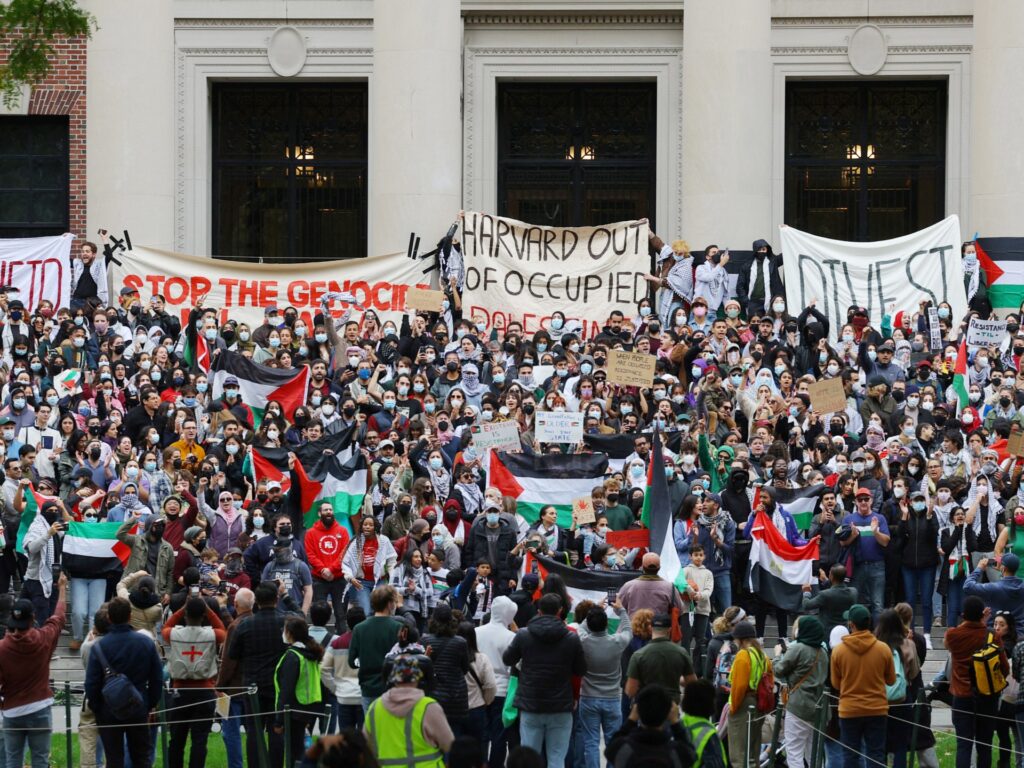
These days one of the most talked-about news stories in the United States is the resignation of Harvard University President Claudine Gay. As Harvard and its leadership are centred in the media, however, Palestinians continue to be killed by US-supplied bombs and buried under the rubble of their homes, schools, mosques and hospitals. While Harvard Yard is filled with speculation about the career of a millionaire academic, two million Palestinians are displaced by carpet bombing intended to ethnically cleanse Gaza. Amid the attempted distractions from an actualised genocide whose targets include families of students at Harvard, those of us in solidarity with Palestine remain subject to relentless attacks. Indeed, while hundreds of intellectuals at the university mobilised to sign a letter to the Harvard Corporation in support of Gay – the very president who spent weeks denouncing students protesting in solidarity with the victims of the ongoing Nakba – we are barely afforded minimal support. The letter, urging the Harvard Corporation “in the strongest possible terms to defend the independence of the university and to resist political pressures”, received ample attention from the national media. In the end, however, this effort by Harvard faculty not only failed to save Gay’s job but also did not translate into any meaningful support for those of us in solidarity with Palestine who refuse to cower. As Palestinians in Gaza and the rest of the occupied territories are subject to unfathomable conditions, relentless killing and irreversible destruction, at Harvard condemnation remains wrongfully assigned to students organising for justice in Palestine. Leading faculty appears ready to back only Gay, who, despite failing to recite the exact script demanded by Zionists, still classifies our activities in support of liberation as “abhorrent”. When solidarity is reserved for elite academics during an active genocide and there is only limited activity to demand Harvard end its complicity, or even just protect students standing with the oppressed, we have a problem. When a Trump endorsee’s rhetorical trap is left unchallenged and there is no rejection of the harmful premise that students calling for the end of an actual genocide are somehow calling for a hypothetical genocide, we have a problem. When some mobilise to preserve “free inquiry”, but avoid recognising the Palestine exception to free speech, we have a problem. For years, many have asked Harvard to disclose and divest from its material complicity in what has been widely recognised as an apartheid regime. In the past few months of censorship and particularly egregious threats to largely Muslim, Arab, Black, and brown students, we have been subject to attacks on campus. A student-compiled list of over 70 incidents include: a woman in hijab chased by someone wielding a knife; doxing via a billboard truck while targeted students face job losses, evictions, and academic sanctions; frivolous police reports against visibly Muslim students; and students being followed and harassed for wearing a keffiyeh (by the wife of a Harvard professor who signed the letter in support of Gay). During her limited tenure which held capacity for making various Zionist claims in public and private spheres, President Gay did not recognise a single one of these incidents; not even behind closed doors when rare opportunities for Muslims to express their hurt presented themselves. Over the fall semester, victims of anti-Palestinian and anti-Muslim racism found little support from the majority of faculty signatories on the letter to the Harvard Corporation. Only around 10 percent of the 764 signatories joined an open letter asking Gay to recognise the suffering of Palestinians and denounce the silencing of supporters of Palestinian liberation (which she has never done, not even in her post-resignation op-ed). Even the killing of over 100 family members of a single Palestinian student at Harvard Law School has not been enough to garner sympathy – let alone rage – from this institution. Recognising pervasive anti-Black racism, speaking out against the bigotry motivating Gay’s ousting – even if her administration perpetuated its own modes of injustice against marginalised communities – is necessary. Also necessary is recognising that following an earlier smear campaign by a billionaire mogul against a Black student protester and a Muslim security marshal, Gay would succumb to this hateful campaign and release an email to notify the public that these students are under investigation by local police and the FBI. While Gay is backed by hundreds of faculty in an attempt to save her elite position, Elom Tettey-Tamaklo was promptly robbed of his job as a residential assistant, with minimal outcry. The president of Harvard at the time even condemned the liberatory phrase “from the river to the sea” Palestine will be free, in communication to the entire Harvard community. While leading intellectuals attempted to rescue Gay under the claim of free speech, many caused disappointment by ignoring Harvard’s neglect of its students speaking for a free Palestine. Now, will these Harvard faculty sign on to support the crucial chapter of Faculty and Staff for Justice in Palestine? Focus ought to shift towards understanding why many stand by, as students showing solidarity with Palestine face smear campaigns ignored or supported by their universities, and others within these institutions mobilise only for a president who boasts about punishing these students. Some at Harvard shamefully rationalise away speaking against the Zionist genocidal campaign, refusing to use institutional privilege to pursue veritas in the most basic way. Even as the university attempts to restrict speech and censure voices for Palestine, hundreds of faculty, who happily signed an open letter in support of Gay, turn away from their students advocating for justice in Palestine. As Palestinians are slaughtered, many of us at Harvard, many at Harvard, through rhetoric and actions, support their plight “from the river to the sea”. Yet elite academics and headlines only notify us of a defence for a president who credulously opened herself up to a frivolous congressional hearing. As a grave injustice unfolds before our eyes, at the most basic level, Harvard – as one of the most influential institutions based
Israeli minister says only a deal can free captives as rifts split cabinet

Gadi Eizenkot’s comments come amid disagreement in the war cabinet about how to handle the war in Gaza. A deal will be needed to ensure captives still held in the Gaza Strip are released alive, Israeli war cabinet minister and former military chief Gadi Eizenkot says, adding that a lightning raid would be extremely unlikely to succeed. Eizenkot, whose youngest son was killed in fighting in Gaza last month, said the fate of the captives should take priority over other war aims, even if that means Israel missing out on an opportunity to take out the political header of Hamas. Asked if the captives could be released in a rescue mission similar to the 1976 operation in which Israeli commandos freed about 100 hostages in Entebbe, Uganda, he said it was unlikely to happen. “The hostages are scattered in such a way – even underground – that the likelihood [of such an operation] is extremely low,” Eizenkot told Israel’s Channel 12 programme Uvda late on Thursday. “We are still making efforts and looking for every opportunity, but the likelihood is low and to say that this is how it will happen is to sow an illusion.” Israel estimated that about 130 captives remain in Gaza and 27 have died in captivity. More than 100 captives seized during Hamas’s cross-border attack into southern Israel on October 7 were freed during a week-long November truce. “I think it is necessary to say boldly that it is impossible to bring the hostages back alive in the near future without a deal,” Eizenkot said in the interview. But he added that the broader war aims would “still be valid” after any temporary ceasefire. At least 24,762 people have been killed in Israel’s air, ground and sea offensive in Gaza. The revised death toll in Israel from the October 7 Hamas attacks stands at 1,139. Internal rifts Eisenkot’s comments were the latest sign of disagreement among Israel’s political and military leaders over the direction of the offensive in Gaza, now in its fourth month. Prime Minister Benjamin Netanyahu and Defence Minister Yoav Gallant have said the fighting will continue until Hamas is crushed and argued that only military action can win the captives’ release. Hamas seeks an end to the war before discussing releases and has demanded thousands of Palestinians imprisoned by Israel be released in exchange for those held captive in Gaza. Eisenkot is one of four members of the war cabinet along with Netanyahu, Gallant and former Defence Minister Benny Gantz. In his interview, he also said he had convinced officials in the group to hold off on any attack on Hezbollah in Lebanon in the days after the Hamas attacks, confirming that a preemptive strike was called off at the last minute during the early days of the war. He described himself as being among those arguing against such a strike in an October 11 cabinet meeting that left him hoarse from shouting. “I think our presence there prevented Israel from making a grave strategic mistake,” he said. Both Israel and Hezbollah have signalled they want to avoid war, but both said they are ready to fight if necessary. Eizenkot also dismissed suggestions that the military has delivered a decisive blow against Hamas. Gallant said Israeli forces have disabled the Hamas command structure in northern Gaza, from where significant numbers of soldiers were withdrawn this week, and that Israel’s focus is now on the southern half of the territory. But Hamas has continued to fight back across Gaza, even in the most devastated areas, and launched rockets into Israel. “We haven’t yet reached a strategic achievement, or rather only partially,” Eisenkot said. “We did not bring down Hamas.” Adblock test (Why?)
‘Stripped, hung upside down’: Kids allege abuse at Indore orphanage, facility sealed

FIR was registered against five women associated with the facility for allegedly ill-treating children in the name of punishment.
Hunter Biden’s ‘sugar brother’ goes scorched Earth on Comer, says he’s ‘confident’ Hunter will repay loans

Hunter Biden’s lawyer is hitting back at House Oversight Committee Chairman James Comer, R-Ky., accusing the top Republican of misleading about his closed-door deposition Thursday. Following the deposition of Hunter’s lawyer Kevin Morris — which is part of House Republicans’ sweeping probe into President Biden’s family and its past foreign business dealings — Comer released a statement expressing concern about the lawyer’s financial support for his own client. Comer claimed that Morris’ actions raised ethical concerns, noting the millions of dollars the lawyer loaned to Hunter. “Shortly after meeting Hunter Biden at a Joe Biden campaign event in 2019, Kevin Morris began paying Hunter Biden’s tax liability to insulate then-presidential candidate Joe Biden from political liability. Kevin Morris admitted he has ‘loaned’ the president’s son at least $5 million,” Comer said. “These ‘loans’ don’t have to be repaid until after the next presidential election and the ‘loans’ may ultimately be forgiven.” “Since Kevin Morris has kept President Biden’s son financially afloat, he’s had access to the Biden White House and has spoken to President Biden,” he added. “This follows a familiar pattern where Hunter Biden’s associates have access to Joe Biden himself. As we continue more interviews this month and the next, we will continue to follow the facts to understand the full scope of President Biden and his family’s corruption.” HUNTER BIDEN DEPOSITION SCHEDULED FOR NEXT MONTH AFTER RISK OF BEING HELD IN CONTEMPT OF CONGRESS Comer also released excerpts from the deposition showing Morris was introduced to Hunter Biden by Hollywood producer Lanette Philips at a Biden campaign event in the winter of 2019 in Los Angeles, California. According to Comer, Morris said he began loaning Hunter money which doesn’t have to be repaid until 2025 and even bought $1.5 million worth of the president’s son’s artwork to reduce the loan burden. However, in a statement obtained by Fox News Digital, Morris blasted Comer, alleging that he misconstrued his testimony. HUNTER BIDEN LAWYERS SAY THEY WILL ‘COMPLY FOR A HEARING OR DEPOSITION’ IF HOUSE PANELS ISSUE NEW SUBPOENA “When I first met Hunter, he was emerging from the lowest point in his life,” Morris said. “At this time, he had no income and his wife Melissa was five months pregnant. Although he was being harrassed by paparazzi, as well as people coming onto his property and threatening him, he had no security protection.” “I was concerned that Hunter did not have the level of support he needed,” he continued. “I stepped in and have done so ever since. I have worked hard to create a life that has allowed me to help my family and friends when they have needed it, and I did so with Hunter.” Morris added that, while he did loan Hunter money, the two consulted counsel on the transactions and that he is “confident” Hunter will repay him. In addition, Morris denied ever believing the president or his administration would give him anything in return for the loans, saying his “only goal” was to help a friend and that there is no prohibition against that. And in a separate letter to Comer, Morris’ lawyer Bryan Sullivan called for the committee to release the full transcript of his client’s deposition. HUNTER BIDEN PLEADS NOT GUILTY TO TAX CHARGES BROUGHT BY SPECIAL COUNSEL DAVID WEISS “When we started today’s interview of my client Mr. Kevin Morris, I specifically pointed out the practice of Republicans in making partial leaks of witness’ statements rather than releasing the actual transcript so the public would know the truth and not your often inaccurate spin and misstatements,” Sullivan wrote in the letter obtained by Fox News Digital. “I specifically asked that this not to be done with Mr. Morris’ transcript and, if such were done, that the entire transcript be released.” “Your staff as well as the staff of other committees responded that Mr. Morris would be treated fairly,” Sullivan said. “And, then you did not treat Mr. Morris fairly and engaged in your standard practice of partially and inaccurately leaking a witness’s statements. Not two hours after we left Mr. Morris’ transcribed interview, you issued a press statement with cherry‐picked, out of context and totally misleading descriptions of what Mr. Morris said.” “So much for the promise of your staff that Mr. Morris would be treated fairly.” An Oversight Committee spokesperson told Fox News Digital that the panel would soon release the full transcript and that it would confirm Comer’s account of the deposition. “The transcript will affirm Chairman Comer’s readout of the interview with Kevin Morris,” the spokesperson said Friday. “The Committee intends to release the transcript soon, but we do not have it from the court reporter at this time.” Fox News Digital reporter Brooke Singman contributed to this report.
Mississippi approves incentives for EV battery factory that promises 2,000 jobs
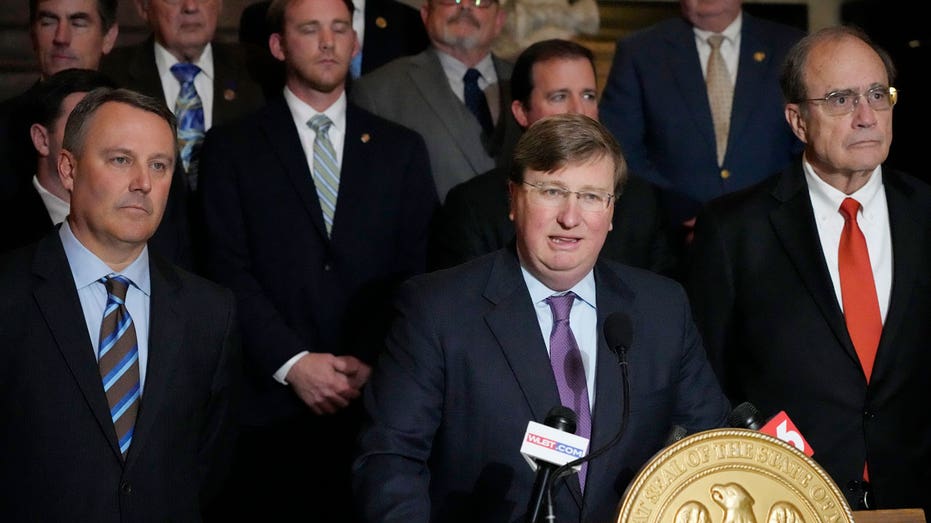
Mississippi lawmakers on Thursday gave broad, bipartisan approval to state incentives for a factory that will manufacture batteries for electric vehicles — a project that promises 2,000 jobs with an average salary of about $66,000. After legislators voted, Republican Gov. Tate Reeves named the four companies involved. Accelera by Cummins, Daimler Truck and PACCAR, which manufacture big trucks, will each own 30% of the project. A China-based lithium battery maker, EVE Energy Co., Ltd., will own 10%. The companies intend to invest about $1.9 billion for the plant in Marshall County, near the Tennessee state line, and it would be the second-largest corporate investment in Mississippi history, Reeves said. GOV. REEVES SWORN IN FOR SECOND TERM AFTER UNDERWHELMING ELECTION WIN IN DEEP-RED MISSISSIPPI “For far too many years, technology was developed in the United States, and that technology was taken to China and manufactured in China,” Reeves said during a news conference in the state Capitol. “The reality is, we need to bring jobs back to America.” U.S. manufacturing of EV batteries is accelerating as automakers transition to electric vehicles. The Inflation Reduction Act offers $7,500 in tax credits for consumers purchasing EVs, but only if the vehicles and batteries are assembled in North America and include minerals mined or processed domestically. The U.S. Treasury Department must approve plans for the plant in Mississippi, said Republican Rep. Trey Lamar of Senatobia, chairman of the state House Ways and Means Committee. “We are living in a global economy,” Lamar said during Thursday’s special legislative session. “The fact that we have companies that may be coming from outside of the United States to invest and provide jobs to Americans is a good thing.” The state incentive package amounts to about $365 million, which includes costs of site development at the Chickasaw Trails Industrial Park. The House rejected two proposals by Democratic Rep. Robert Johnson of Natchez — one that would have required the plant to hire 70% of its employees from Mississippi and one that would have required the plant to invest in other projects to benefit Marshall County. Even though Democrats voted for the incentives, the party’s legislative leaders criticized Republican leaders for ramming the deal through in a one-day special session. They also said the state has steered economic development projects only toward areas represented by Republicans. Reeves thanked Republican U.S. Sen. Roger Wicker for helping Mississippi win the project over other states. “Cutting the bureaucratic red tape was a huge challenge, but knowing it is going to change thousands of lives made the fight worth it,” Wicker said in a statement. “This project is an investment in our people and proof our state is worth investing in.” If the plant comes to fruition, it will add to a list of similar facilities materializing around the country. Ford is building EV battery plants in Kentucky and Tennessee, each through a joint venture with battery partner SK On, of South Korea. Georgia has offered lucrative tax incentives in an effort to become a Southern hub for EV manufacturing, and at a site near Savannah, Hyundai is building its first U.S. factory devoted solely to EV production. ExxonMobil announced in November that it would drill for lithium in southern Arkansas, with the oil giant expected to begin production of the critical material for electric vehicles by 2027.