

Democrat-backed report claims Pennsylvania owes districts $5B in education funding

A commission reviewing how Pennsylvania distributes money to public schools narrowly approved a report Thursday that suggests the state is underfunding districts by more than $5 billion and should begin immediately to close that gap. The vote on the report by the Basic Education Funding Commission was backed by Democrats and members of Democratic Gov. Josh Shapiro’s administration. Republicans and one Democrat on the commission opposed it, resulting in an 8-7 vote. A key recommendation in the report said the state should immediately begin to close a school funding gap of more than $5 billion, phasing in the increased aid over seven years. PENNSYLVANIA SCHOOLS PREPARED TO RETURN TO COURT IF STATE BUDGET FALLS SHORT ON FUNDING The report differs somewhat from what school districts that won a landmark court case want from the state. The districts’ lawyers proposed a $6.2 billion increase in state aid to be phased in over five years. A separate Republican report was defeated on party lines during the meeting in a Capitol hearing room. The Democrats’ report contains only recommendations and does not require Shapiro or Pennsylvania’s politically divided Legislature to act. But Democrats hope it at least provides a blueprint for this year’s budget, and for budgets every year after that, to respond to last year’s court decision that found Pennsylvania’s system of funding public schools violates the constitutional rights of students in poorer districts. “This is the end of the beginning,” commission co-chair Rep. Mike Sturla, D-Lancaster, said at the meeting. “There’s still a whole lot of work to do.” Teacher unions and lawyers for the districts that won last year’s court case cheered the Democrats’ report. House Minority Leader Bryan Cutler, R-Lancaster, criticized the report as containing a “simply spend more money” solution to fix inadequacies in Pennsylvania’s system of school funding. The Republican report said districts should define the instructional changes needed to boost student achievement and did not put a dollar figure on how much more, if anything, should be spent on K-12 education. Underfunded districts are more likely to have larger class sizes, less-qualified faculty and outdated buildings, textbooks, technology and curriculum, school officials say. Many underfunded districts are fast-growing, disproportionately poor or have student bodies that are heavily minority. The next step may arrive Feb. 6, when Shapiro must deliver his second annual budget proposal to lawmakers. Shapiro has sounded a note of caution about how the state will pay for billions in new school funding, and made no commitment Thursday to what exactly he will propose. Lawyers for the school districts that sued called $5 billion “transformational,” although less than they sought and rolled out on a slower timetable. Still, it means thousands more teachers, counselors and librarians in schools, said Dan Uverick-Acklesberg of the Public Interest Law Center, one of the nonprofit legal organizations that represented the districts in court. “And it also is a commitment to do what the commonwealth never does: which is actually come up with a figure, a reasonable, evidence-based figure for what every school district needs to educate their children,” Uverick-Acklesberg said. The commission was required by law to meet to provide recommendations to lawmakers on how to update a formula that is supposed to guide how roughly $8 billion in state aid is distributed to Pennsylvania’s 500 school districts. However, Republicans and Democrats on the commission disagreed over what recommendations the commission should provide in response to the court decision. PENNSYLVANIA POISED TO ALLOW LONGER SCHOOL DAYS, SHORTER WEEKS The Democrats’ report calculated a dollar target for what each school district should receive to provide a constitutionally adequate and equitable education to students. Current funding falls short by $5.4 billion, the report said, or about 18% of what districts spend. Of that amount, $5.1 billion is the state’s responsibility and $291 million is the responsibility of low-tax school districts, the report said. The recommendations also say the state should resume spending at least $300 million a year to support the upkeep of school facilities and send an additional $955 million a year to school districts that have disproportionately high taxes, in theory to provide tax cuts in those districts. The report wraps up months of hearings by the commission, which was composed of 12 lawmakers and three members of Shapiro’s administration.
Fears simmer in Essequibo region as Venezuela eyes the disputed territory
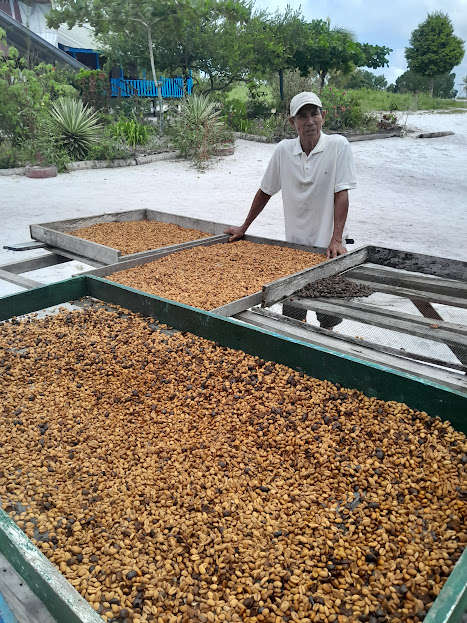
Wakapoa, Guyana – The threat had always been there, ever since Lloyd Perreira was a young child: that one day his ancestral home could be absorbed into the neighbouring country of Venezuela. A member of the Lokono Indigenous people, Perreira considers his home Essequibo, a vast territory on the western flank of Guyana. He grew up in Wakapoa, a village composed of 16 islands on the Pomeroon River, nestled in the heart of the region. “Even as a small boy, I remember hearing Venezuela saying Essequibo is theirs,” Perreira said. “But I also know I live in Essequibo, and as an Indigenous person, Essequibo is ours.” Perreira is now the toshoa, or chief, of Wakapoa. But his childhood fears returned when Venezuelan President Nicolas Maduro recently held a referendum to claim Essequibo as his country’s own. “We were very scared when we saw the referendum,” Perreira said, as he picked a harvest of rare liberica coffee beans. Lloyd Perreira, the toshao or chief of Wakapoa, stands in front of his harvest of liberica coffee beans [Nazima Raghubir/Al Jazeera] Though tensions have subsided since the December 3 referendum, the ongoing question of whether Essequibo could be annexed to Venezuela has sparked anxiety among those who call the territory home. Nearly two-thirds of what is considered Guyana lies in Essequibo, a 159,500-square-kilometre (62,000sq mile) area lush with jungles and farms. Along the Pomeroon River, coconuts are cultivated to make oil. Coffee shrubs blossom from riverbanks. And Indigenous groups like the Lokono harvest cassava for bread and cassareep, a syrup used to preserve food. But the discovery of large oil deposits off its shores in 2015 reignited a decades-long territorial dispute over Essequibo. Experts estimate that more than 11 billion barrels of oil and natural gas could sit within its territory. In recent months, Maduro has framed Venezuela’s claims on the land as a “historic battle against one of the most brutal dispossessions known in the country”. The referendum his administration put before voters consisted of five questions, asking them to reject 19th-century arbitration that awarded Essequibo to Guyana and instead support the creation of a Venezuelan state. That the referendum passed with 98 percent support fueled fears in Guyana that a Venezuelan takeover may be imminent. “Guyana has never been in any war,” taxi driver Eon Smith told Al Jazeera in the town of Charity, southeast of Wakapoa. “We are not prepared for war. What will we do?” Those concerns have also translated into lower attendance at Wakapoa’s local boarding school. Students who usually travelled for miles to attend instead stayed home in the lead-up to the referendum, their dormitory beds sitting empty. “We have one boy in the dormitory,” teacher Veneitia Smith said, pointing to a flat concrete dwelling. “Everyone else stayed away since we heard about the Venezuela referendum.” Guyana’s President Mohamed Irfaan Ali has sought to quell those fears, though. “Guyana will intensify precautionary measures to protect its territory,” Ali said in December. Guyana’s President Irfaan Ali has sought to reassure the public that his country’s territory is safe [Lucanus D Ollivierre/AP Photo] But since the referendum, Maduro has proceeded to declare Essequibo “a province” of Venezuela. He also directed Venezuela’s state-owned companies to “immediately” begin exploration for oil, gas and minerals in the region. Some Guyanese residents, however, have organised activities to protest the referendum. Those demonstrations ranged from prayer meetings to school performances of patriotic songs and chants. Indigenous leaders like Jean La Rose, the executive director of the Amerindian Peoples Association (APA), also called on residents to stay in their villages — and resist any urge to leave preemptively. La Rose herself returned to her home in Santa Rosa, a village in the Moruca subregion of northwest Essequibo. In a message posted on social media, she urged Indigenous peoples “to remain in their homes and guard them” in case of annexation. “I want to encourage other people: Stay in your homes, that is what you own. Stay on your lands, that is what you own,” she said. “That is the patrimony of your forefathers, your ancestors. Stay, guard it.” A boy in Caracas drives a motorcycle past a mural depicting Essequibo as part of Venezuela, following a referendum over the disputed region [Matias Delacroix/AP Photo] Cross-border relations have remained taut, despite a December 14 agreement between Guyana and Venezuela “not to threaten or use force” to settle claims over Essequibo. Known as the Argyle Agreement, the deal included assurances from presidents Maduro and Ali to “remain committed to peaceful coexistence” and to resolve the dispute in accordance with international law. The International Court of Justice continues to weigh a 2018 case brought by Guyana over the territorial dispute. But despite talk of peace, the spectre of military tensions lingers. Late last month, the United Kingdom sent a warship to Guyana for joint training exercises, prompting Venezuela to respond with “defensive” exercises of its own. Maduro called the ship’s presence a provocation, saying it was “practically a military threat”. Guyana’s Foreign Minister Hugh Todd acknowledged in an interview with Al Jazeera that he has heard “concerns” over Venezuelan “aggression”. Still, Todd said, the threat is not so great that businesses are “not willing to invest” in Guyana. He pointed to the energy producer ExxonMobil, which announced in December that it would continue to offshore oil extraction despite the tensions. “They made it clear that Exxon is not going anywhere and they will continue to do their work here in Guyana,” Todd said. Wakapoa, a community composed of multiple islands, is part of the disputed territory of Essequibo [Nazima Raghubir/Al Jazeera] Essequibo’s oil production is one of the primary drivers behind Guyana’s economy. The World Bank has named Guyana one of the “fastest-growing economies” in the world, with double-digit growth of its gross domestic product (GDP) expected to continue in 2024. When asked about potential risks for oil companies from the tensions, Todd maintained that Guyana’s investments are “well protected”. “There is no reason to not want
What plans does Washington have for Gaza?

In yet another Middle East visit, the US secretary of state has been rallying support from regional players. The US secretary of state has wrapped up his latest visit to the Middle East, with Cairo as his final stop. It’s Antony Blinken’s fourth time in the region since Israel began its assault on Gaza more than three months ago. He says the conflict needs to end soon and he has called on regional leaders to help build a stable post-war order. But why isn’t the administration of US President Joe Biden first trying to reach a ceasefire? Presenter: Adrian Finighan Guests: Said Sadek – political sociologist at the Egypt-Japan University Chris Hedges – former Middle East bureau chief for the New York Times and a Pulitzer Prize winner and author Mouin Rabbani – co-editor of Jadaliyya, an online magazine of the Arab Studies Institute Adblock test (Why?)
Photos: Greek students protest government plan for private universities

Thousands of Greek students rallied in Athens and other cities on Thursday to protest against planned education reforms that would allow the introduction of private universities in the country. The conservative government of Prime Minister Kyriakos Mitsotakis, who won a second term last year, is expected to submit a bill to parliament this month that would permit private universities to operate inside Greece. The government has said the schools will operate as branches of foreign universities. Many believe the move will devalue degrees from Greece’s public universities and that the private system will exclude those who cannot afford it. The change will “tear apart the public university as we knew it”, said student Christina Iliopoulou, who joined the protest in Athens. “It will destroy our daily life in terms of how we will be able to find a job after we graduate.” The protests were largely peaceful, but there was a brief clash in Athens between protesters and police, who fired tear gas. Universities in Greece are government-funded institutions where attendance has been free for decades. But Greece has implemented a series of education reforms in the past despite fierce opposition from students and staff. The government, which enjoys a parliamentary majority, has argued that the reform would bolster the economy by luring back some of around 40,000 students now studying overseas and reverse a brain drain of academics prompted by the 2010-2018 debt crisis. The private universities’ curriculum would follow very strict academic standards, the government said last week, adding that the reform would also free public universities of bureaucracy and boost their self-governance. Adblock test (Why?)
North Carolina Attorney General Josh Stein has raised $5.7M since July for his run at governorship
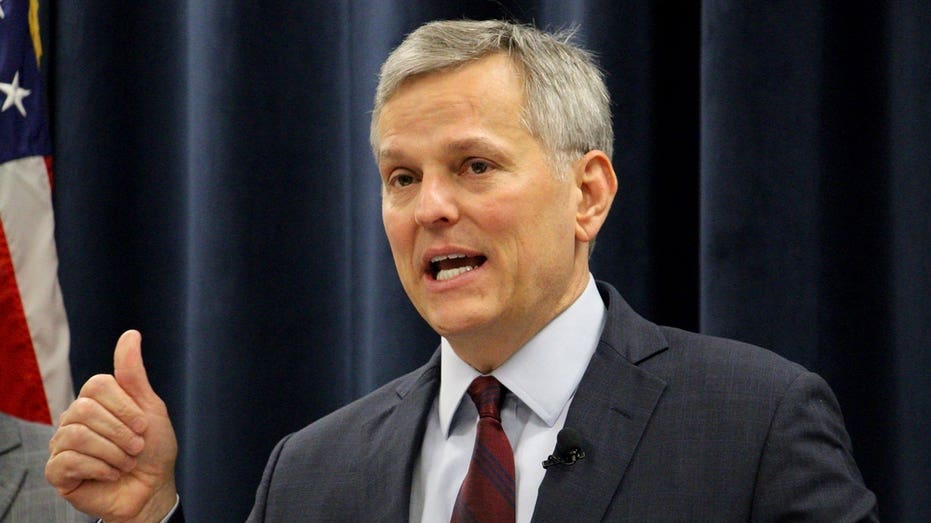
North Carolina gubernatorial candidate Josh Stein raised more than $5.7 million during the past six months, his campaign said Thursday, a total that should keep the Democrat at or near the top of collections when all 2024 gubernatorial candidates report their donations. Stein’s organization revealed what it expects to post on his campaign finance report for the second half of 2023. The Josh Stein for North Carolina campaign already reported raising $5.98 million during the first half of 2023, an amount which was by far the largest among the announced gubernatorial candidates at the time. NORTH CAROLINA GOES ALL IN WITH DNC IN HAVING BIDEN ALONE ON PRIMARY BALLOT, FLOUTING DEMOCRAT CHALLENGERS His campaign committee said Thursday that it also had nearly $11.5 million in cash in its coffers entering the new year and had raised nearly $17 million since this election cycle began in early 2021. A Stein news release describes his 2023 fundraising and current cash on hand as record-breaking. Stein, the current attorney general, and other gubernatorial candidates have to report their numbers to the State Board of Elections by Jan. 26. “People from across North Carolina are helping to build Josh’s campaign because they believe in his vision for a safer, stronger North Carolina,” Stein campaign manager Jeff Allen said in the release. Stein announced his bid for governor in January 2023 and has the backing of outgoing Democratic Gov. Roy Cooper, who is barred from running by term limits. Former state Supreme Court Associate Justice Mike Morgan is also seeking the Democratic nomination, joining the race in September. Gary Foxx, Marcus W. Williams and Chrelle Booker also filed to run in the March 5 Democratic primary. On the Republican side, Lt. Gov. Mark Robinson, attorney Bill Graham and State Treasurer Dale Folwell are on the March GOP ballot. Robinson was the top Republican fundraiser through last June 30. Graham said in October that he would invest “at least $5 million of his own resources” in his campaign. There is also a Libertarian Party primary.
Wisconsin GOP to propose tax cuts for families earning up to $200K
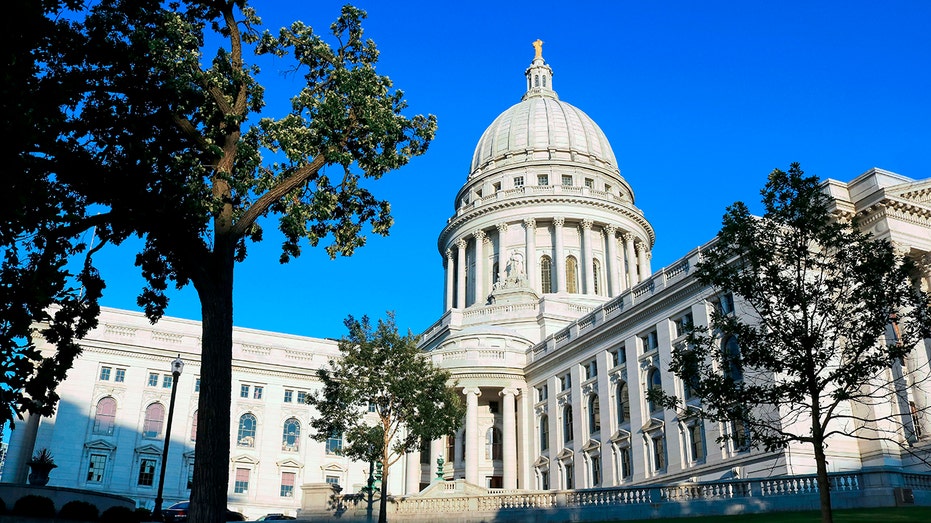
Income taxes would be cut for Wisconsin families earning up to about $200,000 under a plan being worked on by Senate Republicans, a GOP leader said Thursday. The proposal will be targeted at middle class families in an attempt to win the support of Democratic Gov. Tony Evers, who has vetoed past tax cuts that applied to taxpayers earning up to about $405,000, Senate Majority Leader Devin LeMahieu said. WI REPUBLICANS INTRODUCE MEDICAL MARIJUANA BILL AFTER GOV. EVERS VOICES SUPPORT Details of the latest plan are still being worked out, but in general it would lower the tax on income between about $36,000 and around $200,000 for families from 5.3% to 4.4%, LeMahieu said following an appearance at a WisPolitics.com event. Currently, the 5.3% tax rate applies to those earning between about $36,000 and around $405,000. The proposal would cost about $1 billion a year, he said. “That’s something we’re confident the governor can sign,” LeMahieu said. Evers has vetoed past Republican-backed income tax cuts, saying they didn’t target the middle class. Republicans rejected an Evers tax cut plan that he submitted last year as part of the state budget. Evers’ spokesperson, Britt Cudaback, did not comment on the latest proposal. Instead, she referred to the governor’s previous comments saying that any future tax cuts should not put the state into debt. Republican Assembly Speaker Robin Vos last month said he would be backing a tax cut on retirees’ income. But LeMahieu said he didn’t like tax cuts that “choose winners and losers” and instead favors a broad reduction for all taxpayers.
Haley didn’t ask Christie for his endorsement in 2024 race but spoke with him after hot mic diss
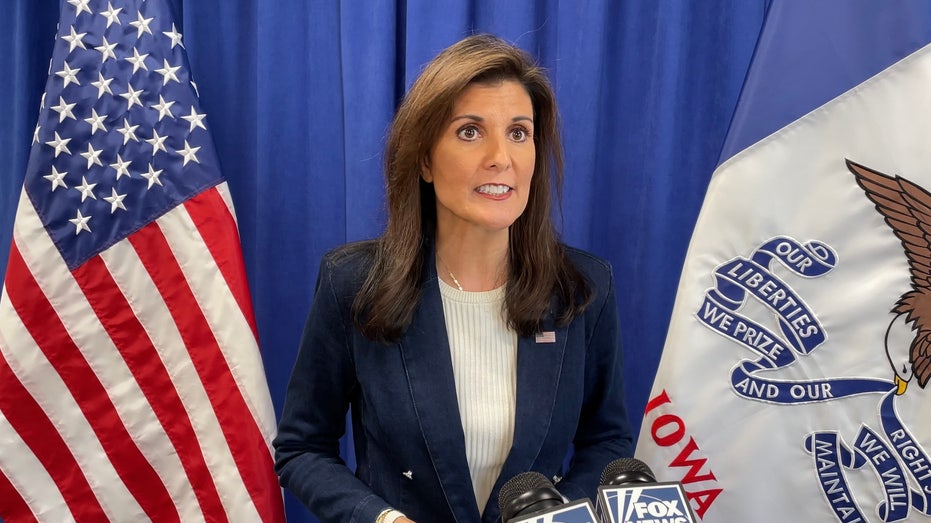
Republican presidential candidate Nikki Haley says she spoke with former New Jersey Gov. Chris Christie on Thursday morning but didn’t ask for his endorsement following his departure from the GOP nomination race. And Haley, in a Fox News interview in Iowa following a campaign event in this city in suburban Des Moines, said that when she wished him well on Wednesday after his campaign suspension, she wasn’t aware of his derogatory comments about her that were caught in a viral hot mic moment. Christie, who was making his second bid for the White House, dropped out of the race at a town hall event in Windham, New Hampshire, saying “it’s clear to me tonight that there isn’t a path for me to win the nomination.” Christie, a long-shot for the nomination in a race dominated by former President Trump, in recent weeks had faced increased calls from fellow Republicans and from some voters to end his bid to give Haley a boost as she aims to close the gap with Trump. CHRISTIE ARGUES HALEY WILL GET ‘SMOKED’ IN HOT MIC MOMENT AS HE DROPS OUT OF THE 2024 RACE Haley, a former two-term South Carolina governor who later served as ambassador to the United Nations in the Trump administration, has soared in recent months to become the main rival to the former president, who’s making his third straight White House run. Ahead of his announcement on Wednesday, Christie was heard on a microphone, apparently without knowing it, saying that Haley was “going to get smoked” by Trump, who is the commanding front-runner for the nomination. “She’s not up for this,” he added. Christie also took two digs at Haley during his speech. NEW POLL SUGGESTS HALEY’S MOVED INTO SECOND PLACE IN FINAL DAYS AHEAD OF IOWA CAUCUSES After Christie suspended his campaign, Haley wrote on social media that “Chris Christie has been a friend for many years. I commend him on a hard-fought campaign. Voters have a clear choice in this election: the chaos and drama of the past or a new generation of conservative leadership. I will fight to earn every vote, so together we can build a strong and proud America.” Asked Thursday by Fox News whether she was aware of Christie’s cutting remarks in the hot mic moment, Haley said, “I didn’t know about the open mic comments.” “But I do wish Chris well, it’s personal to get in a race. It’s personal to get out of a race. So, I know how tough that must be. But at the same time, I’m not like the fellas. Politics is not personal for me,” she added. WAS THE CANDIDATE WHO SKIPPED OUT ON THIS WEEK’S IOWA DEBATE THE WINNER OF THE COMBATIVE SHOWDOWN? And Haley told Fox News that “I did talk to him this morning and just told him I appreciated his … commitment to this race. But no, we didn’t ask him for an endorsement.” Haley was interviewed the day after she and Florida Gov. Ron DeSantis faced off in a combustible prime-time debate in the closing days before Iowa’s Jan. 15 caucuses kick off the Republican presidential nominating calendar. The verbal fireworks ignited moments into the debate, with DeSantis charging that Haley was a “mealymouthed politician who just tells you what she thinks you want to hear just to try to get your vote.” Haley immediate hit back, labeling DeSantis a liar. “What we’re going to do is rather than have him go and tell you all these lies, you can go to DeSantislies.com and look at all of those,” Haley said in the first of at 10 references to a new campaign website. Haley disagreed when asked if promoting the website was overkill. “I wasn’t saying it to be repetitious, but I was saying it because every time he lied, I had to include it. Look, we have a country to save. People want real facts. They want real solutions. And this is the part of politics that I don’t like, that Americans don’t like. They don’t like the fact that people throw out stories to see if they can make one stick,” Haley said. And she explained that “we just put up a website up there. You can go to the website, you can look at all the stuff he’s saying and see what the fact-checkers say and show that it’s false. And so I think that’s the easier way to handle it.” A couple of times in the debate, DeSantis touted his own campaign website, which is full of opposition research clips of Haley. On Thursday, DeSantis said at a campaign stop that Haley messed up by referring to the website. “I think she really stepped in it by repeating that ridiculous website. People were groaning in the audience that she was doing it for the 10th, 12th time,” DeSantis said in Iowa. Haley grabbed momentum last autumn, thanks to well-regarded debate performances. And in recent weeks, she caught up with DeSantis for second place in the polls in Iowa and in national surveys. A fresh survey released Thursday by Suffolk University indicated Haley seven points ahead of DeSantis for a distant second place behind Trump. Haley also surpassed DeSantis and surged to second place and narrowed the gap with Trump in New Hampshire, which holds the first primary — just eight days after Iowa’s caucuses. After New Hampshire, the GOP nomination spotlight shifts to her home state, which holds the first southern contest on Feb. 24. Sen. Tim Scott, South Carolina’s junior U.S. senator, ended his own White House bid in November. Asked if she’s actively seeking Scott’s endorsement, Haley said “we’ve had a conversation and right now we’re focused on Iowa. Then we’ll focus on New Hampshire, then we’ll focus on South Carolina. We’re taking it one state at a time.” Fox News’ James Levinson contributed reporting. Get the latest updates from the 2024 campaign trail, exclusive interviews and more at our Fox News Digital election hub.
Trump slams Hunter Biden in Iowa Town Hall: ‘I don’t get $8 million for doing nothing like Hunter’
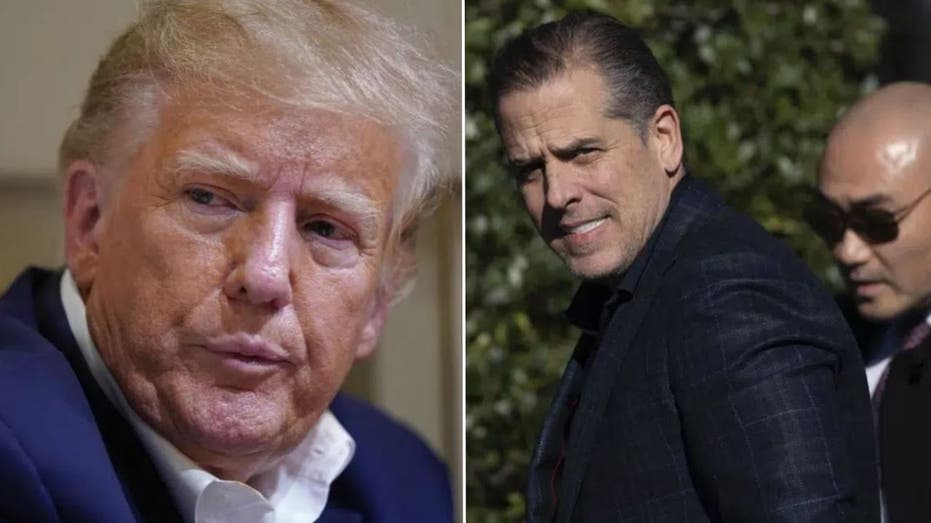
Former President Trump slammed Hunter Biden during his Fox News Town Hall in Iowa on Wednesday night calling him out for selling his artwork for large sums of money. “I don’t get $8 million for doing nothing like Hunter,” Trump said. “I don’t get I don’t get $500,000. I don’t get $500,000 for doing a painting. It’s not a bad idea, I guess, if you can get away with it. When I heard that when I said there’s no way they get away with that. But they got away with that. I guess they got away with it.” “Now we have you know, there was an emoluments lawsuit against me where the radical left, sued me for that, and I won the suit.” Trump was responding to a question on accusations from Democrats that he illegally profited from his businesses during his time in office. HUNTER BIDEN MAKES SHOCKING APPEARANCE AT HIS OWN CONTEMPT HEARING “I own hotels, all over the, I don’t get free money,” Trump said. “Somebody rents a hotel room, etc, etc. Much money I gave back. In fact, I didn’t have to do it. You know, George Washington was a very rich man. People don’t know that, in his essentially White House, which wasn’t built, but they had an office, he had a business desk and he had a country desk right next to each other. You’re allowed to do that. I didn’t do it.” “I put everything in trust. And if I have a hotel and somebody comes in from China, that’s a small amount of money. And it sounds like a lot of money. That’s a small. But I was doing services for that. People were staying in these massive hotels, these beautiful hotels, because I have the best hotels, I have the best clubs, I have the best clubs, I have great stuff and they stay there and they pay.” Fox News Digital reached out to Hunter Biden’s legal team for comment but did not immediately receive a response. HOUSE GOP SAYS HUNTER BIDEN ‘VIOLATED FEDERAL LAW’ BY DEFYING SUBPOENA, PREPARE CONTEMPT RESOLUTION Republican investigators have suggested they are suspicious over whether Hunter Biden’s art career, which began in recent years, has led to any conflicts of interest between wealthy buyers and the White House. Hunter Biden’s art dealer told lawmakers in the House of Representatives on Tuesday that he has never discussed the paintings with the White House seemingly contradicting past statements from the White House on that matter. Trump previously blasted the Justice Department’s Hunter Biden indictment in mid September as the “only crime” that doesn’t “implicate” the President Joe Biden. Biden’s son was indicted on Sept. 14 for making false statements and unlawfully possessing a firearm. Trump claimed in a Truth Social post at the time that the gun charge was “the only crime that Hunter Biden committed that does not implicate Crooked Joe Biden.” Hunter Biden, in an indictment filed in federal court in Delaware by a special counsel overseeing the case, was accused of lying about his drug use when he purchased a weapon in 2018, during a time when he’s acknowledged struggling with a crack cocaine addiction. Late in the year, Trump took another shot at Hunter Biden for skipping his closed-door congressional deposition in mid December and joked that the presidential scion “went to the wrong place” on Capitol Hill.The former president joked that Hunter went to the Senate side of the U.S. Capitol when he should have gone to the House side. Fox News’ Gabriele Regalbuto, Elizabeth Elkind, Andrew Murray, Paul Steinhauser and Houston Keene contributed to this report.
Federal appeals court grants Maryland’s petition for full court to consider handgun licensing law

The 4th U.S. Circuit Court of Appeals has granted Maryland’s petition for the full court to consider the state’s handgun licensing law that was struck down in November by a three-judge panel, Maryland Attorney General Anthony Brown said Thursday. MARYLAND ATTORNEY GENERAL SEEKS COURT REVIEW AFTER RULING STRIKES DOWN HANDGUN LICENSING LAW The three-judge panel ruled 2-1 that Maryland’s law requiring most citizens to obtain a license before acquiring a handgun was unconstitutional. Brown’s office requested the hearing for the full court’s review last month. The November ruling found it was unconstitutionally restrictive for Maryland to require people to obtain a license before purchasing a handgun. The process of obtaining a license can take up to 30 days. “I welcome the court’s decision to rehear this case and will continue to defend common-sense gun laws to protect Marylanders from these unnecessary and very preventable tragedies,” Brown said. The underlying lawsuit was filed in 2016 as a challenge to a Maryland law requiring people to obtain a special license before purchasing a handgun. The law was passed in 2013 in the aftermath of the mass shooting at Sandy Hook Elementary School in Connecticut.
Democratic Marine vet launches longshot North Dakota congressional bid
A Democratic military veteran is seeking North Dakota’s sole U.S. House seat, aiming for an upset in a state where Republicans hold every statewide and congressional office and Democrats haven’t won a statewide election since Heidi Heitkamp’s U.S. Senate victory in 2012. NORTH DAKOTA LAWMAKER HIT WITH MISDEMEANOR CHARGE IN SPECULATION CASE “It is time to elect a pro-union, pro-choice, and pro-democracy leader to represent North Dakota in the U.S. House of Representatives,” Trygve Hammer, of Minot, said in announcing his candidacy on Wednesday. He’s challenging incumbent Republican Rep. Kelly Armstrong, an attorney and former state senator elected to the seat in 2018. Hammer, who has previously run unsuccessfully for the state House and for North Dakota’s Public Service Commission, brings a wide-ranging resume. He cites 25 years of military experience, including deployment to Iraq in 2003 as a weapons platoon commander. He retired in 2010 as a major in the Marine Corps Reserve. He also worked as an airline pilot, freight rail conductor and a grades 7-12 science teacher. “I am running for Congress because it is time to put government to work for all of us. It is time to end the grandstanding and culture-war intrusions into our most personal decisions as persons, parents, and patients,” Hammer said in a statement.