

Good Samaritan: Autorickshaw driver sacrifices earnings for sake of customer’s lost laptop
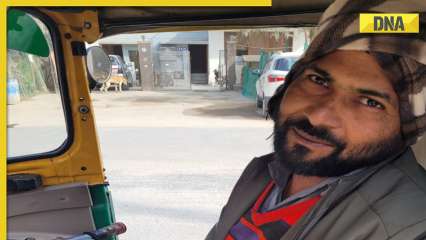
It took over 48 hours, several rounds of search and help from a payment service provider for autorickshaw driver Devesh Pratap to be able to get in touch with the customer and hand over his valuable possessions.
Texas regulators limit oil and gas disposal wells in bid to reduce earthquakes in West Texas

Injecting saltwater back into the ground “is likely contributing to recent seismic activity,” the Railroad Commission of Texas has said.
From RaTmasTer to kingmaker: How Jonathan Stickland trolled his way to Texas GOP power

In his teens and his 20s, Stickland was a prolific internet troll. But instead of growing out of it, he would make a career of it — ascending to the role of a conservative Texas powerbroker, before taking heat for hosting a meeting with white supremacist Nick Fuentes.
Nevada judge rejects Trump ballot eligibility challenge, says GOP opponent ‘improperly manufactured’ standing
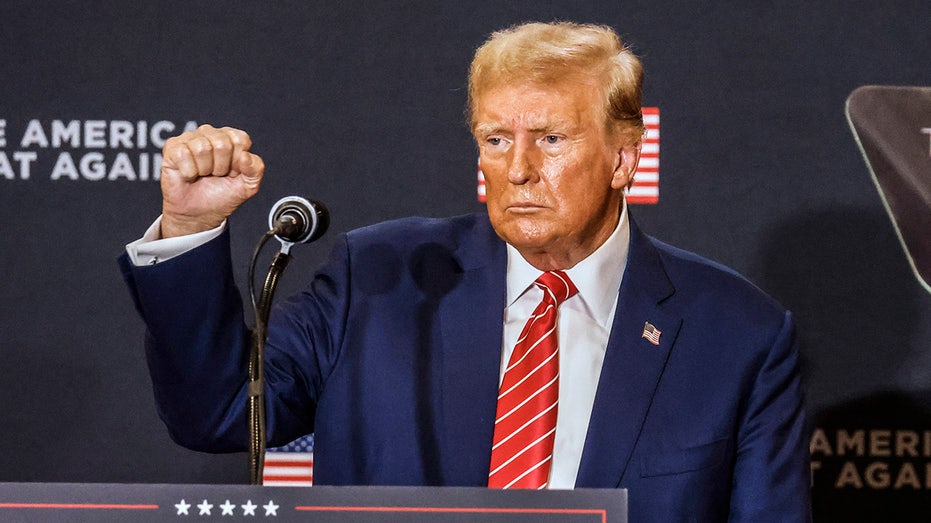
A federal judge in Nevada rejected a case challenging the eligibility of former President Trump to run in 2024, ruling GOP challenger John Anthony Castro, who brought the lawsuit in the Silver State, “lacks standing.” U.S. District Court Judge Gloria M. Navarro, who was appointed by former President Obama, issued the order Monday dismissing Castro’s lawsuit that have ultimately asked if the U.S. Constitution’s Fourteenth Amendment bars Trump from holding office over his alleged incitement of the Jan. 6 Capitol riot. “This is a politically charged question of significant interest to the American public,” Navarro noted. “For reasons discussed below, the Court finds that Castro lacks standing, and the Court therefore lacks jurisdiction to hear this case.” “To have standing to sue in federal court, a plaintiff must have suffered a concrete, particularized, and actual or imminent injury in fact that was caused by the defendant’s challenged conduct and is redressable by a favorable decision,” Navarro explained. “This limitation on the judicial power prevents a plaintiff from invoking Article III jurisdiction of federal court by asserting what is merely a ‘general interest common to all members of the public.’” SUPREME COURT TO DECIDE IF TRUMP BANNED FROM COLORADO BALLOT IN HISTORIC CASE The ruling noted that five courts have already rejected Castro’s political competitor standing argument. “In rejecting his political competitor standing argument, courts have fund that Castro improperly manufactured his standing merely to file this lawsuit,” Navarro writes. “The evidence indicates that Castro is creating his own injury in order to manufacture standing to challenge Trump’s eligibility to run for president.” The judge observed that by his own admission, Castro “declared as a candidate and paid the filing fee to show the impermissibility of Trump’s presidency.” The ruling cited how Castro was quoted in an Associated Press article as having said, “I’m not going to lie and pretend my candidacy is anything more than trying to enforce the United States Constitution, and that’s what I’m here to do.” In a footnote, Navarro highlighted that Trump and Castro are not even competing on the same ballot in Nevada. “As Castro indicates in his FAC, the Nevada Republican Party is holding a caucus separate from the state-run Presidential Preference Primary. Castro intends on running in the Nevada Republican PP,” the footnote says. “Trump is not participating in the PP and is instead appearing on the caucus ballot.” TRUMP CAMPAIGN SAYS 14TH AMENDMENT ADVOCATES USING ‘LAWFARE’ TO ‘DEPRIVE’ VOTERS OF CHOICE IN 2024 Dozens of lawsuits are now challenging Trump’s eligibility, citing the Fourteenth Amendment, after the Colorado Supreme Court removed him from the ballot in their state. Maine’s Democratic secretary of state also banned Trump from the ballot, citing the insurrection clause. The U.S. Supreme Court agreed to take up Trump’s challenge to the Colorado ruling and is set to begin hearing arguments in February. Trump campaign spokesman Steven Cheung championed the Nevada lawsuit’s dismissal in a statement to news outlets. “Today’s dismissal of another bogus, bad-faith, Crooked Joe Biden-engineered attempt to deprive Americans as a whole, and the voters of Nevada specifically, of their right to vote for the candidate of their choice is not only a victory for President Trump, but a victory for all Americans and the people of Nevada,” Cheung said, according to KLAS. “President Trump remains undefeated in federal court against these cynical efforts to interfere in the 2024 election. Courts in eleven states have now dismissed similar, pathetic, 14th Amendment ballot cases.” “Make no mistake, each and every one of these ‘ballot-challenges’ are blatant attempts to steal the election for Crooked Joe Biden and disenfranchise over 100 million American voters,” he continued. “President Trump is the leading candidate for not only the Republican primary, but the general election and his opponents are desperate. Rest assured that he will fight each and every one of these disgraceful attacks on American democracy, he will win, and we will all Make America Great Again.”
Ten killed, gangs unleash terror as Ecuador declares state of emergency
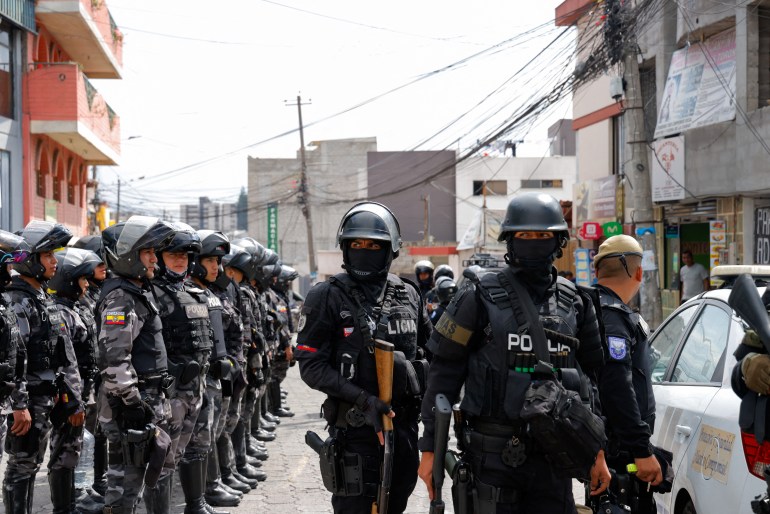
At least 10 people have been killed in Ecuador in a series of attacks blamed on armed gangs, as the country plunges into chaos in what the new president has called an “internal armed conflict”. President Daniel Noboa, 36, declared a 60-day state of emergency and nightly curfew on Monday following the escape of Jose Adolfo Macias, aka “Fito”, the leader of Ecuador’s biggest gang, Los Choneros. Macias was serving a 34-year sentence at the La Regional prison in the port city of Guayaquil. Gangsters unleashed a wave of terror across the country and in several overcrowded prisons after eight people were killed and three were injured in attacks in Guayaquil, while two officers were “viciously murdered by armed criminals” in the nearby town of Nobol, police said late on Tuesday. In retaliation, local gangs took several police officers hostage and set off explosions in several cities. Armed and hooded gang members stormed a studio of state-owned TC Television in Guayaquil with guns and explosives while cameras were rolling on Tuesday. The 13 gunmen were subsequently arrested. Police leave the El Inca prison after a security operation due to riots following the disappearance of Jose Adolfo Macias, alias ‘Fito’, leader of the Los Choneros criminal group, in Quito, Ecuador, on January 8, 2024 [Karen Toro/Reuters] Guayaquil, a coastal city that is Ecuador’s largest, is considered the country’s most dangerous, with its ports a hub for drug smuggling. “Authorities say there have been at least 23 different violent incidents in eight provinces, including a number of car bombs going off,” Al Jazeera’s Alessandro Rampietti reported from the capital, Quito. “A number of police cars were incinerated and at least seven police officers were kidnapped by gang members,” he added. This is the first big test for Noboa, a businessman who took office in November promising to crack down on soaring levels of violence in the South American country. “I have just signed a state of emergency decree so that the armed forces have all the political and legal support for their actions,” Noboa said. “The time is over when drug trafficking convicts, hitmen and organised crime dictate to the government what to do.” Violent deaths nationally rose to 8,008 in 2023, the government has said, nearly double the 2022 figure of more than 4,500. Drug violence has taken a heavy toll on the country since it became a key stop on the United States and Europe-bound cocaine trade. The murder rate quadrupled from 2018 to 2022 and a record 200 tonnes of drugs were seized last year. Security in Ecuador has been worsening since the COVID-19 pandemic, which also battered the economy. Ecuadorian political analyst Adrian Perez Salazar says structural problems have led to the country’s problems with gangs and insecurity. “The causes are multiple. What is particularly important to emphasise is that we are a dollarised economy, and so naturally it’s much easier for international crime to launder money in a place like Ecuador,” he told Al Jazeera. “This is something that has been building up for many years as policies that were very lax in terms of immigration, very lax in terms of allowing gang leaders to establish dominance in areas such as prisons … and now in the last couple of years we are seeing the results of these structural problems being exacerbated.” ‘Wave of violence’ Shortly after the attack on the TV station, Noboa in a decree said he recognised an “internal armed conflict” was ongoing in Ecuador, and identified several criminal gangs as terrorist groups and military targets – including Los Choneros. The decree ordered the armed forces to neutralise the groups. “Today’s events show that the actions and decisions taken by the national government are gravely affecting criminal structures, and as an answer, they have created a wave of violence to frighten the populace,” Admiral Jaime Vela, head of the joint command of the armed forces, said on Tuesday, after a security meeting with Noboa and other officials. The unrest led Peru’s government to declare an emergency along its border with Ecuador, while Brazil, Colombia and Chile expressed their support for the Ecuadorean government. Meanwhile, the Chinese embassy and consulates general in Ecuador will be temporarily closed from January 10 until further notice, according to a statement on Wednesday. “The reopening to the public will be announced in due course,” the embassy said in a statement shared on Chinese social media sites. In a post on X, the top US diplomat for Latin America Brian Nichols said Washington was “extremely concerned” by the uptick in violence, adding that the US was ready to assist Noboa’s administration. Adblock test (Why?)
Tshering Tobgay set to return as Bhutan PM after liberal PDP wins elections

Election commission says People’s Democratic Party, led by Tobgay, won 30 seats in the 47-member parliament. Bhutan’s liberal People’s Democratic Party (PDP) is set to form a new government after winning in parliamentary elections, according to results from the country’s electoral body. PDP leader Tshering Tobgay, 58, who was prime minister from 2013 to 2018, is set to become the new premier for a second five-year term. The Election Commission of Bhutan (ECB) released its provisional results on Wednesday, a day after the tiny Himalayan kingdom held elections, which showed the PDP winning its fourth free vote since democratic elections began 15 years ago. The PDP won 30 seats in the 47-member parliament, or National Assembly, with the rest of the seats going to the Bhutan Tendrel Party (BTP), according to the early tally by the ECB. The PDP was formed in 2007 by Tobgay. Bhutanese people in traditional attire queue up to cast their votes in the national elections in Deothang, Bhutan [Anupam Nath/AP] Tobgay campaigned on the promise of boosting the economy and reducing unemployment rates, despite the country’s constitutionally enshrined philosophy of measuring success in terms of “Gross National Happiness” instead of gross domestic product (GDP). Voter turnout was at 65.6 percent, with 326,775 people casting their ballot from the 498,135 eligible registered voters, according to the ECB. They chose members of parliament from a pool of 94 candidates presented by the BTP and the PDP. A first round of voting in November eliminated three other parties, including the governing centre-left Druk Nyamrup Tshogpa party. The picturesque nation nestled between China and India is still struggling to revive its aid and tourism dependent economy following the COVID-19 pandemic. India is Bhutan’s biggest donor, and while the Himalayan nation has no ties with China, it is in talks with Beijing to resolve border disputes. The negotiations are closely watched by India, which has its own border dispute with China. “Heartiest congratulations to my friend @tsheringtobgay and the People’s Democratic Party for winning the parliamentary elections in Bhutan,” Indian Prime Minister Narendra Modi said in a post on X. “Look forward to working together again to further strengthen our unique ties of friendship and cooperation.” Heartiest congratulations to my friend @tsheringtobgay and the People’s Democratic Party for winning the parliamentary elections in Bhutan. Look forward to working together again to further strengthen our unique ties of friendship and cooperation. — Narendra Modi (@narendramodi) January 9, 2024 In 2008, the country underwent a transformation from a traditional monarchy to a parliamentary form of government. Adblock test (Why?)
Can President Boakai deliver war crimes justice in Liberia?

Joseph Boakai, who secured a narrow victory against incumbent George Weah in a November run-off election, is set to be inaugurated as Liberia’s new president on January 22. The 78-year-old political veteran won the tightly contested race on a promise to address corruption, work towards societal “peace and reconciliation” and deliver justice to the many victims of Liberia’s civil wars (in 1989-1997 and 1999-2003), which killed more than 200,000 people and displaced millions of others. As two decades have passed since the end of the latest round of conflict, and as many accused of war crimes and crimes against humanity are now in their old age, Boakai’s upcoming six-year term as president may be Liberia’s last window for meaningful war crimes accountability and justice. The task at the hands of the new president, however, is neither straightforward nor easy. In the past 20 years, several attempts have been made to try and hold perpetrators of war crimes accountable, with little success. In 2005, following in the footsteps of neighbouring Sierra Leone, which was recovering from its own conflict (a conflict that was very much intertwined with that of Liberia), the Liberian parliament enacted a Truth and Reconciliation Commission (TRC). Four years later, in 2009, the TRC released its final recommendations, including reparations to victims of the civil wars, reforms to prevent atrocities from reoccurring, the establishment of a special court for war crimes, and the banning of certain implicated individuals from holding office until their names are cleared. The commission’s list of persons to be “barred from holding public offices” for “being associated with former warring factions” was extensive and even included then-President Ellen Johnson-Sirleaf. However, most of TRC’s ambitious recommendations, including the suggested political bans on prominent individuals and establishment of a war crimes tribunal, remain unimplemented to this day. Among other factors, this is largely because civil war actors who attained political power after the war have been using their positions to sabotage attempts at accountability and justice within Liberia. This is why, over the years, most survivors of the civil war who are looking for judicial justice have had to turn to foreign courts, which have on occasion tried former warlords who settled outside Liberia after the war. In certain cases, these warlords were tried directly for the crimes they committed in Liberia under the principle of universal jurisdiction. In others, they were prosecuted for “immigration fraud” for not declaring their history as a warlord during the immigration process. However, foreign courts managed to try only a small number of individuals to date, and in most cases, survivors of the crimes perpetrated by these individuals who remain in Liberia did not get to follow, and thus meaningfully contribute to and benefit from, these prosecutions. President-elect Boakai, who hails from Lofa, one of the counties most affected by the horrors of the civil war, has promised to end this reliance on foreign courts and bring justice and accountability back home by establishing a special war crimes tribunal in Liberia. Nevertheless, many are now questioning the reliability of this commitment because of Boakai’s all-important political alliance with former strongman Prince Yormie Johnson, who is the senator for Liberia’s second-most populous county, Nimba. Senator Johnson, whose support helped guarantee Boakai’s electoral victory, has always been vocal about his opposition to the establishment of a special war crimes tribunal. The only obstacle in front of the establishment of a tribunal is not Boakai’s problematic political alliances, either. In the past 20 years, Liberian authorities did very little to document war crimes, record eyewitness testimonies, and generally preserve evidence about the war. As a result, proving war crimes committed during Liberia’s civil wars has become harder and harder over the years. This lack of adequate record-keeping meant that trials of Liberian warlords taking place in other countries had to rely extensively on witness testimony, which made it increasingly difficult to secure convictions. After so many years, the witnesses to civil war atrocities may find it hard to accurately recall what they have seen and experienced during the war, as evidenced in some foreign trials. . This means if Boakai does not institute a war crimes tribunal now, and ensure that testimony from all living witnesses is securely recorded, Liberia may never get a chance to meaningfully prosecute war crimes committed during its bloody civil wars. While it remains uncertain whether Boakai would be able to hold his campaign promise of establishing a special tribunal, and whether such a tribunal would be successful in convicting perpetrators after all these years, there are other, much more straightforward steps the new president could take to deliver justice to survivors, encourage reconciliation, and increase social harmony. First, he could expand the scope of and increase funding for the few existing community justice and reconciliation mechanisms in the country, such as the Palava Hut Program. This programme, outlined in TRC’s final report in 2009, brings victims and perpetrators of lesser war-related crimes – such as arson, assault, forced displacement, forced labour, destruction, theft of properties, and looting – together in a safe space and allows for truth-telling, forgiveness, and reconciliation under the guidance of traditional elders. Currently, the programme visits only a few towns per year and help a very limited number of people. According to the United Nations, until August 2023, Liberia’s Palava Hut Program resolved only 277 cases that involved only 500 people inclusive of victims and perpetrators. This is despite the fact that hearings started in 2016. With many perpetrators living alongside victims within communities, the scaling up of the Palava Hut Program could deliver justice and foster forgiveness and reconciliation for lesser crimes of the civil wars at a community level. The non-retributive nature of this community justice mechanism also means that it can help address the issue of crimes committed by child soldiers, who cannot be held fully accountable and punished for the heinous acts they carried out under duress and often under the influence of drugs they were forced to
Bengaluru CEO Suchana Seth’s son’s murder seems pre-planned, key evidence found in her room: Police

A senior police officer told PTI that during the inspection of the service apartment room where the woman stayed, they found two empty bottles (one big and another small) of a cough syrup.
Manipur govt declines permission for Rahul Gandhi’s Bharat Nyay Yatra, claims Congress
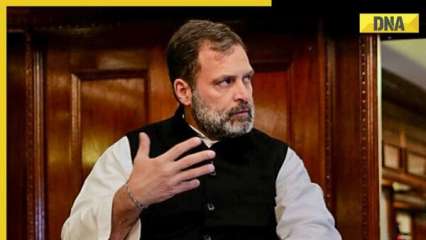
The yatra, scheduled to commence on January 14 from Hatta Kangjeibung in Imphal East district, faced this setback.
SecDef Austin’s ‘reckless’ handling of hospitalization ‘undermined’ constitutional commitments: expert
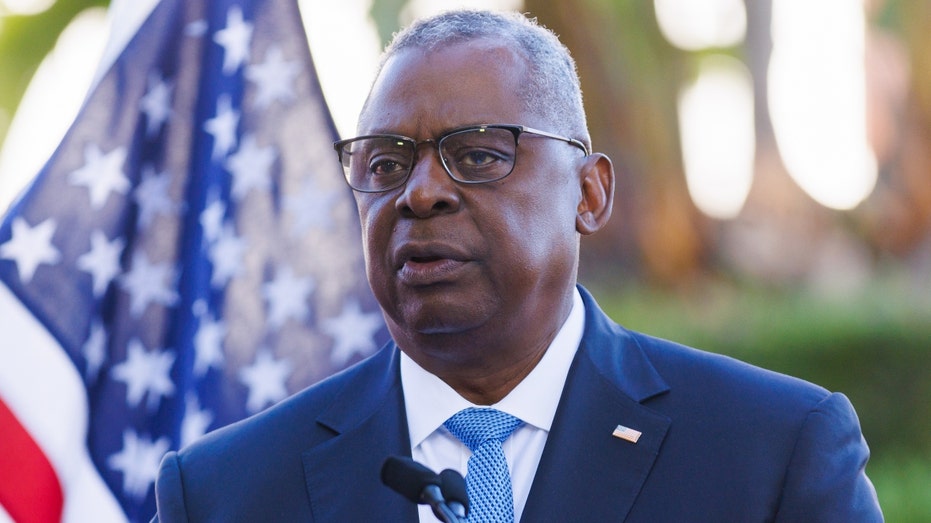
Secretary of Defense Lloyd Austin “undermined” the U.S. “constitutional commitment to civilian control of the military” and the nation’s “readiness in a time of crisis” when his admission to a hospital intensive care unit (ICU) was concealed from the White House. “Austin’s behavior was reckless, particularly at a time when war has broken out in Europe and the Middle East, China is a major threat in the Pacific, global commerce is being paralyzed by piracy in the Red Sea, and American forces are not only in harm’s way but being attacked by Iranian proxies. By keeping his incapacity a secret from the White House, he undermined our constitutional commitment to civilian control of the military and undermined U.S. readiness in a time of crisis,” Andy McCarthy, a former assistant U.S. attorney and Fox News contributor, told Fox News Digital on Monday. Outrage broke out among conservative lawmakers and leaders last week as reports spread that Austin was receiving treatment at Walter Reed National Military Medical Center in Bethesda, Md., and that the White House had been unaware for days. This week, calls have mounted that Austin resign or be fired over the matter, with lawmakers also demanding answers on the apparent communication breakdown in the chain of command. “Worryingly, we now have more questions than answers,” Mississippi Republican Sen. Roger Wicker said in a statement last week. “Why was the notification process under 5 U.S.C. 3349 not followed and who made the determination not to follow it? What role did the Secretary of Defense’s staff play? When exactly was the President notified? What justification did the Department have for withholding information from the National Security Council? To what extent was the Secretary incapacitated by his surgery?” AUSTIN’S MYSTERY HOSPITAL STAY TOTALLY UNPRECEDENTED, COULD EMBOLDEN US ENEMIES: EXPERT “The very fact that we have none of this information is an indictment of an administration which consistently holds Congressional authority on national defense matters in contempt,” Wicker added. Austin, 70, received an elective medical procedure on Dec. 22 at Walter Reed, and days later experienced “severe pain” while at home, Pentagon press secretary Maj. Gen. Pat Ryder told Fox News on Sunday. He was again transported to the hospital on Jan. 1 to the intensive care unit. Austin has resumed his duties and transferred out of the ICU, but remains at Walter Reed. It was revealed Tuesday that Austin underwent a prostatectomy late last month after a prostate diagnosis, and was admitted to the ICU last week due to developing a urinary tract infection following the procedure. WHITE HOUSE RESPONDS TO GOP CALLS FOR SEC AUSTIN’S RESIGNATION AFTER MYSTERY AILMENT, HOSPITALIZATION The media was made aware on Friday of Austin’s hospital treatment, and reports quickly followed that President Biden, the National Security Council and top Pentagon leaders – including Austin’s deputy, Kathleen Hicks – were kept in the dark regarding the hospitalization for days. Ryder told the media Monday that it took so long to flag the White House and National Security Council of the hospitalization because Austin’s chief of staff had the flu. McCarthy continued in his comment to Fox News Digital that “Secretary Austin should be fired but he won’t be.” “The Constitution reposes all executive power in a single official, the president, and makes the president commander in chief of the armed forces. This ensures civilian control of the armed forces: the U.S. military does not have independent constitutional standing – it answers to the chief executive and relies for its existence, operations and armaments on congressional legislation,” McCarthy said. The U.S. military is civilian controlled, meaning ultimate authority of the military is in the hands of the president, not a military officer. “It is President Biden’s duty to direct the executive branch, including the projection of American power, and to preserve and protect our constitutional framework. But whether we are talking about the disastrous withdrawal from Afghanistan, the failure to deter Russia’s aggression, provocations by China, or the ongoing Iran-backed attacks on U.S. forces, Biden has failed to act decisively in furtherance of American national security. Congress should investigate the Austin incident, but there is no reason to believe Biden is going to change,” he added. DEFENSE SECRETARY AUSTIN RESUMES DUTIES, WAS IN INTENSIVE CARE UNIT FOR DAYS AS PUBLIC KEPT IN THE DARK The secretary of defense is sixth in the line for the presidential succession, behind other U.S. leaders such as the vice president, Speaker of the House and secretary of state. Fox News Digital also spoke to national security expert Robert Greenway, director of the Heritage Foundation’s Allison Center for National Security, who detailed that Austin’s hospitalization without the president’s knowledge was unprecedented and that there are clear protocols to follow in the event of a defense secretary’s absence. “The secretary of defense has a number of different statutory roles that are unique to his position, not least of which is in the direct military chain of command. That has implications for employment of our nuclear deterrence, but also for just the application of U.S. forces and the deployment of troops, which he alone is authorized on behalf, or at the direction of the president,” Greenway said Monday morning, “And in a crisis, of course, you know, there isn’t often time. And so every person who exercises the responsibility in the chain of command, has to be present for duty, or has to have someone performing their duties that is authorized to do so,”. DEFENSE DEPARTMENT TO UNDERGO REVIEW AFTER OVER FAILURES DURING AUSTIN’S HOSPITALIZATION “There’s a small list of folks that can perform the duties of the secretary of defense in his absence, but there are clear procedures to be followed. It is certainly unclear if any of those steps were taken. In fact, the evidence, as reported to the public, indicates that there may well have been days in which no one was performing the duties of the secretary of defense,” he continued. The Pentagon said Monday evening that the Department of