

Centre, Gujarat government must apologise to Bilkis Bano: AIMIM president Asaduddin Owaisi on SC verdict

The Supreme Court on Monday struck down the Gujarat government’s order granting remission to 11 convicts who had gang-raped Bilkis Bano and murdered her family members during the 2002 Godhra riots.
ED raids 7 locations linked to Uddhav faction MLA Ravindra Waikar in Rs 500 cr hotel scam

MLA Waikar is accused of defrauding the BMC of Rs 500 crore by obtaining permission to build a five-star hotel on a plot reserved for a BMC playground.
CEO kills her 4-year-old son in Goa hotel, travels with body in bag

Suchana Seth, 39, was arrested by the Karnataka Police from Chitradurga.
Commandant of the U.S. Marine Corps Gen. Eric Smith underwent open-heart surgery

The Commandant of the U.S. Marine Corps, Gen. Eric Smith, underwent open-heart surgery on Monday to repair a valve in his heart, the Corps said. Smith, who was confirmed as the new commandant on Sept. 21, was initially hospitalized after suffering cardiac arrest near his home at Marine Barracks Washington on Oct. 29. “He is in good condition and continues to recover at the hospital among family members and his doctors,” the Corps said in a statement. “Following his rehabilitation, Gen. Smith will return to full duty status as Commandant.” Smith’s surgery comes after news that Defense Secretary Lloyd Austin was admitted to Walter Reed National Military Medical Center last week for complications following a recent elective medical procedure, which was not shared with the public for several days. Austin has since resumed his full duties. TOP MARINE COMMANDER HOSPITALIZED AFTER SUFFERING HEART ATTACK The surgery successfully repaired a bicuspid aortic valve in his heart, which was the cause of his cardiac arrest. Assistant commandant, Gen. Christopher Mahoney, has been serving as the acting head of the Marine Corps while Smith has been in the hospital. Smith will return to his full duties as commandant following rehabilitation, a statement from the Marines said. KAT CAMMACK ALARMED OVER LLOYD AUSTIN’S SECRETIVE HOSPITAL STAY: ‘NOT FIT’ FOR OFFICE The Defense Department said Austin’s hospitalization was not initially disclosed because of medical and personal privacy issues. Deputy Defense Secretary Kathleen Hicks has filled in while on a previously scheduled leave. Several lawmakers, including Democrats and Republicans, have requested additional information on the medical operation and why various offices were not immediately notified about his absence. Republican presidential candidates have also weighed in on the controversy, with Nikki Haley suggesting President Biden should be held accountable. Fox News’ Sarah Rumpf-Whitten and Liz Friden contributed to this report.
United, Alaska find ‘loose hardware’ in checks of Boeing 737 Max 9 planes

Airlines are inspecting the controversial aircraft after a midair blowout forced an Alaska jet to make an emergency landing. United Airlines and Alaska Airlines have said they found loose parts on multiple grounded Boeing 737 Max 9 aircraft, raising new concerns among industry experts about the manufacturing process for the passenger planes. The Federal Aviation Administration (FAA), which regulates the industry in the United States, grounded 171 Max 9 planes worldwide after a cabin panel blew off an Alaska-operated plane in midair on Friday, forcing the pilots to make an emergency landing. United said on Monday that it “found bolts that needed additional tightening,” in its initial inspections. Alaska said early reports from its technicians indicated some “loose hardware” was visible on some aircraft when it conducted checks of its fleet. The carriers are focusing on an area known as the door plug, a cover panel used to fill an unneeded emergency exit in aircraft that have been configured with fewer seats. The panel that blew out on Friday’s Alaskan flight was a door plug and the FAA ordered operators to ground all aircraft with the same configuration. With 79 Max 9 planes, United has the largest fleet of the aircraft in question. Alaska has 65 of the planes, while the remainder are operated by Turkish Airlines, Panama’s Copa Airlines and Aeromexico. The midair incident has raised concerns about the production process and quality control for the Max 9. The model is used by relatively few airlines but the 737 Max family of aircraft has been dogged by controversy since the entire global fleet was grounded in March 2019 after two crashes in the space of six months killed 346 people. Boeing said it was staying in close contact with Max 9 operators and would help customers address any findings during the latest inspections. “We are committed to ensuring every Boeing airplane meets design specifications and the highest safety and quality standards,” the US plane maker said. “We regret the impact this has had on our customers and their passengers.” On Monday, the FAA announced that it approved a roadmap for carriers to complete inspections that include both left and right door plugs, components and fasteners. It said planes would remain grounded until operators complete the “enhanced inspections”. US investigators are continuing to investigate Friday’s incident. None of the 174 passengers or six crew on the aircraft suffered serious injuries in the incident even as oxygen masks were deployed and personal items were sucked out of the plane in the sudden depressurisation. The panel was recovered on Sunday by a Portland teacher who found it in his backyard, National Transportation Safety Board Chair Jennifer Homendy said. The NTSB said the recovery of the fuselage would enable them to determine whether the plug was properly bolted in place or whether the bolts existed. Adblock test (Why?)
Ethnic conflict in India’s Manipur has ‘completely ruined’ businesses

Kolkata, India – Helena Kshetri has seen her fruit sales wiped out since an ethnic conflict engulfed the northeast Indian state of Manipur in early May. “We are often forced to shut shops due to curfews and shutdowns even after months of violence,” said the 50-year-old vendor, who works at Ima Keithel, or the Mother’s Market, in the state’s capital Imphal. Her sales have crashed from 30,000-40,000 rupees ($360-$480) per day to barely 4,000 rupees ($48). “I deal in fruits and cannot hold them for long in case they rot, and I’m forced to sell even in losses. The government should bring the situation under control so that we can run our businesses,” Kshetri said. Businesses and entrepreneurs, both small and large on both sides of the divide, are hurting on account of the violence that broke out on May 3 and has continued to engulf the state in an ethnic conflict. So far, about 180 people, including women and children have been killed, and several homes, businesses and places of worship have been torched with thousands left homeless, many of whom have fled to other states to seek refuge. Retail inflation is through the roof at 11.63 percent and the internet has been shut down for vast periods, affecting businesses and residents. “We are passing through a very difficult phase and the situation is even worse than insurgency, demonetisation [of currency] and COVID,” said Haorokcham Anil, the secretary of the Manipur Chamber of Commerce and Industry. “The business has been completely ruined and it’s very hard to predict when the situation would be even close to normal.” Violence begins Manipur is home to several communities and tribal groups including the Meitei, Nagas and Kuki. The dominant Meitei community is largely Hindu and lives in the Imphal Valley, while the Naga and Kuki tribes, who are predominantly Christians, mostly reside in the hills. The Meiteis comprise 51 percent of Manipur’s population of 2.3 million but are concentrated in the plains, holding only 10 percent of the land. Kukis and Nagas, who comprise 40 percent of the population, occupy 90 percent of the land as they are mostly based in the hills that dominate the state’s landscape. Due to their larger numbers, Meiteis have a larger share of representation in the politics and state assembly. While tension between the Meitei community and the Kuki tribes had been brewing for a while, it came to the forefront in the first week of May after the Manipur High Court, acting on a writ petition on April 14, directed the state government to send a recommendation to the federal government to grant tribal status to the Meiteis. The court’s order was strongly opposed by the Kukis who argued that it would further strengthen the already dominant Meitei community. Members of a community with tribal status get reservations in government jobs and educational institutions. On May 3, the All Tribal Students’ Union Manipur rallied across all hill districts of the state to protest the court order. The demonstrations turned violent and the next day, the violence spread to the capital Imphal with clashes breaking out between the two groups. The situation is still tense and this journalist was held briefly by members of one of the groups for nearly two hours while conducting interviews in the state last month. Shops in Imphal are frequently forced to close because of curfews [Gurvinder Singh/Al Jazeera] ‘Forced to completely shut’ The violence has almost paralysed the state economy, leaving the business community in severe distress with no signs of recovery in the near future. Several entrepreneurs said their businesses have been hit by more than 70 percent in losses and it has become difficult to even maintain daily expenses, forcing them to retrench their employees and adopt other cost-cutting measures. Thangjam Joy Kumar Singh, the managing director of Likla, one of the biggest fast-moving consumer goods (FMCG) brands in the state selling fruit juices, pickles, bakery and packaged drinking water, conceded that he has been forced to lay off 200 of his 900 employees. “Initially, I didn’t take the situation seriously and thought that things would turn normal within a week, but I was wrong. It was something that we had never witnessed before. We were forced to completely shut our factories for the first 15 days before we started producing packaged water as it was a necessary commodity,” he said. Singh shut his bakery division for nearly three months and closed the bakery outlets in Kuki-dominated areas fearing violence. “At present, we are operating at just 50 percent of our capacity and somehow managing to run the show,” he said. The ethnic tension has split the two communities into separate zones. As a result, neither side can enter the other’s territory to do business or any activity for fear of being attacked or even killed. Keisham Ranjan Singh, a Meitei who had a modular furniture showroom in the Kuki-dominated Churachandpur District about 60km (37 miles) from Imphal, rued that he had lost approximately 8 million rupees ($96,000) in the mayhem after his shop there was set on fire on May 16. “We had Kuki workers also but they have lost their livelihood due to the turmoil,” he said. Businesses in Imphal have not been spared. FMCG brand Likla has laid off 200 of its 900 employees as sales have crashed [Gurvinder Singh/Al Jazeera] Dinesh Kapoor, 59, a sound engineer who runs a sound system shop in the state capital has seen his sales crash as he used to get a lot of customers from the hills. Compared with the 1 million rupees ($12,029) that Kapoor would typically make per day in the holiday season from sales of sound systems, his revenue from the shop has crashed to a mere 15,000 rupees ($180) a day. “The months starting from November to March [are] good for business because Christmas, New Year, Holi and even Thabal Chongba, the biggest festival of the state, is held. But the violence has destroyed all.
Ecuador declares state of emergency, curfew after druglord escapes prison

Ecuador has declared a state of emergency after an “extremely dangerous” druglord escaped from maximum-security detention and unrest broke out at several prisons in the violence-plagued country. President Daniel Noboa, in office since November, announced a 60-day mobilisation of soldiers in Ecuador’s streets and prisons as authorities searched for Jose Adolfo Macias, alias Fito. There would also be a curfew from 11pm (04:00 GMT) to 5am (10:00 GMT) daily, the president said. The state of emergency, Noboa said in a video on Instagram, would give members of the armed forces “all the political and legal support” they need to carry out their duties in a battle against what he described as “narcoterrorists”. “We will not negotiate with terrorists nor rest until we return peace to all Ecuadorans,” Noboa said. On Sunday, Fito, the leader of the powerful Los Choneros gang, was found missing by police conducting an inspection of a prison in the port city of Guayaquil. The 44-year-old, who is said to have instilled terror in his fellow inmates, is believed to have escaped just hours before police arrived, according to presidency spokesperson Roberto Izurieta. He was apparently tipped off. “The full force of the state is being deployed to find this extremely dangerous individual,” Izurieta told domestic television on Monday. He said the prison system had failed and bemoaned “the level of infiltration” by criminal groups. The prosecutor’s office, meanwhile, said it had opened an investigation and filed charges against two prison officials “allegedly involved in the escape” of Fito. ‘He must be found’ Fito had been serving a 34-year sentence for organised crime, drug trafficking and murder since 2011. This is his second prison escape – the last was in 2013 when he was recaptured after three months. In an operation involving thousands of security forces, Fito was transferred to a maximum-security prison last August following the assassination of presidential candidate Fernando Villavicencio. A week before his death, anti-cartel candidate Villavicencio said he had received threats from Fito. Long a peaceful haven between top cocaine exporters Colombia and Peru, Ecuador has seen violence explode in recent years as rival gangs with links to Mexican and Colombian cartels vie for control. Gang wars largely play out in the country’s prisons, where criminal leaders such as Fito wield immense control. Some 460 inmates have been killed in these battles since 2021, and their bodies are often found dismembered, decapitated or incinerated. Izurieta said Fito, who studied law in prison, was a “criminal with extremely dangerous characteristics, whose activities have characteristics of terrorism”. “The search continues … He will be found, he must be found,” said the spokesperson. After Fito’s escape, unrest broke out at penitentiaries in six of Ecuador’s 24 provinces on Monday, according to the SNAI prison authority, with guards taken hostage at some of the facilities. Heavily armed police and soldiers entered the prisons of El Oro, Loja, Chimborazo, Cotopaxi, Azuay and Pichincha, after which the military distributed images of half-naked inmates rounded up in courtyards. The SNAI said there had been no injuries due to the “incidents”. Other videos on social media, not verified by the authorities, purported to show hooded inmates threatening officials with knives as they pleaded for their lives. Noboa came to power with promises to clamp down on gangs and insecurity. On the campaign trail, he proposed creating a separate judicial system for the most serious crimes, militarising the borders with Colombia and Peru, and jailing the most violent offenders on barges offshore. Last week, he announced the construction of two new maximum-security prisons similar to those built by El Salvador’s President Nayib Bukele, who has led a controversial crackdown on gangs credited with drastically reducing his country’s murder rate. Adblock test (Why?)
Uttarakhand: People evacuated in Dehradun’s Jhanjra after chlorine gas leak
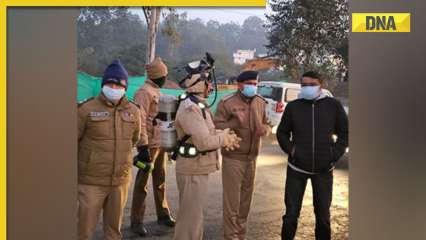
According to Senior Superintendent of Police (SSP) Dehradun, Ajay Singh, National Disaster Response Force (NDRF) and other security forces rushed to the spot soon after receiving information about the incident.
AAP, Congress to take decision on seat sharing for Lok Sabha elections soon; BJP alleges confusion in alliance
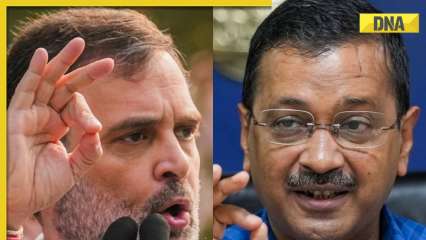
AAP leader Atishi and other party leaders were present at the meeting held at Congress leader and convener of the Congress National Alliance Committee, Mukul Wasnik’s residence in the national capital to discuss the seat-sharing formula.
‘India has always been…’: Maldives tourism body reacts to derogatory comments against PM Modi

Terming India as one of the closest neighbours and allies of the Maldives, MATI noted that India has always been a first responder to various crises throughout the history of the island country.