

Excise policy PMLA case: Delhi HC issues notice to ED on AAP leader Sanjay Singh’s bail plea

The bench of Justice Swarna Kanta Sharma while seeking a response from ED, fixed January 29, 2023, for the next date of hearing.
Chennai weather: Schools, colleges are shut due to heavy rainfall, check latest IMD report

The India Meteorological Department (IMD) said that light to moderate rain with occasional intense spells accompanied by thunderstorms and lightning is very likely to continue in several districts today.
A poll with outsize importance: What to know about Taiwan’s election
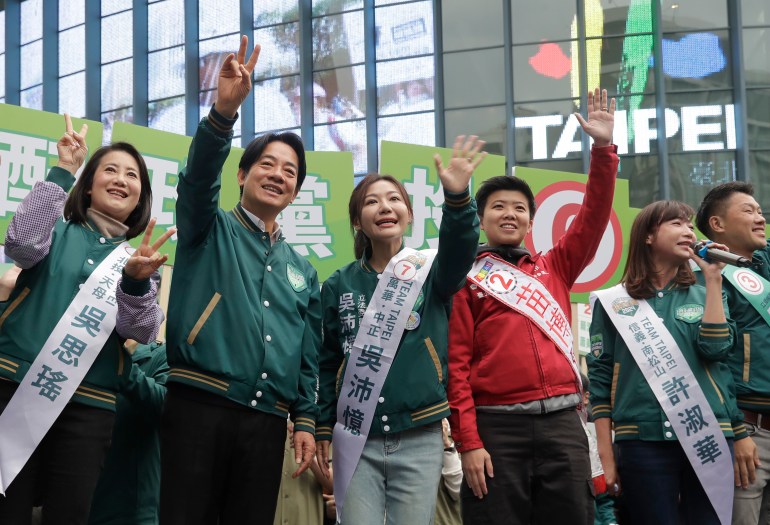
Taipei, Taiwan – In what is set to be a historic year for elections worldwide, Taiwanese voters will head to the polls this week to choose their next president, vice president and legislative representatives on January 13. Despite a population of just 23.5 million people, Taiwan’s election carries an outsized importance due to its disputed political status. While de facto independent since the 1940s, the island and its outlying territories are still claimed by the Chinese Communist Party (CCP) – something nearly all Taiwanese reject but fear saying publicly because of the risk of war. Observers in the United States and China will be closely watching the outcome to see whether voters opt for the more conservative and Beijing-friendly Kuomintang (KMT) or the more centre-left and US-friendly Democratic Progressive Party (DPP), which has ruled Taiwan for the past eight years. There is also the smaller Taiwan’s People Party (TPP), which lies somewhere between both parties on the political spectrum. Since its first democratic elections in 1996, Taiwan’s two major political parties have alternated leadership every eight years – but this year, the DPP’s William Lai Ching-te is the frontrunner with the KMT, which has far failed to mount a substantial challenge to Lai following the collapse of efforts to agree on a joint opposition ticket with the TPP. While voters are unhappy with key domestic issues such as Taiwan’s stagnant economy, the high cost of housing and the future of the island’s energy policies, the presidential election is often overshadowed by the bigger question of Taiwan’s political status. In 2020, voters chose the DPP and its Taiwan-first agenda by a landslide against a backdrop of massive pro-democracy protests in Hong Kong, a former British colony that Beijing promised to allow semi-autonomy for 50 years after its return to Chinese sovereignty in 1997. Taiwan had long been offered a similar deal if it returned to the “motherland” but for many in Taiwan, events in Hong Kong, where Beijing imposed a sweeping security law and an electoral overhaul, were evidence that Beijing does not keep its promises. Taiwanese Vice President William Lai is hoping he can extend the DPP’s hold on government for a third successive term [Chiang Ying-ying/AP Photo] With the Hong Kong protests long over, voters will now have to decide if they want the economic benefits of a closer relationship with Beijing offered by the KMT or if they want to continue standing apart and risk facing regular Chinese aggression as they have under incumbent President Tsai Ing-wen. “Because of Taiwan’s contested status and the uncertainty that that brings not just to the region, but the world as well, everyone is really invested in who’s going to be the one steering the ship, so to speak, because that will have a lot of implications for not just security, but also risk and economic potential,” said Lev Nachman, an expert in Taiwanese politics and an assistant professor at Taipei’s National Chengchi University. “The reason so many people want to make sure that this is a free and fair election is because the world will be very interested if Taiwan’s status as a democracy changes. I think people not only care about who wins the election but how they win,” he said. Here is all you need to know about the Taiwan elections. How does the election work? On January 13, people in Taiwan will vote three times: for president and vice president, for their local legislator, and for their favoured “party list” – a list of legislators-at-large who are given seats based on their party’s proportion of votes. The party list is particularly important in Taiwanese politics as a measure of a party’s popularity and reputation. Taiwan’s 113-person legislature is made up of 73 legislators based on geographic constituencies, 34 based on party lists and six seats reserved for Indigenous Taiwanese representatives, all of whom will serve four-year terms. Polls will open from 8am (00:00 GMT) until 4pm (08:00 GMT) and voters will cast paper ballots that will be counted by hand. About 19.5 million people are registered to vote and results should be out by the end of the voting day. Critics say Taiwan’s voting system deprives younger people of a voice because voters have to be at least 20 years old and return to the location of their “household registration” – typically their hometown – to vote. The day before the election, tens of thousands of people will be on the move, flying to one of Taiwan’s outlying islands, driving to a remote mountain town, or taking the high-speed rail to one of its major west coast cities. Despite these challenges, turnout has been relatively high in the last two elections – at 66.27 percent in 2016 and 74.9 percent in 2020. Hou Yu-ih is hopjng to win back power for the KMT, the region’s oldest political party [Ann Wang/Reuters] On the ground, it is not hard to see why so many people get excited about polling day, Brian Hioe, the co-founder of New Bloom Magazine and a frequent commentator on Taiwanese politics, told Al Jazeera. “Just go around the city and you see election ads everywhere, blanketing everywhere, just like you just see speaker trucks blaring election slogans everywhere in your daily life,” he said. “So, it’s very ubiquitous and it points to how politics is very integrated into everyday life in Taiwanese society.” Along with election fever has also come a wave of election scandals – another popular ingredient in Taiwanese politics, according to Hioe, thanks in part to Taiwan’s politically polarised and tabloid-dominated media. This election, all three presidential candidates are facing questions about their various property holdings, including a student dorm, a family home and an illegally-zoned parking lot. What are Taiwan’s main political parties? Taiwanese politics is still overshadowed for some voters by the island’s tumultuous 20th-century history. Passed between multiple colonial powers from the 17th to the late 19th century, Taiwan was a Japanese colony from 1895 until 1945, when Tokyo
Sheikh Hasina wins fifth term in Bangladesh amid turnout controversy
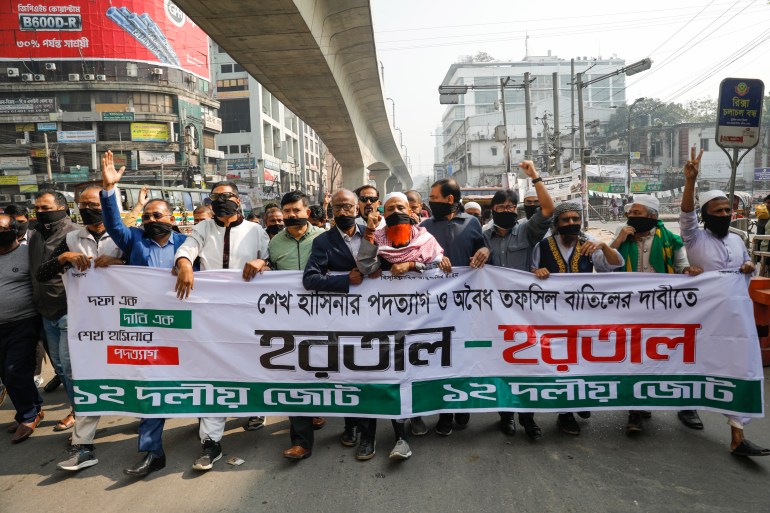
Sheikh Hasina has secured her fifth term as Bangladeshi prime minister in an election whose outcome was decided the moment its schedule was announced in early November when the main opposition boycotted the poll. The surprise was who came second. Instead of any political party, independent candidates secured a total of 63 seats, the second highest after Hasina’s Awami League (AL), which won 222, creating a problem of finding a parliamentary opposition. The current opposition, the Jatiya Party, managed to secure just 11 of the 300 parliamentary seats, according to the Elections Commission. Almost all the winning independent contenders were people who had been rejected by the AL but were asked by the party leadership to stand as “dummy candidates” to give the election a competitive veneer in front of the world. “This is a bizarre outcome of a bizarre election,” Shahidul Alam, a renowned Bangladeshi rights activist and photographer, told Al Jazeera. “Dummy candidates in a dummy election will now lead to a dummy parliament.” Shunned by the Bangladesh Nationalist Party (BNP) – the AL’s main political opponent – which wanted the balloting held under a neutral entity instead of Hasina’s administration, Sunday’s “one-sided election” was just a “mere formality” to put Hasina back in power again, analysts say. The only suspense, they added, was voter turnout, after Western governments put pressure on Hasina’s government to ensure a free, fair and participatory poll. After polling closed at 4pm (10:00 GMT on Sunday), the Election Commission (EC) said turnout was 40 percent. But many were doubtful it was even that high. “I don’t know about the rest of the country but I think I have not seen such an empty Dhaka in years,” Abdullah Yusuf, an engineer in the Dhanmondi area of the capital, told Al Jazeera. “It felt like the initial COVID days. I crossed two polling centres midday and didn’t see many people besides Awami League activists who were wearing badges. EC’s claim of 40 percent is quite absurd.” ‘Ridiculous’ Some analysts, meanwhile, pointed to confusion at the EC announcement. “It’s hard to believe the turnout was 40 percent, especially given the fact that the chief election commissioner himself uttered 28 percent first while briefing the media and then changed it to 40 percent all of a sudden,” said Sakhawat Hossain, a former election commissioner. The turnout figure, which was shown on the dashboard at the EC headquarters hours after the briefing, was 28 percent, and a photo of it was widely circulated in the country’s social media and received criticism. Al Jazeera checked and verified that figure. EC earlier declared at an hour before the poll closing that the turnout was about 27 percent. Al Jazeera visited at least 10 polling stations across the capital Dhaka in the last hour and did not see any voters. Sharmin Murshid, the head of the reputed election observer organisation Brotee, told Al Jazeera that a jump from 27 to 40 in a span of an hour or so was “ridiculous” and had “tainted the EC reputation severely”. “It was a sure way to further lose the confidence of the people and credibility which it did not have to start with,” she said. “This was not an election, rather it was an exercise in casting votes by one party for one party,” she added. Activists from Bangladesh’s opposition called a “hartal”, or strike, over the election weekend [Mahmud Hossain Opu/AP] BNP leaders, meanwhile, termed even 28 percent very high, saying that most of the polling booths across the country had been empty throughout the day. The opposition party earlier declared a 48-hour “hartal”, equivalent to a total strike, from Saturday morning, which it believed also reduced turnout. “In most pictures and footage shared in media and social platforms, you would find photos of dogs standing, lying down and basking in the sun along with police and a few Awami League activists,” said Abdul Moyeen Khan, a senior BNP leader, while briefing journalists after the election, “But no voters.” Khan said people had heeded their call to boycott ballots and show a “red card” to the election. “Even Awami League supporters didn’t bother to go to booths to cast their votes because they knew their candidates would win anyway,” he added. Concerns on legitimacy AL leaders, however, said the BNP’s plan to foil the election through “hartal” and “arson attacks” had not paid off because people did turn out to vote. “This is a victory for our democracy,” Obaidul Quader told the media after finding a clear lead in poll results, “People give BNP’s terrorism befitting reply through balloting.” Quader also said most people voted for their preferred candidates without any intimidation or interference in voting. “This was one of the most peaceful elections of the country,” he said. While the last two national elections were tainted with dozens of deaths and severe violence, Sunday’s poll saw only one death and very few clashes, making it one of the most peaceful polls in the South Asian nation’s history. “People of your country should be proud of holding such a peaceful election,” Hisham Kuhail, the CEO of the Central Election Commission of Palestine, one of several foreign observers of the poll, told a media briefing afterwards. Election officials at Armanitola Government High School in Dhaka wait for voters [Mohammad Ponir Hossain/Reuters] Kuhail, however, avoided questions about voter turnout and said he was assessing only the technicalities of the voting process – whether voters were allowed access and whether voting took place systematically. “I cannot comment on the political scenario here. For that I need to stay at least a month,” he added. Russian observer Andrei Shutov also said the voting process was systematic and peaceful. “This election is legitimate,” he added. AKM Wahiduzzaman, the information and technology affairs secretary of the BNP, said there was no question it was peaceful because “there were no voters”. “But it is obviously not legitimate,” he said. The Awami League’s victory, he added, was “illegal and
Russia-Ukraine war: List of key events, day 684
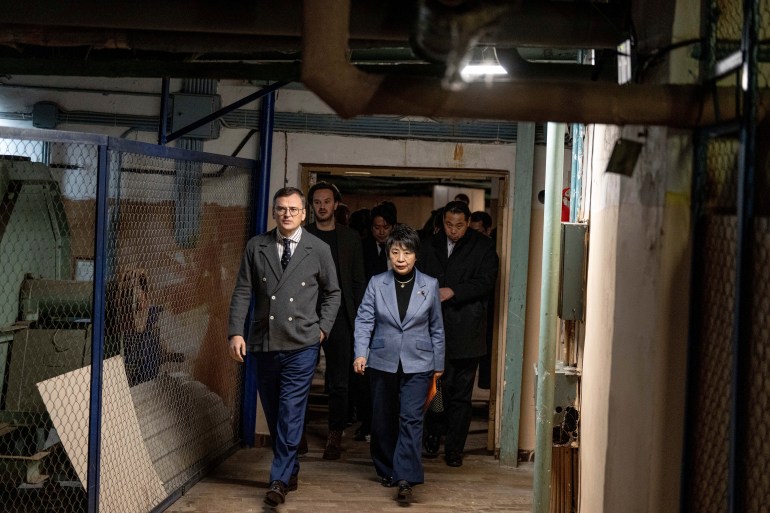
As the war enters its 684th day, these are the main developments. Here is the situation on Monday, January 8, 2024. Fighting Ukraine’s Air Force said it shot down 21 out of 28 Russian drones aimed at the south and east of the country. Russia also launched three cruise missiles, the Air Force added, without offering further details. Dnipropetrovsk regional authorities said 12 people were injured in a Russian drone attack on the city of Dnipro. Local officials said two people were killed in the city of Kherson after Russian forces occupying the opposite bank of the Dnipro River hit the city with numerous shelling attacks. Roman Mrochko, the head of the Kherson city administration, said several people were also injured. In the northeast, the Kharkiv Regional Prosecutor’s Office said one man was killed and two other civilians, including a child, injured in Russian shelling of Kupiansk. Russia’s Defence Ministry said soldiers fighting on the front line in Ukraine marked Orthodox Christmas with military priests leading prayer services. Politics and diplomacy Japanese Foreign Minister Yoko Kamikawa, on an unannounced trip to Kyiv, promised $37m to NATO to help Ukraine avert Russian drone strikes. She also said Japan would donate five mobile gas turbine generators and seven transformers to maintain power supplies. Kamikawa was forced to hold her press conference with Ukrainian Foreign Minister Dmytro Kuleba underground after an air raid alert. “Japan is determined to continue to support Ukraine so that peace can return,” she said. VIsiting Japanese Foreign Minister Yoko Kamikawa had to hold her press conference in a bomb shelter because of an air raid [Evgeniy Maloletka/AP] Ukrainian President Volodymyr Zelenskyy told a security conference in Sweden that the situation on the battlefield remained relatively stable and that Russia could be defeated. Speaking at the same event, Swedish Foreign Minister Tobias Billstrom said the primary task of Sweden’s foreign policy in the coming years would be to support Ukraine. Weapons Zelenskyy said the war in Ukraine had shown the need for Europe to develop joint weapons production to ensure it can “preserve itself” and defend its freedoms. Adblock test (Why?)
Who has maximum gold in India? Who owns 22579618 kg gold in the country

The World Gold Council India’s director, Somasundaram, states that the 2020-21 study indicates that Indian households own 2-13,000 tonnes of gold.
Case filed against Amit Malviya for ‘defaming’ Bengal CM Mamata Banerjee

A Police complaint has been filed against BJP’s Amit Malviya for social media post on Bengal CM Mamata Banerjee.
Delhi-NCR weather: Amid cold wave, light rains expected in region, check details here
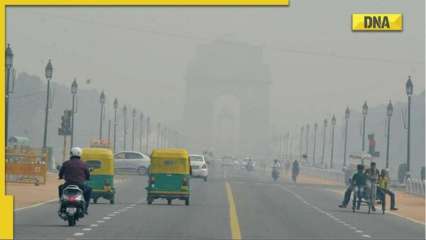
IMD predicts rainfall in Delhi NCR, and low temperatures across North India.
‘Rajiv Gandhi had taken steps to open Ram temple…’: Karnataka Minister targets BJP for taking credit

Karnataka Minister and Congress leader Ramalinga Reddy on Sunday targeted the BJP for taking credit for the Ram Temple.
EaseMyTrip suspends all Maldives flight bookings amid India-Maldives row
Amid an escalating row between India and the Maldives, hashtag #BoycottMaldives gained traction on social media as Indian tourists started cancelling their scheduled vacations to the island nation.