

DGCA orders airlines to inspect emergency exits of Boeing 737-8 Max planes after Alaska Airlines incident

The directive comes in the wake of the Alaska Airlines incident involving Boeing 737 -9 Max aircraft.
Bangladesh to vote in general elections boycotted by opposition

Bangladesh is holding general elections on Sunday, with Prime Minister Sheikh Hasina set to win a fourth straight term and the fifth overall for her Awami League-led alliance, despite overseeing an economy that required an international bailout last year. The main opposition Bangladesh Nationalist Party (BNP) of ailing former Prime Minister Khaleda Zia is boycotting the polls after Hasina denied its demand to resign and let a caretaker government run the elections. Women make up almost half of the nearly 120 million eligible voters. First-time voters number about 15 million. Nearly 2,000 candidates overall are vying for the 300 directly elected parliament seats, with a record high of 5.1 percent of women candidates. There are 436 independent candidates in the race, the most since 2001. The BNP says the Awami League has propped up “dummy” candidates to try to make the election look credible, a claim the ruling party denies. Rights groups have accused the government of targeting opposition leaders and supporters, while Hasina and the Awami League have repeatedly condemned the BNP as troublemakers set on sabotaging the elections. Nearly 800,000 police, paramilitary and police auxiliaries will guard the polls on election day. Officials of the army, navy and air force have also been deployed. As many as 127 foreign observers will track the election process to assess its fairness, while 59 journalists from abroad have been accredited. Hasina has been credited with turning around the $416bn economy and its massive garments industry, while also winning international praise for sheltering nearly a million Rohingya Muslims fleeing persecution in neighbouring Myanmar. But in recent months, the economy, once among the world’s fastest growing, was rocked by violent protests after a jump in the cost of living, as Bangladesh struggles to pay for costly energy imports amid depleting dollar reserves. Adblock test (Why?)
Bangladesh polling booths set ablaze, opposition starts election strike

Police say unidentified arsonists have set fire to at least five primary schools, including four polling stations. Polling booths were set on fire in Bangladesh on the eve of Sunday’s general elections, hours after four people were killed in a suspected arson attack on a commuter train. Police on Saturday said unidentified arsonists set fire to at least five primary schools, including four polling stations. They were investigating fires in Gazipur, on the outskirts of the capital, Dhaka, suspected to have been set in the middle of the night by those aiming to disrupt the elections, which the main opposition party has pledged to boycott. “We have intensified patrolling and remain on high alert,” said Gazipur police chief Kazi Shafiqul Alam. The election commission has asked authorities to increase security around polling stations. Arsonists also attacked polling booths in the northeastern districts of Moulvibazar and Habiganj, police said, with similar incidents reported elsewhere in the past two days. Police in the coastal district of Khulna arrested two people on Thursday night accused of trying to set fire to a school, which serve as voting stations. The following day, another bid to set fire to a primary school nearby was averted, said Saidur Rahman, police chief of the district. The main opposition Bangladesh Nationalist Party (BNP), and numerous other opposition parties, have boycotted the elections, saying they are intended to solidify the rule of Prime Minister Sheikh Hasina. Hasina, 76, is assured of a fourth consecutive term in Sunday’s vote, which observers have criticised as one-sided. The Khaleda Zia-led BNP on Saturday started a 48-hour general strike, calling on people to boycott the vote, saying the government can’t guarantee its fairness. On Saturday morning, a small group of party supporters marched across Dhaka’s Shahbagh neighbourhood, calling on people to join the strike. Another rally by about 200 left-wing protesters took place outside the National Press Club to denounce the election. “The government is again playing with fire. The government has resorted to its old tactics of holding a one-sided election,” said Ruhul Kabir Rizvi, a senior BNP official. Deadly train fire Meanwhile, police apprehended seven members of the opposition party, accused of an alleged pre-election arson attack on a commuter train on Friday, in which four people were killed. Among those arrested in the capital early on Saturday was Nabiullah Nabi, a senior BNP official, along with six other party activists. “Nabi funded and masterminded the attack,” Dhaka Metropolitan Police spokesperson Faruk Hossain told the AFP news agency by phone. Foreign Minister AK Abdul Momen said the timing of the incident showed an “absolute intention to hinder the festivity, safety and security of the democratic processes of the country”. A rescuer shines his torch from a window as he searches a charred carriage of the Benapole Express in Dhaka, Bangladesh, on January 5, 2024 [Indranil Mukherjee/AFP] “This reprehensible incident, undoubtedly orchestrated by those with malicious intent, strikes at the very heart of our democratic values,” he added in a statement. However, BNP spokesperson AKM Wahiduzzaman told AFP the attacks were pre-planned “acts of sabotage” by the ruling government, aimed at “discrediting the non-violent movement of the BNP”. He said the government was aiming to “divert people’s attention away from the sham election”. Eight people were critically injured in the train fire, officials said. “All eight, including two children, have burnt their respiratory tracts,” said Dr Samanta Lal Sen of a state-run specialist burns hospital in the capital. “We are closely monitoring them,” he told reporters. Adblock test (Why?)
‘Blood for money’: The patients forced to turn to racketeers in Nigeria

Ibadan, Nigeria – A wave of red corrugated roofs welcomes visitors to the city of Ibadan in southwest Nigeria. Inside the 200-year-old city’s centre, incessant traffic winds through narrow, unpaved roads and past crowded open-air markets. At the edge of the city, Opeyemi Dasola’s home, a square fortress of cement, is a calm oasis. Dasola, a streetside cheese seller, is a quiet soul, and the only sound in her living room is the gentle hum of the air conditioner circulating air through the sparsely furnished space. But just a week earlier, this house was rocked with chaos. Fowarogun, Dasola’s 17-year-old daughter, had woken at midnight with a shooting pain starting in her feet and eventually engulfing every part of her body. The girl was frightened, but Dasola already knew what was causing the problem. Fowarogun had been diagnosed with sickle cell anaemia, a hereditary condition that limits the supply of oxygen to the blood, when she was four years old. The disorder occurs due to clusters of sickle-shaped red blood cells, which can obstruct blood vessels, hindering blood flow around the body. It can shorten life expectancy by 20 to 30 years in many countries, but in Nigeria, about 80 percent of sufferers do not even make it to the age of five. The mean age of death for those who do is currently just over 21. This is a condition that Fowarogun’s mother has learned to manage by giving her daily folic acid supplements and avoiding extreme temperatures. Nevertheless, roughly every three years, Fowarogun requires a blood transfusion to keep her healthy. Obtaining blood for her daughter is a source of great anxiety for Dasola. Severe blood shortages have left patients in Nigeria scrambling to find their own private donors, a practice that is illegal, according to the country’s blood regulator, the National Blood Transfusion Commission. The unmet demand for blood, however, has spawned a black market in which people donate blood for profit and where there are few regulations to ensure the blood is free of disease and safe to use. A refrigerator with a few dozen donations of blood type B at Ibadan Transfusion Service [Omotayo Omokehinde/Al Jazeera] With a population of 200 million people, Nigeria requires an estimated 1.8 million units of blood each year for patients who have been in accidents, undergo surgery and need it to treat conditions such as anaemia and other genetic blood disorders. However, each year, only about 500,000 pints (236,600 litres) of blood are collected through official channels. Nigerians are often reluctant to give blood because of beliefs that donating it will make them sick or will weaken men’s libidos. The National Blood Transfusion Commission faces other challenges besides low supplies. Lack of funding is a major problem, Amedu Omale, the commission’s former director general, told Al Jazeera shortly before he retired in August. He said it will cost an estimated $15m to reform the system but it has received only $50,000 from the government since its creation in 2021 by the National Assembly. Before the commission, Nigeria’s blood service was run by the National Blood Transfusion Service, which was created in 1990 and was merely a task force under the Federal Ministry of Health and Social Welfare without much decision-making power. Al Jazeera contacted the ministry for comment but received no reply. A spokesman for the National Blood Transfusion Commission told Al Jazeera that after the agency was established, the government quickly became preoccupied with the COVID-19 pandemic and the cost of living crisis but the commission hopes to conduct its own fundraising drives in 2024. ‘Family replacement’ With adequate funding, the commission could build a centralised blood collection system in which blood from donors could be screened and separated into components to avoid waste. Blood could also be stored in the right conditions and sorted so it would be ready for delivery to hospitals when needed. There would also be a system to allow hospitals all over the country to coordinate with each other to share blood supplies. Instead, the lack of such a system has forced most hospitals to source blood through a problematic practice known as “family replacement”, in which patients must find a family member to donate the same amount of blood that has been used for the patient. The people donating will typically have to answer a questionnaire about their health, sign an agreement and then donate blood. The blood type does not have to match. People who do not have a family member available to donate will need to find someone who they can pay who will pose as a family member – the hospitals do not check ID. Most hospitals impose a deadline of three to seven days and will not approve a patient for discharge until the blood has been replaced. A commercial blood donor on a stretcher at a local clinic in Ibadan [Omotayo Omokehinde/Al Jazeera] “Family replacement is not ideal because it creates shortcuts and discourages voluntary donation,” said John Aneke, a professor of haematology at Nnamdi Azikiwe University in the southeastern state of Anambra. This system is frowned upon by the public health community, he said, because it helps promote commercial donations from donors who engage in risky lifestyles and increases the risk of transfusion-transmitted infections, such as hepatitis. The requirement that blood replacements must be found before patients are discharged also puts immense pressure on patients, whose bills from spending extra days in the hospital will continue to accumulate. Many end up turning to social media to appeal for donations and to illegal commercial donors or “racketeers”. Commercial donors give blood to earn cash and are normally contacted by middlemen who broker deals between them and the patients. A donor is advised to donate no more than twice a year, but because this practice is illegal, it is not regulated in any way. Many commercial donors donate blood much more frequently than this. Oloyede Adebola, a 37-year-old mother of two, has had to deal with racketeers
COVID-19: Task force orders holiday returnees to isolate for 5 days amid rising cases in this state

With the next 15 days being critical to curbing infections, people experiencing fever, cold, or cough are advised to get tested for Covid.
Who is Kajal Jha, whose Delhi bungalow worth Rs 100 crore was sealed by Noida Police?

Noida Police raided a luxurious ?100-crore South Delhi bungalow gifted by Kana to his girlfriend, Kajal Jha.
‘India creates yet another landmark’ says PM Modi as ISRO’s Aditya-L1 reaches destination travelling 15 lakh kms

PM Modi applauded the country’s scientists, and said ‘India creates yet another landmark. India’s first solar observatory Aditya-L1 reaches it destination.’
Judge denied Bill Clinton deposition request in Ghislaine Maxwell case: Jeffrey Epstein docs

Former President Bill Clinton was not required to testify in a defamation case against Ghislaine Maxwell after a judge ruled that one of Jeffrey Epstein’s accusers had not proven Clinton’s testimony was relevant, newly-unsealed documents showed. The 2016 ruling was revealed Friday during the third drop of unsealed documents in the defamation case filed against Maxwell by Epstein accuser Virginia Giuffre. In the ruling, Giuffre sought to depose butler Juan Alessi, Palm Beach Police Chief Michael Reiter and Clinton. “The relevance of the testimony of Mr. Reiter and President Clinton have not been adequately established. The motion as to these two depositions is denied,” former Southern District of New York Judge Robert Sweet wrote in his decision. EPSTEIN ALLEGEDLY INVOKED 5TH AMENDMENT 500 TIMES DURING DEPOSITION, SKIRTED QUESTIONS ABOUT CLINTON Of the three requests, only Alessi was approved for a deposition. The entire former first family has now been named in the unsealed records, although none of the Clintons have been accused of wrongdoing in connection with Epstein. A spokesman for the former president earlier this week denied claims in the documents that Epstein and Clinton were close friends. FORMER VANITY FAIR EDITOR ‘CATEGORICALLY’ DENIES REPORT CLINTON TRIED TO SHUT DOWN EPSTEIN REPORTING Last month, a New York federal judge ordered that dozens of documents with the names of people linked to Epstein be unsealed. Clinton was one of dozens of John Does whose names were unsealed under the court order. Anyone who suspects trafficking can call the National Human Trafficking Hotline at (888) 373-7888.
Supreme Court rules Idaho may enforce its abortion ban, even in medical emergencies
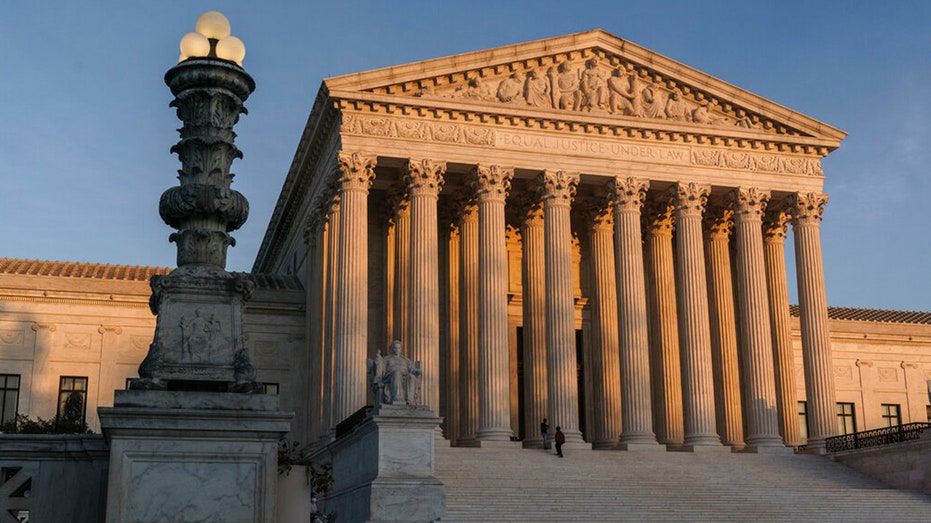
The Supreme Court ruled Friday that Idaho may enforce its abortion ban, including in medical emergencies, as the fight over the law plays out in court. The court said it would hear arguments in April and put on hold a lower court ruling that had blocked the law in medical emergencies. The lower court ruling came following a lawsuit filed by the Biden administration. The challenge against the Idaho law gives the high court its second major abortion dispute since it overturned Roe v. Wade in 2022, allowing states to make their own laws regarding abortion access. The court will also hear in the coming months a challenge to the Food and Drug Administration’s rules for obtaining the abortion pill mifepristone. In the Idaho case over hospital emergencies, the administration has argued that hospitals who receive Medicare funds are required by federal law to provide emergency care, potentially including abortion, regardless of a state law prohibiting abortion. TEXAS EMERGENCY ROOMS NOT BOUND BY BIDEN ADMIN’S GUIDANCE ON EMERGENCY ABORTION, FEDERAL COURT RULES The administration issued guidance about the federal law – the Emergency Medical Treatment and Labor Act – two weeks after Roe v. Wade was overturned. A month later, the administration sued Idaho. U.S. District Judge B. Lynn Winmill in Idaho sided with the administration. A judge in a separate case in Texas sided with the state. President Biden released a statement Friday night objecting to the Supreme Court’s decision, saying his administration “will continue to defend a woman’s ability to access emergency care under federal law.” Idaho’s law makes it a crime with a prison term of up to five years for anyone who performs or assists a woman in an abortion. The administration claims that the Emergency Medical Treatment and Labor Act mandates that health care providers must perform abortions for emergency room patients when needed to treat an emergency medical condition, including severe bleeding, preeclampsia and certain pregnancy-related infections, even if a state’s abortion restrictions prohibit such a response. “For certain medical emergencies, abortion care is the necessary stabilizing treatment,” Solicitor General Elizabeth Prelogar wrote in an administration filing at the Supreme Court. FORMER TRUMP ADVISER KELLYANNE CONWAY LEADS CHARGE TO OVERHAUL GOP ABORTION STRATEGY, END DEMS’ 2024 ADVANTAGE The state argued that the administration was misusing a law intended to prevent hospitals from ignoring patients and imposing “a federal abortion mandate” on states. The Emergency Medical Treatment and Labor Act “says nothing about abortion,” Idaho Attorney General Raul Labrador told the court in a brief. The federal appeals court in New Orleans came to the same conclusion as Labrador in a ruling Tuesday. A three-judge panel ruled that the administration cannot use the Emergency Medical Treatment and Labor Act to require hospitals in Texas to provide abortions for women whose lives are at risk due to pregnancy. The appeals court affirmed a ruling by U.S. District Judge James Wesley Hendrix, who wrote that adopting the administration’s view would force physicians to place the health of the pregnant person over that of the fetus or embryo even though the Emergency Medical Treatment and Labor Act “is silent as to abortion.” Following Winmill’s ruling, Idaho lawmakers won an order from a panel of the 9th U.S. Circuit Court of Appeals allowing the law to be fully enforced. However, a larger contingent of 9th Circuit judges threw out the panel’s ruling and set arguments for later this month. The Supreme Court’s order on Friday moves the Idaho case away from the appeals court, and a decision is expected this summer. Several other legal battles concerning abortion are also making their way through the courts in Idaho. Four women and several physicians have filed a lawsuit asking an Idaho court to clarify the circumstances that qualify women to legally receive an abortion. That lawsuit was recently allowed to move forward despite attempts by the Attorney General’s office to dismiss the case. CLICK HERE TO GET THE FOX NEWS APP A federal judge in November temporarily blocked Idaho’s “abortion trafficking” law from being enforced while a legal fight challenging its constitutionality plays out. That law intended to prevent minors from receiving abortions in states where the procedure is legal if they do not have their parents’ permission. The Associated Press contributed to this report.
Liz Cheney calls on New Hampshire voters to fight ‘plague of cowardice’ in Republican Party

Former U.S. Rep. Liz Cheney, R-Wyo., urged New Hampshire voters on Friday to take a stand against the “cowardice” she claims is spreading within the Republican Party when they head to the polls to cast their votes in the 2024 presidential primary later this month. Cheney, once a member of House Republican leadership when she was in Congress, made the comments in a speech at Dartmouth College as voters in New Hampshire prepare for the Jan. 23 primary. “In a little over two weeks when you in New Hampshire go to the polls the world will be watching,” Cheney said. “Speak for us all. Tell the world who we are with your vote. Tell them that we are a good and a great nation,” she added. “But make sure they know that we do not bend, we do not break and we do not yield in the defense of our freedom. Show the world that we will defeat the plague of cowardice sweeping through the Republican Party.” HALEY SPARKS STRONG REACTIONS FROM CAUCUS-GOERS AFTER TELLING NH VOTERS TO ‘CORRECT’ IOWA CAUCUS The former GOP congresswoman has clashed with many Republican lawmakers in the last couple of years over her criticism of former President Trump’s unsubstantiated claims the 2020 election was stolen from him, the former president’s handling of the Jan. 6, 2021, Capitol attack and her vote to impeach him. Cheney served as vice chair of the Congressional committee that investigated the Capitol riot. “As a nation, we have arrived at a point where a group of elected Republicans cannot be counted on to defend the Constitution,” she said. The Supreme Court said Friday it will decide whether Trump can be kept off state ballots over his role in the riot. This comes after two states – Colorado and Maine – took steps last month to remove the former president from their respective ballots, citing a provision under the 14th Amendment of the U.S. Constitution prohibiting some people who engaged in insurrection from holding public office. “This is a process that will go through the courts and we’ll see how that unfolds. But there’s no question in my mind that his actions clearly constituted an offense that is within the language of the 14th Amendment,” Cheney said. “There’s not a requirement that you be convicted in the Senate or in a court of law, and so I believe in the plain language of the constitution.” TRUMP TARGETS HALEY IN NEW HAMPSHIRE DURING FINAL WEEKS BEFORE PRIMARY Cheney, who was easily defeated in her 2022 primary re-election bid by a Trump-backed candidate after standing up to the former president, said she disagrees with many of President Biden’s policies but urged conservative Republicans to recognize “the threat posed by Donald Trump and the threat posed by Joe Biden are not even remotely similar.” “Our nation can survive and recover from policy mistakes. We cannot recover from a president willing to torch the Constitution,” she said. When asked about her future political ambitions and if they included a third-party run for president this year, Cheney echoed her past comments in which she said she would consider launching a White House bid to prevent Trump from being elected again. “I’m going to do whatever the most effective thing is to ensure that Donald Trump is not elected,” she said on Friday. “I’ll make a decision about what that is in the coming months as we see what happens in the Republican primaries.” The Associated Press contributed to this report.