

Courtroom drama as convicted felon attacks judge during sentencing

NewsFeed Dramatic video shows the moment a defendant jumps over a courtroom bench to attack a judge during his sentencing hearing in Las Vegas, Nevada. Moments earlier, he had asked the court for leniency. In November, he pled guilty to attempted battery causing substantial bodily harm. During the attack, court personnel grab him and a brawl ensues. Punches are thrown continuously for 20 seconds as guards restrain him. Court attendees then check on the judge who had suffered minor injuries. Published On 4 Jan 20244 Jan 2024 Adblock test (Why?)
As opposition boycott tarnishes vote, young Bangladeshis seek new narrative

At a technology centre in Bangladesh’s capital, young women huddle around a computer, discussing a coding issue. Many of them make the daily trip to Dhaka on the shiny new metro rail while scouring their smartphones for the latest on social media. For decades, political battles in Bangladesh have been fought on the streets, often with violence, by parties led by two powerful women. But there are signs of a generational change as the country of 169 million heads into another general election on Sunday. Acrimony has flared once again ahead of the voting, and the opposition, led by former Prime Minister Khaleda Zia, has boycotted the elections. But millions of young voters are seeking a different narrative. A burgeoning technology industry, lively e-commerce and a growing public digital infrastructure are helping one of South Asia’s fastest growing economies capitalise on a tech-savvy workforce that is demanding change from politicians. Prime Minister Sheikh Hasina is trying to woo first-time voters with her government’s Digital Bangladesh project, promising a “smart Bangladesh” by 2041 and 15 million new jobs for young people by 2030. In an address at a large election rally outside Dhaka on Saturday, Hasina asked young voters for their support, “so that the advancement of Bangladesh continues”. Some are listening. Shahrima Tanjin Arni, 26, who teaches law at Dhaka University, called Hasina a bold leader with a vision for a digital future. “She holds the values of the past, but at the same time, she has a progressive thinking in her progressive heart, which is not very common in Bangladeshi societies,” Arni said. Arni credits Hasina with being a ‘bold leader’ with a vision for a digital future [Mahmud Hossain Opu/AP] ‘Don’t want any chaos’ The previous two general elections were marred by allegations of vote rigging and intimidation, which authorities denied. Hasina is seeking a fourth consecutive term and has pledged free and fair elections. But her critics have accused her of undermining the process for inclusive elections and suppressing the opposition, which Hasina blamed for violence. Younger voters have said they want a break from the highly polarised political culture and concerns over democratic rights. “My desire is that … people of Bangladesh will freely exercise their voting right, their freedom of speech will be ensured and the justice system will work independently,” said Abdur Rahim Rony, a student at Dhaka University. “I also wish that no political party or the government will interfere with the constitutional institutions.” One-fourth of the country’s population is in the 15-29 age group, according to the Bangladesh Bureau of Statistics. Almost one-third of the country’s 119.1 million registered voters are between 18 and 30. An October survey conducted online by the Bangladesh Citizen’s Platform for SDGs, or sustainable development goals, found that 69 percent of people aged 18 to 35 in Bangladesh consider corruption and nepotism as the main obstacles to development as the country sheds its least-developed economic status and grows into a middle-income developing country. “We don’t want any chaos on streets or violence. When I will finish my study, I wish to do a job or start my own business peacefully,” said 20-year-old Raul Tamjid Rahman, a first-time voter and computer science student at Brac University in Dhaka. “It’s a call from our generation to our politicians and policymakers.” Digital boom The telecommunications boom in Bangladesh began in 1997 when Hasina issued free licenses to three operators to run the mobile phone sector. It was a key chance for global companies to invest in one of the world’s most densely populated countries. “The expansion of digital economy is a miracle that is bringing changes to the economic landscape with young people at the helm,” said Abu Saeed Khan, a senior policy fellow at the Sri Lanka-based think tank LIRNEasia. Achia Nila is the founder of a Women in Digital technology centre [Mahmud Hossain Opu/AP] According to the Bangladesh Telecommunication Regulatory Commission, the country now has close to 127 million internet users with about 114 million mobile internet subscribers. The government has spent millions of dollars to turn a network of 8,500 rural post offices into e-centres for local communities. New startups include some funded by Silicon Valley investors, and mobile money transfers have become common. Most of Bangladesh’s 4 million garment workers, a majority of them women, use SMS-based money transfer apps to help their families in rural areas. But inflation and dwindling foreign currency reserves still challenge Bangladesh’s economy. The country sought a $4.5bn loan from the International Monetary Fund in 2022 to safeguard its finances. The government is optimistic, however, that the economy, which grew from $8.75bn in 1971 to $460bn in 2022, will soon be worth half a trillion dollars. “Mobile voice and mobile video both have become the oxygen of [the] economy, as simple as that,” Khan said. The expansion of digital infrastructure has come with concerns over a contentious 2018 Digital Security Act and its recent replacement, the Cyber Security Act. The government said they are needed to fight misinformation, hacking and attempts to undermine people’s rights. Critics and rights activists said the previous law was misused by the government to suppress dissent and freedom of speech. Critics said the new cybersecurity law will change little from the earlier legislation. In March, a journalist for a leading newspaper was arrested under the law on charges of spreading false news. TIM Nurul Kabir, executive director of the Foreign Investors’ Chamber of Commerce and Industry, said that despite challenges, Bangladesh’s digital development is attracting young people. “This is the new generation who are coming ahead with innovations,” he said. “For a developed Bangladesh, these young people, these digital dreamers, are the backbone. Women are also increasingly joining that future journey.” Tech entrepreneur Achia Nila is one of them. “Technology is super important in my daily life. It fits into everything I do,” Nila said, adding that it helps to connect with clients and the international market. Ahead of Sunday’s elections, Nila called on political
Myanmar military government pardons more than 9,000 prisoners

Annual amnesty marking Independence Day takes place during crisis in the north that poses threat to military rulers. Myanmar’s military government has pardoned more than 9,000 prisoners, including 114 foreign nationals, to mark the country’s Independence Day. Friends and families of prisoners gathered outside the high-security Insein Prison in the commercial capital Yangon as the releases were set to start on Thursday and expected to take place over several days. The identities of those slated for release were not yet known, and there was no indication that any political prisoners would be freed. Thursday’s announced amnesty, part of an annual release, comes as the government faces a crisis in the country’s north, where ethnic armed groups have captured military and border posts, threatening to block trade with China. Against this roiling backdrop, the Independence Day celebrations were devoid of the usual pomp and circumstance, and military chief Min Aung Hlaing was notably absent from the proceedings. In a statement, his administration said 9,652 prisoners would be freed. The military came to power in a coup in February 2001 after ousting civilian leader Aung San Suu Kyi, brutally suppressing protests and cracking down on all forms of dissent. Suu Kyi, 78, is currently in prison, sentenced to 33 years on an array of politically motivated charges from corruption to flouting COVID-19 restrictions. Her party was dissolved last year after failing to comply with tough new party registration laws. Since the power grab, military leaders have been accused of murdering dozens of prisoners and covering up their deaths as escape attempts. According to the Assistance Association for Political Prisoners (AAPP) monitoring group, more than 25,730 people were arrested for opposing the coup, and almost 20,000 are still in detention. The AAPP reports that at least 4,277 civilians, including pro-democracy activists, have been killed by security forces. In 2022, the generals drew international condemnation after executing four pro-democracy leaders and activists in the country’s first use of the death penalty in decades. Adblock test (Why?)
Who is Kishore Kanyal, IAS officer who was transferred for asking ‘aukaat’ of truck driver?
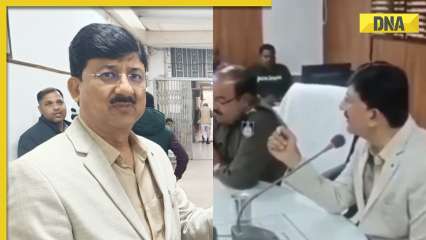
IAS Kanyal lost his cool during a meeting with representatives of a drivers’ union on Tuesday. He later expressed regret if anyone was hurt by his words.
This town wants to be named the quinceañera capital of Texas

Diboll’s growing Hispanic population has inspired a new economy of party planners and DJs to produce quinceañeras. City leaders are taking notice.
Bangladesh elections mark a pro-China tipping point in South Asia

The year 2024 will witness key elections to choose democratic governments across the world, and the season begins with the Bangladesh election on January 7. Altogether, 29 political parties, including the governing Awami League (AL) and a faction of the opposition Jatiya Party, will fight the elections. With almost all the opposition parties led by the Bangladesh Nationalist Party (BNP) and the Jamaat-e-Islami (Jamaat) sitting out, the return of AL to power for a fourth term is a fait accompli. Bangladesh’s general elections have always drawn international attention. But this time round, certain geopolitical issues at play have pushed the level a few notches up. Till the opposition parties were in the race, countries like the United States and India, and blocs like the European Union, resorted to rhetoric, administrative action and backroom diplomacy to pressure the AL government into ensuring the elections appear to be free and fair. This was counterbalanced by China and Russia, who told others — read the US — not to meddle in Bangladesh’s internal matters. Such a polarisation of world powers reveals the geopolitics at play in South Asia. It matters to these countries as to who rules Bangladesh. It is about who gains out of a status quo versus who is looking at potential gains if AL is voted out of power. Taking positions By late 2021, the US had already made up its mind. In a press statement on December 10 that year, Secretary of State Antony Blinken imposed sanctions on two Bangladeshi security officials, Benazir Ahmed and Miftah Uddin Ahmed, for alleged extrajudicial killings, making them and their immediate family members ineligible for entry into the US. The Department of the Treasury also designated Bangladesh’s elite Rapid Action Battalion (RAB), Benazir Ahmed and five other officials under the Global Magnitsky Sanctions Program in connection with serious human rights abuse. In May 2023, the US government enacted a visa policy which denied visas to those engaged in undermining the “democratic election process”. In September 2023, the US announced that it was taking steps to implement the new visa policy. On November 13, 2023, US Assistant Secretary of State for South and Central Asian Affairs Donald Lu wrote to all three major parties – the AL, BNP and the Jatiya Party – calling for “dialogue without preconditions”. The beaming pictures of Prime Minister Sheikh Hasina and US President Joe Biden taken at the September G20 Summit in New Delhi do not appear to have translated into a more benign US policy over the AL-affiliated Bangladeshi government. In the run-up to prior elections, it was customary for the AL and the BNP to elicit support from India and other leading world powers, and this time was no exception. During its visit to New Delhi in August 2023, a five-member AL delegation, led by Agriculture Minister Mohammad Abdur Razzaque, met senior Indian ministers and leaders of the governing Bharatiya Janata Party (BJP) and advocated that re-election of the AL was essential to ensure stability in the South Asian region. The AL’s talking points were familiar: a combination of fear-mongering over the BNP-Jamaat combine’s political Islamist tilt and reassurance that Dhaka would not ignore New Delhi’s sensitivities about Beijing; that China was more of a development partner, not a strategic partner; that Bangladesh has not forgotten the antagonistic role China and the US played against the country’s liberation struggle in 1971, and how India was the friend that truly helped the country gain independence. Compared with the US and its Western allies, China and India have shown more restraint in their reaction to the Bangladesh elections. While China has stated that it will back the Bangladeshi government against external interference, India believes that putting “too much” pressure would strengthen hardline forces in Bangladesh’s opposition parties. The Chinese strategic calculus The Chinese have identified opportunities in retaining the AL government. Since 2010, China’s influence has been growing in the decision-making architecture of both Bangladesh and the AL at various levels. Beijing has strong strategic compulsions to turn Bangladesh into a state heavily dependent on it, like Myanmar and Cambodia. Doing so will ensure easier Chinese access to Indian Ocean sea lanes, bypassing the Malacca Strait via the China-Myanmar Economic Corridor (CMEC) connecting Yunnan province to the seaport city of Kyaukpyu in Myanmar’s Rakhine state. Geographically, the Ganga-Padma-Brahmaputra delta hosts the shortest land route to access the sea lanes from mainland China. That was the British calculation when they set up Calcutta (now known as Kolkata), which was then part of undivided Bengal, as their transshipment point to support the East India Company’s opium and tea trade with China. As things stand, AL in power will ensure a predictable, stable and favourable political climate to protect and promote China’s large infrastructure investments in Bangladesh. AL’s metamorphosis from a mass-based party of middle-class, secular, pro-Indian leaders, wedded to the spirit of the 1971 liberation struggle, to a party run by China-backed oligarchs – some with dubious credentials – is cause for concern both in New Delhi and Washington. Take Hasina’s top adviser, Salman Rahman, who critics claim effectively runs the government. Rahman’s family owns Beximco, one of Asia’s largest textile firms, which has significant business deals with China; or Zunaid Ahmed Palak, lawyer and minister of state for information and communication technology, who has faced accusations of being soft on Chinese companies in his role. It is not that the AL is the only governing party being driven by oligarchic interests. In neighbouring India, for instance, oligarchs close to Prime Minister Narendra Modi also push their interests, cloaked in the garb of national interests, shaping and driving domestic and foreign policies. Geopolitical issues like transborder infrastructure, disaster and pandemic response and wars provide platforms that put invisible men in grey suits on the same page as they parse out territories for commercial exploitation transcending borders. With AL set to retain its control over Bangladesh, the US effort to disrupt this metamorphosis by using human rights as a diplomatic weapon appears
Israel’s war on Gaza: List of key events, day 90

EXPLAINER Israel’s plan for Palestinian resettlement is condemned globally as the ICJ confirms it will hold public hearings. Here is the latest: Here’s how things stand on Thursday, January 4, 2024: Latest updates and human impact: The International Court of Justice (ICJ) has confirmed that it will hold public hearings at The Hague on January 11 and 12 regarding South Africa’s case against Israel. Rafah municipality head Ahmed al-Soufi told Anadolu Agency on Wednesday that the number of displaced people who arrived in Rafah in the southernmost part of Gaza is about one million, since the war broke out on October 7. The usual population of Rafah is about 300,000. As fire exchanges continue between Israel’s northern border and Lebanon’s southern border, the Israeli army says that it will continue its attack on Lebanese territory as it sees fit, Al Jazeera’s Hamdah Salhut reported from occupied East Jerusalem. Hezbollah leader Hassan Nasrallah said his heavily armed forces would fight to the finish if Israel chose to extend the war to Lebanon. The latest Israeli strikes killed four men who were reportedly Hezbollah members in the southern Lebanese town of Naqoura. Fourteen members of one family — the Salah family — were killed overnight in an Israeli bombardment of Gaza. Israeli strikes continue in the vicinity of al-Amal hospital, the headquarters of the Palestinian Red Crescent in Gaza, Palestinian news agency Wafa reported. Israeli aerial and ground attacks have recently targeted the southern Gaza city of Khan Younis and Bureij refugee camp in central Gaza. Diplomacy and aid delivery: Senior US Education Department policy adviser Tariq Habash resigned in protest of President Joe Biden’s approach to the war. “The President must call for a permanent ceasefire,” he wrote in an X post on Wednesday. Humanitarian agencies have been unable to deliver aid to the north of the Gaza Strip for the past three days, United Nations agency OCHA reported on Wednesday. OCHA added that active conflict coupled with access delays was the reason for this, but did not state who was responsible. The Dutch foreign ministry called recent remarks by Israeli ministers Bezalel Smotrich and Itamar Ben-Gvir regarding Palestinian resettlement from Gaza as “irresponsible”, in a post on X on Wednesday. The Netherlands, Germany, France and Saudi Arabia have also condemned Israel’s calls for the forced migration of Palestinians. US Secretary of State Antony Blinken is set for another visit to the Middle East, his fourth since the war broke out in Gaza. He intends to make a stop in Israel. Raids in the West Bank: A raid that started in the Nur Shams refugee camp in Tulkarem has entered its second day, Al Jazeera’s Salhut reported. Residents are saying that a massive number of Palestinians have been arrested, but the number has not been confirmed yet. In Nur Shams, armoured bulldozers have destroyed infrastructure and people’s homes have been ransacked, reported Al Jazeera’s Laura Khan from East Jerusalem. Water lines, store fronts, commercial establishments and homes were destroyed. Another raid is taking place in Tubas, on the northeastern side of the occupied West Bank. Salhut has reported that a Palestinian has died in gunfights there. Several other raids are happening in Nablus, Ramallah, Hebron and Bethlehem. A young Palestinian man was detained on Wednesday night after being shot in the foot in Qalqilya, Wafa reported. Adblock test (Why?)
Confusion, speculation in Iran after twin blasts kill more than 80 people

Iranians mark day of mourning after bombings kill at least 84 people, leave more than 280 wounded. Iranians have been marking a day of mourning after twin bombings in the city of Kerman killed and wounded many people at a memorial for top Iranian general Qassem Soleimani four years since his assassination, raising tensions in the region. At least 84 people were killed in the blasts, Interior Minister Ahmad Vahidi said on Thursday, according to state news agency IRNA. An earlier death toll of 103 was twice revised down after officials realised some names had been repeated on the victims’ list, and because bodies had been dismembered and counted “several times”, said Jafar Miadfar, the head of Iran’s emergency services. More than 280 people were wounded in Wednesday’s attacks, with 195 still in hospital. There has been no claim of responsibility for what appeared to be the deadliest attack to target Iran since its 1979 Islamic revolution. The blasts struck minutes apart, shaking Kerman, about 820km (510 miles) southeast of the capital, Tehran. The second blast sent shrapnel into a screaming crowd fleeing the first explosion. Al Jazeera’s Ali Hashem, reporting from Tehran, said the mood in the country was one of confusion, with many having questions about what exactly happened. “There’s no clear answer … whether this was a suicide bombing or the bombs were planted,” Hashem said on Thursday. “Of course, the main suspects here in Iran for the Iranian officials are the United States and Israel.” People disperse near the site where two blasts in quick succession struck a crowd marking the anniversary of the 2020 killing of Qassem Soleimani in the southern Iranian city of Kerman [Mehr News/AFP] The commemoration marked the fourth anniversary of the killing of Soleimani, the head of the elite Quds Force of the Islamic Revolutionary Guard Corps (IRGC), in a US drone strike in Iraq ordered by then-President Donald Trump. The blasts took place near his gravesite as long lines of people gathered for the event. Iranian President Ebrahim Raisi, who cancelled his planned trip to Turkey, declared Thursday as a national day of mourning to pay respect to those killed in the bombings. US Department of State spokesperson Matthew Miller said American officials had “no reason” to believe Israel was involved in the attack. Iran’s Supreme Leader Ayatollah Ali Khamenei blamed “evil and criminal enemies” of the country for the attack and pledged a “harsh response”. “These hard-hearted criminals could not tolerate the love and enthusiasm the people had to visit the shrine of their great commander, Qassem Soleimani,” Khamenei said in a statement. “Let them know that the soldiers of … Soleimani will not tolerate their vileness and crimes.” The United Nations, European Union, and several countries, including China, Saudi Arabia, Jordan, Germany and Iraq, denounced the bombings. The attacks came a day after the killing of Saleh al-Arouri, a deputy leader of the Palestinian armed group Hamas, an ally of Iran, in a drone strike in the Lebanese capital, Beirut, raising fears of further escalation in the region following the start of Israel’s war in Gaza on October 7. Adblock test (Why?)
WFI to challenge its suspension, calls EC meeting on Jan 16

The WFI has maintained that it neither accepts the suspension nor does it recognise the ad-hoc panel that has been constituted by the IOA to manage the day-to-day affairs of the sport.
Covid-19: India witnesses 760 new cases, 2 deaths amid JN.1 spike, active cases rise to 4,423
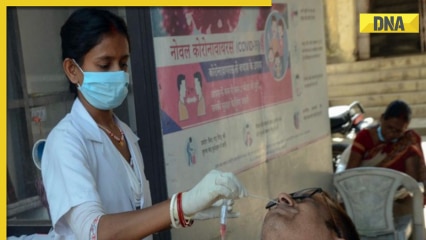
As of December 16, the World Health Organisation (WHO) reported 7,344 cases of Covid-19 JN.1 subvariant from 41 countries.