

In 2024, Europe to hunt for new partners to offload asylum seekers

Eight years after the image of three-year-old Alan Kurdi lying facedown on a beach in Turkey shocked the world, pictures of asylum seekers’ lifeless bodies washed up on the coast of Italy’s Calabria region in February once again stirred global outrage. European Commission President Ursula von der Leyen responded to the tragic shipwreck just metres away from the coast of Steccato di Cutro by promising to “redouble our efforts”. “Member states must step forward and find a solution. Now,” she said. Yet as 2024 begins, activists and experts told Al Jazeera that 2023 has seen Europe reach for ever more drastic solutions to curb NGO search and rescue operations and outsource its border management to other nations. The International Organization for Migration (IOM) estimated at least 2,571 people died this year trying to cross the Mediterranean – one of the deadliest years ever. Since 2014, the United Nations agency has counted at least 28,320 men, women and children who lost their lives trying to reach Europe. “What is new is the popularity of the idea that you can externalise asylum processing,” said Camille Le Coz, associate director for Europe at the Migration Policy Institute. “That’s something we’re likely going to see more of moving forward despite shaky legal grounds.” Externalising asylum At least 264,371 asylum seekers entered Europe by boat and land in 2023, according to the Office of the UN High Commissioner for Refugees – a 66 percent increase compared with the previous year and the highest figure since 2016. Six of every 10 among them landed on Italian shores. Flavio Di Giacomo, a spokesperson for the IOM, said these numbers were a far cry from those recorded in 2015 when more than a million people reached European shores via the sea. “There is no real emergency,” Di Giacomo told Al Jazeera. “They are very manageable figures, and more should be done to give people who arrive by sea access to a system of protection.” Yet hardliners have sounded the alarm about migration. British Prime Minister Rishi Sunak was accused in December of adopting “toxic” rhetoric after warning that migration would “overwhelm” European countries without firm action. His comments came during a four-day political event in Rome organised by far-right Italian Prime Minister Giorgia Meloni, weeks after his flagship bill designed to deport asylum seekers to Rwanda to process their claims was ruled unlawful by the Supreme Court in the United Kingdom. Meloni, who also governs on a staunchly nationalist agenda that focuses on immigration, has warned that Italy would not become “Europe’s refugee camp”. Similarly to her British ally, Meloni had signed a deal to send asylum seekers arriving in Italy to another country. Albania had agreed to process their claims in two facilities run by Italian officials under Italian jurisdiction. The five-year deal, announced in November, was blocked by the Balkan country’s Constitutional Court for violating the constitution and international conventions. Le Coz told Al Jazeera that Georgia, Ghana and Moldova were also in talks with European Union member states to sign deals to conduct part or all of their asylum procedures on their territory. Whether these agreements will be greenlit by courts next year is unclear. “Deals that externalise asylum processing raise questions in terms of human rights standards but also on political and financial costs,” Le Coz said. “In the end, none of these deals are moving forward because their legal grounds are pretty shaky, and so far, they have provided no solutions while incurring many costs.” Amid renewed interest in external processing, the EU has been working on a New Pact on Migration and Asylum to make return and border procedures on European soil “quicker and more effective”. The pact, which reached a preliminary agreement on December 20 after lengthy negotiations ahead of further debate in the coming months, allows member states to fast-track the processing of applications from countries with low approval rates, such as Morocco, Pakistan and India, and foresees tougher rules in case of emergencies, including longer detention periods. NGOs have denounced the pact as a “devastating blow to the right to seek asylum in the EU”, arguing that the measures erode international protection standards. “It will normalise the arbitrary use of immigration detention … and return individuals to so called ‘safe third countries’ where they are at risk of violence, torture, and arbitrary imprisonment,” a group of 50 civil society organisations said in an open letter. “Human rights cannot be compromised. When they are weakened, there are consequences for all of us,” the letter added. According to Le Coz, the impact the pact is going to have on the ground next year remains unclear. “On one hand, there is concern that the system is going too far in terms of quick processing of the asylum claims, and on the other hand, there are political forces betting on the fact that the pact is not going to deliver and that we should move towards further deals with foreign governments like Albania and Rwanda,” the analyst said. Border patrol As Tunisia overtook Libya as the top embarkation point for people heading from Africa to Europe this year, EU officials struck a 1 billion euro ($1.1bn) deal to bolster the bloc’s capacity to prevent refugees from setting out to sea and stabilising Tunisia’s shaky economy. Tunis was called to play a border patrol role similar to previous agreements struck with Tripoli and stop the inflow of refugees into European countries, months after President Kais Saied launched a crackdown against undocumented sub-Saharan nationals, whom he accused of crimes and plotting to change the country’s demographic makeup. Tunisia’s poor economic situation and racial discrimination triggered an exodus towards European shores. “Tunisia used to be a country of arrival for sub-Saharan migrants, but racial discrimination has forced many to leave,” Di Giacomo said. The UN estimated 96,175 people who reached Italy’s shores this year departed from Tunisia, compared with 29,106 last year. Images of Italy’s southernmost island of Lampedusa receiving more than 6,000 people within
Deadly explosions in Iran during Soleimani anniversary procession

NewsFeed Iranian state media says two explosions have struck a procession marking the anniversary of General Qassem Soleimani’s assassination. The blasts reportedly happened near the slain commander’s gravesite in the city of Kerman. Published On 3 Jan 20243 Jan 2024 Adblock test (Why?)
Palestinians protest killing of senior Hamas official in Lebanon

NewsFeed Palestinians in the occupied West Bank have protested the killing of Hamas’s deputy leader Saleh al-Arouri who was targeted by a drone strike in Lebanon. The UN is calling for restraint, saying the Beirut attack risks a devastating escalation in the region. Published On 3 Jan 20243 Jan 2024 Adblock test (Why?)
Busy with Rajya Sabha election, send questionnaire: Arvind Kejriwal to ED after skipping summons

The Delhi CM said he “would be happy to respond to any questionnaire” if the agency seeks any information or documents.
‘Brij Bhushan’s Propaganda…’: Sakshi Malik on protests against veteran wrestlers

“For past two-three days, Brij Bhushan’s goons have become very active. My mother is getting threats via phone calls. People are calling and saying that a case will be registered against someone in my family,” she said.
Ramaswamy welcomes former Iowa Republican Rep Steve King’s endorsement, defends ‘villainized’ ex-congressman

GOP presidential candidate Vivek Ramaswamy welcomed on Tuesday the endorsement of controversial former nine-term Republican Rep. Steve King of Iowa, who House Republicans turned their backs against five years ago over his comments about race, immigration and the border wall. “I’m proud to have Steve King’s endorsement, and I think that he has been wrongfully villainized by a media that has not once quoted the alleged racist remark or whatever it is that he made, and I just reject a lot of this mainstream media narrative thing,” Ramaswamy said on camera to a reporter in a clip shared by King on X. “But for my purposes, he and I have found common cause in issues that no other Republican candidate is speaking to – against the CO2 pipeline using eminent domain to seize the land of innocent farmers who don’t want that built in their backyards. Somebody who actually, before it was cool, was calling for building the wall. Now something we accept needs to be normalized policy in this country,” Ramaswamy said. “And so yes, I’m proud to have his endorsement, and I’ve met so many Iowans on the ground who are very different from the media who understand somebody actually stood to represent their interests saying the things that other people weren’t willing to say on issues ranging from the carbon capture pipeline to actually securing our borders, to actually reviving our national identity and even making English the national language of the United States, which I agree with. And so I’m proud to have his endorsement. I’m not a political analyst, that’s your job. Maybe you should try doing it.” King captioned the X post, writing, “Vivek Ramaswamy speaking Truth to Fiction!” VIVEK RAMASWAMY BLASTS CNN DEBATE OVER EXCLUSION, SAYS ONLY ‘ESTABLISHMENT INSIDERS’ WILL BE ON STAGE In a video statement earlier Tuesday, King announced his endorsement of Ramaswamy as the “strongest voice we have that will defend our Constitution and restore the pillars of American exceptionalism.” “Vivek is gonna stand up and is standing up for the rights of We The People. He will build the wall on the border for real, and I’m asking you to come with me on January 15. Caucus for Vivek Ramaswamy, the strongest voice we have to defend our Constitution and to reestablish America’s destiny,” King said. In 2019, House Republicans under then-Minority Leader Kevin McCarthy, R-Calif., booted King from three congressional committee assignments, and all House Republicans joined Democrats in voting for a resolution of disapproval of King following a New York Times interview in which the longtime Iowa congressman, known for his incendiary remarks, commented about immigration and then-President Trump’s border wall. CONTROVERSIAL REP. STEVE KING LOSES IOWA GOP PRIMARY BATTLE They took issue at the time with King remarking to the Times, “White nationalist, white supremacist, Western civilization — how did that language become offensive? Why did I sit in classes teaching me about the merits of our history and our civilization?” In the interview, King said he supported legal immigration and people fully assimilating into the “the culture of America.” After the story was published, he issued a statement calling himself a “nationalist” and defending support of “western civilization’s values,” though clarifying he did not advocate for “white nationalism and white supremacy.” “I want to make one thing abundantly clear: I reject those labels and the evil ideology they define,” he wrote in 2019. King ultimately lost his re-election bid in 2020 against then-state Sen. Randy Feenstra. Ramaswamy himself on the GOP debate stage last month said that the Great Replacement Theory, which some critics condemn as racist for suggesting non-European immigrants in the United States are being used to supplant White voters, “is not some grand right-wing conspiracy theory but a basic statement of the Democratic Party’s platform.”
MP collector who questioned ‘aukat’ of driver transferred, CM Mohan Yadav says won’t tolerate such language
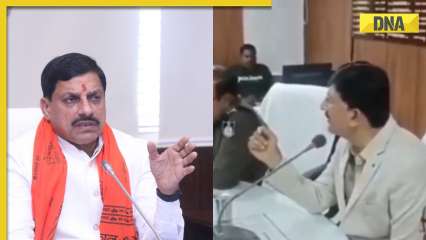
Narsinghpur’s collector Riju Bafna has been made the new collector of Shajapur.
COVID-19: India records 602 new Covid cases, 5 deaths in 24 hours; 312 JN.1 cases so far

A total of 312 cases of coronavirus sub-variant JN.1 were logged in the country until Tuesday, with about 47 per cent of them recorded in Kerala, according to the Indian SARS-CoV-2 Genomics Consortium (INSACOG) data.
Sierra Leone charges ex-leader Koroma’s guard, 11 others over failed coup

Those charged were part of 85 people arrested in connection with the attempted coup in Sierra Leone on November 26. Sierra Leone authorities have charged 12 people including a member of former President Ernest Bai Koroma’s security detail, with treason in connection with a failed coup in November, the government said on Tuesday. The accused were arraigned before a magistrate in Freetown on Tuesday, the Ministry of Information and Communication said in a statement, adding that they included ex-police and correctional officers. “Other accused persons are expected to be charged in the coming days,” the ministry said. One of those charged was Amadu Koita, a former soldier and bodyguard of former president Ernest Bai Koroma, Koita was widely followed on social networks where he criticised the government of current President Julius Maada Bio. Koita was arrested on December 4, one of 85 people arrested in connection with the events of November 26 when gunmen attacked a military barracks, a prison and other locations in Freetown. They freed about 2,200 inmates and killed more than 20 people in what the authorities deemed a coup attempt by members of the armed forces. The violence sparked fears of another coup in West Africa, where Mali, Burkina Faso, Niger and Guinea have all experienced takeovers since 2020. Neither Koita nor his legal representative have commented on the charges. Koroma, who condemned the attacks in a statement shortly after they happened, was summoned for questioning in December as part of the police investigation. Adblock test (Why?)
‘Dummy’ candidates, coerced voting: Inside Bangladesh’s election ‘charade’

Dhaka, Bangladesh – Hasanul Islam Ador, an elected representative in a rural area in southern Bangladesh’s Cox’s Bazar district, was taken aback when a group of officials in plain clothes barged into his home last week. Ador said the officers threatened him, saying he should stop campaigning for Zafar Alam, an independent candidate for the national election to be held on Sunday. Alam is a current member of parliament representing Cox’s Bazar for the ruling Awami League (AL) party, led by Prime Minister Sheikh Hasina. When Alam failed to secure his party’s nomination for this year’s election, he was asked by the party leadership to run as an independent contender – one of what analysts and critics say are hundreds of so-called “dummy” candidates propped by the party to make the election look free and fair. A ruling party supporter carries a giant portrait of PM Sheikh Hasina in Dhaka [File: Anupam Nath/AP] Hasina, 76, has been in power for 15 straight years – the longest-serving leader in Bangladesh’s history. Her tenure has been marked by allegations of authoritarian rule, targeting of the opposition, the suppression of people’s rights, and large-scale vote rigging in elections held to keep her in power. As she seeks a record fourth term in Sunday’s vote, the main opposition Bangladesh Nationalist Party (BNP), led by ailing former Prime Minister Khaleda Zia, has decided to boycott the vote, as it did in 2014. Zia, 78, was jailed for more than two years over corruption charges and was moved to house arrest over health concerns in 2020. She denies the allegation, saying her conviction was politically motivated. A woman holds a placard as BNP supporters form a human chain to mark International Human Rights Day in Dhaka [File: Mahmud Hossain Opu/AAP] The BNP says it does not have any confidence in Hasina presiding over a free and fair election. It demanded Hasina step down to make way for a caretaker government to organise the vote. But the demand was met with a severe government crackdown, which saw tens of thousands of BNP members arrested and at least 11 of them killed by security forces during street protests, raising concerns over valid elections in the garments hub of the world. In September, the United States, the top buyer of Bangladeshi garments, said it was imposing a visa ban on the country’s officials who undermine the democratic election process. Two months later, Human Rights Watch condemned the arrests of opposition members and said “the government’s autocratic crackdown will jeopardise future economic cooperation” with other countries. ‘Mockery of our democracy’ Since the opposition’s boycott call, Hasina’s party had been scrambling to field independent – or “dummy” – candidates to make the election look fair. The “competitive make-up”, as analysts call the move, saw the Awami League fielding candidates like Alam in the fray, but at the same time, ensuring the ballot does not throw up any surprises for the party. To ensure the results are in favour of the ruling party, the government is allegedly using law enforcement machinery and intelligence agencies to intimidate and threaten independent candidates. “The people who barged into my home were from an intelligence agency,” Ador told Al Jazeera. “They came to my house and threatened me to stop campaigning for Zafar Alam and seek votes for a particular candidate.” Police officers outside the closed office of the main opposition BNP party in Dhaka [File: Al Jazeera] Ador and more than a dozen other local representatives in Alam’s constituency wrote a letter to the Bangladesh Election Commission, saying “an intelligence agency had put immense pressure and threatened them” to work for an Awami League candidate. The commission acknowledged receiving such a letter to Al Jazeera, with election officials saying they were “seriously looking into the complaint”. Without the main political opposition contesting, there is little uncertainty as to what the results of the Sunday vote will be. “This election is a charade,” prominent Bangladeshi rights activist Shahidul Alam told Al Jazeera. “It’s a mockery of our democracy – whatever is left of it.” The BNP has not only boycotted the election but has also announced a non-cooperation movement, asking people not to vote on Sunday. As a result, the ruling Awami League’s main concern at the moment is to ensure a “reasonable” voter turnout, according to its official Bahauddin Nasim. To do that, the party has allegedly resorted to “undue” measures. In many constituencies, members of the ruling party have been accused of threatening to strip people of the government’s social benefits schemes if they fail to appear in polling booths on election day. Nearly 13 million people, belonging to the most vulnerable groups, receive direct social benefits from the government, according to the finance ministry’s data. Moreover, getting on the government list of beneficiaries is a process involving 473 elected officials, nearly all of them belonging to the Awami League. Videos, unverified by Al Jazeera, are viral on Bangladeshi social media, purportedly showing ruling party officials threatening the voters. BNP supporters gather for a protest rally in Dhaka [File: Mahmud Hossain Opu/AP] Rumeen Farhana, the BNP’s international affairs secretary, told Al Jazeera that participating in an election, knowing it will be rigged, was “suicidal and a betrayal to the thousands who were hurt, detained, tortured, or killed for democracy and free speech”. “People of this country will remember this election as the most absurd and illegitimate one in its history,” she said. ‘Strategy of the autocrats’ Michael Kugelman, director of the South Asia Institute at the Wilson Center in the United States, said the BNP boycott does the Awami League a “big favour by making it harder for Western countries to conclude that the election is fraudulent”. “If the Awami League wins 95 percent of the vote, one can’t accuse the party of stealing votes because it will essentially be running against itself,” Kugelman told Al Jazeera. He said the pattern of events leading to the BNP’s decision to boycott should be of