

Dozens killed as extent of Japan earthquake damage becomes clear

NewsFeed Earthquakes that struck Japan on New Year’s Day have killed dozens of people and caused widespread damage across Ishikawa Prefecture. Published On 2 Jan 20242 Jan 2024 Adblock test (Why?)
‘Shahenshah enacted law…’: Rahul Gandhi slams Centre over truck drivers protest

Under the Bharatiya Nyay Sanhita (BNS), which replaced the Indian Penal Code, drivers who cause a serious road accident by negligent driving and run away without informing the police or any official from the administration can face punishment of up to 10 years or a fine of Rs 7 lakh.
What’s next for Netanyahu after top court ruling against judicial overhaul?

The Israeli Supreme Court has struck down a controversial law that Prime Minister Benjamin Netanyahu’s coalition government has been pushing for months – but caused uproar and prompted thousands of people to take to the streets in defiant protest. That decision is being seen as a blow to the coalition government which promised to enact sweeping changes that would curb judicial powers but has suffered deep divisions since being sworn in, late in 2022. Those fissures appear to have only deepened, with the top court’s ruling made as Israel wages a devastating war on Gaza that has already killed more than 22,000 people in the besieged enclave, more than a third of them children. So what is the controversy about – and what is next for Israel and Netanyahu? Protesters gather for an 11th straight week of protests against the government’s controversial judicial overhaul bill in Tel Aviv on March 18, 2023 [Jack Guez/ AFP] What was the law about? The law was the only one from a package of judicial overhauls by Netanyahu’s government that aimed to limit the Supreme Court’s powers concerning the executive. Since Israel does not have a constitution, it relies on a set of Basic Laws and the legislation in question was an amendment to an existing provision that allowed the Supreme Court to overrule laws that, in its view, did not pass a “reasonableness” test. The new law eliminated the top court’s ability to block laws using that test. Other laws that are part of the planned judicial overhaul would give the Knesset, Israel’s parliament, more power to appoint Supreme Court judges. Before being passed in July, and even after that, the law saw swift and intense opposition in Israel, with thousands of people in Israel and abroad demonstrating for several weeks on end. Thousands of army reservists also threatened to quit. Detractors say the law removes a crucial checks and balances component of Israeli democracy needed in a country with a fragile legal system. Many Israelis also said the amendment weakens the independence of the judiciary at a time when the country is being run by its most far-right and most religiously conservative coalition yet. Western allies, including the United States and the United Kingdom, cautioned Netanyahu and advised his government to “uphold democracy” as demonstrations raged across the two countries. Although it saw great opposition from inside the Knesset as well, the bill passed with a vote of 64 to 0 after opposition lawmakers boycotted and left the session. What did the Supreme Court say? In a vote on Monday, 12 of 15 Supreme Court judges ruled for the first time that the court had the power to strike down Basic Laws. Eight judges further voted to nullify this specific “reasonableness” amendment. It is the first time the court will nullify a Basic Law or an amendment to one. In a case summary, the Supreme Court said the government’s passing of the law “completely revoked the possibility of carrying out judicial review of the reasonableness of decisions made by the government, the prime minister, and the ministers,” and added that letting the law stand could cause “unprecedented and severe harm” to Israel’s democracy. Netanyahu’s government has always claimed the law is needed to create balance in government branches and to diversify the bench which it sees as putting minority interests before national ones. But some see the push for the law as an attempt by Netanyahu to avoid sentencing in a drawn-out corruption trial in which he faces charges of bribery, fraud and breach of trust. Those proceedings were suspended following the start of Israel’s war on Gaza, but resumed early in December. Netanyahu has denied any wrongdoing. What’s next? Netanyahu’s Minister of Justice Yariv Levin, who has shepherded the controversial laws, including the one that the court has struck down, hit out at the judges, insisting that the ruling would not “stay our hand”. Levin also said that the decision by the court to publish its ruling while Israel’s war on Gaza was continuing is “the opposite of the unity required these days for the success of our fighters on the front.” Likud, Netanyahu’s party, said the decision was “unfortunate”. Yet, if the government decides to ignore the Supreme Court ruling, it could end up destabilising the wartime coalition that is leading Israel’s assault on Gaza. Minister of Defense Yoav Gallant has opposed the amendment – and was even temporarily fired over it. On Monday, former defense minister Benny Gantz also called for the Supreme Court ruling to be respected – effectively publicly rejecting Levin’s criticism of the judges. ערב ה-7.10 החברה הישראלית הגיעה למקומות קיצוניים, לפילוג ולשיח שנאה שהיה אסור להגיע אליהם. את פסק הדין חובה לכבד, ואת הלקח מההתנהלות בשנה האחרונה חובה להפנים – אחים אנחנו, לכולנו גורל משותף. אלו לא ימים לניגוחים פוליטיים, אין היום מנצחים ומפסידים. היום יש לנו רק מטרה אחת משותפת… — בני גנץ – Benny Gantz (@gantzbe) January 1, 2024 “The verdict must be respected, and the lesson from the conduct of the last year must be internalised – we are brothers, we all have a common destiny,” he wrote on X. “These are not days for political arguments, there are no winners and losers today. Today we have only one common goal – to win the war, together.” Adblock test (Why?)
How devastating was Monday’s earthquake in Japan?

On Monday, a magnitude 7.6 earthquake hit Japan near the Noto Peninsula in the Ishikawa prefecture, prompting tsunami warnings for the nine prefectures along the west coast of the country and neighbouring areas such as South Korea. More quakes are expected to come this week. Japan is particularly prone to earthquakes because four of the earth’s tectonic plates meet in the country. Japan experienced a devastating quake in 2011 with a death toll of nearly 20,000 people, with most killed by tsunami waves, and also caused nuclear plant meltdowns in Fukushima. The disaster is believed to have caused $220bn worth of damage. Here is what you need to know about Monday’s earthquake. Where and when did the earthquake occur? Quakes began at around 4pm local time (07:00 GMT) on Monday. A magnitude 7.6 earthquake was reported near the Noto Peninsula in Japan’s Ishikawa prefecture. Japan is divided into 47 prefectures which are types of administrative divisions. Earthquakes measuring between 7.0 to 7.9 are considered “major” and can cause serious damage. The largest earthquake ever recorded was magnitude 9.6 in Chile in 1960. The earthquake generated ocean waves about 1 metre (3 feet) high along Japan’s west coast and on the coast of neighbouring South Korea. The temblor was also felt in Japan’s capital, Tokyo, 300km (186 miles) away on the other side of the country. Across nine prefectures, almost 100,000 people were evacuated and spent the night in sports halls and school gymnasiums, commonly used as evacuation centres in emergencies in Japan. These are often built with an accompanying “disaster storehouse” which contains food supplies and other essentials to support living for a period of time. The Japan Meteorological Agency (JMA) issued low-level tsunami warnings for the prefectures of Niigata and Toyama and a major tsunami warning for Ishikawa that was lifted on Tuesday morning. Within two hours of the major earthquake near the Noto Peninsula, the Japanese public broadcaster, NHK TV, had urged people to flee to higher ground or to get to the top of nearby buildings as quickly as possible. It was feared that floodwaters could reach as high as 5 metres (16.4 feet) in the event of a tsunami. A tsunami wave around 1.2 metres (4 feet) high hit Wajima city in Ishikawa 10 minutes after the magnitude 7.6 quake occurred, while a fire sparked by the collapse of buildings engulfed houses in the area. Residents were forced to evacuate in the dark because of power outages. People were seen carrying belongings such as blankets, while others rushed out holding babies. On Tuesday, JMA reported that the country had been hit by 155 earthquakes since the initial tremor on Monday. Is this region particularly prone to earthquakes? Japan is one of the countries in the world most at risk from earthquakes. Seismic activity has been simmering in the area for some time. Between December 2020 and last month, 506 quakes with an intensity of at least 1.0 were recorded. Experts say they will not know why this more major series of earthquakes was not anticipated until further research has been carried out. Ishikawa, a popular tourist destination famous for its cultural heritage sites, lies near the tectonic plate boundary between the earth’s Eurasian and North American plates. Such areas are particularly susceptible to earthquakes because of the movement of the plates against each other, and the stronger shock this causes in nearby areas. Monday’s earthquake is the strongest to have occurred in Ishikawa since 1885 when data first became available. Monday also marks the country’s first major tsunami warning since March 2011 when a magnitude 9.0 earthquake in the Tohoku region killed more than 18,000 people and triggered nuclear plant meltdowns in Fukushima. How many casualties have there been so far? At least 30 people have been killed in Ishikawa and rescue teams are still trying to reach areas where people are feared to have been trapped under collapsed buildings. At least 14 people have been critically injured. “The government has identified at least six to 10 people trapped inside buildings and [the total] may be much higher than that, considering the government is usually quite conservative about these numbers until their official [final tally],” said Al Jazeera correspondent Chris Gilbert, reporting from Tokyo. Will there be more quakes? JMA has warned that further quakes with a seismic intensity of 7.0 could hit the region over the next week, particularly in the next two to three days. There is a heightened risk of fires and landslides, the JMA said. Officials warned residents of some areas to stay away from their homes because of the potential danger. The warning of a major tsunami for Ishikawa, however, was cut to an advisory-only alert and eventually lifted on Tuesday morning. A tsunami “advisory” indicates that significant flooding is not expected but local officials may take some action such as closing beaches or evacuating harbours. “The tsunami threat has now largely passed,” the Hawaii-based Pacific Tsunami Warning Center said on Monday night. How much damage has the earthquake caused? The Japanese authorities are still assessing the extent of the damage but the quake has so far resulted in several deaths, collapsed buildings, fires in Wajima and power outages across Ishikawa. Almost 33,000 households remained without power in Ishikawa prefecture early on Tuesday morning in Japan, according to information on Hokuriku Electric Power’s website. Broadcaster NHK said most areas in the northern Noto Peninsula were also without water. Several highways near the epicentre were closed, while flights and bullet train services to the area had also been suspended. In Suzu, a coastal town of just over 5,000 households near the quake’s epicentre, there may have been as many as 1,000 houses destroyed, according to its mayor, Masuhiro Izumiya. How quickly will people trapped under rubble be rescued? With warnings of further quakes to come, Prime Minister Fumio Kishida warned late on Monday that efforts to rescue people trapped under collapsed buildings would be a “race against time”. Thousands of army personnel,
Turkey arrests dozens suspected of spying for Israel

Suspects detained in raids for allegedly planning to pursue, assault and kidnap foreign nationals living in Turkey. Turkey has reportedly detained 33 people suspected of spying on behalf of Israel. The authorities are still searching for 13 other people believed to have links to Israel’s Mossad security service, the Anadolu Agency reported on Tuesday. Ankara has previously warned that it will not allow Israel to strike at Hamas inside Turkey’s borders. The suspects were detained in raids in Istanbul and seven other provinces for allegedly planning to carry out activities that included “reconnaissance” and “pursuing, assaulting and kidnapping” foreign nationals living in Turkey, the agency reported. “We will never allow espionage activities to be conducted against the national unity and solidarity of our country,” Interior Minister Ali Yerlikaya said on social media. Anadolu did not provide information on the suspects, nor the foreigners who were allegedly targeted. The report came weeks after the head of Israel’s domestic security agency, Shin Bet, said in an audio recording that his organisation is prepared to destroy Hamas “in every place,” including in Lebanon, Turkey and Qatar. Turkish President Recep Tayyip Erdogan warned Israel of “serious consequences” if it pressed ahead with its threat to attack Hamas officials on Turkish soil. Following years of tension, Turkey and Israel moved towards normalising ties in 2022 as they resumed diplomatic ties. But that detente quickly deteriorated during the Israel-Hamas war, with Ankara becoming one of the strongest critics of Israel’s military actions in Gaza. Israel initially withdrew its diplomats from Turkey over security concerns and later announced it was recalling its diplomats for political reasons, citing “increasingly harsh statements” from Turkish officials. Turkey also pulled its ambassador from Israel. Erdogan’s reaction to the Israel-Hamas war was initially fairly muted. But the Turkish leader has since intensified his criticism of Israel, describing its actions in Gaza as verging on “genocide”. He has called for Israeli Prime Minister Benjamin Netanyahu to be prosecuted for “war crimes” and compared him to Nazi leader Adolf Hitler. The Turkish leader, whose government has hosted several Hamas officials in the past, has also said that the Palestinian group – considered a “terrorist organisation” by Israel, the United States and the European Union – is fighting for the liberation of its lands and people. The arrests have come amid a spate of arrests by Turkish security forces. In roughly two weeks before the new year, about 500 people suspected of having ties to the ISIL (ISIS) armed group were detained in raids across the country. The detentions were thought to be part of a drive by Turkey’s security forces ahead of New Year festivities. An ISIL attack in Istanbul on January 1, 2017, killed 39 people. At the same time, some have also viewed the uptick in arrests as part of a political push in advance of local elections in March. Analysts say that President Erdogan is eager to win back control of Istanbul, Ankara and other major economic hubs that his AK Party has lost. Adblock test (Why?)
Truck, bus drivers continue protest across states against hit-and-run law, block roads

Under the new law, drivers who cause a serious road accident by negligent driving and run away without informing police can face up to 10 years imprisonment or a fine of Rs 7 lakh.
New Jersey used as ‘transit point’ for migrant buses headed for NYC after new executive order, governor says

New Jersey Gov. Phil Murphy’s office has reportedly confirmed that the Garden State is being used as a “transit point” for migrant buses in response to New York City Mayor Eric Adams’ new executive order attempting to regulate how so-called asylum seekers continue arriving in the Big Apple. “Our Administration has tracked the recent arrival of a handful of buses of migrant families at various NJ TRANSIT train stations,” Murphy’s spokesperson Tyler Jones said in a statement reported by Politico. “New Jersey is primarily being used as a transit point for these families — all or nearly all of them continued with their travels en route to their final destination of New York City. We are closely coordinating with our federal and local partners on this matter, including our colleagues across the Hudson.” The mayors of Secaucus and Fanwood, New Jersey, have both reported the arrivals of migrant buses to train stations in their communities. Trenton’s mayor, Reed Gusciora, told Politico that NJ Transit officials informed his city of buses of people arriving at Trenton’s train station stop, but claimed it was unclear if those individuals would be migrants. In a since deleted post on social media, Jersey City Mayor Steven Fulop, who is running for governor in 2025, wrote, “This is clearly going to be a statewide conversation so important that we wait for some guidance from the Governor here on next steps as busses continue,” according to Politico. NJ MAYOR ACCUSES MIGRANT BUSES OF BYPASSING NYC ORDER THROUGH ‘LOOPHOLE’ Secaucus Mayor Michael Gonnelli on Sunday accused the migrant buses of bypassing New York City’s executive order through a “loophole.” According to the mayor. Secaucus police and town officials had been told by Hudson County officials about the arrival of buses at the train station in Secaucus Junction beginning Saturday. He said four buses were believed to have arrived and dropped off migrants who then took trains into New York City. Gonnelli said the executive order signed recently by Mayor Eric Adams of New York requires bus operators to provide at least 32 hours’ advance notice of arrivals and to limit the hours of drop-off times. “It seems quite clear the bus operators are finding a way to thwart the requirements of the executive order by dropping migrants at the train station in Secaucus and having them continue to their final destination,” Gonnelli said in a statement. He suggested that the order may be “too stringent” and is resulting in “unexpected consequences.” Gonnelli called the tactic a “loophole” bus operators have found to allow migrants to reach New York City, and added that state police have reported that “this is now happening at train stations throughout the state.” Gonnelli vowed to work with state and county officials and to “continue to monitor this situation closely.” A message posted on a social media account for Jersey City said the city’s emergency management agency reports that “approximately 10 buses from various locations in Texas and one from Louisiana have arrived at various transit stations throughout the state, including Secaucus, Fanwood, Edison, Trenton.” NYC MAYOR ADAMS MIGRANT CRISIS WILL LEAD TO ‘EXTREMELY PAINFUL’ BUDGET CUTS; DOESN’T EXPECT FEDS TO HELP About 397 migrants had arrived at those locations since Saturday, the post said on Sunday, according to the Associated Press. On December 27, Adams issued an executive order requiring the operators of any charter buses carrying migrants bound for the Big Apple to provide 36-hour advanced notification to New York City’s Commissioner of Emergency Management about their intended arrival, as well as a manifest of passengers, including information about how many migrants are traveling as single adults versus as families. The order requires the drop-offs be timed between the hours of 8:30 a.m. to 12:00 p.m., Monday through Friday, and limits bus drop-off locations. A City Hall spokesperson said last week that the Big Apple had “led the nation in responding to this national humanitarian crisis, providing compassion, care, shelter, and vital services to more than 161,000 migrants” since spring 2022, taking aim at Republican Texas Gov. Greg Abbott for allegedly treating asylum seekers “like political pawns” and dropping off families in surrounding areas “in the cold, dark of night with train tickets to travel to New York City” as was done in Chicago in response to a similar executive order there. Adams last week joined mayors of Chicago and Denver to renew pleas for more federal help and coordination with Texas over the growing number of asylum-seekers arriving in their cities by bus and plane. The Associated Press contributed to this report.
Retirement planning: Leveraging mutual funds for a secure future

You might not be able to beat inflation by simply relying on the returns of traditional investment avenues.
COVID-19: India reports 573 new cases, 2 deaths; 312 JN.1 cases so far

A total of 312 cases of COVID-19 sub-variant JN.1 have been detected in the country so far, with about half of them recorded in Kerala, according to the INSACOG’s data updated today.
Hit-and-run law: Around 2000 petrol pumps run dry amid nationwide protests by truckers
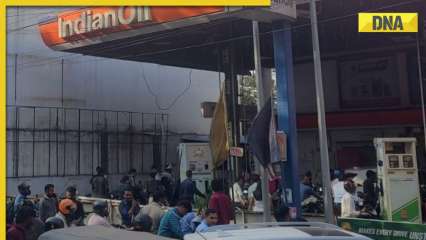
While state-owned oil firms had topped up tanks at most petrol pumps across the country in anticipation of the truckers’ strike, some petrol pumps in Rajasthan, Madhya Pradesh, Maharashtra and Punjab ran out of stock due to heavy rush, industry officials said.