

Walkout weapon: British school students battle curbs on Gaza war protests
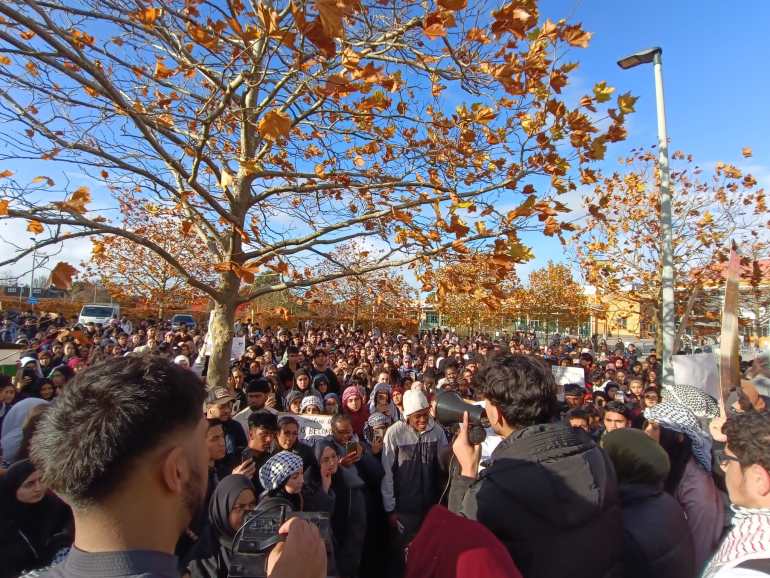
Luton, United Kingdom — At exactly 11am on a Saturday in mid-November, hundreds of students from Luton Sixth Form College streamed out of their school, gathering outside in a sea of black, white and red keffiyehs and Palestinian flags. They carried banners and placards saying “Bombing kids is not self-defence” and “This is no ‘conflict’ it’s genocide”, referring to Israel’s war on Gaza after Hamas’s October 7 attacks on southern Israel. Student organisers of the rally read out speeches against the war, in which Israeli bombs and artillery fire have now killed more than 21,000 Palestinians in Gaza, including more than 8,000 children. Yet Israel wasn’t the only target of criticism at the rally: The students were protesting against their college’s links to an arms company that had supplied weapons and advanced military platforms to Israel. The walkout was organised by the school’s student council after its chair, 18-year-old Hassan Sajjad, was approached by students critical of the senior leadership at the college, who some students felt had failed to address or acknowledge strong student sentiment towards the Israel-Gaza conflict. But a week later, Sajjad and the other council members were informed by the school leadership that their entire council had been disbanded, months before their term was supposed to end in April 2024. Their student council email communication was also suspended. “It shattered my understanding of democracy in college, and the idea of freedom of speech and ‘British values’,” Sajjad said. Since the start of the war, the United Kingdom has seen unrelenting demonstrations urging the government to call for a ceasefire. Yet as students in schools, colleges and universities across the UK also joined the chorus condemning the war, they have also been reprimanded, subtly or explicitly, for their pro-Palestine advocacy in several instances, igniting concerns around freedom of speech. Luton, a town less than 48km (30 miles) north of London with a majority ethnic minority population, has been at the centre of that debate after the backlash faced by students over their walkout. It all started when students discovered that their school had played host to a weapons giant with ties to Israel’s military. Students at the protest at Luton Sixth Form College on November 18, 2023 [Courtesy Miheer Shet] ‘Protest to have your voice heard’ Though Israel is today a major arms exporter, it continues to import weapons from the West. The United States is its biggest military partner and the source of 83 percent of Israel’s weapons imports between 1950 and 2020. But the UK has also been a steady military ally to Israel. It has licensed arms worth more than 442 million pounds ($563m) to Israel between May 2015 and August 2022 and is now facing a legal challenge in the High Court from Palestinian human rights groups. Demonstrations have been held outside other arms factories like those of defence giant BAE Systems and Leonardo — formerly known as Finmeccanica — which produce parts for Israeli fighter jets. In late October, dozens of trade unionists protested outside the Kent site of Instro Precision Ltd, a British subsidiary of Israeli weapons manufacturer Elbit Systems. Yet there are more subtle ways in which Israel’s war machine intersects with British educational institutions. Leonardo, one of the world’s largest arms companies, manufactures naval guns installed on Israeli warships used against Gaza in the current war. In a “multi-billion dollar” deal, Leonardo supplied seven training helicopters to Israel, according to The Times of Israel. It also provided the Israeli Ministry of Defense with “advanced mobile radars” in June. Thirty percent of the company is owned by the Italian Ministry of Economy and Finance according to Campaign Against Arms Trade, with substantial production in both the US and the UK. Leonardo has also participated in career fairs at British schools and colleges — including Luton Sixth Form College, students discovered, as scrutiny on Israel’s weapons suppliers grew with the spiralling death count of Palestinian civilians in Gaza. Since the start of the October 7 war, Leonardo’s market valuation has grown by 20 percent. A walkout wasn’t the student council’s first planned course of action against the war. The council – who represent over 3,000 students – suggested organising a fundraiser for Gaza and the occupied West Bank. As the civilian death count mounted in Gaza, the council also flagged the college’s relationship with Leonardo. For about a month, their requests were met with silence. Then, the school’s leadership said the students could fundraise but only for an event that wasn’t specifically for Palestinians. “If students aren’t being catered for and the [school leaders] are not respecting the student council – the people who represent the thousands – then you only have one option left: that’s to protest to have your voice heard”, Sajjad said. On November 18, hundreds of students walked out of their lesson in what was a peaceful protest. “We wanted students to know this is your legal right to protest, and you shouldn’t feel pressured or afraid to protest”, said Arsalan Ilyas, 17, a student at the college. ‘Inherently Islamophobic’ The crackdown on the now-suspended council was swift, but its members soon discovered more. They found out, from social media platform X, that Shout Out UK, an organisation that aims to equip people with “critical thinking skills and emotional resilience needed to question divisive or extreme content” according to its CEO, Matteo Bergamini, was delivering workshops at the college in December. The news sparked further outrage among students, as Shout Out UK has worked on a number of Home Office Prevent programmes across the country, with a focus on countering extremist misogyny, online disinformation and the far right. Prevent, the UK government’s controversial counter-terrorism programme which aims to “stop people from becoming terrorists or supporting terrorism”, has been accused by critics of conflating extremism – and on occasion, pro-Palestine advocacy – disproportionately with Muslim students. According to Waqas Tufail, a reader in Criminology at Leeds Beckett University, pro-Palestinian activism has long been regarded “formally and informally” as
What’s the Philadelphi Corridor border zone that Israel wants to control?
Israel has said it wants to take control of the entirety of the border area between Gaza and Egypt as it signals that its brutal war on Gaza is nowhere near the end. Prime Minister Benjamin Netanyahu told a weekly news conference on Saturday that the Philadelphi Corridor “must be in our hands” and shut down to ensure the security outcome Tel Aviv desires. Israel’s war on the besieged enclave has killed more than 21,000 Palestinians. With the fighting now in its 13th week, what is the significance of the corridor, why does Israel want control and what could be the implications? What’s the Philadelphi Corridor? The Philadelphi Corridor, also known as the Philadelphi Route, is the 14km (8.7-mile) long strip of land that represents the entirety of the border area between Gaza and Egypt. It was established as a buffer zone controlled and patrolled by Israeli armed forces as part of the 1979 peace treaty with Egypt that ended Israel’s occupation of the Sinai Peninsula and reopened the Suez Canal. Its stated purpose was to stop weapons and material from reaching the hands of Palestinians inside the Gaza Strip, which Israel occupied, and to prevent people from moving between the Palestinian lands and Egypt without tough checks. “It must be shut. It is clear that any other arrangement would not ensure the demilitarisation that we seek,” Netanyahu said on Saturday, also signalling the war may last many more months. [embedded content] Where does Egypt stand on this? In 2005, Israel withdrew from the Gaza Strip under international pressure and instead turned the densely populated Palestinian land into the world’s largest open-air prison. Egypt became the main player in control of the corridor, which signifies the only link with the outside world not controlled by Israel – as Tel Aviv maintains a land, sea and air blockade of the strip from all other sides. An agreement after the Israeli disengagement from the area in 2005 allowed Egypt to deploy 750 soldiers and heavy arms to patrol and safeguard the Egyptian side of the corridor, with the responsibility of the other side handed over to the Palestinian Authority. But Hamas was in full control of the Gaza Strip some two years after the Israeli withdrawal, and things changed. Over the years, Egypt said it kept destroying tunnels dug out by Palestinians to smuggle weapons and people, but Israel has questioned the effectiveness of Cairo’s moves. Now, Israel wants full control of the border area, which includes the crucial Rafah crossing, supposedly to ensure its security. But that would amount to a de facto full reoccupation of the Gaza Strip, something Israel and the US have publicly disagreed over. Both Egypt and Hamas have been against Israel regaining control of the corridor, and Egyptian President Abdel Fattah el-Sisi has repeatedly said Cairo won’t allow Palestinians to be displaced from their homeland into Egypt. What’s Israel after? Netanyahu wishes to reassure his domestic audience – which has grown angry and critical of his handling of the war and his failure to bring back dozens of captives still in Gaza — according to Rami Khouri, a journalist and distinguished fellow at the American University of Beirut. At the same time, Khouri said, the Israeli PM wants to instil more fear among Palestinians and create fresh leverage for negotiations with the US and Egypt. “So, anything he says has multiple audiences, multiple purposes, and should not be taken at face value,” Khouri told Al Jazeera. “We have to take this as another element that he is throwing in the negotiating pot.” Khouri said Egypt would not agree to Israel retaking control of the corridor and establishing a military presence there decades after it left. He said Netanyahu’s comments can also be viewed within the context of Israel’s constant pursuit of territorial expansionism since its creation in 1948 — even though this has not brought the country security. “The more they expand, the more they control land, the more they try to be secure by taking over people’s lands and driving people out of their homes, the less secure they become because they just instigate greater and more intense forms of resistance by Palestinians and other people, including Hezbollah in Lebanon.” Didn’t Israel want another corridor in the north? Yes, Israel brought up the idea of another “buffer zone” along its border with the northern part of Gaza with Arab leaders and the US last month as part of its “day after Hamas” plans. Tel Aviv reportedly wants to raise this corridor inside Gaza in order to make sure it won’t suffer another attack like the one on October 7 by Hamas that killed about 1,140 people inside Israel. Earlier this month, White House National Security Council Spokesman John Kirby said Washington opposes “any reduction of the geographic limits of Gaza”. The US has also said it wants the Palestinian Authority to take over security of the Strip, contradicting Israel’s aspirations for establishing a direct presence there. [embedded content] Adblock test (Why?)
Pro-Palestine campaigners call for Gaza ceasefire on New Year’s Eve
Activists are asking people to turn the New Year’s countdown in their countries into a countdown for a ceasefire in Gaza. Activists have launched a global campaign asking people to turn the New Year’s countdown in their countries into a countdown for a ceasefire in Gaza, which has been under devastating Israeli bombardment since October 7. “New Year’s Eve is a moment of celebration worldwide, and an opportunity to create resolutions for a brighter future. With nearly 30,000 civilians killed, including over 10,000 children, our only New Year’s resolution is to call for a permanent ceasefire,” Countdown2Ceasefire, a London-based grassroots campaign, said in a statement on Thursday. “Our aim is to morph the traditional New Year’s countdown into an influential and resounding countdown for a permanent ceasefire in Gaza.” So far the campaign has successfully been embraced by activists in over 30 countries, including Switzerland, Turkiye, Malaysia, Australia, Tanzania, Mexico and Germany, according to the organisers. While ringing in the new year, these local events calling for a ceasefire will be livestreamed across Countdown2ceasefire’s social media platforms. Israeli bombings have destroyed more than 70 percent of Gaza homes [File: Ariel Schalit/AP Photo] “A permanent ceasefire is the first step in ending the current deplorable situation and a tangible move towards a future where traumatised communities can rebuild and recover,” Bushra Mohammad, a campaign spokeswoman, said in a statement. Israel’s brutal military offensive in Gaza has killed more than 21,500 people and wounded more than 55,000 others triggering a global outrage, with protesters across the world rallying to call for a ceasefire. Many have also expressed their disappointment towards politicians and countries who vetoed or abstained from voting for a ceasefire at the United Nations. Rights organisations including Human Rights Watch, Amnesty International and Doctors Without Borders also condemned countries vetoing a ceasefire, warning that this would result in a humanitarian disaster. On Saturday, the World Food Programme warned that it’s in a race against time to avert starvation for millions in Gaza. “Only a long-term ceasefire and unhindered humanitarian access can end this,” the UN agency posted on X. Israel has refused to stop the bombing that has destroyed more than 70 percent of Gaza homes and displaced more than 90 percent of the enclave’s 2.3 million people. Countdown2Ceasefire pointed out how people power can make a difference. “As we enter 2024, we look forward to it being the year that our New Year’s resolution, of a permanent ceasefire in Gaza, is fulfilled.” Adblock test (Why?)
Israel-Hamas war: List of key events, day 86
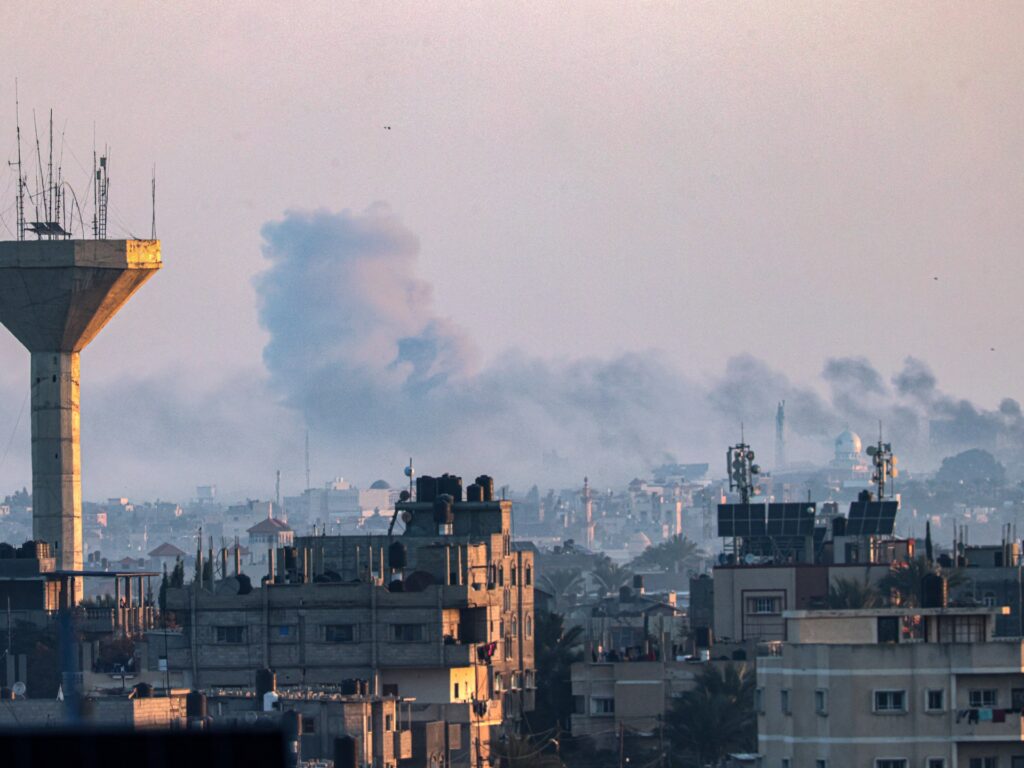
At least 100 killed in central Gaza, while night-time raids injure 17 in occupied West Bank – here is the latest. Here’s how things stand on Sunday, December 31, 2023: Latest updates and human impact: Israeli military attacks on homes in central Gaza have killed at least 100 people and wounded 286 in less than 24 hours, according to Gaza’s Ministry of Health. The continuing Israeli bombardment has now destroyed more than 70 percent of Gaza’s homes, the Government Media Office says. The occupied West Bank saw another night of raids and drone attacks as at least 17 Palestinians were wounded in Tulkarem and Nur Shams refugee camps. There is a growing exodus of displaced Palestinians into the far southern town of Rafah, with some 100,000 fleeing there in just a few days, according to the United Nations. Prime Minister Benjamin Netanyahu has said Israel should control the border zone between the Gaza Strip and Egypt. Egypt has rejected the prospect of ceding this territory to Israel. Twenty-three Syrian fighters have been killed by air raids believed to be waged by Israeli forces, according to the Syrian Observatory for Human Rights, as hostilities build between Israel and Iran-aligned groups in the region. Israel also traded strikes with Hezbollah. The Lebanese group claimed four attacks on Israeli territory over the past day, while Israeli strikes killed at least one Hezbollah fighter. The Palestine Public Broadcasting Corporation strongly condemned Israel for reportedly hacking a local radio station and broadcasting “threatening messages” to Gaza residents already traumatised by war. In Gaza, at least 21,822 people have been killed and 56,451 injured in Israeli attacks since October 7. The revised death toll from Hamas’s attack on Israel stands at 1,139. Diplomacy: The Organisation of Islamic Cooperation welcomed South Africa’s decision to file a genocide case against Israel at the International Court of Justice (ICJ), saying that the charge is warranted because of Israel’s “indiscriminate targeting of the civilian population”. Several genocide experts also welcomed the move, with British war crimes prosecutor Geoffrey Nice telling Al Jazeera it is a “courageous” step. Israeli Prime Minister Benjamin Netanyahu thanked the administration of US President Joe Biden for its continued backing during the war, including approval of a new emergency weapons sale, the second this month. Foreign Minister Eli Cohen told Israeli media that the government bears some responsibility for failing to prevent Hamas’s attack on October 7. He called for an investigation committee to be formed to hold those who were “negligent” accountable. Israel is prepared to let ships deliver aid to Gaza “immediately” through a proposed sea corridor from Cyprus, according to Cohen. Commercial vessels targeted in the Red Sea: Yemen’s Houthi rebels waged multiple attacks on a container ship owned by global shipping giant Maersk, according to the US military, prompting the firm to suspend operations in the Red Sea for 48 hours. In the last alleged Houthi attack on the Maersk ship, US helicopters responded to and fired at attacking Houthi boats, sinking three of them and killing several crew, according to the United States Central Command. Britain’s Foreign Secretary David Cameron said he conveyed to Iran’s foreign minister that Tehran shares “shares responsibility for preventing these attacks, given their longstanding support to the Houthis”. I spoke to @Amirabdolahian today about Houthi attacks in the Red Sea, which threaten innocent lives and the global economy. I made clear that Iran shares responsibility for preventing these attacks given their long-standing support to the Houthis. — David Cameron (@David_Cameron) December 31, 2023 Adblock test (Why?)
Indian Navy steps up surveillance in Arabian Sea after rise in drone attacks

Liberian-flagged cargo vessel MV Chem Pluto, with 21 Indian crew members, was the target of a drone attack off India’s west coast on December 23, triggering security concerns as the incident came amid Iran-backed Houthi militants launching strikes on several commercial ships.
Who is Arvind Panagariya, ex-NITI Aayog VC, appointed chairman of 16th Finance Commission?

Panagariya has worked in various capacities with the World Bank, IMF, and the United Nations Conference on Trade and Development.
Centre bans J-K’s Tehreek-e-Hurriyat for spreading anti-India propaganda

The pro-Pakistan group was earlier headed by deceased separatist leader Syed Ali Shah Geelani.
Israeli bombardment destroyed over 70% of Gaza homes: Media office
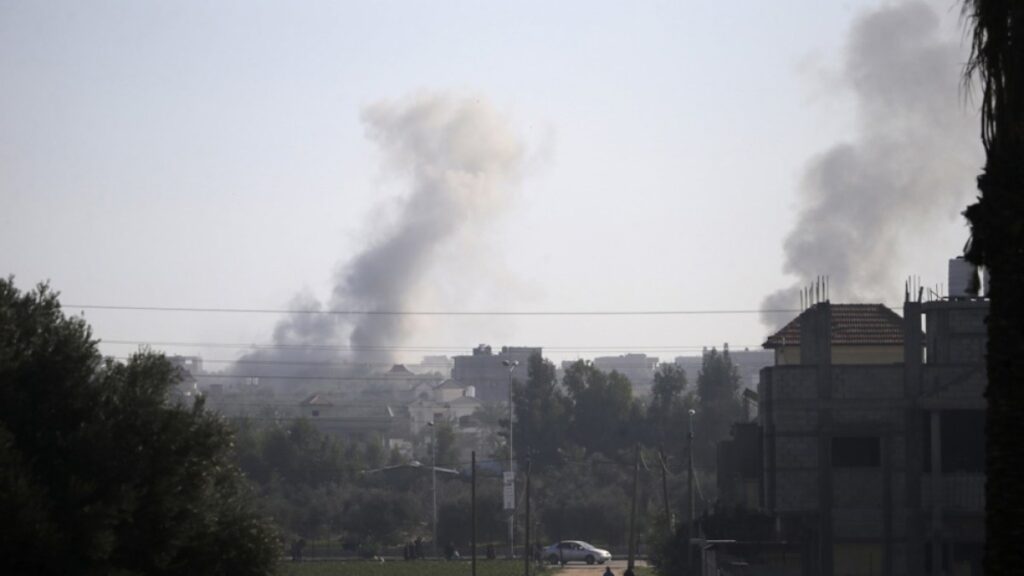
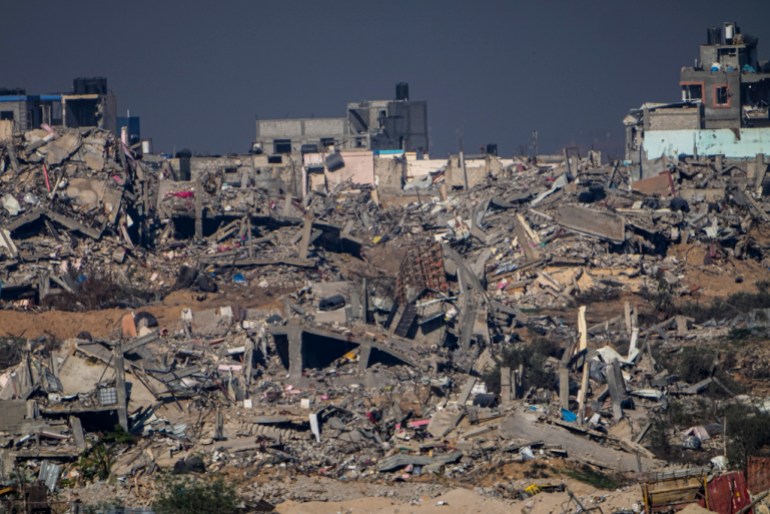
Israel’s relentless bombardment of Gaza for nearly three months has destroyed 70 percent of the homes in the besieged Palestinian enclave, according to the Government Media Office. No further details were provided but an earlier report said more than 200 heritage and archaeological sites were destroyed in the Israeli bombardment considered the most destructive in modern history. About 300,000 out of 439,000 homes have been destroyed in Israeli attacks, a Wall Street Journal report said. Analysing satellite imagery, the report added that the 29,000 bombs dropped on the strip have targeted residential areas, Byzantine churches, hospitals and shopping malls and all civilian infrastructure has been damaged to an extent that they cannot be repaired. “The word ‘Gaza’ is going to go down in history along with Dresden [Germany] and other famous cities that have been bombed,” Robert Pape, a political scientist at the University of Chicago who has written about the history of aerial bombing, told WSJ. In nearly two months, the offensive has wreaked more destruction than the razing of Syria’s Aleppo between 2012 and 2016, Ukraine’s Mariupol, or, proportionally, the Allied bombing of Germany in World War II. It has killed more civilians than the United States-led coalition did in its three-year campaign against the ISIL (ISIS) group. Between 1942 and 1945, the Allies attacked 51 major German cities and towns, destroying about 40-50 percent of their urban areas, Pape told The Associated Press news agency. “Gaza is one of the most intense civilian punishment campaigns in history,” said Pape. “It now sits comfortably in the top quartile of the most devastating bombing campaigns ever.” Corey Scher of the CUNY Graduate Center and Jamon Van Den Hoek of Oregon State University told the AP, “Gaza is now a different colour from space. It’s a different texture.” Deadliest in recent history The Israeli military campaign in Gaza, experts say, also now sits among the deadliest in recent history, killing more than 21,500 people and wounding 55,000. More than 1,000 children had their limbs amputated in the Israeli attacks since October 7. The Israeli army claims it has been targeting Hamas fighters, who carried out a deadly attack inside Israel on October 7. Some 1,200 people were killed in that attack which triggered the current phase of the conflict. Hamas says its attack was in response to continued Israeli blockade of Gaza and expansion of settlement in the occupied West Bank and East Jerusalem. Palestinians see the Israeli settlements – which are considered illegal under international law – to be the biggest hurdle in the realisation of their future state. The level of destruction is so high because “Hamas is very entrenched within the civilian population”, Efraim Inbar, head of the Jerusalem Institute for Strategy and Security, a think tank, told the AP. But experts have criticised Israel for bombing Gaza – which is one of the most densely populated areas in the world housing 2.3 million people on 365sq km (141sq miles) of land. Media reports and rights groups say an overwhelming majority of those killed are civilians – more than 70 percent of them children, women and elderly. More than 90 percent of the enclave’s population is now displaced, with aid groups warning of hunger and outbreaks of disease. Delivery of aid has been restricted by Israel worsening the crisis. Meanwhile, the Israeli military has said little about what kinds of bombs and artillery it is using in Gaza. From blast fragments found on-site and analyses of strike footage, experts are confident that the vast majority of bombs dropped on the besieged enclave are US-made. They say the weapons include 2,000-pound (900kg) “bunker-busters” that have killed hundreds in densely populated areas. US news network CNN reported on December 14 that about half of all the Israeli munitions dropped on Gaza were imprecise “dumb” bombs, which pose a greater threat to civilians. Earlier this week, an Israeli military official admitted that the high death toll from a Christmas Eve attack on a refugee camp in central Gaza was the result of the use of improper munitions, highlighting military tactics that have created high numbers of civilian casualties. The Israeli news outlet +972 also previously reported that the Israeli military has loosened its standards regarding acceptable civilian harm from attacks, resulting in a higher portion of civilians killed than in previous rounds of military assaults. Human Rights Watch has accused Israel of using banned white phosphorous. Israel has denied the claims. The Israeli army has reiterated that every strike is cleared by legal advisers to make sure it complies with international law. “We choose the right munition for each target – so it doesn’t cause unnecessary damage,” said the army’s chief spokesman, Rear Admiral Daniel Hagari. Adblock test (Why?)
‘He never hesitated’: Samer Abudaqa – father, friend, fearless photographer
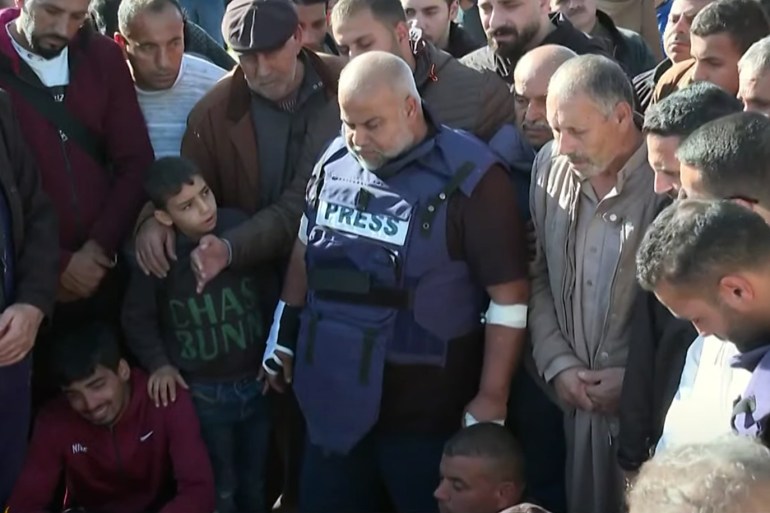
Gaza – When 15-year-old Zain Abudaqa spoke to his father by telephone on December 15, he had no idea it was the last time he would ever hear his voice. “He told me to nurture my talents and never to give up on my dreams. He told me to be a good son,” Zain said. “I cannot believe he is gone and left us alone like this.” Samer Abudaqa was 46 when he was killed in an Israeli air raid on Khan Younis in Gaza on December 15. A photojournalist and cameraman who was born and raised in the town of Abasan al-Kabira, east of Khan Younis, he joined Al Jazeera Arabic in 2002. Abudaqa sent his wife and four children to live in Belgium three years ago and managed to visit them there only twice – most recently three months ago when he brought roses home, his favourite way to express his love for his family. He had hoped to bring them back to Gaza to live together again once it was safe enough to do so. Zain, who is Abudaqa’s middle son, has a particular talent for singing and was being encouraged by his father to develop it – part of the reason his father was so eager for the family to move to Belgium where Zain would have more opportunity to do so. “For three years, we have been in Belgium, away from my father,” Zain said. “We were waiting for him to come back to us again during the war. We asked him to leave Gaza during the war because we were so afraid for him.” Zain was at school when he received the news that his father had been injured alongside his colleague, Wael Dahdouh, Al Jazeera’s Gaza bureau chief, who lost several members of his family, including his wife, two of his children and one grandson, to the Israeli bombardment in November. “I asked [school] to allow me to return home so that I could be with my mother, sister and brothers. [For] six hours straight, we waited for news about my father despite the internet and communication blackouts in Gaza. I had hope that he would live.” That hope was ultimately dashed when, later that night, it was confirmed that Abudaqa had bled to death from his injuries following Israel’s attack while he and Dahdouh were reporting at Farhana school in Khan Younis. Medical teams were able to reach Dahdouh and take him to hospital, but they were blocked from Abudaqa’s location. When they finally reached him, hours later, it was already too late. Wael Dahdouh, Al Jazeera Arabic’s bureau chief in Gaza who was also injured in the Israeli air raid that killed Samer Abudaqa, attends his funeral alongside dozens of mourners in Gaza’s southern city of Khan Younis on December 16 [Screengrab/Al Jazeera] Despite the danger, ‘he never hesitated’ Even though his family was safely overseas, Abudaqa insisted on staying in Gaza to cover the war. In the more than 20 years he worked for Al Jazeera, he never stopped for a moment, his friends and colleagues said, with some describing him as working “like a bee”. Dahdouh, who worked alongside Abudaqa since joining the Gaza office in 2004, remembered his colleague as a journalist who was always brave enough to seek out the most important stories. “We encouraged each other to produce distinctive stories without thinking too much about the effects those stories might have on us,” he said. “We really loved each other’s work. Samer was one of those photographers who had a sense of images and produced images that speak. “He would go into the field and paint the picture he needed there, then come back with a complete story.” Abudaqa visited his family in Belgium just three months before he died. He brought them his signature gift of roses [Screengrab/Al Jazeera] On the day he died, Abudaqa went with Dahdouh to film a report at the Farhana school east of Khan Younis. Despite the area being known to be particularly dangerous, Abudaqa did not hesitate, said Dahdouh. “Samer was a very spontaneous and generous person who loved his work very much. He always gave priority to his work – sometimes over his family. “He woke up early and prepared the equipment to go out with me to film despite my hesitation about this task due to the seriousness of the situation there.” Accompanied by a Palestinian Civil Defence unit, the pair spent two and a half hours filming at the site before they began preparing to leave. “The mission was over,” said Dahdouh. “But when we left, we were directly targeted with a reconnaissance missile. It killed three members of the Civil Defence, and I was injured.” Dahdouh was knocked unconscious while Abudaqa was struck in the stomach and abdomen so severely he was unable to move the lower part of his body. “I tried to be strong and was able to move with difficulty,” Dahouh recalled. “I could not hear well. I tried to take cover from any more missiles, which I expected would fall, and when I saw my hand was bleeding a lot, I tried to crawl. “I headed towards the ambulance, which was a few hundred metres away from us, and when I reached them with difficulty, I asked them to return to save Samer. They told me that it was difficult because of the debris [blocking the path], and they said that they would tend to me and then return to Samer.” It took hours of coordination with different parties for them to be able to do that, however. The Red Crescent ambulance crew had to request a Red Cross vehicle to help so that they would not be targeted by Israeli soldiers. When they finally reached Abudaqa, it became clear that his press jacket had come off him in the blast. He had tried to crawl away but had been injured again while doing so. Dahdouh said he was not
Job scam that offered money to ‘impregnate’ women busted, 8 arrested

DSP Kalyan Anand confirmed the arrests and stated that the men were part of a larger countrywide cyber syndicate.