

Analysis: Has Israel weakened Hamas enough to win the war on Gaza?
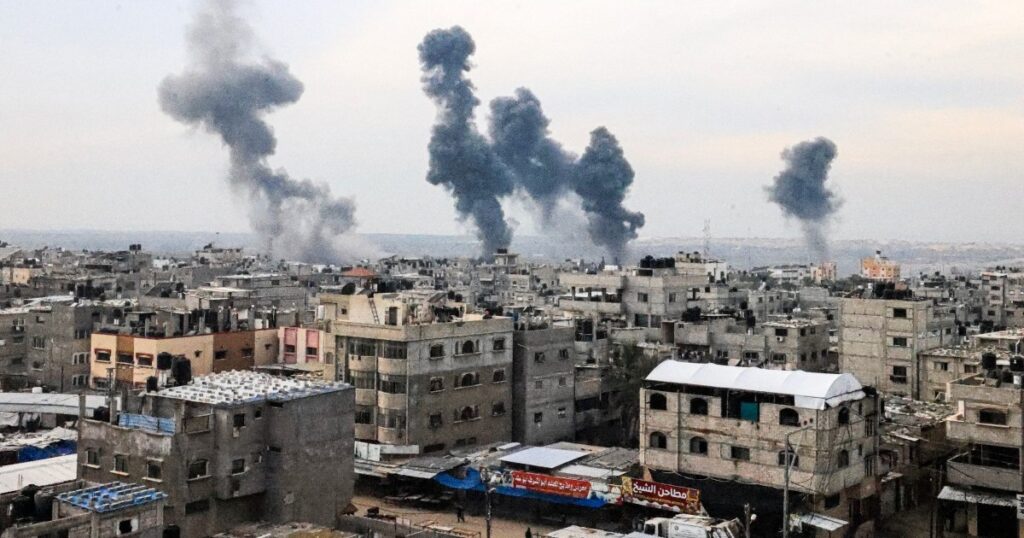
Almost 23,000 people – the vast majority Palestinian – have been killed since the unprecedented Hamas attacks in southern Israel on October 7, which launched the Israeli assault on Gaza. As the end of 2023 approaches, the Israeli offensive is showing no signs of any let-up and the death toll is certain to rise on both sides as fighting continues. Political attempts at peace have failed. Israel has stated from the outset that its objective is to eliminate Hamas’s military and governing capabilities. To this end, it has continued the aerial bombardment and ground invasion of the Gaza Strip almost without pause, since October 7. While Israel admits it has failed in this mission so far, it claims it is just a question of time before it achieves this goal. But does the situation on the ground support that claim? The answer is a cautious no. A detailed and impartial analysis of various aspects of its performance leads to the conclusion that so far, Hamas has experienced more successes than failures – for the following reasons. Hamas continues to exist The organisation is still very much alive and kicking. Politically, it is still recognised – de facto if not de jure – as the only entity exercising control over what remains of the heavily damaged civilian structures in the Gaza Strip. It is party to indirect negotiations that have already managed to produce a one-week-long pause in the assault on Gaza and a limited exchange of Israeli and Palestinian captives and hostages. As long as it holds on to its remaining hostages, Hamas will continue to be an inevitable “other side” without which no release of those captives will be possible. Israel has repeatedly stated that there is “no place” for Hamas in the post-war civilian structures of Gaza but has never produced any semblance of a concrete, alternative plan. Various vague, unfocused suggestions that the future of Gaza would be better without Hamas have been floated but nobody has produced any coherent suggestion of how to remove Hamas and what to replace it with. The US, some Arab states and various international organisations have suggested that a post-war Gaza should be run by Fatah or a pan-Arab force, but have presented no tangible plans for how to achieve that. For now, this remains wishful thinking. For the predictable future, therefore, Hamas is here to stay. Hamas remains an effective military force The military wing of Hamas, the Qassam Brigades, has never publicly disclosed information about its structure, organisation or numbers. Some experts, using open sources and leaked intelligence from Israeli, US, Arab and Russian sources, estimate the Qassam Brigades’ strength at between 30,000 and 45,000 fighters. Even the most cautious of analysts believe that before the war, the force could count at least 18,000 well-trained, disciplined and ideologically highly motivated first-line soldiers in its ranks, with everything above that number being the second echelon. Various Israeli claims of having killed as many as 10,000 Hamas fighters are almost certainly exaggerated. The Qassam Brigades have been taking heavy losses but most of its battalions remain effective combat units. Institute for the Study of War, an influential and well-informed US think tank estimates that out of 26 to 30 battalions of fighters, which were believed to exist on October 7 – each having 400 to 1,000 men, only three have been rendered inoperable – or, in civilian parlance, destroyed. Of the remainder, four or five have been “degraded”, meaning that their strength is reduced but they continue to fight, either alone or by joining other units. In one aspect, the Hamas military wing has proved exceptionally effective: all units whose commanders have been killed have nevertheless continued fighting under their deputies. Relying on its excellent field intelligence, Israel has managed to kill at least five battalion commanders in targeted air raids, with at least six more dying in battle, including the commander of the Northern Brigade. Yet none of those units was rendered “headless” and collapsed, confirming Hamas’s clear ability to plan and train competent deputies. Israel has been destroying or blocking tunnel entrances wherever it can find them but there are clear signs that Hamas still maintains enough underground facilities to move forces between front lines and often successfully flank and surprise the enemy. Hamas has support from other armed factions Reports from Gaza sometimes make it appear that the Hamas armed wing, the Qassam Brigades, is doing all the fighting. In fact, there are no fewer than 12 different armed groups, affiliated with different political and ideological blocs. The second-best known is Islamic Jihad, but others include the Popular Resistance Committee and two Fronts for the Liberation of Palestine of almost the same name – one calling itself “Popular” while the other is “Democratic”. Probably the most unlikely to be associated with Hamas is the Al-Aqsa Martyr Brigades, the armed wing of its rival, Fatah. Political differences aside, however, it fights in coordination with and largely under the general command of the Qassam Brigades. Putting all these groups under the Hamas umbrella is a pragmatic solution born out of necessity, but it seems to work to the satisfaction of all involved, with no visible tensions or cracks so far. There have been no reliable claims of any of this plethora of smaller units caving in under pressure from Israeli armed forces, disbanding, deserting or collaborating with the enemy. Furthermore, it cannot be ruled out that some of them may merge, at least temporarily, into the Qassam Brigades. The continued co-existence of these armed factions while they face the same threat is without doubt a success for Hamas. Hamas has gained popularity in the West Bank Contrary to the predominant Israeli and Western image of Hamas as unacceptable terrorists and murderers of innocent civilians – a view particularly reinforced after reports of indiscriminate slaughter on October 7 – many Palestinians see it in a different light. Those who see themselves as victims of Israeli oppression, unequal treatment, lawlessness and
A tiny, shrinking percentage of American journalists are Republicans, study finds
A recent study found that a small fraction of American journalists are Republicans. The study from Syracuse University’s Newhouse School of Public Communications found that just 3.4% of American journalists identify as Republicans, with another 36.4% identifying as Democrats. Based on an online survey of 1,600 U.S. journalists conducted in early 2022, the study is part of a series of research from over the years that examines journalists’ “perspective on the work, professional attitudes, and ethics,” according to the study. The first-of-its-kind study, which made its debut in 1971, has witnessed a dramatic shift in the percentages of Republican and Democratic journalists over the years. VAST MAJORITY OF AMERICANS BELIEVE MEDIA INCREASING COUNTRY’S POLITICAL DIVIDE: POLL The initial study from 52 years ago revealed that 35.5% of respondents said they were Democrats, 25.7% said they were Republicans and 32.5% said they were Independents. The percentage of people who refer to themselves as Democrats and independents has varied over the years, with those identifying as Democrats hitting a high of more than 44% in 1992. The 2022 study showed an all-time high for those who are independents at more than 51%, up a point and half from the same study conducted in 2013. As for those who identify as Republicans, the percentage total has slowly dwindled, with the only exception being a less than 2% increase between the 1992 and 2002 studies. In 1982, 11 years after the first study was conducted, 18.8% of respondents said they were Republican, compared to 38.5% who said they were Democrats and 39.1% who said they were independents. The 2013 study found that a little more than 7% of American journalists were Republicans, compared to 28.1% of Democrats at the time. POLLSTER SHOCKED HALF OF AMERICANS BELIEVE NATIONAL MEDIA AIMS TO MISLEAD: ‘PRETTY STRIKING’ The findings from the new study appear to show how out of touch some journalists may be with American voters, according to other polls released this year. As for Americans overall, a November Gallup poll found that 29% consider themselves Democrats, 29% consider themselves Republicans, and 40% consider themselves independents. A poll released earlier this year also found that nearly three-quarters of Americans believe the media is increasing polarization in the U.S. and that only 16% of adults have a “great deal” of trust and confidence in the news media. The Associated Press-NORC Center for Public Affairs Research and Robert F. Kennedy Human Rights survey found that 74% of overall adults believed the news media was increasing the political divide in this country. “Is the news media doing more to increase political divisions in the United States, decrease political divisions, or does it not have any impact?” the poll asked adults 18 years or older. Nearly three-quarters responded with “increase/a lot,” 18% said the media had “no impact” and 6% responded that media decreased polarization “a little.” Fox News’ Hanna Panreck contributed to this report.
Eric Adams says NYC is at ‘breaking point’ as he warns of another surge of migrants from Texas
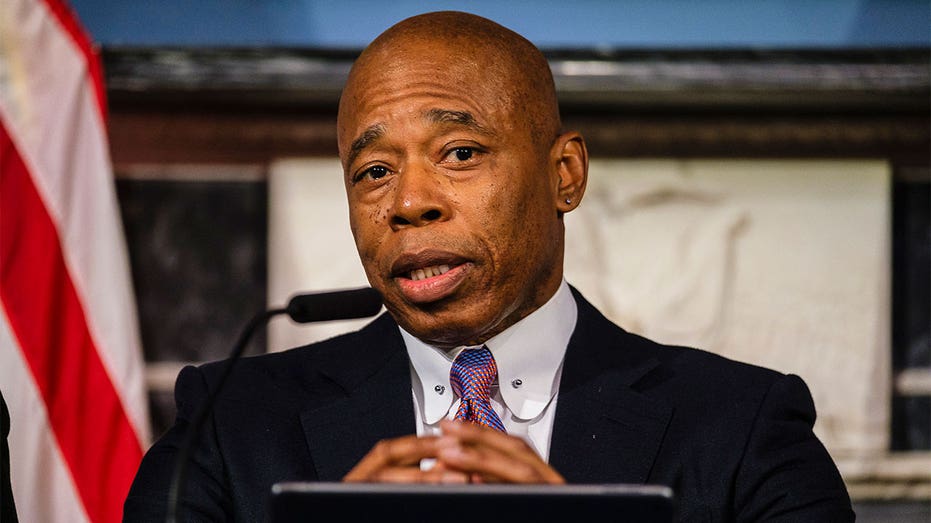
New York City Mayor Eric Adams warned residents to expect another surge in migrants from Texas in the coming months even as he said the city is reaching its “breaking point.” NYC received a record 14 buses of migrants in a single day last week as Texas Gov. Greg Abbott continues his effort to force northern Democratic strongholds to grapple with illegal immigration. NYC has received 161,000 migrants since the spring of 2022, though that figure includes migrants who arrived on their own, according to The Wall Street Journal. “For many months, we were able to keep the visualization of this crisis from hitting our streets, but we have reached a breaking point and can no longer do that,” Adams in a press conference last week. “New York City has begun to see another surge of migrants arriving, and we expect this to intensify over the coming days as a result of Texas Gov. Abbott’s cruel and inhumane politics,” he added. ‘CHAOS’ AND ‘FURY’ IN NYC AS OFFICIALS LOSE FAITH IN MAYOR ERIC ADAMS OVER MIGRANT CRISIS: REPORT Adams and other liberal mayors in Chicago and elsewhere have imposed new regulations on where and when buses can drop off migrants. As a result, Abbott has already sent migrants to the cities via plane, according to WSJ. TEXAS MIGRANT FLIGHT HEADING TO NEW YORK CITY DIVERTED TO PHILADELPHIA “Instead of attacking Texas’ efforts to provide relief to our overwhelmed border communities, these Democrat mayors should call on their party leader to finally do his job and secure the border—something he continues refusing to do,” said Renae Eze, a spokeswoman for Abbott’s office, told the Journal. Abbott’s transport program has succeeded in dividing the country’s most powerful mayors from Democratic leaders in Washington. Adams himself has repeatedly criticized the White House for not sending enough federal aid to address the city’s migrant crisis. Adams complained last week that he didn’t have a single meeting with President Biden regarding the immigration crisis throughout 2023. “I met with the president several times on this issue in ‘21 I think early 2022, the dates get confused,” he said when asked about his meetings with the White House. “It baffles me. New York City is the economic engine of the state and of the country. And I don’t have the answer.”
Maine Democrat who barred Trump from ballot met with Biden twice, called Electoral College ‘white supremacy’
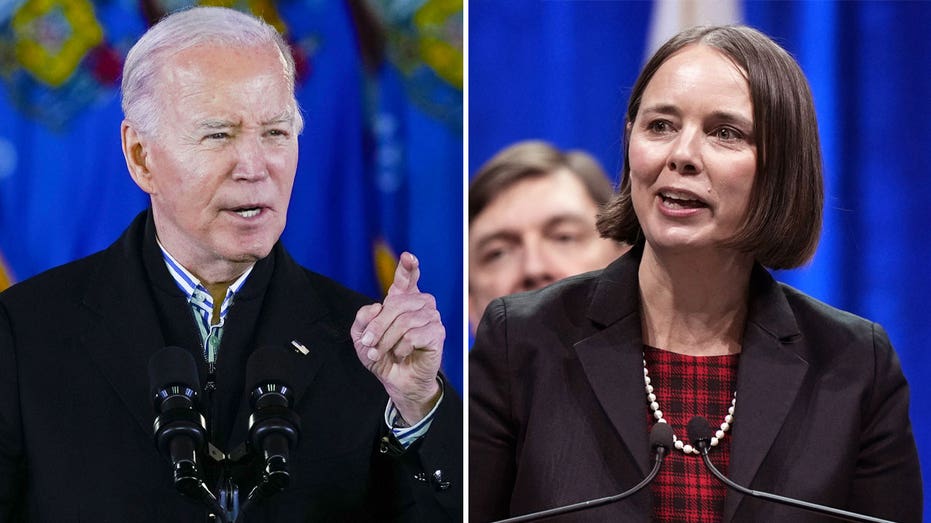
The Maine official who moved to disqualify former President Donald Trump from the state’s 2024 Republican primary ballot on Thursday visited the White House this year to meet with President Biden and previously referred to the Electoral College as a “relic of white supremacy.” On two separate occasions this year — once in March and another time in June — Maine Secretary of State Shenna Bellows, a Democrat, was invited to the White House, according to White House visitor logs. Bellows’ first trip came after she was invited to attend a Women’s History Month event held on March 22 at the White House, where she met with Biden and snapped a photo with him. Bellows took to social media to share the photo she took with Biden at the March event and described the “amazing” experience she had meeting the president. MAINE GOP STATE LAWMAKER MOVES TO IMPEACH STATE SECRETARY OVER TRUMP BALLOT REMOVAL “Birthday jaunt to DC for a Women’s History Month event at the White House yesterday and walking around today,” she added in the post to Facebook at the time, according to the Washington Free Beacon, the initial outlet to report on Bellows’ trips to the White House. Bellows’ March trip to the White House was also promoted by the secretary of state’s office in a press release earlier this year, in which she said it was “an honor to join” Biden, Vice President Kamala Harris, and other female leaders from across the country. “It was an honor to join President Biden, Vice President Harris and amazing female leaders from around the country to celebrate Women’s History Month at the White House yesterday,” Bellows said at the time. “I hope to someday see the last of the ‘firsts’ like myself, but as we continue to see these groundbreaking leaders in new positions of power, I look forward to celebrating them as part of our nation’s history.” Bellows’ second trip came on June 6, when she traveled to the White House with more than a dozen others to meet with Justin Vail, a special assistant to Biden. That trip, according to social media posts by others who made the journey with Bellows, appears to have been organized by Issue One Reform, which describes itself as “the leading crosspartisan political reform group” in D.C. that works to “unite Republicans, Democrats, and independents in the movement to fix our broken political system and build an inclusive democracy that works for everyone.” Responding to a June 8 post to X from Dustin Czarny, a Democrat who made the trip and serves as the Onondaga County elections commissioner and the Democratic Caucus chair of the New York State Elections Commissioner Association, Bellows wrote, “Yes! That was such a powerful part of our trip to DC. Democrats, Republicans and nonpartisan elections officials united on issues of protecting election workers and finding critical election infrastructure.” Bellows, who represented Maine’s 14th district in the state Senate for roughly four years, has served as the Secretary of State for Maine since 2021. Shortly after taking office, Bellows penned an op-ed for a progressive platform known as the Democracy Docket. In her writing, titled “Voting Rights for Our Neighbors Matter As Much as Our Own,” Bellows touted her efforts to make “voting more accessible” and said she sought the position of secretary of state in Maine because she “was truly frightened for our democracy” following the 2020 presidential election. HOUSE DEMOCRAT FROM MAINE RIPS STATE’S DECISION TO TAKE TRUMP OFF BALLOT Bellows also took aim at the Electoral College in her column, claiming it is “the relic of white supremacy” that prevents voters from being represented fairly. In her ruling to disqualify Trump from the state’s 2024 ballot, Bellows cited Section 3 of the 14th Amendment of the U.S. Constitution that bars people who have “engaged in insurrection” from running for elected office without two-thirds congressional approval. The clause was originally meant to bar former Confederate soldiers and officers from holding positions in the U.S. government or military. It was also referenced by Colorado’s highest court in a 4-3 ruling last week similarly barring Trump from that state’s primary ballot. The decision was challenged by the Colorado GOP, setting up a battle before the U.S. Supreme Court. Bellows’ affection for Biden and Harris and disdain for Trump is no secret. In an October 2020 post to social media, Bellows said she was “excited to vote for Biden and Harris.” Before that, in October 2020, Bellows questioned on social media whether the “obsession” with 2016 presidential candidate Hillary Clinton was because people “just can’t deal [with] the magnitude of fears of what Trump presidency brings.” Bellows has faced backlash over her decision to remove Trump from the state ballot from multiple Republicans and those within her own party, including Rep. Jared Golden, D-Maine. “I voted to impeach Donald Trump for his role in the January 6th insurrection. I do not believe he should be re-elected as President of the United States,” Golden said Thursday night. “However, we are a nation of laws, therefore until he is actually found guilty of the crime of insurrection, he should be allowed on the ballot.” Bellows defended her move while responding to Golden’s criticism during a CNN interview on Friday. “I reviewed Section Three of the 14th Amendment very carefully and determined that Section Three of the 14th Amendment does not say ‘conviction,’ it says ‘engage,’” Bellows said. “And, let’s go back and keep in mind that the events of January 6, 2021, were unprecedented and tragic,” Bellows continued. “This was an attack, not only on the Capitol and the government officials, the former vice president, members of Congress, but an attack on the rule of law.” “And the weight of evidence that I reviewed indicated that it was, in fact, an insurrection,” she added. “And Mr. Trump engaged in that insurrection under Section Three of the 14th Amendment.” Bellows’ office did not immediately respond to Fox News Digital’s request for
Ramaswamy says time to fight systemic racism is over, blasts affirmative action as ‘anti-American’
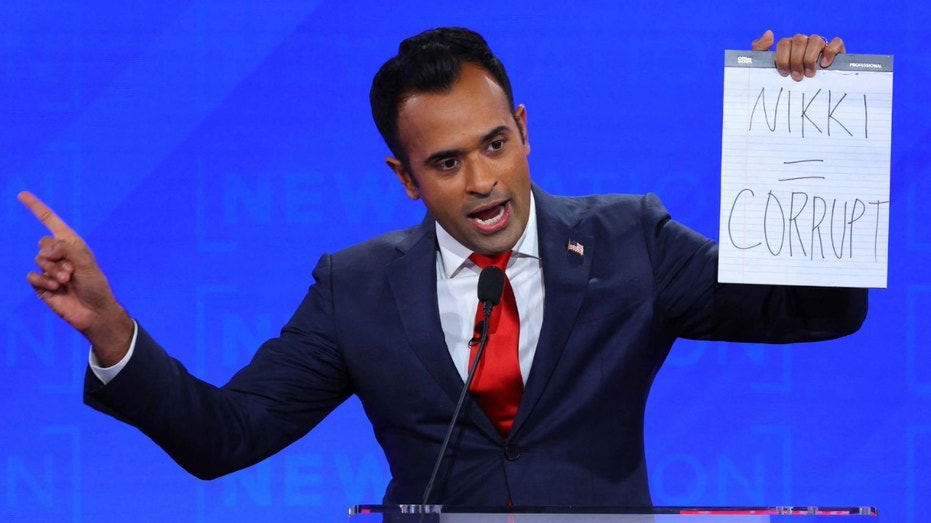
GOP presidential candidate Vivek Ramaswamy says the time for Americans to address systemic racism is long gone, and that racism has dwindled to near irrelevance in the U.S. Ramaswamy made the comments during a campaign stop in Iowa on Friday, telling his audience that contemporary efforts to combat systemic racism are only worsening the issue. Rev. Samuel Ansong asked how the U.S. should grapple with the issue if not in the form of affirmative action and other similar programs. “Was there a time and place for correcting for those past injustices? Yeah, it was like in 1870,” Ramaswamy responded, according to the Des Moines Register. Ramaswamy reportedly added that affirmative action and DEI programs were “anti-American at their core” and “inherently divisive. HOUSE DEMOCRAT FROM MAINE RIPS STATE’S DECISION TO TAKE TRUMP OFF BALLOT “But at a certain point in time, I think that what you would think of as racism in this country — or you can fill in the blank, sexism or any other -ism or form of discrimination — it gets to be small enough, not to be zero, but small enough that the best thing we can do is let it atrophy to irrelevance,” Ramaswamy added. He went on to argue that current efforts to combat so-called systemic racism do more harm than good by drawing attention to race and highlighting divisions. The exchange comes as Ramaswamy and the other GOP 2024 hopefuls are in the home stretch for the presidential primary in Iowa on January 15. BLACK VOTERS SAY THEY’RE TURNING AWAY FROM ‘WEAK’ BIDEN IN 2024: ‘HE DIDN’T CHANGE ANYTHING’ Former President Donald Trump holds a massive lead over his competitors in national polls, though candidates like Florida Gov. Ron DeSantis, former South Carolina Gov. Nikki Haley and Ramaswamy have invested a huge effort into swaying Iowa voters specifically. Nevertheless, a Fox Business poll of Iowa Republicans found that Trump has a lead of 34 points as of mid-December.
Year of the underdog: How ‘outsiders’ upended Latin America’s elections
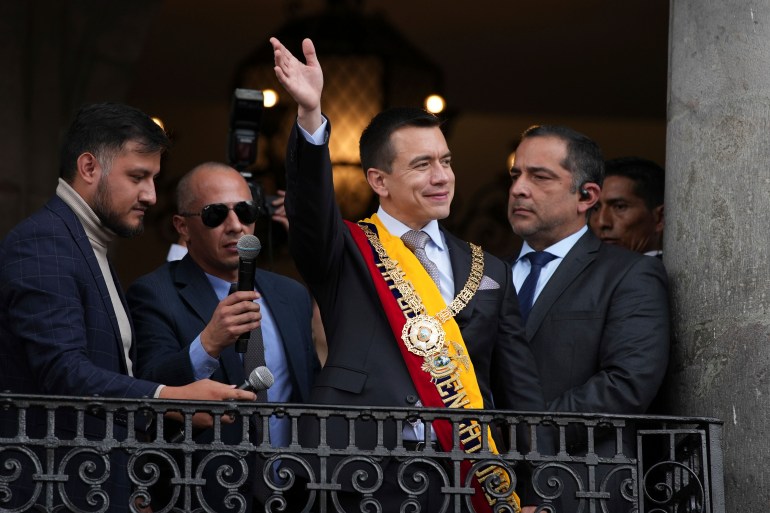
Buenos Aires, Argentina – Poverty through the roof. Out-of-control inflation. Overwhelming debt. Javier Milei painted the grimmest of pictures when he delivered his inaugural address as president of Argentina earlier this month. “There is no money,” he said in a grave voice. “There is no alternative to tightening our belt. There is no alternative to a shock.” It was not the sort of message you would expect to elicit cheers from a society battered by economic recession. But the roar from the crowd demonstrated the extent to which Milei – a relative newcomer to the world of politics – had succeeded in tapping into voters’ discontent with the status quo. Milei, a 53-year-old libertarian economist known for his shaggy hair and cloned dogs, was part of a wave of political outsiders who surged into leadership positions in Latin America this year. Countries across the region saw dark-horse candidates sweep into the presidency in 2023, delivering a rebuke to the political establishment. In Ecuador, for instance, Daniel Noboa stunned the nation by defeating political veteran Luisa González in an October run-off vote. Like Milei, Noboa, the heir to a banana industry fortune, had only served a single term in public office before his ascent to the presidency. Guatemala, meanwhile, saw progressive congressman Bernardo Arevalo come from behind to win a landslide in his country’s presidential elections, defeating former First Lady Sandra Torres. Arevalo had been seen as a long-shot candidate, polling with less than 3 percent support in the lead-up to the first vote. But he sailed to victory on a wave of popular frustration he characterised as a “democratic spring”. President Daniel Noboa became Ecuador’s youngest-ever elected president when he was sworn in on November 23 [Carlos Noriega/AP] Even in Paraguay, another long-shot, Paraguayo Cubas, made a surprisingly strong showing in the country’s presidential race. Describing himself as an “anti-system” candidate, the far-right leader landed in third place in the final vote. But Pablo Touzon, an Argentinian political scientist, said “anti-system” might not be the right term for this trend of political outsiders. “It’s not that they are anti-system. They are the new system,” he said of the slate of new leaders, who span the political spectrum, from left to right. Touzon traces this crop of political outsiders to a global shift that has been brewing for more than a decade. He explained that the global economic crash of 2008 and the rise of social media empowered new voices to rail against the status quo, rocking political establishments from Europe to North America to the Middle East. This period of upheaval in the early 2000s coincided with a commodities boom in Latin America: The price of raw materials and other exports rose, fuelled by demand from countries like China. That lowered regional inequality slightly, but Touzon warned that Latin America has “yet to find its economic model” – one that will ensure the region’s stability. Instead, economic uncertainty has created the conditions for the current “political rupture”. “The new system might be more unstable, more variable, with a power that is easier to obtain and easier to lose,” Touzon said. President-elect Bernardo Arévalo has faced legal challenges since winning Guatemala’s presidential election with a dark-horse campaign [Moises Castillo/AP] The economy was a leading issue in several of the countries that saw upstart candidates take power. Argentina’s dismal economic outlook dominated its election cycle, with inflation soaring past 160 percent and its currency tanking. More than 40 percent of the population sits below the poverty line. Likewise, Ecuador’s economy has struggled to rebound after the COVID-19 pandemic. Experts have warned that high youth unemployment could provide “easy recruits” for criminal gangs, another top concern in this year’s election. Corruption was also a mobilising issue. In Ecuador, outgoing President Guillermo Lasso faced impeachment hearings until he dissolved the legislature and called for new elections. In Argentina, meanwhile, the previous administration hit a speed bump when a federal court found then-Vice President Cristina Fernández de Kirchner guilty of corruption last December. And in Guatemala, a litany of government scandals drove voters to back the Movimiento Semilla or Seed Movement, an anticorruption party led by Arevalo. “My candidacy and our party channelled the frustration with an intolerable situation of corruption,” Arevalo said in an interview with the BBC in November. Even so, government prosecutors and rival politicians have mounted repeated efforts to question the legitimacy of Arevalo’s victory, spurring international observers to warn of election interference. Supporters reach out towards Argentina’s newly inaugurated President Javier Milei, bottom right, on December 10 [Natacha Pisarenko/AP] Distrust in government institutions has been a uniting theme throughout the 2023 elections, according to commentators like Pulitzer Prize-winning columnist Andrés Oppenheimer. In an appearance on Mexico’s Imagen Radio, Oppenheimer credited the clamour for change to longstanding frustrations. “The wave of outsider presidents that they are electing in Latin America – from Chile, Peru, Colombia, Argentina, all the anti-systemic leaders are appearing ahead in the polls – all of that is part of the same thing,” Oppenheimer said. “There’s a wave of unhappiness in the world.” In some cases, when faced with major obstacles like economic turmoil or corruption, voters turn to politicians they come to view as “messiahs”, said Romina Del Pla, a left-leaning member of Argentina’s Chamber of Deputies. “It’s the expression of the magnitude of the crisis that we have been living through in Argentina for many years,” Del Pla said of her country’s recent election. She added that the thirst for “messiah” figures extends beyond Argentina, pointing to the success of populists like Donald Trump in the United States or Jair Bolsonaro in Brazil. “We’ve seen that this phenomenon is international in nature, with Trump, with Bolsonaro, with others, that are the people who have managed to channel that huge frustration,” she said. Protesters demonstrate against President Javier Milei’s slate of reforms outside the National Congress in Buenos Aires, Argentina, on December 21 [Rodrigo Abd/AP] Del Pla observed that, during this year’s presidential race, there was
Nicole Jenes and Rathbone: Social media influencers a new lens on Gaza war
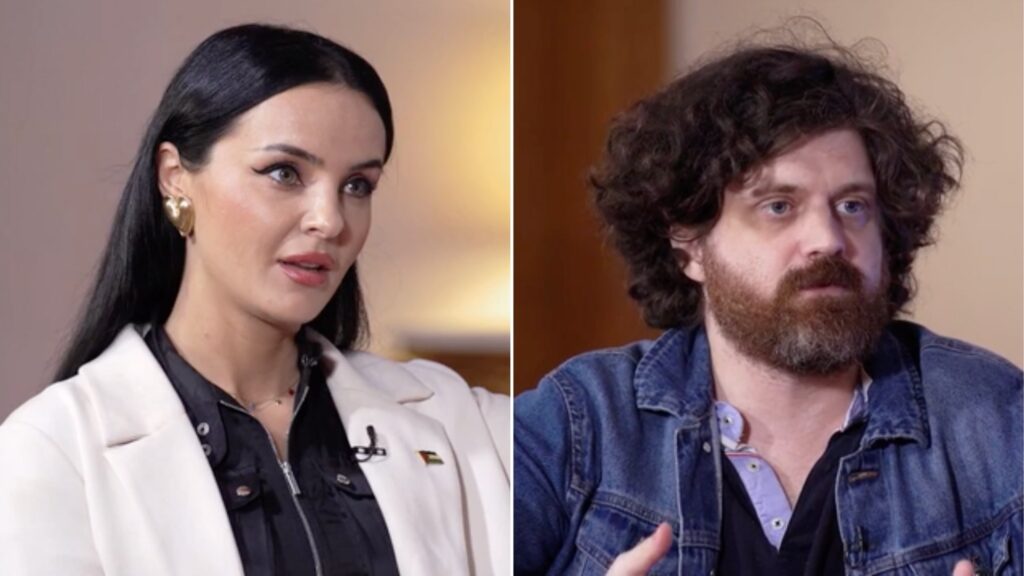
Exploring how Instagram and TikTok influencers shape narratives in Israel’s war on Gaza. Social media has revolutionised our understanding and perception of wars and conflicts. Platforms like Instagram, Snapchat and TikTok, with their real-time, unfiltered content, offer a new perspective that’s immediate and often raw. These platforms enable users worldwide to witness conflicts like the war on Gaza as they unfold, offering a variety of viewpoints that traditional media may not cover. This shift has led to a more multifaceted and grassroots-level narrative, one which we will explore as influencers Nicole Jenes and Rathbone talk to Al Jazeera. Adblock test (Why?)
Pakistan poll body rejects ex-PM Imran Khan’s nomination for 2024 elections
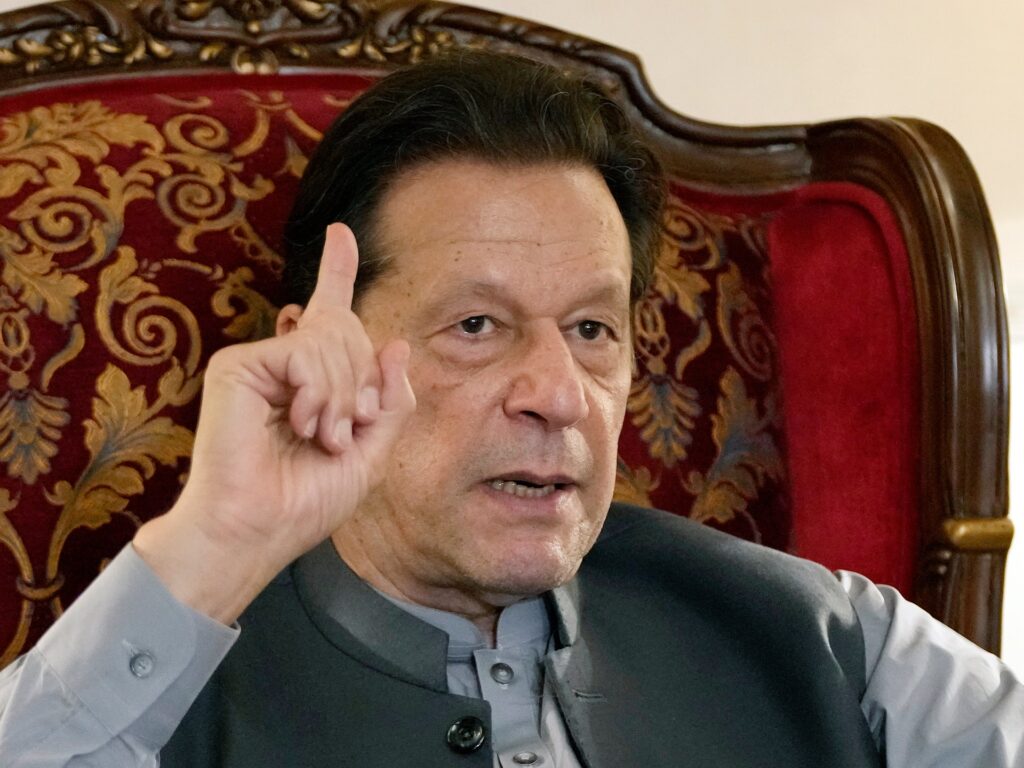
The jailed leader’s bid to overturn his disqualification in the wake of conviction in a corruption case rejected by election body. Pakistan’s election body has rejected former Prime Minister Imran Khan’s nomination to contest the 2024 parliamentary elections, with Khan’s Pakistan Tahreek-e Insaf (PTI) party accusing authorities of stopping most of its candidates from participating in the elections due in February. The 71-year-old former cricket star, who is serving a three-year prison sentence for corruption, was barred from politics for five years by the Election Commission of Pakistan (ECP). But he still filed nomination papers on Friday. Election officials disallowed Khan’s candidacy because of his conviction and what they said was his disqualification under the Constitution, according to documents seen by the AP. They also rejected the candidacies of former members of his cabinet. The ECP released a list of rejected nominees from Lahore on Saturday, which also contained Khan’s name. It said the former prime minister could not become a nominee because he is not a registered voter of the constituency and due to him being “convicted by the court of law”. The cricketer-turned-politician’s nomination bid was also rejected in his hometown of Mianwali in Punjab province, according to his media team. Khan has not been seen publicly since his incarceration in August in the corruption case in which he was accused of unlawfully selling state gifts while in office. Last week, the Supreme Court granted him bail in a case alleging he leaked state secrets, but he is continuing to fight a barrage of legal cases that have dogged him since being removed from office last year. Most popular leader Khan, who is widely seen as the country’s most popular leader, has alleged that Pakistan’s powerful military is colluding with traditional parties to destroy his political party and prevent him from running for office again. The military has historically played a major role in the country’s politics and has directly ruled for decades since independence in 1947 from British rule. The 71-year-old leader has also alleged that the Pakistani military and the United States government conspired to topple his administration after he visited Moscow just before Russia invaded Ukraine. Washington and Pakistan’s military have denied the accusations. However, the US-based news site The Intercept published in August what it claims to be the details of a secret diplomatic cable that suggested the US administration wanted to remove Khan from power. The ECP had previously ruled that Khan’s PTI party cannot contest general elections using its cricket bat logo, but the High Court in the northwestern city of Peshawar earlier this week handed his team a legal victory by suspending the order. In addition to the 71-year-old Khan, the election commission has also rejected nomination papers submitted by other senior members of his party, including vice chairman Shah Mahmood Qureshi. The commission, however, has accepted a nomination bid from former Prime Minister Nawaz Sharif from two constituencies, weeks after a court overturned two corruption convictions. But Sharif, who also has been facing legal challenges for years and returned home in October to end a four-year self-imposed exile in the United Kingdom, still needs to remove a life ban on holding public office, a hearing for which will be held in January. The PTI has accused the Pakistani authorities of rejecting 90 percent of nominations from its party candidates while allowing nomination papers from other parties, including Sharif’s Muslim League-Nawaz (PML-N). [embedded content] Adblock test (Why?)
PM Modi inaugurates Amrit Bharat Express train: Here’s everything you need to know

Here are five features of Amrit Bharat Express trains travelling from Darbhanga in Bihar to Anand Vihar and Malda Town in West Bengal to Sir M Visvesvaraya Terminus in Bengaluru.
‘Light diyas and celebrate, but don’t…” PM Modi urges devotees ahead of Ram Mandir inagrautaion
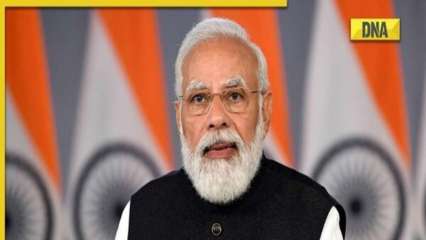
PM Modi was addressing a public rally after inaugurating and laying the foundation stone of development projects.