

Hochul vetoes Democrat-backed bill changing state campaign financing program
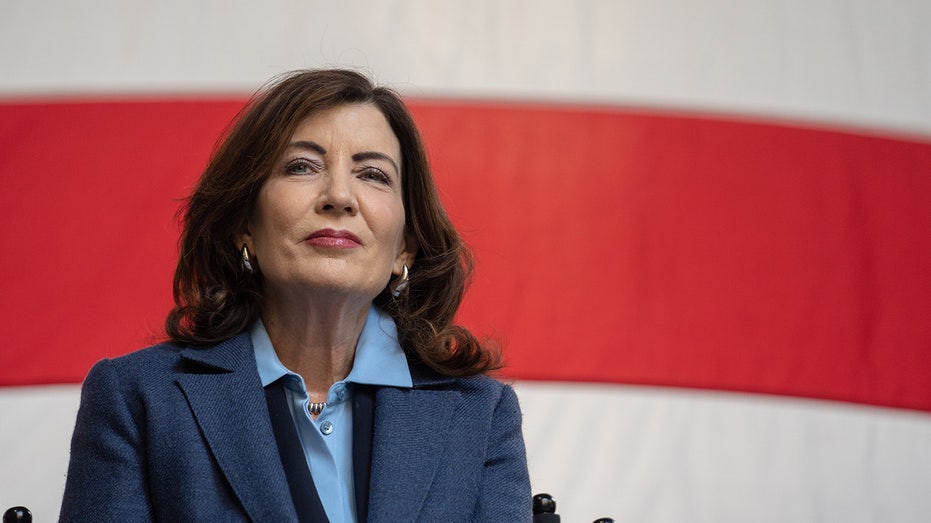
New York Democrat Gov. Kathy Hochul vetoed an election bill on Wednesday that would have significantly changed the state’s newly established system to publicly finance political campaigns by raising the dollar threshold for candidates to qualify in state elections. As it stands, New York’s Public Campaign Finance Program allows statewide or state legislative office candidates to receive public matching funds at rates of up to 12-to-1 based on small donations — anywhere between $5-$250 — from residents in their district. More than 160 candidates have already opted in for the 2024 election cycle. But under the now-rejected measure, which state lawmakers narrowly passed in June, political contributions of any size could have been matched with $250 in public funding, increasing the thresholds for a candidate to participate in the program. “New York’s distinctive public campaign finance laws were written to amplify the voices of low-dollar donors in State elections and diversify the pool of candidates who can run for office,” Hochul said in a veto memo, adding that increasing the number of donations eligible for public matching funds would also add “significant costs” to the state budget that are not accounted for in its financial plan. “Signing this bill would effectively reduce the impact of small donors on elections, in direct contravention of the purpose for which the [Public Campaign Finance Program] was originally adopted,” she said. Sponsored by Brooklyn Democrat lawmakers, Assembly Member Latrice Walker and state Sen. Zellnor Myrie, the bill passed in June in both Democrat-controlled legislative chambers: 80 to 66 in the Assembly and 34 to 29 in the Senate. Hochul’s rejection came as a surprise as she sided with every state Republican lawmaker, including a handful of Democrats, who voted against the measure. New York Republican election attorney Joseph Burns told Fox News Digital that conservative lawmakers have long held the position of opposing public finance programs, asserting they fail to improve democracy and the state’s electoral system. “And they end up just becoming an unnecessary and wasteful taxpayer subsidy of politicians and political campaigns,” Burns said. Burns suggested that the origins behind the bill signaled more of a fight between the progressive and establishment Democrats. “The genesis of this bill to make it more difficult to qualify was that many establishment Democrats realized that progressive candidates and generally underfunded progressive candidates were poised to take advantage of it,” Burns said. “Which, of course, would have threatened the number of establishment Democrats in primaries.” Hochul’s veto received applause from good-government groups and public campaign finance advocates, who argued the bill would have undermined the voice of everyday New Yorkers and countered the influence of wealth in politics. “Because the program’s match is limited to small contributions from constituents, it will push back on the toxic influence of big money in our politics and uplift the voices of everyday voters,” Joanna Zdanys, senior counsel in the Elections and Government Program at the Brennan Center for Justice, said in a statement. “It will give candidates a powerful incentive to engage with their own constituents. And it will open pathways for New Yorkers who aren’t wealthy to participate [in] the political process.” Fox News Digital reached out to the governor’s office but did not immediately receive a response.
‘The revolution will continue’: Syrian protesters vow ahead of 2024
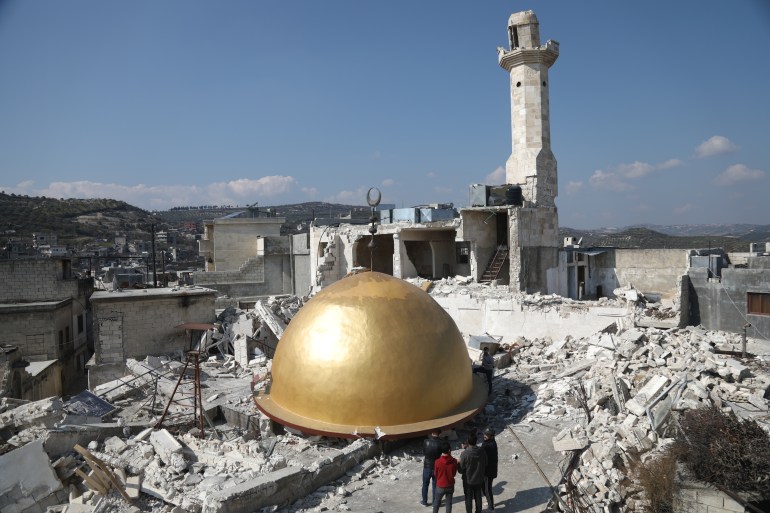
Sweida, Syria – On Friday, people carried red flowers, flags and banners as they headed towards Freedom Square in the city centre to take part in a demonstration filled with songs and chants calling for the overthrow of the Syrian regime. “The revolution will continue and we will keep taking to the streets to achieve our demands,” Lubna al-Basit, 30, declared resolutely to Al Jazeera. It was the 130th such demonstration since they began taking place on a daily basis in August. This time, there was a particularly festive feel in anticipation of the New Year in the air. Worsening living conditions and lack of public services have sparked protests in regime-held areas over the past few years of the civil war, but they have not been this sustained and populous before. This time, the slogans shouted are more reminiscent of 2011 when protests were met with brutal repression by the security forces. The year 2023, which was kicked off with the earthquake disaster in Turkey and Syria, has borne witness to several important international and local developments for Syria. The Maland Mosque dome in Idlib fell to the ground when the February 6 earthquake destroyed the structure beneath it [Ali Haj Suleiman/Al Jazeera] Since the start of this year, the Syrian pound has halved in value against the dollar. Before the war it traded at 47 Syrian pounds to the dollar; at the start of 2023, it was around 6,500 Syrian dollars. Now, having been devalued halfway through the year by the Central Bank, it is trading at just over 13,000 to the dollar. Public services and living conditions have gone “from bad to worse”, al-Basit said. She placed the blame firmly on the “bankruptcy” of the Syrian regime and its inability to provide anything better for its people. “These demonstrations will continue in 2024 because there is no seriousness in resolving the Syrian issue.” Normalisation and precautions A few months before the protests in Sweida began last summer, the Arab League took the decision to bring Syria back into the fold. However, this normalisation of relations with the Syrian regime did not put a stop to the illegal trading of the highly addictive drug, Captagon, which is exported from Syria to the Gulf countries and around the world, as clashes continue on the southern border between the Jordanian army and Syrian drug smugglers. People collect belongings after their house was bombed by Russian warplanes in the village of Jaftlik Haj Hammoud, north of Jisr al-Shughur [Ali Haj Suleiman/Al Jazeera] Al-Basit and other activists participating in the protests in Sweida last Friday said they were not surprised. “The Syrian crisis is fundamental to the Arab world and must be resolved because the danger of [President] Bashar is crossing the borders,” al-Basit said. Even with the normalisation of relations between Syria and other Arab nations, activists remain hopeful that the regime can still be held to account, for example via the international court of justice proceedings against Syria for violations of the Convention against Torture. Furthermore, the arrest warrant issued by France this year against President Bashar al-Assad for his role in the chemical massacre of 2013 has brought hope to some people. Radwan al-Atrash, the director of the Syrian Centre for Community Development, told Al Jazeera that peaceful demonstrators across Syria support all accountability efforts. “[These are] all positive factors in finding a solution to the Syrian crisis.” Despite continued bombing of northwestern areas in Syria, scouts gather in downtown Idlib to show support for Gaza [Ali Haj Suleiman/Al Jazeera] Although the bombing and targeting of civilian areas and gatherings has not stopped in northwestern Syria, action by Syrian organisations to support Gaza has continued. “Standing with peoples exposed to injustice” is what has motivated the continued protests despite the danger, al-Atrash said. Millions in danger “The international community must realise that the lives of millions of Syrians are in danger,” Mounir Mustafa, deputy director of the Syrian Civil Defense (White Helmets), told Al Jazeera. In August, the White Helmets held an event in Idlib to commemorate the 10th anniversary of a chemical weapons massacre of 1,000 people in villages in Ghouta, southern Syria, by the regime. Members of the Syria Civil Defence (White Helmets) commemorate more than 1,000 victims of a 2013 chemical weapons massacre by the regime in southern Syria [Al Haj Suleiman/Al Jazeera] This year, the regime’s focus has been on the northwestern part of the country, where 1,232 attacks by the Syrian regime and its allies have been recorded this year. These have caused the deaths of 162 people and the wounding of 684 others, half of whom were women and children. Mustafa said he believes the regime is stepping up its attacks in direct response to the protests in Sweida. “It is using escalation as a means to tighten its grip on power and impose its presence as a capable actor,” he said, adding that the bombing had targeted vital facilities with internationally banned weapons. Mustafa described the consequences of continued bombing as “catastrophic” in light of the growing humanitarian disaster in the area, and the lack of funding for relief operations. Russian warplanes target the west of Idlib city [Ali Haj Suleiman/Al Jazeera] Heated fronts all over the map In his briefing to the Security Council On Thursday last week, UN Special Envoy to Syria Geir O Pedersen spoke about the fighting and attacks that other areas of Syria have also suffered in 2023. Most significant, he said, has been the intense Israeli bombing of Damascus and Aleppo airports since the start of the war on Gaza, which has impeded the movement of civilians and humanitarian operations by the United Nations. He said the battles in Deir ez-Zor between the Arab tribes and Syrian Democratic Forces (SDF) at the end of August, as well as the continued SDF clashes with Turkey, represent an escalation of the deadly violence in Syria. “No one should delude themselves that this worrying new normal of ongoing
Russian poets given long jail terms for reciting verses against Ukraine war
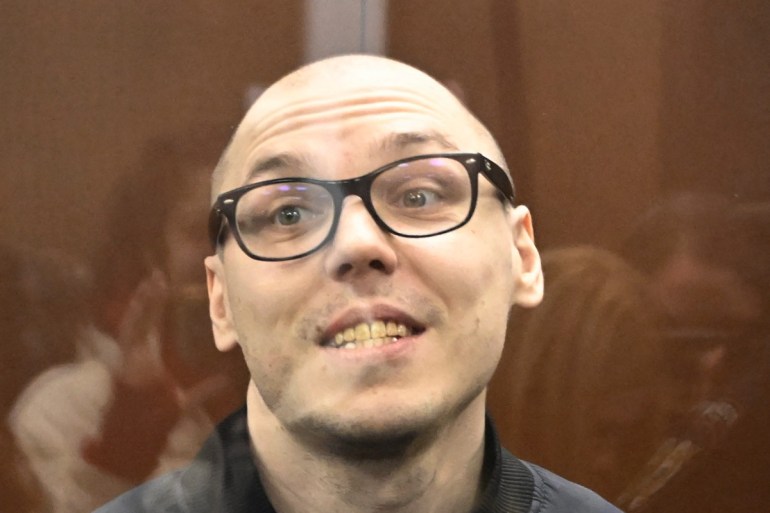
Artyom Kamardin, 33, and Yegor Shtovba, 23, sentenced for ‘undermining national security’, ‘inciting hatred’. A court in Moscow has sentenced two Russian men to several years in prison for reciting poetry against the war in Ukraine during an anti-mobilisation protest last year as the Kremlin presses on with its crackdown on dissent. Artyom Kamardin, 33, was sentenced to seven years in jail on Thursday after being convicted of making calls “undermining national security” and “inciting hatred”. The charges were linked to him reading his anti-war poems at the rally in Moscow in September 2022. The Tverskoy District Court also sentenced Yegor Shtovba, 23, to a five and a half year term on the same charges, after he participated in the event and recited Kamardin’s verses. The demonstration last year was held days after President Vladimir Putin ordered the mobilisation of 300,000 reservists amid Russia’s military setbacks in Ukraine. The widely unpopular move prompted hundreds of thousands to flee the country to avoid being recruited into the military. Kamardin read out his poem, “Kill me, militia man!”, ending with the line, “Glory to Kievan Rus, Novorossiya – suck!” – using the historic terms for Ukraine’s capital Kyiv and a term from days of the Russian Empire that Moscow uses for the area of southeastern Ukraine it is trying to annex, respectively. Russian poet Artyom Kamardin stands inside the defendants’ glass cage as his sentence is read out in court, on December 28, 2023. He recited his poem, ‘Kill me, militia man!’ at an anti-war rally last year [Alexander Nemenov/ AFP] Days later, police stormed into the apartment Kamardin shared with his then-girlfriend, Alexandra Popova, and another activist. According to Amnesty International, Popova said police beat and violated Kamardin with a dumbbell before forcing Popova to watch a video of the act. She also claimed that police super-glued stickers to her face and threatened to rape her. A clip later circulated on Telegram of the bruised and battered Kamardin apologising for his words. Authorities in Russia have detained thousands of people under wartime censorship laws for their simple acts of protest against the offensive in Ukraine. Just before his sentencing, a smiling Kamardin recited a poem that refers to poetry as “gut-wrenching” and often disliked by “people accustomed to order”. Popova, now his wife, was escorted out of the courtroom by bailiffs after she shouted “Shame!” following the verdict. “It is a very harsh sentence. Seven years for poems, for a non-violent crime,” she told the AFP news agency, before being taken away by police officers. According to OVD-Info, a prominent rights group that monitors political arrests and provides legal aid, 19,834 Russians have been arrested between February 24, 2022, when Russia began its invasion, and late October 2023, for speaking out or demonstrating against the war. Adblock test (Why?)
Photos: 2023 – a year in pictures
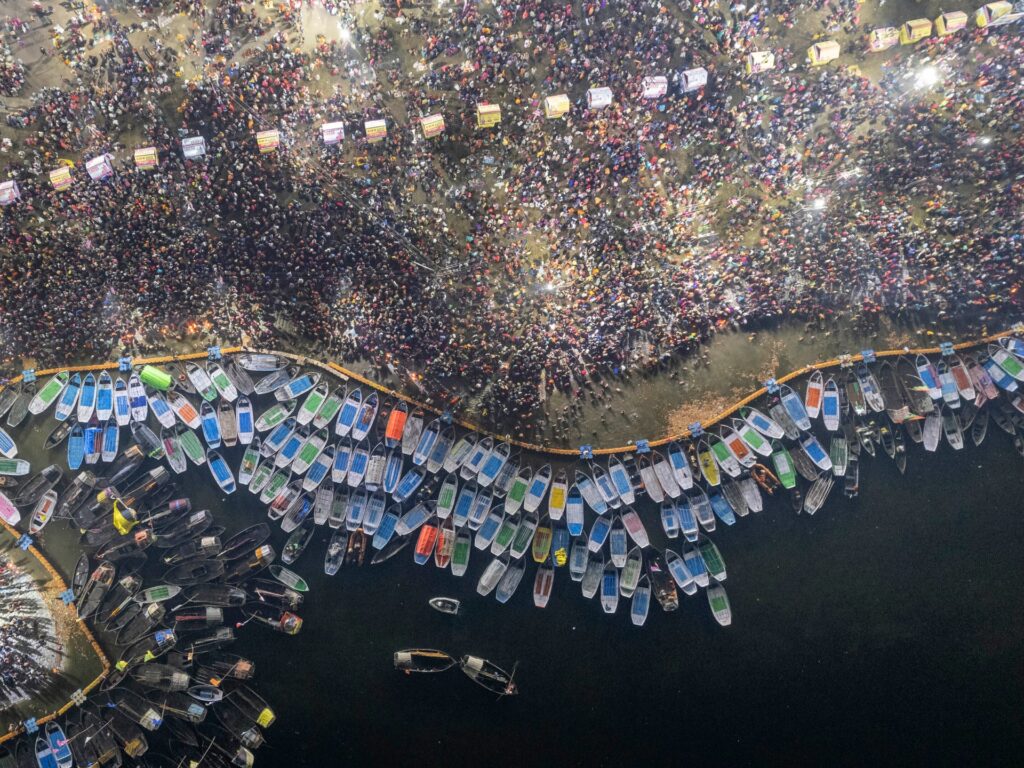
From the Israel-Hamas war to Russia’s grinding battles against Ukraine, 2023 has shown the dangers of armed conflicts breaking out into region-wide combat. It has revealed the human struggle – to protect loved ones, to navigate a warming planet, to escape strife and oppression, to survive nature’s capriciousness. Go through our gallery below to see some of the most powerful photographs defining the last 12 months. Adblock test (Why?)
Lalan Singh resigns, Bihar CM Nitish Kumar elected as JDU chief
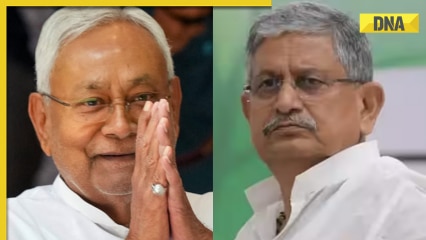
Lalan Singh proposes Bihar CM Nitish Kumar’s name for Janata Dal (United) president at party’s national executive meeting.
Watch: Rahul Gandhi shows Jiu-Jitsu skills in viral video, engages in martial art bout with Bajrang Punia

The former Congress president also learnt some of the wrestling moves such as ‘dhobi pachaad’ and ‘dhak’ with Bajrang explaining him the difference between wrestling on the mud and on mat.
Covid-19: Manipur reports first case of JN.1 sub-variant, active cases stand at 4,097

Manipur reported a fresh case of COVID-19 amid spiking cases across India.
Who is TA Narayana Gowda, man at the centre of pro-Kannada protest in Bengaluru?

TA Narayana Gowda and 29 others were arrested in Bengaluru following a pro-Kannada protest that turned violent.
‘BJP will now revert to its core message.’: Congress leader Shashi Tharoor ahead of Ram Temple inauguration in Ayodhya
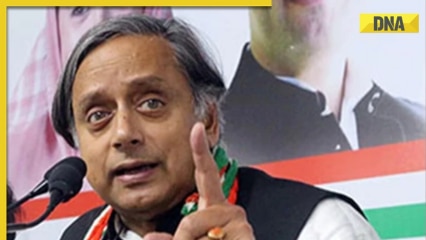
Shashi Tharoor’s critical remarks hold significance as Congress is facing pressure from its coalition partners, like the Indian Union Muslim League (IUML), to maintain a distance from the grand event.
‘INDIA Bloc will…’: Congress leader Sachin Pilot makes big statement after ‘Hain Taiyyar Hum’ rally in Nagpur
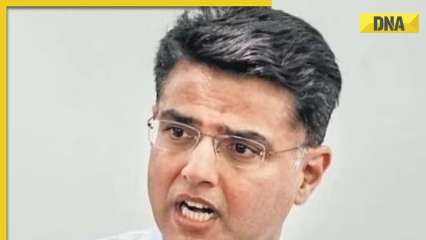
The Congress kicked off its campaign for the 2024 Lok Sabha elections with the ‘Hain Tayyar Hum’ rally in Nagpur on Thursday. The Grand Old Party also celebrated its 139th Foundation Day on December 28.