

Why is Bengaluru on the boil? Outlets face vandalism amid ‘60% Kannada’ order, malls forced to close

Karnataka Rakshna Vedikehad set a December 27 deadline for all establishments to implement 60 per cent Kannada in signboards across the city.
‘Switch to defence’: Ukraine faces difficult 2024 amid aid, arms setbacks
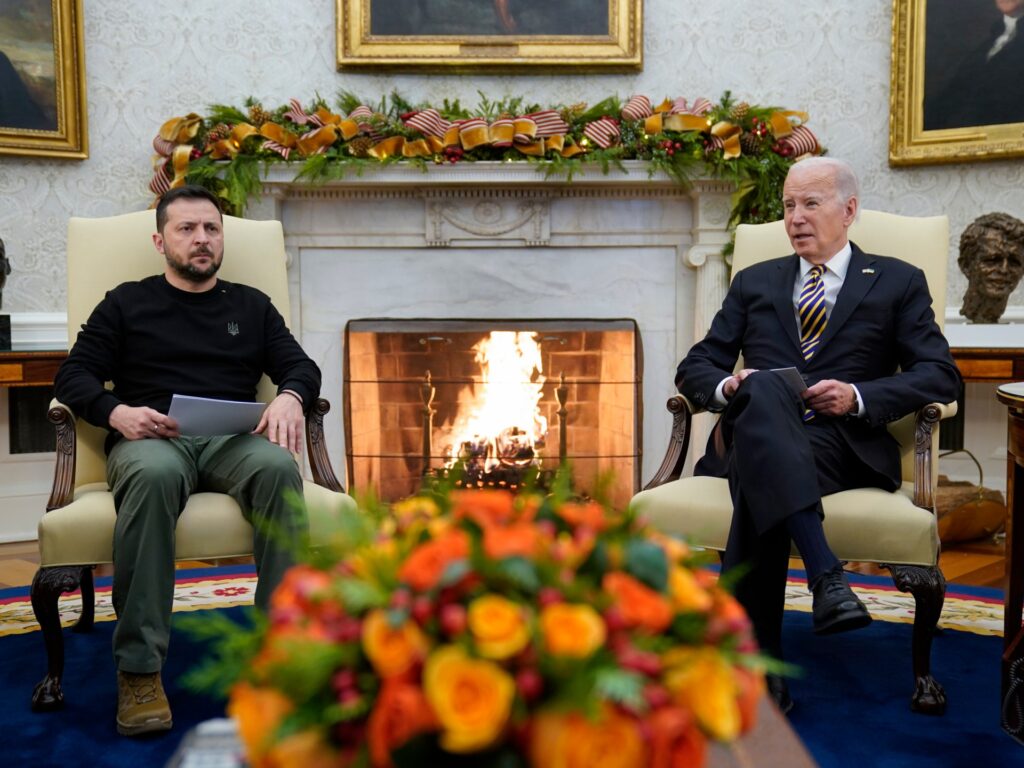
Kyiv, Ukraine – Whenever Svitlana Matvienko hears the wailing of air raid sirens, she goes down to the nearby subterranean shopping mall. There, a barista she’s on a first-name basis with gets her a large latte, and Matvienko clacks away on her tiny silver laptop, sitting next to several dozen others waiting out the air raid. “I’m like a little Pavlov dog, but the sirens make me drool for coffee,” the 52-year-old freelance marketing expert told Al Jazeera with a sense of self-deprecating humour that helps Ukrainians cope with the war. The crowd around her is minuscule in comparison with last year, when hundreds of people thronged the same Metrograd mall, often staying for the night with their weeping children and squealing pets. To Matvienko, the December 15 air raid was yet another multimillion-dollar exercise in the futility of Russia’s war effort, with all the cruise missiles and kamikaze drones shot down and no casualties reported. And when asked about what awaits her and all of Ukraine in 2024, the ginger-haired, petite mother of two pointed up, as if her manicured forefinger could pierce the ceiling towards the grey sky and howling sirens, and said: “A lot more of this.” This year has been uneasy and somewhat disappointing to many Ukrainians. The long-awaited counteroffensive in eastern and southern regions stalled as Russian bombardment of urban centres resumed to sow panic and destroy power stations and central heating facilities. “Because the summer counteroffensive lacked notable results, Ukrainians got back to feeling danger and threat that seemed to have subdued as they were getting used to the ongoing war,” Svitlana Chunikhina, vice president of the Association of Political Psychologists, a group in Kyiv, told Al Jazeera. “We need to adapt to the war again, to correct expectations and life strategies taking into account more realistic estimates,” she said. The counteroffensive’s fiasco seems sobering in comparison with last year’s emotional rollercoaster, when Russian troops horrified Ukraine by advancing from three directions – only to withdraw from around Kyiv and northern regions and to suffer a string of humiliating defeats in the east and south. This winter, the tables seem to have turned. “Now is the time to switch to defence” along the crescent-shaped front line that traverses eastern and southern Ukraine for more than 1,000km (600 miles), says Kyiv-based analyst Igar Tyshkevich. “For the winter campaign, Ukraine’s logic is to hold the front. Hold the Black Sea, keep the ports open, work the political field to guarantee the reception of military aid as the spring approaches,” he told Al Jazeera. Kyiv’s manpower and arsenals are too depleted to go on the offensive next year, according to some top Ukrainian military experts. “We don’t have the resources for next year’s operation,” Lieutenant General Ihor Romanenko, the former deputy chief of the General Staff of the Ukrainian Armed Forces, told Al Jazeera. Polls show that the number of Ukrainians who believe that the war should go on until Ukraine regains all lost territories, including the Crimean peninsula that Russia annexed in 2014, is going down, albeit insignificantly. Sixty percent believe in Kyiv’s imminent military triumph, as opposed to 70 percent last year, according to a Gallup poll released in October. And almost a third of those polled – 31 percent – think that peace talks with Russia should begin “as soon as possible,” compared with 26 percent last year, the poll said. Most of the supporters of immediate negotiations come from southern (41 percent) and eastern (39 percent) Ukraine, where most of the hostilities took place this year, the poll said. Meanwhile, Israel’s war on Gaza has eclipsed the Russia-Ukraine war in the Western media and halls of power as aid to Ukraine has dwindled or been suspended. The aid has been keeping Kyiv afloat since the war began in February 2022 – and will be the key factor shaping the future and stability of Ukraine’s economy, according to Kyiv-based analyst Aleksey Kusch. “In theory, Ukraine can hold on for between six months and a year on its own. But that will require the freezing of a string of budget articles,” he told Al Jazeera. Only by 2025 will Ukraine achieve a “factor of safety” if some refugees return and Kyiv gets sizable investments, he said. More than six million people left Ukraine last year, mostly to Poland and other Eastern European nations, and another eight million have been displaced within the France-sized nation. Another key contributor to the economic growth will be the unblocking of Ukrainian ports on the Black Sea and Azov Sea to fully resume the shipment of grain and steel, a scenario that will require Kyiv to continue to assault Russia’s navy, Kusch said. This year, Ukraine’s economy showed small signs of recovery after 2022’s freefall, when the gross domestic product shrank by a third. This year, the GDP will have grown by 2 percent – and may gain another 3.2 percent in 2024, the International Monetary Fund said in October. It said the “stronger than expected” growth in domestic demand reflected the adaptation to the invasion and reversed the prediction of a 3 percent shrinkage for 2023. Another source of cautious optimism is the prospect of Ukraine joining NATO and the European Union – something that would safeguard the country from Russia politically and economically. At a summit in July, NATO member states agreed to simplify Ukraine’s path to membership, although they did not say when it could join. And in mid-December, the European Union decided to open membership talks for Kyiv, despite Hungary’s objections over the “mistreatment” of ethnic Hungarians in western Ukraine. The overwhelming majority of Ukrainians believe that their nation would join NATO (69 percent) and the EU (73 percent) within a decade, the Gallup poll showed. In 2024, Ukraine is also not going to see a change of leadership. All political parties with a presence in the Verkhovna Rada, Ukraine’s lower house of parliament, agreed in mid-November to postpone the presidential and parliamentary votes until the war is over. They said that too many
China sanctions US-based Xinjiang monitor
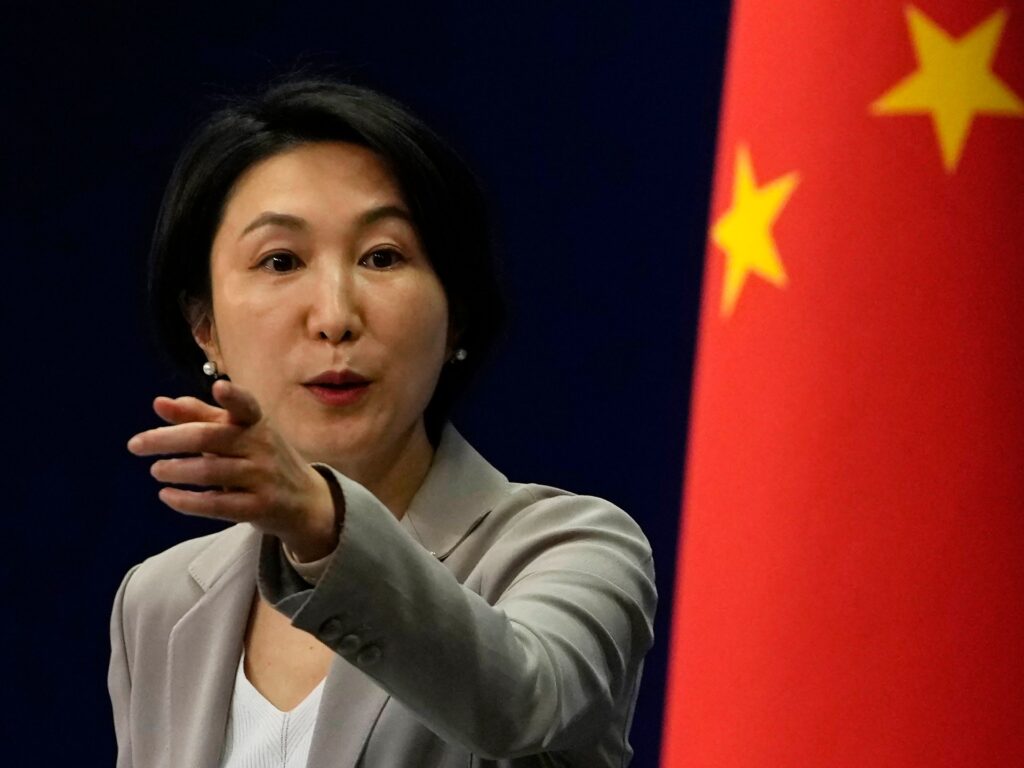
Los Angeles-based Kharon reported on human rights abuses committed against China’s Uighurs and other Muslim minorities. China has placed sanctions on a United States research company that monitors human rights in the northwestern region of Xinjiang. China announced late on Tuesday that Los Angeles-based research and data analytics firm Kharon and its two lead analysts are now barred from entry. The company has reported extensively on claims that Beijing is committing human rights abuses against Uighurs and other Muslim minority groups. Director of investigations Edmund Xu and Nicole Morgret, a human rights analyst affiliated with the Center for Advanced Defense Studies, were named as the two barred analysts in a statement published by Chinese foreign ministry spokesperson Mao Ning. Any assets or property owned by the company or individuals in China will be frozen. Organisations and individuals in China are prohibited from conducting transactions or otherwise cooperating with them. The statement said that the sanctions were retaliation for Kharon’s contribution to a US government report on human rights in Xinjiang. Uighurs and other natives of the region share religious, linguistic and cultural links with the scattered peoples of Central Asia and have long resented the Chinese Communist Party’s heavy-handed control and attempts to assimilate them with the majority Han ethnic group. In a paper published in June 2022, Morgret wrote: “The Chinese government is undertaking a concerted drive to industrialise the Xinjiang Uyghur Autonomous Region (XUAR), which has led an increasing number of corporations to establish manufacturing operations there.” “This centrally-controlled industrial policy is a key tool in the government’s efforts to forcibly assimilate Uyghurs and other Turkic peoples through the institution of a coerced labor regime,” she added. Such reports draw from a wide range of sources including independent media, non-governmental organisations and groups that may receive commercial and governmental grants or other outside funding. Harsh conditions China has long denied allegations of human rights abuses in Xinjiang, saying the large-scale network of prison-like facilities through which hundreds of thousands of Muslim citizens have passed were intended only to rid them of violent, extremist tendencies and teach them job skills. Former inmates describe harsh conditions imposed without legal process and demands that they denounce their culture and sing the praises of President Xi Jinping and the Communist Party daily. China says the camps are all now closed, but many of their former inmates have reportedly been given lengthy prison sentences elsewhere. Access to the region by journalists, diplomats and others is tightly controlled, as is movement outside the region by Uighurs, Kazaks and other Muslim minorities. “By issuing the report, the United States once again spread false stories on Xinjiang and illegally sanctioned Chinese officials and companies citing so-called human rights issues,” Mao was quoted as saying. “If the United States refuses to change course, China will not flinch and will respond in kind,” Mao was quoted as telling reporters at an earlier news briefing. The US has imposed visa bans and a wide range of other sanctions on dozens of officials from China and the semi-autonomous city of Hong Kong, including the country’s former defence minister, who disappeared under circumstances China has yet to explain. China’s foreign minister also was replaced this year with no word on his fate, fuelling speculation that party leader and head of state for life Xi is carrying out a purge of officials suspected of collaborating with foreign governments or simply showing insufficient loyalty to China’s most authoritarian leader since Mao Zedong. It is not immediately clear what degree of connection Xu or Morgret, if any, they had with the US government. Adblock test (Why?)
Analysis: In the Red Sea, the US has no good options against the Houthis
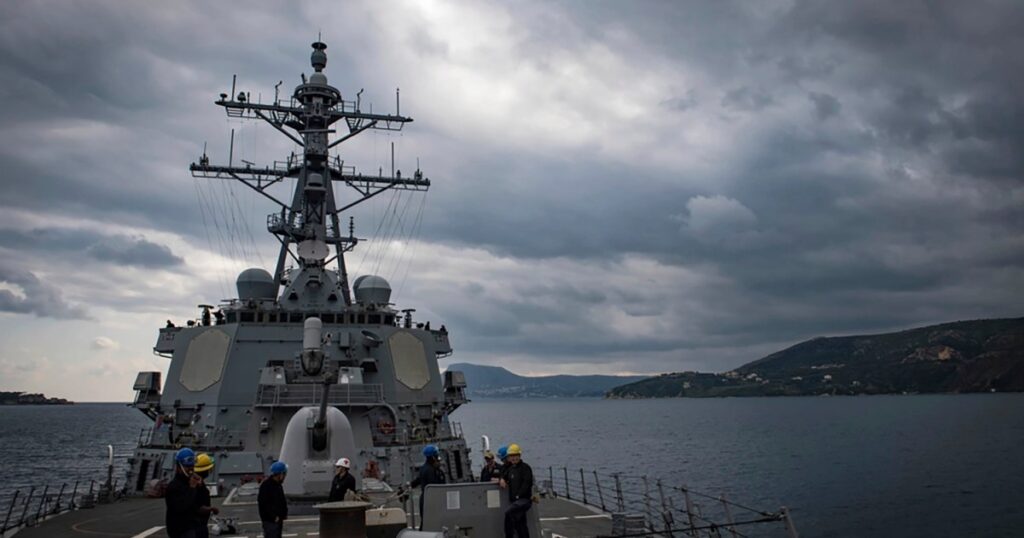
Operation Prosperity Guardian (OPG), the United States Navy-led coalition of the willing intended to allow international shipping to continue navigating safely through the Red Sea, is set to activate within days. Including allies from Europe and the Middle East, as well as Canada and Australia, the operation has been snubbed by three important NATO countries, France, Italy and Spain. What is the exact task of OPG? The official line, “to secure safe passage for the commercial ships”, is too vague for any naval flag officer to feel comfortable getting into. Admirals want politicians to give them precise tasks and clear mandates needed to achieve the desired results. Defining the threat seems easy, for now: antiship missiles and drones of various types carrying explosive warheads have been targeting merchant ships on the way to and from the Suez Canal. All were fired from Yemen, by the Houthi group also known as Ansar Allah which now controls most of the country, including the longest section of its 450km-long Red Sea coast. All missiles were surface-launched, with warheads that can damage but hardly sink big cargo ships. The Houthis at first announced that they would target Israeli-owned ships, then expanded that to include all those using Israeli ports, ultimately to those trading with Israel. After several attacks where the Israeli connection appeared very distant or vague, it is prudent to assume that any ship could be targeted. All missiles neutralised by US and French warships so far were shot down by sophisticated shipborne surface-to-air missiles (SAM), proving that the modern vertical-launch systems guided by the latest generation phased array radars work as designed. Many nations earmarked to participate in OPG have ships with similar capabilities. Almost all also carry modern surface-to-surface missiles that can attack targets at sea or land. If the task of OPG were to be defined narrowly, only to prevent hits on merchant ships, it could be performed using the centuries-old principle of sailing in convoys with the protection of warships. In a convoy, slow, defenceless commercial cargos sail in several columns at precisely defined distances from each other — led, flanked and tailed by fast warships that can take on any threat. The system is effective, as the United Kingdom, Russia, Malta, and many other countries saved by convoys in World War II can attest. But every strategy has its limitations. A convoy is big and cumbersome, extending for miles to give behemoth ships a safe distance from each other and to enable them to manoeuvre if needed. Whatever the protective measures taken, huge tankers and container carriers – longer than 300 metres (984 feet) – still present big targets. Captains of commercial ships are generally not trained in convoy operations, and most have no experience operating in large groups or under military command. Their escorts, even if well-armed, carry a limited number of missiles and must plan their use carefully, allowing for further attacks down the shipping lane and ultimately leaving a war reserve for the defence of the ship itself. Once they expend some of the missiles, they need to replenish them – a task that is possible at sea but done much more quickly and safely in a friendly port out of reach of Houthi missiles. To clear the critical 250 nautical miles (463km) along the Yemeni coast leading to or from the Bab al-Mandeb strait, advancing at assumed 15 knots (28kmph) — as convoys always sail at the speed of the slowest units — ships would be exposed to even the shortest-ranged Houthi missiles and drones for at least 16 hours. And before even trying to make the dash, they would be particularly vulnerable in the staging areas in the Red Sea and the Gulf of Aden where ships would spend some time gathering, forming the convoy and setting under way. The Houthi missile threat is now known to be high, and their arsenal is substantial. Naval planners must be worried by their ability to mount concentrated prolonged attacks simultaneously from several directions. This was demonstrated in the very first attack, on October 19, when the Houthi launched four cruise missiles and 15 drones at USS Carney, a destroyer that is still operating in the Red Sea and will be part of OPG. The attack, probably planned to test the Houthis’ attack doctrine and enemy response, lasted nine hours, forcing the crew of the target ship to maintain full readiness and concentration for a prolonged period to intercept all incoming missiles. Every admiral would tell his political superiors that military necessity would call for attacks on Houthi missile infrastructure on the ground in Yemen: fixed and mobile launch sites, production and storage facilities, command centres and whatever little radar infrastructure there exists. A proactive response to the missile threat, in other words, to destroy the Houthi ship-targeting capability, rather than the reactive one limited to shooting missiles down as they come in. In theory, attacks against Houthi missile infrastructure could be based on satellite and unmanned aerial vehicles (UAV) reconnaissance and carried out by missiles launched from the Red Sea and the Indian Ocean and armed drones from distant land bases. But the only realistic chance at meaningful success would require the use of combat aircraft, bombers based on the two US Navy nuclear carriers in the region. Attacks against targets in Yemen would have a clear military justification. But they would also carry a clear political risk: that of the West, particularly the US, being seen in the Arab and Islamic world as actually entering the Gaza war on the side of Israel. After all, the Houthis say their attacks on Red Sea ships are aimed at getting Israel to end the war. Aware of the perils of such a development that could easily cause the conflict to spread, the US has tried to tread carefully, engaging with regional powers, and sending messages that it wants no escalation. It even openly demanded of its ally Israel that it limit civilian suffering and end
Chennai: One dead, several injured after Indian Oil plant boiler burst in Tondiarpet

Fire tenders are present at the spot. More details awaited.
Centre bans separatist Masarat Alam’s Muslim League Jammu & Kashmir for 5 years for anti-national activities

Union Minister Amit Shah said the organisation and its members are involved in anti-national and secessionist activities in Jammu and Kashmir.
Texans grapple with numerous challenges, yet many are actively seeking solutions

Across the state, people are looking for ways to make Texas a better place to live as they tackle hunger, rural “brain drain,” health care obstacles and other impediments.
Reports about police actions in U.S. mass shootings lack standardization and often leave unanswered questions

A lack of national standards leads to wide variability in after-action examinations of law enforcement’s response, ProPublica, The Texas Tribune and FRONTLINE found.
India’s Covid JN.1 variant tally crosses 100 after 40 more infections

Most of the patients are currently in home isolation, officials said. There is no cause of immediate concern as 92 per cent of those infected are opting for home-based treatment, they added.
Political crisis in Nigerian oil capital sparks fears of more economic woes
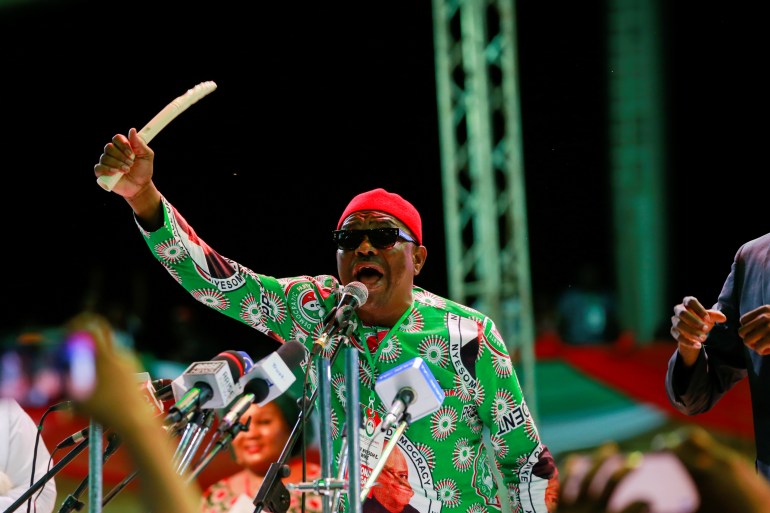
Abuja, Nigeria – On October 30, oil-rich Rivers State, Nigeria’s oil capital, became the latest hub of political drama in the country following the state parliament’s attempted impeachment of Siminalayi Fubara, who had been governor for only five months. The impeachment notice was signed by 24 of 32 lawmakers, all loyal to Nyesom Wike, Fubara’s predecessor, who was hitherto seen as his “political godfather”. Wike has accused Fubara of wanting to destabilise the structure that brought him to office. Since then, a political crisis has unfolded, impeding governance in the state and risking crude production in Africa’s largest oil producer. The parliament complex was burned down; 27 lawmakers defected from the Peoples Democratic Party to the All Progressives Congress – the opposition at state level but the national ruling party – while the remaining five elected a factional speaker; Fubara presented the 2024 budget to these five lawmakers and nine members of the state cabinet resigned. The crisis split the parliament into two factions: one backed by Wike, now a federal minister, and the other faction loyal to Fubara. A night before the impeachment attempt, an explosion by unknown arsonists destroyed a section of the legislative complex. During Fubara’s inspection tour of the complex the next day, the police fired tear gas at him. Nigeria’s President Bola Tinubu met with parties involved in the crisis on December 18. After the meeting, the parties involved reportedly signed a resolution stating that court cases instituted by Fubara be withdrawn and the state parliament drop all impeachment proceedings against him. Confidence MacHarry, a lead security analyst at Lagos-based consultancy SBM Intelligence, says although the move may be in the interests of peace, such intervention could “end badly.” “That kind of direct intervention of Tinubu sets a dangerous precedent and people in the state are not taking it quite kindly being that the president is not from the region and he is from a different political party [APC],” MacHarry told Al Jazeera. He explained that because Wike played a critical role in ensuring the president got the majority of votes from the state during the February 25 election and was then appointed a minister, “people do not think the president would be an impartial arbiter”. Former Rivers State Governor Nyesom Wike addresses the Peoples Democratic Party delegates during a special convention in Abuja, Nigeria, on May 28, 2022 [File: Afolabi Sotunde/Reuters] Risk to the economy The peace agreement has barely resolved the crisis, creating fears of continued risk to the oil capital, even as Nigeria’s economy, which is overly reliant on oil exports, continues to plummet. At least 90 percent of the country’s revenue goes to servicing its debt obligations and workers have threatened strikes if there is no pay increase to counter a cost-of-living crisis, worsened by a controversial fuel subsidy ending in May. For decades, crude oil from the delta has accounted for the majority of the country’s export earnings. Rivers, one of the six states in the region, is home to pipelines that transport crude from other states to its Bonny export terminal. In 2021, the state accounted for 6.5 percent of Nigeria’s entire revenue. “If the political crisis continues, it could spread to other parts of the Niger Delta which will be more devastating to the economy,” says Gabriel Adeola, a professor of political science specialising in political economy at Crawford University, Ogun State. Nigeria’s crude production averages 1.25 million barrels per day (bpd), according to data from the Organization of the Petroleum Exporting Countries (OPEC). Revenue from non-oil outpaced that of oil by 1.5 trillion Nigerian naira ($1.9bn) in 2022, due to factors such as oil theft – which cost Nigeria at least $2bn between January and August 2022 alone and caused oil production to dip. Still, experts like Peter Medee, associate professor of economics at the University of Port Harcourt, insist that Nigeria cannot thrive on revenue from non-oil sectors alone. “Oil is the nerve centre of [Nigeria’s] economy … If anything happens to oil production, it means that 60 percent of revenue is gone,” Medee told Al Jazeera. [embedded content] ‘Recipe for disaster’ There are also fears that the political crisis could eventually snowball into an ethnic crisis because of the identity of the main actors. Fubara is Ijaw, Nigeria’s fourth largest ethnicity and spread across the delta while Wike is Ikwerre, the largest ethnic group in Rivers. Zoning and rotation of positions is an often unwritten rule in Nigerian politics, ostensibly to ensure equality in what is a very diverse society. Until Fubara’s election victory in March, no Ijaw had become governor since the return to democracy in 1999; all three of his predecessors in that time have been Ikwerre. Already, Ijaws have started drumming support for the governor. Jonathan Lokpobiri, president of the nationalist Ijaw Youth Council (IYC), said his people were already “worried about the catastrophic effect this crisis may have on Rivers State and the spiral effect it will have on the entire Niger Delta”. The current developments, Lokpobiri told Al Jazeera, have so far “undermined and insulted the sensibilities of the Ijaw people”. He said a lack of a fair and lasting solution could force the people to deploy different means in showing support for the governor, warning that interested parties could “go destructive which tends to get attention faster and better”. “The president’s [actions and inactions] can be a recipe for disaster not just in Rivers State but the Niger Delta,” he warned. “If this issue is not managed and the president thinks it does not affect him, it will affect the oil industry.” This could lead to an armed revolution, says Medee. “People revolt in their area of advantage and one of their [Ijaw people] area of advantage is the oil pipeline that carries crude from other parts of the state through Ogoniland in Rivers …they could cut it off,” he told Al Jazeera. A man throws dead fish back into a polluted river in Ogoniland, Rivers State, Nigeria,