

PM Modi’s YouTube channel crosses 2 crore subscribers; highest among global leaders

The global leader with the second-most followers is former Brazilian President Jair Bolsanora, who just has 64 lakh subscribers, which is a little less than one-third of the subscribers the Narendra Modi YouTube channel has.
SliceTube: The Hot New YouTube Video Trimming App Taking the World of Creators by Storm

SliceTube makes it easier than ever to trim down longer YouTube videos into concise shareable clips for creators around the world.
SocialKing.in: Dominating the 2023 Social Media Marketing Landscape

With an astonishing 100K+ campaigns initiated, the platform has gained recognition among businesses striving to build a powerful digital footprint.
Logicmojo Data Science Course To Become Data Scientist in 2024

The Logicmojo Data Science Course & Bootcamp is set to commence in 2024.
RBI, HDFC, ICICI banks receive bomb threats, sender demands resignation of Nirmala Sitharaman
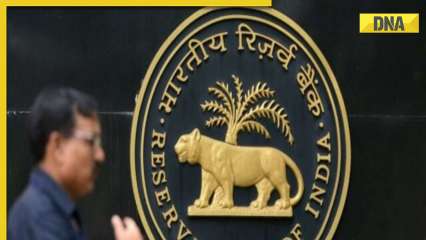
The mail said 11 bombs have been planted at 11 locations in Mumbai including RBI offices, HDFC Bank and ICICI Bank and the blast would take place at 1:30 pm.
COVID-19 JN.1: Cases of new variant rises to 69 in India, highest from Karnataka
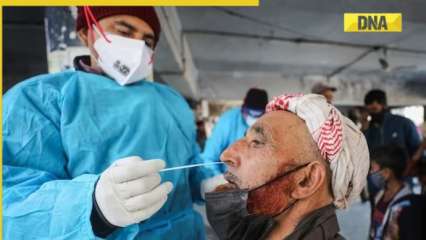
India recorded 116 new cases of Covid-19, with three deaths in Karnataka, bringing the total active cases to 4,170 and the total death toll to 5,33,337, as of Tuesday.
Will raising fuel and power bills make Malaysians go solar?
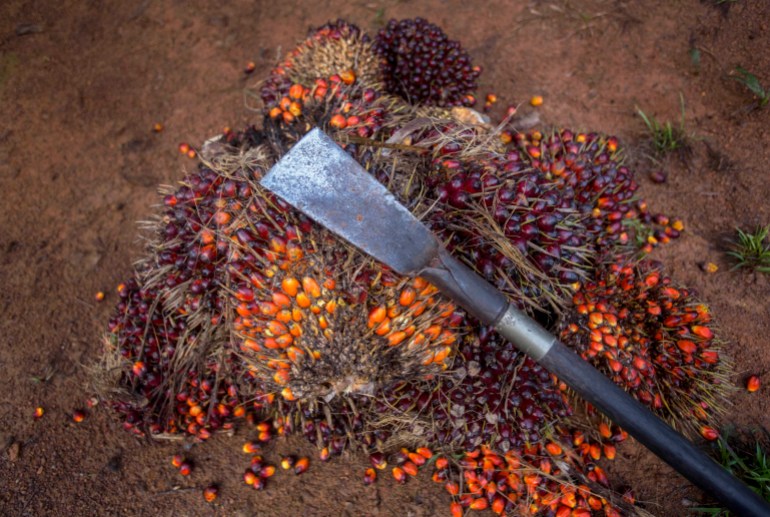
This year saw an increase in natural disasters the world over, from floods in Libya and New York and deadly wildfires in Hawaii and Greece – all very real effects of climate change. Globally, there have been twice as many days where temperatures exceed 50 degrees Celsius (122 degrees Fahrenheit) than 30 years ago, with this year being declared the hottest on record. Malaysia is just one country that has been facing its own set of climate issues. In recent years it’s faced an unprecedented rise in temperatures causing heat islands to devastating floods, like the ones in 2021, displacing thousands as homes submerged under water. Although the Southeast Asian state was once criticised for its contribution to global warming, caused by deforestation on land used for palm oil cultivation and more recently for its use of coal-fuelled power stations – it’s also been at the forefront of climate mitigation. But its new minister for natural resources and environmental sustainability, Nik Nazmi, has said more needs to be done. Since taking the helm of his country’s climate change measures last year, he’s already said no more new palm oil plantations and coal plants. Instead, he wants to increase electricity tariffs for the wealthy hoping to direct them towards alternative energy, while continuing to subsidise electricity and fuel for the less well-off. Ultimately, steering his country towards a more sustainable way of living, he says, cannot be achieved through governmental policies alone, but through changing mindsets and returning to shared human values. Here’s more from Al Jazeera’s conversation with Nik Nazmi, Malaysia’s minister for natural resources and environmental sustainability: Al Jazeera: Can you tell us more about Malaysia’s climate adaptation plan and when it’s expected to come into action? Nik Nazmi: Our target is for the National Adaptation Plan and the Climate Change Act to be ready by 2025. It’s a multifaceted approach that will deal with creating infrastructure. In recent years we’ve faced flooding, so we are trying to move away from impermeable surfaces like concrete and tarmac and towards other breathable materials. We also want to build more homes and services further inland – because Malaysia is a mountainous country overall, people tend to be pushed to live near the coast or the river basins, but that also means a lot of people are then exposed if there’s a major sea level rise. In the last few years, the level of heat has been much higher than usual. We noticed temperatures can be lower in green spaces compared to built-up areas – by as much as 6C (42.8F). We are planning our cities using a nature-based approach, by planting more greenery and parks. We are trying to slowly move and change so that ultimately we can overcome the urban heat island effect. Al Jazeera: Would you say Malaysia’s production of palm oil – the country’s top crop for three decades – is contributing to this rise in global temperatures, as a leading contributor to deforestation and greenhouse gas (GHG) emissions? Nazmi: It may have been at one time, but that isn’t the case now. In Malaysia, most of our plantations, [98 percent] are covered, even the smallholders are covered, under the Sustainable Palm Oil initiative. It’s a move that has been recognised, even by international studies, in significantly decreasing deforestation from palm oil. Yes, we have a very widespread sustainable palm oil industry, but there is a limit to the size of our palm oil plantations. Both the timber industry and the palm oil industry in Malaysia are very much regulated. There are no new plantations planned. Palm oil production is thought to be a leading contributor to the effects of climate change [Binsar Bakkara/AP Photo] Al Jazeera: But hasn’t the State of Kelantan been giving out concessions encouraging more palm oil production? Is the federal government trying to stop it? Nazmi: Under our Constitution, the state authority is in charge of land and forests, and the federal government regulates and coordinates it. If there has been an issue in Kelantan where the environmentally sensitive areas have been deconstructed, and this includes areas of permanent forest reserves which are going to be given to a palm plantation, then they will not get the Malaysian Sustainable Palm Oil certification. Our Sustainable Palm Oil initiative has been a major element in protecting the forest, and it’s something we don’t get enough recognition for. The Sustainable Palm Oil initiative has made a huge difference, but so has our Sustainable Forest Management Programme. This looks at ways to protect the forest and allow it to redevelop, to regrow. We are a federation with land and forests all under state control. We give state governments a certain amount of money for them to reserve their forests. The amount is based on how large the size of the forest that they continue to maintain is, whether they continue to add to forest reserves, or whether they do any other initiatives to improve that. We used to pay 70 million ringgit a year [$15m], but last year – 2022-2023 – we managed to increase it to 150 million ringgit [$32m]. And for 2024, the Prime Minister has already announced in the budget 200 million ringgit [$42.9m]. So that’s a massive amount. Is it enough? It’s not enough, but it’s a good start. We’ve also had a national Forestry Act, which was passed in 2022. This means that for state governments, they have to do public inquiries before they can work on any forests. They also have to instantly replace those forests, by replanting. Those are all the things that we tried to do in order to make sure that we protect our greatest asset – the forest. Al Jazeera: What about the wildlife within the forests? Al Jazeera has covered the near extinction of the Malayan Tiger before – there are now thought to now be less than 100. Nazmi: We have several measures in place here. First, it’s about dealing with the fragmentation of
‘Don’t worry about me. I’m fine’: Kremlin critic Navalny from Arctic jail
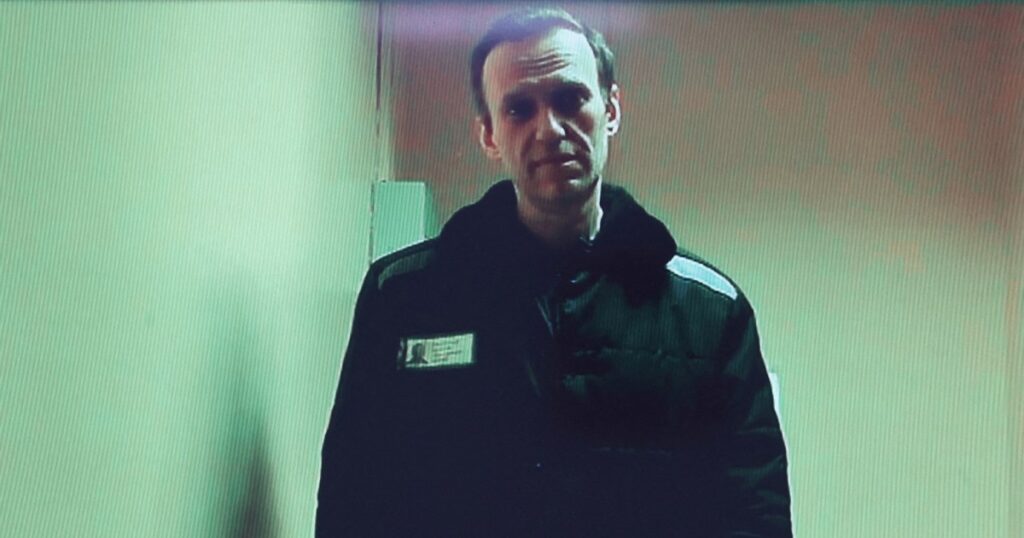
Russian opposition leader says he has seen his lawyer after 20 days travelling to penal colony above the Arctic Circle. Jailed Russian opposition politician Alexey Navalny has confirmed he is being held in a remote Arctic prison and has seen his lawyer after his spokespeople said they had lost touch with him for more than two weeks. Navalny on Tuesday said he was in good spirits after a “pretty exhausting” 20-day transfer from a prison in the Vladimir region, in a post on X, his account routinely updated via his allies. “I now live above the Arctic Circle. In the village of Kharp on Yamal. The nearest town has the beautiful name of Labytnangi,” he wrote, after announcing: “I am your new Santa Claus” and noting that he had grown a beard during the “20 days of my transportation”. His spokesperson, Kira Yarmysh, on Monday said Navalny had been tracked down and was in the IK-3 penal colony in Kharp in the Yamal-Nenets region, about 1,900km (1,200 miles) northeast of Moscow. The Kremlin critic’s whereabouts had not been known since December 6, triggering concern from his allies, rights groups and Western governments. “The 20 days of my transportation were pretty exhausting, but I’m still in a good mood,” Navalny said. “They brought me here on Saturday night. And I was transported with such precaution and on such a strange route (Vladimir – Moscow – Chelyabinsk – Ekaterinburg – Kirov – Vorkuta – Kharp) that I didn’t expect anyone to find me here before mid-January. “That’s why I was very surprised when the cell door was opened yesterday with the words: ‘A lawyer is here to see you.’” 1/9 I am your new Santa Claus. Well, I now have a sheepskin coat, an ushanka hat (a fur hat with ear-covering flaps), and soon I will get valenki (a traditional Russian winter footwear). I have grown a beard for the 20 days of my transportation. — Alexey Navalny (@navalny) December 26, 2023 Addressing his supporters, Navalny thanked them for being concerned about his wellbeing, adding: “Don’t worry about me. I’m fine. I’m totally relieved that I’ve finally made it.” While his whereabouts were unknown, there was speculation that he was undergoing a prison transfer, which can take weeks in Russia because prisoners are slowly moved by rail between far-flung facilities. Navalny’s lawyers and supporters had been preparing for his expected transfer to a “special regime” colony, the harshest grade in Russia’s prison system. His new home, known as the “Polar Wolf” colony, is considered one of the toughest prisons in Russia. Its inmates are convicted of grave crimes. Winters are harsh there with temperatures due to drop to about minus 28 degrees Celsius (minus 18 degrees Fahrenheit) over the next week. Navalny has been behind bars since January 2021 when he returned to Moscow after recuperating in Germany from nerve agent poisoning that he blamed on the Kremlin. Before his arrest, he campaigned against corruption and organised major anti-Kremlin protests. He has since received three prison terms and spent months in isolation in Penal Colony Number 6 for alleged minor infractions. A court extended Navalny’s sentence to 19 years on extremism charges and ruled that he be moved to a more secure, harsher prison. He has rejected all charges against him as politically motivated. “Since I’m Santa Claus, you’re probably wondering about the presents,” Navalny said on X. “But I am a special-regime Santa Claus, so only those who have behaved very badly get presents.” Adblock test (Why?)
Why do evangelical Christians support Israel?

Palestinian human rights activist Jonathan Kuttab explains how Christian Zionism affects US policy in the Middle East. In the evangelical Christian worldview, the 1948 creation of Israel was a fulfilment of Biblical prophecy and the Palestinians are either “non-existent” or “the enemies of God, because they are the enemies of the State of Israel”, explains Palestinian human rights defender Jonathan Kuttab. Kuttab tells host Steve Clemons that believers of this interpretation of holy scripture do not care about international law or catastrophic war in the region. “They say, ‘Bring it on. That’s the End Times. That’s the Second Coming. That’s wonderful.’” And if 30 percent of Americans hold these beliefs, what is the impact on US policy on Palestine and Israel? Adblock test (Why?)
Uttar Pradesh to get India’s first ‘AI city’, details inside

A 40-acre land situated close to the Amausi airport in the city is going to be the core centre of the project.