

COVID-19: India logs 628 new cases amid JN.1 variant spike

As per Union Health Ministry, 4,054 active COVID-19 cases were reported in the previous 24 hours in India.
Sakshi Malik reconsidering retiring? Here’s what Olympic wrestler said after WFI suspension

Malik added that the wrestlers’ protest is not directed towards the government but a single individual, the now-deposed WFI chairman Brij Bhushan Sharan Singh.
Plane carrying Indian passengers to leave France after trafficking probe
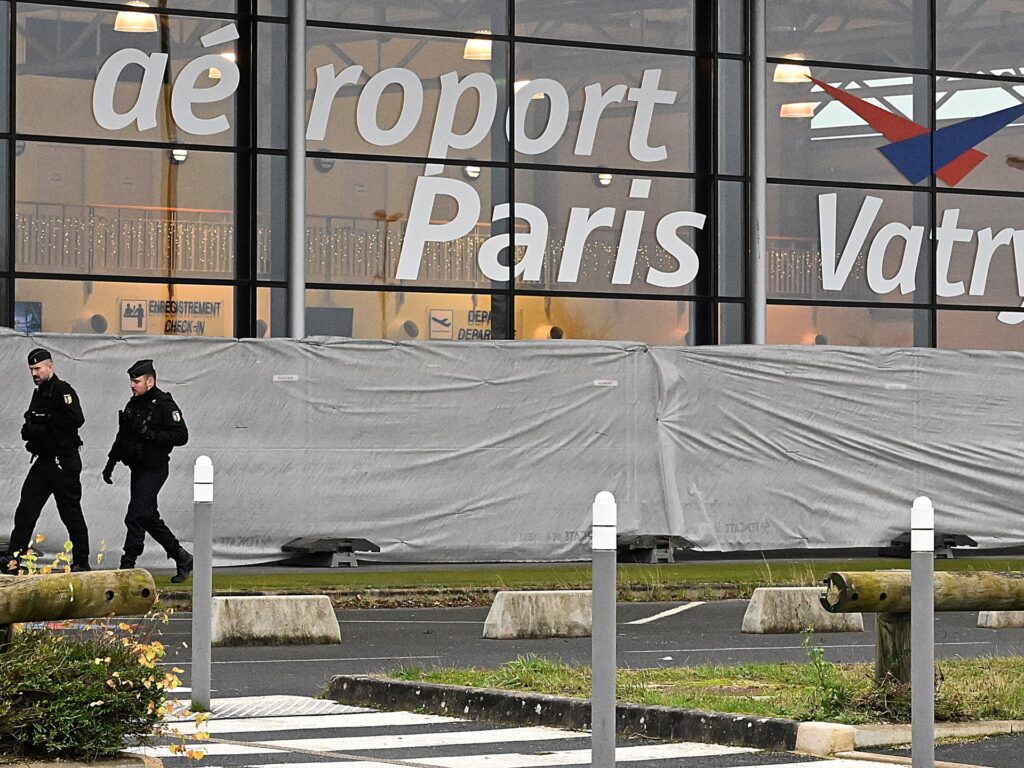
Airbus A340 is expected to leave airport on Monday after French Civil Aviation Authority secures approval. A plane carrying more than 300 Indian passengers that has been detained at an airport in France since Thursday has been cleared to leave after a probe into human trafficking claims, French authorities have said. French prosecutors on Sunday gave the green light for the plane to leave Vatry airport, located 150km (95 miles) east of Paris, after questioning passengers for two days about allegations they may be victims of human trafficking. The Airbus A340 is expected to leave on Monday after the French Civil Aviation Authority secures final approval for departure, with a lawyer for Romania-based Legend Airlines saying most of the stranded passengers would be returning to India. Two passengers have been detained since Friday as authorities investigate whether they travelled with a different purpose than the other passengers and “under what conditions and with what objectives”. Several other passengers have requested asylum in France, according to the local government. The Nicaragua-bound plane was held after stopping to refuel at Vatry en route from Fujairah Airport in the United Arab Emirates, after authorities received an anonymous tip that it may be carrying trafficking victims. The passengers of the flight, including a 21-month-old child, have since then been confined at the airport, where local government authorities said beds, toilets and showers were installed for their stay. After police grounded the aircraft, authorities turned the airport into a makeshift courtroom as judges, lawyers and translators filled the terminal to conduct emergency hearings to determine whether the passengers could be held any longer. The Indian Embassy in Paris posted on X on Saturday that consular staff were working with French authorities for an “early resolution of the situation”. Francois Procureur, the head of the Châlons-en-Champagne Bar Association, told local television that the hearings were “unprecedented”. “I’m surprised at how things unfolded in the waiting area,” Procureur told BFM television. “People should have been informed of their rights and, clearly, that was not the case.” Adblock test (Why?)
Analysis: Has the US-led Red Sea force calmed shippers amid Houthi attacks?

The United States-led multinational naval force that was to protect and secure maritime traffic through the Red Sea from attacks by Yemeni Houthi rebels appears significantly weakened – even if not quite dead in the water – before it ever sailed together. Less than a week after the announcement of Operation Prosperity Guardian (OPG), France, Italy and Spain have pulled out of the nearly fully-created force touted to include warships from more than 10 nations. The decision to cobble together what is essentially an anti-Houthi coalition was almost forced on Washington. In early November, a US destroyer shot down several missiles fired from Yemen but the US tried to maintain a business-as-usual pose and not advertise that it was engaging the Yemeni group. As long as the combative Houthis tried, unsuccessfully, to lob missiles at Israel, a country attacking Yemeni’s Arab and Muslim brethren, the US could maintain that the whole affair was not a serious regional escalation. But when their repeated attacks on ships headed to and from the Suez Canal threatened the security of international maritime routes, the US was forced to act. The US Navy already has a huge number of ships in the region, so why would it need to ask friendly nations to contribute more? One reason is that even with such a large force, the US cannot spare many ships for the task. The other is political unwillingness to be the only nation attacking Yemen as it would likely be interpreted, especially in the Middle East, as direct military action in aid of Israel. US political and military dilemmas are largely conditioned by geography and Yemen’s control of the strategically important choke point where the Indian Ocean funnels into the Red Sea. The Bab el-Mandeb passage is only 29km (16 nautical miles) wide at its narrowest point. Its approaches are bristling with warships: More than 35 from at least 12 nations that do not border the Red Sea are now in positions from which they could reach the strait in less than 24 hours. Nations along its African and Arabian shores have at least as many in their harbours. Many of these ships were already in the region before 7 October. The northwestern parts of the Indian Ocean leading into the Gulf of Aden and the Bab el-Mandeb are probably the most notorious pirate-infested waters of the 21st century. The civil war and breakdown of Somalia’s central government created maritime piracy on an unprecedented scale. Somali pirates venture out to sea in fast small boats, armed with machine guns and rocket-propelled grenades and intercept commercial shipping heading towards and from Bab el-Mandeb in three directions: from the Far East, passing south of India; from the Gulf, sailing around the Arabian Peninsula; and north to south along African shores. Shipping companies demanded protection and the international community, aware of the need to keep shipping lanes open and secure, provided it. Every month, 200 ships cross the Suez in each direction carrying no less than 3 million containers. Since 1990, the Combined Task Force 150 (CTF-150) had been engaged in anti-piracy missions. More than 30 nations, mostly Western but also including Saudi Arabia, Pakistan, Thailand, Singapore and Turkey, took part and usually kept at least four warships on station, rotating every three to four months. In 2022, a new force, the CTF-153, took over. When the latest war in Gaza started, the force was comprised of US destroyers USN Carney and USN Mason, Japanese destroyer JDS Akebono and a South Korean one, ROKS Yang Man Chun. In anticipation of the arrival of stronger assets, the US ships immediately moved into the Red Sea, and both have on several occasions intercepted Houthi missiles and drones. The US Navy hurriedly deployed two aircraft carrier task groups – which include anti-aircraft and anti-submarine cruisers and destroyers, helicopter carriers, assault ships and other offensive and defensive assets – to the wider region. It is almost certain that the White House did not immediately have a concrete action plan for involvement in the Gaza conflict, but the decision to deploy to the region naval and air power capable of taking on all potential adversaries was militarily prudent. Meanwhile, the White House also engaged in diplomacy. The US and Iran exchanged indirect statements, assuring each other they did not seek confrontation. Iran announced that it had not been informed of the October 7 Hamas attacks on Israel, and the US did everything to avoid alienating Iran. In return, Tehran nudged the Lebanese armed group Hezbollah into refraining from a full-scale offensive. The de-escalation seemed to be working. But then the Houthis, considered to be an Iranian proxy in much the same way as Hezbollah, decided to attack in the Red Sea, demanding Israel end its war on Gaza. They launched long-range missiles at Israel and naval missiles at US Navy destroyers that had entered the Red Sea. Both operations failed, with all missiles and drones being on several occasions intercepted and shot down. The US Navy was convinced that its two destroyers could handle the situation, possibly being reinforced in time by a couple more. But when tankers and container ships in the Red Sea started taking hits almost daily, the escalation was undeniable. Many of the world’s biggest shipping companies shifted from going through the Suez Canal to the longer and more expensive route around Africa. Commercial carriers now introduced a $700 surcharge on each container sailing the longer route. Counting just those laden with Asian manufactured goods heading to Europe, the additional cost is a staggering $2bn per month. That increase gets passed on to the final customers – leading to inflation. In addition, the longer travel will soon cause distribution delays, shortages and general disruption of the economy, which every nation will feel. The markets demanded action and the US optimistically believed it could assemble a robust force of up to 20 participating nations to carry out Operation Prosperity Guardian. Within days, high hopes were drowned in refusals.
Plane carrying 303 Indians to leave France airport after being grounded over ‘human trafficiking’

A lawyer for the airline said the plane would take many of the stranded passengers back to India on Monday. Passengers were stuck for the past 4 days at the airport.
IMD update: Delhi-NCR shivers in dense fog with ‘very poor’ air quality
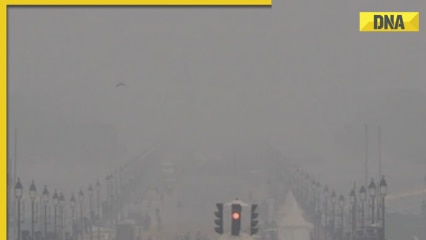
Visibility dropped to 125 meters in several parts of Delhi, and most parts of the National Capital Region (NCR) also experienced low visibility.
Bethlehem’s bombed-out nativity sculpture sends a powerful message
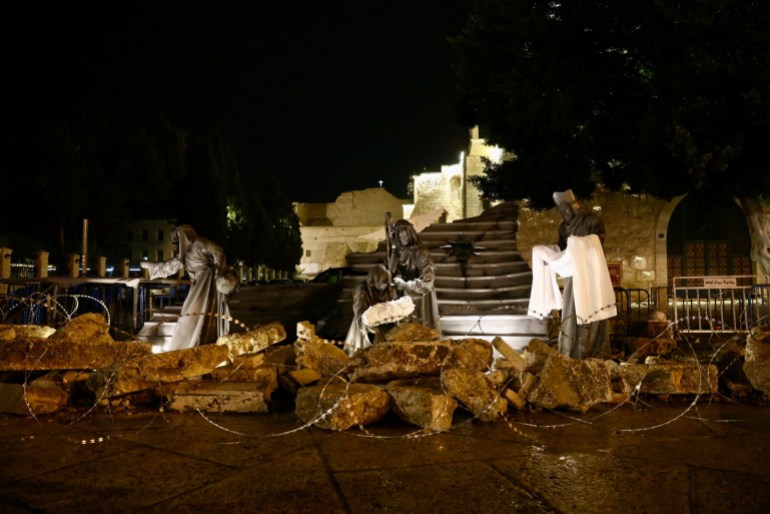
The scene of a devastated nativity cave symbolises the plight of Christ’s family — and Palestinians now. Bethlehem, occupied West Bank — This year, Bethlehem is sombre and quiet. There is no Christmas tree and there are no holiday lights or tourists to see them. Instead, the city of Jesus’s birth – which is in the middle of a war zone – is marking Christmas with a powerful and poignant message: solidarity with Palestine. The Holy Family Cave is a sculpture that depicts a harrowing tableau: a bombed-out version of the traditional nativity cave, which many Christians traditionally believe is where Jesus was born in Bethlehem. It is the site now of the Church of the Nativity in Bethlehem. The new mural draws a comparison with the journey of Christ and his family, when they had to flee Bethlehem under an oppressive ruler to Egypt, before returning to Nazareth two millennia ago. The bombed-out nativity scene is surrounded by rubble and barbed wire [Monjed Jadou/Al Jazeera] Surrounded by rubble and barbed wire, the Virgin Mary embraces the baby Jesus, while Joseph embraces her, offering solace. On one side of the family, the Magi holds out a white shroud. On the other side, the fourth shepherd carries a bag, a symbol of Palestinian displacement. Angels, suspended around the rubble, represent the souls of children who have been victims of massacres on Palestinian land throughout history: the murder of children in Bethlehem by Herod at the birth of Jesus; various colonial attacks against the Palestinian people and their ancestors; and current massacres by Israel in Gaza. Around the scene, multilingual panels call for a ceasefire and an end to the massacre against the Palestinian people. Hana Hanania, the mayor of Bethlehem, said the sculpture aims to showcase Palestinian suffering everywhere. Churches, clergy and civilians in Gaza are being bombarded, and a blockade is enforced in the West Bank, particularly in Bethlehem. The fourth shepherd carries a bag, symbolising Palestinian displacement [Monjed Jadou/Al Jazeera] The sculpture, with its political, religious, and national symbolism, draws a comparison between what happened more than 2,000 years ago and what is happening today, she said. Just as Christ was tortured and children were killed by King Herod then, today, children and women are being slaughtered in a clear act of genocide. The cave’s roof is a geographical map of Gaza. Its shape, together with a depiction of an explosion, form a star, inspired by the Star of Bethlehem that led the Magi to Jesus’s birth. This conveys a message of hope. The artist, Tarek Salsaa, explained that the scene cannot fully express the immense destruction and systematic genocide against the Palestinian people by the Israeli occupation. What Palestine is going through today is reminiscent of the years of colonialism, with all its allies throughout the ages and various historical epochs, he added. “Christmas approaches this year, and we find ourselves living in the most challenging and difficult circumstances, a result of what our people in the besieged Gaza Strip and in all cities, villages, and camps of the West Bank and Jerusalem are enduring due to the Israeli continuous aggression against our people, said Rula Maayaa, the Palestinian Authority’s minister of tourism and antiquities. “As we launch this symbolic initiative in Bethlehem … our people are confident that the message of Christmas, sent by the messenger of peace, will triumph over injustice and tyranny,” Maayaa said. People light candles near the installation [Monjed Jadou/Al Jazeera] We are in a constant state of mourning, especially during the days of mourning for the martyrs, said Father Ibrahim Feltz, the deputy custodian of the Holy Lands. “We have not witnessed such a scene in the square, and we have not seen the city in this condition. Bethlehem has never been sad like this before.” Adblock test (Why?)
The dark world of illegal loan apps in India

On August 12, a family in the central Indian city of Bhopal took a selfie in their home. After the photo, the father, Bhupendra Vishwakarma, gave his two sons, eight and three years old, a poisoned drink, and he and his wife took their lives by hanging themselves. In his four-page suicide note, Vishwakarma, 35, who worked in an insurance firm, wrote that he was trapped in a cycle of debt from loan apps. Recovery agents had been tormenting him for months and the last message he received from them tipped him over the edge. It said, “Tell him to repay the loan; otherwise, today I will strip him naked and upload it on social media.” In his suicide note, Vishwakarma said, “Today, the situation has reached the point of losing my job as well. I can’t see a future for myself and my family. I am no longer worthy of showing my face to anyone. How will I face my family?” Police have arrested five people involved in the scam so far even as the investigation continues. Vishwakarma’s story is not unique. Shivani Rawat, a 23-year-old college receptionist in Delhi, faced her own ordeal. In June 2023, she applied for a 4,000 rupee ($48) loan through an app called “Kreditbe”, since her salary was delayed. Her loan request remained pending, with no funds received. Yet, within a week, she began receiving 10-15 calls demanding 9,000 rupees ($108) for repayment. Rawat said she told the recovery agents that she hadn’t received any money in her account, “but they started using abusive language. When I stopped answering their calls, they began sending me abusive texts.” In August, her colleagues received manipulated explicit photos of her and her family that had been sent by representatives of Kreditbe. She tried to explain the situation to her coworkers, but the next day, her manager asked her to resign because her presence made others uncomfortable. “After losing my job, I became so depressed that I even had thoughts of ending my life,” Rawat admitted. Al Jazeera tried reaching out to Kreditbe for a comment but there was no information available on the firm and none of the representatives who had been in touch with Rawat were available any more. Bhupendra Vishwakarma took a selfie with his family before he died by suicide [Anil Kumar Tyagi/Al Jazeera] Kreditbe’s name is a rip-off of a legitimate loan app called KreditBee, a common modus operandi for these illegal loan apps which often choose names similar to reputable brands to create a sense of authenticity. Both Vishwakarma and Rawat had borrowed money from lending apps, which offer loans to users in a convenient, few clicks and without the extensive documentation that a traditional bank loan requires. The money is credited to the borrower’s account within a few minutes, unlike the five to seven days that a bank loan takes for borrowers who meet the high eligibility bar. These apps saw a rise in use during the pandemic as with many businesses shut or scaled back, a significant number of people were unemployed and in financial difficulties. The average loan tickets in these apps range between 10,000 rupees to 25,000 rupees ($120 to $300) with monthly interest rates of 20 percent to 30 percent and a processing fee that can be as much as 15 percent. Loan app representatives typically begin the recovery process 15 days after approving the loan. However, in many cases, they have been known to start harassing people just four to six days after disbursing the loan, and in Tiwari’s case, it was even before she actually received the loan. As per Akshay Bajpai, an independent cybersecurity expert in Bhopal, currently, more than 700 loan apps are operating in the country, some of which are Indian but the majority of which are Chinese-owned and hire Indians to run them. While some of them are outright frauds and use the promise of quick money to get fees from desperate loan seekers before disappearing in the night, others are in a grey area not just because of the malicious methods they employ to extort money from innocent people but also because they don’t follow the central bank rules on online lending including on the annual interest rate, various charges. The Reserve Bank of India (RBI) has also clearly said that no lending institution can store customer details except some minimal data such as the name, address and contact details of the customer. However, illegal apps access contact lists and pictures, edit them and use manipulated images to blackmail borrowers to recover money. According to a study conducted by CloudSek, a cybersecurity software company, between July 22, 2023, and September 18, 2023, their experts monitored 55 fraudulent loan apps that targeted individuals. Additionally, they identified more than 15 obscure payment gateways operated by individuals of Chinese origin who undertook those steps to evade detection. The Chinese loan apps also employ this modus operandi in Southeast Asia and some African nations, as well. In countries where people are less aware of cybersecurity and fraud, people become easy targets for such malicious activities. Creating fear Loan apps representatives harass borrowers with threatening and abusive messages and calls like these that Shivani Rawat received [Courtesy Shivani Rawat] “Scammers instil fear in the minds of their victims by employing various tactics. Initially, they may threaten to access the victim’s contact list and make calls. If the victim resists, they may infiltrate the victim’s photo gallery, manipulate images, and send them back,” explained Pravin Kalaiselvan, founder of SaveThem India, an NGO that spreads awareness about cybercrime. “This induces panic among the victims, ultimately leading them to comply with the scammers’ demands for money,” he added. In the last three years, Loan Consumer Association (LCA), a group of advocates and social workers focused on combating unethical recovery practices by banks and apps, has helped almost 1,800 people stuck in these illegal loan app traps both with counselling and help them file complaints with the
‘People are seeing the behaviour of Congress…’: BRS leader slams Cong over hijab row in K’taka
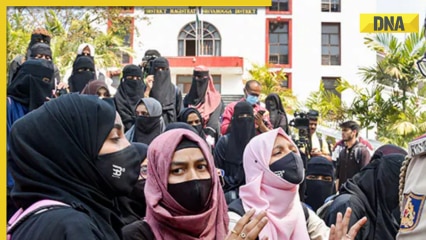
The debate on the hijab issue again rose to prominence after Karnataka Chief Minister Siddaramaiah announced in a public meeting that his government would lift the ban on hijab imposed by the previous BJP government in the state.
Serbia police fire tear gas as opposition backers demand election annulled

President Aleksandar Vucic condemns ‘attempted violent takeover’ amid protests over alleged election fraud. Riot police in Serbia have fired tear gas and pepper spray at opposition supporters demanding the annulment of elections marred by claims of widespread fraud. Hundreds of protesters attempted to storm Belgrade City Hall on Sunday evening during demonstrations against the results of parliamentary and local elections on December 17, which international observers say were marred by vote buying, ballot stuffing and the improper influence of President Aleksandar Vucic. Opposition supporters, some chanting, “Vucic thief” and “Vucic is Putin”, used flagpoles and rocks to break windows as they tried to break into the capital’s administrative building but were repelled by riot police. Vucic’s ruling Serbian Progressive Party (SNS) were returned to power with a parliamentary majority after winning nearly 47 percent of the votes, according to preliminary results announced by electoral authorities. The centre-left opposition alliance Serbia Against Violence received 23.56 percent of the vote, followed by the Socialist Party of Serbia with 6.56 percent, according to electoral authorities. Serbia Against Violence has claimed it was the rightful winner, especially in Belgrade, where there were reports of non-residents being recruited to vote. In a letter earlier this week, Serbia Against Violence told European Union institutions, officials and member nations that it would not recognise the outcome and called on the bloc to do the same as well as to initiate an investigation. “Police are everywhere, also on the roofs. It is obvious that they do not want to recognise [the] election results,” said Serbia Against Violence leader Nebojsa Zelenovic. “We will continue with our fight.” Vucic has rejected opposition calls to rerun the vote, blasting claims of irregularities as blatant “lies”. In an address aired by pro-government Pink TV on Sunday, Vucic said the protests were “not a revolution” and those seeking to destabilise the state would not succeed. “This was an attempted violent takeover of the state institutions of the Republic of Serbia,” Vucic said, while claiming there was evidence that “everything was prepared in advance” with assistance from abroad. The Serbian leader said more than 35 people were arrested and more would follow. “Nobody has the right to destroy our house, to destroy the property of our country and our citizens, not to mention causing serious injuries to our police officers,” Vucic said. Vucic and his party were rattled by antigovernment protests in May, which began as demonstrations against back-to-back mass shootings that killed 18 people, including nine children, before morphing into a broader antigovernment movement taking aim at issues such as rising inflation and perceived government corruption. Adblock test (Why?)