

Watching the watchdogs: Why the West misinterprets Middle East power shifts

“In Yemen, there is wisdom,” goes the medieval Arab saying. Remember that, if you’re trying to sort out how the Israel-Palestine confrontation in Gaza rattles the Middle East – because ongoing Yemeni attacks against Israel-linked ships in the Red Sea clarify one of the region’s most important political dynamics of recent times. The rocket and drone attacks on Israeli-owned or -bound ships in recent weeks are a show of support for besieged Palestinians in Gaza by Ansar Allah (Houthis), who control most of northern Yemen. Ansar Allah say they would stop these attacks only when Israel ends its genocidal siege and bombardment of the Palestinian enclave. These attacks are part of a coordinated military reaction by the three core Arab members of the Iran-led anti-Israel (and anti-West) “Axis of Resistance”, Hezbollah, Hamas and Ansar Allah, to Israel’s latest assault on the Palestinians. At one point last week, Israel and the United States simultaneously exchanged direct fire with Axis of Resistance forces in both Gaza and the West Bank in Palestine, in Lebanon, Syria, Iraq and also Yemen – which can also be seen as a peculiar low-intensity, indirect military engagement with Iran. Any assessment of how the region has evolved since October 7, and what likely lies ahead, must acknowledge three critical points relating to the Axis of Resistance’s regional network, military capabilities and trajectory. The mainstream US media and political elite tend to ignore all three points, which are: Groups within the axis can coordinate across the region and face Israel as a united front The widespread fear in the West that this latest Israel-Hamas confrontation would spark a full-fledged regional war between the US-Israel and half a dozen Arab-Iranian forces has not materialised. However, neither has the confrontation remained confined to Gaza – it has sparked the first serious coordinated battlefield action by the Axis of Resistance across the region. This reflects Hezbollah’s talk all year of the “unity of fronts”, ie, Axis members now coordinate and assist one another in battle, or between battles, in times of preparation. Ansar Allah can challenge Israel/the US militarily to deter or secure concessions from them, just like Hezbollah and Hamas For decades, Hezbollah and Hamas were the only two Arab powers that faced down Israel militarily, and forced it into ceasefires, prisoner exchanges and other concessions. Ansar Allah’s ongoing drone and missile attacks on Red Sea shipping routes will likely similarly challenge Israel. These attacks may eventually provide the Yemeni group with important leverage against its Western adversaries, especially if, as expected, the US and Israel do not send ground troops into Yemen, but rely solely on air power in their efforts to protect trade routes. All three leading Arab members of the Axis of Resistance have significantly improved their military capabilities in the past two decades Hezbollah was the first Axis member to prove its military prowess against Israel. The impasse between the Lebanon-based group and Israel in the 2006 war led to an informal truce based on mutual deterrence. Both parties realised that a fully-fledged war would inflict severe damage to national assets and result in unacceptable numbers of civilian casualties on both sides; they have since confined their confrontations to limited tit-for-tat attacks that result in limited casualties. On October 7, by attacking Israel at an unprecedented scale and then managing to defend its assets to date, Hamas has also proved that it has built significant military prowess. Ansar Allah’s capabilities are also improving – after forcing Saudi Arabia and the United Arab Emirates into ending their war on Yemen, in the past month it attacked at least 100 vessels in the Red Sea with high efficiency. A senior US military official called this a “very significant breadth of attacks” not seen in at least “two generations.” We cannot yet predict what this means for the future, but this much is clear: Hamas’s new prowess in attacking Israel and defending its own assets brings it close to Hezbollah’s qualitative capabilities; and Ansar Allah’s proven competence in drone and missile attacks against Saudi Arabia, the UAE and Red Sea shipping heightens its military proficiency. The emerging reality is that the Axis of Resistance that unites Iran with half a dozen big and small Arab non-state, armed actors is growing stronger, and will likely continue to do so if the issues that drive the partnership remain unresolved – especially the Palestine conflict, and Israeli-American aggression, threats or sanctions against Arab parties. Former American diplomat in Yemen Dr Nabeel Khoury, now a senior fellow at the Arab Center Washington, also explained to me in an interview that after the end of the war in Yemen, Ansar Allah now seem ready to act on a regional level. Yet you would be ignorant of this if your knowledge about the region comes from the mainstream US media. For the American media largely follow the American political elite, and both tend to ignore Middle East realities that do not comply with Western preconceptions of “weak” Arabs who only respond to the use of force by “righteous” Israeli-American armies” – despite the recent events in Palestine, Lebanon, and Yemen that have shattered such racist visions for good. The increasing power, integration, and influence of the Axis of Resistance rank among the most significant geo-strategic developments in the Middle East in the last half century. The combination of state-anchored Arab militancy by Hezbollah (Lebanon), Hamas (Palestine) and Ansar Allah (Yemen) alongside Iran’s resistance to American and Israeli provocations are best understood through their common underlying values of “resistance” and “defiance”. The American media and political class, and most of the West, still refuse to see or acknowledge this, because Israel, the US and their Arab allies are the ones being resisted and defied. They prefer to assess developments in the region through their imagined prism of Islamist extremism that is blindly anti-American and anti-Israeli. And they assume they can handle any Middle Eastern challenge through Israeli-American military attacks, sanctions or threats. Not surprisingly, scholars routinely
COVID-19: India reports 22 cases of Covid’s JN.1 variant till December 21

Kerala was the first state to report the JN.1 Covid variant reported 265 fresh Covid-19 infections and one death in the last 24 hours, according to data from the Ministry of Health and Family Welfare.
Karnataka govt withdraws hijab ban, announces CM Siddaramaiah

He also accused the BJP of dividing people and dividing society on the basis of clothes, dress and caste.
Nikki Haley closes to within four percentage points of Trump in surprise New Hampshire poll
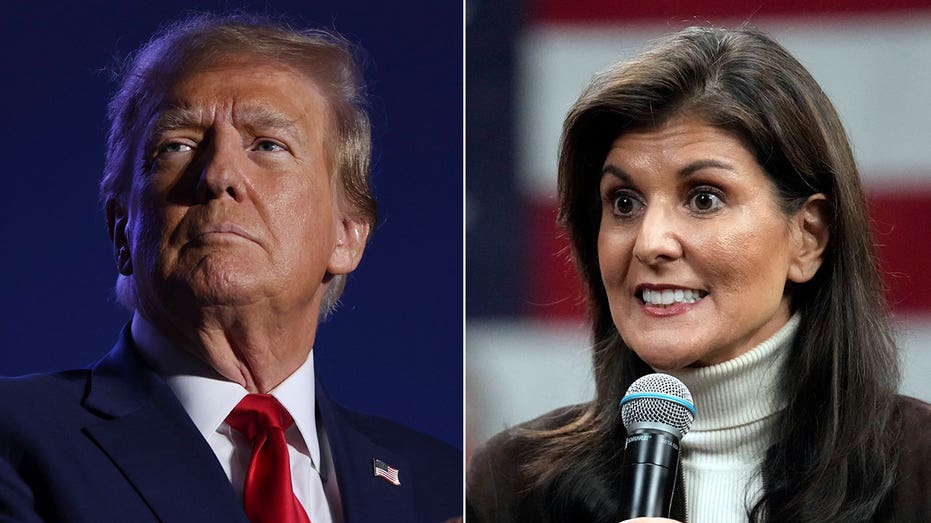
GOP presidential candidate Nikki Haley is edging within four percentage points of longtime Republican frontrunner former President Trump in a new New Hampshire poll. Haley, who served in the Trump administration as U.S. ambassador to the United Nations, was supported by 29% of likely New Hampshire Republican primary voters, according to a recent poll by American Research Group conducted by telephone, December 14-20. The poll showed that 33% of likely New Hampshire Republican voters said they would support Trump. Former New Jersey Gov. Chris Christie ranked third among likely New Hampshire Republican primary voters, garnering 13% support, while Florida Gov. Ron DeSantis had just 6% support. Vivek Ramaswamy received 5% support, while 1% of likely New Hampshire Republican primary voters responded that they would support former Arkansas Gov. Asa Hutchinson. TRUMP KEEPS MASSIVE LEAD, HALEY TIES DESANTIS FOR SECOND IN NEW 2024 GOP PRESIDENTIAL PRIMARY POLL The poll showed that 12% of respondents said they were undecided ahead of the primary. Just 1% said they would support a candidate other than those mainstream GOP contenders. The poll was conducted through 600 completed telephone interviews among a random sample of likely Republican primary voters living in New Hampshire. The sample size included 361 Republicans and 239 undeclared voters or independents, American Research Group said. AD WARS: AS TRUMP SUPER PAC TARGETS HALEY IN NEW HAMPSHIRE AD, HER SUPER PAC FIRES BACK When looking at party affiliation, 39% of registered New Hampshire Republicans interviewed said they would support Trump ahead of the primary, while 27% of registered GOP voters said they’d support Haley. Trump received 24% among undeclared voters interviewed in the poll, compared to 33% of undeclared voters interviewed saying they would support Haley. With less than a month to go before voting begins in the January 15 Iowa caucuses, Haley is mainly competing against DeSantis as the best Trump alternative for Republican voters. She has received a recent surge in polling in New Hampshire, which has its primary contest set for January 23. Earlier this month, Haley received the coveted endorsement of New Hampshire Gov. Chris Sununu. Meanwhile, the DeSantis campaign has focused heavily on Iowa, where Gov. Kim Reynolds endorsed him in November. Nationwide, a Fox News Poll released Sunday showed Trump widening his commanding lead over his GOP rivals, receiving the support of 69% of Republican primary voters. DeSantis and Haley trailed with 12% and 9% support, respectively.
French President Emmanuel Macron to be chief guest at Republic Day 2024 celebrations

Earlier, there were reports that US President Joe Biden was invited to be the chief guest for the Republic Day celebrations.
Delhi liquor policy case: ED summons Delhi CM Arvind Kejriwal for third time, asked to appear on January 3

Earlier on Monday, the Enforcement Directorate had issued second summon to Arvind Kejriwal for questioning on December 21 in the excise policy-linked money laundering case. But he had skipped it.
Gujarat allows alcohol consumption for GIFT City workers, visitors, residents

A Liquor Access Permit will be given to all the employees/owners working in the entire GIFT City.
Why Palestinians in East Jerusalem are losing their homes | Start Here

The space for Palestinians in occupied East Jerusalem is shrinking. It’s happening through a process of evictions and demolitions. Sandra Gathmann went to East Jerusalem for #AJStartHere to explain what’s happening and why. This film was shot in August 2023, before the war on Gaza. Adblock test (Why?)
Last set of French troops exit Niger as Sahel sheds Parisian influence
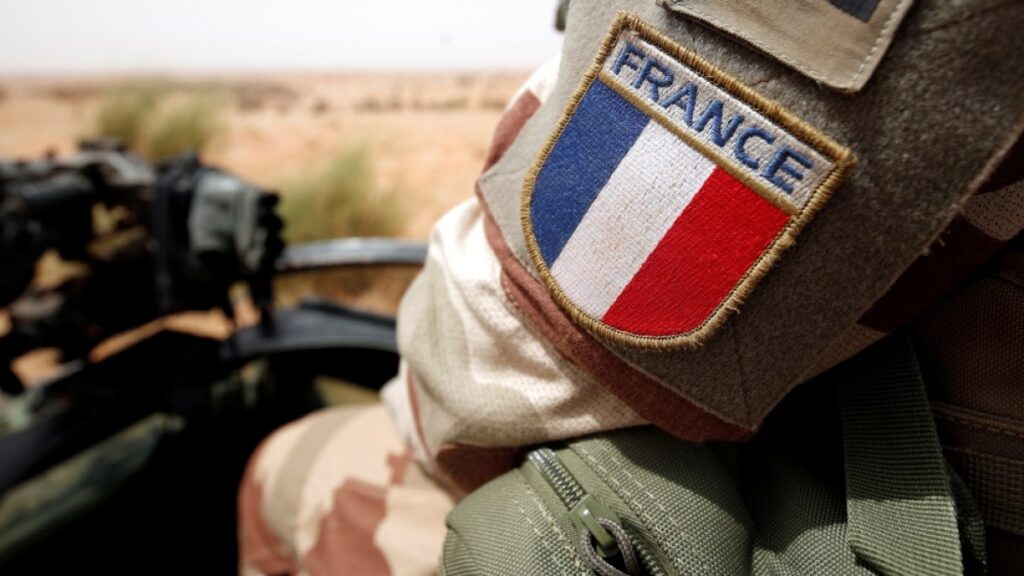
The exit is the third time in 18 months that French troops have been sent packing from a country in the Sahel. The last French troops in Niger have withdrawn, marking an end to more than a decade of French operations to fight armed groups in West Africa’s Sahel region. “Today’s date … marks the end of the disengagement process of French forces in the Sahel,” Niger army Lieutenant Salim Ibrahim said on Friday. France said it would pull out its roughly 1,500 soldiers and pilots from its former colony after Niger’s military government demanded they depart after a coup on July 26. It was the third time in less than 18 months that French troops have been sent packing from a country in the Sahel. They were forced to leave fellow former colonies Mali last year and Burkina Faso earlier this year after recent military takeovers in those countries too. All three nations are battling rebel violence that erupted in northern Mali in 2012, later spreading to Niger and Burkina Faso. But a string of coups in the region since 2020 – and consequent rise in anti-French sentiments among the people – have seen relations nosedive with France and pivot towards greater rapprochement with Russia. The French exit from Niger leaves hundreds of United States military personnel and a number of Italian and German soldiers remaining in the country. Military leaders in Niamey this month said they would also end two European Union security and defence missions in the country. France’s withdrawal from Mali left a bitter aftertaste when the bases it once occupied in Menaka, Gossi and Timbuktu were rapidly taken over by Russia’s Wagner paramilitary group. In September, French President Emmanuel Macron announced the withdrawal of all French troops from Niger by the end of the year. The first contingent left in October. Most French soldiers in Niger were at an air base in Niamey. Smaller groups were deployed alongside Nigerien soldiers at the border with Mali and Burkina Faso, where armed groups linked to ISIL (ISIS) and al-Qaeda are believed to operate. The withdrawal was a complex operation with convoys having to drive up to 1,700km (1,000 miles) on sometimes perilous desert routes to the French centre for Sahel operations in neighbouring Chad. The first French convoy of troops withdrawing from Niger arrived in Chad’s capital, N’Djamena, after 10 days on the road. From Chad, French troops can leave by air with their most sensitive equipment although most of the rest has to be moved by land and sea. A source told the Agence France-Presse news agency on the condition of anonymity that some of the French containers carrying equipment were to be driven from Chad to the port of Douala in Cameroon before they sailed to France. France’s former ally in Niger, overthrown President Mohamed Bazoum, remains under house arrest. A US official said in October that Washington was keeping about 1,000 military personnel in Niger but was no longer actively training or assisting Niger forces. The US said this month that it was ready to resume cooperation with Niger on the condition its military government committed to a rapid transition to civilian rule. Niger’s rulers want up to three years for a transition back to a civilian government. [embedded content] Adblock test (Why?)
Four Indian soldiers killed in Kashmir amid uptick in attacks on troops
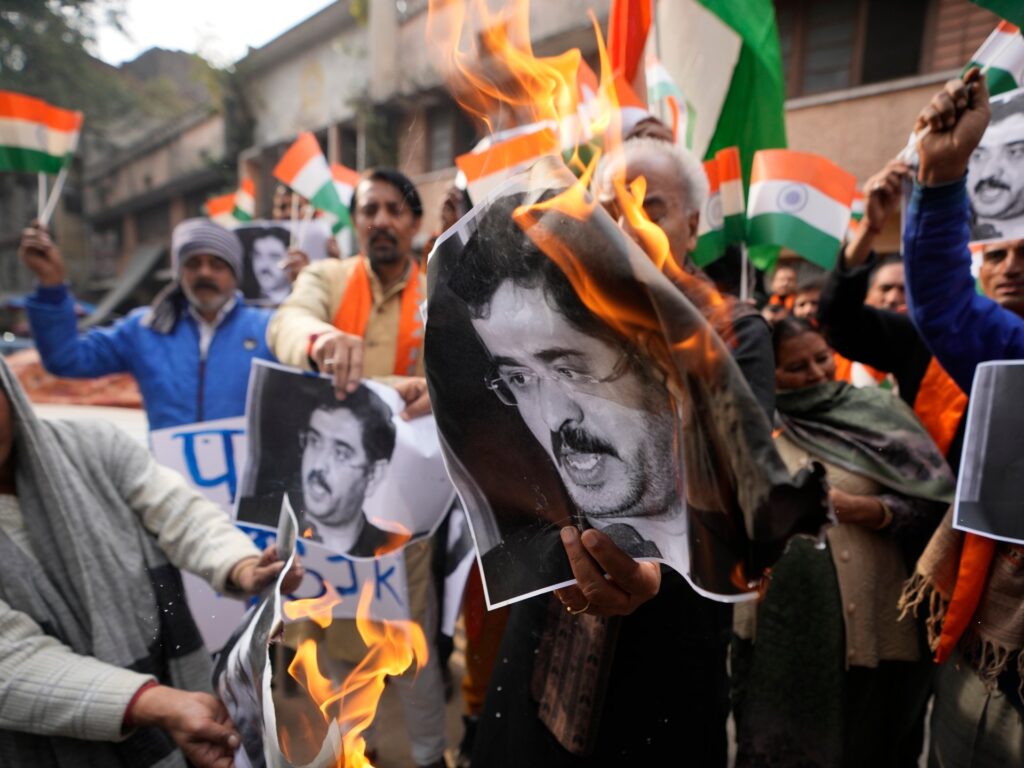
Thursday’s attack is the latest in a series of incidents in which armed fighters have killed Indian soldiers. Four Indian soldiers were killed, and three others were wounded after suspected rebels ambushed Indian military vehicles in the southernmost border district of Rajouri in Indian-administered Kashmir, officials said on Friday. An Indian army official told Al Jazeera that the attack took place on Thursday afternoon when two army vehicles – a mini-truck and a gypsy – carrying nine soldiers were moving to a site where a search operation was under way to find the suspected rebels in Rajouri. In a statement on Thursday evening, the Indian army said that their “troops immediately retaliated”. Following the attack, the Indian army launched a major operation in the area to nab the attackers who are believed to be hiding in the dense forest area. Nearby areas were also cordoned off. So far, however, the army has not declared any casualties among the armed rebels. Rajouri and Poonch districts are the hilly areas close to the Line of Control (LoC), a demarcation line between the Indian and Pakistan-administered parts of Kashmir. The armed rebellion in Kashmir, which is claimed in full by both India and Pakistan, but ruled in parts by the two neighbours, has been continuing since the 1990s against Indian rule. India accuses Pakistan of financing and arming the rebellion. New Delhi has struggled for decades to completely suppress anti-India sentiments in Kashmir. In August 2019, Prime Minister Narendra Modi’s government stripped the region of its semi-autonomous status, guaranteed under the Indian constitution when the former king of Kashmir acceded to the Indian Union in 1948. Earlier this week, the Indian Supreme Court upheld the Modi government’s decision. India has also divided what was a full-fledged state into two federally ruled territories — Jammu and Kashmir, and Ladakh. While the Kashmir region has been a hotbed for dissent for decades, since 2021 districts like Rajouri and Poonch in the Jammu region have witnessed an uptick in the rebel attacks against Indian soldiers, and 2023 has been particularly deadly for Indian soldiers. In all, 34 Indian soldiers have been killed in Kashmir since 2021,19 since April. A little-known rebel outfit, Peoples Anti-Fascist Front, which officials have said is the proxy of Pakistan-based armed group Jaish-e-Muhammad, has claimed responsibility for the attacks, including the latest one. The renewed attacks, observers said, have become a new challenge to the government in New Delhi which has claimed that its controversial policies have improved the security landscape in the region. In November, five soldiers including two army captains were killed in an operation in the same district in Kalakote, Rajouri. In September, four army personnel were killed in a gunfight in the forests of Kokernag near Anantnag district. In April and May this year, 10 soldiers were killed in the two districts. ‘Safe haven’ A senior security official in the southern city of Jammu, who was not authorised to speak to the media, told Al Jazeera that the tough terrain of southern Kashmir is a safe haven for armed fighters to launch such kind of attacks. “Forests give enemies anonymity, space to operate and conceal themselves to outfox the security dragnet,” he said. Ajai Sahni, the executive director of the Institute for Conflict Management in Delhi, told Al Jazeera, that most of the recent killings of army soldiers had occurred in army-initiated operations. “This seems the pattern that has been followed by most of the recent incidents in which security forces have lost their lives,” Sahni said. When asked about the claims of the government about normalcy in Kashmir amid the uptick in attacks on the soldiers, Sahni said “I don’t believe that normalcy has returned after Article 370 abrogation,” referring to the Constitutional provision that gave Jammu and Kashmir greater autonomy than other states. “What is normalcy? This [Kashmir] is a theatre which has seen up to 4000 deaths in a single year in 2001,” Sahni said. “So, to expect no incidents to occur, it’s unrealistic. The government has made extremely unrealistic projections and claims about the situation in Jammu and Kashmir. “ Adblock test (Why?)