

‘India out’: Maldives president eyes Middle East partners with early trips
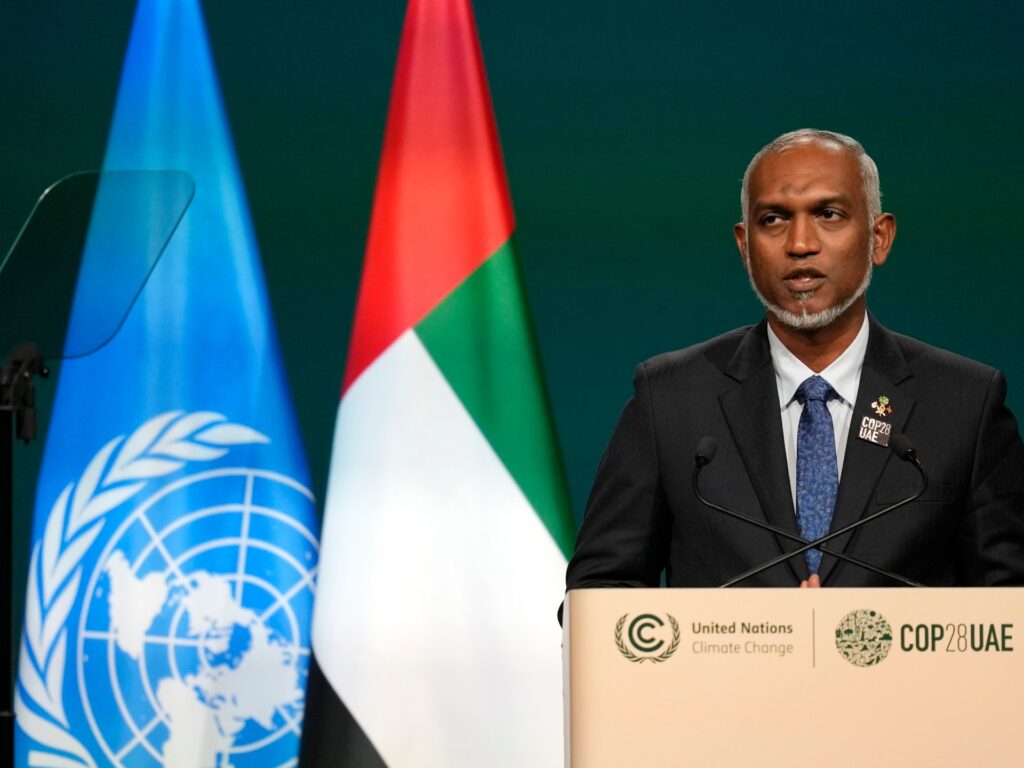
When the new Maldives president, Mohamed Muizzu, stepped on a plane in late November for his first overseas visit since being sworn in barely a week earlier, he was breaking with a longstanding tradition in his country’s diplomatic practices. Across party lines, Maldivian presidents have long made India their first port of call after being elected, in a reflection of the South Asian giant’s traditional influence on the idyllic Indian Ocean archipelago. But Muizzu, who became president after a raucous and divisive anti-India campaign, chose to make his first official trip to Ankara, the capital of Turkey, showcasing an intent to diversify and reorient his country’s foreign policy. At the heart of Muizzu’s efforts is a search for new friends at a time he has made it clear that he intends to pull away from India, according to analysts and sources within the Maldives. It “symbolises a considerable reorientation in the Maldives’s foreign relations, moving away from the longstanding view of India as an essential ally and strategic partner in the Indian Ocean region and South Asia”, Mujib Alam, a professor in international relations at New Delhi’s Jamia Millia Islamia university, told Al Jazeera. Soon after taking office, Muizzu doubled down on a campaign demand that India should withdraw troops from the Maldives. During the election campaign, his Progressive Party of Maldives (PPM) had claimed that India had plans to use the military base that it was building on the island of Uthuruthilafalhu near Male to take over the country. The party built on an “India out” campaign that has, in recent years, projected New Delhi as a hegemon keen to erode the country’s autonomy. India has rejected that suggestion: It has only 77 soldiers in the Maldives, and that includes those who operate two Dhruv helicopters and Dornier aircraft supplied by India to help reach people on distant islands of the archipelago needing medical assistance. Maldivian opposition sources, who did not want to be named, claimed Muizzu understands that Indian troops do not really threaten the country’s sovereignty, but managed to touch a nationalist nerve in the nation for political and electoral dividends. His predecessor, Ibrahim Solih, was seen as particularly close to India. By contrast, Muizzu is viewed by many as closer to China: When he was mayor of Male, he oversaw key Beijing-funded infrastructure projects and promised stronger ties with the Chinese Communist Party if he became president. Yet a visit to China as his first foreign trip could have risked upsetting ties with India — the Maldives’s closest neighbour and leading aid and assistance partner — too far. His choice of Turkey suggests a more nuanced message to India, according to analysts. Signal to India While India views China as a national security threat, its formal ties with Turkey are more steady — though increased scarred by tensions. Turkey has criticised Indian Prime Minister Narendra Modi’s decision to abrogate Indian-administered Kashmir’s semi-autonomous status and has highlighted human rights violations in the region at the United Nations. Against this backdrop, Muizzu’s visit to Turkey “would not be an easy track” for India to accept, said Anil Trigunayat, a former Indian diplomat who served as ambassador to Libya and Malta. It is a pointed message to New Delhi, said Professor Alam. “It appears to be a deliberate stance in the context of India-Turkey tensions,” he said. A Turkish official, who requested anonymity, suggested that Ankara had no interest in stoking tensions between India and the Maldives, but was looking after its own interests. Under President Recep Tayyip Erdogan, Turkey has looked to expand its geopolitical clout — playing a vital role in negotiations over the Russia-Ukraine war, among other issues — and South Asia has been no exception. In June, Turkey hosted Bangladesh’s president. Last month, Turkish Airlines resumed direct flights to Sri Lanka after a decade. In January 2022, then-Turkish Foreign Minister Mevlut Cavusoglu visited the Maldives and Sri Lanka. During Muizzu’s visit to Ankara in November, the two countries signed a free trade agreement and committed to strengthening defence ties: Turkey has one of the world’s most advanced defence industries. Turkey and the Maldives are increasingly also aligned on key geopolitical challenges — they have both strongly criticised Israel’s war on Gaza, while India has been more ambivalent, only recently joining calls for a ceasefire. Yet, Muizzu’s Turkey visit is ultimately less about Ankara and more about distancing Male from New Delhi, said analysts. After his election but before he was sworn in, Muizzu visited the United Arab Emirates. Muizzu returned to the UAE for a second time, for the COP28 summit. In December, Maldives Vice President Hussain Muhammad Latheef visited China. For India, this rift with the Maldives is a cause for anxiety — 50 percent of India’s external trade and 80 percent of its energy imports transit through Indian Ocean sea lanes. For Muizzu, the equation appears clear: If he wants India out, he needs others to come in. That, experts said, is what his trips are about. Adblock test (Why?)
Parliament security breach: Counter Intelligence Unit brings all 6 accused together to match sequence of events
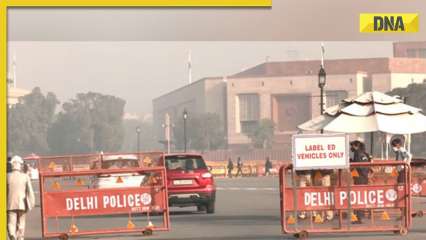
According to Delhi Police, all 6 were kept at five different units of the Special Cell where they were subjected to sustained grilling.
India logs 358 fresh COVID-19 cases, states on alert

Of the total cases, 300 were reported in Kerala, bringing the state’s active cases to 2,341. The total COVID-19 related deaths in Kerala reached 72,059, with three deaths reported
‘Hospitalisations will go up as…’: Former WHO chief scientist Soumya Swaminathan on JN.1 sub-variant

Dr Swaminathan talked about the emergence of the JN.1 variant, a sub-variant of Omicron, expressing hope for mild behaviour but cautioning about increased transmissibility
China urges Philippines to ‘act with caution’ amid South China Sea dispute
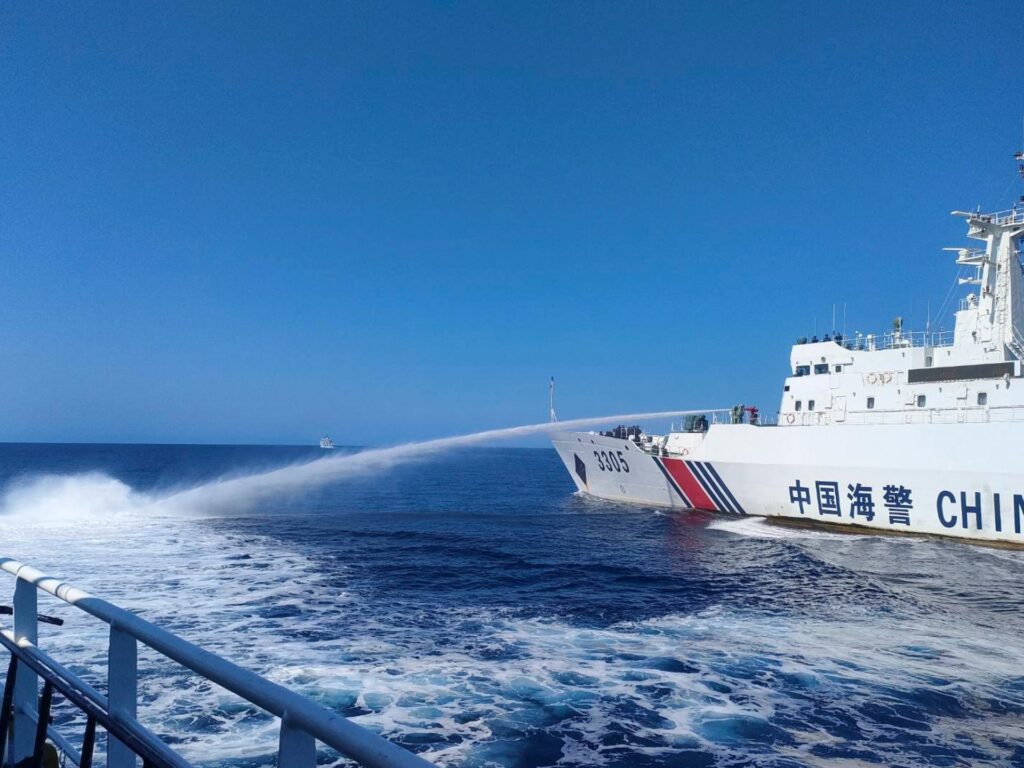
Tensions between the two countries have risen this year, with China attempting to disrupt Filipino ship resupply missions. China’s Foreign Minister Wang Yi has urged Manila to “act with caution” over the hotly-contested South China Sea as his Philippines counterpart Enrique Manalo noted the need for dialogue between the two countries. Tension between Beijing and Manila over the waterway has risen in recent months, particularly in the Scarborough Shoal and Second Thomas Shoal where Manila has accused the Chinese Coast Guard of dangerous actions against Filipino boats during regular resupply missions to sailors on the Sierra Madre, which was grounded there in 1999. Manila has lodged dozens of diplomatic protests over China’s behaviour and earlier this month, summoned the Chinese ambassador after a collision between Chinese and Filipino vessels. Wang and Manalo spoke by phone on Wednesday with China’s Foreign Ministry releasing a five-paragraph readout of the discussions – noting that Manalo had talked about Manila’s views on Second Thomas Shoal – but alleged that any spike in tensions was Manila’s fault. “The root cause is that the Philippines has changed its policy stance so far, reneged on its commitments, continued to provoke and cause trouble at sea, and undermined China’s legitimate and legitimate rights,” the statement said. “China-Philippines relations are at a crossroads. Faced with the choice of where to go, the Philippines must act with caution.” Second Thomas Shoal lies about 195km (121 miles) from the western Philippine island of Palawan and more than 1,000km (621 miles) from China’s southern Hainan island. Beijing seized Scarborough Shoal from Manila after a months-long standoff in 2012. The shoal lies about 220km (137 miles) off the coast of the Philippines and falls within its exclusive economic zone (EEZ), according to international maritime law. In a brief statement, Manalo described the call with Wang as a “frank and candid exchange”. “We ended our call with a clearer understanding of our respective positions on a number of issues,” he said in the statement. “We both noted the importance of dialogue in addressing these issues.” China claims almost the entire South China Sea under its so-called nine-dash line. After the Scarborough Shoal incident, Manila took its case to the Permanent Court of Arbitration in The Hague. The court ruled in 2016 that China’s claims had no legal basis but Beijing has ignored the ruling, doubling down on its claim by building artificial islands, establishing military installations and deploying its coast guard, maritime militia and commercial fishing fleet to the waters. Brunei, Malaysia and Vietnam also claim parts of the sea and the latter two have also reported incidents with Chinese vessels. Since Ferdinand Marcos Jr became the Philippines’s president in 2022, the country has revived its once close relationship with the United States, expanding a defence pact giving Washington access to more of its military bases. In the call, Wang said Beijing was committed to dialogue but also issued a warning. “If the Philippines misjudges the situation, insists on going its own way, or even colludes with malicious external forces to continue causing trouble and chaos, China will definitely safeguard its rights in accordance with the law and respond resolutely,” he said in the statement. Adblock test (Why?)
No need to panic, state fully prepared: Maharashtra Health minister on new Covid sub-strain

The state Health Department, informed that regular genome sequencing was being conducted after the detection of the new sub-variant in the state.
Another California city passes proclamation supporting ceasefire in Gaza
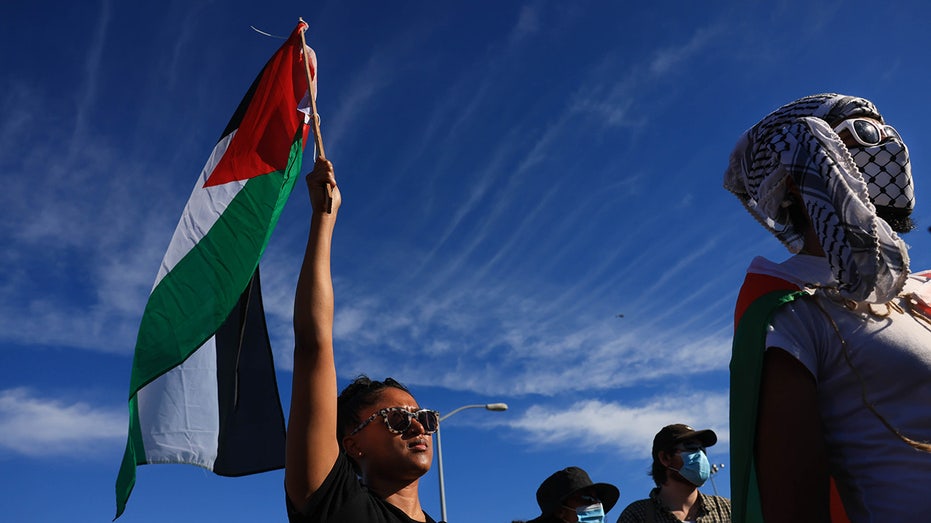
Another California community has joined a growing list of cities across the state that have formally approved a proclamation calling on the federal government to support a permanent ceasefire in Gaza. On Tuesday, nearly 200 people spoke out about the proclamation during the public comment portion at the Long Beach City Council meeting, according to the Press-Telegram. Following hours of public comment, the council voted 5-2 in favor of the proclamation. The proclamation was introduced by Council members Joni Ricks-Oddie, Roberto Uranga and Al Austin. CAPITOL POLICE ARREST 60 ANTI-ISRAEL ACTIVISTS FOR ILLEGALLY PROTESTING INSIDE ROTUNDA: REPORTS Before the formal approval, the Long Beach Community United for Peace, a group that represents the “Palestinian Community in unity with Muslim, Christian and Jewish allies and supporters from various backgrounds,” started a petition calling for the city to support calls for a ceasefire. The petition was sent to Long Beach Mayor Rex Richardson on November 8, pleading for his endorsement. CONTROVERSIAL LEFT-WING ACTIVIST, 7 OTHERS ARRESTED AFTER PROBE INTO ‘BRUTAL’ ASSAULT AT CALIFORNIA PROTEST “It is with a sense of urgency and a plea for compassion that we seek your endorsement for an immediate Cease Fire in GAZA,” the letter stated. “This plea transcends complex political discourse; it is a fundamental human rights appeal. The principles of humanity should never be obscured or overridden by the tenets of warfare.” So far, about 2,400 people have signed the petition, according to the website. GUN-TOTING RABBI LEADS PUSH TO ARM, TRAIN JEWISH COMMUNITY AMID HIGH TENSIONS: VIDEO In addition to call for a ceasefire, the proclamation also calls for the release of all hostages captured by Hamas duing its invasion of Israel, the protection of all civilians on both sides of the war and the safe delivery of humanitarian aid into Gaza. A vigil was also held prior to the city council meeting, according to the petition website. ALEC BALDWIN GETS IN SHOUTING MATCH WITH PRO-PALESTINIAN ACTIVISTS DURING NYC PROTESTS Long Beach now joins Cudahy, Richmond and Oakland in a list of cities that have all created local ordinances calling for a ceasefire in Gaza.
Beyond Australia’s failed referendum: Truth, treaty and voice in Victoria
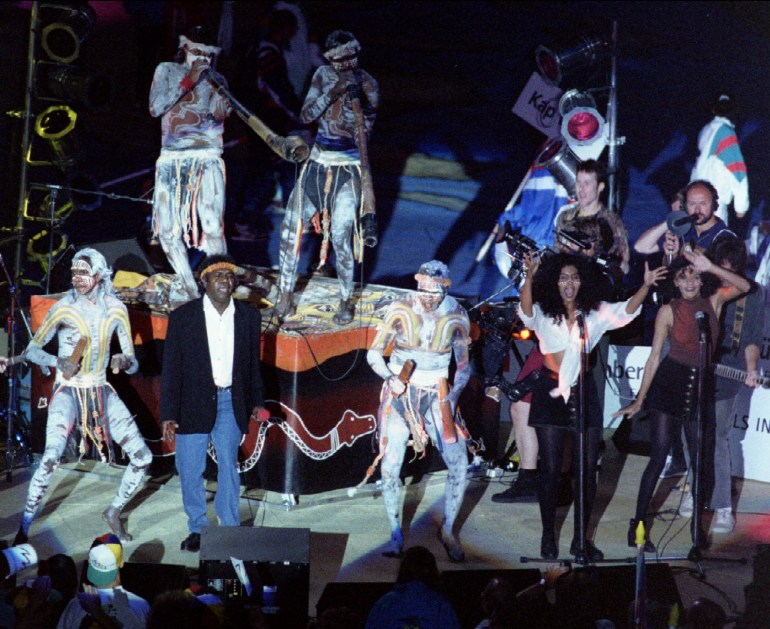
Melbourne, Australia – In October this year, a referendum to establish an Indigenous “Voice to Parliament” in the Australian Constitution was heavily defeated at the polls. Had the vote passed, an advisory group would have been established to make recommendations to the federal government to alleviate the social and economic inequalities experienced by Indigenous people. In the referendum, 60 percent of Australians voted against the proposal in a campaign marred by disinformation and public racism. Still, 25-year-old Jordan Edwards remains pragmatic. “You can’t lose something you never had,” he told Al Jazeera. The Gunditjmara, Waddawurrung and Arrernte man is a newly-appointed member in the southern state of Victoria’s First Peoples’ Assembly. Similar to the proposed Voice to Parliament, the First Peoples’ Assembly was established in 2020 to advance treaty negotiations with the state government. Separate from the federal government, Australian states have the capacity to introduce such initiatives, despite the failure of the national referendum. Currently, only Victoria and Queensland have committed to the treaty process. Edwards also acts as the Youth Voice convener, engaging with Indigenous young people around the state to educate them about a process that aims to secure an agreement between local Indigenous groups, known as “traditional owners” and the government, which would allow some self-determination and decision making on matters affecting the community, including land use and resources. Australian Rock group Yothu Yindi has long called for a treaty between Australian governments and Indigenous people [File: AP] Edwards says it is important that Indigenous young people are included in these conversations. “I think for young people, [treaty] always been an Elders’ fight, or their parents’ fight. And now, realising that’s on our doorstep, I think we need to grapple with that conversation,” he said. Looking to the future Calls for a treaty between Indigenous Australians and both state and federal governments have been echoing for decades, including in the 1991 hit song Treaty, by Indigenous band Yothu Yindi. Unlike Canada and New Zealand, the British colonial powers did not form treaties with Indigenous people in Australia, instead declaring the land “terra nullius” – nobody’s land – a legal fiction that took more than 200 years to be overturned. Victoria’s state government committed to establishing a treaty process in 2018, which is set to be cemented in 2024. Edwards says a treaty is important for Indigenous communities and could especially affect young people into the future. “They are our largest demographic in our population. So, we actually need young people there because it will affect them as a majority,” he said. While non-Indigenous Australia has an ageing population, Indigenous communities have far more younger people. A 2021 census showed there were 60,000 Indigenous people in Victoria, with about half of them under the age of 25. Edwards’s focus on young people is shared by Esme Bamblett who is also an elected member of the First Peoples Assembly and the Elders’ Voice convener. “We need to think about seven generations’ time,” she told Al Jazeera. “Personally, in seven generations’ time, I’d like my children and my descendants to have generational wealth, I want them to have every opportunity just like everybody else. I want them to know that they are strong and to be proud of who they are and have a strong identity as Aboriginal people.” A traditional smoking ceremony took place ahead of the Yoorrook Commission [Ali MC/Al Jazeera] Bamblett said the inclusion of an Elders’ Voice at a parliamentary level was important not only to highlight the challenges Indigenous elders face but also to reflect Indigenous cultural protocols. “A very important part of our culture has been respect for our elders,” she said. “The heads of all the families were the Elders, and the Elders would get together and they would then decide on issues and actions and there would be a consensus of opinion about what would happen. You learn from a very young age to respect your elders, and to listen to them.” Indigenous people had lived on the continent now known as Australia for more than 65,000 years, when the British sailed into Botany Bay in 1788. Their declaration of “terra nullius” paved the way for violent colonisation in the 1800s and punitive assimilation policies that removed Indigenous children from their families well into the late 20th century. Known as the Stolen Generations, this attempt at assimilation was buttressed by strict immigration laws which excluded non-Europeans, known as the “White Australia” policy. Those policies’ negative legacy continues to be felt by the more than 30 Indigenous nations that live in the state of Victoria. “Out-of-home care, the incarceration rates, unemployment – all these things have really impacted on our mob [communities],” Bamblett told Al Jazeera. “And there’s a lot of our elders who are caring for their grandchildren.” Truth for change Similar to the structure of the proposed – and defeated – Voice to Parliament, Victoria’s First Peoples’ Assembly is made up of 32 members elected by local Indigenous communities who each represent the concerns and cultures of traditional owner groups. First Peoples’ Assembly Co-Chair Ngarra Murray told Al Jazeera that Indigenous people needed to be “in the driver’s seat when it comes to the issues that affect us”. “To be able to distil and articulate the views of our communities is powerful in itself and provides us with a strong platform to advocate for and against certain policies and practices that affect our communities,” she said. Victoria Police Chief Shane Patton publicly apologised for the systemic racism experienced by Indigenous people at the hands of the police when he appeared at the Yoorrook Justice Commission [Ali MC/Al Jazeera] Murray – who is from the Wamba Wamba, Yorta Yorta, Dhudhuroa and Dja Dja Wurrung peoples – said self-determination was vital if the impacts of colonisation were to be rectified. “We are the experts on our own lives, we just need the freedom and the power to make the decisions about our culture, communities and country,” she said. Alongside the First
Reclaiming Bollywood, Shah Rukh Khan style
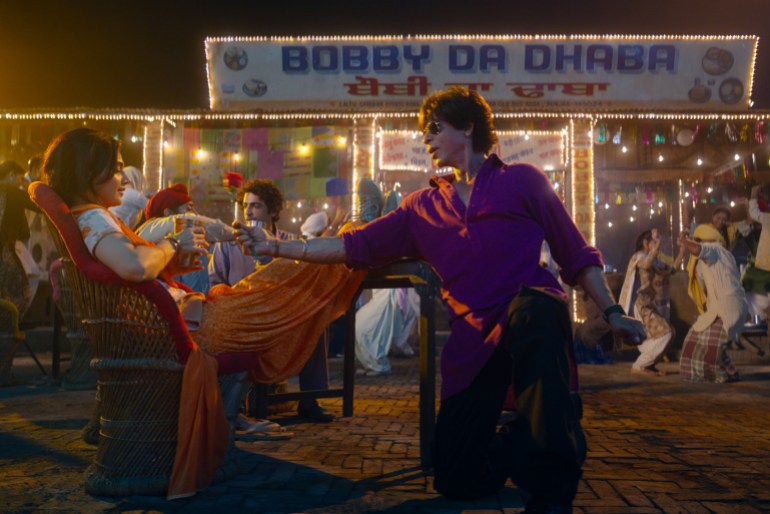
Sudhir Kothari, 36, a financial analyst and adviser based in the southern Indian city of Chennai, has ordered a special five-kilogramme (11-pound) choco-truffle cake, garlands and booked dhol (drum) players. The T-shirts, badges and wristbands that he had ordered arrived in time and Rohini Silver Screens theatre has allowed him to erect a 7.4-metre (25-foot) cutout of Bollywood star Shah Rukh Khan for the special 9am “First Day, First Show” of Dunki, Khan’s new film that releases worldwide on Thursday. A diehard “SKRian”, as Khan’s fans call themselves, Kothari told Al Jazeera that in 2013, three to four days after “SRK sir started following me, I turned my personal Twitter account into a fan club.” Today his handle, SRKChennaiFC, has 167,600 followers. Kothari, who prefers the appellation “The Only Fan SRK Follows” to his own name, and has written a book of the same title, was busy until late Wednesday evening overseeing the arrangements at the theatre, booked for SRK fans after submitting a support letter from SRK’s production team. After garlanding and pouring milk over Khan’s cutout, they will light fireworks and dance. Inside the 550-seater theatre, too, they will dance, cut the cake and post videos on their handles with rapturous adjectives and hashtags like #DunkiReview, meant to tickle the interest of prospective ticket buyers. In all likelihood, Khan, who has 43.9 million followers on X and follows 74 people, of whom five are fan accounts, will acknowledge the celebration videos with a sweet thanks and #Dunki. Yash Paryani, the admin of SRK Universe, Khan’s biggest fan club which has 3.2 million followers on Facebook, tweeted that for December 21, fans are organising “1,000+ first day, first shows in 65 countries”. Rishil Jogani, who said he is part of “a small group of admins of Khan’s fan clubs that takes some big decisions”, told Al Jazeera that “these numbers are not 100 percent accurate,” but fans and fan clubs post them because “euphoria is very contagious. There is FOMO [fear of missing out] and it motivates people to book tickets.” All the fans Al Jazeera spoke with said that they “don’t get a penny” or any free tickets, and they do all this out of their love for Khan, hoping for one end result: “For SRK films to do wonders and for him to be happy”. Dunki, unlike Khan’s two multi-star, action-packed hits released earlier this year, is riding mostly on Khan’s shoulders and will test his box-office clout. To prepare for that, he has spent months marketing it in a way that resembles the election campaign style of India’s governing right-wing Bharatiya Janata Party, the very party he has had several run-ins with in the past. But it is not clear if all this effort will pay off this time. Hopes for a hat-trick Khan and his fans are hoping Dunki will beat his previous blockbusters [Still from Dunki courtesy: Spice PR] This year has been a very happy one for Khan, 58, who returned to theatre screens after a four-year hiatus, a string of flops and a massive personal setback. His two films — Pathaan, which was released in January this year, and, Jawan [Soldier], in September — were blockbuster hits, and have made it to the top 10 highest-grossing Indian films ever. With Dunki, industry insiders said, Khan is hoping to score a hat-trick. The year of Khan’s last box-office hit, 2015, was also the year when he called out rising religious intolerance in the country, ruffling the feathers of the governing right-wing Bharatiya Janata Party (BJP). A concerted backlash followed, his films were trolled and threatened with calls for boycott, and it seemed that he had lost his box-office mojo after three flops and two that did middling business. In 2021, during the pandemic, his then-24-year-old son Aryan Khan was arrested, along with seven others, in an alleged drug bust on board a cruise ship off the Mumbai coast. The young Khan was charged with possession, consumption and sale of illegal substances and had to spend about three weeks in jail. Seven months later, all the charges were dropped. Khan has always been outspoken and does not scare easily. He once reportedly told off a Mumbai mafia boss who was pressuring him to act in a film, “Shoot me if you want to, but I won’t work for you. I am a Pathaan,” referring to the proud, warrior clan that he is a descendent of. His public appearances always sparkled with his signature repartee. Well-read and sharp, he gave candid interviews and would appear regularly on reality and comedy TV shows, especially while promoting his films. But after his son was arrested and attempts were allegedly made to extort money from Khan, he went quiet and retreated from public view. He made no statement on his son’s arrest and the allegations against him, and stopped meeting the press or making appearances on TV shows. The only connection he continued to maintain was with his fans, online and offline and today it is one of the biggest and most active fan communities of a Bollywood star. Khan’s son Aryan, centre, was arrested in an alleged drug bust [File: Rajanish Kakade/AP Photo] When Pathaan was released in January, Khan’s fans across the world bought 50,000 tickets for the first day, first show, said Paryani. For Jawan, they beat their own record and bought 85,000 tickets. With a total gross earning of 21 billion rupees ($253m) at the box office, Khan is now being credited for reviving Bollywood, which had been struggling for a hit for the last few years. “There’s a well thought out strategy behind what we have seen — Shah Rukh Khan as a phenomenon in 2023,” Girish Johar, producer and film business expert, told Al Jazeera. “The films were positioned, marketed and released in such a manner that his fan base, box-office numbers and his craze increases day by day, with every film,” he said. Pathaan, a multi-star film with big Bollywood
Russia-Ukraine war: List of key events, day 666
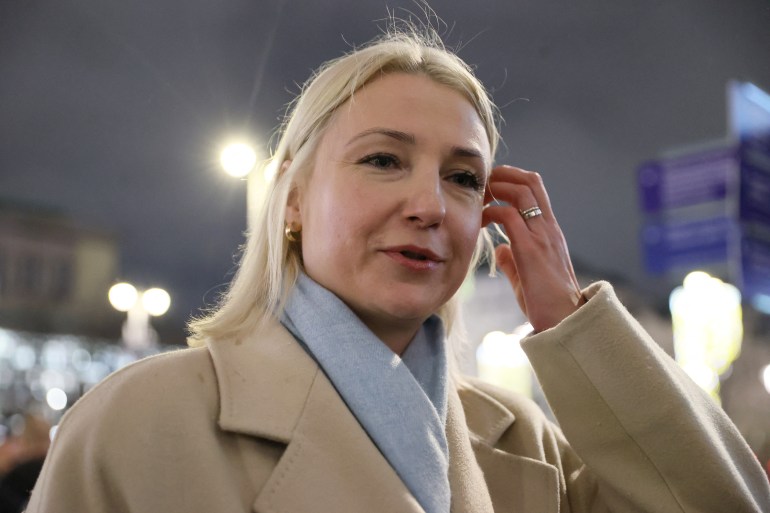
As the war enters its 666th day, these are the main developments. Here is the situation on Thursday, December 21, 2023. Fighting Nine people, including four children, were injured in Russian shelling of the southern Ukrainian city of Kherson, as Russia also targeted the capital Kyiv, the second-largest city of Kharkiv and other regions with drones and missiles. Ukraine’s Air Force said air defence systems destroyed 18 out of 19 Russian attack drones and that Russia fired two surface-to-air guided missiles at Kharkiv. No casualties were reported. Ukrainian military spokesman Oleksandr Shtupun acknowledged that Russian forces were gaining ground around the industrial city of Avdiivka. Sthupun told Ukrainian television the Russians had “advanced by one and a half to two kilometres [0.3 to 1.2 miles] in some places” since October 10, but it had “cost them a lot”. The evening update from the Ukrainian General Staff reported 89 incidents of Russian ground attacks on seven sections of a front line that extends for about 1,000km (600 miles). There were 31 attacks near Avdiivka, it added. Ukraine’s Armed Forces are taking up a more defensive posture after a months-long counteroffensive failed to achieve a significant breakthrough, the United Kingdom’s Defence Ministry said in its latest assessment of the war. It said Ukraine was improving field fortifications along the front line. Politics and diplomacy The Kremlin said there was no current basis for peace talks between Russia and Ukraine and that Kyiv’s proposed peace plan was absurd because it excluded Russia. “We really consider that the topic of negotiations is not relevant right now,” Kremlin spokesman Dmitry Peskov told reporters in Moscow. Russian President Vladimir Putin called for a “severe” response to foreign agents who try to help Ukraine by engaging in sabotage in Russia. Russian billionaire Roman Abramovich lost his attempt at the European Union’s top court to overturn the sanctions the EU imposed on him after Russia began its full-scale invasion of Ukraine. German federal prosecutors said they aim to seize more than 720 million euros ($789 million) from an unnamed Russian bank it suspects of trying to violate Western sanctions. Ukraine’s biggest mobile operator Kyivstar said it had fully restored its services in the country and overseas following a huge cyberattack last damaged IT infrastructure and affected air raid alert systems. More than half of Ukraine’s population are Kyivstar subscribers. A Russian court fined Google 4.6 billion roubles ($50.84m) for failing to delete so-called “fake” information about the war in Ukraine and other topics, according to the state TASS news agency. Yekaterina Duntsova, a 40-year-old independent politician, has declared her intention to run in Russia’s 2024 presidential election [Vera Savina/AFP] Yekaterina Duntsova, a 40-year-old former broadcast journalist, put her name forward to stand in Russia’s presidential election on a platform “for peace and democratic processes”. Duntsova has previously called for an end to the war in Ukraine and the release of political prisoners including opposition leader Alexey Navalny. The 40-year-old needs 300,000 signatures from across Russia by January 31 to support her candidacy. Vladimir Putin is expected to win in a landslide. Weapons Oleksandr Kamyshin, Ukraine’s minister for strategic industries, said Kyiv plans to manufacture 1 million reconnaissance and attack drones as well as more than 11,000 medium- and long-range attack drones next year. The figure includes at least 1,000 drones with a range of more than 1,000km (620 miles), he said. Japan is considering allowing Patriot missile transfers to Ukraine, according to a report in Nikkei. Adblock test (Why?)