

How Do I Handle a Delayed Flight?

Familiarize yourself with the airline’s policies and the UK regulations on passenger rights to ensure you receive the compensation you are entitled to.
New satellite-based tolling system on National highways to start by…: Nitin Gadkari

India’s National highways will soon bring satellite-based tolling systems, announced the Minister for Road Transport and Highways Nitin Gadkari.
Trump decision splits Colorado Supreme Court along elite East Coast law schools, Denver Law lines
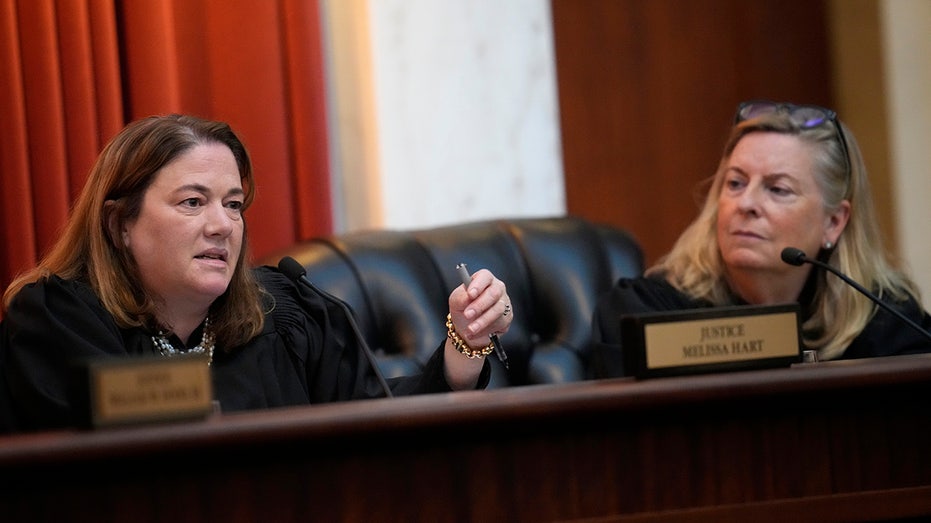
The decision to disqualify former President Trump from the 2024 presidential ballot over the Jan. 6 Capitol riot split the Colorado Supreme Court not along party lines, but by law schools. The four Colorado Supreme Court justices who ruled Trump ineligible for the White House under the U.S. Constitution’s insurrection clause and removed him from the state’s presidential primary ballot all attended Ivy League institutions or otherwise a top-ranked elite law school on the East Coast for law school. The three dissenting justices, meanwhile, all graduated from the University of Denver’s law school, Jason Willick, a Washington Post columnist, pointed out in a post on X. The decision from a court whose justices were all appointed by Democratic governors marks the first time in history that Section 3 of the 14th Amendment has been used to disqualify a presidential candidate, setting up a likely showdown in the U.S. Supreme Court to decide whether the front-runner for the GOP nomination can remain in the race. “A majority of the court holds that Trump is disqualified from holding the office of president under Section 3 of the 14th Amendment,” the court wrote in its 4-3 decision. COLORADO SUPREME COURT DISQUALIFIES TRUMP FROM 2024 BALLOT The four who ruled in favor of the plaintiffs were Colorado Supreme Court Justices Richard L. Gabriel, Melissa Hart, Monica Márquez and William W. Hood III. Gabriel graduated from UPenn, Hart graduated from Harvard, Márquez graduated from Yale and Hood graduated from the University of Virginia for law school. This comes as the nation’s most prestigious universities have faced widespread criticism for spreading wokeism and failing to condemn rampant antisemitism on American campuses in the wake of Hamas’s Oct. 7 terrorist attack on southern Israel. House Republican Conference Chair Elise Stefanik, who grilled the presidents of Harvard, UPenn and the University of Massachusetts earlier this month on whether calls for intifada or the genocide of Jews violated their institutions’ codes of conduct, also reacted to the Colorado ruling Tuesday. “Four partisan Democrat operatives on the Colorado Supreme Court think they get to decide for all Coloradans and Americans the next presidential election,” Stefanik, R-N.Y., said. Those who dissented were Chief Justice Brian D. Boatright and Justices Maria E. Berkenkotter and Carlos Samour. All three went to Denver for law school. “Our government cannot deprive someone of the right to hold public office without due process of law,” Samour wrote in his dissent. “Even if we are convinced that a candidate committed horrible acts in the past — dare I say, engaged in insurrection — there must be procedural due process before we can declare that individual disqualified from holding public office.” POLL SHOWS BIDEN HITTING RECORD LOW APPROVALS, FALLING BEHIND AGAINST TRUMP IN 2024 MATCHUP All seven Colorado justices were appointed by Democrats. Boatright, Hood, Gabriel, Hart and Samour were appointed by Democratic former Gov. John Hickenlooper, while Márquez was appointed by former Democratic Gov. Bill Ritter, and Berkenkotter was appointed by current Democratic Gov. Jared Polis. Trump lost Colorado by 13 percentage points in 2020 and does not necessarily need the state’s 10 electoral votes to win next year’s presidential election. However, the danger for the former president is that more courts and election officials could follow Colorado’s lead and exclude Trump from must-win states. Dozens of lawsuits have been filed nationally to disqualify Trump under Section 3, which was designed to keep former Confederates from returning to government after the Civil War. It bars from office anyone who swore an oath to “support” the Constitution and then “engaged in insurrection or rebellion” against it, and has been used only a handful of times since the decade after the Civil War. The Colorado case was brought by the left-leaning group, Citizens for Responsibility, on behalf of six Colorado Republican and unaffiliated voters. After a weeklong hearing in November, District Judge Sarah B. Wallace found that Trump indeed had “engaged in insurrection” by inciting the Jan. 6 riot at the Capitol, but her ruling said he could not be barred from the ballot because it was unclear that the Section 3 provision was intended to cover the presidency. Trump’s attorneys had afterward urged Colorado’s highest court to reverse Wallace’s ruling that Trump incited the Jan. 6 riot, arguing the then-president had simply been using his free speech rights and had not called for violence. Trump attorney Scott Gessler also argued the attack was more of a “riot” than an insurrection. The Colorado Supreme Court overturned Wallace’s ruling Tuesday but stayed its decision until Jan. 4, or until the U.S. Supreme Court rules on the case. Colorado election officials say the issue must be settled by Jan. 5, the deadline for the state to print its presidential primary ballots. The Associated Press contributed to this report.
CAIR quietly scrubs Democrats’ praise for group after blowback over leader’s pro-Hamas comments

The Council on American-Islamic Relations (CAIR) appears to have scrubbed Democratic lawmakers’ praise for its group from its website following blowback over its leader’s controversial statements regarding Hamas, Fox News Digital has discovered. Nihad Awad, CAIR’s executive director, recently said he was “happy to see” the Oct. 7 Hamas invasion of Israel and that the Jewish state did not have a right to self-defense because it was an “occupying power.” After Awad made the contentious comments, Fox News Digital and other publications questioned Democratic lawmakers who previously expressed support for the group in letters and statements, including some posted on CAIR’s endorsements and awards page. The endorsements and awards page that contained glowing recognition from Democrats was wiped clean sometime in the past few days and now shows a ‘404’ error. DEM LAWMAKERS HAVE HISTORY OF PRAISE FOR GROUP WHOSE LEADER SAID HE WAS ‘HAPPY TO SEE’ HAMAS ATTACK ISRAEL The page was last captured by the Wayback Machine, an internet archiver, on December 4. It shows its previous state, including its “Awards and Recognitions from Interfaith, Law Enforcement, Elected Officials and Others.” The page contained over 100 current and former Democratic politicians heaping praise on the group. Federal lawmakers such as Sens. Chuck Schumer of New York, Elizabeth Warren of Massachusetts, Cory Booker of New Jersey, Ben Cardin of Maryland and Vice President Kamala Harris had attributable quotes on the website. Additionally, the page contained numerous quotes from lawmakers in Congress’ lower chamber, including Reps. Pramila Jayapal of Washington, Andre Carson of Indiana, Ilhan Omar of Minnesota and Katie Porter of California, among others. Awad caused headaches for several Democrats following his Nov. 24 speech at the 16th Annual Convention for Palestine in the U.S., where he said he was “happy to see” Hamas attack Israel. WHITE HOUSE SCRAMBLES TO DISTANCE ITSELF FROM ISLAMIC GROUP AFTER LEADER’S PRAISE FOR HAMAS’ OCT 7TH SLAUGHTER “The people of Gaza only decided to break the siege – the walls of the concentration camp – on Oct. 7,” Awad said during his speech. “And yes, I was happy to see people breaking the siege and throwing down the shackles of their own land and walk free into their land that they were not free to walk in.” “And yes, the people of Gaza have the right to self-defense – have the right to defend themselves. And yes, Israel as an occupying power does not have that right to self-defense,” he said. Awad’s remarks forced the White House to scramble and scrub CAIR as a committed partner to fight antisemitism on its website. A White House spokesperson also forcefully reprimanded his comments in a previous statement to Fox News Digital. “We condemn these shocking, Antisemitic statements in the strongest terms,” the White House spokesperson said. “The horrific, brutal terrorist attacks committed by Hamas on October 7th were, as President Biden said, ‘abhorrent’ and represent ‘unadulterated evil.’” CAIR DIRECTOR SAYS HE WAS ‘HAPPY’ TO WITNESS OCT. 7 ATTACKS, ISRAEL ‘DOES NOT HAVE RIGHT TO SELF-DEFENSE’ Some Democrat lawmakers who associated with or praised the group also condemned Awad’s statements after facing questions about their support, while others remained silent. “I condemn in the strongest possible terms these antisemitic statements – and anyone who tries to make excuses for Hamas’ murder of innocent civilians,” Sen. Sherrod Brown of Ohio, who also had an attributable quote on CAIR’s website, previously told Fox News Digital. “I strongly support Israel’s right to defend itself and will continue to stand with the Israeli people as they fight back against Hamas’ terrorism.” Sen. Tammy Baldwin of Wisconsin told Fox News Digital that Awad exhibited “blatantly antisemitic comments.” “There are no two ways about this: Hamas’s October 7th terrorist attacks on Israel were completely horrific – innocent Israelis were slaughtered, hundreds of civilians were kidnapped, and now, countless families are grieving and afraid,” Baldwin said. “I condemn these blatantly antisemitic comments in no uncertain terms, and these remarks have led to me completely losing faith in the organization and its work.” Likewise, Sen. Bob Casey of Pennsylvania, who previously praised a local CAIR chapter’s “diversity and equality” efforts, pushed back against Awad’s remarks. “October 7th was a brutal and vicious attack on innocent Israeli civilians,” Casey told Fox News Digital last week. “I unequivocally condemn the antisemitic and hateful comments made by CAIR’s leadership and any comments that celebrate the despicable acts of Hamas terrorists.” CAIR did not respond to Fox News Digital’s request for comment on its endorsement page.
Biden admin holds 73 million-acre lease sale after appeals court steps in
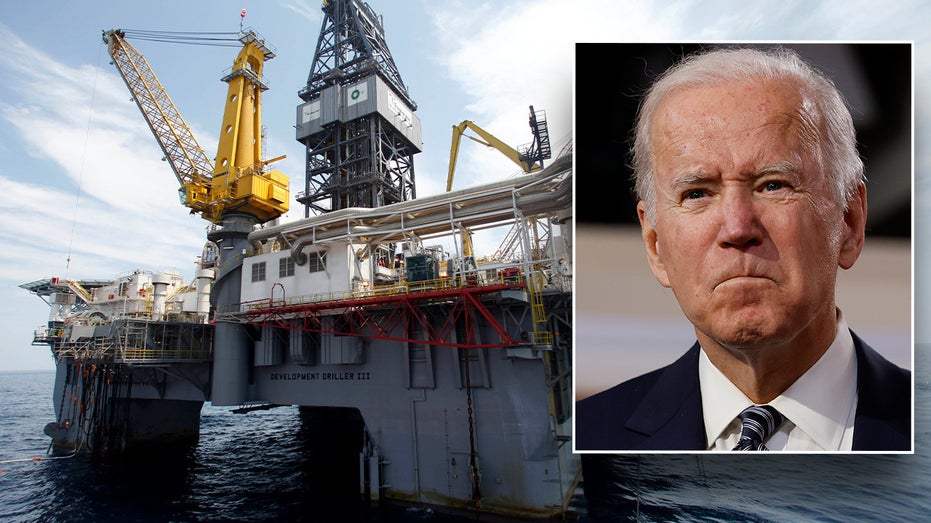
The Biden administration will hold a massive offshore oil and gas lease sale Wednesday after its efforts to scrap the auction over potential climate and environmental impacts failed. The Bureau of Ocean Energy Management (BOEM) will hold Lease Sale 261, which spans more than 73 million acres across the Gulf of Mexico and is expected to garner hundreds of millions of dollars worth of bids from industry. BOEM’s sale comes a month after an appeals court forced the agency to scrap eco restrictions on the sale and nearly two years after the White House tried to cancel the sale altogether. “It’s a very important lease sale considering the uncertainty on the horizon for additional offshore oil and gas leasing,” said Erik Milito, president of the National Ocean Industries Association, which represents both traditional and renewable offshore energy producers. “There are competing pressures heading into the event. “On one hand, unless there is congressional action, this marks the final lease sale until at least 2025,” he told Fox News Digital. “We operate in a prospective business where companies must acquire new lease blocks for exploration and potential development. However, there is no guarantee that acquired leases have enough hydrocarbons to warrant investment. Companies want to invest in the Gulf of Mexico, and this represents their final opportunity to gather more leases for a while.” MAJOR ‘CLIMATE DECEPTION’ LAWSUIT AGAINST BIG OIL VOLUNTARILY DISMISSED Milito added that, on the other hand, the Biden administration has “repeatedly shown an unwillingness” to encourage offshore oil and gas production and could pursue policies delaying or shrinking future sales. Such policies would discourage investment in domestic exploration, driving it overseas instead, he said. “Companies have already faced a slate of regulatory and policy-driven disincentives as they try to develop what is fundamentally a national strategic asset,” Milito said. “While the U.S. offshore energy regulatory structure has historically been a competitive advantage, at a certain point, companies will choose to invest their dollars in regions with fair and predictable regulations and policies.” DARK MONEY GROUP WIRED MILLIONS TO LAW FIRM SUING BIG OIL WITH DEM STATES In November, the 5th Circuit Court of Appeals ruled that last-minute restrictions BOEM placed on Lease Sale 261 under a closed-door settlement with climate advocacy organization were illegal, and the agency was required to move forward with the sale as originally planned. Following the ruling, BOEM scheduled the sale, which had originally been slated for late September, for Wednesday. The July settlement with environmental groups, meanwhile, came after years of litigation and specifically expands protections for the Rice’s whale, a species listed as endangered. The settlement made the lease sale smaller by 6 million acres and created multiple vessel restrictions for companies that obtain leases which energy groups argued would stifle industry interest. In May 2022, the White House intervened in Lease Sale 261 and the two other remaining scheduled offshore lease sales, canceling all three in an unexpected move “due to factors including conflicting court rulings.” However, the three sales were all reinstated under the 2022 Inflation Reduction Act, which tethers future oil and gas lease sales to future renewable energy lease sales, effectively forcing the administration to pursue both. A BOEM spokesperson declined comment. Under federal law, the Department of the Interior is required to periodically issue five-year plans scheduling future offshore lease sales. Lease Sale 261 is the final sale scheduled under the 2017 plan that expired last year. Earlier this month, the administration finalized the newest five-year offshore oil and gas leasing program, which schedules just three Gulf of Mexico lease sales through 2029, marking the fewest number of sales ever included in such a plan. As a result, the next sale is slated for 2025 and 2024 is expected to be the first year without an offshore lease sale since the mid-1960s. “Simply put, this final 5-year program fails to meet the energy needs of the American people and could threaten to increase reliance on foreign energy sources,” American Petroleum Institute Vice President of Upstream Policy Holly Hopkins said last week. “Demand for affordable, reliable energy is only growing, yet the administration is choosing to limit future production in a region that plays a critical role in powering our nation and supplies among the lowest carbon-intensive barrels in the world,” she added. “This program is a step in the wrong direction for U.S. energy security and will only make it harder to meet growing energy demand over the long-term.”
Excluding Hamas from the ‘day after’ in Gaza would be a mistake
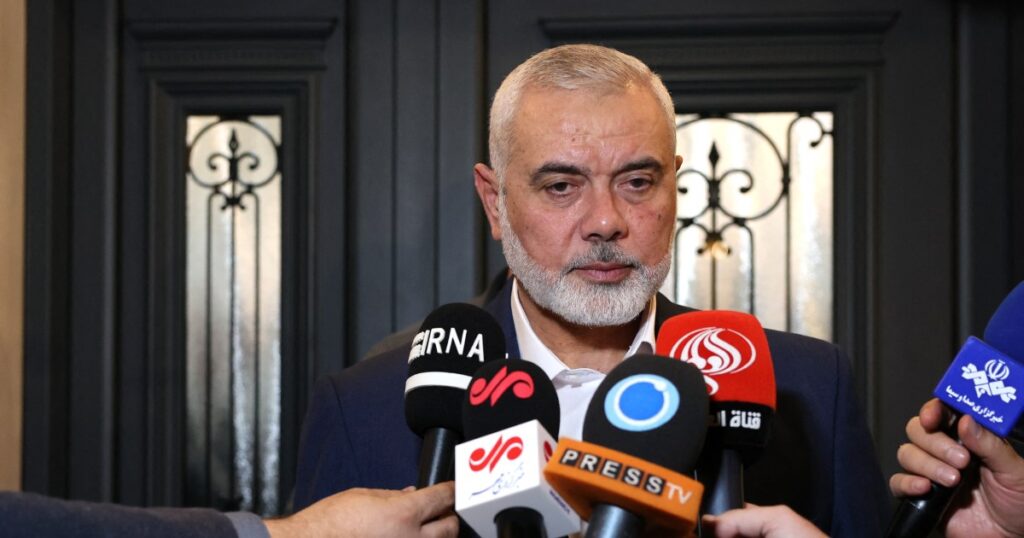
In the field of the social sciences, it is very common to say “history repeats itself”. However, there is nothing inevitable about how political events pan out and the choices that political actors make. In this sense, and in the current context of Israel’s war on Gaza, it is important to consider what foreign intervention in a country’s internal affairs and government can lead to. When foreign powers decide to eject a certain political player from power and impose an unelected provisional government, they create two problems. First, the population of the country is denied their voting rights and their right to voice their political opinions. A governing body that does not represent the people ignores their demands and complaints, which leads to precarious outcomes, including internal conflict. Second, the forced marginalisation of a political party could weaken and silence it, but it could also backfire. The denial of its right to political participation could push its members to reorganise, remobilise and return to the political scene with more hardline approaches or even violence. The example of Afghanistan is quite telling. In 2001, a US-led coalition invaded the country and dislodged the Taliban government from power. In the subsequent proceedings to form a government, the Taliban was excluded after being presented as an illegitimate actor. What followed was 20 years of political instability and war, which ended with the Taliban coming back to power. Today, as the international community mulls the fate of Gaza after Israel’s war on it ends, it is on its way to repeating its mistakes of the past. Of course, the history and current situation in Gaza are different from Afghanistan’s, but there is a similar desire to marginalise a legitimate political actor. Since Israel announced its war on Israel, it has repeatedly made clear that it wants to dismantle and eliminate Hamas, for which it has received backing from its ally, the US, and European countries. The Israeli military has claimed it is after Hamas’s fighters and military infrastructure, but over the past 75 days, it has become evident that it is also targeting its political structures, including ministries, institutions that provide civilian services, facilities responsible for basic utilities and so on. Worse than that, Israel has demonstrated its intentions to devastate the civilian infrastructure of the Gaza Strip and expel as many of its residents as possible. In a November 17 interview with NPR, Israeli Prime Minister Benjamin Netanyahu refused to say who should take over governing Gaza; he did insist that whoever it is, it “can’t be people committed to funding terrorism and inculcating terrorism”. He then went on to compare the Israeli invasion of Gaza to the Allies’ occupation of Germany and Japan after World War II. But the comparison Netanyahu drew between Germany, Japan and Gaza is inaccurate. Gaza, as well as the West Bank and East Jerusalem, has been under Israeli occupation since 1967. The Palestinians, unlike the Germans and the Japanese, do not have a state and have the status of an occupied population. As such, under international law, their acts of armed resistance are not equal or comparable to acts of aggression by an independent state with a national army. Resistance in Palestine under occupation has historically taken numerous forms and has been channelled by various political parties, both on the left and on the right. Yet, Israel has labelled all of them as “terrorist”, whether it was the Palestinian Liberation Organization (PLO), the Popular Front for the Liberation of Palestine, the Democratic Front for the Liberation of Palestine, or any other. If Hamas is dismantled, as Israel seeks to do, another resistance group would take its place. This is due to the fact that the culture of resistance is embedded in the Palestinian society on the religious, political, economic and social levels and it will require much more than the eradication of one party to change that. That is why, the plans of foreign powers to impose an unelected government on Gaza are likely to backfire. The US specifically has proposed the unification of the West Bank and Gaza under the rule of the Palestinian Authority as a step towards Palestinian statehood. Such a move would deny the right of the Palestinian people to choose who they want to be governed by. It is important to note that Hamas won the 2006 legislative elections in the occupied Palestinian territories and its government was democratically elected. Since then, it has become so embedded in the Palestinian society in general, and in Gaza specifically, that its marginalisation in any future Palestinian would create massive societal tensions. It would also create a political, social and security vacuum that would not spell any good for whoever takes over governance. How and when the war in Gaza will end and what follows next is still uncertain. But one thing is clear: If Western and regional powers repeat past mistakes of marginalising a major political actor and seek to impose their will on the Palestinian people, they would not get a different outcome than they have had in the past. The views expressed in this article are the author’s own and do not necessarily reflect Al Jazeera’s editorial stance. Adblock test (Why?)
Deadly floods in India leave hundreds stranded
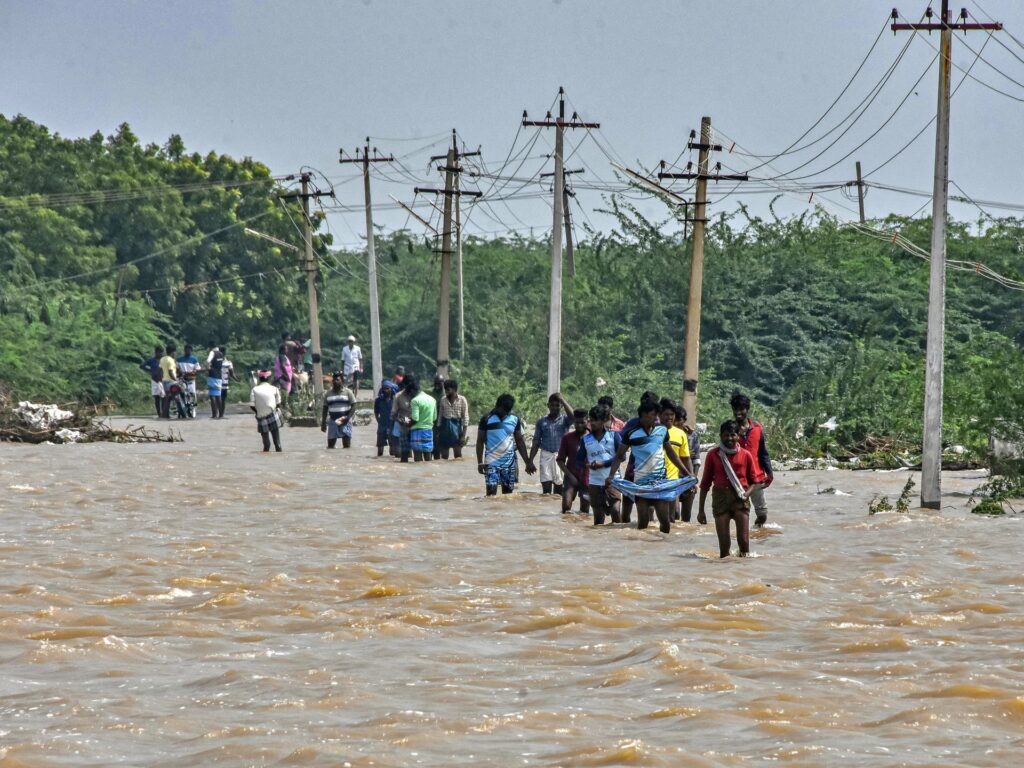
NewsFeed Major flooding has hit India’s southern state of Tamil Nadu, leaving hundreds of people stranded and forcing thousands from their homes. Media reports say at least 10 people have died. Published On 20 Dec 202320 Dec 2023 Adblock test (Why?)
’Everything is dead’: How record drought is wreaking havoc on the Amazon

Curralinho, Brazil – For communities on the Brazilian island of Marajó, the ebb and flow of the Canaticu River marks the turn of the seasons. During the rainy months, the river is several metres deep, lapping below the wooden houses that rise from its shores on stilts. Residents rely on its water for drinking, cooking and washing. But when summer hits, the river dwindles to a stream. Still, its flow is normally sufficient for locals to meet their daily needs. This year, however, a severe drought has engulfed large swaths of Brazil’s Amazon rainforest. All that remains of the Canaticu River in some areas is a dark brown trickle, laden with bacteria and almost completely dried up. “Now we cannot use it for anything. It wasn’t like this before,” said 36-year-old Elizete Lima Nascimento, who has lived in one of the riverside communities, Serafina, for the past decade. The dry conditions have sparked a crisis in towns like Serafina — one that could transform their way of life for generations to come. Inhabitants in the community of Serafina use river water for washing and even drinking [Apolline Guillerot-Malick/Al Jazeera] Hundreds of thousands of people rely on the Amazon’s rivers and streams for food, transportation and income. But the historically low water levels have forced residents to reimagine their relationship to the environment. One tributary, the Rio Negro, plunged to levels not seen in 121 years. “We are completely dependent on nature,” Maria Vanessa Tavares de Souza, a 36-year-old teacher who lives in Serafina, said during a community meeting to discuss the problems caused by the drought. “Now that climate change has unbalanced everything, it’s going to be hard for us to survive here.” Already, one of the residents’ primary food sources is threatened: fish. Some have been left stranded as the river recedes — and in the water that remains, the corpses of other fish float to the surface. Abnormally warm temperatures are suspected in the mass die-off. Residents fear the dead fish could pollute the water as they decompose. Nine heatwaves have hit Brazil since the beginning of the year, with the heat index in Rio de Janeiro soaring to almost 60 degrees Celsius (140 degrees Fahrenheit) in November. Worldwide, 2023 is expected to be the hottest year on record. In Serafina’s community hall, residents gather to discuss problems posed by the drought [Apolline Guillerot-Malick/Al Jazeera] Scientists have blamed climate change, driven by the burning of fossil fuels, for the rising temperatures and extreme weather conditions. This year’s El Niño — a climate phenomenon that warms surface waters in the equatorial Pacific region — has been particularly intense, contributing to the Amazon’s drought. But the trend towards drier weather has been a long time coming. A string of harsh summers already led many Serafina residents to dig wells in their backyards to access subterranean water, instead of relying on the river. Others have called for the installation of a drinking water distribution system, a major infrastructure project that would consist of pipes and storage facilities. They argue the wells are unreliable and cannot stand in for a long-term solution. Still, well owners like Nascimento say their homemade water systems have been pivotal to withstanding the drought. “The well is extremely important. We use its water for everything — for drinking, cooking, making açai, washing both ourselves and our clothes,” she said, as she lifted the wooden planks in her garden to reveal the six-metre-deep hole. Not every family has a well, though, so residents that do own one share their water supplies with neighbours. Paula Lima, 43, brings home more than 50 litres (13 gallons) a day from a well at her cousin’s house on the other side of the community, just to meet her family’s needs. The trips have contributed to Lima’s back problems. But she has no choice. Consuming the river’s water when its level is so low triggers vomiting and diarrhoea — if not worse. Many households in Serafina now use wells for drinking water, particularly when the river water becomes too muddy to be consumed [Apolline Guillerot-Malick/Al Jazeera] Eleniuda Costa Paiva de Souza, a 30-year-old nurse, recently had to take her two-year-old daughter to the nearest hospital — a trip that required trekking across the jungle, then travelling five more hours by boat. Her child had become ill after ingesting the river’s sludge. De Souza said she intends to leave the community shortly. “Life here is only going to get worse. In town, things will be easier,” she explained. Isolation is part of life for riverine communities: Serafina hugs a serpentine bend in the river, surrounded by rainforest as far as the eye can see. But the weak flow of the Canaticu River has made Serafina even more secluded. To stock up on supplies, locals normally use the river to travel to nearby towns. But with the water so shallow, residents are forced to manoeuvre their small wooden boats at a snail’s pace to avoid logs and exposed roots. Many worry that, if a medical emergency were to occur, it would take too long to reach the closest town. Downriver, at the mouth of the Canaticu, the municipality of Curralinho has faced its own struggles amid the severe drought. Located on the southern coast of Marajó, the town and its population of nearly 34,000 saw fires tear through thousands of hectares of nearby rainforest in November. Curralinho was not alone in contending with raging flames. In the first two weeks of October, more than 2,900 blazes erupted in the state of Amazonas, a record number. The smoke was so thick that it choked the region’s biggest city, Manaus, complicating navigation and the delivery of essential supplies. Criminal enterprises have also taken advantage of the dry conditions to clear the rainforest with fire, as part of land-grab schemes. In the countryside of Curralinho, firefighters patrol a former açai plantation destroyed by fires [Apolline Guillerot-Malick/Al Jazeera] But in Curralinho, small-scale farmers were largely responsible for the
Congress begins ‘UP Jodo Yatra’ from Saharanpur, gears up for Lok Sabha polls 2024

The Congress also aims to connect the people of the state during this yatra, which assumes significance as it comes after the grand old party’s recent electoral defeat in three states.
Profit By PPC Shows How To Find Right SEO Service Provider For Your Startup Business

Profit by PPC can complement your efforts by providing immediate results and targeting specific audiences effectively.