

Indian Air Force successfully testfires ‘SAMAR’ air defence missile system at Exercise Astrashakti

The missile system participated for the first time in the exercise to test its surface-to-air weapon systems and carry out their operational field trials.
PM Modi inaugurates new terminal building of Surat airport

Surat Airport will not only become a gateway for international travellers but also facilitate seamless export-import operations for the thriving diamond and textile industries.
Covid subvariant JN.1 in Kerala: Union Health Ministry initiates preparedness measures

The reported symptoms include fever, runny nose, sore throat, headache, and, in some cases, mild gastrointestinal symptoms.
Parliament security breach: Police recover burnt phone parts of accused in Rajasthan

Delhi police sources revealed earlier that Lalit Jha, the accused in Parliament security breach incident, destroyed five mobile phones before arriving in Delhi, and was misleading the investigating team.
Delhi shivers as minimum temperature hits 7 degrees, AQI continues to be ‘very poor’

The temperature in the national capital was recorded at 7 degrees Celsius at 5:30 am.
Smell that: The rise of India’s ittar industry

Kannauj, India — Gopal Kumar pulled apart the bulb of a flower and pointed to where the roots of the petals had turned a little black inside. This is when the marigolds smell the best and are ready for picking, he said. He picked a pink rose next and sniffed. “You can only find this smell in Kannauj,” he said. Kumar has been growing flowers outside Kannauj – a sleepy town nestled on the fertile plains of the Ganges in northern India – for 50 years. His flowers are used in the making of ittars, natural perfumes produced by distilling flowers, herbs, plants or spices over a base oil, which takes on the scent of the raw material. Once a sophisticated kingdom in northern India, Kannauj is famed for its production of ittars using an ancient method called deg-bhakpa. This is a slow, laborious process of hydrodistillation devoid of all modern equipment that has survived in hundreds of small-scale distilleries across Kannauj and in surrounding cities. Despite a long heritage of fragrance and scent, economic liberalisation of the late 1980s led to a period of decline in India’s ittar industry as cheap, alcohol-based perfumes were introduced from the West. Until the 1990s, there were 700 distilleries in Kannauj, but their numbers dropped to 150 to 200 by the mid-2000s. Trying to compete on price, some manufacturers started using alcohol as the base rather than more expensive sandalwood oil, degrading the quality and purity of the products. Post-liberalisation, rather than selling directly to consumers, the vast majority of ittars and essential oils produced in India were exported to other businesses – either as an input into perfumery and cosmetic industries in the West or to the tobacco industry. Rosewater is an ingredient in chewing tobacco. But in the past few years, several young, predominantly female Indian entrepreneurs have spotted a gap in the market between these indigenous artisanal skills and India’s thriving consumer culture, and a new set of homegrown brands has emerged. A new wave of fragrance Boond Fragrances is one such company, established in May 2021 during the pandemic by a sister and brother, Krati and Varun Tandon, to help preserve and raise awareness of the perfume-making traditions of Kannuaj and to support local artisans. “Our father was a perfume trader and at-home perfumer,” Krati Tandon explained at her family home in Kannuaj. ”We grew up around perfumers and perfumeries in Kannauj, and you really absorb what’s happening. But we also saw over the years how some perfumeries started shutting down, and some are worried about their futures.” The duo wanted to make ittars accessible. “The idea was really for us to bring it to customers – people like us who, if we knew something like this existed, would appreciate it,” Krati said. Divrina Dhingra, author of The Perfume Project: Journeys Through Indian Fragrance, agrees. “Ittars have a marketing problem actually. In many ways they are stuck in the past,” she said. “But it is also an awareness problem. I don’t know if many people know this industry still exists, the way in which it exists, what it does, what is actually available.” Gopal Kumar grows flowers in Kannauj that are used to make ittars [Eileen McDougall/Al Jazeera] The initial response to Boond, Krati said, has been overwhelming with more than 10,000 orders dispatched in the 12 months up to October, a sizeable number for the young business. Sales rise in winter, the Indian wedding season and the time when Christmas orders come from abroad. The company said it expects sales to double in the next two years but declined to share its revenue numbers. “Recently, people have again started realising what synthetic perfume is and what real perfume is,” Krati said. “Particularly post-COVID, there has been a transformation back towards the real thing.” As per market research firm Technavio, the Indian perfumery industry will increase by about 15 percent compounded annually for the next five years. While market trends are currently dominated by trade between businesses, the number of Indian firms selling their own fragrances directly to consumers is increasing. Indian beauty writer Aparna Gupta said there’s been “a discernible shift, a renaissance if you will, in the domestic market’s attitude towards these traditional fragrances”, which are predominantly marketed on Instagram, and demand for them has gained “considerable momentum”. She credited brands like Boond that are concentrating on traditional, time-tested ittar scents for playing “a pivotal role” in this resurgence. “They are not just selling ittars; they are reintroducing a forgotten art form to a generation that is eager to reconnect with its heritage,” she said. Then there are other new brands like Kastoor and Naso Profumi that are targeting “younger consumers by blending traditional elements with modern nuances” – for instance, Kastoor’s Mahal with its unique blend of patchouli and lotus, Gupta said. A tradition of scent The flowers used used to make ittar are put in water and sealed inside a large copper vat called a deg [Eileen McDougall/Al Jazeera] It is unclear exactly how long ittars and essential oils – made when vapours of ingredients are extracted but no base oil is used – have been produced through hydrodistillation in India. However, recently distillation stills excavated from the cities of the Indus Valley indicate a culture of scent in some form dating back to about 3,000 BC. Around Kannuaj, many locals attribute the discovery of ittars to the Mughal queen Nur Jahan, who lived in the 16th and 17th centuries CE. However, Sanskrit texts indicate that the area was already a centre of fragrance before Mughal times. Historians believe the practice was invigorated with new ingredients and distillation methods further developed by the Mughal court. Production is highly seasonal, and February in Kannuaj is the season of Damask rose. The warming winter sun was high in the sky by the time a motorbike arrived at the distillery of Prem and Company, a jute sack tied to its rear. Dinesh, the distiller, immediately weighed, inspected and
PM Modi to inaugurate Varanasi’s 2nd Vande Bharat Express, Tamil Sangamam during 2-day visit

PM Narendra Modi is all set to embark on a two days trip to Surat, Gujarat and Varanasi. UP to flag off various development projects. Know details here.
Analysis: Why Israel will continue its deadly push into Gaza city centres
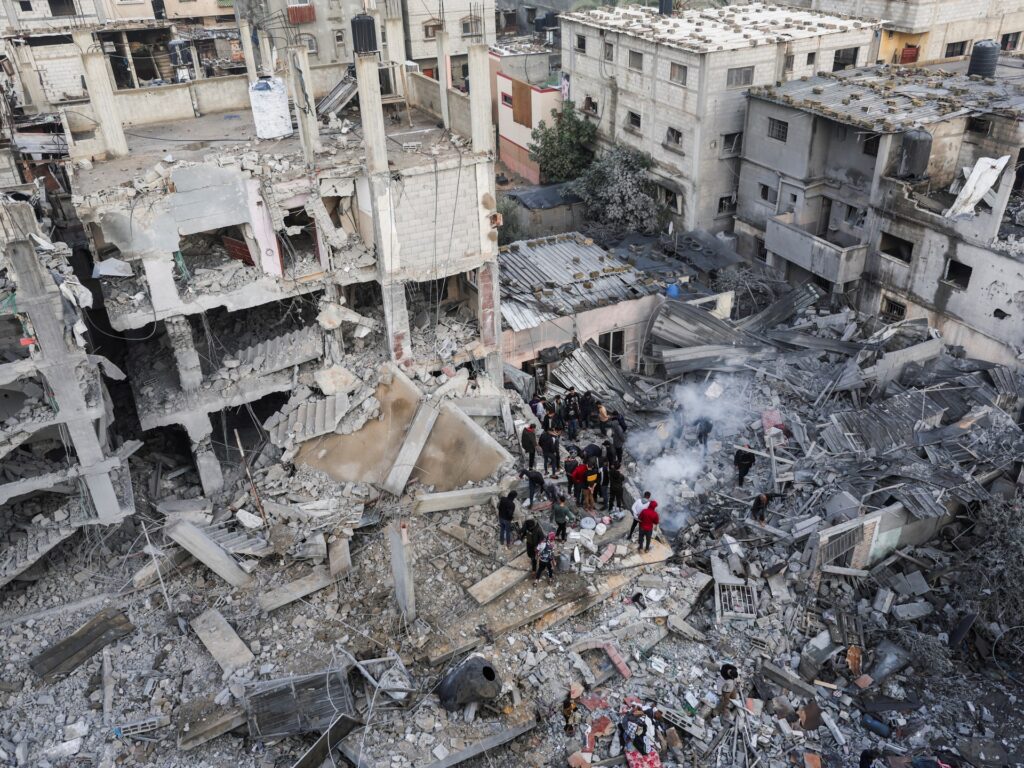
Dramatic news reports, claims and videos have emerged from both sides involved in the Gaza fighting throughout the past week. The week started with the Israeli army releasing several videos of Palestinians stripped to their underwear being marched through urban ruins. Israel’s PR machine disregarded the Palestinian outcry that followed. Israel staunchly asserted that the men were Hamas fighters and that their alleged mass surrenders signified that the end of the Palestinian group was close, even as many Palestinians and independent observers insisted that the men were civilians who had been treated against the laws of war by being publicly humiliated. For its part, Hamas stuck to its usual practice of pushing its cause through video releases – skilfully edited to enhance the desired effects – purporting to confirm its constant and numerous successes against Israeli invaders, mostly showing hits scored against armoured vehicles. Then came the news that stunned Israel and put a big question mark on its official line of Hamas being on the verge of collapse. First, nine soldiers were killed in a single operation in the Shujaiya neighbourhood of Gaza City on Tuesday. That shock was followed by another one on Friday, with the Israeli army admitting that it killed three Israeli captives, having mistaken them for enemies – even though they held white flags. So what is really happening on the ground in Gaza? Nothing we did not predict weeks ago: The war has entered a difficult, unpredictable and bloody phase of full-scale urban warfare where gains are small and slow, and losses can be huge. Combat in narrow and cramped streets of old cities is known to be one of the most difficult ways to fight a war. Classic military theory calls for defended cities to be surrounded and blockaded by units just strong enough to prevent the defenders from breaking out, while the main force continues advancing and taking territory. But the fight in Gaza is not about conquering fields and beaches – Israel’s proclaimed goal is to destroy Hamas. To do that, the first step is to control the ground where the enemy operates: the cities. Many aspects of warcraft are as ancient as the human urge to fight wars: attack and conquer versus defend and remain free. But the ways of achieving those goals have changed with technology and, at certain times, the means available to soldiers favour one aspect over another. In the old days, cities needed strong walls to defend themselves, but in the last 100 years, weapons have advanced at a rapid rate, causing a change in tactics. Successful resistance against enemy attacks no longer depends on huge, expensive static bastions. Nowadays, small but potent man-portable weapons whose destructive power is hugely disproportionate to their size, such as anti-tank rocket launchers, grenade throwers, small mortars, assault rifles and many others, allow the defenders to turn each house and every street into a formidable defensive position. From the 1940s to this day, almost all attempts to conquer cities held by determined defenders have ended in failure. The few victories attackers achieved were so costly that they often ended the offensive capabilities of those armies pushing into cities. In their own ways, Stalingrad, Warsaw, Berlin, Dien Bien Phu, Vukovar, Sarajevo, Grozny and Fallujah – some successfully defended, others eventually succumbing to attacks – all confirmed the military wisdom that urban warfare should be avoided whenever possible. Israel could not avoid urban warfare in Gaza. To have a chance of destroying Hamas, it has to deny it its operating ground, the three biggest urban agglomerations in the strip: Gaza City, Khan Younis and Rafah. In the first phase of its ground operation, the Israeli army advanced across open ground, through farmland and villages that do not lend themselves to mounting a major defence, only harassing attacks to slow down and dent the invaders. Hamas acted in classic guerrilla fashion, launching some hit-and-run attacks without wasting any effort to stop the Israelis then and there. The second phase started with Israeli forces reaching the suburbs, first of Gaza City and then, after the temporary ceasefire expired, of Khan Younis. Treading slowly and carefully in expectation of a concentrated Hamas response, the Israeli military completed the encirclement of those two urban areas. It would be naive to assume that Israel’s generals hoped that by isolating the two biggest built-up areas in the Gaza Strip, they would seriously impair the ability of the Qassam Brigades, Hamas’s armed wing, to fight back. In reality, the encirclement of the two city centres is not a classic one where troops within the blockade cannot be reinforced nor receive any supplies. Hamas still has an unknown but probably major part of its tunnel network intact and can move in and out. They have some difficulties in doing so but Hamas fighters are not locked in. Aware of the menace that tunnels present but also of the grave hazard of taking the fight into them, Israel has tried several approaches. It has destroyed as many tunnel entrances as it has found, mostly in the areas under its control, but many others that remain keep the danger acute. After several attempts to send troops underground that ended in disaster, with troops falling casualty to Hamas booby traps, the high command abandoned that approach. It then reportedly mulled the idea of filling tunnels with seawater, claiming that the test-flooding was successful but it has not yet decided to mount a full-scale deluge operation. This week’s Israeli actions on the ground strongly suggest that the Israeli army leadership realises that the only way towards achieving its proclaimed goal of annihilating Hamas is by taking, holding and controlling the ground throughout the currently surrounded centres of Gaza City and Khan Younis. That in itself would not guarantee victory but could create conditions to squeeze Hamas fighters into tunnels, after which Israeli forces could block and destroy all entrances. Flushing Hamas out would probably take weeks of heavy urban warfare with many more
Senate sex tape: Capitol Hill hearing room where leaked video was recorded home to several historic events

Several high-profile hearings have taken place in the Senate hearing room where an alleged congressional staffer reportedly filmed a sex tape. The U.S. Capitol Police told Fox News they were aware of an amateur pornographic video published by the Daily Caller on Friday, which shows someone identified as a congressional staffer, engaging in sex with another man in Hart Senate Office Building room 216. The Daily Caller report states the video was leaked after being “shared in a private group for gay men in politics.” The men’s identities haven’t been confirmed. Social media posts claimed the alleged staffer worked for Sen. Ben Cardin’s office. Hours after the story broke, Cardin’s office announced that a legislative aide had been dismissed but did not address reports linking a member of his staff to the sex tape. NSFW: CAPITOL HILL ROCKED BY SEX TAPE SCANDAL FEATURING FAMOUS SENATE HEARING ROOM “We will have no further comment on this personnel matter,” his office wrote in a statement. According to the Daily Caller, the explicit video was recorded in Hart 216. Here’s a look at some of the high-profile events that have taken place in that same hearing room: SENATE SEX TAPE: CONGRESSIONAL STAFFER ALLEGEDLY SEEN IN LEAKED VIDEO COULD FACE CHARGES, LEGAL EXPERT SAYS Now-Supreme Court Associate Justice Bret Kavanaugh’s confirmation hearings were held in Hart 216, which took place from September 4-7, 2018. Now-Supreme Court Associate Justice Samuel Alito’s confirmation hearings took place in Hart 216 from January 9-13, 2006. Now-Supreme Court Associate Justice Sonia Sotomayor’s confirmation hearings were held from July 13-16, 2009 in Hart 216. Now-Supreme Court Associate Justice Amy Coney Barrett’s confirmation hearings took place in Hart 216 from Oct 12-15, 2020. Now-Chief Justice John Roberts’ confirmation hearings were held in Hart 216 from September 12-15, 2005. Now-Supreme Court Associate Justice Neil Gorsuch’s confirmation hearings were held from March 20-23, 2017 in Hart 216. Now-Supreme Court Associate Justice Ketanji Brown Jackson’s confirmation hearings were held in Hart 216 from March 21 to 24, 2022. Now-Supreme Court Associate Justice Elena Kagan’s confirmation hearings took place in Hart 216 from June 28-July 1, 2010. SENATE DEMOCRATS AT ODDS WITH SCHUMER OVER BORDER TALKS: ‘TERRIBLY MISTAKEN’ The National Commission on Terrorist Attacks Upon the United States, known as the 9/11 Commission, held several hearings in Hart 216. Former FBI Director James Comey appeared in a hearing inside Hart 216 on June 8, 2017, to discuss his interactions with former President Trump. Former Secretary of State John Kerry’s confirmation hearings were held in Hart 216 on January 24, 2013.
Confederate Memorial at Arlington National Cemetery to be removed despite GOP opposition
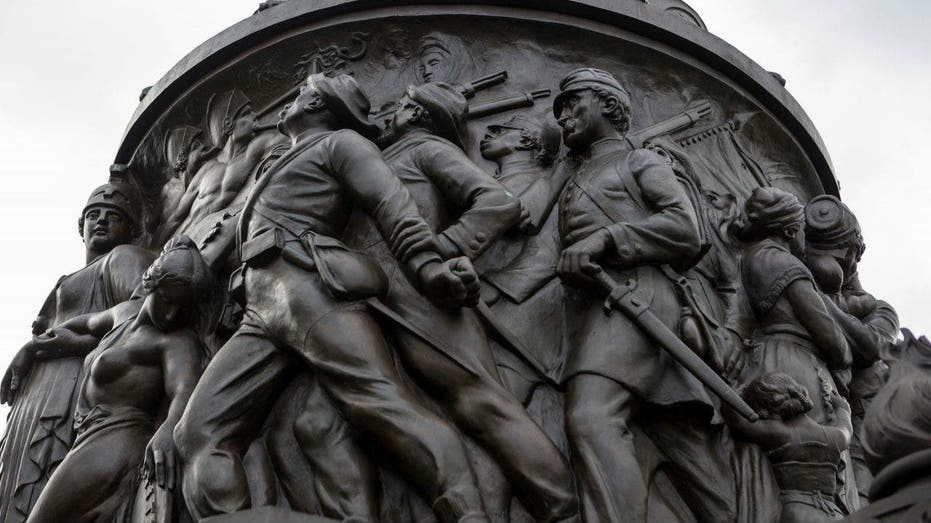
Despite efforts from a group of Republican lawmakers, a Confederate statue in the Arlington National Cemetery will be removed in the coming days. The Reconciliation Monument, known as the Confederate Statue, is part of the push to remove military installations named after the Confederacy in the wake of the summer 2020 Black Lives Matter protests. According to a press release from the national cemetery, the statue will be removed from the cemetery by Dec. 22. The move to remove the statue is in compliance with the Congressional mandate to remove all Confederate memorials by Jan. 1, 2024. GOP LAWMAKERS DEMAND PENTAGON STOP REMOVAL OF CONFEDERATE MEMORIAL IN ARLINGTON NATIONAL CEMETERY The Congressional mandate, passed in 2020, declared that the Department of Defense must remove all “names, symbols, displays, monuments, and paraphernalia that honor or commemorate the Confederate States of America” by Jan. 1, 2024. An Arlington National Cemetery spokesperson confirmed to Fox News Digital that safety fencing has been installed around the Confederate Memorial as preparation begins to deconstruct the memorial, which was erected in 1914. While the work occurs, the surrounding landscape, graves, and headstones will be protected, the cemetery said. The deconstruction of the memorial comes after a group of GOP lawmakers, led by Rep. Andrew Clyde, R-Ga., wrote a letter to Secretary Austin and demanded that they keep the Confederate Memorial in place until the end of the fiscal year 2024 appropriations process. US MILITARY CARRIES OUT AIRSTRIKES ON FACILITIES IN SYRIA OPERATED BY IRANIAN-BACKED FORCES In a letter to Secretary Austin, Clyde argued that the memorial was dedicated to American unity following the Civil War rather than honoring the Confederacy, and that it would desecrate the graves of Confederate troops buried there. “Despite bipartisan support for this monument, the Naming Commission, established by the Fiscal Year 2021 National Defense Authorization Act, clearly overstepped its legislative authority when it recommended that the Department of the Army remove the Reconciliation Monument from Arlington National Cemetery,” the lawmakers wrote. “[T]he Reconciliation Monument does not honor nor commemorate the Confederacy; the memorial commemorates reconciliation and national unity. Clyde, a Navy combat veteran, was joined on the letter by 43 other House Republicans. Gov. Glenn Youngkin said that he also disagrees with the Biden administration’s decision to remove the statue and the grave of Moses Ezekiel, the renowned sculptor of the memorial. “The governor formally asked Secretary Austin to ensure that the grave of Moses Ezekiel and the accompanying memorial atop his grave remain in its revered location at the Arlington National Cemetery,” Gov. Youngkin’s spokeswoman Macaulay Porter said in a statement to Fox News Digital. “The governor is disappointed that the Biden administration still sought to remove the memorial but believes that the Newmarket battlefield state park in the Shenandoah Valley will provide a fitting backdrop to Ezekiel’s legacy as a legendary sculptor and Virginian even though he disagrees with the Biden administration’s decision to remove it,” Porter said. Rep. Andrew Clyde did not immediately respond to Fox News Digital’s request for comment. Fox News’ Elizabeth Elkind contributed to this report.