

Federal government lagging behind on key AI requirements, watchdog finds

A number of federal agencies are lagging behind on deadlines and efforts to better their management of artificial intelligence, as the technology’s footprint is expanding in the federal government. “Although certain federal agencies have taken initial steps to comply with guidance and statutory requirements, key efforts to strengthen management of AI have missed deadlines and are not yet completed,” the Government Accountability Office (GAO) report issued this week says. The report makes dozens of recommendations to 19 agencies to take additional steps to fully implement requirements on AI that are federally mandated. Those recommendations include the development of plans across agencies on the application of the technology, the use of inventories to include required information and the issuing of guidance on AI usage. BIPARTISAN LAWMAKERS EYE AI SAFEGUARDS FOR US AGRICULTURE INDUSTRY The report found that 20 of the 23 agencies reported about 1,200 current or planned challenges or opportunities that could be solved or aided by the use of AI. Examples include analyzing cameras at the border and analyzing images taken by drones. There are over 200 instances in which AI is already being used. NASA, as well as the Departments of Commerce, Energy, Health and Human Services and State were those with the highest reported AI use cases in FY 2022. The report found that five agencies had provided comprehensive information for their use cases, but the other 15 had either incomplete or inaccurate data – including lacking required data elements, such as life cycle of the artificial intelligence, or whether the AI case was releasable. There were other instances of AI uses that were later determined not to be AI after all. “Without accurate inventories, the government’s management of its use of AI will be hindered by incomplete and inaccurate data,” the report said. The report comes as the federal government and Congress look to grapple with the implications, advantages and threats posed by the technology. WHITE HOUSE UNVEILS AI EXECUTIVE ORDER, REQUIRING COMPANIES TO SHARE NATIONAL SECURITY RISKS WITH FEDS There has been a flurry of legislation in Congress in the efforts to regulate AI, as well as a number of bipartisan briefings on the matter with key tech leaders and experts. A bill introduced by Rep. Randy Feenstra, R-Iowa, this week would enforce standards for AI programs in the agricultural sector to protect food, fuel and other necessities. Meanwhile, the State Deptartment announced last month that 45 foreign governments have now partnered with the U.S. to launch the implementation of a declaration on “responsible military use” of AI. Fox News’ Liz Elkind contributed to this report.
Israeli captives mistakenly killed in Gaza held white flag, official says
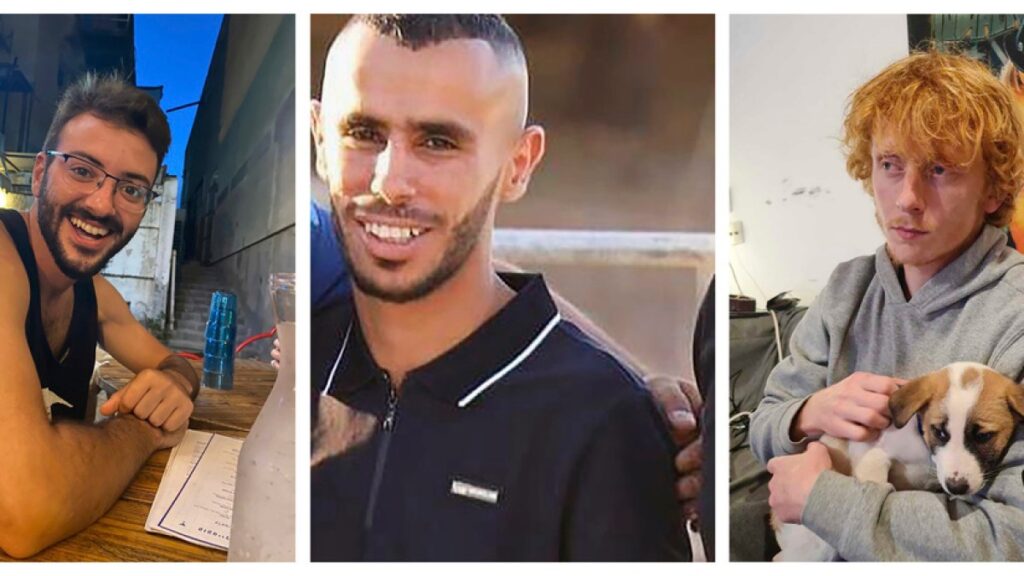
Rules of engagement breached in incident that resulted in death of three hostages, all in their 20s. Three Israeli hostages killed mistakenly in Gaza by Israeli forces were shirtless and one of them was holding up a white flag, according to an initial inquiry into the incident, a military official has said. The incident took place in an area of intense combat where Hamas fighters operate in civilian attire and use deception tactics, the Israeli official said on Saturday. A soldier saw the hostages emerging tens of metres from Israeli forces in the area of Shujayea, the official added. “They’re all without shirts and they have a stick with a white cloth on it. The soldier feels threatened and opens fire. He declares that they’re terrorists, they [forces] open fire, two are killed immediately,” said the military official. The third captive was wounded and retreated into a nearby building where he called for help in Hebrew. “Immediately the battalion commander issues a ceasefire order, but again there’s another burst of fire towards the third figure and he also dies,” said the official. “This was against our rules of engagement.” Mourning and anger The military on Friday identified the three as Yotam Haim, 28, and Alon Shamriz, 26, abducted from Kibbutz Kfar Aza, and Samer Talalka, 25, abducted from nearby Kibbutz Nir Am, by Hamas. About 300 people turned out to mourn Talalka at his funeral on Saturday in his hometown of Hura, in southern Israel, The Associated Press news agency reported. “We had so many hopes, expectations, that he would come back to us,” his cousin, Alaa Talalka told Israel’s public broadcaster Kan. “We’re not going to start pointing fingers, who is guilty and who is not. It is just not the time,” Talalka said. “The families are thinking only of how to bring the hostages back alive. This is the time to ask for the war to end.” They were among about 240 people taken captive during Hamas’s October 7 attacks in Israel, which killed about 1,200 people, mostly civilians, according to Israeli figures. Promising to destroy Hamas and bring back the hostages, Israel launched a massive military offensive against the Palestinian group that has left much of the Gaza Strip in ruins. The territory’s Hamas-run government says the war has killed at least 18,800 people, mostly women and children. Israeli Prime Minister Benjamin Netanyahu described the killing of hostages as an “unbearable tragedy”. Hundreds of people are expected to gather on Saturday in Tel Aviv to call on Netanyahu’s government to secure the release of 129 hostages still held in Gaza. Several returned home during a pause in hostilities which saw the release of captives in exchange for Palestinian prisoners held in Israel jails. Adblock test (Why?)
The use of explosive weapons in cities must stop
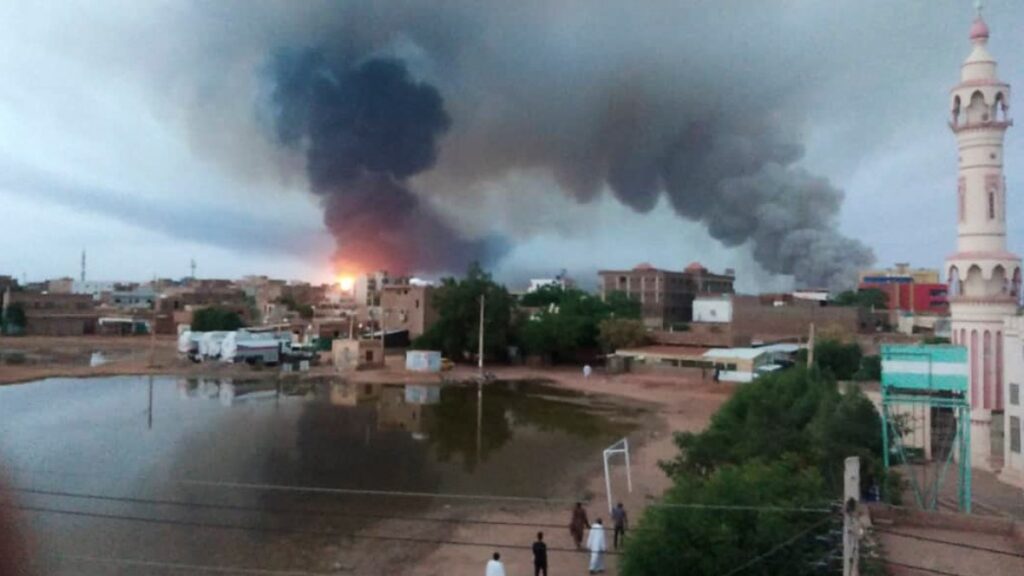
On April 15, we awoke to news that war had broken out in Sudan. From our screens, my family, our Sudanese community, and I followed media outlets and WhatsApp groups, hungry for information on what was happening overseas. We watched from afar as fighting between the Sudanese Armed Forces and the Rapid Support Forces spilled into Khartoum, causing chaos, and transforming the once vibrant and familiar capital into a trail of destruction. We saw videos circulated around social media of frightened passengers cowering on the floor of the Khartoum International Airport as it came under heavy bombardment. We saw doctors wheeling their patients out of Al Shaheeda Salma hospital on stretchers and beds after it was bombed. As we watched the dissolution happening on our screens, we ran to our phones to check up on family and loved ones back home. Eight months later we are still glued to our phones as Khartoum and other parts of Sudan continue to suffer under the bombardment. As of December, the fighting had killed more than 12,000 people and displaced 6.7 million, in what the United Nations humanitarian chief Martin Griffiths has called “one of the worst humanitarian nightmares in recent history”. I have watched in agony as cities have transformed into warzones and my mental image of “home” has crumbled under the barrage of rockets, artillery, and bombs. Like many other Sudanese families, we have had to mourn the deaths of loved ones from an imposed distance, including most recently my grandfather, who had lost access to health care due to the war. From the onset of the conflict, explosive weapons have destroyed homes, including my own family’s home, entire neighbourhoods, and infrastructure, such as hospitals, schools, and water treatment plants. In early November, the monumental Shambat Bridge connecting Omdurman and Khartoum Bahri was bombed and destroyed. Truces that should have allowed civilians to evacuate cities under bombardment have collapsed or ended too quickly, effectively pinning civilians to their homes in precarious situations due to bombardment. Explosive weapons encompass a range of surface-fired and air-dropped weapons and other munitions, including aerial bombs, artillery and mortar projectiles, and rockets and missiles. These weapons frequently are too inaccurate, or their blast radius is too large for them to be used in populated areas without causing unlawfully indiscriminate harm. The situation in Sudan represents just one example of what happens when hostilities occur in cities. We also have Gaza, Syria, and Ukraine where we see the use of explosive weapons make cities unliveable. In Syria, recent shelling and air raids in Idlib and Aleppo have displaced more than 120,000 people, while in Ukraine, Russian forces’ air raids, rocket attacks and other munitions have hit vital ports and grain facilities and damaged schools and hospitals among other civilian infrastructure. The Israeli army’s widespread use of explosive weapons has turned Gaza, as the UN Secretary-General Antonio Guterres put it, into a “graveyard for children”. Large parts of once densely populated neighbourhoods have been completely levelled. Palestinian armed groups have also fired thousands of rockets towards Israeli population centres. Explosive weapons not only kill and injure civilians, but they also cause massive damage to power lines, water supplies and other essential infrastructure. This damage can result in so-called reverberating, or long-lasting, effects that can cause harm for decades to come. Additionally, unexploded remnants of war present a threat to civilians during and after hostilities and prevent the safe return of refugees and displaced people. While this landscape of despair and ruin may seem inevitable, a product of 21st-century warfare, there is potential for action on a global scale to reduce the use of explosive weapons. Last year, 83 countries adopted the Political Declaration on the Use of Explosive Weapons in Populated Areas, which for the first time officially recognises the need to address this issue urgently and directly. The declaration commits governments and militaries to adopt policies and rules of engagement that better protect civilians from the use of explosive weapons in populated areas. It also commits them to develop new norms and standards against bombing and shelling in populated areas. Many countries whose civilians have suffered from explosive weapons in armed conflict endorsed the declaration, such as Cambodia, Central African Republic, and Palestine. It was also signed by producers and exporters of explosive weapons including France, South Korea, Turkey, and the United States. Sudan has recognised and acknowledged the harm caused by explosive weapons in populated areas, but it has yet to commit to action on the declaration in a national capacity. While the declaration is not legally binding, it is a major step in efforts to curb human suffering during armed conflict. Effective implementation and a humanitarian interpretation of the declaration is crucial and imperative to safeguarding civilians. More states need to sign the declaration and stand in solidarity with families like mine, the Sudanese people, and all those caught under the barrage of war. We should seize this moment and work to uphold the tenets of the declaration to diminish the devastating toll of explosive weapons on civilians. The views expressed in this article are the author’s own and do not necessarily reflect Al Jazeera’s editorial stance. Adblock test (Why?)
British teen ‘abducted’ by mother years ago to be repatriated from France
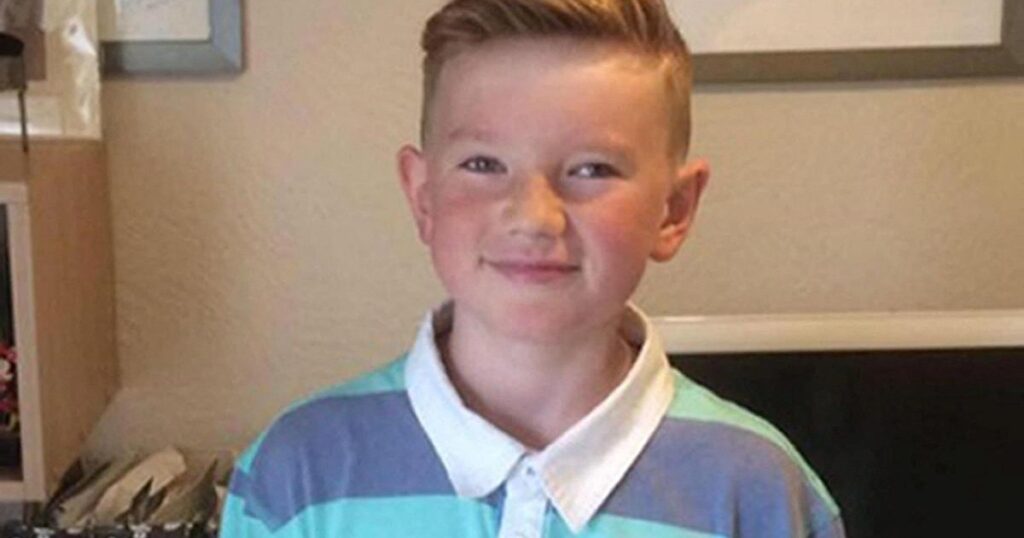
Alex Batty, who went missing aged 11 during a holiday in Spain, has been found in France after six years of nomadism. A British teenager who went missing six years ago and was found this week in France is set to be reunited with his family in the United Kingdom. Alex Batty, who was “abducted” by his mother at the age of 11, will be repatriated on Saturday, a prosecutor in Toulouse told the AFP news agency. He will take off for London from the southern French city “accompanied by several British police officers”, said magistrate Antoine Leroy. Batty will be returned to his maternal grandmother, with whom the British justice system entrusted his custody before he disappeared in 2017 during a holiday with his mother and grandfather in Malaga, Spain. Toulouse deputy prosecutor Antoine Leroy said on Friday the youth had spent the past two years in different areas of southern France, living in “spiritual communities” with his mother, never staying more than several months in the same place. The grandfather died about six months ago, said Leroy, adding that the boy’s mother might currently be in Finland. The teen was found in the middle of the night by a delivery driver after he had escaped and had been along a road for four days, Leroy said at a news conference on Friday evening. Greater Manchester Police GMP earlier said they were working with French authorities to bring Batty home to his grandmother. France’s BFM TV has reported a search operation was under way to find Batty’s mother. ‘Nomadic life’ Six years ago, Batty’s mother and grandfather took him on what was meant to be a two-week family holiday in Spain. Instead, it turned out to be a six-year odyssey through Morocco, Spain and southwest France, living an off-the-grid life. Now 17 years old, Batty told French investigators that he, his mother and her father had moved from house to house, carrying their own solar panels, growing their own food, living with other families, meditating and contemplating reincarnation and other esoteric subjects. “It was a nomadic life,” police officer Lea Chambonnière said at the news conference in Toulouse. “The only constants, the only things they carried with them, were the solar panels and their vegetable plants.” Batty reappeared on Wednesday, when a delivery driver found him walking alone on a remote French road and delivered him to the French police. “When his mother indicated that she intended to leave for Finland with him, this young man understood that this journey had to stop,” Leroy, the prosecutor, said. “He was never locked up,” he added. “But he was always obliged to live in these conditions.” I cannot begin to express my relief and happiness that Alex has been found safe and well,” the teen’s grandmother, Susan Caruana, said in a statement released by British police. She said they spoke by video call and “it was so good to hear his voice and see his face again”. “I can’t wait to see him.” Adblock test (Why?)
‘They are trying to shield perpetrators of Parliament security breach’: BJP attacks Congress, INDIA bloc

Addressing a press conference at the BJP headquarters here, the party’s national spokesperson Shehzad Poonawalla alleged that the opposition ‘INDIA’ bloc parties are standing by the perpetrators of the security breach as their links with them were emerging.
Will oil prices rise after Red Sea shipping curbs amid Houthi attacks?

Hijackings, missile strikes and drone assaults on ships by Yemen’s Houthi rebels have forced AP Moller-Maersk, a Danish shipping and logistics giant, and Hapag-Lloyd, a German shipping and container transportation company, to pause shipments through the Red Sea. Their decisions, announced on Friday, are a sign that major corporations are taking the security situation in the Red Sea increasingly seriously. But the consequences might also be felt by the world’s oil markets and the cost of energy that consumers need to bear – though the extent of any disruption might depend on how major global players respond to the looming crisis, said experts. Maersk said in a statement that its decision stemmed from the company’s concerns about the “highly escalated security situation in the southern Red Sea and Gulf of Aden” over the past few weeks. Recent missile and drone attacks on commercial vessels represent a “significant threat to the safety and security of seafarers,” it said. Maersk and Hapag-Lloyd together operate almost a quarter of the world’s shipping fleet. The growing insecurity in the Red Sea is a result of Israel’s war on Gaza which began on October 7. Since Israel’s bombardment of the Palestinian enclave began 10 weeks ago, the Houthis have attacked at least eight ships in the Bab el-Mandeb, the strait separating Eritrea and Djibouti on one side from the Arabian Peninsula on the other. Only 29km (18 miles) wide at its narrowest point, the Bab el-Mandeb is a vital route for international trade –10 percent of the world’s seaborne crude flows through this strait – meaning any disruptions become a global problem. The Houthis have been targeting vessels which are at least partly owned by Israelis or by anyone shipping cargo to Israel via the Red Sea. In November, the group said it had taken over the Galaxy Leader cargo ship, which it claimed was Israeli owned. But Israel described it as a British-owned and Japanese-operated cargo vessel with no Israeli nationals on board. That ship was headed for India. The rebels, who have been in control of large parts of Yemen since 2014, have promised to continue carrying out such attacks until a full ceasefire is implemented in Gaza. This is part of a strategy aimed at raising the costs for the US and others of supporting Israel in various ways. Such hostilities also serve to demonstrate that the Houthis are a force with staying power in Yemen and an increasingly bold and determined part of the so-called “axis of resistance”. This also includes Hamas in Gaza, Lebanon’s Hezbollah, the Syrian government and various Syrian and Iraqi non-state actors backed by Tehran. This handout screen grab captured from a video shows Yemen’s Houthi fighters’ takeover of the Galaxy Leader cargo ship in the Red Sea on November 20, 2023 [Houthi Movement via Getty Images] Oil market ‘taking more notice’ There is little to suggest that the Houthi attacks will stop any time soon. What does that mean for the oil market? Colby Connelly, a senior analyst at Energy Intelligence, a Washington-based energy information company, told Al Jazeera that there has been a “fairly limited” but “not intangible” impact of these attacks on the oil market. “As these attacks have gone on, markets have taken more and more notice, so crude prices did end the week higher than they’ve been for the last couple of days or so, especially as these attacks don’t look like they’re going to stop until there’s a stronger effort to actually stop them,” he commented. As tensions heighten, it is difficult to tell where this crisis in the Red Sea is headed. “If the Bab el-Mandeb is constrained to oil traffic due to tensions in the region there is a good chance the price of oil to some places will go up due to a crisis and war premium on insurance and the products themselves,” said Paul Sullivan, a non-resident senior fellow at the Atlantic Council’s Global Energy Center, in an interview with Al Jazeera. “Given the present circumstance, this is doubtful, but in the increased tensions in the region just about anything is possible. If it gets bad enough that all sorts of cargoes will be redirected around Africa, this could reconfigure many cargo contracts, including of oil and liquefied natural gas (LNG). And prices will have upward pressures. The softening of overall oil prices may mitigate that, but not for long,” added Sullivan. This handout screen grab captured from a video shows Yemen’s Houthi fighters’ takeover of the Galaxy Leader cargo ship in the Red Sea on November 20, 2023, in the Red Sea, Yemen [Houthi Movement via Getty Images] No discernible pattern to attacks One of the factors which makes this situation challenging is that the Houthi missile and drone attacks do not necessarily follow a discernible pattern. “The Houthis are acting in a way that makes it more difficult to determine what they’re going to do next as they do more,” said Connelly. If the Houthis were to try to close the Bab el-Mandeb Strait, it “would have a massive impact” because of the risks in shipping insurance, the costs of alternative routes and the potential for supply disruption, among other factors, said Connelly. “But I don’t think that’s something they have the capability to do and something like that would be certain to draw a very stern response, very quickly.” Indeed, the Houthis’ disruptive actions in the Red Sea have much potential to result in significantly greater pressure on them from players such as China, India, the Gulf Cooperation Council states, Iran and Western powers. “Because of the negative impacts on its economy, China is against any interruption to global trade, especially in routes as strategic as the Bab el-Mandeb Strait and the Suez Canal. Hence, China and Iran — at China’s request — may pressure the Houthis to reduce their hostile activities in the Red Sea,” Amin Mohseni, a senior lecturer in economics at American University, told Al Jazeera. “It is important to
Israel keeps the pressure on Gaza as Qatar confirms truce talks
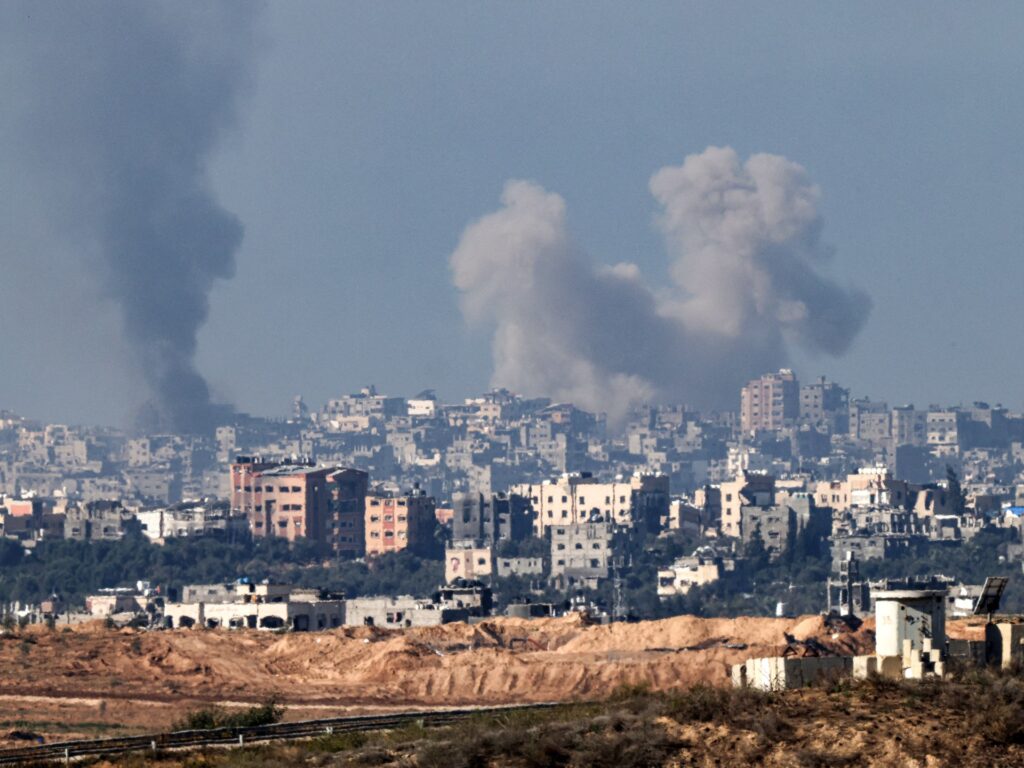
Attacks on Saturday heavily targeted Khan Younis in the south, where thousands have been forced to flee. The Israeli army has continued to pound areas across the Gaza Strip to devastating effect as Qatar has confirmed that talks are once more under way to evaluate if a new truce can be reached. The Qatari foreign ministry said in a statement Saturday that talks are continuing. “Qatar affirmed its ongoing diplomatic efforts to renew the humanitarian pause and expressed hope for building upon the progress made to accomplish a comprehensive and sustainable agreement that would end the war, stop the bloodshed of our Palestinian brethren, and lead to serious negotiations and the launch of a political process that yields a comprehensive, permanent, and just peace in accordance with international resolutions and the Arab Peace Initiative,” the ministry said in a statement. The Israeli ground, air and naval forces launched attacks on the besieged enclave on Saturday, leaving many dozens dead. At least 18,787 Palestinians have been killed in Gaza since October 7, after Hamas launched an attack inside Israel killing about 1,200 people. Attacks on Saturday heavily targeted Khan Younis in the south, where thousands have been forced to flee, as Israel has expanded its ground military presence in the north and towards the south. Al Jazeera journalists Samer Abudaqa and Wael Dahdouh were covering the aftermath of an Israeli bombing of a school in Khan Younis on Friday when they were targeted by a drone strike. Cameraman Abudaqa died after paramedics were prevented from reaching him for hours, and Gaza bureau chief Dahdouh walked to a hospital after suffering injuries from shrapnel. Abudaqa was the 13th Al Jazeera journalist killed since the founding of the news network, and one of at least 57 Palestinian journalists killed while covering the war on Gaza. The Israeli army said on Saturday it raided two schools in Gaza City, in the north of the Strip, claiming it killed 25 fighters and captured 50 more. Since the war started, the military has repeatedly legitimised attacks on civilian infrastructure, including United Nations-run schools and hospitals, to target Hamas fighters. However, reports from the ground show that scores of civilians have been killed in most of these strikes. Earlier on Saturday, several Palestinians were killed and injured in an Israeli attack targeting the vicinity of the al-Mazraa School run by the UN Relief and Works Agency for Palestine Refugees in the Near East (UNRWA) in Deir el-Balah, central Gaza Strip. No significant progress has been made on stopping the war – even temporarily – since last month, when Israel pulled back its Mossad negotiators from Doha after an agreement with Hamas could not be reached through Qatari mediation. Reports on Saturday suggested Israel may be looking to revive the talks that had earlier led to a week-long truce and the exchange of dozens of captives held by Hamas for Palestinian prisoners in Israeli jails. This comes after Israel admitted to mistakenly killing three of its captives held inside Gaza who were initially believed to be fighters. Israeli Prime Minister Benjamin Netanyahu has been under increasing pressure from the families of the people held in Gaza to secure their release. Another large demonstration was held in Tel Aviv on Friday to demand the release of captives. Adblock test (Why?)
Weather update: IMD predicts heavy rain, dense fog for several states; check latest forecast here
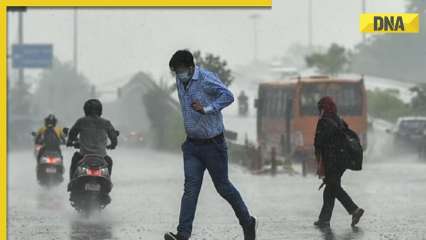
The weather agency predicts that throughout the next five days, there will likely be severe fog in certain areas over northern Punjab and northern Haryana in the morning. IMD predicts an intense period of rainfall activity over the southernmost tip of the Indian Peninsula over the next two days.
IND vs SA: Rinku Singh to make his ODI debut? KL Rahul gives major update

Besides Rinku Singh, KL Rahul also drops a massive update about wicket-keeper Sanju Samson’s availability.
Boston mayor posts photo of controversial ‘electeds of color’ party despite criticism

Boston Mayor Michelle Wu has proudly posted a photo of all the attendees of her “electeds of color” holiday party despite the gathering coming in for heavy criticism for excluding white lawmakers. Wu, 38, who is the city’s first Asian-American mayor, posted a photo to Instagram of 17 people smiling and sitting around a dinner table at the exclusive bash which took place Wednesday. “Last night was my turn to host the annual holiday dinner for Boston’s elected officials of color – a special moment to appreciate that our affinity group now includes leadership across city, state, county, and federal offices,” Wu wrote in the caption alongside the photo. BOSTON MAYOR ACCIDENTALLY INVITES EVERYONE TO HOLIDAY PARTY FOR NON-WHITE ELECTED OFFICIALS Earlier this week, a member of Wu’s staff mistakenly sent the entire city council an invitation to the party at the city-owned Parkman House near the Massachusetts Statehouse. Having realized the error, the aide sent out a second email about 15 minutes later apologizing for the initial email. The 13-member city council is made up of six minorities and seven White members. It is understood that the White members were not invited. While the mayor and her aide apologized for the accidental invite, they did not apologize for planning a party that excluded White city leaders. BOSTON MAYOR TAKES HEAT FOR ‘ELECTEDS OF COLOR’ HOLIDAY PARTY: ‘GEORGE WALLACE WOULD APPROVE’ Critics have panned the party as being segregationist and anti-White, with Fox News’ Greg Gutfeld accusing Wu of having a history of “blatant racism.” The exclusionary invite was criticized Wednesday by one White member of the city council as “unfortunate and divisive,” according to the Boston Herald. However, Black City Councilor Brian Worrell held a different opinion and defended the invitation, suggesting the holiday party was merely a way to represent “all kinds of special groups” in the Boston government. On Friday, Wu championed the dinner party as a celebration of diversity, writing that the number of minority lawmakers has grown since she was first elected to the city council in 2014. “Not too long ago in Boston, we didn’t need such a big table to fit electeds of color,” Wu wrote in her Instagram post. “But over my time as a City Councilor and now Mayor, following so many leaders who have paved the way, I’ve proudly watched this group grow and create space for mentorship and fellowship among many who are breaking down barriers while holding the weight of being the first or only.” “And at the holidays, we take the time to celebrate and enjoy each other’s company!” Ricardo Patrón, Wu’s press secretary, said no city funds were used to pay for the party. The photo sparked a mixed reaction online, although one poster claimed Wu was pulling down unfavorable comments. “You can delete my comment over and over commies, I will continue to celebrate your segregation efforts!” wrote one poster. “You’re an absolute disgrace to the city of Boston!!! Shame on you,” wrote another. Wu did have supporters in the comments section. “Great to see such diversity! Every American should see themselves represented in their elected officials!” wrote one of them. “To everyone saying this is segregation, literally every space of prominence and power has been only White people for centuries,” wrote another advocate of Wu’s actions. “We are allowed to gather and find solidarity with other POC (people of color) [in] most every other space we are in we are a minority. It is okay for us to TAKE UP SPACE.” Fox News’ Kristine Parks and the Associated Press contributed to this report.