

Minnesota lawmakers vow new crackdown after $1B fraud meltdown they say Walz let spiral

As investigations continue into widespread fraud across multiple government programs, Minnesota lawmakers and a former prosecutor on the case spoke to Fox News Digital about how to fix the roots of the crisis that lie in years of unchecked incompetence, political resistance to oversight, and a culture inside state government that discouraged whistleblowers from speaking out. “Republicans have proposed a number of common sense guardrails,” Republican state Sen. Julia Coleman told Fox News Digital. “I have a bill that mandates state employees to report fraud if they know of it to law enforcement, but Democrats have blocked us every step of the way.” Republican state Sen. Michael Kreun told Fox News Digital that Republicans will put forward measures to crack down on fraud during the next legislative session early next year. “There’s going to be a number of bills coming up here in the next legislative session to address fraud,” Kreun said. “The one that I’ve been working on this past year was a bill to establish a statewide office of inspector general, which would be an independent office not that wouldn’t direct directly answer to the governor, whose sole mission would be to root out fraud, investigate fraud, with all providers and recipients across all state agencies and to be overlooking the agencies themselves.” ‘HE HAD YEARS TO STOP THIS’: GOP LAWMAKERS BLAST WALZ OVER MASSIVE MINNESOTA FRAUD SCHEME Kreun blamed Walz for his legislation stalling in the Democrat-controlled House earlier this year, a sentiment echoed by state Rep. Patti Anderson, who wrote on X, “Speaker Demuth tried to get the OIG bill passed in the House but the House Dems killed it due to pressure from Governor Walz. We all know that’s true. Let’s hope House Dems finally see the light and we get it done next year.” Walz’s office directed Fox News Digital to a clip of Demuth saying in a press conference last week that Walz previously stated “he would sign it” if the bill got to his desk. “So that’s one measure that we can take next year,” Kreun said. “There’s gonna be a whole host of other measures to put up those guardrails to make sure that it becomes a lot harder to commit fraud here in Minnesota.” Minneapolis has been at the center of controversy in recent weeks over a massive fraud scheme dating back to at least 2020 that permeated several departments and several nonprofits, ranging from childcare services, to COVID-19 relief, to autism care. It is believed by many to eventually eclipse $1 billion in wasted state and federal taxpayer funds. The most prominent scandal, related to the nonprofit Feeding Our Future and representing the nation’s largest COVID-19 fraud case, involves a scheme that prosecutors say exploited a federally funded children’s nutrition program administered by the Minnesota Department of Education (MDE) during the COVID-19 pandemic, siphoning money meant to provide meals to low-income kids. ELON MUSK ACCUSES ILHAN OMAR OF TREASON OVER SOMALIA COMMENTS IN VIRAL SOCIAL MEDIA POST “For this amount of fraud to take place in the state of Minnesota, a billion or more dollars of fraud to happen has to be apathy and incompetence,” GOP state Sen. Julia Coleman told Fox News Digital. “Years ago, before this ever hit the national media stage, I sat on an education committee trying to get to the bottom of how the Feeding Our Future fraud scandal happened. Now, this was years ago. There have been no additional guardrails in place, and in fact, fraud has been allowed to be more rampant than ever. It’s a mix of apathy and incompetence. Republicans have proposed a number of common sense guardrails. I have a bill that mandates state employees to report fraud if they know of it to law enforcement, but Democrats have blocked us every step of the way.” GOP state Sen. Mark Koran told Fox News Digital that while legislation will help, ultimately, the oversight in Minnesota is done by the executive branch. “It’s not gonna change with this governor,” Koran said. Fox News Digital also spoke to former federal prosecutor Joe Teirab, who worked on the Feeding Our Future case, and asked him what changes need to be made to ensure this large-scale fraud doesn’t happen again. “I think you need to look at all these big government programs where tons of money is going out, and especially the ones in which nonprofits or other organizations are just entrusted to be watchdogs themselves,” Teirab explained. “That’s just not a system that’s set up well. Those things need we need to have way more checks and balances, way more structure to make sure that that money’s going out to the right people and it’s actually being used in the way that it should be used, and then we need to give more teeth and more ability for auditors and inspector generals to actually say, hey, look, if someone is potentially committing fraud, that person, the money should be cut off from them in other aspects of other agencies.” Minnesota’s Legislature is on a razor’s edge. Democrats currently hold a one-seat majority in the state Senate, 34–33, but after the most recent elections the Minnesota House is now split 67–67, with a power-sharing agreement in place between the two parties. That means even a small handful of defections or cross-party votes could decide whether tougher anti-fraud measures advance or stall. “Ultimately, we need to figure out the depth of this problem, get it taken care of once and for all, get the right people in place,” Kreun told Fox News Digital. “A change in the administration would go a long way towards helping that, and then rebuilding that trust with proper safeguards and people that are looking out for the taxpayer and make sure that they’re not getting ripped off.”
The Hitchhiker’s Guide to Thursday’s big Senate votes on healthcare
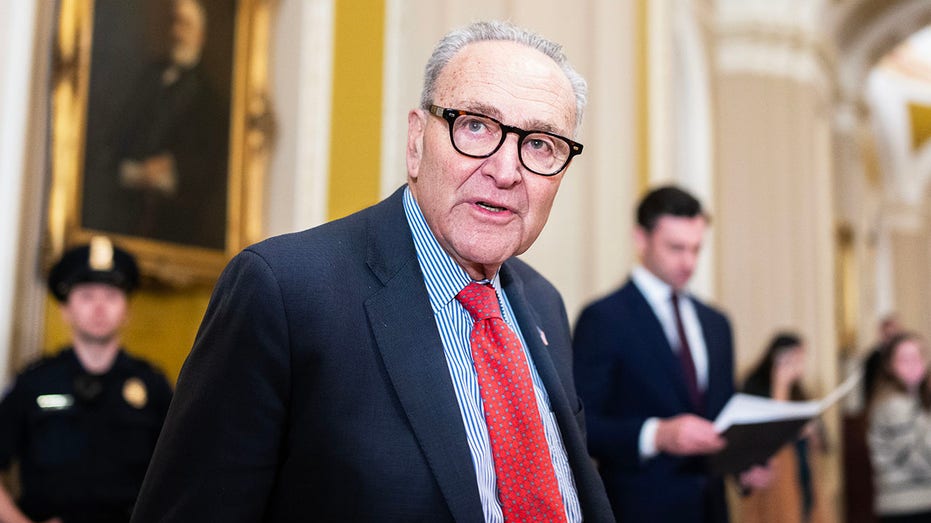
Today is the pivotal day for the Senate on healthcare. The Senate takes test votes on competing Democratic and Republican proposals to address astronomical healthcare premium spikes at the end of the year. But it’s about the math. Both need 60 yeas. Neither will pass. Everything starts around 11:30 a.m. ET. The Senate votes first on a GOP plan. It does not renew the expiring Obamacare subsidies. It simply allows people to use health savings accounts (HSAs) to shop for coverage. Republicans believe this will dramatically bring down healthcare costs. MODERATE REPUBLICANS STAGE OBAMACARE REBELLION AS HEALTH COST FRUSTRATIONS ERUPT IN HOUSE The Senate then pivots to the Democratic plan. It renews the expiring Obamacare subsidies for three years without reforms. Today’s votes are part of a demand by a coalition of Democratic senators who helped end the government shutdown. They requested a vote (not necessarily a fix) on healthcare before the end of the year. It’s possible there could be other votes related to healthcare as well today. COLLINS, MORENO UNVEIL OBAMACARE PLAN AS REPUBLICANS SEARCH FOR SOLUTION TO EXPIRING SUBSIDIES So what happens if both votes fail? It’s possible that could spark the Senate to get serious about addressing the spiking subsidies. They’ve done their posturing and have two weeks until Christmas. Lawmakers often accomplish the most legislatively when they face a deadline — especially before the holidays. It’s also possible Congress does nothing and the premiums go up on Jan. 1. This is a deep impasse and a hard one to resolve quickly. That said, many lawmakers — especially Republicans — are leery of leaving town for the holidays without addressing this issue. Republicans know they face a particular vulnerability here before the midterms. Especially since “affordability” is the buzzword of the day. That could make lawmakers buckle down over the next two weeks — especially after today’s plans fail.
Trump’s Ukraine deadline sparks rift on Capitol Hill amid stalled peace talks

Lawmakers gave mixed reactions to the timeline that President Donald Trump laid out for Ukrainian President Volodymyr Zelenskyy to accept a peace plan. The new timeline, first reported by the Financial Times, gives Ukraine just “days” to consider the 20-point design floated by the administration after months of stalemate. According to the Times, the administration wants to have an answer by Christmas. ZELENSKYY APPEARS TO CHANGE HIS MIND ON HOLDING ELECTIONS AFTER TRUMP’S CRITICISM Where some lawmakers believe a sense of urgency is essential to drawing the parties to the table, others criticized the timeline as a tool that they believe is putting a disproportionate amount of pressure on Ukraine. “I don’t think people should be given a deadline when it comes to defending their freedom and sovereignty,” Sen. Chris Van Hollen, D-Md., said Wednesday. Whether Ukraine will have to surrender some of its land has become the main sticking point amid broader conversations on the 20-point peace plan brokered by the United States. Zelenskyy has repeatedly said conceding territory is a line he won’t cross. On Wednesday, in a post to X, he said he would work with Ukraine’s allies to find an acceptable resolution to the conflict. “We continue to communicate with all our partners on a daily basis, virtually 24/7, to identify doable and realistic steps to bring the war to an end. Everything must be reliable and dignified for Ukraine,” Zelenskyy said. “We are finalizing work on the 20 points of a fundamental document that could define the parameters for ending the war, and we expect to deliver this document to the United States in the near future following our joint work with President Trump’s team and partners in Europe.” TRUMP PRESSURES ZELENSKYY FOR NEW ELECTIONS, WARNS UKRAINE OF ‘A POINT WHERE IT’S NOT A DEMOCRACY ANYMORE’ Like Van Hollen, Sen. Chris Coons, D-Del., said he believes the timeline doesn’t help reach a resolution. But he also questioned how firm the timeline request would be. Coons, a member of the Senate Foreign Relations Committee, noted Trump has made similar efforts to put pressure on peace talks in the past. “Over and over and over and over, President Trump’s attitude towards Russia and Ukraine has changed off again, on again, off again over the last 11 months,” Coons said. “It is long past time for President Trump to acknowledge that Russia is the aggressor, that Ukraine is a democracy, and that our vital national interest rests with defending Ukraine. He should not be giving timeline ultimatums,” Coons said. But not all lawmakers see the timeline as counterproductive. Republicans said it introduces a needed degree of pressure. “I don’t criticize the timelines, because I think that forces people to the table and to try to work it out,” said Rep. Brian Fitzpatrick, R-Pa., who is a longtime supporter of sending U.S. aid to Ukraine. “But I do think that we have to make sure that we’re clear on who the aggressor is and who the victim is and proceed accordingly,” Fitzpatrick added. Rep. Darrell Issa, R-Calif., a member of the House Committee on Foreign Affairs, declined to praise or condemn the timeline. But in a pragmatic sense, he believes it helps Ukraine come to grips with the ugly reality of war and what he sees as an unsustainable drain to the country’s military power. ZELENSKYY READY TO PRESENT NEW PEACE PROPOSALS TO US AND RUSSIA AFTER WORKING WITH EUROPEAN TALKS “I’m not trying to take any sides on this, other than the longer this goes on, the more devastating it is to Ukraine post-war,” Issa said. “If you look at this, like you look at a chessboard where you have 20 pawns and I have 10, and we’re trading them one for one. Time is not on the side of the one that has 10.” “Time is [Zelenskyy’s] enemy, because every day that goes by that we’re at a standstill, he doesn’t become militarily weaker, but from a human asset [view], he’s becoming weaker. And you know, this is not a sustainable war because he can’t produce another generation of fighters to replace the ones that are being killed or maimed every day,” Issa said. It’s unclear what the Trump administration would do if the conflict were to stretch past that window. The White House did not immediately respond to a request for comment.
Who is Arun Nehru? Know why DMK minister KN Nehru’s son met FM Nirmala Sitharaman
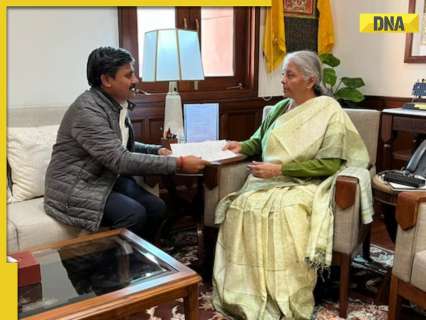
DMK MP Arun Nehru holds talks with Finance Minister Nirmala Sitharaman as ED investigates Minister K.N. Nehru in a Rs 1,020 crore corruption case, with the Minister alleging the charges are politically motivated. Read here to know more about this case.
Goa nightclub fire: Luthra brothers, owners of Birch by Romeo Lane nightclub, arrested in Thailand, to be brought to India soon

The development comes after the Goa Police’s decision to suspend the passports of Saurabh and Gaurav Luthra, linked to the fatal fire at Arpora’s Birch by Romeo Lane on Saturday, which claimed 25 lives. The brothers fled from India shortly after the December 6 fire in Arpora.
US-Pakistan arms deal: Donald Trump clears sale of F-16 fighter jets to Islamabad amid stringent measures against India

After slapping heavy tariffs on India, the Trump administration has approved a $686 million F-16 support package for Pakistan, dealing a blow to India-US ties.
Good News for Passengers: Indian Railways unveils world’s most powerful hydrogen-powered train, project is backed by…; Here’s all you need know

Indian Railways has unveiled India’s first indigenous hydrogen-powered train set, a significant step in the country’s green mobility transition. Developed with local technology, the 10-coach train runs with zero emissions and supports the Atmanirbhar Bharat initiative.
BIG move by IndiGo: After mass cancellation, airline announces travel vouchers worth Rs…, for passengers who…

The airline, facing scrutiny for canceling hundreds of flights over several days, stated that it has already processed the necessary refunds for the cancelled flights.
Goa Nightclub Fire: Government bans fireworks at THESE places in North Goa days after tragedy claims 25 lives; Here’s all you need to know

Following the deadly fire at a nightclub in Arpora, North Goa, which claimed 25 lives, the district administration has imposed a ban on fireworks, sparklers, and pyrotechnics inside all tourist establishments. The ban applies to nightclubs, bars, hotels, resorts, and event venues across the district
New Jersey’s medically assisted suicide law only covers state residents, appeals court rules

A federal appeals court ruled that New Jersey’s medical aid-in-dying law applies only to state residents, rejecting efforts by out-of-state patients and physicians to challenge the restriction. The Third U.S. Circuit Court of Appeals upheld the state’s residency requirement, finding that New Jersey is not required to make assisted suicide available to non-residents. In an opinion written by Judge Stephanos Bibas, the court acknowledged the difficult decisions facing terminally ill patients but said the option remains limited under state law. “Death brings good things to an end, but rarely neatly,” U.S. Circuit Court Judge Stephanos Bibas wrote in the opinion issued last week. “Many terminally ill patients face a grim reality: imminent, painful death. Some may want to avert that suffering by enlisting a doctor’s help to end their own lives. New Jersey lets its residents make that choice—but only its residents.” New Jersey is one of 11 states, along with Washington, D.C., that allow physician-assisted suicide for terminally ill adults. Most states restrict the practice to residents, though Oregon and Vermont allow access regardless of residency. LAWSUIT FILED AGAINST KANSAS LAW NULLIFYING END-OF-LIFE CHOICES FOR PREGNANT WOMEN The case began when a Delaware woman with stage four lymphoma sought to use New Jersey’s law but was blocked by the residency rule. She died after arguments in the case. A New Jersey doctor who wanted to treat patients from nearby states also joined the challenge, as did other plaintiffs who have since passed away or retired. One of the plaintiffs, Dr. Paul Bryman, said he was disappointed by the ruling. “Terminal patients outside New Jersey should have the option of medical aid in dying without having to travel long distances,” he said. DELAWARE’S ASSISTED SUICIDE BILL SIGNED INTO LAW, MAKING IT THE 11TH STATE WITH SUCH A STATUTE New Jersey Gov. Phil Murphy, a Democrat, signed the measure into law in 2019, saying at the time that while his Catholic faith might prevent him from choosing assisted suicide for himself, he supported the right of others to make that decision. Under the law, a patient must be an adult New Jersey resident with a terminal diagnosis and a prognosis of six months or fewer to live. Two physicians must confirm the diagnosis and the patient’s capacity to decide. Patients must make two requests — at least one of them in writing with two witnesses — and must be given the opportunity to rescind. At least one witness cannot be a family member, heir, attending physician or an employee of the facility where the patient receives care. Patients must self-administer the medication, and doctors are required to offer alternatives such as palliative care. ‘LOVE YOU FOREVER’ AUTHOR MAY SOON DIE BY ASSISTED SUICIDE, PRO-LIFE GROUPS CALL DECISION ‘HEARTBREAKING’ A lower court previously dismissed the challenge, finding that physician-assisted suicide is not a fundamental right states must extend to non-residents. The appeals court agreed. “In our federal system, states are free to experiment with policies as grave as letting doctors assist suicide. Other states are free to keep it a crime,” the appeals court ruling said. “This novel option does not appear to be a fundamental privilege, let alone a fundamental right, that states must accord visitors.” Delaware’s own aid-in-dying law goes into effect on Jan. 1. Several other countries, including Canada, Germany, Belgium, Switzerland, the Netherlands, Australia and Colombia, have also legalized physician-assisted suicide. The Associated Press contributed to this report.