

Big relief for Sharjeel Imam in Delhi riots case; gets interim bail for 10 days

A Delhi court has granted 10-day interim bail to activist Sharjeel Imam, an accused in the 2020 Delhi riots larger conspiracy case.
Questions about self-driving cars amplify after one blocked an ambulance responding to Austin shooting

While the encounter didn’t significantly hinder response to the shooting, it has raised concerns about the vehicles as they expand to more Texas cities and before new state regulations kick in.
Texas hemp businesses fear an uptick in police raids after more than 15 in the last two years
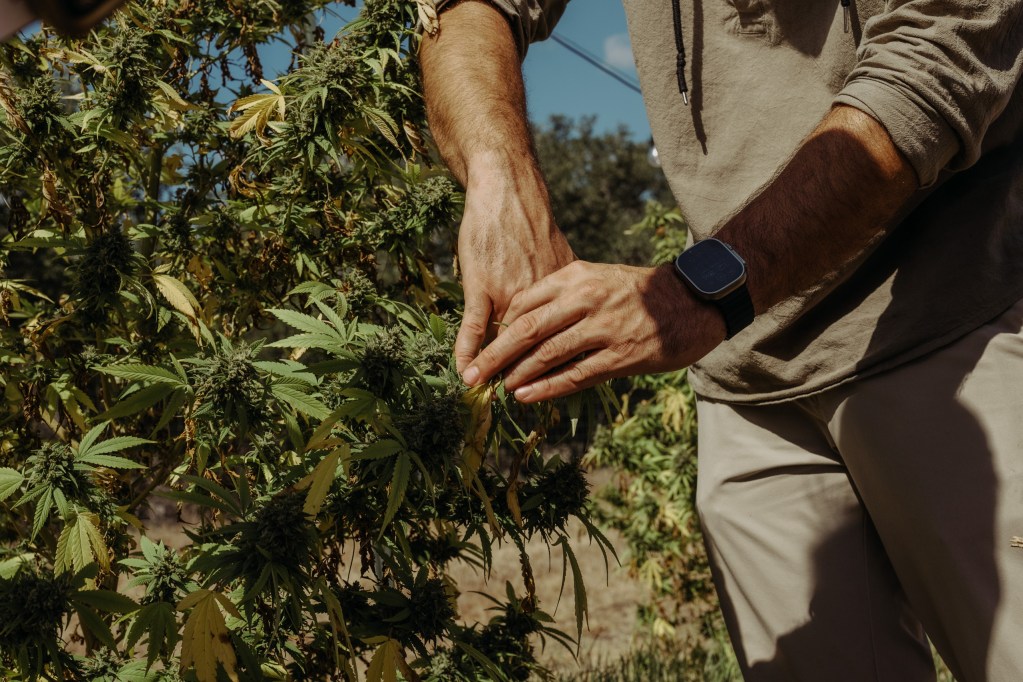
Attorneys for hemp businesses say the raids have hurt their revenue and reputation, while police said they’re necessary to root out products with illegal levels of THC.
GOP-led fight over allegations of student indoctrination raises tensions at University of Houston
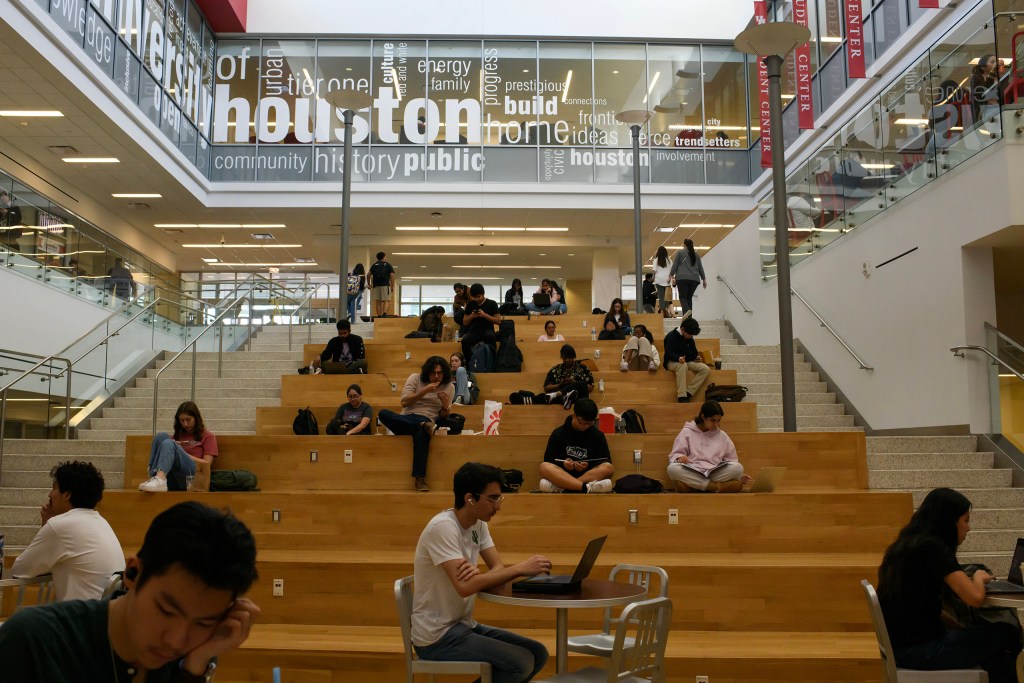
Some professors push back after a five-page curriculum checklist was unveiled and several deans directed instructors to affirm that they don’t indoctrinate students.
Iran names Ayatollah Khamenei’s son as new leader after father’s killing
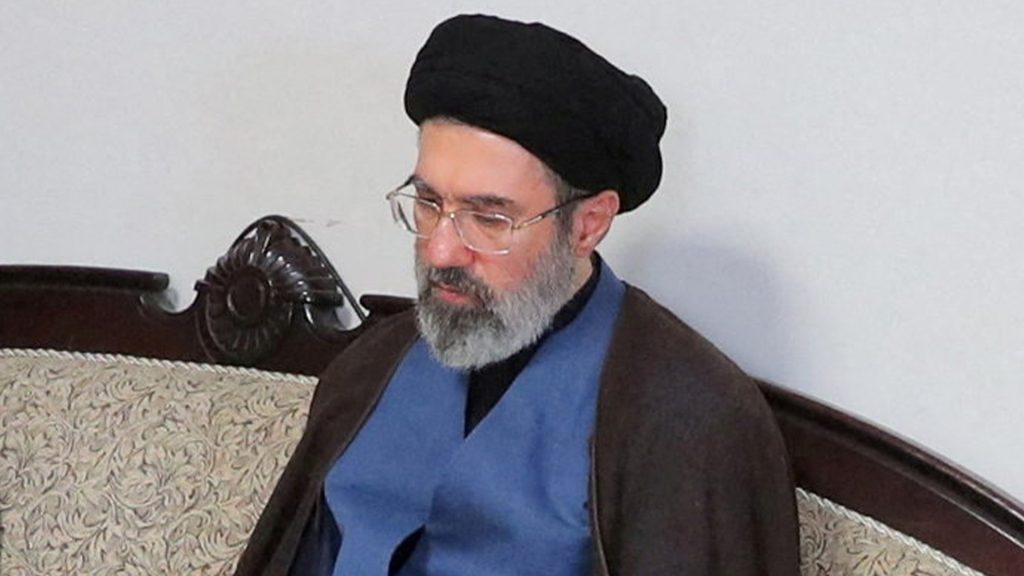
NewsFeed Iranian state television has announced that the Assembly of Experts has chosen Mojtaba Khamenei as supreme leader after a “decisive vote”. He’s the son of Ayatollah Ali Khamenei who was killed by the United States on February 28. Published On 8 Mar 20268 Mar 2026 Click here to share on social media share2 Share plus2googleAdd Al Jazeera on Googleinfo Adblock test (Why?)
Iran war live: Mojtaba Khamenei named supreme leader; Israel bombs Tehran

blinking-dotLive updatesLive updates, Iran’s military and political leaders pledge allegiance to Mojtaba Khamenei as Saudi Arabia reports two deaths amid Iranian counterattacks. Published On 9 Mar 20269 Mar 2026 Click here to share on social media share2 Share plus2googleAdd Al Jazeera on Googleinfo Adblock test (Why?)
Oil soars past $100 a barrel as US-Israel war on Iran rages
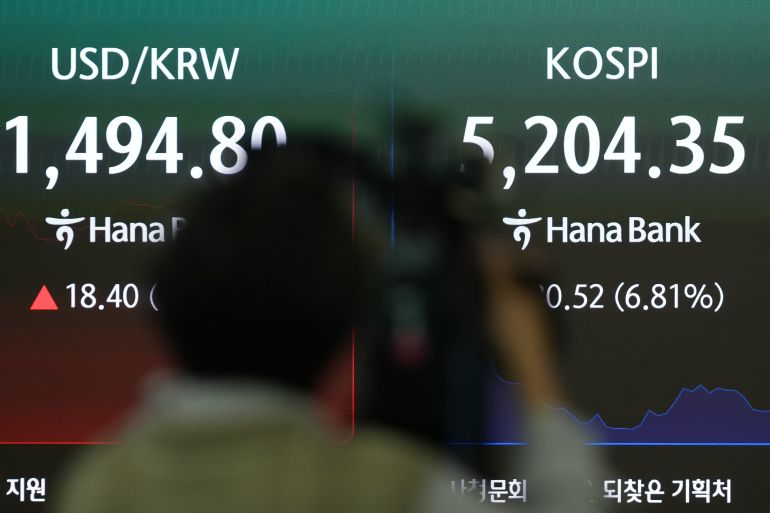
Listen to this article Listen to this article | 2 mins info Oil prices have surged past $100 a barrel amid the fallout of the United States and Israel’s war on Iran. Brent crude, the international benchmark, rose more than 20 percent on Sunday, at one point topping $114 a barrel, as fears grew of prolonged disruption to global energy supplies. Recommended Stories list of 4 itemsend of list After moderating slightly, the benchmark was hovering around $107.50 as of 02:30 GMT on Monday. The surge marked the first time oil rose above $100 per barrel since Russia’s 2022 invasion of Ukraine. US President Donald Trump, who campaigned heavily on cost-of-living concerns in the 2024 election, brushed off the spike in prices. “Short term oil prices, which will drop rapidly when the destruction of the Iran nuclear threat is over, is a very small price to pay for U.S.A., and World, Safety and Peace,” Trump said in a post on Truth Social. “ONLY FOOLS WOULD THINK DIFFERENTLY!” US Secretary of Energy Chris Wright also downplayed the prospect of rising energy prices earlier on Sunday, telling CBS News’ Face the Nation programme that any increase in prices at the petrol pump would be “temporary”. Crude oil prices have surged by about 50 percent since the US and Israel launched joint strikes on Iran on February 28. Iran has brought shipping in the Strait of Hormuz to an effective halt in retaliation, threatening about one-fifth of the global oil supply. Iraq, the United Arab Emirates and Kuwait, three of the biggest producers in The Organization of the Petroleum Exporting Countries (OPEC), have cut production amid an accumulating backlog of barrels with nowhere to go due to the effective closure of the waterway. Advertisement Attacks on energy production facilities in the region have further threatened supplies. Iran has been blamed for multiple attacks on energy facilities across the Gulf, including in Qatar, Saudi Arabia and Kuwait. On Saturday, Israel carried out air strikes targeting Iran’s oil infrastructure for the first time since the start of the war. The strikes hit four oil storage facilities and an oil production transfer centre in Tehran and the province of Alborz, according to Iranian state media. Iran’s Revolutionary Guard Corps (IRGC) on Sunday threatened to target energy facilities across the region in retaliation, warning that oil could soar to $200 a barrel if the US and Israel “continue this game”. A TV cameraman films the screens showing the KOSPI and the foreign exchange rate between the US dollar and the South Korean won at Hana Bank in Seoul, South Korea, on March 9, 2026 [Lee Jin-man/AP] Stocks in Asia fell sharply on Monday morning, as investors braced for the fallout of rising energy prices. Japan’s Nikkei 225 tumbled more than 7 percent in early trading, while South Korea’s KOSPI plunged more than 8 percent. In Hong Kong, the Hang Seng Index fell by nearly 3 percent. US stock futures, which are traded outside of regular market hours, also saw substantial losses. Futures tied to Wall Street’s benchmark S&P 500 fell by 1.7 percent, while those for the tech-heavy Nasdaq Composite dropped by 1.90 percent. While Trump administration officials have insisted that the war will be over within weeks, the prospect of prolonged disruption to global energy supplies has stoked fears of higher inflation and slowing economic growth. The International Monetary Fund has estimated that every sustained 10 percent rise in oil prices results in a 0.4 percent rise in inflation and a 0.15 percent reduction in global economic growth. “If the shock proves short-lived, the global economy can quickly recover,” Mike O’Rourke, chief market strategist at JonesTrading, told Al Jazeera. “If oil remains at these levels for several weeks, it will be a major global headwind. Thus far, markets have underestimated the risks related to the conflict in Iran.” In an interview published by The Financial Times on Friday, Qatari Minister of Energy Saad al-Kaabi warned that all of the region’s producers could soon be forced to halt production and that prices could hit $150 a barrel. “Everybody that has not called for force majeure we expect will do so in the next few days that this continues,” Al-Kaabi told the newspaper. Advertisement “All exporters in the Gulf region will have to call force majeure.” Adblock test (Why?)
PM Modi congratulates Team India on winning T20 World Cup: ‘Every Indian heart filled with pride’
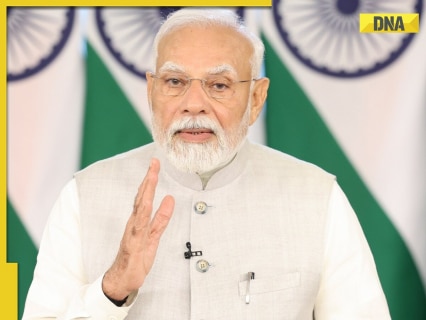
In a post on the social media platform X, PM Modi said that every Indian heart was filled with “pride and joy.” The Men in Blue defended a mammoth total of 255 runs by bowling out the Kiwis for 159 with an over to spare.
Uttar Pradesh: Land acquisition for Ganga-Jewar link expressway gains momentum, 39 villages to get benefit, check details
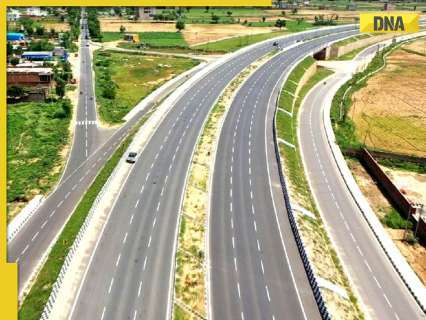
The Greenfield Link Expressway will provide a direct link between the Ganga Expressway and the upcoming Noida International Airport (Jewar Airport).
Before-and-after satellite imagery offers a rare look at damage inside Iran
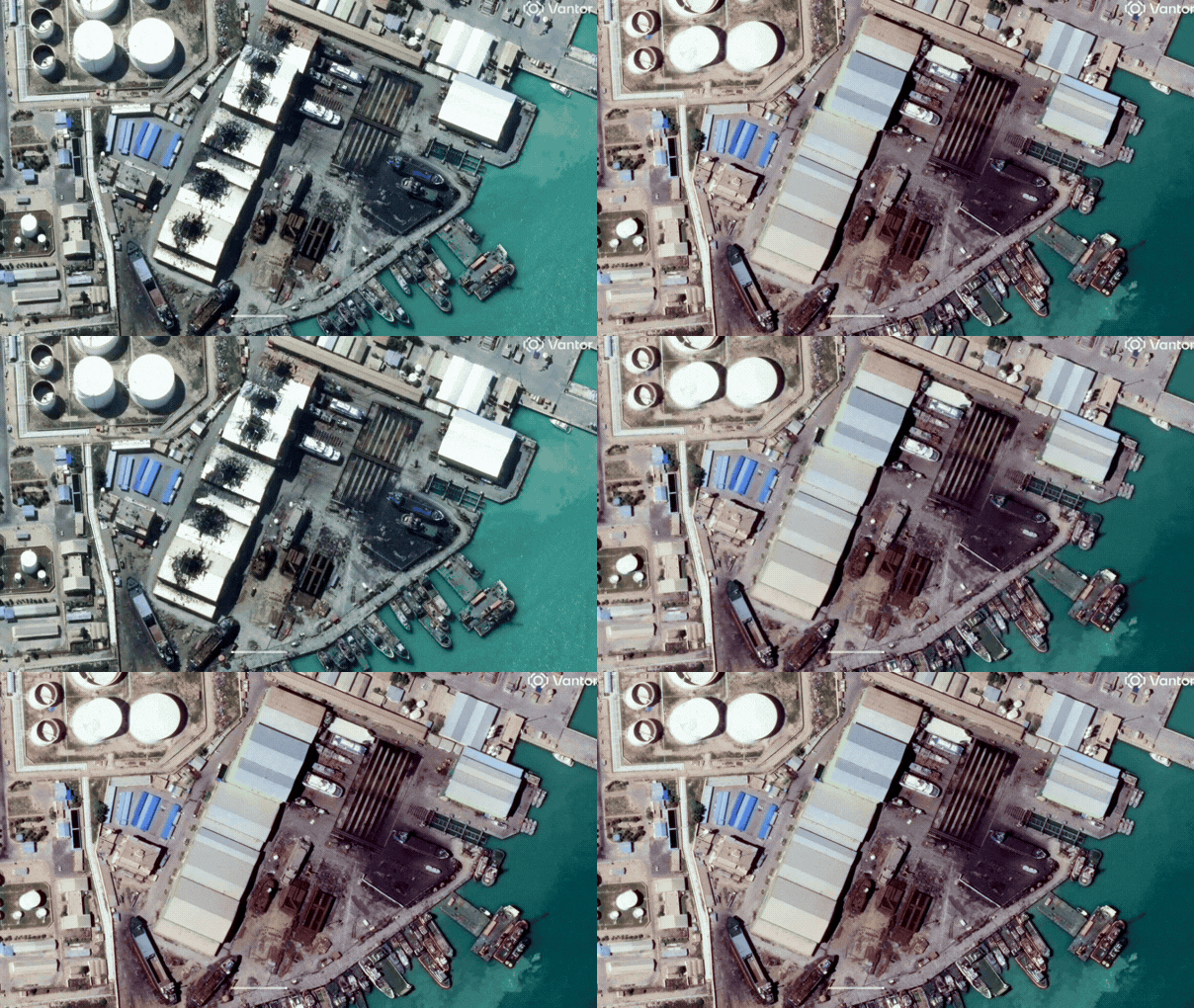
Fresh satellite images give a rare aerial view of the damage across Iran after U.S.-Israeli strikes and what Tehran’s retaliation left behind across the region. Planet Labs satellite imagery captured burning ships and damaged facilities at the Konarak base in southern Iran, as well as significant destruction at Iran’s naval headquarters in Bandar Abbas on the Persian Gulf, reflecting the scale of the strikes on military infrastructure. WATCH SHIPPING THROUGH THE STRAIT OF HORMUZ GRIND TO A HALT AMID IRAN CONFLICT Imagery from Vantor shows damage to facilities and vessels located in Iran’s Bushehr port in the Persian Gulf. In addition to naval assets, satellite photos show a bunker at Bushehr air base hit by a strike, leaving a large crater and destroying several nearby small buildings. More strikes targeted the Choqa Balk drone facility in western Iran. Radar systems at the Zahedan air base in eastern Iran — near the country’s borders with Pakistan and Afghanistan — were also struck. The two facilities are about 800 to 900 miles apart, underscoring the broad reach of the coordinated strikes. Satellite imagery also reveals damage to aircraft on the tarmac at Shiraz air base, including scorch marks and debris around several parking areas. Satellite imagery from Planet Labs shows thick smoke plumes rising above Tehran, signaling explosions and fires inside the Iranian capital. The smoke underscores how the conflict has moved beyond isolated military sites and into the heart of Iran’s political center. THE UNLIKELY TOOL TRUMP IS EYEING TO TACKLE RISING OIL PRICES AMID THE IRAN CONFLICT Iran has since responded with missile and drone strikes of its own, expanding the conflict across the region. Satellite images reveal damage to the port city of Sharjah in the United Arab Emirates. Sharjah is the third most populous after Dubai and Abu Dhabi. The Jebel Ali Port, the region’s largest maritime hub, was also targeted, underscoring how the retaliation extended beyond military sites to key infrastructure. The new satellite imagery comes on the heels of U.S.-Israeli strikes that killed Iran’s supreme leader, Ayatollah Ali Khamenei, and several top members of the regime, triggering a succession crisis. President Donald Trump warned on Sunday that Iran’s new leader is “not going to last long” without U.S. approval as Operation Epic Fury marches into a third week.