

Pentagon watchdog warns drone incursions require ‘immediate attention’ at US military bases

In December 2023, nearly three weeks of unidentified drones hovering over sensitive areas of Langley Air Force Base laid bare a problem U.S. officials were not prepared to handle: determining who was responsible for investigating the incursions — and who had authority to act. A new Pentagon Inspector General report indicates those same gaps in authority and coordination remain unresolved across much of the War Department, even as drone activity near U.S. military installations continues with striking frequency. The watchdog report warns that the Pentagon lacks clear, consistent policies governing counter-drone operations at domestic installations, leaving many bases unsure whether they are authorized to respond when drones appear overhead. The findings reinforce what defense officials and outside experts have cautioned for years: while the military can often detect drones, confusion over jurisdiction, approval processes and legal authority can delay — or prevent — action. The report warns that “immediate attention [is] required” to protect War Department assets from unmanned aircraft systems, citing unclear policies, conflicting guidance, and a lack of operational approval at many installations. Pentagon leadership last year established Joint Interagency Task Force 401 to better coordinate counter-drone efforts across the department, but the watchdog concluded the recommendation to consolidate policies and authorities remains unresolved. In December, the Department of War issued updated counter-UAS guidance intended to address longstanding confusion over authority and jurisdiction highlighted in previous drone incursions and oversight reviews. The Inspector General’s report reflects conditions prior to that update and does not assess the revised guidance. The revised policy expands commanders’ ability to assess and respond to unauthorized drone activity beyond installation fence lines, clarifies how “covered facilities or assets” can be designated based on risk, and improves interagency coordination and data-sharing with partners such as the Department of Homeland Security and the Justice Department. US PRISONS BATTLE EVOLVING DRONE TECHNOLOGY USED TO SMUGGLE CONTRABAND TO INMATES Michael Healander, CEO of Airspace Link, said the Inspector General’s findings reflect challenges he has seen while working with military bases and civilian authorities on drone airspace awareness. Airspace Link works with the FAA, municipalities and select military installations to track authorized drone activity, flag unidentified drones near bases, and improve coordination across civilian and government airspace. “When we read the document, we noticed these are issues that we’ve been starting to solve with some of these military bases,” Healander told Fox News Digital. “It’s that understanding of what are the rules and regulations per base — whose drones are whose — and really having that airspace awareness is an issue.” Healander said identifying whether a drone near a military installation is authorized, misrouted or potentially hostile is often less about detection technology and more about coordination in crowded domestic airspace. PENTAGON EXPLORING COUNTER-DRONE SYSTEMS TO PREVENT INCURSIONS OVER NATIONAL SECURITY FACILITIES “There are tools out there. The technologies are out there,” he said. “It’s just they don’t have the frameworks, and it seems to be different from base to base.” The Inspector General report found that the War Department has failed to provide clear, consistent guidance on which installations qualify as “covered assets” eligible for counter-drone protections, resulting in conflicting lists maintained across the department. In some cases, high-value bases conducting critical missions were excluded because their activities did not neatly fall into narrow mission categories defined in federal law. The watchdog concluded these policy gaps have left many installations unsure whether they are authorized to act during drone incursions. The scope of the issue is far from isolated. U.S. Northern Command head Gen. Gregory Guillot said during a roundtable last year that drone activity near War Department installations occurs almost daily. “We’re between one and two incursions per day” at War Department installations, Guillot told reporters. Healander said confusion often intensifies when drones appear outside a base’s perimeter, where military authority intersects with FAA-regulated airspace and local law enforcement jurisdictions. “What happens if there’s a drone outside the fence line?” he said. “Most military bases don’t have jurisdiction out there.” Modern drone identification tools — including systems that detect remote identification signals, radio frequencies, radar and optical tracking — can often determine where a drone originated and whether it is registered. But Healander said that without standardized rules governing who operates those systems and how information is shared, detection alone does not translate into timely decisions. “If you have those technologies together, you can start to see where the drone came from,” he said. “It’s just making sure that these bases have a framework to follow.” The Inspector General also found that the approval process required for installations to use counter-drone systems is fragmented and burdensome, with different military services following different procedures. In many cases, installations must procure and test systems before receiving authorization to use them — a hurdle that has led some bases to forgo seeking approval altogether, even after experiencing incursions. Healander said improving situational awareness and coordination will become increasingly urgent as civilian, commercial and public-safety drone operations expand near military installations, further complicating an already crowded low-altitude airspace environment. “Getting their house in order first — understanding who’s flying, where, and under what authority — is the starting point,” he said.
ICE re-arrests two Venezuelan men after federal judge’s release order
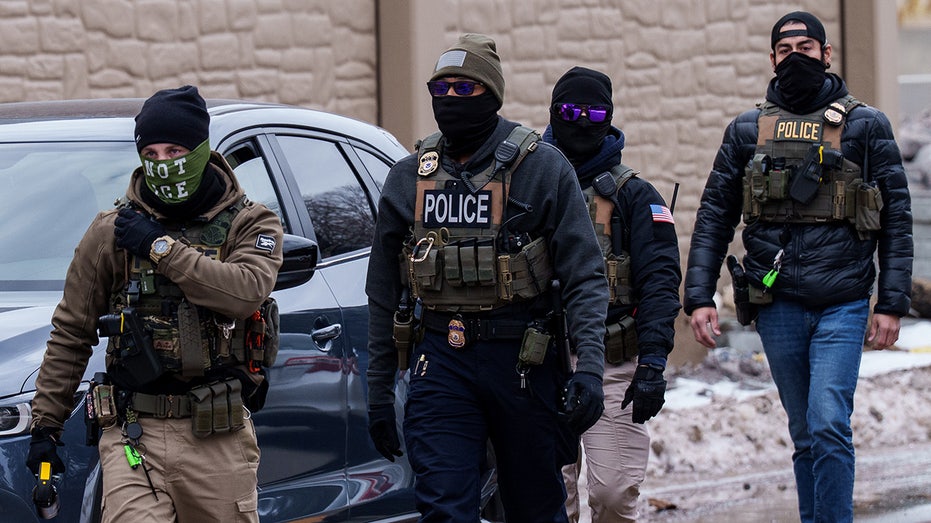
Two Venezuelan nationals accused of assaulting a U.S. Immigration and Customs Enforcement (ICE) officer during a chaotic Minneapolis arrest last month were ordered released by a federal judge this week, only for ICE to re-arrest them, according to court records cited by The Minnesota Star Tribune. Alfredo Alejandro Ajorna, 26, and Julio Cesar Sosa-Celis, 24, were released under court-ordered conditions Tuesday after a judge found they did not pose a heightened flight risk, the outlet reported. The men were re-detained by ICE almost immediately after the hearing and never left the courthouse before agents took them back into custody. The Tribune reported that attorneys for the men said ICE detained them “without explanation” shortly after the judge’s release order, prompting a habeas corpus petition filed late Tuesday. Minnesota Chief U.S. District Judge Patrick J. Schiltz then barred ICE from removing the men from the state and ordered the federal government to explain its actions by Friday. CRIMINAL ILLEGAL IMMIGRANT ALLEGEDLY RAMS ICE VEHICLE IN MINNESOTA AS ATTACKS ON AGENTS SURGE “This re-detention is unconstitutional, and they should be immediately released,” attorney Brian Clark wrote in the emergency habeas petition, per the outlet. The pair were arrested after a Jan. 14 altercation that began when ICE agents attempted a targeted traffic stop in north Minneapolis, DHS said at the time. According to DHS, federal officers were attempting to arrest Sosa-Celis when he fled the scene in his vehicle, crashed into a parked car and ran on foot. DHS said the pursuing officer caught up with Sosa-Celis and attempted to take him into custody, at which point Sosa-Celis allegedly began to resist and violently assault the officer. As the two struggled on the ground, DHS said two individuals emerged from a nearby apartment and began striking the officer with a snow shovel and the handle of a broom. DHS said Sosa-Celis then broke free and allegedly struck the officer as well before the agent, fearing for his life, fired a defensive shot that struck Sosa-Celis in the leg. Despite being wounded, DHS said Sosa-Celis and the other two men retreated into the apartment and barricaded themselves inside. FEDERAL JUDGE BACKS AWAY FROM THREAT TO HOLD ICE LEADER IN CONTEMPT ICE ultimately arrested all three suspects and took them into custody, DHS said. The officer and Sosa-Celis were both hospitalized following the confrontation. The agency described the incident as an “attempted murder of federal law enforcement,” saying an ICE officer was ambushed and struck with a snow shovel and the handle of a broom before firing a defensive shot that struck Sosa-Celis in the leg. DHS publicly identified three Venezuelan nationals — Sosa-Celis, Ajorna and Gabriel Alejandro Hernandez-Ledezma — as the suspects who allegedly assaulted the ICE agent and were taken into federal custody after the Jan. 14 incident. The Tribune reported that the federal affidavit in the case makes no mention of Hernandez-Ledezma, and that he has not been charged with any federal crime. The newspaper said he is being held at a federal detention facility in Texas and that it could not independently verify his presence or involvement in the incident. Defense attorneys told the court that photographic evidence and witness statements raise questions about the timing and circumstances of the shooting, including allegedly suggesting the shot may have been fired after the suspects had gone inside a residence, according to the Tribune. Fox News’ Greg Wehner contributed to this report.
Uttar Pradesh: CM Yogi-led govt approves funds for new bypass, 100 villages to gain, here’s all you need to know

The bypass is designed to be 7 meters wide and will provide an alternative route for heavy vehicles, reducing traffic congestion in the area. The construction of the bypass is expected to improve road safety and reduce travel time for commuters.
J-K’s Udhampur Operation Kiya: Encounter breaks out between security forces and terrorists
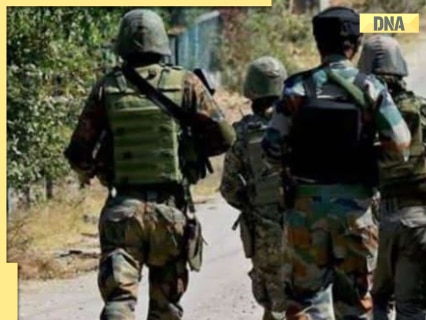
The Indian Army is conducting an intelligence-based joint operation along with the Jammu and Kashmir Police and the Central Reserve Police Force (CRPF) in the Basantgarh area of Udhampur district after contact was established with terrorists on Tuesday afternoon.
Did Mathura headmaster force Hindu boy offer namaz? What happened next?

The complaint also claimed that the headmaster had not ensured the national anthem was sung in school every morning. Mohammad received information about his suspension on January 31, without any verification or inquiry being carried out.
Cold wave tightens grip over Delhi-NCR, air quality turns ‘very poor’ at 312, IMD issues yellow alert
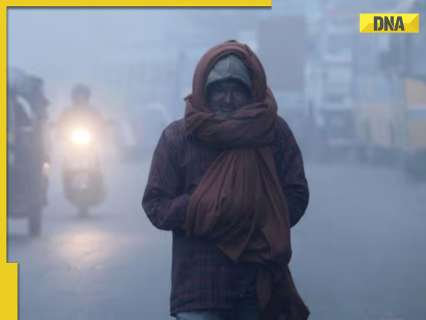
The IMD has issued a Yellow Alert for the entire city due to fog and haze, warning of low visibility that may slow down traffic movement during morning hours, particularly on major roads and highways.
UP Shocker: Three Ghaziabad-based teenage girls jump to death, was Korean online gaming app behind suicide?
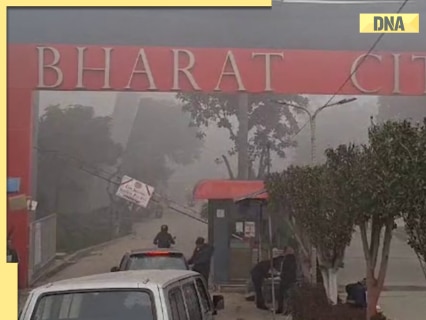
In a shocking incident reported from Uttar Pradesh’s Ghaziabad, three minor sisters jumped off the ninth floor of their apartment building, allegedly after their parents’ objection to their online gaming addiction. The incident took place at Bharat City, a residential township in Ghaziabad, at around 2 am on Wednesday.
Texas Education Agency warns districts of potential state takeovers for “encouraging” student protests
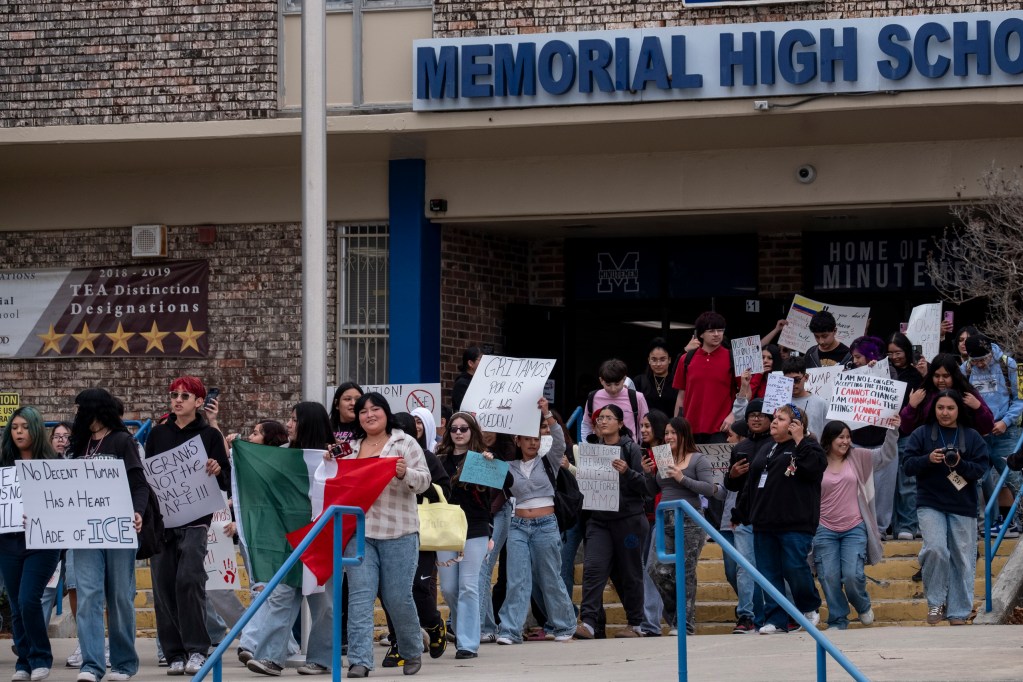
The state education agency issued guidance to districts after Gov. Greg Abbott directed its commissioner to investigate the student protests of killings by federal agents.
White House approves Medal of Honor for fallen Army Staff Sgt Michael Ollis after years-long push
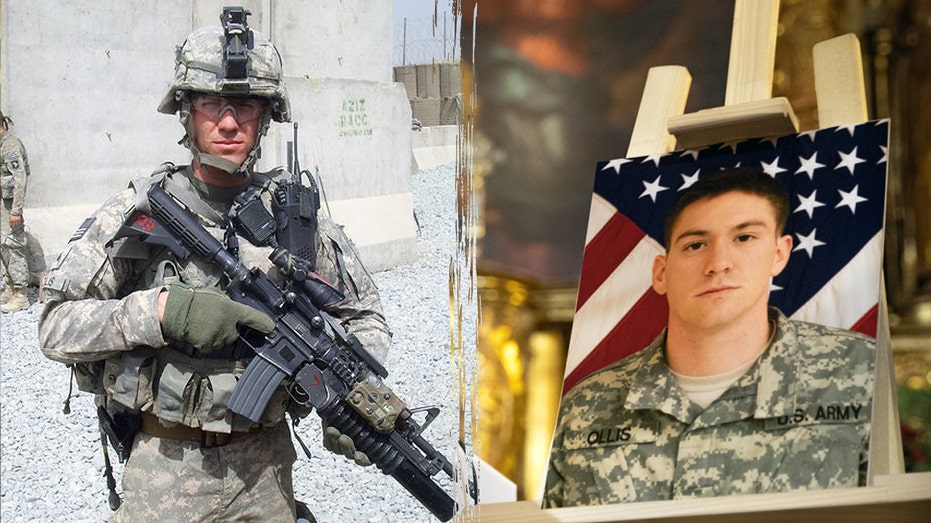
The White House has approved the Medal of Honor for fallen Army Staff Sgt. Michael Ollis, a Staten Island, New York, native who died in Afghanistan in 2013, while shielding an allied soldier, according to Rep. Nicole Malliotakis, R-N.Y., who said she was notified of the decision in a statement posted to social media. The decision follows years of advocacy from veterans’ groups, elected officials and the Staten Island community to formally recognize Ollis’ actions, which supporters have long argued met the standard for our nation’s highest military honor. In a Facebook post, Malliotakis said she had been notified directly by the White House. “We were notified by the White House that Staten Island’s hometown hero, U.S. Army Staff Sergeant Michael Ollis, has been approved for the Medal of Honor for his extraordinary act of heroism,” Malliotakis wrote. REP BRIAN MAST: CONGRESS HAS THE PERFECT WAY TO HONOR OUR NATION’S FALLEN HEROES Ollis was killed in Afghanistan on Aug. 28, 2013, when he used his body to shield a Polish Army officer during a suicide bombing. He was 24 years old. “In 2013, Staff Sergeant Ollis gave his life to save an allied soldier, and his courage, selflessness, and sacrifice represent the very best of our nation,” she continued. Malliotakis credited years of advocacy efforts, adding: “After years of advocacy from the American Legion, our elected officials, and the Staten Island community, we are grateful to President Donald Trump for recognizing Staff Sergeant Ollis’ extraordinary heroism with our nation’s highest military honor.” The Medal of Honor is the nation’s highest military decoration and is awarded for acts that go above and beyond the call of duty. While the standards for awarding the medal have evolved over time, it has always recognized “conspicuous gallantry and intrepidity at the risk of life,” according to the Congressional Medal of Honor Society. The current criteria were established in 1963 during the Vietnam War. TRUMP SIGNS MEDAL OF HONOR ACT TO RAISE PENSIONS FOR AMERICA’S MILITARY HEROES Under those standards, the medal may be awarded for actions taken against an enemy of the U.S., during military operations involving conflict with an opposing foreign force, or while serving alongside friendly foreign forces engaged in armed conflict in which America is not a belligerent party. Awarding the Medal involves a rigorous review process. Each recommendation requires detailed reports on the act itself and battlefield conditions, at least two sworn eyewitness statements, and additional corroborating evidence. Recommendation packets must be approved through the full military chain of command before reaching the president, who serves as commander-in-chief. Federal law also imposes strict timelines on the process, with recommendations requiring submission within three years of the valorous act and the medal awarded within five years. Any submission outside those limits requires an act of Congress to waive time restrictions. NATIONAL GUARD MEMBERS ATTACKED BY AFGHAN REFUGEE IN DC HONORED BY UNANIMOUS HOUSE VOTE Ollis’ family also addressed the reports in a statement shared by the SSG Michael Ollis Freedom Foundation. “We are extremely grateful to the President of the United States for recognizing the heroism of our son, U.S. Army Staff Sgt. Michael Ollis, with the Medal of Honor,” the statement said. “Knowing that Michael’s life, legacy and final act of courage have not been forgotten leaves us with a feeling of overwhelming pride and eternal gratitude.” The statement also thanked supporters in a separate statement who have advocated for the recognition. “We also greatly appreciate the letters, emails and phone calls of support from government and military officials, local leaders, non-profit organizations and the many friends we are blessed to know here in Staten Island and beyond. It is deeply moving to know that you haven’t forgotten Michael or our family.” Fox News Digital has reached out to the White House and the Department of War for additional details regarding the Medal of Honor process, including timing and ceremony plans. The Ollis family did not immediately respond to Fox News Digital’s request for additional comment.
Lawmakers probe National FFA over Chinese Communist Party ties and DEI programs
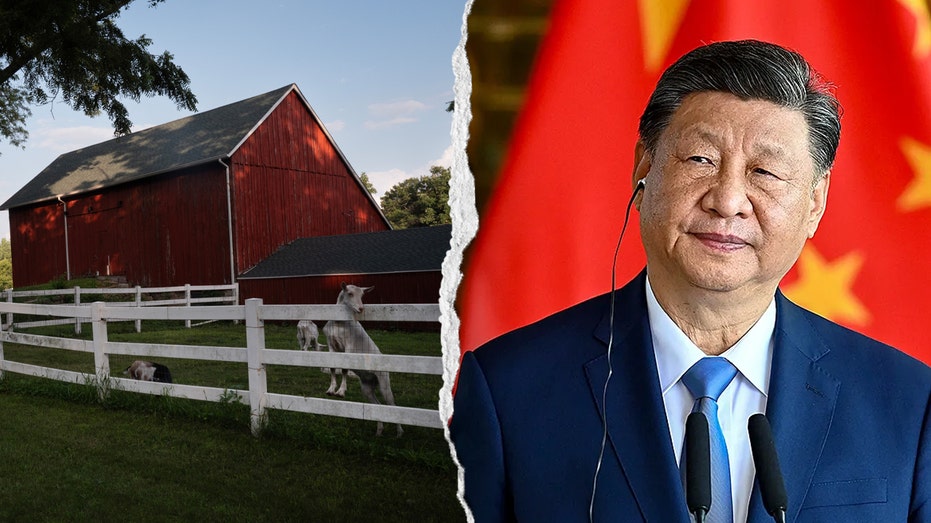
Federal lawmakers are demanding answers from the National Future Farmers of America (FFA) over its partnership with a Chinese Communist Party-controlled agribusiness and its push for DEI initiatives, citing national security concerns and questions about its tax-exempt status. The inquiry is being led by the House Ways and Means Committee and the Congressional FFA Caucus, which say the organization’s relationship with Syngenta Group raises concerns about foreign influence and whether FFA is operating in line with its stated mission as a tax-exempt nonprofit. House Ways and Means Committee Chairman Jason Smith and Congressional FFA Caucus co-chair Tracey Mann sent a letter to National FFA CEO Scott Stump demanding documents and answers related to the partnership, Syngenta’s role in shaping internal policies and the organization’s compliance with federal tax law. “Working with our nation’s foreign adversaries and prioritizing woke policies over your mission raises serious concerns regarding whether the National FFA is complying with the requirements to maintain tax-exempt status,” the lawmakers wrote. MOST SHOCKING EXAMPLES OF CHINESE ESPIONAGE UNCOVERED BY THE US THIS YEAR: ‘JUST THE TIP OF THE ICEBERG’ In the letter, the committee emphasized FFA’s role in educating future agricultural leaders, noting the organization serves more than one million students through thousands of chapters across the country. The lawmakers devoted a significant portion of the letter to detailing Syngenta Group’s ownership structure and its ties to the Chinese government, arguing the relationship raises red flags for a U.S.-based, tax-exempt youth organization tied to agriculture. Syngenta has been wholly owned since 2017 by China National Chemical Corp., or ChemChina, a Chinese state-owned enterprise that later merged into Sinochem Holdings. AMERICA HAS TO RESPOND WITH A UNITED FRONT TO CHINA’S MASSIVE ECONOMIC WARFARE Both ChemChina and Sinochem were designated during the first Trump administration as Communist Chinese military companies, a classification used to identify firms linked to Beijing’s military-civil fusion strategy and restrict their access to U.S. government funding. Lawmakers noted that while those designations were removed in 2021 under the Biden administration, Syngenta was later redesignated as a Chinese military company, underscoring ongoing concerns about its ties to the Chinese state. The letter also pointed to actions by U.S. states and federal agencies to limit Chinese ownership and influence in American agriculture. It included efforts to force Syngenta subsidiaries to divest farmland and initiatives aimed at preventing the sale of U.S. agricultural land to Chinese entities on national security grounds. MORE THAN 160 HOUSE DEMS VOTE AGAINST CRACKDOWN ON FOREIGN INFLUENCE IN US SCHOOLS Against that backdrop, lawmakers said Syngenta’s access to FFA leadership, programming and students raises concerns about the influence a Chinese state-owned company could exert over future American agricultural leaders. “The CCP has a well-documented history of economic espionage to steal biotechnology and agriculture-related intellectual property, and the fact that the National FFA has provided one of their state-owned companies direct access to the future leaders of America’s farming industry is alarming,” the letter states. The lawmakers also criticized FFA’s embrace of DEI initiatives, arguing the programs risk shifting the organization away from agricultural education and toward identity-based priorities that could divide students. HOUSE GOP LAUNCHES BLITZ OF BILLS TO SHUT DOWN CCP INFILTRATION OF US SCHOOLS: ‘COMMONSENSE’ They questioned whether Syngenta’s role in DEI-related efforts gave the company undue influence over FFA’s strategic direction. “The goal of the National FFA should be to bring student members together as a community — not force them into specific categories,” the lawmakers wrote. Smith and Mann said the inquiry is part of broader congressional oversight of tax-exempt organizations and their exposure to foreign influence, particularly as farm and food security are increasingly viewed as matters of national security. FCC, STATE AGS TO JOIN FORCES IN CRACKDOWN ON CHINA-LINKED COMMUNICATIONS TECHNOLOGY Smith and Mann cited a statement from USDA Secretary Brooke Rollins that “farm security is national security.” Ultimately, the letter directs National FFA to turn over documents and provide detailed answers about its partnership with Syngenta Group, including contracts and financial contributions, the role Syngenta employees play in leadership or advisory positions, and the company’s involvement in shaping FFA’s diversity and strategic programs. In a statement provided to Fox News Digital, Smith said the committee is expanding its investigation to include the FFA over concerns about foreign influence and its impact on the organization’s mission. “The Ways and Means Committee is expanding our investigation into the malign foreign influence in the U.S. tax-exempt sector to include the FFA in light of deeply concerning reports that the organization has maintained ties to an entity controlled by the Chinese Communist Party — a relationship that appears to have influenced its decision-making,” Smith said. “The FFA plays a vital role in educating the next generation of farmers, strengthening American agriculture, and safeguarding our nation’s food supply and national security. That important mission must not be compromised.” Fox News Digital reached out to the National FFA for comment on the matter.