

Before-and-after satellite imagery offers a rare look at damage inside Iran
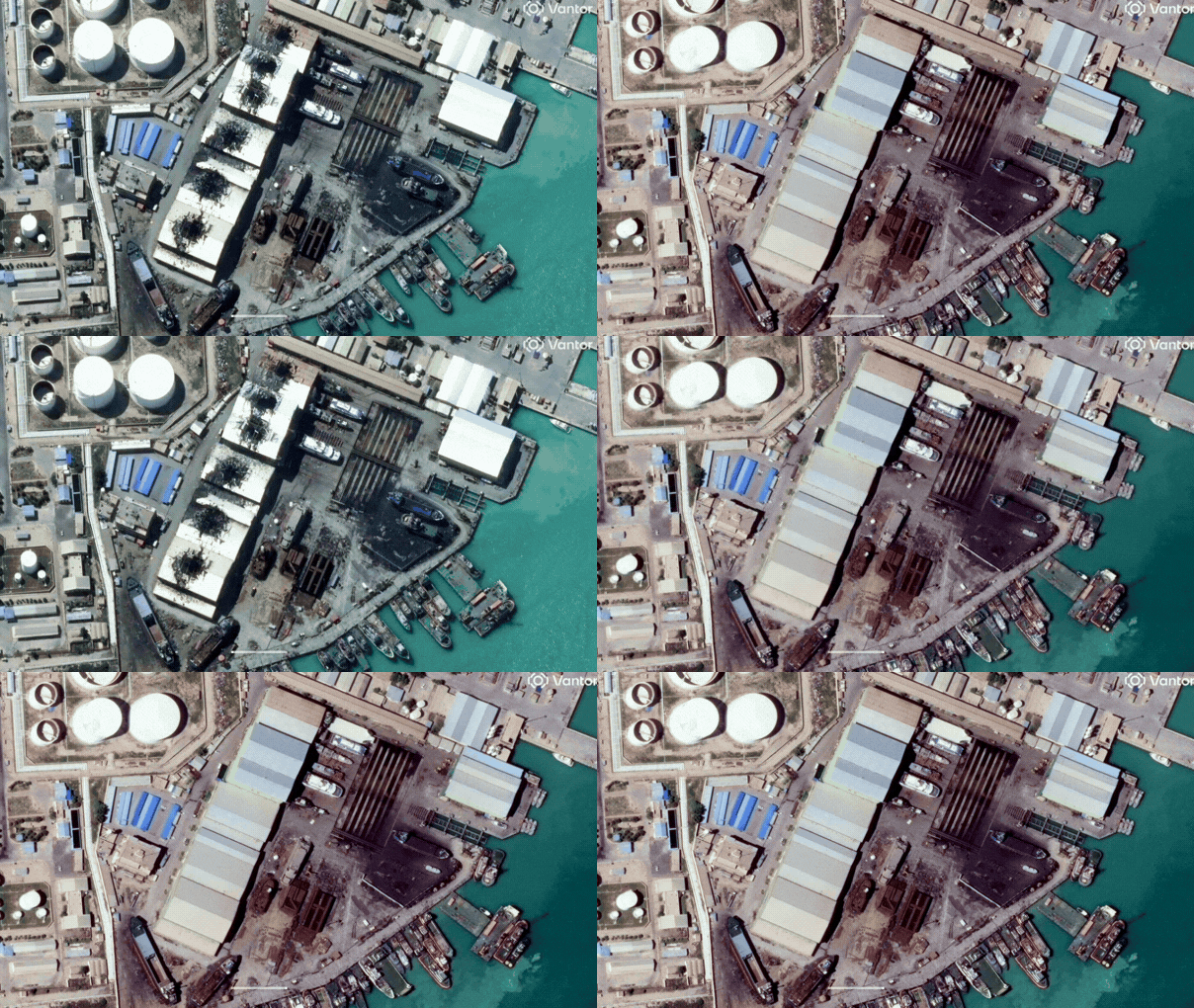
Fresh satellite images give a rare aerial view of the damage across Iran after U.S.-Israeli strikes and what Tehran’s retaliation left behind across the region. Planet Labs satellite imagery captured burning ships and damaged facilities at the Konarak base in southern Iran, as well as significant destruction at Iran’s naval headquarters in Bandar Abbas on the Persian Gulf, reflecting the scale of the strikes on military infrastructure. WATCH SHIPPING THROUGH THE STRAIT OF HORMUZ GRIND TO A HALT AMID IRAN CONFLICT Imagery from Vantor shows damage to facilities and vessels located in Iran’s Bushehr port in the Persian Gulf. In addition to naval assets, satellite photos show a bunker at Bushehr air base hit by a strike, leaving a large crater and destroying several nearby small buildings. More strikes targeted the Choqa Balk drone facility in western Iran. Radar systems at the Zahedan air base in eastern Iran — near the country’s borders with Pakistan and Afghanistan — were also struck. The two facilities are about 800 to 900 miles apart, underscoring the broad reach of the coordinated strikes. Satellite imagery also reveals damage to aircraft on the tarmac at Shiraz air base, including scorch marks and debris around several parking areas. Satellite imagery from Planet Labs shows thick smoke plumes rising above Tehran, signaling explosions and fires inside the Iranian capital. The smoke underscores how the conflict has moved beyond isolated military sites and into the heart of Iran’s political center. THE UNLIKELY TOOL TRUMP IS EYEING TO TACKLE RISING OIL PRICES AMID THE IRAN CONFLICT Iran has since responded with missile and drone strikes of its own, expanding the conflict across the region. Satellite images reveal damage to the port city of Sharjah in the United Arab Emirates. Sharjah is the third most populous after Dubai and Abu Dhabi. The Jebel Ali Port, the region’s largest maritime hub, was also targeted, underscoring how the retaliation extended beyond military sites to key infrastructure. The new satellite imagery comes on the heels of U.S.-Israeli strikes that killed Iran’s supreme leader, Ayatollah Ali Khamenei, and several top members of the regime, triggering a succession crisis. President Donald Trump warned on Sunday that Iran’s new leader is “not going to last long” without U.S. approval as Operation Epic Fury marches into a third week.
Trump warns Iran’s new leader won’t ‘last long’ without his approval
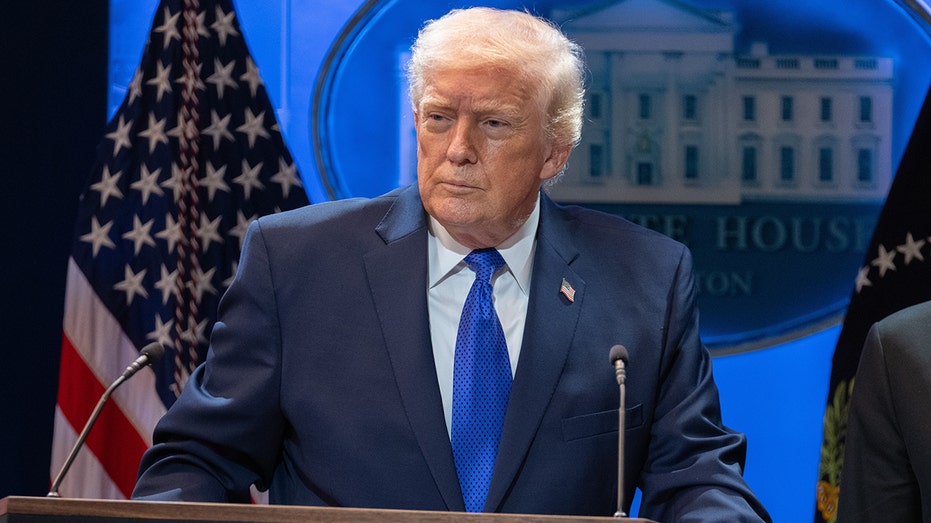
President Donald Trump said Sunday that Iran’s new leader is “not going to last long” without U.S. approval as Operation Epic Fury continues into its second week. “He’s going to have to get approval from us,” Trump told ABC News in an interview. “If he doesn’t get approval from us he’s not going to last long. We want to make sure that we don’t have to go back every 10 years, when you don’t have a president like me that’s not going to do it.” “I don’t want people to have to go back in five years and have to do the same thing again or worse let them have a nuclear weapon,” the president continued. Trump’s comments come after Iranian state media reported that a majority consensus had been reached on a new supreme leader following the Feb. 28 assassination of Ayatollah Ali Khamenei. IRAN’S SENIOR CLERICS ‘EXPOSED’ AFTER BUILDING STRIKE IN QOM, SUCCESSION CHOICE LOOMS Mohammadmehdi Mirbaqeri, who serves on Iran’s Assembly of Experts, the clerical body tasked with selecting the supreme leader, did not offer any names but acknowledged to the Mehr News Agency that there are still “some obstacles.” ABC News reported that Trump said it’s possible he would be in favor of someone with ties to the old regime. “I would, in order to choose a good leader I would, yeah, I would. There are numerous people that could qualify,” he said. ISRAEL HAMMERS IRANIAN INTERNAL SECURITY COMMAND CENTERS TO OPEN DOOR TO UPRISING The Associated Press reported that several figures are being viewed as potential successors to Iran’s supreme leadership. They include: IRAN POSTPONES TEHRAN FAREWELL CEREMONY FOR KHAMENEI WHERE LARGE CROWDS WERE EXPECTED TO GATHER Israel’s Defense Minister Israel Katz warned Iranian leadership in a post on X last week that any successor who tries to “destroy Israel, to threaten the United States and the free world and the countries of the region, and to suppress the Iranian people” will be an “unequivocal target for elimination.” “It does not matter what his name is or the place where he hides,” Katz said.
The unlikely tool Trump is eyeing to tackle rising oil prices amid the Iran conflict
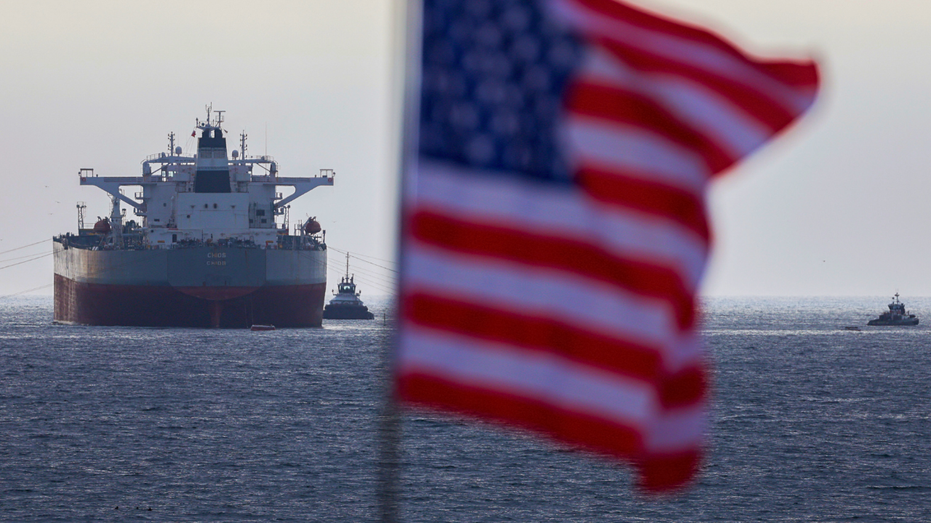
The new battleground in the Gulf isn’t just on the water — it’s in the insurance market, where war-risk coverage can determine which oil tankers sail and which stay put. With the conflict driving gasoline prices higher, the White House is weighing steps to keep oil flowing through the Strait of Hormuz and to keep prices from climbing further. The Strait of Hormuz, a narrow passage between Iran and Oman, carries roughly 20 million barrels of oil a day and about one-fifth of global supply of liquefied natural gas. When conflict flares in the region, even the threat of disruption can rattle markets because so much of the world’s energy moves through that single corridor. WATCH SHIPPING THROUGH THE STRAIT OF HORMUZ GRIND TO A HALT AMID IRAN CONFLICT And with so much at stake, the White House is turning to an unlikely tool: insurance. President Donald Trump said the U.S. could use a government-backed insurance program to lower war-risk premiums for vessels in the region. Under a backstop, the government would absorb part of any major losses, easing pressure on private insurers and shipowners. Because when danger rises, the bill rises. Insurers charge more to cover ships and cargo, shippers add “war-risk” surcharges and some vessels slow down, detour or pause altogether. Those delays can tighten supply and push crude prices higher even if oil production hasn’t changed. Against that backdrop, the latest disruption, sparked by U.S.-Israeli strikes starting on Feb. 27 and retaliatory Iranian drone and missile attacks across the region, is forcing shippers and insurers to rethink whether it’s safe to transit the waterway. NEW SATELLITE IMAGES SHOW FIRES, NAVAL BASE DAMAGE ACROSS IRAN AFTER US-ISRAELI STRIKES Some global insurers are already tightening terms. Maritime insurance titans Gard, Skuld, NorthStandard, the London P&I Club and the American Club, have already canceled war-risk coverage, leaving voyages through Iranian and nearby waters without insurance. Not all coverage is disappearing though. Lloyd’s of London, an insurance marketplace that brings together multiple insurers to cover large, high-risk voyages, said its vessels operating in the Gulf region have a combined hull value exceeding $25 billion. It added that coverage is still in place. A Lloyd’s spokesperson told Reuters the market is in talks with U.S. officials about possible options. Separately, global insurance broker Marsh said it met with Trump administration representatives to discuss the idea. Matt Smith, an analyst at Kpler, said coverage is a baseline requirement for ships transiting the Strait of Hormuz, but it doesn’t eliminate the risk. “It’s essential for all of these tankers to have insurance. You simply cannot pass through the Strait of Hormuz if you don’t have the insurance, given the high possibility of getting struck by a missile,” Smith told Fox News Digital. “But even with that insurance in place, it’s little comfort for those on the ship if there’s a chance the vessel is going to be attacked,” he added. With that calculus in mind, Maersk, widely regarded as a bellwether for global ocean freight, said it will suspend all vessel crossings through the Strait of Hormuz until further notice and warned service to Arabian Gulf ports could be delayed. When big shippers hit the brakes, the ripple effects can be felt fast. If oil becomes more expensive or slower to reach buyers, those increases can move through the supply chain and show up for Americans at the pump. How much Americans feel at the pump will depend on how long the disruption lasts and whether shipping and insurance markets stabilize. Until then, the world’s most important energy chokepoint is likely to keep traders and drivers on edge.
Trump vows block on signing new laws until SAVE America Act passes Senate
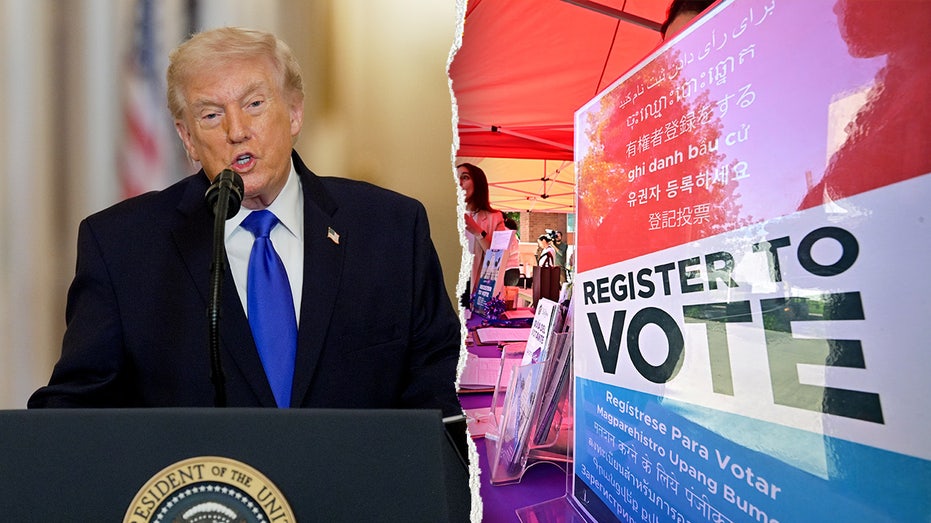
President Donald Trump is vowing to reject signing any new bills into law until the SAVE America Act is passed by the Senate, a tall order with just 53 Republicans seated and the 60-vote filibuster threshold a high hurdle. “Great Job by hard working Scott Pressler on Fox & Friends talking about using the Filibuster, or Talking Filibuster, in order to pass THE SAVE AMERICA ACT, an 88% issue with ALL VOTERS,” Trump wrote Sunday morning on Truth Social. “It must be done immediately.” “It supersedes everything else,” Trump added. “MUST GO TO THE FRONT OF THE LINE.” The vow to halt all new law signings is a new one coming from the White House and notable because of the Senate hesitation to follow the urgings of Sen. Mike Lee, R-Utah, to force the Senate to bring the bill forward through the talking filibuster. DAVID MARCUS: PASSING THE SAVE AMERICA ACT TO SAVE CORNYN IS A FAIR DEAL “I, as President, will not sign other Bills until this is passed,” Trump’s post continued, “AND NOT THE WATERED DOWN VERSION – GO FOR THE GOLD: MUST SHOW VOTER I.D. & PROOF OF CITIZENSHIP: NO MAIL-IN BALLOTS EXCEPT FOR MILITARY – ILLNESS, DISABILITY, TRAVEL: NO MEN IN WOMEN’S SPORTS: NO TRANSGENDER MUTILIZATION FOR CHILDREN! DO NOT FAIL!!!” While Senate Majority Leader John Thune, R-S.D., has publicly acknowledged a willingness to bring a vote on the SAVE America Act before the upper chamber, there is hesitation within the Republican Party about forcing the talking filibuster under the current Senate rules. The talking filibuster would force Democrats to speak on the Senate floor to argue against a voter identification position widely supported by Americans, as Trump noted, but it would also force Republicans to sit in attendance with a quorum. That has been rebuked by longtime Senate GOP veterans as something that would “waste time.” FETTERMAN EXPECTS DHS SHUTDOWN AMID PARTISAN FUNDING FEUD, BREAKS WITH DEMOCRATS ON VOTER ID Former Senate GOP leader Mitch McConnell, R-Ky., has been publicly opposed to forcing a talking filibuster because of the time constraints it would force on the Senate GOP, and he remains one of the few Senate Republicans not signing on to support the SAVE America Act. Another development that clouds the SAVE America Act filibuster is the recent appointment of Sen. Markwayne Mullin, R-Okla., to serve as the next Department of Homeland Security secretary, perhaps resigning from the Senate by the end of March. Fox News Digital reached out to Mullin’s office for comment. McConnell’s office declined to comment on Trump’s Truth Social vow to block all new law signings amid the standoff on the DHS funding that has the government in a partial shutdown and the Senate sitting on the House-passed SAVE America Act. GOP REACHES KEY 50-VOTE THRESHOLD FOR TRUMP-BACKED VOTER ID BILL AS SENATE FIGHT LOOMS “We’re going to have a vote on this, but in terms of what the president is willing to sign, Maria, we need to get the Department of Homeland Security funded,” Senate Majority Whip John Barrasso, R-Wyo., told Maria Bartiromo on “Sunday Morning Futures.” “The Democrats have blocked that right now. And the greatest threat to the American people today is terrorism. So I want to make sure that the Democrats work with us to pass and fund the Department of Homeland Security, because I’m worried about the lone wolf, the sleeper cells and the cyber terrorism that’s coming our way because of what Iran is telling people around the world to do to continue this reign of terror,” Barrasso said. Getting to 60 votes in the Senate is unlikely with just Sen. John Fetterman, D-Pa., as the lone potential Democrat vote to side with the Senate GOP on the SAVE America Act. HOUSE REPUBLICANS PUSH JOHNSON TO GO TO WAR WITH SENATE OVER SAVE ACT “The Democrats are against so many of the things that I think help this country,” Barrasso added to Bartiromo. “They’d rather stand with illegal immigrant criminals than with the safety and security of the American people. I want to get the SAVE Act to the floor. I want to have a vote.” “That’s the next step on this need to get the Department of Homeland Security open and funded,” he continued. “The Democrats are bowing to the liberal left: The people that want to eliminate ICE, the people that want open borders again, and the people that really aren’t looking out for the best interest of the American people. “As the president said in the State of the Union, it is the first duty of the American government to protect American citizens, not illegal aliens. But that’s what not one single Democrat stood up for that when every Republican stood and cheered loudly.” Barrasso, the Senate GOP member whipping up support, considers the SAVE America Act “common sense.” “You want to make sure that only citizens can vote,” he concluded to Bartiromo. “You want to make sure that when people show up, they have a photo ID to prove they are who they say they are. You need a photo ID to buy a beer, to board a plane, all of those things. And it’s 90% popular with the American people. The only people against this are the Democrats because they want to make it easier to cheat.”
State Department defends ‘proactive’ evacuation efforts against Dems’ claims of diplomatic chaos
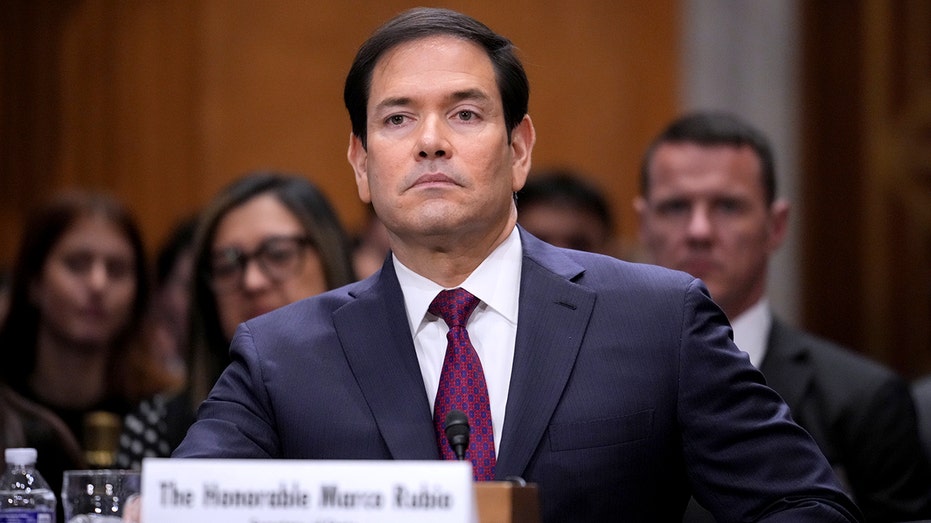
FIRST ON FOX: Nearly 28,000 Americans have returned from the Middle East, according to the State Department, which outlined a large-scale evacuation effort as Senate Democrats escalated criticism over the conflict in Iran. A top State Department official, in a letter to Senate Democrats first obtained by Fox News Digital, noted that since fighting in Iran escalated following Operation Epic Fury, the agency has “taken proactive, rapid action to support Americans in the region.” That has included chartered flights, ground transport from closed-airspace areas and round-the-clock crisis staffing. US EMBASSY URGES AMERICANS IN IRAQ TO SHELTER IN PLACE UNTIL FURTHER NOTICE Paul Guaglianone, the State Department’s senior bureau official of legislative affairs, wrote in a letter to several Senate Democrats on the Senate Foreign Relations Committee that before the strikes, the agency “planned immediate measures to protect and evacuate U.S. citizens.” The letter comes as diplomats and officials have faced “multiple direct strikes from the Iranian regime.“ “The professionalism and competence of America’s diplomatic corps are inspiring,” Guaglianone wrote. “The Department has taken all necessary steps to protect its safety, both in the region and at posts worldwide.” AMERICAN STUCK IN MIDDLE EAST ESCAPES IN RACE TO REACH CRITICALLY ILL HUSBAND IN CALIFORNIA “Despite ongoing threats, our diplomats remain active and focused,” he continued. “They continue to communicate with our allies and partners and advance American diplomatic interests.” His letter responds directly to criticism from Senate Democrats, led by Sen. Jeanne Shaheen, D-N.H., who argued that Secretary of State Marco Rubio and the Trump administration have “not prioritized getting experienced ambassadors in place in the Middle East,” leading to a breakdown in evacuating diplomats and Americans since the strikes began. The lawmakers noted that three ambassadors were dismissed in Qatar, Kuwait and Egypt “without explanation,” and that the administration is behind in finding replacements and filling vacancies. AMERICANS STRANDED IN DUBAI FACE REPEATED FLIGHT CANCELLATIONS AMID IRAN ESCALATION “Of the 14 countries where the Department urged Americans to urgently leave last Monday, only six have confirmed ambassadors,” the lawmakers wrote. “There are currently no pending nominees before the Senate for ambassadorships in the Middle East. As a result, many key posts are without experienced senior leadership at a time of crisis.” “Simply put, abrupt decision-making and lack of planning by State Department leadership to ensure the safety and security of its own staff left our personnel and their families unnecessarily at risk,” they continued. “Days into the conflict, the Department still appears caught off-guard and lacks a clear, comprehensive plan to safeguard American personnel, their families or other Americans in the region.” Guaglianone noted that the agency is providing frequent updates to more than 106,000 Americans enrolled in the Smart Traveler Enrollment Program, operating a 24/7 call center with no wait times and responding quickly to congressional inquiries while coordinating closely with lawmakers to assist constituents. He also wrote that the agency is chartering additional planes for Americans as more commercial flights become available in Saudi Arabia, the United Arab Emirates, Jordan and Oman, and that ground transportation is being offered to expand relocation options for Americans in places with closed airspace. Americans in Oman, Kuwait, Bahrain, the United Arab Emirates, Qatar, Saudi Arabia and Israel who complete the Crisis Intake form receive direct outreach about upcoming charter aviation and ground transportation options from the agency. “At this time, nearly one in three American citizens who requested help departing turn down U.S. government-provided transportation options when contacted,” Guaglianone wrote. “Some American citizens wish to remain in-country, while others prefer an alternative departure option.”
Iran women’s football team sing anthem amid safety concerns during war

Listen to this article Listen to this article | 5 mins info Players on the Iranian women’s football team have sung and saluted during their national anthem before their final Women’s Asian Cup match at Gold Coast Stadium in Australia, six days after their decision to remain silent during the anthem saw them labelled “wartime traitors” on state TV back home. The Iranians, whose situation has become a cause celebre among human rights campaigners in Australia, will play no further part in the tournament after a 2-0 loss on Sunday to the Philippines in Queensland. Recommended Stories list of 3 itemsend of list Their campaign in the continental showpiece started last weekend, just as the United States and Israel launched air strikes on Iran on February 28, killing at least 1,332 people since then, including Supreme Leader Ali Khamenei. Iran’s team and management, who have voiced fears and concerns for their families in Iran, wore a stoic look and chose not to sing their national anthem in the opening game against South Korea on Monday. Their decision drew criticism in Iran with Islamic Republic of Iran Broadcasting presenter Mohammad Reza Shahbazi saying in a video that the players showed a lack of patriotism and their actions amounted to the “pinnacle of dishonour”. The Iranian team sang along to Mehr-e Khavaran (Eastern Sun) before their second defeat against the host nation on Thursday, sparking fears among Australian human rights campaigners that they had been coerced by government minders. No public reason was given for the players’ original stance over the pregame national anthem. Iran’s coach Marziyeh Jafari also salutes during the anthem alongside the players [Dave Hunt/AAP Image via AP] ‘Credible fears for safety’ A petition launched on Friday on the Change.org website urging Australia to give refuge to the team had gathered more than 51,000 signatures by late on Sunday. The petition called on Home Affairs Minister Tony Burke to ensure the team did not depart Australia “while credible fears for their safety remain” but Burke’s office has not commented on the petition. Advertisement The petition asked local authorities to ensure any player seeking protection “can do so safely, privately, and without interference” and to “make clear that Australia will uphold its … humanitarian protection obligations in relation to any player at risk of persecution or serious harm”. “Where credible evidence exists that visiting athletes may face persecution, imprisonment, coercion, or worse upon return, silence is not a neutral position,” it said. “The current wartime environment has intensified repression, fear, and the risks faced by anyone publicly perceived by the Islamic Republic as disloyal.” Iranian Australian activist Tina Kordrostami, a member of local government in Sydney’s Ryde Council, told The Australian newspaper the Iranian players “need an opportunity, a safe space, a chance to actually speak up about what their needs are and what their requirements are”. “We can’t give them that space without the government helping us,” she said. Speaking to national broadcaster ABC before Sunday’s game, Foreign Minister Penny Wong was asked about the prospect of the team going home. “I want to say about the Iranian women’s team that it has been really moving for Australians to see them in Australia,” she said. Wong added that the sight of the Australian players swapping shirts with their Iranian opponents was “a very evocative moment”. “It spoke to solidarity and the way in which sport can bring us together,” she said. “We know this regime has brutally oppressed many Iranian women. Obviously, this is a regime that we know has brutally cracked down on its people.” The US and Israel continued their large-scale strikes on Iran for a ninth day as the conflict has widened to include the Gulf region as well as Lebanon and Iraq. The players union FIFPRO had previously called on the Asian Football Confederation and global football’s governing body, FIFA, to uphold their human rights obligations and undertake all necessary steps to ensure the safety of Iran’s squad in the wake of the broadcast. Iran’s team ended their campaign winless, also losing 3-0 to South Korea and 4-0 to Australia to finish bottom of Group A with nine goals conceded and none scored. Matildas snatch late draw with South Korea Australia’s Alanna Kennedy scored her second goal deep into stoppage time to achieve a 3-3 draw against South Korea, but it was not enough to prevent their opponents from topping Group A. The South Koreans, who sealed the top spot by virtue of their superior goal tally over the three group fixtures, will return to Stadium Australia in Sydney on Saturday for a quarterfinal against a third-placed team from one of the other opening-round groups. Advertisement The Matildas, meanwhile, will have to travel across Australia to play either North Korea or reigning champions China in the last eight at Perth Rectangular Stadium on Friday. Australia’s Alanna Kennedy, left, scored a stoppage-time equaliser as Australia drew 3-3 with South Korea to finish second in their group [Rick Rycroft/AP] Adblock test (Why?)
How targeting of desalination plants could disrupt water supply in the Gulf
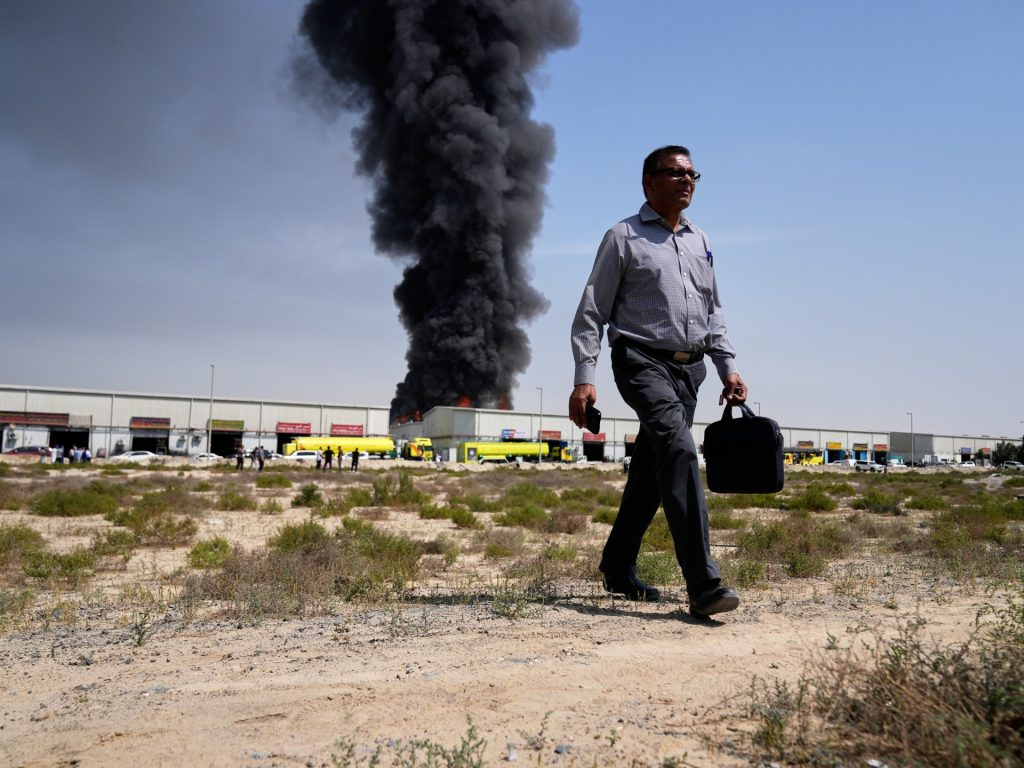
Bahrain has said an Iranian drone attack caused material damage to a water desalination plant in the country, marking the first time a Gulf nation has reported targeting any such facility during the eight days of the war between Iran and the US and Israel. The attack on Sunday comes a day after Iranian Foreign Minister Abbas Araghchi said a freshwater desalination plant on Qeshm Island in southern Iran was attacked by the United States. Recommended Stories list of 3 itemsend of list “Water supply in 30 villages has been impacted. Attacking Iran’s infrastructure is a dangerous move with grave consequences. The US set this precedent, not Iran,” he said on X on Saturday. While Tehran has not yet commented on the Bahrain attack, it has raised questions about the vulnerability of the Gulf countries, which depend on desalination plants for the majority of their water supply. How important are water desalination plants to the Gulf region? Can water security in the Gulf be guaranteed amid a widening of military targets to include energy and other civilian sites? What are desalination plants? A desalination plant primarily converts seawater into water suitable for drinking purposes as well as for irrigation and industrial use. The process of desalination involves removing salt, algae and other pollutants from seawater using a thermal process or membrane-based technologies. According to the US Department of Energy, desalination systems “heat water so that it evaporates into steam, leaving behind impurities, and then condenses back into a liquid for human use”. Advertisement Meanwhile, membrane-based desalination involves “a class of technologies in which saline water passes through a semipermeable material that allows water through but holds back dissolved solids like salts”. Reverse osmosis is the most popular membrane technology. Most countries in the Gulf Cooperation Council (GCC) use reverse osmosis since it is an energy-efficient technique. Why are desalination plants important to the Gulf? Water is scarce in the Gulf region due to the arid climate and irregular rainfall. Countries in the Gulf also have very limited natural freshwater resources. Groundwater, together with desalinated water, accounts for about 90 percent of the region’s main water resources, according to a 2020 report by the Gulf Research Center. But in recent years, as groundwater has also begun to deteriorate as a result of climate change, Gulf countries have begun relying heavily on energy-intensive seawater desalination to meet their water needs. More than 400 desalination plants are located on the Arabian Gulf shores stretching from the United Arab Emirates (UAE) to Kuwait, providing water to one of the most water-scarce regions in the world. According to a 2023 research paper published by the Arab Center Washington DC, GCC member states account for about 60 percent of global water desalination capacity, producing almost 40 percent of the total desalinated water in the world. About 42 percent of the UAE’s drinking water comes from desalination plants, while that figure is 90 percent in Kuwait, 86 percent in Oman, and 70 percent in Saudi Arabia. Saudi Arabia also produces more desalinated water than any other country. Desalination has also played a crucial role in enabling economic development in the region, according to Naser Alsayed, an environmental researcher specialising in the Gulf states. He noted that after the discovery of oil in the late 1930s, Gulf states had very limited natural freshwater resources and could not meet the demands created by population growth and expanding economic activity. “Desalination plants were therefore introduced,” he told Al Jazeera, adding that the importance of desalinated water in supporting the Gulf’s development is often overlooked. “As a result, targeting or disrupting desalination facilities would place much of the region’s economic stability and growth at significant risk,” he said. “Secondly, desalination is the main source of freshwater for most GCC states, especially smaller and highly water-scarce countries such as Bahrain, Kuwait and Qatar. Because this water is primarily used for human consumption, desalination carries a strong humanitarian dimension and is essential for sustaining daily life in the region, making any disruption to these facilities particularly significant for the population,” he added. Advertisement Iran also uses desalination plants, which have been installed in coastal areas such as Qeshm Island in the Gulf. But Iran also has many rivers and dams and is not as heavily reliant on desalination plants as other countries in the Gulf region. If a desalination plant is attacked, what is the impact? The Gulf’s heavy reliance on desalination plants has made it vulnerable during times of conflict. During the 1990-1991 Gulf War, Iraqi forces intentionally destroyed most of Kuwait’s desalination capacity, and the damage to its water supply was severe. Raha Hakimdavar, a hydrologist, told Al Jazeera that in the long-term, attacking these plants can also impact domestic food production, which mostly uses groundwater. “However, the pressures from competing needs can divert this water away from domestic production. This can be especially challenging because the region is also highly food import dependent and is facing potential food security challenges due to the compromising of the Strait of Hormuz,” said Hakimdavar, who is a Senior Advisor to the Deans at Georgetown University in Qatar and the Earth Commons. A 2010 CIA report (PDF) also warned that while “national dependence on desalinated water varies substantially among Persian Gulf countries, disruption of desalination facilities in most of the Arab countries could have more consequences than the loss of any industry or commodity.” According to Alsayed, the impact of a plant being attacked in the region, however, depends on the local scenario. “For Saudi Arabia, which is the least dependent on desalination and has significant geographic space, facilities on the Red Sea provide resilience. The UAE has 45 days of water storage aligned with its 2036 water security strategy, so contingency plans are in place to manage potential disruptions,” he said. “The effects are likely to be felt more acutely in smaller states that are highly dependent on desalination like Qatar, Bahrain, and Kuwait, which have minimal strategic reservoirs,” he noted. “The
‘Gulf countries may question US capability to protect them’
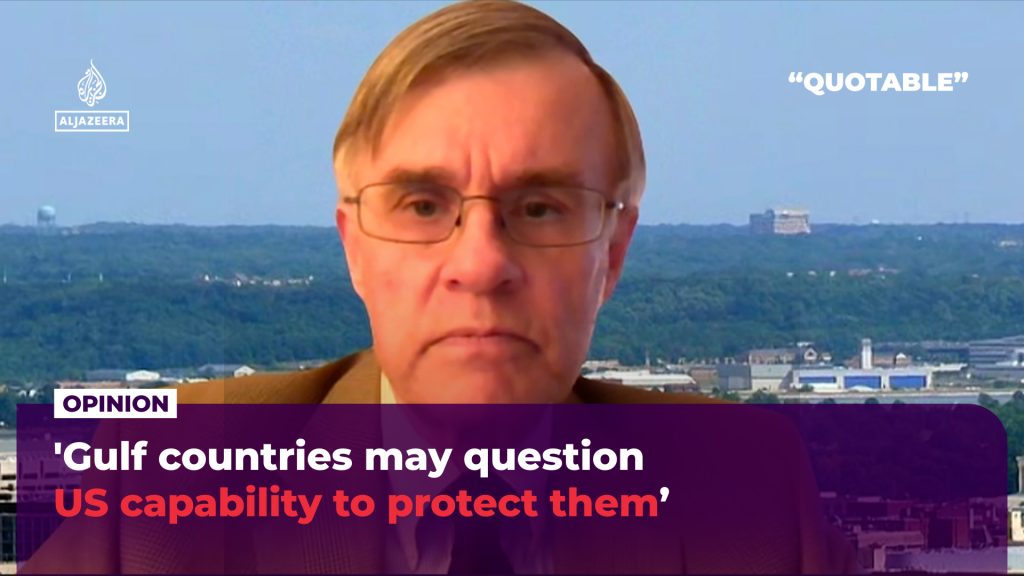
Former US Deputy Assistant Secretary of State Gordon Gray explains the short-term and long-term implications of US-Israeli war on Iran. Published On 8 Mar 20268 Mar 2026 Click here to share on social media share2 Share plus2googleAdd Al Jazeera on Googleinfo Adblock test (Why?)
PM Modi inaugurates Delhi Metro corridors, projects to extend Pink, Magenta Lines, check new routes

Prime Minister Narendra Modi inaugurates and lays the foundation stone of Delhi metro projects worth about Rs 18,300 crore. Prime Minister inaugurates two new corridors of the Delhi Metro.
Rajasthan Horror: Man cuts off mother-in-law’s nose in Jalore, flees; police probe underway

In Rajasthan’s Jalore, a man allegedly cut off his mother-in-law’s nose following a prolonged family dispute. The victim, Kaili Devi, is undergoing treatment in Mehsana, Gujarat, while police have registered a case and are searching for the absconding accused.