

Endangered monarch butterfly population surges 64 percent

NewsFeed Mexico’s monarch butterfly population surged 64 percent this winter, raising hopes for the endangered species’ spring migration to the United States and Canada. Published On 27 Mar 202627 Mar 2026 Click here to share on social media share2 Share googleAdd Al Jazeera on Googleinfo Adblock test (Why?)
Albanese says Australia playing “constructive” role in the war on Iran
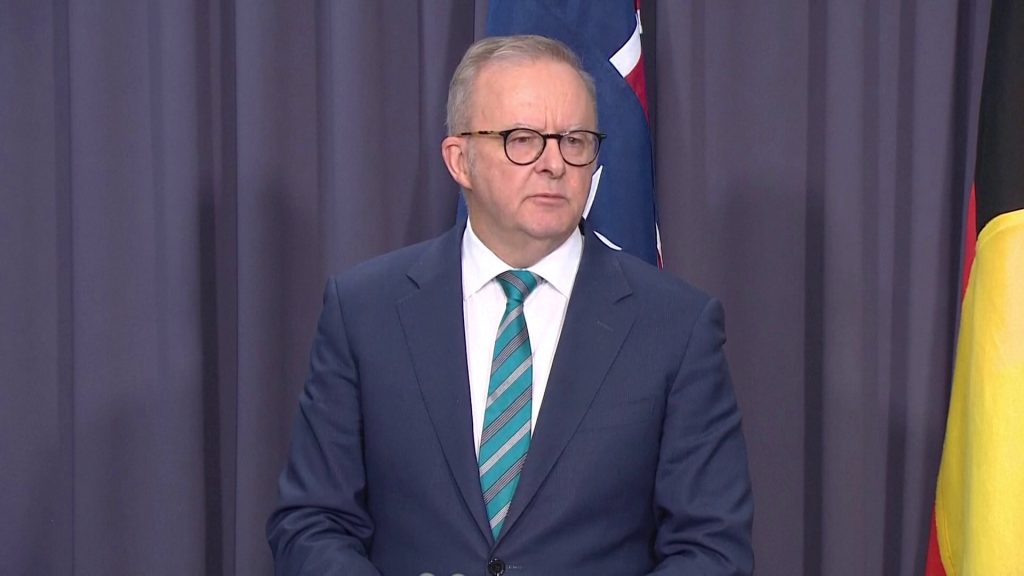
NewsFeed Australia’s prime minister Anthony Albanese says his government has made a “constructive” contribution to the US-Israeli war on Iran. The comments follow criticism from US President Donald Trump who said Australia’s support “was not great”. Published On 27 Mar 202627 Mar 2026 Click here to share on social media share2 Share googleAdd Al Jazeera on Googleinfo Adblock test (Why?)
Gurugram-Faridabad Namo Bharat RRTS corridor to get 18 new metro stations, HMRTC announces, check details

The HMRTC has earmarked 10 stations for Faridabad and eight for Gurugram, with the Gurugram-Faridabad RRTS line stretching approximately 64 kilometers.
Passenger finds worms in Vande Bharat meal, IRCTC fined Rs 10 Lakh, vendor’s contract terminated

Along with this, a fine of Rs 50 lakh has been imposed on the concerned service provider, and the contract termination has been ordered.
Modi govt cuts additional excise duty on petrol, diesel amid US-Iran war; Know what does this mean for you? Check new rates

India has revised fuel excise duties, cutting special additional duty on petrol to zero and setting Rs 3 per litre on diesel under one category.
Appeals court pauses orders limiting federal agents’ use of tear gas at protests near Portland ICE building
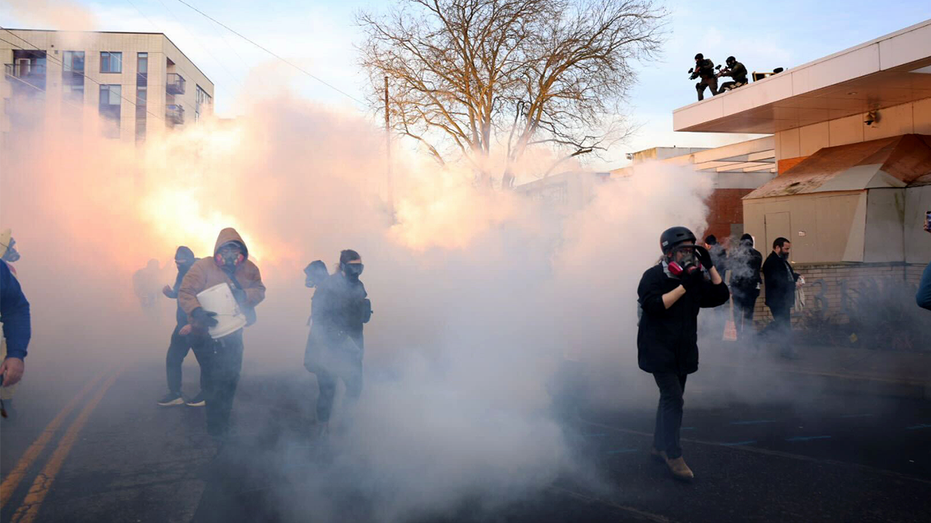
An appeals court paused a pair of lower court rulings in Oregon that restricted federal agents’ use of tear gas and other crowd-control munitions during protests outside the U.S. Immigration and Customs Enforcement building in Portland. The U.S. Court of Appeals for the Ninth Circuit granted the Trump administration’s request for temporary administrative stays in two cases in a 2-1 ruling. Anti-ICE demonstrators have held protests at the building since June, as part of protests across the country challenging President Donald Trump’s mass deportation agenda. Two lawsuits were filed over federal agents’ crowd control tactics — one brought by the American Civil Liberties Union of Oregon on behalf of protesters and freelance journalists and another brought by the residents of an affordable housing complex across the street from the ICE building. OREGON JUDGE LIMITS FEDERAL AGENTS’ TEAR GAS USE AT PORTLAND PROTESTS The complaints argue that federal agents’ use of chemical and projectile munitions has violated the rights of plaintiffs — including a demonstrator known for wearing a chicken costume, a married couple in their 80s and two freelance journalists who said federal agents used chemical spray and projectile munitions against them. The Department of Homeland Security has previously said that the agents have “followed their training and used the minimum amount of force necessary to protect themselves, the public, and federal property.” Earlier this month, the federal judges in Portland overseeing the separate cases both issued preliminary injunctions limiting federal agents’ use of tear gas, pepper spray and other chemical munitions unless someone poses an imminent threat of physical harm. The agents were also ordered not to fire munitions at the head, neck or torso “unless the officer is legally justified in using deadly force against that person” and were told not to use pepper spray against a group in an indiscriminate way that would affect bystanders. Additionally, they were told to only target people who were engaging in violent unlawful conduct or actively resisting arrest, noting that trespassing, refusing to move and refusing to obey an order to disperse are acts of passive resistance, not active resistance. “Plaintiffs provided numerous videos, which were received in evidence and unambiguously show DHS officers spraying OC Spray directly into the faces of peaceful and nonviolent protesters engaged in, at most, passive resistance and discharging tear gas and firing pepper-ball munitions into crowds of peaceful and nonviolent protestors,” U.S. District Judge Michael Simon wrote in his ruling on March 9 in the case brought by the ACLU. “Defendants’ conduct — physically harming protestors and journalists without prior dispersal warnings — is objectively chilling,” he added. JUDGE RULES FEDERAL AGENTS MUST LIMIT TEAR GAS AT PROTESTS NEAR PORTLAND ICE BUILDING The Ninth Circuit panel said on Wednesday that oral arguments in the two cases will be consolidated and scheduled for April 7. Earlier this year, Portland Mayor Keith Wilson called on ICE to leave the city after federal agents deployed tear gas at a crowd of demonstrators outside the agency’s building. The mayor described the protests as peaceful and criticized federal officers’ use of pepper balls, flash-bang grenades and rubber bullets. “Federal forces deployed heavy waves of chemical munitions, impacting a peaceful daytime protest where the vast majority of those present violated no laws, made no threat, and posed no danger to federal forces,” he said in a statement at the time. “To those who continue to work for ICE: Resign. To those who control this facility: Leave,” he added, accusing federal officials of “trampling the Constitution.” The Associated Press contributed to this report.
Schumer, Dems block DHS funding again as Trump intervenes to pay TSA agents
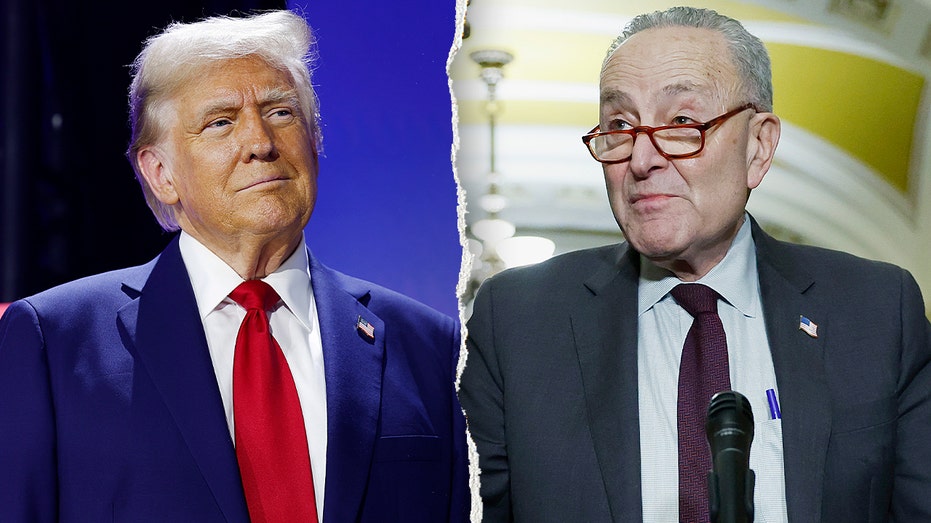
The Senate was again unable to end the Homeland Security shutdown on Thursday despite signs of a possible breakthrough to end the long-running closure, which prompted President Donald Trump to make a move. Senate Democrats blocked Department of Homeland Security (DHS) funding for a seventh time as the partial shutdown entered its 41st day on Thursday after Senate Republicans made a new offer earlier in the day after late-night negotiations. Trump then ordered DHS to pay airport workers and accused “their ‘Leader,’ Cryin’ Chuck Schumer,” of making it clear where Democrats stand, “and that is, ON THE SIDE OF CRIMINAL ILLEGAL ALIENS, AND NOT THE AMERICAN PEOPLE.” DEMS BLOCK DHS FUNDING AFTER GOP REJECTS THEIR COUNTER, THUNE SAYS SCHUMER ‘GOING IN CIRCLES’ “I am going to sign an Order instructing the Secretary of Homeland Security, Markwayne Mullin, to immediately pay our TSA Agents in order to address this Emergency Situation, and to quickly stop the Democrat Chaos at the Airports,” Trump said on Truth Social. “It is not an easy thing to do, but I am going to do it!” Still, several other components of the agency, including the Federal Emergency Management Agency, are still without funding. The vote stayed open for several hours to allow for talks between both sides to continue, but, by the fifth hour, Trump pulled the trigger on funding the Transportation Security Administration (TSA). “We’ve held the vote open for five hours to give the Democrats an opportunity to come to the table,” Senate Majority Whip John Barrasso, R-Wyo., told reporters. “They have not. And now, time is up.” Earlier in the day, Senate Majority Leader John Thune, R-S.D., said he believed talks between the sides were making progress. And despite Thune saying just a day earlier that there was “no point” in sending Senate Minority Leader Chuck Schumer, D-N.Y., and Democrats another compromise proposal, Republicans did just that. “Dems are in possession of what I think is our last and final [offer],” Thune said. “So, let’s hope this gets it done.” Thune remained mum on the details of the offer. When asked if the White House backed it, he said, “They’ve been involved in the back-and-forth that has occurred overnight and all morning, so we’ll see.” DHS DEAL IN LIMBO AS DEMOCRATS DEMAND TOUGHER ICE CRACKDOWN DESPITE GOP COMPROMISE Several Senate Democrats leaving their closed-door lunch meeting said they had yet to see or be briefed on the latest proposal and that the GOP’s new offer wasn’t discussed during the meeting. A source familiar with negotiations told Fox News Digital, “Schumer needs to grow a pair of b—- and make a decision.” The quick shift in mood in the upper chamber, despite the latest failure, came after the prospect of a deal to end the second-longest shutdown in history appeared even further out of reach. Republicans had offered Democrats a framework that would carve out Immigration and Customs Enforcement (ICE) funding but lacked the reforms Schumer and his caucus want. “I think our caucus remains united around the same premise: We’re not going to fund an immigration enforcement operation that doesn’t obey the law,” Sen. Chris Murphy, D-Conn., told Fox News Digital. “And I don’t think we’ve seen a proposal from them yet that meets that very simple priority.” SENATE REPUBLICANS MOVE TO REOPEN DHS WITH NEW PLAN, WAIT FOR DEMOCRATIC BUY-IN The ICE carve-out is also a proposal Democrats have made before, one Republicans previously blocked. Given that, many Senate Republicans were frustrated that Democrats appeared to back away from an idea they once supported. “They go on the floor, they shoot their mouths off and say we’ll fund everything but ICE,” Sen. Roger Marshall, R-Kan., told Fox News Digital. “We took them at their word. So, you know, they need to agree to ‘yes.’” It has also forced Republicans to grapple with the idea of not funding immigration enforcement, which has been a sore subject throughout the week. Still, they are eyeing budget reconciliation — the same party-line tactic used to pass Trump’s “big, beautiful bill” last year — to fund immigration operations and several other priorities. “I will not support legislation that doesn’t pay ICE agents. However, there’s a mechanism, by way of reconciliation, where we can front-load multiple years of that,” Sen. Eric Schmitt, R-Mo., told Fox News Digital. “The Democrats, I think, just handed us more certainty moving forward.”
Elon Musk demands judge’s recusal after latest flare-up over alleged bias
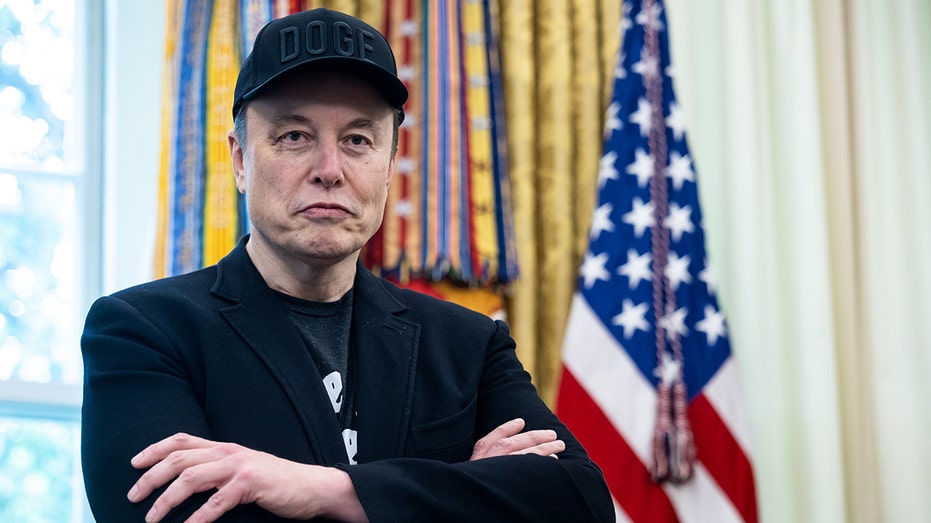
Elon Musk demanded on Wednesday that a Delaware judge recuse herself from Tesla lawsuits, arguing she recently demonstrated her bias against him when she liked an anti-Musk LinkedIn post. Musk’s lawyers filed a motion for recusal in Delaware’s Court of Chancery, which included a screenshot of Judge Kathaleen McCormick liking the social media post celebrating Musk’s $2 billion court loss in a separate case. The attorneys noted that the incident did “not exist in a vacuum.” The lawyers were referring to McCormick previously presiding over high-stakes cases involving Musk and the tech billionaire accusing the judge of bias stretching back years. The ongoing friction with the judge follows hostility Musk has faced from the left in recent years, most notably when he became a close ally of President Donald Trump in 2024 and through the early months of the administration. Musk’s lawyers said McCormick appeared to cheer on a lawyer on LinkedIn who made a post mocking Musk’s legal defeat in a California fraud case. McCormick is currently presiding over separate derivative litigation brought by Tesla shareholders who have alleged Musk harmed the company by overpaying himself and board members. The lawyers said one of McCormick’s staff members also liked another anti-Musk post related to Musk’s pending litigation. TRUMP NOT INTERESTED IN TALKING TO MUSK: ‘ELON’S TOTALLY LOST IT’ “This post to which the Court reacted and another to which a Court staff member reacted are not simply negative criticism of Mr. Musk and his attorneys, they are inflammatory,” Musk’s lawyers wrote. The lawyers said that “the very facts underlying the litigation celebrated in the posts are squarely at issue in the consolidated and coordinated actions.” McCormick later deactivated her LinkedIn account, and in a letter to attorneys in the case she denied supporting the anti-Musk post. “I either did not click the ‘support’ icon at all, or I did so accidentally,” McCormick wrote. “I do not believe that I did it accidentally.” McCormick in 2022 presided over a separate, high-profile lawsuit brought by Twitter, now called X, against Musk to force him to complete his $44 billion acquisition of the company after Musk attempted to back out over allegations the company misled him about the number of bots on the platform. Musk ended up moving forward with the acquisition and later testified that he felt forced to because he believed McCormick was biased against him. “We were unlikely to win the [Twitter] case in Delaware because the judge was extremely biased against me,” Musk said this month, according to the recusal motion. “This was, in fact, the same judge that struck my Tesla option grant that was subsequently overturned by the Delaware Supreme Court. So it’s accurate to say she was, that judge was not favorably inclined to me. Not objective.” In another lawsuit, McCormick in 2024 twice voided a multibillion-dollar pay package for Musk and the Tesla board, saying they had breached their fiduciary duties and that Musk effectively controlled the board. The Delaware Supreme Court reinstated the pay package but upheld McCormick’s underlying findings. Musk responded that year to an X post from a conservative influencer about McCormick, writing “absolute corruption” after the influencer noted that she had previously worked at a Delaware law firm that donated to former President Joe Biden. Musk’s grievances with McCormick began amid a national push against the tech billionaire as he began weighing in on politics, speaking out against the Democrat Party ahead of the 2022 midterms and endorsing Trump in the 2024 election. He became the head of Trump’s Department of Government Efficiency in 2025, serving in the role as a special government employee as he sought to identify government overspending and fraud, which raised his status as a political target by the left. Democrat lawmakers condemned Musk’s DOGE efforts in protests, while Tesla locations were targeted by rioters last year as critics characterized Musk as an unelected billionaire working in the administration. Trump and Musk had a public falling out last spring, when Musk openly opposed the president’s signature budget bill, known as the One Big Beautiful Bill Act. The pair have since been spotted chatting at various public events.
Trump declares national emergency at airports, to sign order instructing DHS to ‘immediately pay’ TSA officers
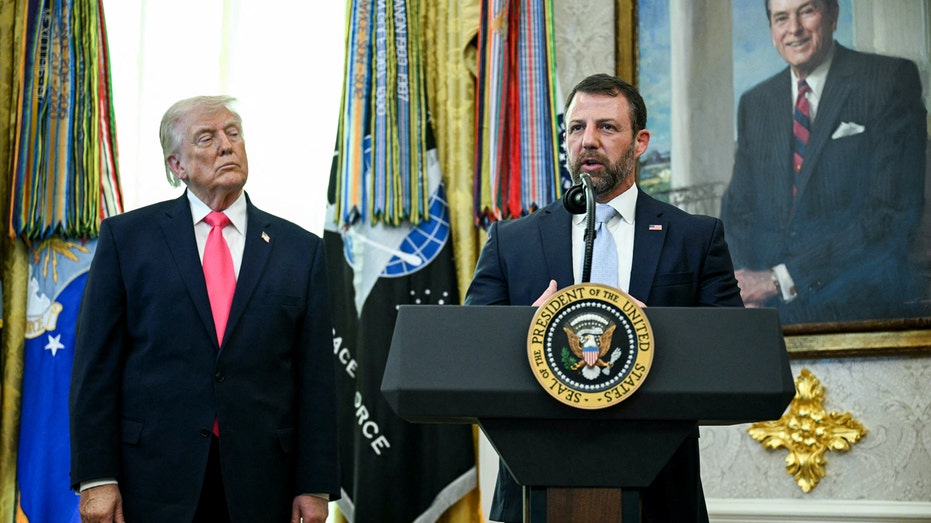
President Donald Trump said he will sign an executive order to address airport disruptions, announcing the move in a Truth Social post Thursday that framed the situation as a national emergency. “Because the Democrats have recklessly created a true National Crisis, I am using my authorities under the Law to protect our Great Country,” Trump wrote. “Therefore, I am going to sign an Order … to immediately pay our TSA Agents in order to address this Emergency Situation.” WHY SOME US AIRPORTS ARE DODGING TSA SHUTDOWN CHAOS WHILE OTHERS GRIND TO A HALT The White House said funding from legislation backed by Trump will be used to ensure TSA officers are paid during the disruption. “Not unlike actions taken during the first Democrat-shutdown (i.e., paying the troops), President Trump has determined that congressional Democrats have created an emergency situation that cannot be allowed to continue,” White House Office of Management and Budget Communications Director Rachel Cauley said in a statement to Fox News Digital. SCHUMER, DEMS BLOCK DHS FUNDING AGAIN AS TRUMP INTERVENES TO PAY TSA AGENTS Homeland Security Secretary Markwayne Mullin praised the move, writing on X that he “want[s] to thank @POTUS for his leadership in finding a way to pay our TSA officers to end this chaos at our airports.” “These hours long lines and thousands of Americans missing their flights was caused solely by the Democrats reckless @DHSgov shutdown,” Mullin added, calling on Democrats to “stop playing political games with our national security” and reopen the department. The move comes as a 41-day partial government shutdown has disrupted the Transportation Security Administration (TSA), causing long lines at airports nationwide amid a standoff over DHS funding and immigration enforcement. CLICK HERE TO GET THE FOX NEWS APP Trump accused Democrats of “refusing to fund Immigration Enforcement” and creating “Chaos at the Airports,” while thanking TSA officers for their work.
Treasury to place Trump’s signature on paper currency to mark nation’s 250th anniversary
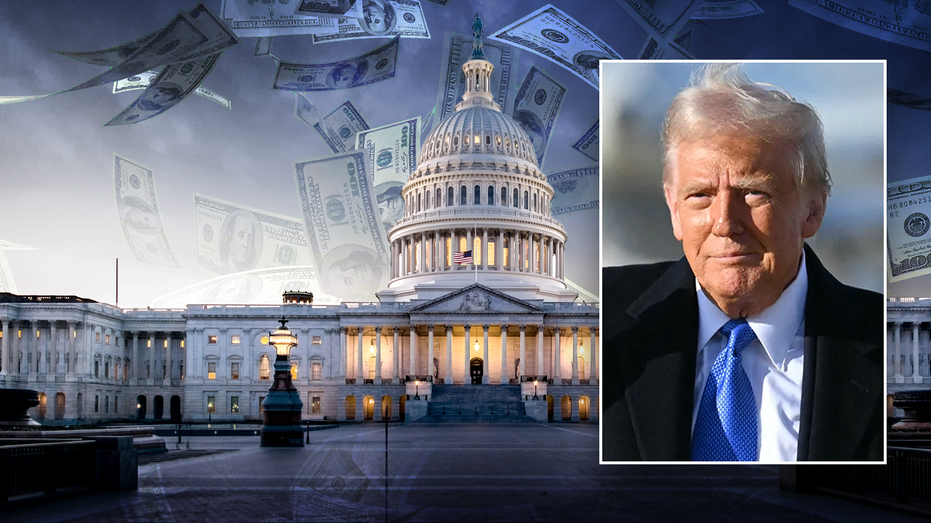
U.S. dollar bills will bear President Donald Trump’s signature to mark the 250th anniversary of American independence, the Treasury Department said, a first for a sitting president. Trump’s signature will be placed on all U.S. paper currency and will replace the Treasurer of the United States’ signature on U.S. money for the first time in 165 years. Treasury Secretary Scott Bessent said the move will recognize the Trump administration’s “historic achievements.” “Under President Trump’s leadership, we are on a path toward unprecedented economic growth, lasting dollar dominance and fiscal strength and stability,” Bessent said in a statement. “There is no more powerful way to recognize the historic achievements of our great country and President Donald J. Trump than U.S. dollar bills bearing his name, and it is only appropriate that this historic currency be issued at the Semiquincentennial.” TRUMP LAUNCHES MASSIVE ‘FREEDOM 250’ PUSH TO IGNITE AMERICA’S 250TH BIRTHDAY CELEBRATION The first $100 bills with the signatures of Trump and Treasury Secretary Scott Bessent will be produced in June, followed by other denominations in the coming months, Reuters reported. Fox News Digital has reached out to the Treasury Department for comment. MAGA COUNTRY VOTERS SOUND ALARM OVER ‘RIDICULOUS’ NATIONAL DEBT AMID DEBATE OVER TRUMP-BACKED BILL The Treasury’s Bureau of Engraving and Printing is still producing notes bearing the signatures of former President Joe Biden’s Treasury Secretary, Janet Yellen, and Treasurer Lynn Malerba, Reuters reported. In a statement, Treasurer Brandon Beach said placing Trump’s signature on U.S. currency is “not only appropriate, but also well-deserved,” given his “mark on history as the architect of America’s Golden Age economic revival.” Thursday’s announcement came as Trump makes efforts to put himself on a coin. The design of a commemorative gold coin with his image was approved by a federal arts panel. Trump’s name has also been placed on buildings, government programs and institutions.