

Army vet lawmaker marks Abbey Gate anniversary with blistering message for Biden-Harris: ‘Abject failure’
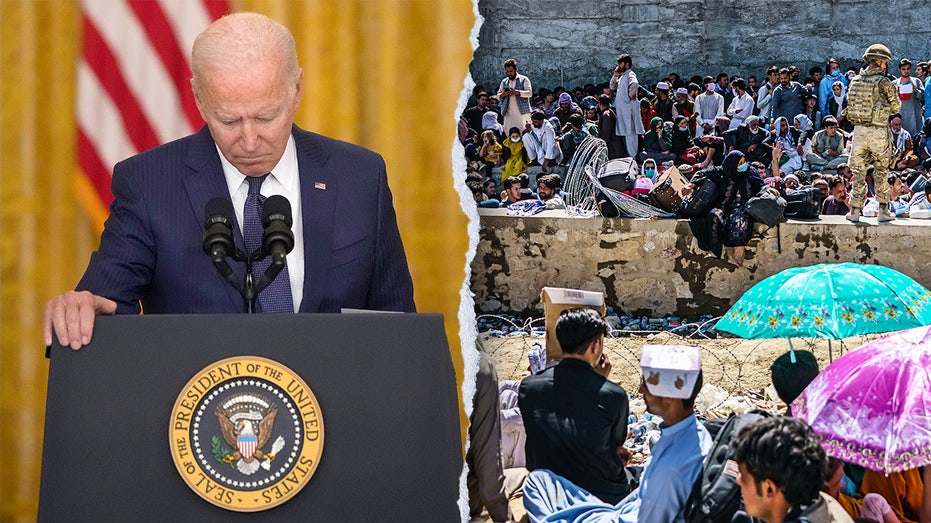
FIRST ON FOX: Former Army aviator Rep. Matt Van Epps, R-Tenn., said he “vividly” remembers the moment five years ago when he heard the U.S. was withdrawing from Afghanistan with scant shreds of a plan in place. “I remember my boss at the time in Tennessee state government asked me, like, ‘Hey Matt, are you OK?’ And, you know, I think the frank answer is no, I’m very upset about this,” he told Fox News Digital in an interview. “And as I talked to my colleagues, some who were serving with me in government, others that were still active-duty Army and in the military, I think the feeling was generally the same, that we spent so much time and effort and to see that unfold the way that it did was just beyond frustrating.” To this day, Van Epps believes neither the Biden administration nor former President Joe Biden himself have been “adequately held responsible in the aftermath of just an absolutely chaotic withdrawal that did not have to happen.” It’s part of what motivated him to introduce a resolution marking Wednesday’s fifth anniversary of the tragic bombing at Hamid Karzai International Airport in Kabul, which took the lives of 13 U.S. service members in addition to over 100 Afghanis near the Abbey Gate. GOLD STAR FATHER SAYS PRIOR AFGHANISTAN REVIEW SMELLED ‘LIKE A COVER-UP’ AS NEW LOOK EXAMINES MILLIONS OF DOCS “We’ve introduced this resolution, first and foremost, to remember that, coming up on five years ago, those 13 brave service members made the ultimate sacrifice at Abbey Gate,” Van Epps said. “And then second to that is that the Biden-Harris administration absolutely failed to withdraw in Afghanistan, and it didn’t have to be that way. And it’s important for the American people to remember what the Biden-Harris administration did in that abject failure, withdrawing from Afghanistan.” AMERICA’S PROMISE TO OUR AFGHAN ALLIES IS STILL UNFINISHED FIVE YEARS LATER Van Epps served 10 years of active duty that included deployments to Iraq and Afghanistan, spending part of that time as an air mission commander. He then served in the Tennessee Army National Guard. And his ties to the withdrawal are personal, Van Epps said — two of his friends were on the ground in Kabul when the evacuation was taking place. “I had two very close friends who were there as part of that evacuation. And they served honorably and heroically and did incredible work with the hand that they were dealt, they just should never have been put in that situation to begin with,” he said. The Biden administration faced bipartisan backlash for how it handled the withdrawal from Afghanistan amid the Taliban’s lightning-fast takeover of the country. TALIBAN WIPES OUT DECADES OF PROGRESS AS 2.4M AFGHAN GIRLS REMAIN LOCKED OUT OF SCHOOL, UN AGENCY SAYS The majority of Democrats, however, have defended Biden. Many have said he was carrying out the work of President Donald Trump’s agreement with the Taliban during his first administration in February 2020, which called for the U.S. to withdraw within 14 months. DEMOCRATS CONDEMN DNC FOR POLITICIZING FALLEN SOLDIERS IN DELETED MEMORIAL DAY POST Van Epps defended Trump’s peace deal, arguing it cleared the way for a “very deliberate withdrawal from Afghanistan that had conditions that the Taliban and the Afghan government had to meet for us to withdraw our soldiers.” “And then the Biden team gets in, totally ignores the Doha agreement where they could have enforced those accountability measures on the Taliban, totally missed and ignored all of these warning signals as the Taliban was gaining ground across the country. They were more interested in optics than operations,” he said.
SEE IT: LA Dem candidates torched by disgusted residents after ‘disgraceful’ debate: ‘Both bad’
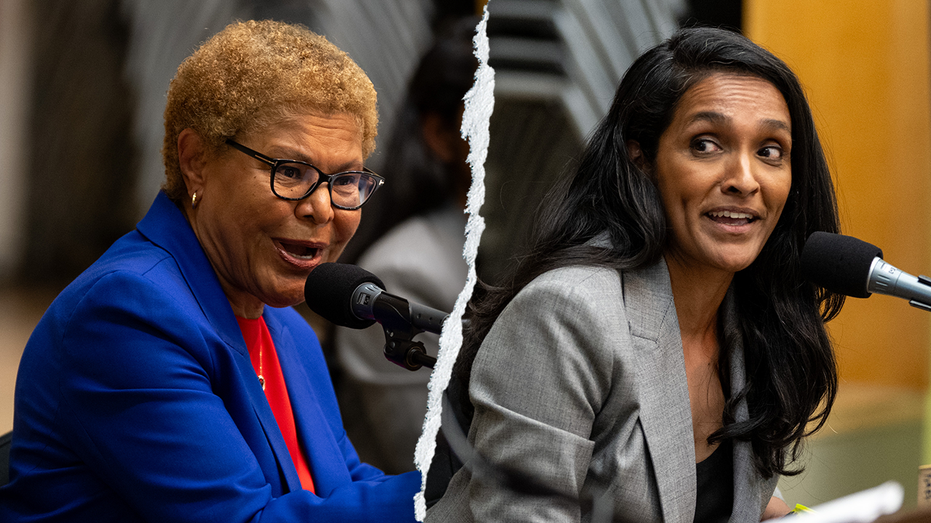
Los Angeles’ Democratic mayoral candidates were torched by residents after a debate night in America’s second-most populous city that one voter described as “disgraceful.” Besides being home to Hollywood, Los Angeles is one of America’s most economically important cities. The city, however, has struggled with recent fires, rising living costs, homelessness and outmigration. Those problems have fueled a particularly contentious mayoral race this year, which included a surprisingly competitive but ultimately unsuccessful bid by Republican Spencer Pratt. With Pratt out of the race, Democrats Karen Bass, the incumbent, and Nithya Raman, a democratic socialist city council member, are locked in a competitive and bitter runoff for Los Angeles mayor. During last week’s debate, Bass and Raman traded personal attacks and insults, leaving some voters frustrated over what solutions the candidates could offer. After the debate, voter Stacey Segarra Bohlinger told Fox News Digital she believes Bass and Raman are “both bad” and said, “I wish they could both lose.” ‘SEND HELP’: LA GOP LEADER ISSUES DESPERATE APPEAL AFTER DEM MAYOR’S CAMPAIGN VID SHOCKS VIEWERS Bohlinger, who until July served as a committee member on the Sherman Oaks Neighborhood Council, said that although she was initially “a huge champion” for Raman, “I don’t see substantive differences between the two of them.” Bohlinger said Raman “reneged on a lot of the initial campaign promises she made” and also criticized the councilwoman’s approach to homelessness, which she described as “a very capitalist approach to what she thinks solving the issue of homelessness is.” Regarding criticism of Bass, Bohlinger said, “I also agree with a lot of what said about the city not being in a good place right now.” “She responded really terribly to the Palisades fires. She did not respond well to the Lineage fires,” she said, concluding, “I don’t have much good to say about either of them.” Asked about her top issue, Bohlinger said the Los Angeles government “has a long sort of history of immense corruption.” TRUMP ADMINISTRATION YANKS FUNDING FROM LA HOMELESS AGENCY AMID EXPLOSIVE FRAUD PROBE: ‘NECESSARY STEP’ “If you look up, you know, recent Los Angeles officials who have conviction records for corruption, it’s a really long list. So, I think along with the housing affordability issue [is] accessibility, transparency, more accountability, less corruption,” she said, adding, “We have a lot of sort of political dynasties in the city, and I think that’s a real fly in the ointment. I don’t think much is going to change until the corruption is dealt with.” Meanwhile, Wayne Spindler, an Encino resident and regular City Hall critic, told Fox News Digital that “a lot of people… are upset.” “They don’t like either one of them. And a lot of them are going to walk out of this [debate] and not vote,” he said. Based on the debate, Spindler predicted the election is “going to be close” because “there was not a lot of enthusiasm.” He said he will be voting for Raman, saying, “What I tell people is you got to go for one of the two.” “You can’t write in Spencer [Pratt]. Spencer would have been the dream come true. That would have been amazing,” he said. Another debate attendee, Gregory Wright, a committee member on the Sherman Oaks Neighborhood Council, told Fox News Digital, “For me, it’s more important that Democrats win whatever part of the Democratic spectrum they’re in.” “I am in favor of visionary ideas for the future,” he said, adding, “I think socialism is the right direction for the entire world.” After the debate, Fox News Digital contacted the Sherman Oaks Neighborhood Council, which co-hosted the event, for comment. Council President Howard Katchen clarified that “the comments by Stacey Segarra Bohlinger and Gregory Wright are their opinions as individuals and do not represent the Sherman Oaks Neighborhood Council.” Katchen reiterated that the two spoke as individuals and that their comments did not represent the Sherman Oaks Neighborhood Council. He called the debate a “success as determined by over 400 attendees, over 700 virtual viewers, NPR LAist live broadcast to what I was told over 500,000 listeners and covered by local, state, national and international media outlets.” He also clarified that “Neighborhood Councils don’t endorse candidates for elected office.” Joey Tuccio, an animal rights advocate who previously supported Pratt publicly, told Fox News Digital he was outraged after the debate. Referring to his work helping animals and people on Skid Row, he said, “We are doing their job.” EXCLUSIVE: LA ICE DIRECTOR REVEALS OFFICERS FOLLOWED HOME, HARASSED AS POLICE FAIL TO HELP IN SANCTUARY CITY “We’ve been catering Skid Row for years for free. We’ve got no support from the city. We have rescued over 150 animals. My rescue partner rescued a seven-year-old child that was being sex trafficked by his father. And Karen’s office just said that they are avoiding us because we are ‘haters,’” he said. “I think that is one of the most disgusting things I’ve ever heard in my life, and it’s disgraceful.” He said that, for now, “I’m going to be not supporting either of them.” Asked what he is looking for in a candidate, Tuccio said, “We want people that will enforce laws.” “Specifically on Skid Row, every day, every time we go, we see somebody overdosing, we see dogs that are abandoned, we see children without their parents, and we see good people living on the streets that are so scared,” he said, adding, “It is lawless, and it’s not getting better.” “People are being robbed there, people are being attacked, people are getting murdered,” he continued. “There’s people hanging themselves… people dying and rotting before anybody finds them. And from the animal side, there are animals that are left there for days and days starving to death. But then we get calls from caseworkers because they can’t get the support of the city.” SIGN UP TO GET THE POLITICS NEWSLETTER “So, we need people to actually take the reins of this and stop pretending that everything
EXCLUSIVE: State Dept reveals Portland Antifa connection to Hamas, Iran’s IRGC in sweeping terror action

EXCLUSIVE: A State Department memo reveals that an international technology collective, now under a U.S. global terrorism designation, provided services to overseas terrorist groups and violent far-left agitators causing chaos in American cities, according to a copy obtained by Fox News Digital. “Far-left terrorism poses a profound threat to the United States and the broader West,” Secretary of State Marco Rubio said in a statement to Fox News Digital. “Today, the United States sanctioned Autistici/Inventati – a major far-left tech collective whose services are used by the most active and violent Antifa cells in the United States and across the world.” Autistici/Inventati, called the A/I Collective by the State Department, is an Italy-based group that builds highly sophisticated digital infrastructure used by violent left-wing organizations in the United States and Europe, along with Islamic terrorists, according to the State Department. The collective’s services include encrypted chats and email, web hosting, secure video conferencing and streaming and anonymity shields, according to the memo. ‘LEFT-WING EXTREMISTS,’ CARTELS MOVE INTO CROSSHAIRS IN TRUMP TERROR SHIFT BEYOND ISIS “These tools are specifically designed to support the operations of far-left terrorist networks, built to enable them to organize, recruit, communicate, disseminate propaganda, share target information and tactics, and carry out violent attacks – all while remaining anonymous, untraceable, and beyond the reach of the law,” says the State Department’s memo. A/I Collective has officially been deemed a Specially Designated Global Terrorist. The designation bars Americans and U.S. financial institutions from doing business with the group and freezes any assets it has under U.S. jurisdiction. Violators can face civil or criminal penalties. The memo identifies Portland-based Rose City Antifa, known for its violent rioting and destruction, as one of the U.S. groups that relied on A/I Collective tools and services. FORMER MARINE GETS 100 YEARS IN PRISON AS JUDGE CALLS ICE DETENTION CENTER AMBUSH ‘AN ASSAULT ON DEMOCRACY’ Rose City Antifa is listed in the memo alongside a media organization that the State Department says uses A/I Collective tools to disseminate information to the Popular Front for the Liberation of Palestine (PFLP), which is proliferating inside the United States, Hamas, the Islamic Revolutionary Guard Corps (IRGC), Hezbollah and others. The memo also accuses the militant abortion-rights group “Jane’s Revenge” — which declared “open season” on pro-life organizations and threatened escalating attacks after the leaked Supreme Court draft signaling Roe v. Wade would be overturned — of using the collective’s services. The State Department memo says the collective provides its services exclusively to left-wing extremists, screening users for ideological alignment before allowing them access to its tools. The collective claims to host roughly 16,000 mailboxes, 1,500 websites, 5,500 mailing lists and 10,000 “blogs” on a custom-built platform. The State Department says militants frequently use those services to disseminate target information, tactical manuals and techniques and communiqués about recent attacks. RUBIO’S CALL TO COMBAT GLOBAL FUNDERS OF FAR-LEFT TERRORISM COULD PUT SINGHAM IN CROSSHAIRS The memo stressed that while the infrastructure is overseas, it supports domestic far-left groups that for years have wreaked havoc in the United States, mostly under the label of Antifa, or antifascism. TRUMP’S COUNTERTERRORISM STRATEGY SCORES BIG WINS AGAINST GLOBAL TERROR THREATS “There will be no refuge for violent extremists who wage war on our civilization and plot to undermine law and order, destroy critical infrastructure, assault political opponents, or conspire to conceal their crimes from authorities,” Rubio said. “We will use all the tools and authorities at our disposal to fight terrorism and protect our way of life from terrorist coercion.” The memo cites several examples of violent or terrorist activity that the State Department says was facilitated through A/I Collective technology. SECRET SIGNAL CHATS REVEAL HOW ANTI-ICE AGITATORS COORDINATED NEWARK RIOTS The memo identifies a far-left extremist media group that describes itself as a “tool” for militants worldwide to share “essential information” to be “acted upon.” According to State, the group relies on A/I Collective services to publish official communiqués and calls to action for U.S.-designated foreign terrorist organizations. The memo says Rose City Antifa relied on A/I Collective tools and services to organize and incite violent and criminal acts, including disseminating an online flyer urging supporters to use laser pointers against U.S. Customs and Border Protection helicopters. ANTI-ICE AGITATORS THROW WOODEN PALLETS, MATTRESSES AT FEDERAL AGENTS DURING CHAOTIC NJ DETENTION CENTER CLASH “All you need is a laser. Leave home – they can see where the laser is coming from,” the flyer said. “Go to a park, a field, or some other public place, and once the clock strikes 9 unleash your beam at the cop copter. Mask up. Coordinate with friends to throw a laser party!” “Let’s take back the night together!” it continued. “It won’t take many of us to ground the helicopters!” The memo says at least one man answered the call to action. Federal records show he later pleaded guilty to aiming a laser at a CBP helicopter, forcing the aircraft to abort its planned landing. The memo says Rose City Antifa also used A/I Collective tools to disseminate personal information about U.S. Immigration and Customs Enforcement personnel and calls for targeted attacks against ICE agents “in their homes” and in public. “Jane’s Revenge” used A/I Collective tools to “publish official communiqués and claims of responsibility for violent and criminal acts and to incite copycat attacks,” according to the State Department. Notably, Jane’s Revenge claimed responsibility for the May 2022 firebombing of a crisis pregnancy center in Madison, Wisconsin. The following day, a cryptic message appeared on a blog affiliated with the group. THREE ALLEGED ANTIFA-LINKED PROTESTERS INDICTED IN ATLANTA POLICE TRAINING CENTER CONTRACTOR FIREBOMBING “This was only a warning. We demand the disbanding of all anti-choice establishments, fake clinics, and violent anti-choice groups within the next thirty days,” the message said. “This is not a mere ‘difference of opinion’ as some have framed it. We are literally fighting for our lives. We will not sit still while we are killed and forced into servitude. We have run
SEEING DOUBLE: Second Dan Sullivan advances, setting up bizarre Alaska Senate ballot

Dan J. Sullivan Jr., a Senate candidate in Alaska who has made headlines for sharing a name with incumbent Sen. Dan S. Sullivan, R-Alaska, has officially advanced to the general election, The Associated Press announced on Wednesday. He joins Sen. Sullivan and former Rep. Mary Peltola, D-Alaska, as the third of the final four candidates. Alaska has yet to announce the fourth. Sullivan Jr.’s advance, which seemed likely after the polls closed last Tuesday, complicates the picture for Republicans as they work against the clock to explain why two candidates have the same name — as well as which one to vote for. Unlike the primary, the general election picture is further clouded by ranked-choice voting (RCV), which raises more questions about how voters will react to the name overlap. MORNING GLORY: ALASKA’S ‘REAL’ SENATOR DAN SULLIVAN STOOD UP OVER CHALLENGER Under this system, voters rank their preferred candidates. If their top choice is eliminated, their support passes on to their next-ranked option. While supporters of the process argue it expands voters’ power and greatly increases the influence of candidates that may not otherwise be a top choice, critics — like Sen. Sullivan — believe it also introduces confusion. “Like many others who did not support ranked choice voting in 2020, I still believe that this new election system has created unnecessary confusion among voters,” Sullivan told local Alaskan media in 2024. Fears of that confusion were amplified by the emergence of the second Sullivan. Sullivan Jr., a logger, appeared among the 16 candidates on the ballot as an independent in last week’s primary, snapping up 2.5% of the vote. Sullivan Jr.’s campaign announcement did not list a party affiliation. His website does not state his position on any political issues. Instead, it leaned into the name overlap. “Dan Sullivan challenges Dan Sullivan for U.S. Senate Seat, urges Alaskans to defeat incumbent, elect a Sullivan who stands up for Alaska,” it read. ALASKA REPUBLICANS SCRAMBLE TO EDUCATE VOTERS ON SUSPECTED DEM PLANT AS ‘BALLOT FATIGUE’ THREATENS RACE According to his biography, Sullivan Jr. spent his early career working blue-collar jobs like logging, construction, bartending and forestry but decided to enter his bid for Senate after growing frustrated with government mismanagement. A Fox News Digital review of the campaign earlier this year uncovered that Amber Lee, a progressive consultant, had helped author some of Sullivan Jr.’s campaign materials. Lee previously supported Peltola, the former congresswoman. The campaign has drawn criticism from Republicans who believe it’s an effort to put two “Dan Sullivans” on the ballot in November and, through ranked choice voting, intentionally draw away votes from the senator. Alaska state Sen. James Kaufman, a Republican, said he personally remains worried about conflation between the two. He believes there are still some voters in Alaska, especially Republicans, who refuse to use the RCV system, citing disagreements with its implementation. “Some people have a pretty strong traditionalist perspective: one person, one man, one vote,” Kaufman said. JUDGE RULES REPUBLICAN WITH SAME NAME AS SEN DAN SULLIVAN CAN STAY ON ALASKA PRIMARY BALLOT “And so, the ballot fatigue where people just don’t rank because maybe they disagree with it; there’s a pretty strong segment of the population here that just patently disagrees with the ranked-choice voting system we ended up with. And they don’t necessarily believe in utilizing it.” Having cleared the primary, Sen. Sullivan, Sullivan Jr. and Peltola will face off in the general election on Nov. 3.
El-Sayed’s tribute to Dolly Parton after her death sparks internet fury as critics cry foul: ‘Gimme a break’
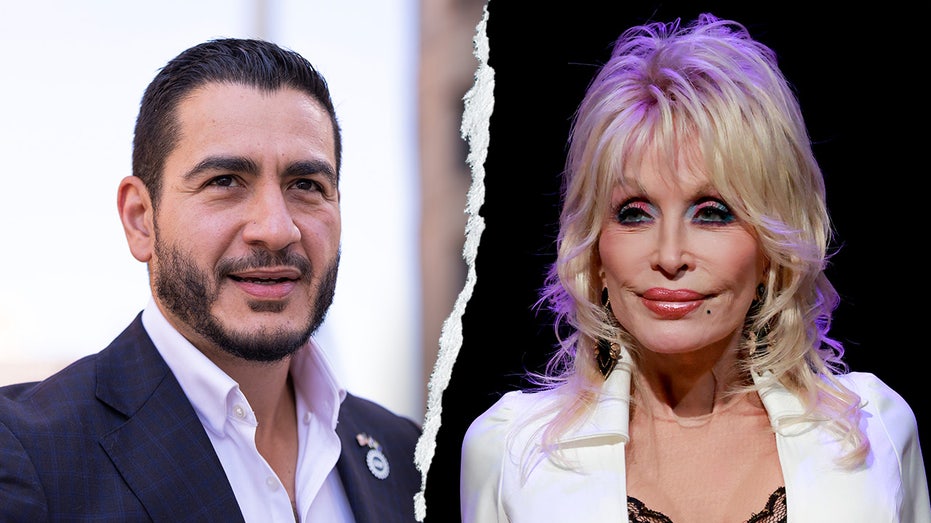
As millions of Americans across the country issued heartfelt tributes following the death of country music superstar Dolly Parton, Michigan Democratic Senate nominee Abdul El-Sayed is facing heat online over what critics call a politicization of Parton’s passing. “Dolly Parton used her gift for music to highlight the challenges of poverty, inequality, and struggle in ways that uplifted and inspired working people,” El-Sayed posted on X on Tuesday shortly after Parton died at the age of 80 after a brief battle with cancer. “And I told ’em all the story / Momma told me while she sewed / And how my coat of many colors / Was worth more than all their clothes,” El-Sayed added, quoting Parton song lyrics. El-Sayed’s post was “ratioed” on social media, yielding far more negative comments and quote tweets that positive ones from users accusing the far-left candidate of injecting his political message into his Parton tribute. DOLLY PARTON REFUSED TO PICK POLITICAL SIDES FOR DECADES: ‘I’M NOT IN POLITICS, I’M AN ENTERTAINER’ “Leave it to you to exploit her death for political gain,” Twitchy Managing Editor Sam Janney posted on X. “D-ck.” “I didn’t think anyone would actually politicize Dolly Parton’s death, but here we are,” Washington Free Beacon reporter Chuck Ross posted on X. “Quiet,” Townhall Media’s Storm Paglia posted on X. ‘You hate America .” “Stay away from her,” Senate Leadership Fund rapid response director Chloe Smith posted on X in meme form. EL-SAYED’S DEFENSE OF SHARIA LAW STANCE SPARKS ONLINE ERUPTION FROM CHRISTIANS, CONSERVATIVES: ‘HE’S DONE’ “Gimme a break, Abdul is no fan of Dolly and I doubt she of him,” another user posted. “Dolly is a hard working kind person, NOT a socialist.” Conservative writer Debbie Schlussel slammed El-Sayed for messaging she views as contrived. “Hilarious watching this privileged spoiled rich kid from wealthy Bloomfield Hills… pretend he’s down with the struggle of America’s working poor because he googles a Dolly Parton song. Total fraud. How many believe this phony knew the lyrics to any Dolly song?” she said. One X user sporting more than 150,000 followers responded to El-Sayed with only two words. “Pandering buffoon,” she said. “Your religious laws would have had her covered from head to toe and restricted her from playing music or expressing herself publicly,” said another account with more than 83,000 followers. El-Sayed has previously said he follows Sharia in his personal religious life. Fox News Digital reached out to El-Sayed’s campaign. Parton died peacefully in Nashville, Tennessee, on Tuesday, according to a press release obtained by Fox News Digital. Her representatives confirmed she faced a “brief battle with cancer.” Parton’s catalog included enduring hits such as “Jolene,” “Coat of Many Colors,” “Here You Come Again,” “9 to 5” and “I Will Always Love You.” The latter song became a global phenomenon again when Whitney Houston recorded it for 1992’s “The Bodyguard.” Beyond her impressive career, Parton built a business empire centered in her home state of Tennessee. Dollywood became one of Tennessee’s most popular attractions, while her charitable work through the Dollywood Foundation and Imagination Library left an equally lasting mark. “Our beloved Dolly Parton spent her life and career bringing joy, laughter, hope and integrity into everything she touched,” her team said in a statement. Fox News Digital’s Christina Dugan Ramirez contributed to this report.
US kills 4 alleged drug smugglers on boat in Caribbean, bringing total to 227 in 68 strikes

U.S. Southern Command announced another strike on “narco-terrorists,” killing four in the Caribbean, bringing the roughly one-year total to at least 227 dead among the 68 reported strikes, including back-to-back days after months of calm in the area. “On August 25, under Gen. Donovan’s direction, Joint Task Force Western Hemisphere executed a lethal kinetic strike on a go-fast vessel operating along established narco-trafficking routes in the Caribbean,” SOUTHCOM wrote in a Tuesday night X post. “Confirmed intelligence revealed the vessel’s active involvement in narco-trafficking. The operation killed four narco-terrorists.” Since September, President Donald Trump’s administration has been striking suspected cartel vessels in the Atlantic and Pacific that it accuses of transporting narcotics. US KILLS TWO ‘NARCO-TERRORISTS’ IN STRIKE 2 MONTHS SINCE LAST ANNOUNCED ANTI-‘NARCO-TRAFFICKING’ ATTACK “Joint Task Force Western Hemisphere continues executing precise, lethal operations against the cartels,” SOUTHCOM Commander Gen. Francis L. Donovan said in a statement quoted in the X post. “We will hunt, disrupt, and defeat these narco-terrorist networks. “SOUTHCOM is resolved to neutralizing cartel terror and violence throughout the region and into the U.S. homeland.” The U.S. military said Monday two were killed in a strike it launched on a vessel in the Eastern Pacific over the weekend. That strike marked the first in more than two months. US EYES IRAN FAST BOATS WITH ‘KILL’ TACTICS TESTED IN VENEZUELA DRUG-BOAT STRIKES The video posted on X showed an image of what appeared to be a moving boat followed by a flash. The Associated Press reports that this makes at least 227 total deaths from such strikes. The Trump administration is pursuing deals with allied nations to extend its offensive to land across multiple Latin American countries. War Secretary Pete Hegseth said during a visit to Panama this month that Colombia, Guatemala and Honduras had agreed to allow the U.S. to carry out joint military operations against criminal groups on their soil. Guatemala denied reaching such a deal. Ecuador launched similar missions with the U.S. in March. Trump has said the U.S. is in “armed conflict” with cartels in Latin America and has justified the attacks as a necessary escalation to stem the flow of drugs into the United States and fatal overdoses claiming American lives. Reuters and AP contributed to this report.
California Dems trigger outrage after siding with convicted child sex offenders in shocking vote
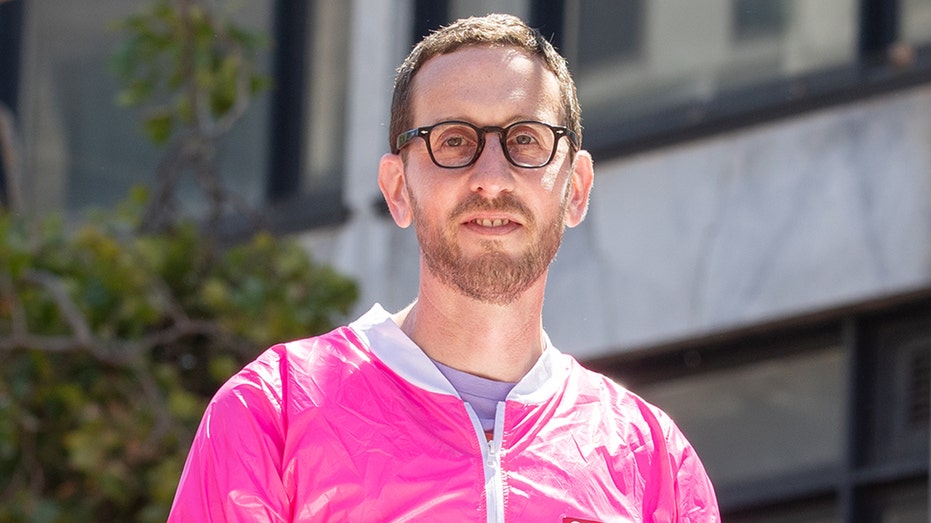
California Senate Democrats rejected Republican Sen. Suzette Valladares’ effort to close a “loophole” allowing some people convicted of sex crimes against minors to seek public office, including school board seats. At issue is AB 2691, a proposal to add sexual assault and human trafficking to the felony convictions that disqualify Californians from elected office. Valladares’ amendment sought to undo Democratic-led changes that allow people convicted of certain sex crimes against minors to remain eligible to seek public office. “Right now in California, someone convicted of sexually abusing a child can still sit on your school board. That’s not a loophole. That’s a choice. And in my perspective, and most, that’s wrong,” Valladares, R-Santa Clarita, said on the California Senate floor while urging colleagues to adopt an amendment that Senate Democrats later rejected on a party-line vote, according to her office. “Predators who sexually abuse children have no place holding public office. None, not in the Capitol, not on city council, and definitely not on our school boards. AB 2691 was supposed to guarantee that. It started as a simple ban,” she continued. “Convicted sex offenders don’t get to hold public office. Period. But amendments added this summer gutted it, narrowing the bill to cover only tier three offenders and deliberately exempting tier one and tier two.” SEX CRIMES COULD COST LAWMAKERS TAXPAYER-FUNDED PENSIONS UNDER HAWLEY’S NEW PROPOSAL Under the bill’s current language, the new public-office ban would apply to sexual-assault convictions requiring lifetime Tier 3 sex-offender registration. People whose convictions place them in Tier 1 or Tier 2 — categories requiring at least 10 or 20 years on the registry before they can ask a court for removal — would not be disqualified under the proposed law. Concern was also raised months ago during a Senate committee hearing, when Republican California state Sen. Steven Choi asked Assemblywoman Dawn Addis, the bill’s Democratic author, why people convicted of certain sex crimes against minors could remain eligible to seek office under the amended measure. Addis did not address the specific offenses Choi identified, instead calling AB 2691 a “first in the nation” proposal that would protect survivors and saying she was open to working with lawmakers on other crimes. “We’re doing a first in the nation bill that would protect the public trust of survivors and would make sure that survivors are really in the lead,” Addis responded. “Happy to continue working with the committee or others if there are other kinds of crimes folks feel need to be addressed. But at the moment, I feel like we have a really important bill that is nation leading, that will uplift survivors and enhance public trust here in California.” DRAG QUEEN SCHOOL BOARD VICE PRESIDENT ARRESTED ON CHILD PORNOGRAPHY AND ENDANGERMENT CHARGES California state Sen. Scott Wiener, the Democratic chair of the committee that considered the bill, argued that a broader prohibition based on all three registry tiers would be overbroad. He said California’s registry had historically included both “sexually violent predator[s]” and others who have committed less serious crimes, citing an example of “a gay guy who had sex in a park or in a car and got arrested.” “Sex offender registry is not punishment,” Wiener argued. “It is a tool for law enforcement to be able to monitor people who may potentially cause a risk. And when we use the sex offender registry as a proxy for anything else, we get into problems.” But Sen. Valladares told Fox News Digital that the issue “isn’t complicated” for her. “I’m a mom. This one isn’t complicated for me. Today, 40 senators had the chance to say convicted sex offenders should NEVER hold public office in California,” she told Fox News Digital. “Ten Republicans stood up to vote for what is right. My amendments would have closed the door. No loopholes. No exceptions. No convicted sex offenders serving in positions of public trust, including on our school boards. Protecting our kids should NEVER be partisan. I’m deeply disappointed, and I’m not done fighting.”
‘Captain Canada’ firebrand unloads on Trump with profane one-liner as trade war escalates
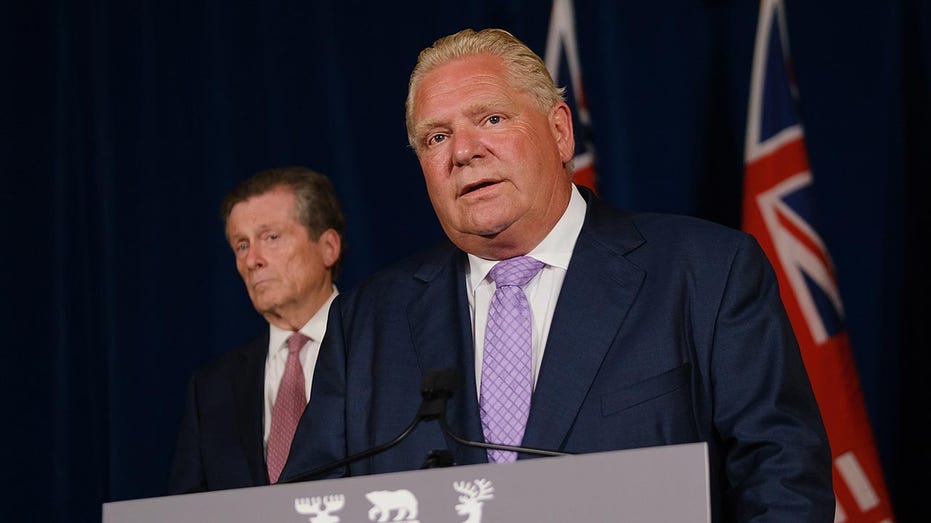
A simmering trade rift between President Donald Trump and Canadian officials burst into the open Monday as Ontario Premier Doug Ford sharply escalated his attacks on the president amid a widening tariff fight between the longtime allies. “He can kiss my a– as far as I’m concerned. We’re going to go at him full steam, and we buy 400% more cars than anyone in the world,” Ford said in an interview with Toronto radio station Newstalk 1010 Monday in response to Trump’s threat of new tariffs on Canadian autos, auto parts and steel. Trump mocked Ford on Monday as “less charismatic, intelligent, and overall unimpressive” than his late brother, former Toronto Mayor Rob Ford, who became embroiled in a major 2013 scandal over his use of crack cocaine, which he later admitted. The Ontario premier, dubbed “Captain Canada,” has since emerged as one of the country’s most outspoken critics of Trump’s trade threats. TRUMP TRADE CHIEF WARNS CANADA WALKED AWAY FROM ‘THE BEST DEAL’ TO TRIGGER 50% U.S. TARIFFS The tariff fight is unfolding on two tracks: new 50% U.S. tariffs on certain Canadian goods took effect Aug. 22, with Canada set to retaliate Sept. 8, while Trump separately threatened to raise tariffs on Canadian autos and auto parts to 50% beginning Jan. 1, 2027. The White House referred Fox News Digital to Trump’s Truth Social posts when approached for additional comment. “America has been carrying Canada for decades, but no longer! The U.S.A. will always be far bigger, richer, and stronger than Canada. Without the United States, Canada couldn’t survive — It’s where they get all of their money and, because of their current bad leadership, primarily Governor Carney, and his Flunky, Ford, they will not be allowed to keep taking advantage of the United States — Their key to survival,” Trump added in a post. TRUMP MUST CLOSE THE BACK DOOR CHINA USES TO EXPLOIT NORTH AMERICAN TRADE He claimed Canada imposes tariffs of 400% or more on U.S. farmers and said he plans to end what he describes as unfair trade treatment of American companies and producers. Trump also threatened further economic pressure, claiming much of the electricity, oil and gas Canada receives is transported through the U.S. and calling on the country to “fall in line.” CANADA REPORTEDLY SCRAPS JOINT BRIDGE CELEBRATION WITH US AFTER TRUMP RENEWS TARIFF THREAT Beyond tariffs, Trump also escalated the rhetoric Tuesday by floating a proposal to rename Lake Ontario “Lake America.” The current tariff fight traces back to late 2024, when Trump threatened 25% tariffs on Canadian goods and later joked during a meeting with then-Prime Minister Justin Trudeau that Canada could become the 51st state. Fox News Digital reached out to Ford for comment.
Telangana Bus Accident: 6 killed, 20 injured as private bus with 43 passengers on board rams into truck in Suryapet

According to police, the accident happened around 5:20 am near Durgapuram stage when the Hyderabad to Vijayawada bus collided with the truck. The bus was carrying 43 passengers at the time of the accident.
Operation Sindoor: Did India strike Pakistan’s Kirana Hills near Sargodha? Ex-CDS explains what happened

Speculation about India targeting the site surfaced after Pakistani media broadcast visuals of smoke billowing from the hills during the military standoff.