

Kristi Noem’s firing fails to sway Democrats as DHS shutdown drags on
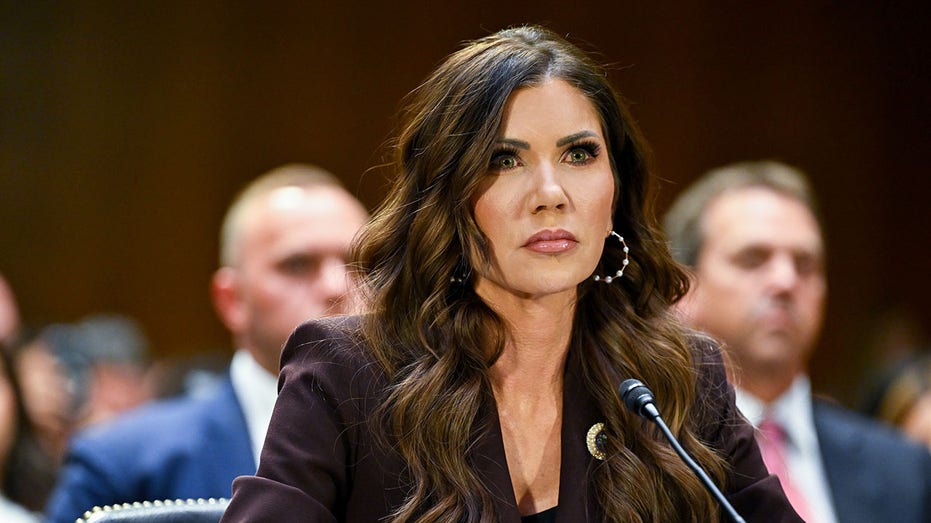
Democrats may be celebrating Kristi Noem’s ouster from the Department of Homeland Security (DHS), but they are still digging their heels in against ending the agency’s weekslong shutdown. “It’s not like Kristi Noem was the one who was involved in negotiating anything. She was a corrupt lackey. So, we were dealing with the White House before, and we’re going to continue to deal with the White House at this point,” House Minority Leader Hakeem Jeffries, D-N.Y., told reporters during a news conference Thursday. That point has since been echoed by several other Democratic lawmakers despite Noem’s firing apparently being one of their key demands in exchange for allowing DHS to be fully funded through the remainder of this fiscal year. KRISTI NOEM OUSTED FROM HOMELAND SECURITY POST AMID RECENT TURMOIL Congressional Democrats have maintained a unified blockade of funding for the agency in pursuit of stringent reforms to Immigration and Customs Enforcement (ICE). Democrats and the White House have been negotiating, but neither side has agreed to compromise terms. And the shutdown is now guaranteed to drag on for another month, given that the House will be out for a week and the Senate is unable to advance any DHS funding legislation. “I’m waiting for them to give us an offer, make us an offering as to what it is that you want us to vote on,” Rep. Lou Correa, D-Calif., said. “I want to see what the guardrails are before I vote on this funding. … I don’t want us to have masked individuals in my community. I want to see body cameras. I want you to identify yourself when you’re making an arrest.” Many Democrats aren’t sure that Noem’s chosen replacement, Sen. Markwayne Mullin, R-Okla., would be the answer to the changes they want. HOUSE DEMOCRATS VOTE TO CONTINUE DHS SHUTDOWN DESPITE IRAN THREAT, NOEM’S OUSTER Rep. Eric Swalwell, D-Calif., suggested to Fox News Digital that he was skeptical that any replacement for Noem would be more effective in the discussions given they still have to answer to Trump and his policies. And Senate Minority Leader Chuck Schumer, D-N.Y., plans to block Mullin’s confirmation in a bid to extract Democrats’ long-sought reforms to ICE. “The rot runs deep,” Schumer said. “If the president wants accountability, he must do more than fire one official — he must end the violence and rein in ICE.” Republican leaders in the House and Senate both tried again to advance a DHS funding bill that was released as part of wider bipartisan government funding discussions earlier this year. The bill passed the House with all but four Democrats voting “no,” even hours after Noem’s ouster. In the Senate, news of Noem’s firing erupted as another push by Senate Majority Leader John Thune, R-S.D., to pass a full-year funding bill began. Like their colleagues in the House, Senate Democrats were unfazed by the change and once more blocked the legislation. SCHUMER, DEMS HOLD FIRM ON DHS FUNDING DESPITE NOEM’S BOMBSHELL OUSTING When asked if he believed removing Noem from the equation would make a difference, Thune said, “It should.” “The Democrats have been complaining about that forever,” Thune said. “And, so, this, to me, is a huge development, I would think, in the funding conversation, and hopefully they’ll get more earnest about coming to the table and trying to get a deal. I mean, we should find out soon enough.” For now, Senate Democrats appear firmly entrenched in their position, even with their colleague Mullin taking the helm of the agency. “No, I don’t think it makes any difference,” Sen. Gary Peters, D-Mich., told Fox News Digital. “They have got to put in the reforms that we need.” Mullin, who has staunchly opposed the stringent reforms Democrats seek for the agency, said he would meet with Schumer in a bid to earn his and every Senate Democrat’s vote during his forthcoming confirmation process. “I’m not going to get into, you know, a tit-for-tat, but if they have real concerns, I’m going to listen to it. I’m going to see if it’s practical,” Mullin said. “But nothing’s going to prevent me from doing my job. I’m going to enforce the policies and the laws that Congress has passed, and we’re going to protect our homeland.” But not all Democrats were pessimistic. Asked by Fox News Digital whether Noem’s firing would help advance DHS funding talks, Rep. Jared Moskowitz, D-Fla., said, “I think it allows us to reopen the negotiations.”
Thousands of Syrian refugees flee Lebanon after Israeli strikes

NewsFeed Thousands of Syrian refugees are fleeing Israeli strikes across Lebanon and trying to return to Syria. Al Jazeera’s Obaida Hitto is at the border, where there are growing fears of a humanitarian crisis. Published On 6 Mar 20266 Mar 2026 Click here to share on social media share2 Share plus2googleAdd Al Jazeera on Googleinfo Adblock test (Why?)
Israel extending ‘Gaza playbook’ to Lebanon, charity warns

Medical Aid for Palestinians accuses Israel of ‘deliberately terrorising civilian populations’ across Lebanon. Listen to this article Listen to this article | 3 mins info Published On 6 Mar 20266 Mar 2026 Click here to share on social media share2 Share plus2googleAdd Al Jazeera on Googleinfo Israel is exporting its “Gaza playbook” to Lebanon, a nonprofit group has warned, as the Israeli military continues to attack the country after ordering the forced displacement of hundreds of thousands of Lebanese civilians. Medical Aid for Palestinians (MAP) said on Friday that Israel’s bombings and forced displacement orders for all of southern Lebanon and the southern suburbs of the capital, Beirut, “are instilling widespread fear among civilians”. Recommended Stories list of 3 itemsend of list “What we are witnessing in Lebanon is the unmistakable extension of the Israeli military playbook used in Gaza,” said Steve Cutts, CEO of the UK-based charity. That includes “collective punishment, forced displacement, and the deliberate terrorising of civilian populations, including already traumatised Palestinian communities,” Cutts said in a statement. The Israeli military issued a forced displacement order on Wednesday for all of southern Lebanon, prompting tens of thousands of residents to flee their homes and communities under threat of attack. A day later, it issued a similar order for the southern suburbs of the Lebanese capital, Beirut, as Israel expanded its intensified air and ground offensive in the country. Intensified fighting between Israel and Hezbollah resumed on Monday after the Lebanese group launched rockets towards Israeli territory following the assassination of Iran’s Supreme Leader Ayatollah Ali Khamenei in attacks by the United States and Israel on Iran. At least 217 people have been killed and 798 others wounded in Israeli attacks across Lebanon since Monday, according to the latest figures from the Lebanese Ministry of Health. Advertisement Human rights groups have raised the alarm over the Israeli forced displacement orders, stressing that many families have nowhere to go as Lebanon’s shelters are full. “We’ve seen people sleeping on the street, sleeping on the Corniche [in Beirut], sleeping in schools that have been converted into reception centres,” Al Jazeera’s Bernard Smith reported from the Lebanese capital on Friday. “People want to know how long they’re going to have to do this, [how long they’ll have] to be away from home, and the authorities have not been able to tell them.” The Israeli military has routinely issued similar orders in its genocidal war against Palestinians in the Gaza Strip, forcing hundreds of thousands of people to move multiple times throughout Israel’s more than two-year bombardment of the enclave. In September last year, the Israeli army issued a forced displacement order for the entirety of Gaza City, prompting international condemnation. “The order … is cruel, unlawful, and further compounds the genocidal conditions of life that Israel is inflicting on Palestinians,” Human Rights Watch said at the time. Israeli leaders have also compared the country’s escalating offensive in Lebanon this week with its war on Gaza. On Thursday, after the forced evacuation order was issued for the southern suburbs of Beirut, far-right Israeli Finance Minister Bezalel Smotrich said Israel planned to make the Dahiyeh area “like Khan Younis”. A city in southern Gaza, Khan Younis – like most of the Strip – has been decimated in Israel’s war. Adblock test (Why?)
In a bid to counter China, Trump hosts a summit for Latin America leaders
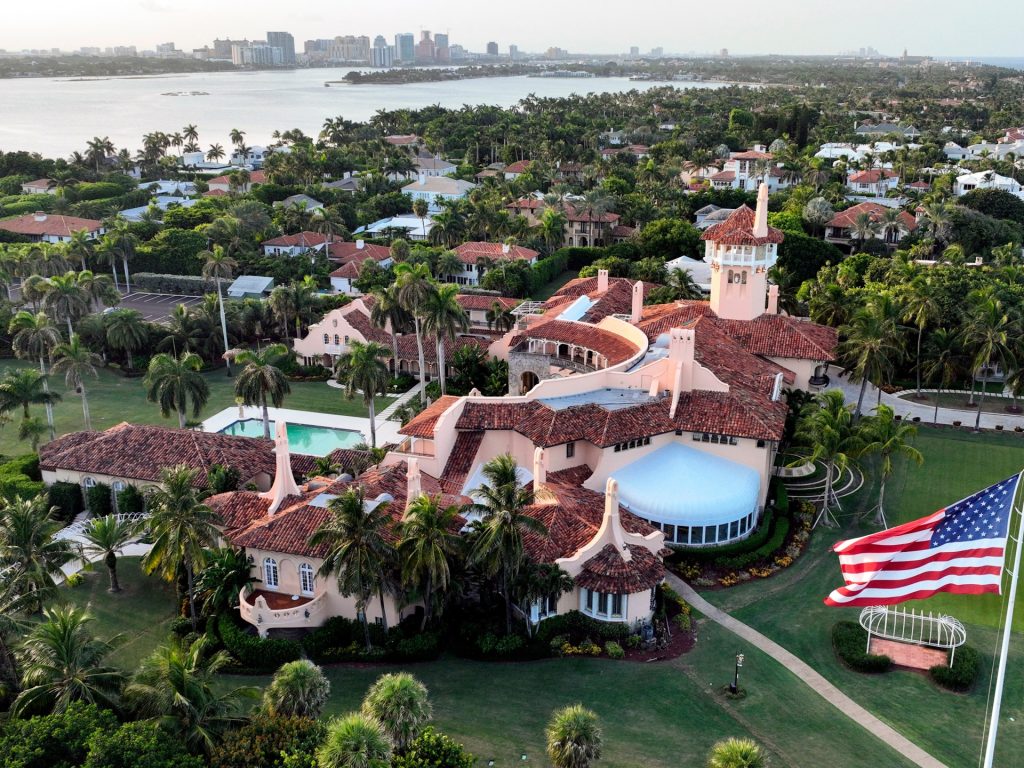
Over the past two decades, China has quietly eclipsed the United States as the dominant trading partner in parts of Latin America. But since taking office for a second term, United States President Donald Trump has pushed to reverse Beijing’s advance. Recommended Stories list of 3 itemsend of list That includes through aggressive manoeuvres directed at China’s allies in the region. Already, the Trump administration has stripped officials in Costa Rica, Panama and Chile of their US visas, reportedly due to their ties to China. It has also threatened to take back the Panama Canal over allegations that Chinese operatives are running the waterway. And after invading Venezuela and abducting President Nicolas Maduro, the US forced the country to halt oil exports to China. But on Saturday, Trump is taking a different approach, welcoming Latin American leaders to his Mar-a-Lago estate for an event dubbed the “Shield of the Americas” summit. How he plans to persuade leaders to distance themselves from one of the region’s largest economic partners remains unclear. But experts say the high-level meeting could signal that Washington is prepared to put concrete offers on the table. Securing meaningful commitments from Latin American leaders will take more than a photo op and vague promises, according to Francisco Urdinez, an expert on regional relations with China at Chile’s Pontifical Catholic University. Even among Trump’s allies, Urdinez believes significant economic incentives are required. “What they’re really hoping is that Washington backs up the political alignment with tangible economic benefits,” he said. Advertisement ‘Reinforcing the Donroe Doctrine’ Already, the White House has confirmed that nearly a dozen countries will be represented at the weekend summit. They include conservative leaders from Argentina, Bolivia, Chile, Costa Rica, Ecuador, El Salvador, the Dominican Republic, Honduras, Panama, Paraguay, and Trinidad and Tobago. Mexico and Brazil, the region’s largest economies, have been notably left out. Both are currently led by left-leaning governments. In a post on social media, the Trump administration framed the event as a “historic meeting reinforcing the Donroe Doctrine”, the president’s plan for establishing US dominance over the Western Hemisphere. Part of that strategy involves assembling a coalition of ideological allies in the region. But rolling back Chinese influence in a region increasingly reliant on its economy will not be an easy feat, according to Gimena Sanchez, the Andes director at the Washington Office on Latin America (WOLA), a US-based research and advocacy group. The US “is trying to get countries to agree that they’re not going to have China be one of their primary trading partners, and they really can’t at this point”, Sanchez said. “For most countries, China is either their top, second or third trading partner.” China, after all, has the second-largest economy in the world, and it has invested heavily in Latin America, including through infrastructure projects and massive loans. The Asian giant has emerged as the top trading partner in South America in particular, with bilateral trade reaching $518bn in 2024, a record high for Beijing. The US, however, remains the biggest outside trade force in Latin America and the Caribbean overall, due in large part to close relations with its neighbour, Mexico. As of 2024, US imports from Latin America jumped to $661bn, and its exports were valued at $517bn. Rather than choosing sides, though, many countries in the region are trying to strike a balance between the two powers, Sanchez explained. Still, she added that the US cannot come empty-handed to this weekend’s negotiations. “If the US is very boldly telling countries to cut off strengthening ties with China”, Sanchez emphasised that “the US is going to have to offer them something.” What’s on the table? Trump has already extended economic lifelines to Latin American governments politically aligned with his own. In the case of Argentina, for instance, Trump announced in October a $20bn currency swap, meant to increase the value of the country’s peso. He also increased the volume of Argentinian beef permitted to be imported into the US, shoring up the country’s agricultural sector, despite pushback from US cattle farmers. Advertisement Trump has largely tied those economic incentives to the continued leadership of political movements favourable to his own. The $20bn swap, for instance, came ahead of a key election for Argentinian President Javier Milei’s right-wing party, which Trump supports. Isolating China from resources in Latin America could also play to Trump’s advantage as he angles for better trade terms with Beijing. A show of hemispheric solidarity could give Trump extra leverage as he travels to Beijing in early April to meet with Chinese President Xi Jinping, Urdinez pointed out. Then there’s the regional security angle. The US has expressed particular concern about China’s control of strategic infrastructure in Latin America and the critical minerals it could exploit in the region to bolster its defence and technology capabilities. Bolivia, Argentina and Chile, for instance, are believed to hold the world’s largest deposits of lithium, a metal necessary for energy storage and rechargeable batteries. The Trump administration referenced such threats in its national security strategy, published in December. “Some foreign influence will be hard to reverse,” the strategy document said, blaming the “political alignments between certain Latin American governments and certain foreign actors”. But Trump’s security platform nevertheless asserted that Latin American leaders were actively seeking alternatives to China. “Many governments are not ideologically aligned with foreign powers but are instead attracted to doing business with them for other reasons, including low costs and fewer regulatory hurdles,” the document said. It argued that the US could combat Chinese influence by highlighting the “hidden costs” of close ties to Beijing, including “debt traps” and espionage. ‘More aspiration than reality’ Henrietta Levin, a senior fellow at the Center for Strategic and International Studies in Washington, believes that many Latin American countries would prefer to deepen economic engagement with the US over China. But in many cases, that hasn’t been an option. She pointed to Ecuador’s decision to sign a free trade agreement (FTA) with China in
Karnataka social media ban: Children under 16 restricted from platforms, announces CM Siddaramaiah; Here’s what parents should know

Karnataka plans to ban social media for children under 16 to curb screen addiction and online risks. Here’s what you should know about this ban.
Who is Akansh Dhull? Son of Haryana BJP leader Krishan Dhull who got 3rd rank in UPSC exam

Son of a Bharatiya Janata Party (BJP) leader from Haryana’s Panchkula secured AIR 3 in the civil services examination. Check out his inspiring story here.
Politicians want to stop companies from buying homes. A ban wouldn’t bring down costs.
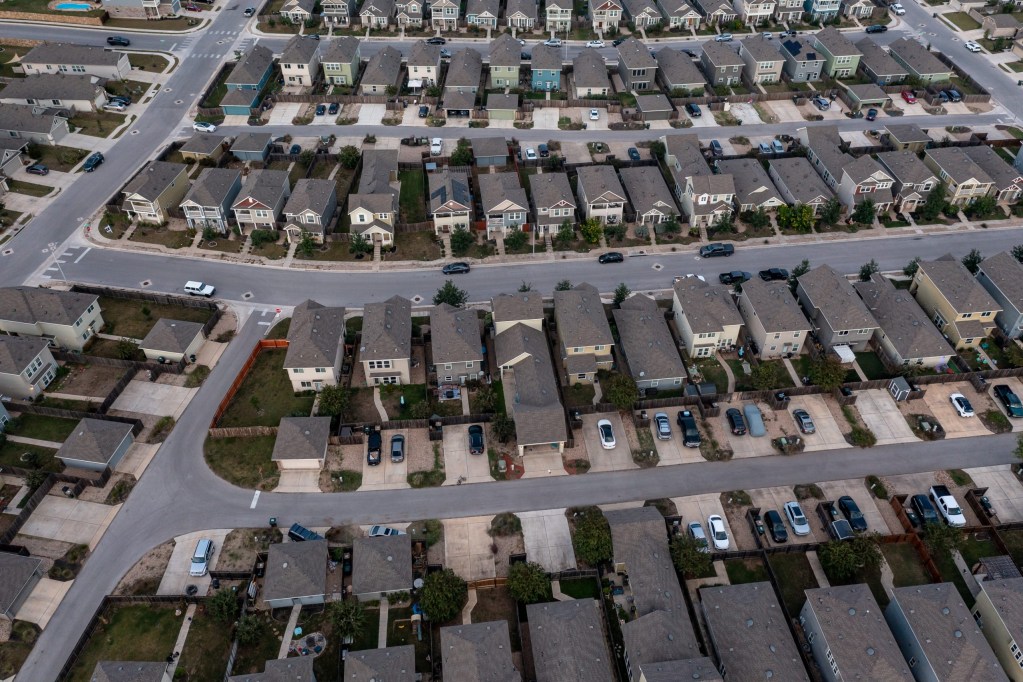
President Trump, who wants to stop profit-driven companies from buying residences in bulk, spotlighted the struggles of a Houston woman who was regularly outbid by firms on homes in the pandemic.
Pro-gambling interests fail to gain ground in Texas primaries as legislative roadblocks remain
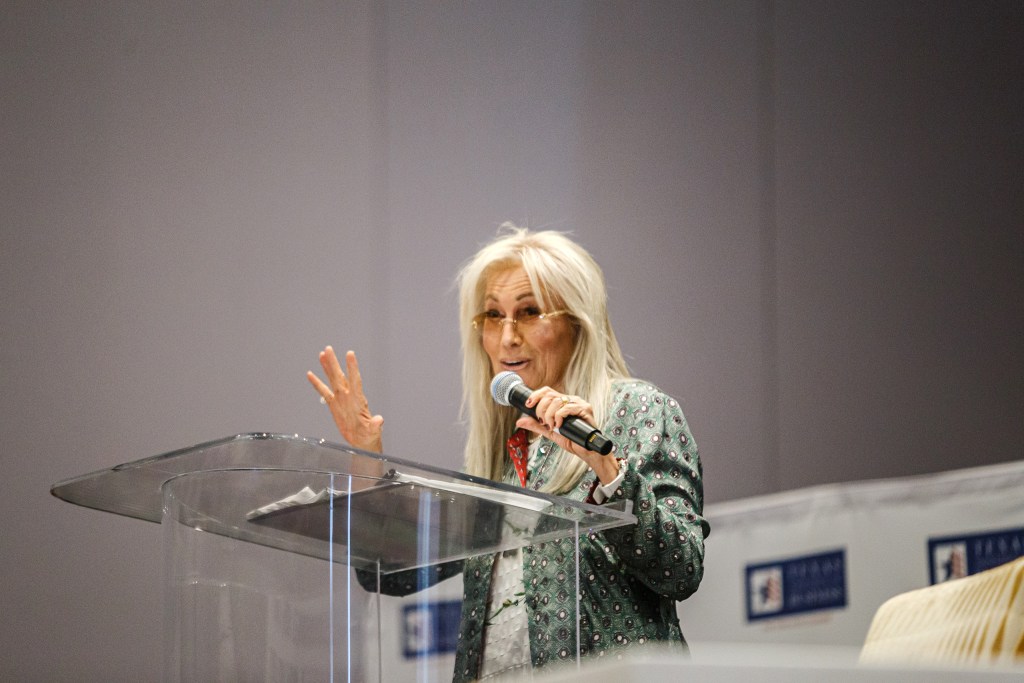
Despite slow progress, casino empire Las Vegas Sands promised to continue investing in candidates who support bringing destination resort casinos to Texas.
Meet Don Huffines, the self-funding tea party activist who won the GOP Texas comptroller primary
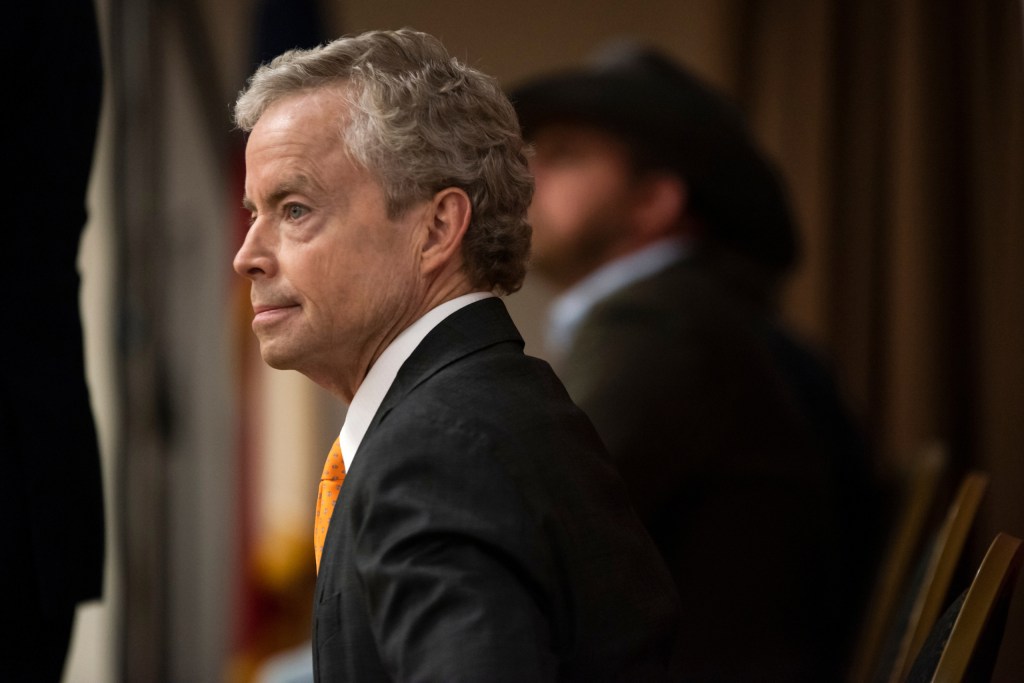
The former state senator from Dallas challenged Gov. Greg Abbott from the right four years ago. He’s now in line to oversee the $1 billion voucher program championed by the governor.
Appeals court declares DC ban on certain gun magazines unconstitutional

An appeals court struck down a local law in the District of Columbia that banned gun magazines containing more than 10 bullets, describing the measure as unconstitutional. The ruling Thursday from the District of Columbia Court of Appeals also reversed the conviction of Tyree Benson, who was taken into custody in 2022 for being in possession of a handgun with a magazine that could contain 30 bullets, according to The New York Times. “Magazines capable of holding more than 10 rounds of ammunition are ubiquitous in our country, numbering in the hundreds of millions, accounting for about half of the magazines in the hands of our citizenry, and they come standard with the most popular firearms sold in America today,” Judge Joshua Deahl wrote on behalf of the two-judge majority in the three-judge panel. “Because these magazines are arms in common and ubiquitous use by law-abiding citizens across this country, we agree with Benson and the United States that the District’s outright ban on them violates the Second Amendment,” he added. MIKE LEE UNVEILS NATIONAL CONSTITUTIONAL CARRY BILL TO OVERRIDE ‘HOSTILE’ STATE GUN LAWS “This appeal presents a Second Amendment challenge to the District’s ban on firearm magazines capable of holding ‘more than 10 rounds of ammunition.’ Appellant Tyree Benson argues that ban contravenes the Second Amendment so that his conviction for violating it should be vacated,” Deahl also wrote. “The United States, which prosecuted Benson in the underlying case and defended the ban’s constitutionality in the initial round of appellate briefing, now concedes that this ban violates the Second Amendment. The District of Columbia, which is also a party to this appeal, continues to defend the constitutionality of its ban.” “We therefore reverse Benson’s conviction for violating the District’s magazine capacity ban. And because Benson could not have registered, procured a license to carry, or lawfully possessed ammunition for his firearm given that it was equipped with a magazine capable of holding more than 10 rounds, we likewise reverse his convictions for possession of an unregistered firearm, carrying a pistol without a license, and unlawful possession of ammunition,” Deahl said. Chief Judge Anna Blackburne-Rigsby, the judge who dissented, wrote that, “The majority bases its common usage analysis on ownership statistics that show only that magazines holding 11, 15, or 17 rounds of ammunition are in common use.” GUN RIGHTS ON PRIVATE PROPERTY DEBATED AT SUPREME COURT “The majority, however, fails to contend with the reality that these statistics do not support the conclusion that the particularly lethal 30-round magazine, such as the one Mr. Benson possessed here, is in common use for self-defense. It simply is not,” she added. The District of Columbia can now appeal the decision to the Supreme Court, or ask the local appeals court to take another look at the ruling with a larger panel of judges, according to the Times. The newspaper also reported that in a previous case, the U.S. Court of Appeals for the District of Columbia upheld the constitutionality of the local law surrounding gun magazine sizes. It’s unclear how the two rulings will interact.