

India is world’s second-largest shrimp producer. That is now under threat
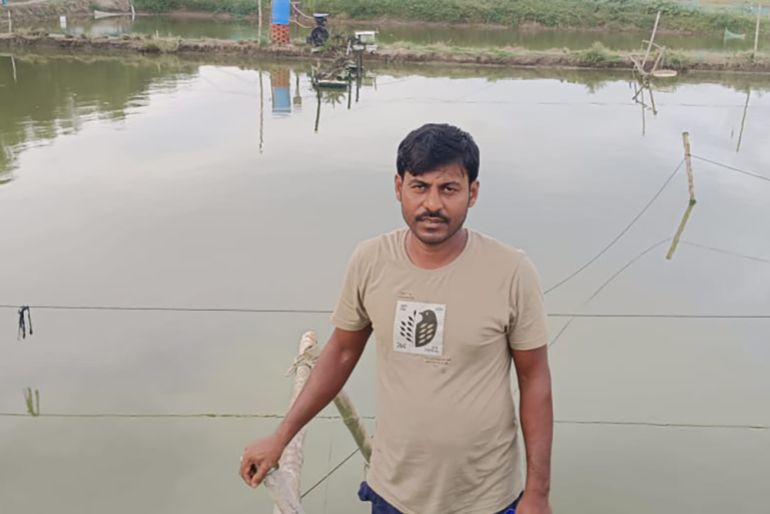
Kolkata, India: Buddhadeb Pradhan, a shrimp farmer in Nandigram in the West Bengal state in eastern India, has taken a major risk by cultivating a second shrimp crop within weeks of harvesting the first cycle. But he needs the money and is willing to risk a diseased crop, a common occurrence when there are two harvesting cycles in a pond in the same year. He was partly pushed into making that decision because of the falling price of the shrimp on account of the tariffs imposed on India by United States President Donald Trump. “The falling prices of the shrimp have me stressing if I can recover my investment of 300,000 rupees [$3,380],” he told Al Jazeera. India is the world’s second-largest producer of shrimp – predominantly for export – after Ecuador. In the financial year ending in March 2025, it sent $5bn of frozen shrimp globally, with the US accounting for about 48 percent of its sales. It produces two commercial varieties of marine and freshwater shrimp, black tiger and Pacific whiteleg, popularly known as vannamei (Litopenaeus vannamei). India’s shrimp production stood at 1.1 million tonnes, predominantly vannamei, but also 5 percent black tiger, in the financial year ending March 2024, as per the latest data available. India has two distinctive shrimp cycles of vannamei, starting from February to June and then from July to October. Farmers are generally reluctant to go for a second cycle, fearing diseases. The black tiger is a single crop from March to August. The shrimp is cultivated in the coastal states of West Bengal, Gujarat, Odisha, Andhra Pradesh, Tamil Nadu, Goa, Maharashtra, Karnataka and Kerala. The industry employs approximately 10 million people, including the shrimp farmers and people at hatcheries, processing units, and others, said Manoj Sharma, a veteran shrimp farmer. Advertisement Since the tariffs were announced in May, farm prices of shrimp dropped from 300 rupees ($3.38) per kilogramme to 230 rupees ($2.59) as farmers tried to offload whatever they had. With production costs at 275 rupees ($3.10) per kilogramme, losses are mounting. Buddhadeb Pradhan has taken a major risk by cultivating a second shrimp crop [Gurvinder Singh/Al Jazeera] Nardu Das, 40, a shrimp farmer in Nandigram, told Al Jazeera that farmers might be forced to consume “poison” if the market doesn’t stabilise and prices do not increase. The 40-year-old said shrimp farming is a costly affair with bills for power, lease on land, feed and other expenses. “The farmers not only risk their savings but also take loans with the hope of massive returns. But diseases and the fall in prices often push them to the brink of poverty,” he said. Farmers are worried that with tariffs at 58.26 percent – including countervailing duties of 5.77 percent and anti-dumping duties of 2.49 percent – they will lose their US market. “The US is a preferred destination for shrimp exporters because of easy market access, higher growth prospects, better profit margins, and repeat customer approvals. The hike in tariffs will discourage farmers from continuing to invest in shrimp culture that also incurs upfront costs of land lease, seed and feed,” said Rahul Guha, senior director of Crisil Ratings. India brings its brood stock – the term for the mother shrimp – in chartered flights from the US to breed to produce seeds for farming. But there have been cases where it is either of poor quality or unfit for the Indian environment, in turn leading to disease among the shrimp produce, which then has to be thrown away. “We have been demanding the government to breed the shrimps using the local brood stock in order to get the high-quality seeds that adjust to our conditions,” said IPR Mohan Raju, president of the Prawn Farmers Federation of India. Another spillover of the tariffs has been on hatcheries. India has about 550 private hatcheries that depend on these shrimp farmers for their livelihood. Several farmers, fearing a further dip in prices of shrimp, have stopped buying seeds, and at least half the hatcheries have already shut down, said Ravid Kumar Yellanki, president of All India Shrimp Hatcheries Association. “Undoubtedly, the US tariffs have begun to have a major impact on the hatcheries, with many halting production,” Yellanki said. These hatcheries produce approximately 80 billion seeds annually and have drained seven to eight billion seeds in the past four months due to no demand from the farmers, as the shelf life of seeds is just three to four days. Advertisement “It would be a major loss to the hatchery owners if the situation doesn’t turn normal soon,” Yellanki added. Nardu Das said farmers might be forced to consume ‘poison’ if the market doesn’t stabilise and if prices do not rise soon [Gurvinder Singh/Al Jazeera] Ecuador, another headache India is already facing stiff competition from Ecuador, which has been expanding its share of the US market due to its geographical proximity to the US. Ecuador produces high-quality vannamei shrimp at a lower price, as that is its domestic species. Plus, tariffs on it are at 15 percent, much lower than India’s, making it a more attractive market for the US to source from. During the first nine months of 2025, Ecuador exported 1,038,208 metric tonnes of shrimp to the US, up 14 percent year-on-year, with a total value of $5.51bn, representing a 23 percent increase compared with the same period last year. Sharma, the aquaculture expert, says the US tariffs will force Indian exporters to compete among themselves to sell to alternate markets. His suggestion is for businesses to cultivate one oft-ignored market – the domestic Indian market. There is “complete ignorance of the domestic market [among exporters] … and that has a lot of potential”, he said. Adblock test (Why?)
US judge rules Trump illegally ordered National Guard troops to Portland
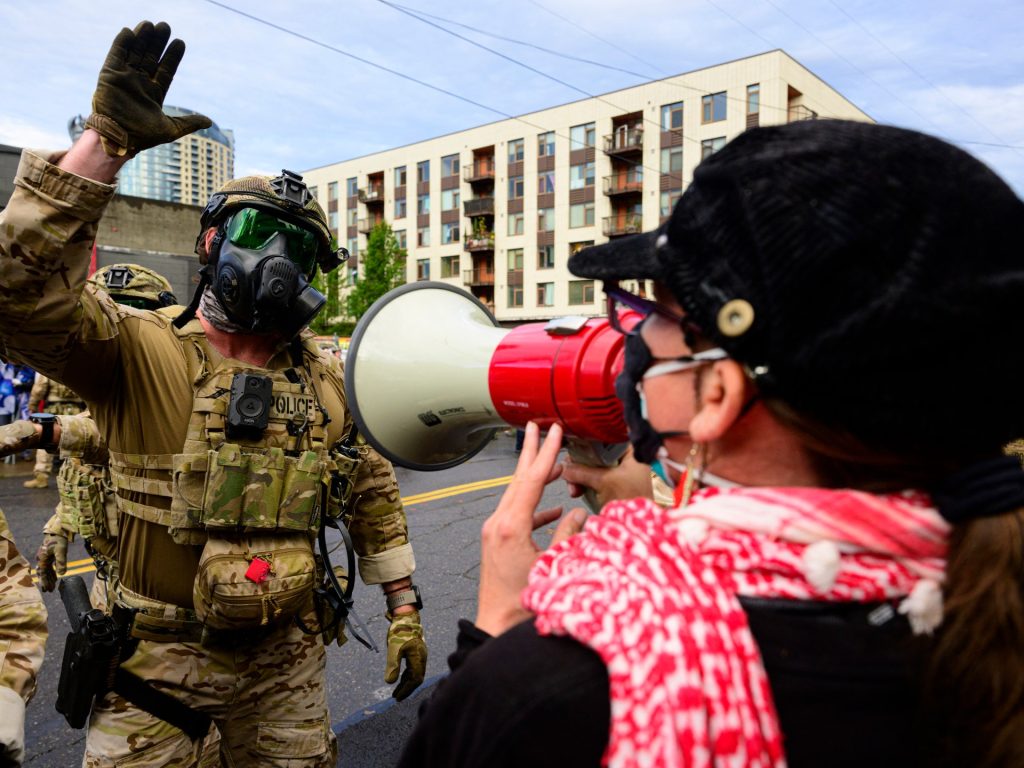
US district judge blocks Donald Trump’s use of military force to tackle protests against immigration officers. Published On 8 Nov 20258 Nov 2025 Click here to share on social media share2 Share United States President Donald Trump unlawfully ordered National Guard troops to Portland, Oregon, a federal judge has ruled, marking a legal setback for the president’s use of the military for policing duties in US cities. The ruling on Friday by US District Judge Karin Immergut is the first to permanently block Trump’s use of military forces to quell protests against immigration authorities. Recommended Stories list of 4 itemsend of list Immergut, a Trump appointee, rejected the administration’s claim that protesters at an immigration detention facility were waging a rebellion that legally justified sending troops to Portland. Democrats have said Trump is abusing military powers meant for genuine emergencies such as an invasion or an armed rebellion. Oregon Attorney General Dan Rayfield described the ruling as a “huge victory” and the “decision confirms that the President cannot send the Guard into Oregon without a legal basis for doing so”. “The courts are holding this administration accountable to the truth and the rule of law,” Rayfield said in a post on social media. BREAKING NEWS: We just secured a final court order blocking National Guard deployment! Today’s ruling is a huge victory for Oregon. The courts are holding this administration accountable to the truth and the rule of law. pic.twitter.com/ffzgj0zCjM — Attorney General Dan Rayfield (@AGDanRayfield) November 8, 2025 Portland’s Mayor Keith Wilson also applauded the decision, saying it “vindicates Portland’s position while reaffirming the rule of law that protects our community”. Advertisement “As I have said from the beginning, the number of federal troops needed in our city is zero,” Wilson said, according to local media reports. The City of Portland and the Oregon Attorney General’s Office sued in September, alleging that the Trump administration was exaggerating occasional violence to justify sending in troops under a law permitting presidents to do so in cases of rebellion. Echoing Trump’s description of Portland as “war-ravaged”, lawyers from the Department of Justice had described a violent siege overwhelming federal agents in the city. But lawyers for Oregon and Portland said violence has been rare, isolated and contained by local police. “This case is about whether we are a nation of constitutional law or martial law,” Portland’s lawyer Caroline Turco had said. The Trump administration is likely to appeal Friday’s ruling, and the case could ultimately reach the US Supreme Court. A review by the Reuters news agency of court records found that at least 32 people were charged with federal crimes stemming from the Portland protests since they began in June. Of the 32 charged, 11 pleaded guilty to misdemeanours, and those who have been sentenced received probation. About half the defendants were charged with assaulting federal officers, including 14 felonies and seven misdemeanours. Prosecutors dismissed two cases. Charging documents describe protesters kicking and shoving officers, usually while resisting arrest. Three judges, including Immergut, have now issued preliminary rulings that Trump’s National Guard deployments are not allowed under the emergency legal authority cited by his administration. Adblock test (Why?)
Trump says US to boycott South Africa G20 summit over white ‘genocide’
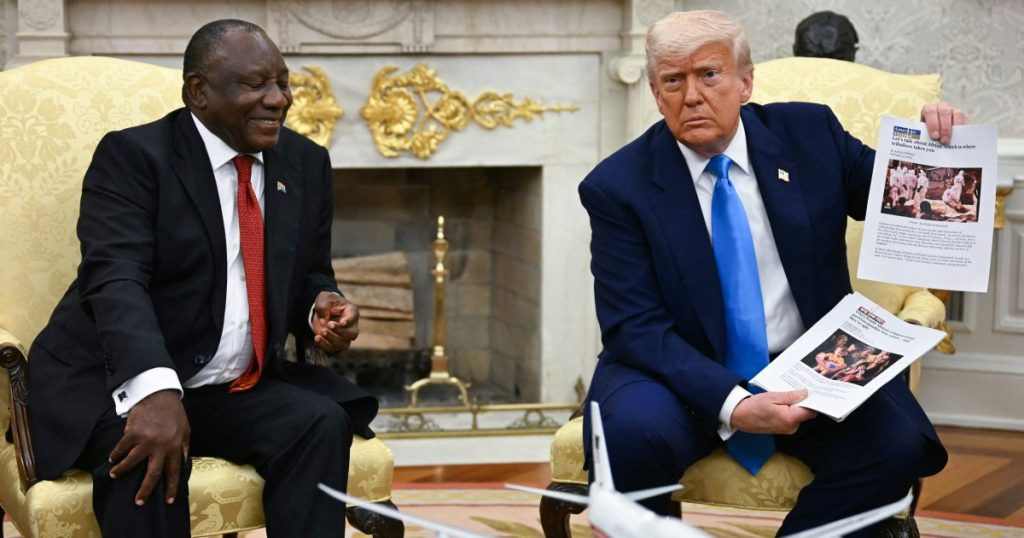
Trump calls it a ‘disgrace’ that South Africa is hosting the G20, reiterates debunked claims of a ‘genocide’ against white farmers. President Donald Trump has said no United States officials will attend this year’s Group of 20 (G20) summit in South Africa, citing the country’s treatment of white farmers. Writing on his Truth Social platform on Friday, Trump said it was a “total disgrace that the G20 will be held in South Africa”. Recommended Stories list of 3 itemsend of list “Afrikaners (People who are descended from Dutch settlers, and also French and German immigrants) are being killed and slaughtered, and their land and farms are being illegally confiscated,” Trump wrote, reiterating claims that have been rejected by authorities in South Africa. “No US Government Official will attend as long as these Human Rights abuses continue. I look forward to hosting the 2026 G20 in Miami, Florida!” he added. Since returning to the White House in January, Trump has repeatedly claimed that white South Africans are being persecuted in the Black-majority country, a claim rejected by South Africa’s government and top Afrikaner officials. Trump had already said on Wednesday that he would not attend the summit – which will see the heads of states from the world’s leading and emerging economies gather in Johannesburg on November 22 and 23 – as he also called for South Africa to be thrown out of the G20. US Vice President JD Vance had been expected to attend the meeting in place of the president. But a person familiar with Vance’s plans told The Associated Press news agency that he will no longer travel to South Africa. Tensions first arose between the US and South Africa after President Cyril Ramaphosa introduced a new law in January seeking to address land ownership disparities, which have left three-quarters of privately owned land in the hands of the white minority more than three decades after the end of apartheid. The new legislation makes it easier for the state to expropriate land, which Ramaphosa insists does not amount to confiscation, but creates a framework for fair redistribution by allowing authorities to take land without compensation in exceptional circumstances, such as when a site has been abandoned. Advertisement Shortly after the introduction of the Expropriation Act, Trump accused South Africa of “confiscating land, and treating certain classes of people VERY BADLY”. “The United States won’t stand for it, we will act,” he said. In May, Trump granted asylum to 59 white South Africans as part of a resettlement programme that Washington described as giving sanctuary after racial discrimination. The same month, when Trump met with President Ramaphosa in the White House, he ambushed him with the claim that a “genocide” is taking place against white Afrikaners in his country. Ramaphosa denied the allegations, telling Trump “if there was Afrikaner farmer genocide, I can bet you, these three gentlemen would not be here”, pointing to three white South African men present – professional golfers Ernie Els and Retief Goosen, and South Africa’s richest man, Johann Rupert. South African historian Saul Dubow, professor of Commonwealth history at the University of Cambridge, previously told Al Jazeera that there is no merit to “Trump’s fantasy claims of white genocide”. Dubow suggested that Trump may be more angry about South Africa’s genocide case filed against Israel in the International Court of Justice over its war on Gaza. Nonetheless, the Trump administration has maintained its claim of widespread persecution. On October 30, the White House indicated that most new refugees admitted to the US will be white South Africans, as it slashed the number of people it will admit annually to just 7,500. “The admissions numbers shall primarily be allocated among Afrikaners from South Africa pursuant to Executive Order 14204 and other victims of illegal or unjust discrimination in their respective homelands,” the White House said. Adblock test (Why?)
Over 800 flights delayed, 20 cancelled at Delhi Airport after Air Traffic Control glitch
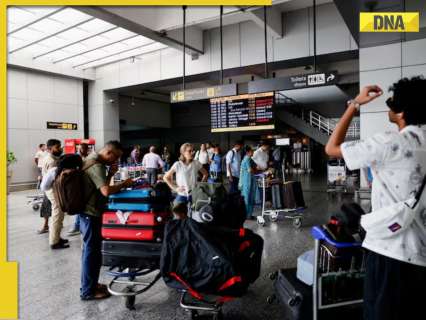
Over 800 domestic and international flights were delayed, 20 cancelled at Delhi’s Indira Gandhi International Airport (IGIA) due to technical problems with the air traffic control system. All airline operations at the airport have been impacted and authorities are working to fix the issues.
DNA TV Show: Analysis of row over ‘Vande Mataram’ as national song completes 150 years
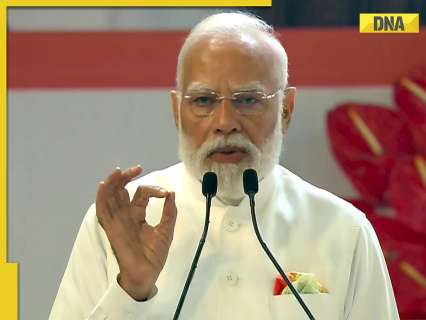
The national song of our country, Vande Mataram, completed 150 years. On this occasion, Prime Minister Narendra Modi kicked off a-year-long commemorative celebration, releasing a stamp and a coin to mark the special occasion.
Good news for Delhi commuters! NHAI to widen Dhaula Kuan road near Subroto Park, ease travel to Gurugram, check details

Traffic congestion in Dhaula Kuan may ease as the NHAI has taken up project to expand the highway near Subroto Park Air Force Station. The left-hand side part of the road which goes towards Gurugram is being further built from two lanes to four.
Delhi-NCR AQI: Air quality remains in ‘very poor’ category; CM Rekha Gupta revises working hours for govt officials, check timings
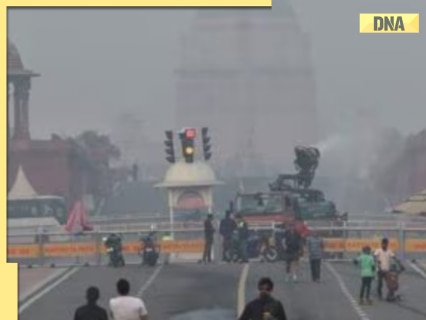
The air quality in the national capital remained in the ‘poor’ category on Saturday morning as the overall AQI recorded at 7 am was 336. According to the data of the Central Pollution Control Board (CPCB), the AQI recorded at several monitoring stations of Delhi was ‘very poor’ while some stations also recorded ‘severe’ air quality.
Delhi airport issues BIG update on flights status after system failure: Will you take off on time today?
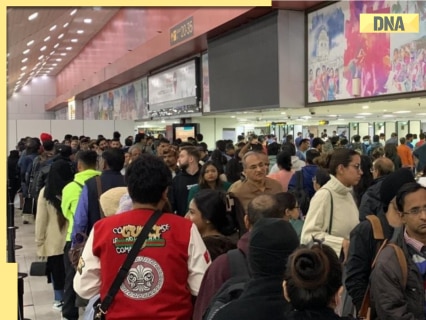
The Automatic Message Switching System (AMSS) affecting Air Traffic Control (ATC) operations at Delhi’s Indira Gandhi International Airport has been resolved, and normal flight operations are resuming. Delhi Airport on Saturday announced that operations are returning to normal, and advised passengers to stay updated with their airlines for the latest flight information, according to ANI.
PM Modi flags off Ernakulam-KSR Bengaluru Vande Bharat; check train stoppages, timings, fares

Prime Minister Narendra Modi on Saturday flagged off the inaugural special Ernakulam-KSR Bengaluru Vande Bharat Express through video conferencing from Varanasi. This will be the third Vande Bharat service for Kerala and the 12th pair operating within the Southern Railway network.
Operation Pimple: Two terrorists killed in Jammu and Kashmir’s Kupwara district after army foils infiltration attempt, VIDEO

Two terrorists killed in Jammu and Kashmir’s Kupwara after security forces on Saturday foiled an infiltration attempt in the Keran sector under ‘Operation Pimple.