

Russia-Ukraine war: List of key events, day 1,343
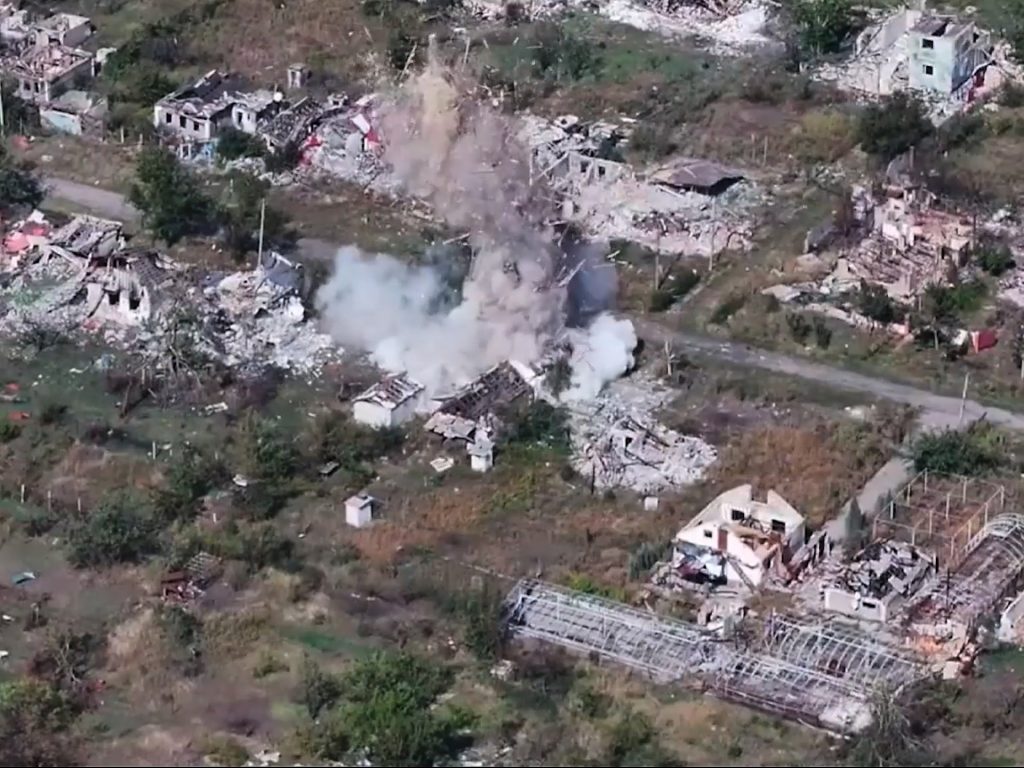
Here are the key events from day 1,343 of Russia’s war on Ukraine. Published On 29 Oct 202529 Oct 2025 Click here to share on social media share2 Share Here is how things stand on Wednesday, October 29, 2025: Fighting Russia launched 396 attacks on 15 settlements in Ukraine’s southern Zaporizhia region, killing one person and injuring three others, Governor Ivan Fedorov said on Tuesday. Russian forces also launched drone attacks, air strikes and artillery shelling across Ukraine’s Kherson region, killing one person and wounding six, the head of the Kherson Regional Military Administration, Oleksandr Prokudin, said on Tuesday. A woman who was wounded in a Russian attack on the Kherson region on Monday died as a result of her injuries, Prokudin added. The head of the Kharkiv Regional Military Administration, Oleh Syniehubov, said on national television that only 561 residents remain in the city of Kupiansk, in Ukraine’s Kharkiv region, as of midday on Tuesday. Thousands of people have been evacuated from the city, which had a population of more than 26,000 prior to the war, as Russian forces advanced. Ukrainian attacks killed an 85-year-old woman in the Russian-occupied part of Ukraine’s Kherson, according to a local official. The Russian-installed Governor of Kherson, Vladimir Saldo, said that Ukrainian attacks on power lines and substations in the region had left 5,800 people without electricity. In Russia, Ukrainian forces sent drones towards Moscow for a third consecutive night, disrupting air traffic around the Russian capital, authorities there said late on Tuesday. Ukrainian forces killed a person in the Russian border region of Bryansk, according to a local official. Ambassador-at-Large of the Russian Minister of Foreign Affairs Rodion Miroshnik told the TASS state news agency that Ukrainian attacks on Russian regions in the past week killed nearly 20 people, including a child. Russian forces shot down 124 Ukrainian drones in a 24-hour period, TASS reported, citing the Russian Ministry of Defence. Advertisement Politics and Diplomacy Ukrainian President Volodymyr Zelenskyy said on Tuesday that Kyiv was ready for peace talks with Russia, but it would not cede more territory as Moscow has demanded. He also said that Ukrainian and European officials would meet at the end of the week to discuss the details of a ceasefire plan. “It is not a plan to end the war. First of all, a ceasefire is needed,” Zelenskyy said. “This is a plan to begin diplomacy… Our advisers will meet in the coming days; we agreed on Friday or Saturday. They will discuss the details of this plan.” The Ukrainian leader also urged United States President Donald Trump to pressure Chinese leader Xi Jinping to end his support for Russia when the two leaders meet later this week. He added that Ukraine needs European financial support to continue its defence against Russian forces for another two or three years. Germany’s economy minister, Katherina Reiche, told Reuters that the US government has provided written assurances that the German business of Russia’s Rosneft company would be exempt from new oil sanctions because the assets are no longer under Russian control. Kremlin spokesman Dmitry Peskov said that the Kremlin acknowledges Trump’s statements urging other countries to stop buying Russian oil, but that Russia’s partners will make their own decisions on whether to continue buying its energy products. Peskov also claimed that Russia cannot assess the status of peace negotiations with Ukraine because Kyiv has put them on hold, and is unwilling to answer questions posed by Russia. Many Indian refiners have paused new orders for Russian oil since the US’s latest sanctions on Moscow, according to Reuters, but the state-run Indian Oil said it would not stop buying Russian oil as long as it is complying with sanctions. “Russian crude is not sanctioned. It is the entities and the shipping lines which have got sanctions,” Anuj Jain, Indian Oil’s finance director, said. “Today, if somebody comes to me with a non-sanctioned entity, and the cap is being complied with, and the shipping is OK, then I will continue to buy it,” he said. The Indian state-owned warplane maker Hindustan Aeronautics Ltd said on Tuesday that it signed an initial agreement to build civil commuter aircraft with the United Aircraft Corporation, a Russian aerospace firm subject to Western sanctions. Weapons Zelenskyy said that Ukraine, which has significantly increased its production of weapons during the war, is planning to begin controlled exports of arms from next month. US Permanent Representative to NATO Matthew Whitaker told Bloomberg that he expects $12bn to $15bn dollars will be raised to buy weapons for Ukraine into 2026. “It’s going to be US weapons… And I think this is another example of Europe stepping up, of our NATO allies here on the continent, stepping up and supporting Ukraine,” he said, referring to the Trump administration’s move towards ensuring European countries buy US weapons to support Ukraine, rather than the US government providing them. Advertisement Adblock test (Why?)
As Trump and Xi near deal, few see letup in heated US-China rivalry
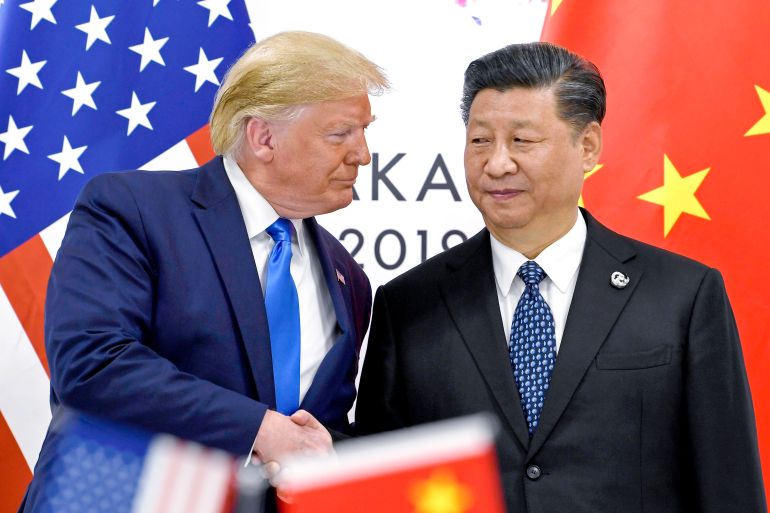
Gyeongju, South Korea – As US President Donald Trump and Chinese leader Xi Jinping prepare to meet for the first time since 2019, Washington and Beijing appear poised to reach a deal to lower the temperature of their fierce rivalry. But while Trump and Xi are widely expected to de-escalate US-China tensions in South Korea on Thursday, expectations are modest for how far any agreement will go to resolve the myriad points of contention between the world’s two largest economies. Recommended Stories list of 4 itemsend of list Many details of the expected deal that have been flagged in advance relate to avoiding future escalation, rather than rolling back the trade war that Trump launched during his first term and has dramatically expanded since returning to office this year. Some of the proposed measures involve issues that have only arisen within the last few weeks, including China’s plan to impose strict export controls on rare earths from December 1. Whatever Trump and Xi agree to on the sidelines of the Asia-Pacific Economic Cooperation (APEC) summit in Gyeongju, there is little doubt that Washington and Beijing will continue to butt heads as they jockey for influence in a rapidly shifting international order, according to analysts. “I have modest expectations for this meeting,” said Deborah Elms, head of trade policy at the Hinrich Foundation in Singapore. “I think, no matter what happens this week, we haven’t seen the end of economic tensions, tariff threats, export controls and restrictions, and the use of unusual levers like digital rules,” Elms told Al Jazeera. US President Donald Trump shakes hands with Chinese President Xi Jinping during a meeting on the sidelines of the G20 summit in Osaka, Japan, on June 29, 2019. [Susan Walsh/AP] Contours of a deal While the exact parameters of any deal are still to be determined by Trump and Xi, the contours of an agreement have emerged in recent days. Advertisement US Secretary of the Treasury Scott Bessent said in media interviews this week that he expected China to defer its restrictions on rare earths and that Trump’s threatened 100 percent tariff on Chinese goods was “effectively off the table”. Bessent said he also anticipated that the Chinese side would agree to increase purchases of US-grown soya beans, enhance cooperation with the US to halt the flow of chemicals used to manufacture fentanyl, and sign off on a finalised TikTok deal. While heading off a further spiralling in US-China ties, a deal along these lines would leave intact a wide array of tariffs, sanctions and export controls that hinder trade and business between the sides. Since Washington and Beijing reached a partial truce in their tit-for-tat tariff salvoes in May, the average US duty on Chinese goods has stood at more than 55 percent, while China’s average levy on US products has hovered at about 32 percent. Washington has blacklisted hundreds of Chinese firms deemed to pose national security risks, and prohibited the export of advanced chips and key manufacturing equipment related to AI. China has, in turn, added dozens of US companies to its “unreliable entity” list, launched antitrust investigations into Nvidia and Qualcomm, and restricted exports of more than a dozen rare earths and metallic elements, including gallium and dysprosium. US-China trade has declined sharply since Trump re-entered the White House. China’s exports to the US fell 27 percent in September, the sixth straight month of decline, even as outbound shipments rose overall amid expanding trade with Southeast Asia, Latin America, Europe and Africa. China’s imports of US goods declined 16 percent, continuing a downward trend since April. “The structural contradictions between China and the United States have not been resolved,” said Wang Wen, dean of the Chongyang Institute for Financial Studies at Renmin University of China in Beijing, predicting continuing friction and “even worse” relations between the superpowers in the future. “Most importantly, China’s strength is increasing and will surpass that of the United States in the future,” Wang told Al Jazeera. ‘De-escalation unlikely’ Shan Guo, a partner with Shanghai-based Hutong Research, said he expects the “bulk” of the deal between Trump and Xi to be about avoiding escalation. “A fundamental de-escalation is unlikely given the political environment in the US,” Guo told Al Jazeera. A man films the logo of the Asia-Pacific Economic Cooperation summit (APEC) outside of the venue in Gyeongju, South Korea, Tuesday, October 28, 2025 [Lee Jin-man/AP] But with the US having no alternative to Chinese rare earths and minerals in the near-term, Washington and Beijing could put aside their differences for longer than past trade truces, Guo said. Advertisement “This means reduced downside risks in US-China relations for at least a year, or perhaps even longer,” he said. Dennis Wilder, a professor at Georgetown University who worked on China at the CIA and the White House’s National Security Council, said that while he is optimistic the summit will produce “positive tactical results”, it will not mark the end of the trade war. “A comprehensive trade deal is still not available,” Wilder told Al Jazeera. “Bessent and his Chinese counterpart will continue negotiating in hopes of a more lasting agreement if and when President Trump visits China next year.” Trump and Xi’s go-to language on the US-China relationship itself points to the gulf between the sides. While Trump often complains about the US being “ripped off” by China, Xi has repeatedly called for their relations to be defined by “mutual respect” and “win-win cooperation”. “The United States should treat China in a way that China considers respectful,” said Wang of Renmin University. “They have to respect China, and if they don’t, then the United States will receive an equal response until they become able to respect others,” he added. Adblock test (Why?)
North Korea test-fires cruise missiles as Trump visits South Korea
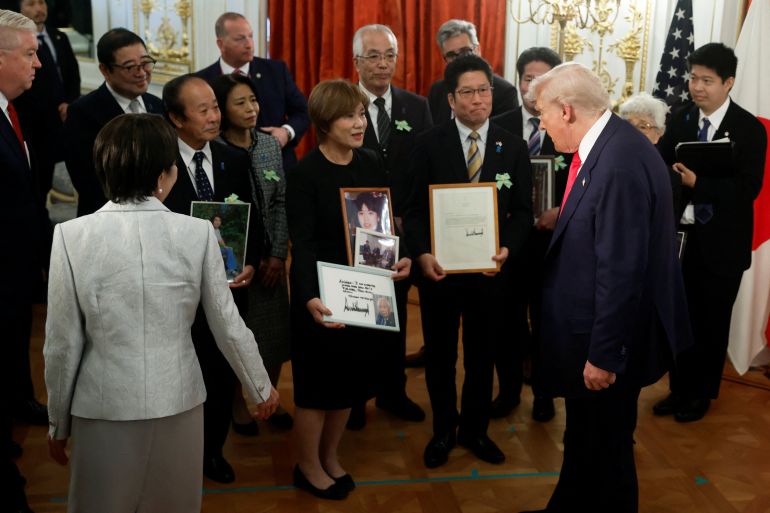
Pyongyang says the tests in the Yellow Sea were aimed at impressing its abilities upon its ‘enemies’. Published On 29 Oct 202529 Oct 2025 Click here to share on social media share2 Share North Korea has test-fired several sea-to-surface cruise missiles into its western waters, according to state media, hours before United States President Donald Trump begins a visit to South Korea. The official Korean Central News Agency (KCNA) said on Wednesday that the missiles, carried out in the Yellow Sea on Tuesday, flew for more than two hours before accurately striking targets. Recommended Stories list of 4 itemsend of list Top military official Pak Jong Chon oversaw the test and said “important successes” were being achieved in developing North Korea’s “nuclear forces” as a war deterrent, according to KCNA. The test was aimed at assessing “the reliability of different strategic offensive means and impress their abilities upon the enemies”, Pak said. “It is our responsible mission and duty to ceaselessly toughen the nuclear combat posture,” he added. South Korea’s joint chiefs of staff said on Wednesday that the military had detected the North Korean launch preparations and that the cruise missiles were fired in the country’s northwestern waters at about 3pm (06:00 GMT) on Tuesday. The joint chiefs said South Korea and the US were analysing the weapons and maintaining a combined defence readiness capable of a “dominant response” against any North Korean provocation. North Korea’s latest launches followed short-range ballistic missile tests last week that it said involved a new hypersonic system designed to strengthen its nuclear war deterrent. The latest test came hours before an expected summit between Trump and South Korean President Lee Jae Myung in the city of Gyeongju, where South Korea is hosting this year’s Asia-Pacific Economic Cooperation (APEC) meetings. Advertisement Trump has expressed interest in meeting with Kim during his stay in South Korea, where he is also scheduled to hold a summit with Chinese President Xi Jinping. However, South Korean officials have said that a Trump-Kim meeting is unlikely. Kim has said he still personally holds “fond memories” of Trump, but has also said he would only be open to talks if Washington stops insisting his country give up its nuclear weapons programme. North Korea has shunned any form of talks with Washington and Seoul since Kim’s high-stakes nuclear diplomacy with Trump fell apart in 2019, during the US president’s first term. Trump and Japanese Prime Minister Sanae Takaichi meet with relatives of Japanese nationals abducted by North Korea, at the Akasaka Palace state guest house in Tokyo, Japan, on Tuesday [Kiyoshi Ota/Pool via Reuters] Before flying to South Korea, Trump was in Tokyo, where he met with families of Japanese abducted by North Korea on Tuesday, telling them that “the US is with them all the way” as they asked for help to find their loved ones. After years of denial, North Korea admitted in 2002 that it had sent agents to kidnap 13 Japanese people decades ago, who were used to train spies in Japanese language and customs. Japan says that 17 of its citizens were abducted, five of whom were repatriated. North Korea has said that eight are dead as of 2019, and another four never entered the country. Adblock test (Why?)
Prashant Kishore rejects ECI’s dual voter claim, clarifies by saying, ‘I have nothing to…’
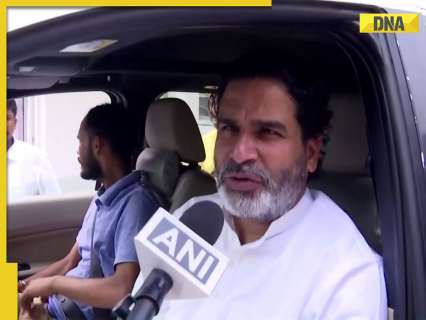
Jan Suraaj founder Prashant Kishor on Tuesday dismissed allegations of dual voter registration, clarifying that he has been enrolled as a voter from Bihar’s Kargahar Assembly constituency since 2019.
Uttar Pradesh CM Yogi Adityanath announces new district to honour former CM Kalyan Singh, would be named…; check details
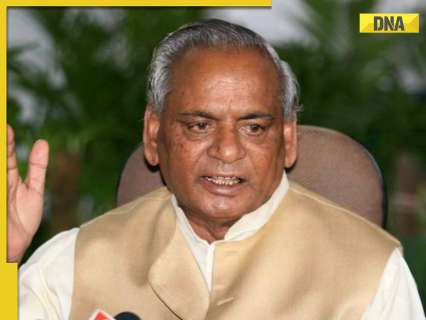
The Uttar Pradesh Government has announced the establishment of a new district to honour former CM Kalyan Singh. Chief Minister Yogi Adityanath has declared that the UP’s 76th district will be named Kalyan Singh Nagar.
Delhi cloud seeding trials: IIT Kanpur director explains why artificial rain efforts fell short
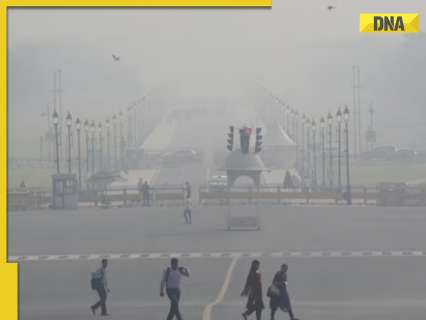
A Cessna aircraft equipped with salt-based and silver iodide flares was used to conduct cloud seeding trials in Delhi, aiming to trigger artificial rainfall.
Cyclone Montha: One dead, thousands evacuated as storm weakens over coastal Andhra, IMD predicts…

The storm’s effects were also felt in Odisha, where normal life was disrupted across 15 districts. Read here to know what IMD said in its forecast.
8th Pay Commission: How much salary hike can central government employees expect?

The Union Cabinet, chaired by Prime Minister Narendra Modi, on Tuesday approved the Terms of Reference for the 8th Central Pay Commission, marking a key step in the process to review and revise the pay structure and service conditions of central government employees.
Delhi-NCR AQI Update: National Capital’s air quality remains ‘very poor’, GRAP II norms in place as pollution continues to bite

According to the Central Pollution Control Board (CPCB), the AQI in RK Puram area of southwest Delhi remains “very poor” at 308, as of 7:00 AM on Wednesday. Read here to know full forecast.
TribCast: Unpacking the constitutional amendments

Texas Politics Project’s Joshua Blank joins the TribCast to walk through the 17 constitutional amendments on the ballot this November