

Odisha horror: Man allegedly beheads neighbour, buries head inside puja room

Odisha Police arrested a man in Bolangir for allegedly killing and beheading a 45-year-old man and burying his head in his puja room.
Delhi software engineer beaten to death by in-laws after fight over child’s medicine

Delhi software engineer Vinay Gupta, 31, Adobe employee with Rs 60 lakh package, allegedly beaten to death by in-laws in Nihal Vihar after fight with wife Rekha over child’s medicine.
MP hospital fire: 3 newborns suffer burn injuries after NICU warmer catches fire

Three newborns were injured after a warmer caught fire inside the NICU of Chhindwara District Hospital.
BJP passes resolution on Vande Mataram, condemns Congress’ stance on national song
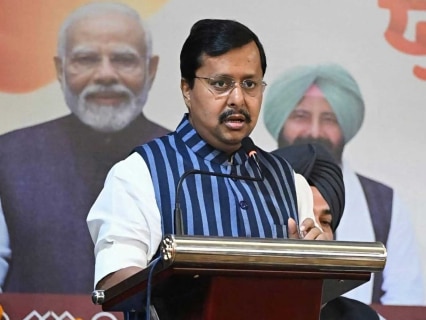
The BJP strongly condemned the Congress Working Committee’s decision taken on August 19 to re-adopt its 1937 resolution that restricts the singing of Vande Mataram to only its first two stanzas at Congress programmes.
Delhi CM Rekha Gupta offers prayers at Sri Lakshmi Narayani Temple in Vellore

On the auspicious occasion of Varalakshmi Vratam, which is being observed across Tamil Nadu today, the chief minister prayed for happiness, peace, good health, and prosperity for all.
DMK announces 9 big changes after poll defeat: Age cap, term limits and more

DMK chief MK Stalin has unveiled a major organisational overhaul of the party, introducing age limits, a two-term cap and more changes aimed at reshaping it from within.
Bar Council chairman Manan Mishra rejects allegations against him: ‘It’s all a political stunt’

Responding to the allegations leveled by senior advocate YR Sadasiva Reddy, Mishra said he was an elected representative and not a nominated member of the BCI.
Flying abroad from India? This boarding pass rule changes from September 1

Flying out of India soon? A familiar airport process is set to disappear on September 1, as physical boarding pass stamping will no longer be required. Yes, you read it right! Know more below.
The Will of 100: Trump’s SAVE America Act sidelined after Senate unanimously agreed to August exit
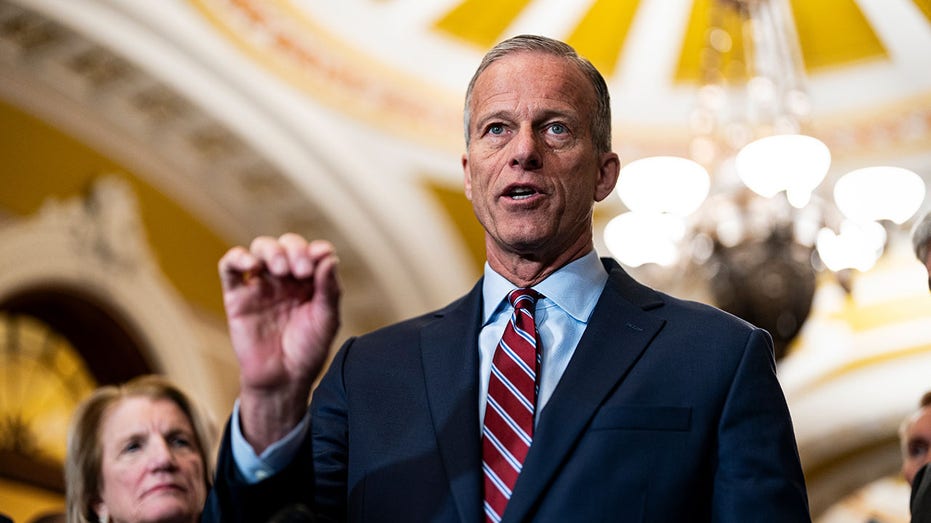
The Senate has been out of session for about two weeks. It’s convened in brief “pro forma” sessions for just a couple of moments on four occasions since senators called it quits for more than a month at 4:57 a.m. ET on Saturday, Aug. 8. Pro forma sessions are where the Senate huddles for just a few seconds, gaveling in and gaveling out with a skeleton crew. It’s rare that more than one senator is even in the chamber. The Senate truly isn’t back for debate and votes until the afternoon of Monday, Sept. 15. REPORTER’S NOTEBOOK: INSIDE THE SENATE SHOWDOWN OVER TRUMP’S PUSH TO SCRAP AUGUST RECESS But what about all of that sturm and drang about “cancelling the August recess?” Remember that President Donald Trump and conservatives – ranging from Sens. Mike Lee, R-Utah, to Rick Scott, R-Fla. – wanted the Senate to remain in session for the month to debate the SAVE America Act. That’s the chief legislative demand of Trump. It requires voter ID and proof of citizenship to vote. Senate Majority Leader John Thune, R-S.D., was on the floor when the Senate cut town a little more than two weeks ago. Did Thune hornswoggle his fellow Republicans into recessing the Senate for five weeks in the dead of night? Hardly. In fact even those Republicans who would have liked senators to remain in Washington to debate the SAVE America Act were in on Thune’s plan, allowing the Senate to abandon town for most of August and nearly half of September. Huh? Believe it or not, Thune and all other 99 senators agreed to leave Washington. In fact, that’s the only way it could have happened. The Senate was meeting at 2:07 a.m. that Saturday, on the verge of commencing a vote series to confirm Attorney General Todd Blanche and approve the Russia sanctions bill. That’s when Thune asked the following on the Senate floor: “When the Senate completes its business on Aug. 8, to meet for pro forma sessions only at 10 a.m. on Monday, Aug. 10, 2026. 8 a.m. on Thursday, Aug. 13, 2026,” requested Thune. The majority leader then continued, rattling off a host of dates on Mondays and Thursdays for the Senate to convene in those pro forma sessions. Sen. Bernie Moreno, R-Ohio, was presiding over the Senate at the time. “Without objection?” asked Moreno of the body when Thune concluded. There was none. INSIDE THE SENATE’S CHAOTIC ALL-NIGHTER THAT LEFT TRUMP’S SAVE AMERICA ACT ON THE SHELF In other words, the Senate would soon depart Washington. There would be no August debate about the SAVE America Act. The Senate would simply meet for abbreviated sessions over the next few weeks. And shortly before 5 a.m., Thune requested the following from the floor: “Madam President, I ask unanimous consent when the Senate adjourns on Thursday, Sept. 10, it stand adjourned until 3 p.m. on Monday, Sept. 14. And following the prayer and pledge, the Journal of proceedings be approved and the Morning Hour be deemed expired,” asked Thune. The South Dakota Republican then threw in some more boilerplate, parliamentary language, to tee up a test vote on an unresolved cryptocurrency regulation bill for the afternoon of Tuesday, Sept. 15. “Without objection,” said Sen. Cynthia Lummis, R-Wy., who was presiding over the Senate at that ungodly hour. Thune paused briefly. But no one said boo from the floor. That’s because the chamber was bereft of senators — except for Thune and Lummis. Everyone bailed and was heading for the airport. “Madam President, if there’s no further business to come before the Senate, I ask that it stand adjourned under the previous order,” Thune asked. “The Senate stands adjourned until 10 a.m. ET on Monday,” declared Lummis, rapping the Senate’s unique hourglass shaped gavel on the dais. No objection. No roll call vote. The Senate was done. So let me filet this for you. The Senate conducts much of its business via “unanimous consent.” The Senate is a body of equals. All 100 senators wield nearly the same power. The Senate relies on “unanimous consent,” the blessing of all 100 members, to conduct quotidian tasks, like going in and out of session or what time to meet. The Senate occasionally approves bills — sometimes even big ones — by unanimous consent if all senators agree. But unanimous consent is just that. All 100 members must be on the same page. And if you have 99 senators in agreement and one holdout, well, that’s not unanimous consent. All it takes is the objection of a solitary member to sidetrack a “unanimous consent” request on the floor. And note that despite the advocacy by some Republican senators for the body to remain in session during August, no one lodged an objection. That’s because Thune pre-baked a series of unanimous consent requests offstage before he came to the floor. Late in the evening of Friday, Aug. 7, Thune ran what’s called a “hotline” in the Senate. He proposed a series of votes to confirm Blanche, OK Russia sanctions and consider a few other items. If any senator had a problem with Thune’s hotline, they should let leadership know before 11:30 p.m. that night. Otherwise, Thune would go to the floor and “propound” the unanimous consent request for the upcoming vote sequence. Thune would also propound a unanimous consent request for what the Senate would address when members returned in September, This package included a plan for those aforementioned pro forma sessions. And, for the Senate to hold off on any votes until Monday, night, Sept. 14. Thune also locked in the procedural vote on the cryptocurrency measure for Sept. 15. Anyone could have objected offstage. They didn’t. That would have scuttled the entire enterprise. Anyone could have objected on the Senate floor when Thune made the unanimous consent requests in real time. That didn’t happen either. That’s why both Moreno and Lummis asked the body if there was “an objection.” Or, they declared “without objection, so
USPS publishes rule to block mail-in ballots from states that don’t provide voter lists
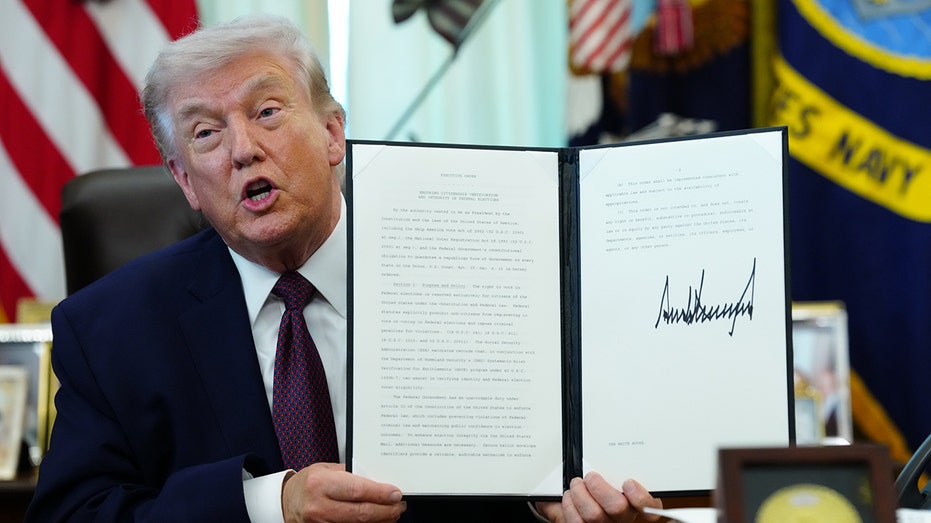
The United States Postal Service (USPS) published a rule Friday that would require states to provide lists of voters who received mail-in ballots to the agency. The USPS rule, first proposed on June 2, moves to align the agency with President Donald Trump’s March 31 executive order, which, among other things, ordered the agency to mandate that all states that plan to use USPS to send mail-in ballots notify the agency at least 90 days before an election and to send USPS a list of eligible voters the state plans on providing a mail-in ballot to at least 60 days before the election. “Any state that intends to receive mail-in or absentee ballots from individual voters through the Postal Service must ensure that such individuals have been enrolled with the Postal Service for inclusion on the state’s Mail-In and Absentee Participation List,” the new rule reads. In order for an individual to be included on the list, their state must submit to the USPS the individual’s name and address and include a “uniquely serialized Intelligent Mail barcode (IMb)” on both the outbound federal ballot and the return ballot sent to the individual. DHS PLANS COSTLY CRACKDOWN ON STATES THAT DON’T COOPERATE ON ELECTION SECURITY The finalized rule, however, cannot go into effect under an outstanding federal injunction against Trump’s March executive order. U.S. District Court Judge Indira Talwani, who was nominated by former President Barack Obama, issued an initial preliminary injunction against the executive order in June, ruling that two sections – including the section pertaining to USPS and mail-in ballots – were unconstitutional. In July, siding with the plaintiffs in League of Women Voters of Massachusetts v. Trump, Talwani renewed the injunction, barring the USPS from enacting the rule. DHS APPROVES PLAN TO VERIFY VOTER CITIZENSHIP, MONITOR MAIL BALLOTS AS TRUMP PUSH INTENSIFIES The rule, which USPS will officially publish on Aug. 26, would only take effect for the upcoming midterm elections if a federal court lifted its injunction on Trump’s executive order. In a filed opposition to the renewal of the injunction, the Trump administration argued that the judicial review was premature under the ripeness doctrine, claiming that the plaintiffs cannot demonstrate any harm from the proposed law until it takes effect. “Plaintiffs cannot demonstrate they suffer any particularized injury from ongoing policymaking deliberations within the Executive Branch. Instead, their concern is with possible ‘action that the [government] might take in the future,’ the objection, filed by the U.S. Department of Justice’s (DOJ) Civil Rights Division, read. USPS Postmaster General David Steiner defended the rule when it was first proposed in June, arguing that the USPS is making sure “we match the ballots that a state believes they’re sending out to what actually gets sent out.” USPS WOULDN’T DELIVER BALLOTS IN STATES THAT REFUSE TO FORK OVER MAIL-IN VOTER INFO UNDER PROPOSED RULE After the most recent injunction was issued, White House spokesperson Lauren Bis said, “The entire Trump Administration will continue lawfully enacting the agenda President Trump was elected to enact – which includes the safety and security of American elections.” Fox News Digital contacted the White House, the DOJ, USPS and the U.S. District Court for Massachusetts for further comment. Reuters and The Associated Press contributed to this report.