

NGOs note 28 new ‘carbon bomb’ projects since 2021
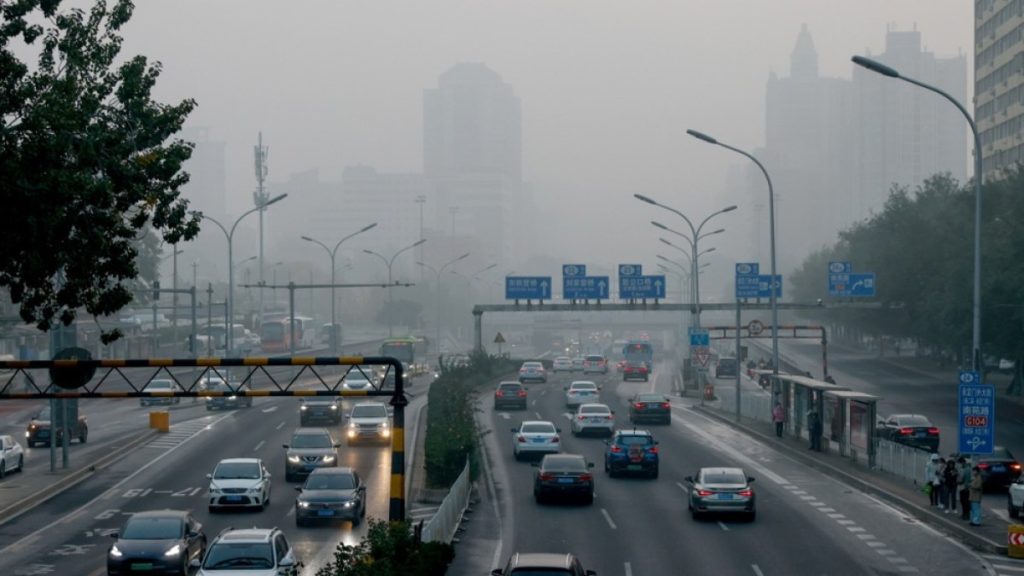
Potential CO2 emissions from new projects 11 times global “carbon budget” remaining to hit Paris Agreement targets. Published On 27 Oct 202527 Oct 2025 Click here to share on social media share2 Share Twenty-eight new “carbon bomb” projects have launched across the globe over the past five years, according to a report issued by NGOs. Despite global efforts to phase out the use of fossil fuels, known to have catastrophic climate effects, the report, published on Monday by a quartet of environmental nonprofits, details that dozens of new fossil fuel extraction projects that will pump out enormous emissions have been started since 2021. Recommended Stories list of 3 itemsend of list Carbon bombs were defined in a 2022 research article as oil, gas or coal facilities capable of generating more than a billion tonnes of CO2 over their lifetime. At that time, the NGOs Lingo, Data for Good, Reclaim Finance, and Eclaircies counted 425 such projects worldwide. The report said some 365 projects are still producing more than one billion tonnes each, with the fall from the 2021 total due to operations that have either cut their output or been re-evaluated. That is despite the International Energy Agency having said in 2021 that launching new oil and gas projects was incompatible with reaching climate targets set out in the Paris Agreement. The landmark agreement reached in 2015 included the aim of keeping global warming below 1.5 degrees Celsius (2.7 degrees Fahrenheit) compared with the pre-industrial era. Two years later, at COP28, countries around the world agreed to begin a phase-out of fossil fuels. Despite that, between 2021 and 2024, the world’s 65 largest banks financed more than $1.6 trillion to the companies involved in the projects pinpointed in the report. Advertisement Barclays Bank is the most involved in supporting companies behind carbon bombs, providing $33.7bn to 62 companies, including Eni, ExxonMobil and TotalEnergies. “Major global banks are exacerbating climate change and future emissions by continuing to give carte blanche to these fossil fuel companies that are destroying the planet,” said Louis-Maxence Delaporte, energy research manager at Reclaim Finance, one of the NGOs involved in the study. China accounts for 43 percent of “carbon bombs”. Russia accounts for 9 percent, the United States for 5 percent. Western oil majors have the most such projects, although Saudi Arabia’s Aramco and China’s CHN Energy produce the most total emissions. The report also identified more than 2,300 smaller extraction projects, approved or launched since 2021, whose potential emissions exceed five million tonnes of CO2 each, equivalent to the annual emissions of a city like Paris. Combined, the potential CO2 emissions from all these projects are 11 times greater than the global “carbon budget” remaining to keep global warming below 1.5C (2.7F) compared with the pre-industrial era, according to the authors’ calculations. Adblock test (Why?)
Fact check: Do quarter of US’s ‘drug boat’ searches find nothing?
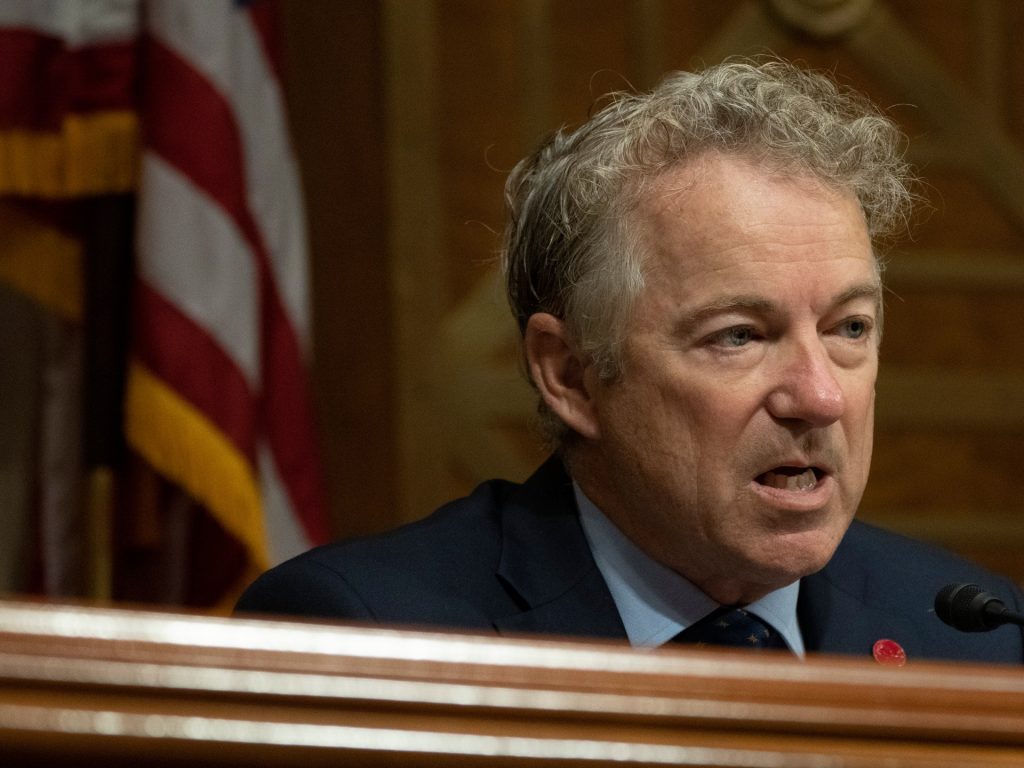
President Donald Trump says US military strikes on eight vessels in the Caribbean Sea and the Pacific Ocean, mostly targeting boats from Venezuela, were legal because they carried drugs being delivered to the United States. But Republican Senator Rand Paul, Kentucky, who is also chair of the Senate Homeland Security Committee, said maritime law enforcement statistics show that not all boats suspected of carrying drugs actually have drugs onboard. He said the military’s strikes were not in line with usual US policy. “When you stop people at sea in international waters, or in your own waters, you announce that you’re going to board the ship and you’re looking for contraband, smuggling or drugs. This happens every day off of Miami,” Paul said on October 19 on NBC’s “Meet the Press” programme. “We know from Coast Guard statistics that about 25 percent of the time the Coast Guard boards a ship, there are no drugs. So if our policy now is to blow up every ship we suspect or accuse of drug running, that would be a bizarre world in which 25 percent of the people might be innocent.” Paul made a similar statement in an October 12 interview. More than 30 people have been killed so far in the strikes, and the Trump administration has provided no evidence that the vessels contained drugs. We rated Trump’s recent statement that each strike saved “25,000 American lives” false. Paul’s office pointed PolitiFact to the US Coast Guard’s 2024 fiscal year report, which said that year the agency intercepted drugs in about 73 percent of cases when they boarded boats, with about 27 percent of vessel interceptions yielding no drugs. Advertisement Experts said the data supports Paul’s point, but noted that it’s unclear how the Coast Guard defines the term it uses to describe intercepting drugs – “a drug disruption”. “If the (Coast Guard) boards a vessel and finds a known drug trafficker but no drugs, and that individual gets arrested and convicted, does that count as a ‘drug disruption’?” said Jonathan Caulkins, a Carnegie Mellon University drug policy researcher. “Or suppose they approach the vessel, it jettisons the drugs overboard, and so the Coast Guard seizes the vessel but the drugs have disappeared into the water. Is that a successful disruption?” Paul’s figure might not translate directly to the recent boat strikes, experts said, since the US could have had intelligence about those specific vessels. PolitiFact contacted the Coast Guard about its data collection process but did not hear back. Coast Guard report details the agency’s drug interceptions The Coast Guard reports data about how often it intercepts drugs to the Department of Homeland Security. Its 2024 fiscal year report, which covers October 2023 to September 2024, summarises the agency’s performance in various programmes. During that period of time, the Coast Guard disrupted drug runs in 91 out of 125 boat interdictions, the report says, which was a rate of about 73 percent. “The quality of searches performed by Coast Guard boarding teams is high,” the report said, adding that its metrics depend on the quality and timeliness of the intelligence the agency receives. The rate has varied in recent years. The agency started reporting this drug interception data in fiscal year 2021, according to the report, which shows a drug disruption rate that year of 59 percent – meaning 41 percent of boats searched yielded no drugs. The interception rate rose to 64 percent in 2022 and 69 percent in 2023. The 2024 drug interception rate of 73 percent represents the Coast Guard’s highest since it started tracking the data. It lists an 80 percent interception rate as its annual goal. The Coast Guard didn’t answer our questions about its data collection process or what amounts to a drug disruption. A 2025 Coast Guard report evaluating agency data from fiscal years 2021 through 2023 found it didn’t accurately reflect all drug interdictions as some reports didn’t contain drug seizure results or the required documentation. Experts said we don’t know whether the 2024 Coast Guard statistic directly translates to the recent strikes in the Caribbean Sea and Pacific Ocean. “The people with fingers on the trigger may demand a much higher certainty rate before shooting,” Caulkins said. “So, even if the senator’s figure were correct when looking across all the many, very diverse operations over the course of a year, that doesn’t mean it applies to the special case of boats of Venezuela. Perhaps it does, but perhaps not.” Advertisement The Trump administration’s lack of information about the type or quantity of drugs it says were on the boats makes it impossible to know if every or any of the boats carried lethal drugs, and if they were en route to the US. Drug experts previously told us that Venezuela plays a minor role in trafficking drugs that reach the US. Most illicit fentanyl in the US comes from Mexico, not Venezuela. It enters the country mainly through the southern border at official ports of entry, and is smuggled in mostly by US citizens. Our ruling Paul said, “About 25 percent of the time the Coast Guard boards a ship, there are no drugs.” A 2024 Coast Guard report said the agency boarded and intercepted boats with drugs on them about 73 percent of the time, which means 27 percent of the interceptions yielded no drugs. This drug disruption statistic, however, might not translate directly to the recent boat strikes, experts said, since we don’t know what kind of intelligence the US had about those vessels. Paul’s statement is accurate but needs clarification. We rate it Mostly True. Adblock test (Why?)
UK journalist Sami Hamdi detained in US after pro-Israel pressure
NewsFeed UK journalist Sami Hamdi has been detained by US immigration officials after his visa was revoked, seemingly for unsubstantiated ‘national security’ reasons. Civil rights groups say it’s due to his criticism of Israel’s war on Gaza, after US far-right activists and pro-Israel influencers called for his deportation. Published On 27 Oct 202527 Oct 2025 Click here to share on social media share2 Share Adblock test (Why?)
Big update on Noida International Airport: Flights to 10 cities to begin operations in Phase 1, inauguration to be held on THIS date

Noida International Airport is set to open in late November or early December, offering flights to 10 major cities. IndiGo and Akasa will base operations there, and international flights will follow. The airport will boost connectivity, support cargo services, and help farmers in western UP.
What is ‘Green Cess’? This state govt to charge extra fee on vehicles from other states; How it works, what it means

Uttarakhand introduces a “Green Cess” on vehicles entering the state from other regions. The initiative aims to improve air quality, fund eco-friendly infrastructure, and tackle pollution caused by vehicle emissions and road dust. The revenue will support green projects like tree planting.
Big update on CJI BR Gavai shoe hurling case: SC declines to initiate criminal contempt against…

The court heard arguments from Senior Advocate Vikas Singh, representing the Supreme Court Bar Association, who urged action against Kishore, citing the glorification of the incident in the media and its impact on the institution’s reputation.
Faridabad: Blackmailed with AI deepfakes of his sisters, 19-year-old college student dies by suicide

The blackmailing began roughly two weeks ago, when two unidentified persons allegedly hacked into his phone and contacted him through the messaging platform WhatsApp. The victim, Rahul Bharti, was a second-year BCom student at DAV College.
Meet Tenzin Yangki, the first woman IPS officer from Arunachal Pradesh, who gets praise from Anand Mahindra

IPS Tenzin Yangki took part in the Passing Out Parade (PoP) at SVPNPA, Hyderabad, on October 17, 2025.
Delhi to bar entry of these vehicles registered outside city from Nov 1 to curb air pollution; check details

There will be no restrictions on the entry of commercial goods vehicles registered in Delhi. Check more details below.
EC announces second phase of SIR in 12 states after Bihar; check full list here
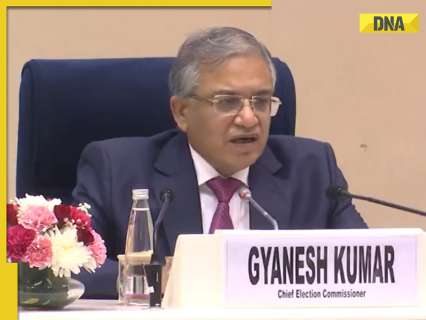
The voter list of all those states where SIR will be done will be frozen at 12 am tonight, CEC Gyanesh Kumar said.