

Why 25-year-old Mahnoor Omer took Pakistan to court over periods
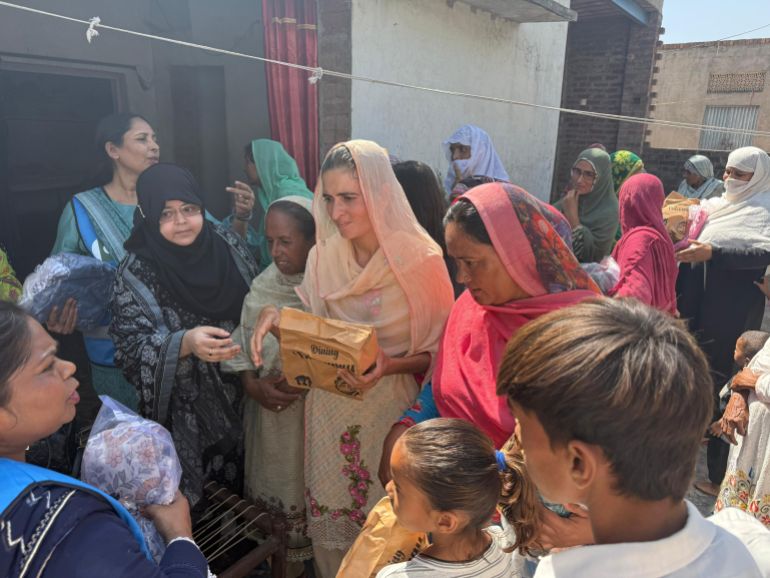
Growing up in Rawalpindi, a city adjacent to Pakistan’s capital Islamabad, Mahnoor Omer remembers the shame and anxiety she felt in school when she had periods. Going to the toilet with a sanitary pad was an act of stealth, like trying to cover up a crime. “I used to hide my pad up my sleeve like I was taking narcotics to the bathroom,” says Omer, who comes from a middle-class family – her father a businessman and her mother a homemaker. “If someone talked about it, teachers would put you down.” A classmate once told her that her mother considered pads “a waste of money”. “That’s when it hit me,” says Omer. “If middle-class families think this way, imagine how out of reach these products are for others.” Now 25, Omer has gone from cautious schoolgirl to national centrestage in a battle that could reshape menstrual hygiene in Pakistan, a country where critics say economics is compounding social stigma to punish women – simply for being women. In September, Omer, a lawyer, petitioned the Lahore High Court, challenging what she and many others say is effectively a “period tax” imposed by Pakistan on its more than 100 million women. Pakistani governments have, under the Sales Tax Act of 1990, long charged an 18 percent sales tax on locally manufactured sanitary pads and a customs tax of 25 percent on imported ones, as well as on raw materials needed to make them. Add on other local taxes, and UNICEF Pakistan says that these pads are often effectively taxed at about 40 percent. Omer’s petition argues that these taxes – which specifically affect women – are discriminatory, and violate a series of constitutional provisions that guarantee equality and dignity, elimination of exploitation and the promotion of social justice. Advertisement In a country where menstruation is already a taboo subject in most families, Omer and other lawyers and activists supporting the petition say that the taxes make it even harder for most Pakistani women to access sanitary products. A standard pack of commercially branded sanitary pads in Pakistan currently costs about 450 rupees ($1.60) for 10 pieces. In a country with a per capita income of $120 a month, that’s the cost of a meal of rotis and dal for a low-income family of four. Cut the cost by 40 percent – the taxes – and the calculations become less loaded against sanitary pads. At the moment, only 12 percent of Pakistani women use commercially produced sanitary pads, according to a 2024 study by UNICEF and the WaterAid nonprofit. The rest improvise using cloth or other materials, and often do not even have access to clean water to wash themselves. “If this petition goes forward, it’s going to make pads affordable,” says Hira Amjad, the founder and executive director of Dastak Foundation, a Pakistani nonprofit whose work is focused on promoting gender equality and combating violence against women. And that, say lawyers and activists, could serve as a spark for broader social change. The court docket describes the case as Mahnoor Omer against senior officials of the government of Pakistan. But that’s not what it feels like to Omer. “It feels like women versus Pakistan.” Activists of Mahwari Justice, a menstrual rights group, distributing period kits to women in Pakistan [Photo courtesy Mahwari Justice] ‘It’s not shameful’ Bushra Mahnoor, founder of Mahwari Justice, a Pakistani student-led organisation whose name translates to “menstrual justice”, realised early just how much of a struggle it could be to access sanitary pads. Mahnoor – no relation to Omer – grew up in Attock, a city in the northwestern part of Pakistan’s Punjab province, with four sisters. “Every month, I had to check if there were enough pads. If my period came when one of my sisters had hers too,” finding a pad was a challenge, she says. The struggle continued in school, where, as was the case with Omer, periods were associated with shame. A teacher once made one of her classmates stand for two entire lectures because her white uniform was stained. “That was dehumanising,” she says. Mahnoor was 10 when she had her first period. “I didn’t know how to use a pad. I stuck it upside down; the sticky side touched my skin. It was painful. No one tells you how to manage it.” She says that shame was never hers alone, but it’s part of a silence which starts at home and accompanies girls into adulthood. A study on menstrual health in Pakistan shows that eight out of 10 girls feel embarrassed or uncomfortable when talking about periods, and two out of three girls report never having received information about menstruation before it began. The findings, published in the Frontiers in Public Health journal in 2023, link this silence to poor hygiene, social exclusion and missed school days. Advertisement In 2022, when floods devastated Pakistan, Mahnoor began Mahwari Justice to ensure that relief camps did not overlook the menstrual needs of women. “We began distributing pads and later realised there’s so much more to be done,” she says. Her organisation has distributed more than 100,000 period kits – each containing pads, soap, underwear, detergent and painkillers – and created rap songs and comics to normalise conversations about menstruation. “When you say the word ‘mahwari’ out loud, you’re teaching people it’s not shameful,” she says. “It’s just life.” The same floods also influenced Amjad, the Dastak Foundation founder, though her nonprofit has been around for a decade now. Its work now also includes distributing period kits during natural disasters. But the social stigma associated with menstruation is also closely tied to economics in the ways in which its impact plays out for Pakistani women, suggests Amjad. “In most households, it’s the men who make financial decisions,” she says. “Even if the woman is bringing the money, she’s giving it to the man, and he is deciding where that money needs to go.” And if the cost of women’s health feels too high, that’s
Trump says all trade talks with Canada are terminated

BREAKINGBREAKING, US President says fraudulent advertisement featuring the late President Ronald Reagan to blame for termination of talks. By Reuters Published On 24 Oct 202524 Oct 2025 Click here to share on social media share2 Share US President Donald Trump said that all trade talks with Canada have been terminated following what he called a fraudulent television advertisement in which former President Ronald Reagan spoke negatively about tariffs. “The Ronald Reagan Foundation has just announced that Canada has fraudulently used an advertisement, which is FAKE, featuring Ronald Reagan speaking negatively about Tariffs,” Trump wrote on his Truth Social platform late on Thursday. Recommended Stories list of 4 itemsend of list “The ad was for $75,000. They only did this to interfere with the decision of the U.S. Supreme Court, and other courts,” Trump wrote. “Based on their egregious behavior, ALL TRADE NEGOTIATIONS WITH CANADA ARE HEREBY TERMINATED,” Trump added. Earlier on Thursday, the Ronald Reagan Presidential Foundation & Institute posted on social media that a TV ad created by the government of Ontario in Canada “misrepresents the ‘Presidential Radio Address to the Nation on Free and Fair Trade’ dated April 25, 1987.” The foundation also said that Ontario had not received its permission “to use and edit the remarks” of the late US president. The foundation added that it was “reviewing legal options in this matter” and invited the public to watch the unedited video of Reagan’s address. Listen to President Reagan’s unedited remarks here: https://t.co/1gQUcbR4eZ pic.twitter.com/iqmjSuypp0 — Ronald Reagan Presidential Foundation & Institute (@RonaldReagan) October 24, 2025 Trump’s announcement on the end of trade talks also follows after Canadian Prime Minister Mark Carney said he aimed to double his country’s exports to countries outside the US because of the threat posed by the Trump administration’s tariffs. Advertisement The Canadian prime minister’s office did not immediately respond to a request for comment on Trump’s decision. This is a breaking news story. More to follow soon. Adblock test (Why?)
What is the cloud seeding plan? Can artificial rain reduce Delhi-NCR pollution? Here’s all you need to know
The Capital’s skies have remained unusually dry even after Diwali, and according to the India Meteorological Department (IMD), no favourable cloud window is expected before October 25.
Big boost to Indian Armed Forces as Centre approves Rs 79000 crore projects, to get Nag missiles, warfare ships and…
The procurement proposals were cleared at a meeting of the Defence Acquisition Council (DAC) chaired by Defence Minister Rajnath Singh.
ISRO Chairman says Gaganyaan mission 90 per cent complete, crewed mission to take off in…
ISRO Chairman V Narayanan said on Thursday that the Gaganyaan mission is growing constantly with almost 90 per cent of the development work being completed. The Gaganyaan mission is India’s first human spaceflight mission which is working in progress.
Railways sets up multi-level war rooms to manage passenger rush, says Union Railway minister Ashwini Vaishnaw; check details
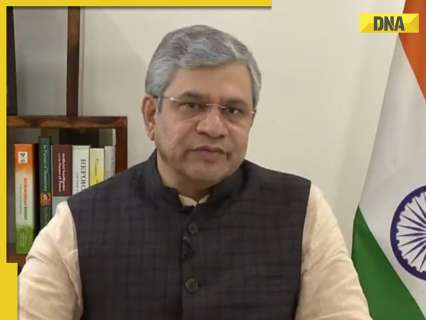
Union Railway Minister Ashwini Vaishnaw informed that Indian Railways has established special “war rooms” at the divisional, zonal, and board levels to manage heavy passenger congestion during the festive season effectively. He said that the number of destinations in Bihar has been increased to 18.
No Modi-Trump meeting soon as PM to virtually attend ASEAN summit in Malaysia
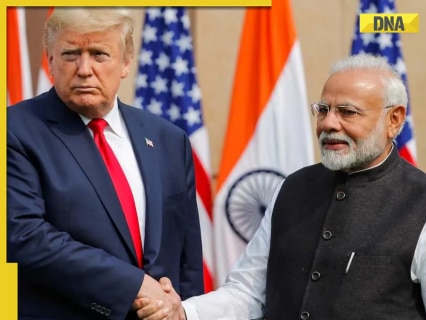
The summit, hosted by Malaysia, will review the progress of ASEAN-India relations and discuss new initiatives to strengthen the Comprehensive Strategic Partnership. The MEA said that strengthening relations with ASEAN remains a key pillar of India’s Act East Policy and Indo-Pacific vision.
Piyush Goyal issues BIG statement on India-US trade deal: ‘Continue to engage with…’
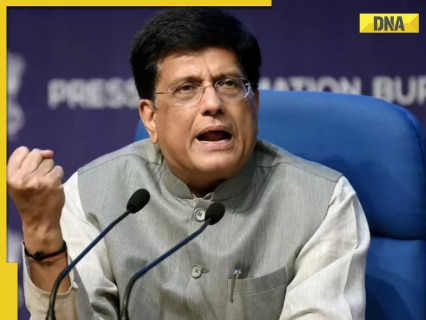
India and the US are working towards a long-stalled trade deal aimed at reducing US tariffs on Indian imports from the current 50 percent. India and the US aim to boost bilateral trade to USD 500 billion by 2030. Goyal was also recently in Germany to discuss the India-EU FTA among other things.
Hyderabad-Bengaluru private bus catches fire after bike collision, at least 20 passengers feared dead

A serious fire accident occurred in Ullindakonda cross, 20 kilometres from Kurnool town, in the early hours of Friday when a Bengaluru-Hyderabad bound Kaveri Travels bus caught fire, leaving several passengers feared dead.
Bihar Election 2025: PM Modi set to kickstart poll campaign from Samastipur today
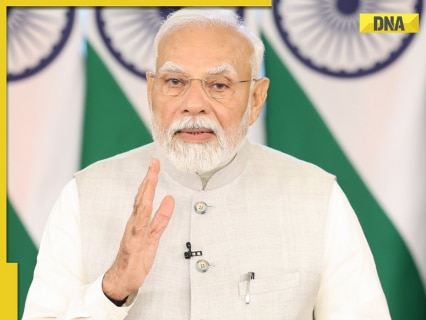
This marks a significant moment in the election campaign as the PM will address public rallies in Bihar, starting with Samastipur at 12:15 PM and then in Begusarai at 2 PM. The Prime Minister will start the election campaign from Samastipur, the birthplace of Bharat Ratna Karpoori Thakur.