

Schumer unveils Democrats’ Obamacare fix plan, likely dead in the water
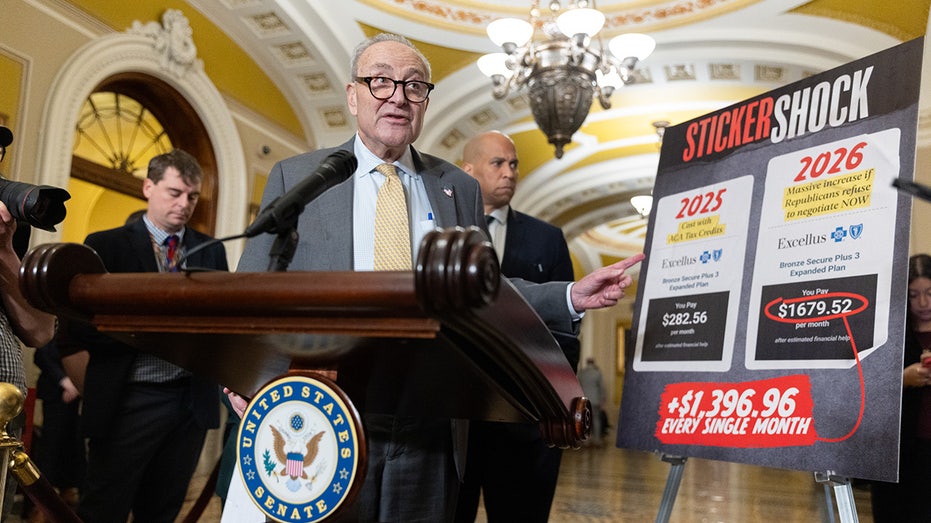
Senate Democrats now have their plan to extend expiring Obamacare subsidies, but it’s unlikely that Senate Republicans will give it the green light. Senate Minority Leader Chuck Schumer, D-N.Y., unveiled Democrats’ plan to prevent the subsidies from expiring by the end of this year on Thursday. Senate Democrats’ strategy, which mirrors the option on the table put forth by House Democrats, would extend the subsidies for three years with no tweaks or reforms. “I’m announcing that Senate Democrats will introduce legislation for a clean, three-year extension of the current [Obamacare] tax credits,” Schumer said on the Senate floor. “This is the bill, a clean, three-year extension of [Obamacare] tax credits that Democrats will bring to the floor of the Senate for a vote next Thursday. And every single Democrat will support it.” BIPARTISAN DEAL ON OBAMACARE SUBSIDIES FADES AS REPUBLICANS PUSH HSA PLAN Senate Majority Leader John Thune, R-S.D., guaranteed Senate Democrats a proposal of their choosing, but the hope in the upper chamber is that a bipartisan compromise would emerge in time for the vote next week, which is expected to come by Dec. 11. However, no such plan has materialized given a litany of issues both sides have with moving forward. Senate Republicans want reforms, like income caps and the inclusion of language that would prevent the enhanced subsidies from using taxpayer dollars to fund abortions, while Democrats, who are open to some reforms, largely want a clean extension of the subsidies as illustrated by Schumer’s plan. Schumer’s plan is also farther reaching than what Senate Democrats initially offered as the government shutdown still raged last month. At the time, the top Senate Democrat pitched a clean, one-year extension of the subsidies, which was universally panned by Senate Republicans, who demanded that healthcare would be considered only after the government reopened. CONGRESS RACES AGAINST 3-WEEK DEADLINE TO TACKLE MASSIVE YEAR-END LEGISLATIVE AGENDA Senate Majority Whip John Barrasso, R-Wyo., railed against the proposal, and charged that after shutting the government down for 43 days, Democrats had, “finally, after all this time, decided what they want.” He predicted that not enough Republicans would support the offer for it to advance. “It is a complete failure, and the best they can do is say three-year extension,” Barrasso said. “It’s not really a credible offer at all. That’s what the Democrats are talking about. I don’t, I cannot in any way, imagine supporting such a thing, because it just highlights the fact that they don’t have a solution for the problem they’ve created with the failure of Obamacare.” Then there is the factor of President Donald Trump, who has signaled that he is not open to just a simple extension of the subsidies, further adding to the futility of Democrats’ pitch. Whether Senate Republicans put forth their own plan also remains in the air. GOP WRESTLES WITH OBAMACARE FIX AS TRUMP LOOMS OVER SUBSIDY FIGHT Senate Health, Education, Labor and Pensions Committee Chair Bill Cassidy, R-La., and Senate Finance Committee Chair Mike Crapo, R-Idaho, have been working on a Republican proposal, which likely largely centers on funneling the subsidy money into Health Savings Accounts (HSAs) rather than directly to insurance companies. The duo pitched ideas and proposals to Republicans during their weekly closed-door meeting on Tuesday, but no unified strategy emerged. Schumer argued that Democrats’ proposal would be the last shot the Republicans and Congress would have to prevent the subsidies from lapsing and stopping healthcare premiums from skyrocketing. “If Republicans block our bill, there’s no going back,” he said. “We won’t get another chance to halt these premium spikes before they kick in at the start of the New Year. Those insurance premiums in January will land like a hammer blow on the American people.”
Did a military lawyer witness the Venezuela ‘double tap’ boat strike? Experts say one should have
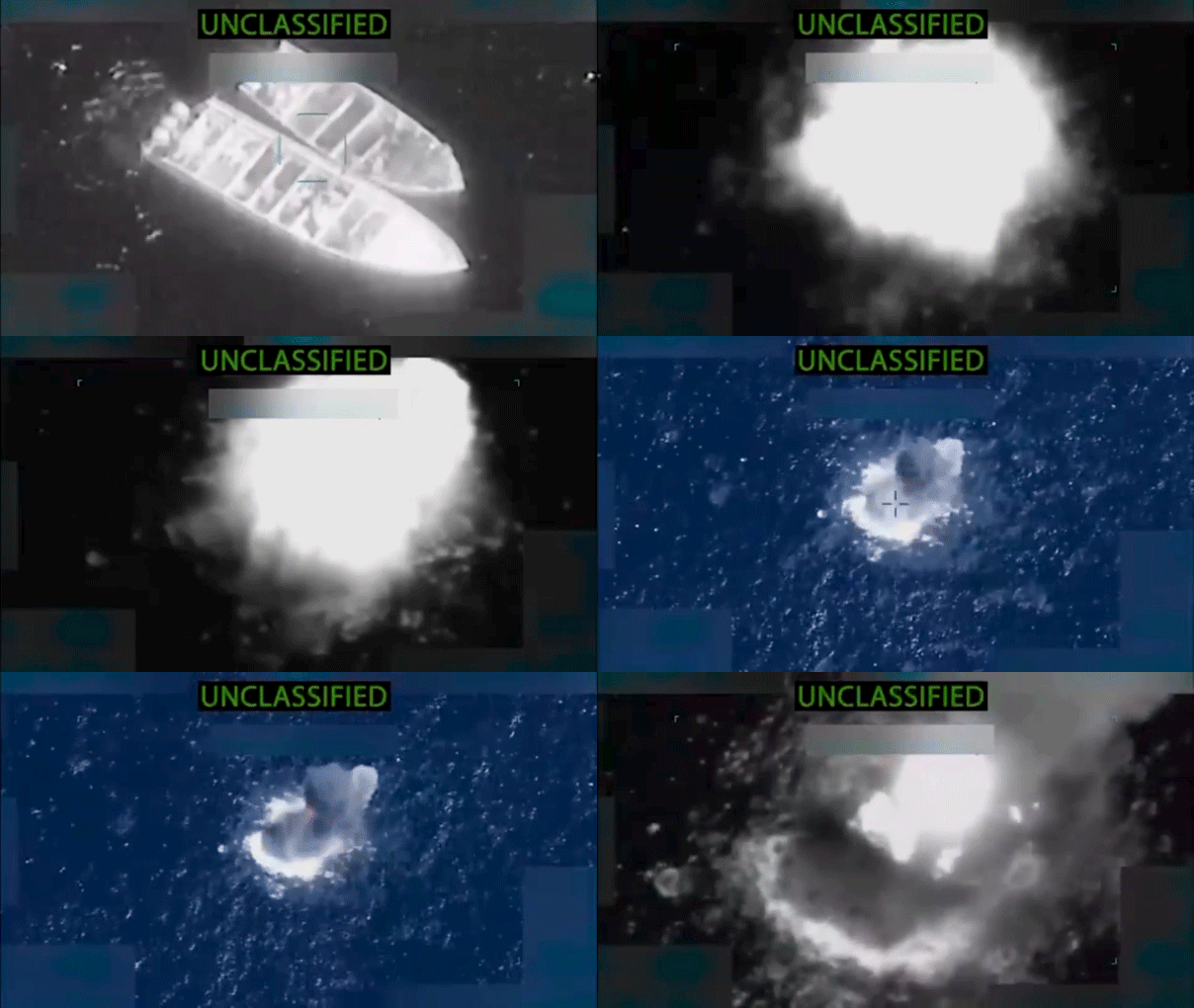
The Pentagon’s account of the September 2 “double tap” strike that killed two survivors of an initial attack on a suspected Venezuelan drug boat is coming under renewed scrutiny after ABC News reported that a military lawyer was present when Adm. Frank “Mitch” Bradley authorized the follow-on strike. The new detail raises a sharper legal question: if real-time legal counsel was available, what advice did the judge advocate general (JAG) provide when Bradley approved a second round of lethal force? Pentagon officials have framed the operation as a counterterrorism mission targeting members of Venezuela’s Tren de Aragua criminal network. Experts say that distinction matters because U.S. counterterrorism missions normally embed a JAG in the operations center to determine whether a target remains lawful — oversight not typical for routine maritime counter-narcotics patrols. Todd Huntley, a former Navy JAG officer at U.S. Special Operations Command, said the presence of a lawyer would fit that framework. “In normal maritime counter-narcotics operations, a JAG isn’t advising in real time because those missions rarely involve lethal force,” Huntley said. “But these strikes are being handled as counterterrorism strikes. The targets just happen to be on the water.” In those missions, he said, the JAG participates directly in the real-time targeting cycle. “The JAG works with intelligence and operations personnel to make sure the target is lawful, that the planned strike is lawful, and whether the commander has the authority to approve it or needs to send it higher.” He emphasized that commanders, not attorneys, ultimately make the call. “JAGs only advise. They can’t override the commander’s decision.” TRUMP ANNOUNCES US MILITARY CONDUCTED ‘LETHAL STRIKE’ ON VENEZUELAN DRUG BOAT IN CARIBBEAN The central legal dispute now turns on the condition of the survivors at the time of the second strike. According to ABC News, U.S. personnel believed the two men in the water may have been calling for help, potentially attempting to bring reinforcements. The Pentagon did not respond to Fox news digital’s requests for comment. Under the U.S. Law of War Manual, attacking persons rendered “helpless” due to “wounds, sickness or shipwreck” is explicitly prohibited and described as “dishonorable and inhumane.” Shipwrecked individuals are protected unless they resume hostile action or otherwise regain the capacity to pose an immediate threat. Calling for help does not automatically remove those protections. Legal experts say the key question is whether U.S. forces had credible evidence that the survivors were attempting to direct further hostilities — or whether they were simply clinging to debris and making distress calls. The Pentagon has said Bradley authorized the second strike that killed the two alleged traffickers, and that War Secretary Pete Hegseth was not involved in that decision. Officials say Hegseth monitored the first strike but did not view the footage of the follow-on strike. Rachel VanLandingham, a former Air Force JAG who advised on operations at U.S. Central Command, said she “would be surprised that there wasn’t a JAG” present if the administration viewed the mission as armed conflict. With ABC now reporting that a lawyer was in the room, she said attention shifts to what the operations center understood about the men’s status in the water. SPEC OPS CHIEF ORDERED DEADLY CARIBBEAN STRIKE ‘IN SELF-DEFENSE’ WITH HEGSETH’S SIGN-OFF, WHITE HOUSE SAYS But she cautioned that the presence of an attorney does not change the underlying legal standards. Shipwrecked personnel, she said, remain protected unless they take clear steps to rejoin the fight. “Whether a JAG was consulted is almost irrelevant here,” she said. “You don’t need a lawyer to know you can’t kill shipwrecked survivors. This is the classic example we use in professional military education of a clearly unlawful order.” “Even if they’re the worst criminals in the world, you don’t kill them once they’re helpless and clinging to the side of a boat,” she said. “Killing shipwrecked persons is a textbook war crime.” She also rejected the Pentagon’s claim that the survivors could have summoned additional boats. “The idea that survivors could have called for backup is absolutely irrelevant,” she said. “Unless they were actively shooting, they remained protected and could not be lawfully targeted.” Hegseth and Bradley have continued to defend the operation. Hegseth wrote on X that Bradley “is an American hero, a true professional, and has my 100% support,” adding that he stands by Bradley’s decisions “on the September 2 mission and all others since.” President Trump has also repeatedly highlighted the strikes, releasing video of the second engagement on Truth Social and praising the campaign against what he calls “narcoterrorists.” With new reporting that a JAG was physically present, and with legal experts emphasizing that shipwrecked personnel retain protection unless they rejoin the fight, the unresolved issue is what specific intelligence the operations center relied upon when Bradley approved the second strike. Did the JAG conclude that the survivors had regained the capacity to pose an imminent threat? Did the attorney object? Did the operations team interpret the alleged call for help as an active step toward hostile action? Until the Pentagon releases a fuller accounting, the legality of the follow-on strike — and the role of the military lawyer who reportedly witnessed it — remains sharply contested.
Putin visits India amid Ukraine peace push: What’s on the agenda?
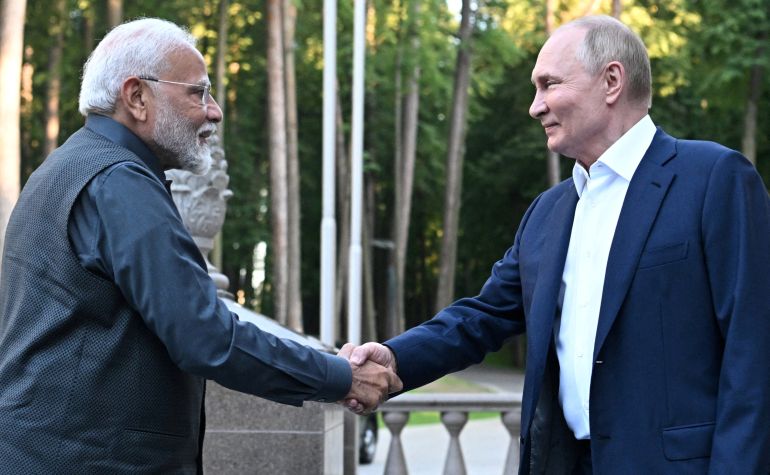
New Delhi, India – Russian President Vladimir Putin is visiting India starting Thursday for the first time since Moscow’s war on Ukraine broke out more than four years ago, even as a renewed push by the United States to end the conflict appears to have stalled. Putin’s 30-hour speed trip also coincides with a tense turn in relations between Washington and New Delhi, with the US also punishing India with tariffs and a sanctions threat for its strong historic ties with Russia and a surge in its purchase of Russian crude during the Ukraine war. That tension has, in turn, made India’s longstanding balancing act between Russia and the West an even more delicate tightrope walk. Since gaining independence from Britain in 1947, India has tried to avoid getting locked into formal alliances with any superpower, leading the non-aligned movement during the Cold War, even though in reality it drifted closer to the Soviet Union from the 1960s. Since the end of the Cold War, it has deepened strategic and military ties with the US while trying to keep its friendship with Russia afloat. Yet, Russia’s war on Ukraine has challenged that balance – and Putin’s visit could offer signs of how Indian Prime Minister Narendra Modi plans to juggle New Delhi’s competing relationships without sacrificing any of them. Russia’s President Vladimir Putin, right, shakes hands with India’s Prime Minister Narendra Modi during their meeting at the Novo-Ogaryovo state residence near Moscow, Russia, July 8, 2024 [Sergei Bobylyov/Sputnik/Pool via Reuters] What’s scheduled for Putin? Putin is expected to land on Thursday evening and head for a private dinner with Modi at the prime minister’s residence in the heart of the Indian capital, New Delhi. Advertisement On the morning of Friday, December 5, Putin is scheduled to visit Rashtrapati Bhavan, the presidential palace, for a guard of honour and a meeting with India’s ceremonial head of state, Droupadi Murmu. He will then, like all visiting leaders, travel to Raj Ghat, the memorial to Mahatma Gandhi. Then, Putin and Modi will meet at Hyderabad House, a complex that hosts most leadership summits for the latest chapter of an annual India-Russia summit. After that, they are scheduled to meet business leaders, before attending a banquet thrown in Putin’s honour by Murmu, the Indian president. Earlier, the Kremlin said in a statement that Putin’s visit to India was “of great importance, providing an opportunity to comprehensively discuss the extensive agenda of Russian-Indian relations as a particularly privileged strategic partnership”. Putin will be joined by Andrei Belousov, his defence minister, and a wide-ranging delegation from business and industry, including top executives of Russian state arms exporter Rosoboronexport, and reportedly the heads of sanctioned oil firms Rosneft and Gazprom Neft. Russian President Vladimir Putin, left, and Indian Prime Minister Narendra Modi greet each other before their meeting in New Delhi, India, on December 6, 2021. That was Putin’s last visit to India before the trip that starts on Thursday [Manish Swarup/AP Photo] Why is the timing of the visit significant? The visit comes as India and Russia mark 25 years of a strategic partnership that began in Putin’s first year in office as his country’s head of state. But even though India and Russia like to portray their relationship as an example of a friendship that has remained steady amid shifting geopolitical currents, their ties haven’t been immune to pressures from other nations. Since 2000, New Delhi and Moscow have had in place a system of annual summits: The Indian prime minister would visit Russia one year, and the Russian president would pay a return visit to India the following year. That tradition, however, was broken in 2022, the year of Russia’s full-scale invasion of Ukraine. Modi was supposed to visit Russia for the summit, but the conclave was put off. In 2023, Putin skipped a visit to India for the G20 summit in New Delhi. At the time, Putin was rarely travelling abroad, largely because of an International Criminal Court (ICC) warrant against him related to the Ukraine war. India is not a member of the ICC – and so it would have been safe for Putin to attend, but Western members of the G20 made it clear that their leaders would be uncomfortable sharing the room with the Russian president. Advertisement Finally, in 2024, the annual summit resumed, with Modi visiting Russia. And now, Putin will land in New Delhi after four years. A Russian S-400 anti-missile system launcher moves along Tverskaya Street towards Red Square ahead of a Victory Day parade rehearsal in Moscow, Russia, April 29, 2025. India used S-400 systems during its May air war with Pakistan [Pavel Bednyakov/AP Photo] What’s on the agenda? Trade analysts and political experts expect Putin to push for India to buy more Russian missile systems and fighter jets, in a bid to boost defence ties and explore more areas to expand trade, including pharmaceuticals, machinery and agricultural products. The summit “offers an opportunity for both sides to reaffirm their special relationship amidst intense pressure on India from [US] President [Donald] Trump with punitive tariffs,” Praveen Donthi, a senior analyst for India at Crisis Group, a US-based think tank, told Al Jazeera. Putin, analysts said, will be seeking optical dividends from the summit. “President Putin can send a very strong message to his own people, and also to the international community, that Russia is not isolated in the world,” said Rajan Kumar, a professor of international studies at Jawaharlal Nehru University in New Delhi. “Russia is being welcomed by a democracy when Putin faces pressure for the war in Ukraine,” Kumar told Al Jazeera. But visuals aside, a key driver of the India-Russia relationship – oil trade – is now at risk. And that, along with the shadow of the man responsible for the disruption, will be hovering over talks, said experts. President Donald Trump greets Russia’s President Vladimir Putin at Joint Base Elmendorf-Richardson in Alaska, August 15, 2025 [Julia Demaree Nikhinson/AP Photo] Is Trump
‘What’s our fault?’: India’s expulsion of Pakistanis still splits families
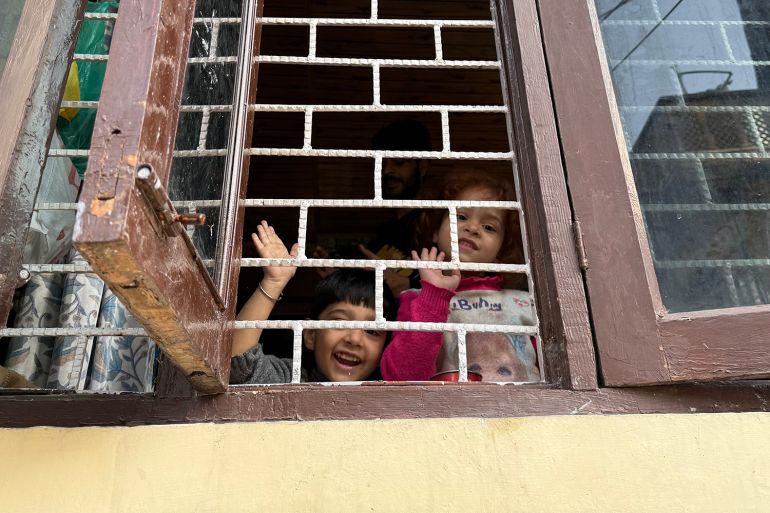
Srinagar, Indian-administered Kashmir – The silence of a narrow alley in Srinagar, the main city of Indian-administered Kashmir, is broken by the rehearsed beckoning of street vendors and the restless cries of two little children. “Auntie, please take me to my mother; the police took her away,” shouts three-year-old Hussein, as he and his sister Noorie, a year younger than him, cling to the window of their one-room house, their faces pressed against rusted iron bars. Recommended Stories list of 4 itemsend of list Their father, Majid*, says the two have been calling out like that to almost every passer-by since their mother, Samina*, a Pakistani national, was forcibly taken away by Indian authorities and deported more than seven months ago. The family’s ordeal began a week after half a dozen gunmen, a couple of them alleged to be Pakistani nationals, stormed a scenic tourist spot in Indian-administered Kashmir’s Pahalgam area and shot 26 people dead on April 22, 2025 in one of the worst attacks in the disputed region. The Muslim-majority region of Kashmir is divided between India and Pakistan, though the nuclear-armed neighbours claim it in full, while regional superpower China also controls a sliver of Kashmir’s land. Since India’s independence from British rule and its partition to create the state of Pakistan in 1947, the two countries have fought two of their three full-scale wars over Kashmir. In the late 1980s, an armed rebellion against New Delhi’s rule erupted on the Indian side, which has since claimed tens of thousands of lives, most of them civilians. The rebellion saw the deployment of nearly a million Indian soldiers, making it one of the world’s most militarised regions. The rebels aim to either carve an independent nation out of Kashmir or merge the region with Muslim-majority Pakistan. Advertisement The anti-India sentiments in Kashmir intensified in 2019 when Prime Minister Narendra Modi’s Hindu majoritarian government scrapped a law that granted the region partial autonomy in matters of land ownership and livelihoods, and split it into two “union territories” to be directly governed by New Delhi. Since then, suspected Kashmiri rebels have launched several attacks against Indian security forces and government employees. India accuses Pakistan of training and financing the rebels, but Islamabad dismisses the charge, claiming it only provides diplomatic backing to Kashmir’s struggle. India blamed Pakistan for the Pahalgam attack as well, and swiftly moved to downgrade all diplomatic ties, suspend bilateral trade, and place a key water treaty in abeyance. Two weeks after the killings, in early May, India and Pakistan engaged in an intense four-day air war, each striking the other’s military bases. Dozens of people were killed on both sides — India insists it only hit “terrorists” in Pakistan, while Islamabad said civilians were principally the victims — before the neighbours agreed to a ceasefire. But seven months later, the pause in fighting has meant little for hundreds of families, like Majid’s and Samina’s, that were broken apart by one of India’s moves. In the aftermath of the Pahalgam attack, India revoked all visas issued to Pakistani citizens residing in India, including medical and diplomatic visas, giving them an April 29, 2025 deadline to leave the country, and closing the Attari-Wagah border in Punjab province’s Amritsar district on May 1. Nearly 800 Pakistanis – many of them married to Indian nationals in Kashmir and other parts of India – were deported. With authorities providing no clarity on whether those families will ever be reunited, the wait drags on for relatives on both sides of the border. ‘I think of ending my life’ Majid married Samina, his 38-year-old Pakistani cousin, in 2018. Despite tense relations between their countries, their marriage was not especially rare. When millions of Muslims moved to a newly-created Pakistan in 1947 – as did Hindus to India – many left behind relatives on both sides of the border. Over the years, these blood ties gave rise to cross-border marriages between citizens of the two countries. But on April 28, Samina was summoned to the local police station in Srinagar’s Dalgate area. Noorie and Hussein slept on their laps as the couple met the police officer. When the children woke up, they realised their father had brought them back home, their mother no longer around. Advertisement Samina was detained at the police station and informed that she would be deported to Pakistan — she is originally from Lahore — the next day. Sitting quietly in a dimly lit room that served as a bedroom and kitchen, Majid said he is still struggling to process the events that turned his life upside down. Majid’s children looking out of the window of their one-room home [Arjumand Shaheen/Al Jazeera] He used to wait tables at a local restaurant and earned about $70 a month. But since his wife was taken away, he has not been able to leave his little children alone. He is now jobless. “I have not slept properly for six months now. My whole time is spent taking care of the children. I cannot think about doing anything else,” he told Al Jazeera. Confined to his room, Majid says he is unable to go out even to buy groceries. “Sometimes, I think of ending my life,” he said. “But I stop myself, wondering who would take care of them when I am gone.” Majid’s children, Hussein and Noorie, also do not know when they will be able to see their mother. “The sudden separation from Samina has traumatised them. They call out to their mother in sleep,” Majid told Al Jazeera as he made a futile attempt to distract his children by showing them cartoons on his mobile phone. “All they know is that the police took her away. Whenever they see any police or army officer, they ask them to bring their mother back.” Meanwhile, forcibly separated from her children, Samina is struggling with health issues in Pakistan. Her blood pressure is unstable due to stress. “She gets hospitalised every now and
Somalis call Trump’s comments insulting their country a ‘grave mistake’
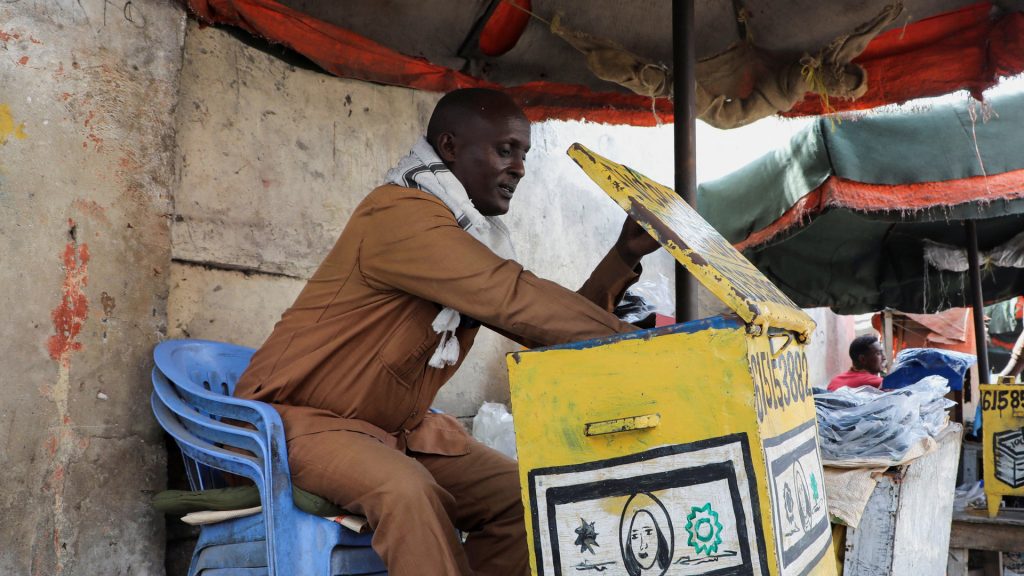
NewsFeed Somalis are condemning recent comments made by US President Donald Trump calling their country a place where people ‘just run around killing each other’. Published On 4 Dec 20254 Dec 2025 Click here to share on social media share2 Share facebooktwitterwhatsappcopylink Save Adblock test (Why?)
What is Mumbai’s Orange Gate to Marine Drive Tunnel Project? To connect residents to Navi Mumbai international airport, check details

Maharashtra Chief Minister Devendra Fadnavis launched the Coastal Road tunnel between Orange Gate and Marine Drive, marking a revolution in Mumbai’s transportation. The underground road project will help residents access Navi Mumbai International Airport.
DGCA takes BIG action after IndiGo flight disruptions, asks the airline to…

On Wednesday, thousands of passengers at several major Indian airports — including those serving Delhi, Mumbai, and Bengaluru — were affected by the disruptions. As per reports, there were multiple reasons behind the nationwide disruption of IndiGo flights, including an acute shortage of crew.
What is Bharat Taxi? Govt launches ride-hailing service to take on Ola, Uber in THESE cities; check key details

The central government has started pilot trials for its ride hailing service, ‘Bharat Taxi’, set to take on the already existing and popular ones, Ola, Uber, Rapido and others. The service is aimed at offering an alternative for drivers of these private commercial services.
EAM Jaishankar issues BIG warning to US, Europe: ‘They would be net losers if…’

Speaking at India’s World Annual Conclave 2025 in capital New Delhi on Wednesday, Jaishankar took a question on the rising political and social backlash against immigration in several nations and argued that the debate is often misplaced.
Putin’s India Visit Begins Today: PM Modi to host dinner; defence, trade talks on agenda

Ahead of Putin’s visit, Russia also gave the go-ahead to a key defence deal between Moscow and New Delhi.