

‘Cruel joke’: How Indian H-1B dreams are crash landing after Trump fee hike
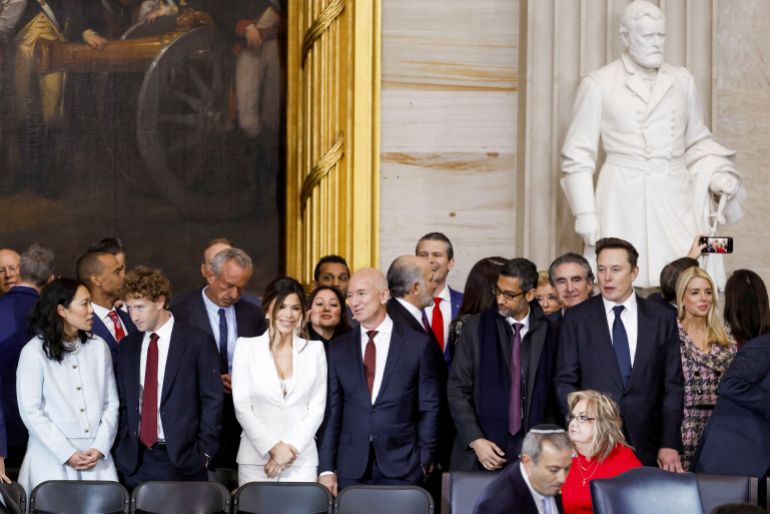
New Delhi, India — Meghna Gupta* had planned it all – a master’s degree by 23, a few years of working in India, and then a move to the United States before she turned 30 to eventually settle there. So, she clocked countless hours at the Hyderabad office of Tata Consultancy Services (TCS), India’s largest IT firm and a driver of the country’s emergence as the global outsourcing powerhouse in the sector. She waited to get to the promotion that would mean a stint on California’s West Coast. Now, Gupta is 29, and her dreams lie in tatters after US President Donald Trump’s administration upended the H-1B visa programme that tech firms have used for more than three decades to bring skilled workers to the US. Trump’s decision to increase the fee for the visas from about $2,000, in many cases, to $100,000 has imposed dramatic new costs on companies that sponsor these applications. The base salary an H-1B visa employee is supposed to be paid is $60,000. But the employer’s cost now rises to $160,000 at the minimum, and in many cases, companies will likely find American workers with similar skills for lower pay. This is the Trump administration’s rationale as it presses US companies to hire local talent amid its larger anti-immigration policies. But for thousands of young people around the world still captivated by the American dream, this is a blow. And nowhere is that more so than in India, the world’s most populous nation, that, despite an economy that is growing faster than most other major nations, has still been bleeding skilled young people to developed nations. Advertisement For years, Indian IT companies themselves sponsored the most H-1B visas of all firms, using them to bring Indian employees to the US and then contractually outsourcing their expertise to other businesses, too. This changed: In 2014, seven out of the 10 companies that received the most H-1B visas were Indian or started in India; In 2024, that number dropped to four. And in the first six months of 2025, Gupta’s TCS was the only Indian company in the top-10 H-1B visa recipients, in a list otherwise dominated by Amazon, Microsoft, Meta and Apple. But what had not changed until now was the demographic of the workers that even the above US companies hired on H-1B visas. More than 70 percent of all H-1B visas were granted to Indian nationals in 2024, ranging from the tech sector to medicine. Chinese nationals were a distant second, with less than 12 percent. Now, thousands across India fear that this pathway to the US is being slammed shut. “It has left me heartbroken,” Gupta told Al Jazeera of Trump’s fee hike. “All my life, I planned for this; everything circled around this goal for me to move to the US,” said Gupta, who was born and raised in Bageshwar, a town of 10,000 people in the northern Indian state of Uttarakhand. “The so-called ‘American Dream’ looks like a cruel joke now.” Priscilla Chan, Meta CEO Mark Zuckerberg, Lauren Sanchez, businessman Jeff Bezos, Sundar Pichai and businessman Elon Musk, among other dignitaries, attend Donald Trump’s inauguration in Washington, DC, US, January 20, 2025 [Shawn Thew/Pool via Reuters] ‘In the hole’ Gupta’s crisis reflects a broader contradiction that defines India today. On the one hand, the country — as Prime Minister Narendra Modi and his government frequently mention — is the world’s fastest-growing major economy. India today boasts the world’s fourth-largest gross domestic product (GDP), behind just the US, China and Germany, after it passed Japan earlier this year. But the country’s creation of new jobs lags far behind the number of young people who enter its workforce every year, widening its employment gap. India’s biggest cities are creaking under inadequate public infrastructure, potholed roads, traffic snarls and growing income inequality. The result: Millions like Gupta aspire to a life in the West, picking their career choices, usually in sectors like engineering or medicine, and working to get into hard-fought seats in top colleges – and then migrating. In the last five years, India has witnessed a drastic rise in the outflow of skilled professionals, particularly in STEM fields, who migrate to countries like Australia, Canada, New Zealand, the United Kingdom and the US. Advertisement As per the Indian government’s data, those numbers rose from 94,145 Indians in 2020 to 348,629 by 2024 — a 270 percent rise. Trump’s new visa regime could now effectively close the pipeline of those skilled workers into the US. The fee hike comes on the back of a series of tension points in a souring US-India relationship in recent months. New Delhi is also currently facing a steep 50 percent tariff on its exports to the US — half of that for buying Russian crude, which the US says is funding the Kremlin’s war on Ukraine. Ajay Srivastava, a former Indian trade officer and founder of the Global Trade Research Initiative (GTRI), a Delhi-based think tank, told Al Jazeera that the hardest-hit sectors after the new visa policy will be “the ones that Indian professionals dominate: mid-level IT services jobs, software developers, project managers, and back-end support in finance and healthcare”. For many of these positions, the new $100,000 fee exceeds an entry-level employee’s annual salary, making sponsorship uneconomical, especially for smaller firms and startups, said Srivastava. “The cost of hiring a foreign worker now exceeds local hiring by a wide margin,” he said, adding that this would shift the hiring calculus of US firms. “American firms will scout more domestic talent, reserve H-1Bs for only the hardest-to-fill specialist roles, and push routine work offshore to India or other hubs,” said Srivastava. “The market has already priced in this pivot,” he said, citing the fall of Indian stock markets since Trump’s announcement, “as investors brace for shrinking US hiring”. Indian STEM graduates and students, he said, “have to rethink US career plans altogether”. To Sudhanshu Kaushik, founder of the North American Association of Indian Students, a body
Gaza and Palestine were dominant themes at UN. Will it make a difference?
New York City – Gaza and Palestine have been the dominant topics at the United Nations as world leaders convened at the 80th General Assembly (UNGA) in New York over the past week. In their speeches, UN Security Council (UNSC) meetings, sideline events and media briefings, many countries – from Saint Vincent and the Grenadines to France to Malaysia – called for an end to Israeli atrocities in Gaza and the establishment of a Palestinian state. Recommended Stories list of 3 itemsend of list But as most of the world rallied around Palestine in the first week of the UNGA, Israel killed at least 661 Palestinians in Gaza and pushed on unabated with its ground assault on Gaza City. Diplomats and analysts say rhetoric and diplomatic moves alone, including the recognition of a Palestinian state, are not enough to move the needle on the ground, or improve the situation of Palestinians under bombardment and occupation. Rights advocates are seeking an arms embargo and sanctions against Israel to force it to end its abuses. Varsha Gandikota-Nellutla, executive secretary of the Hague Group – a coalition of countries pushing for such measures against Israel – said the “situation keeps getting worse” because Israel continues to have access to weapons and resources. “The economic might of the genocidal machine is still not weakened. Israel continues to receive arms,” Gandikota-Nellutla told Al Jazeera. Palestine recognition During the UNGA, dozens of countries convened for a summit to push for the two-state solution, while several Western states, including Australia, France and the United Kingdom, formally recognised Palestine. Advertisement As that meeting was under way, protesters outside the UN complex banged on pots to decry the deadly hunger in Gaza. Maamoun Hussein, one of the demonstrators, said the growing international recognition of the state of Palestine is a positive development, but it must be followed by a meaningful push to hold Israel accountable. “It’s a testament to the perseverance of the Palestinian people for over 78 years of genocide and ethnic cleansing,” Hussein told Al Jazeera, referring to the growing number of countries now recognising Palestinian statehood. “But these countries have the power to do an arms embargo. They have the power to put pressure on Israel. Instead, all the Arab countries now are at risk. The entire world is at risk because they’re changing the entire legal system to suit Israel, which is a terrorist, genocidal state.” While ravaging Gaza and intensifying attacks and annexation efforts in the occupied West Bank, Israel has also carried out attacks against Lebanon, Syria, Yemen, Iran and Qatar in recent months. The Israeli military is also widely believed to have struck a Gaza-bound humanitarian boat in a Tunisian port. Gandikota-Nellutla also said that while recognising Palestinians’ right to self-determination is an important step, more must be done. “The risk is that countries stop here – that countries pat themselves in the back and say, ‘We’ve done our bit’, and move on without cutting off the material arteries of the genocide at this moment,” she told Al Jazeera. ‘The economic might of the genocidal machine is still not weakened,’ says Varsha Gandikota-Nellutla, executive secretary of the Hague Group [Ali Harb/Al Jazeera] At a UNSC meeting to discuss the crisis, Algerian Minister of Foreign Affairs Ahmed Attaf warned on Tuesday that global stability will depend on whether the international community can rein in Israel and ensure the establishment of a Palestinian state based on borders as they stood before the 1967 war. “There is no space for denial that what Gaza has been enduring is a comprehensive war of annihilation,” Attaf said, citing the recent UN Commission of Inquiry’s report that accused Israel of genocide. ‘We are not yet there’ A day later, diplomats representing countries from across the world met to renew calls for protecting Palestinian children, about 20,000 of whom have been killed in Israeli attacks in Gaza since October 2023. “This suffering is not inevitable. It is a result of choices, of actions, and of inaction – and choices can change,” Belgian Foreign Minister Maxime Prevot said at the event. Advertisement On the sidelines of the UNGA, Brazil, Jordan and Spain, along with UN chief Antonio Guterres, also led a push to rally political and financial support for the UN agency for Palestinian refugees, UNRWA, which Israel has unilaterally banned. Al Jazeera asked Philippe Lazzarini, the head of UNRWA, whether the diplomatic efforts in support of Palestine in New York are making a tangible difference in the condition of Palestinians in Gaza and the occupied West Bank. “There have been a lot of acknowledgement-outrage combination, but it hasn’t gone far beyond that,” Lazzarini said. “The real question is: How will this be translated into necessary influence impacting the situation on the ground? We are not yet there,” he added. Lazzarini said the crisis in Gaza has reached the dire state it is in today because of “impunity” for Israel’s actions, suggesting that Palestinian lives have been “devalued” in the eyes of the world. On Friday, delegates of more than 50 countries walked out of the UNGA hall as Israeli Prime Minister Benjamin Netanyahu, who is wanted by the International Criminal Court on war crime charges, took the podium. Nearby, representatives of 34 countries met as part of the Hague Group, and discussed possible policies to stop the atrocities in Gaza, including imposing an energy embargo on Israel and blocking Israeli weapons shipments from their ports. The meeting included countries spanning four continents, such as Brazil, Colombia, Honduras, Iceland, Malaysia, Mexico, Namibia, Spain and Qatar. For Gandikota-Nellutla, the Hague Group’s chief, international collective action is the way towards ending Israeli impunity. “We want to grow country by country, until we engulf the whole world – until every supply chain that brings any weapons of death to Israel becomes inaccessible to Netanyahu and his government,” she told Al Jazeera. Adblock test (Why?)
‘If India can play cricket with Pakistan…’: Jailed activist Sonam Wangchuk’s wife questions amid Ind vs Pak Asia Cup final
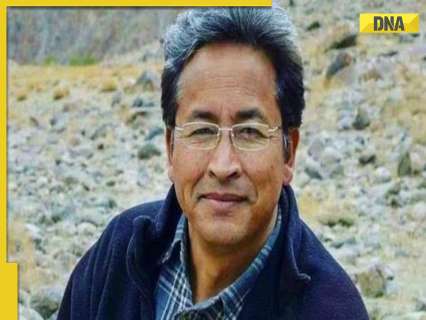
Citing the ongoing India-Pakistan clash in the Asia Cup 2025 tournament in Dubai, jailed Ladakh activist Sonam Wangchuk’s wife, Gitanjali Angmo, questioned the narrative around his visit to Pakistan to attend a climate conference back in February 2025.
What is ADR? Govt’s new policy to boost patients’ safety, hospitals will now have to…

The Government of India is set to bring changes to healthcare policy by issuing guidelines to all hospitals to make it mandatory for patients to fill an Adverse Drug Reaction (ADR) reporting form as part of the patient admission process.
TVK chief Vijay Thalapathy receives bomb threat amid row over Karur stampede, probe underway

Actor-politician Vijay on Sunday, i.e., September 28, received a bomb threat directed at his Chennai-based residence. A bomb disposal squad with sniffer dogs was deployed to his Neelankarai home to carry out a comprehensive search, news agency PTI reported.
Who is Rajeev Verma? Delhi’s new Chief Secretary, set to take charge from…

Senior IAS officer Rajeev Verma has been appointed as the new Chief Secretary of Delhi. He has served the Delhi Government earlier as well. He was an IAS officer from the 1992 batch.
Home Minister Amit Shah issues BIG statement on naxalism: ‘A significant transformation…’
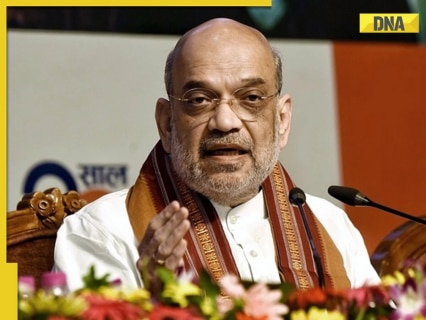
Shah stated there was a time when the slogan of the Red Corridor, which stretched from Pashupatinath to Tirupati, caused concern, but today, people laugh when it is mentioned. Read on to know more on this.
Maharashtra Rains: At least 10 dead as heavy rainfall hit Mumbai, Konkan, Marathwada; over 11000 people evacuated; IMD issues red alert in…
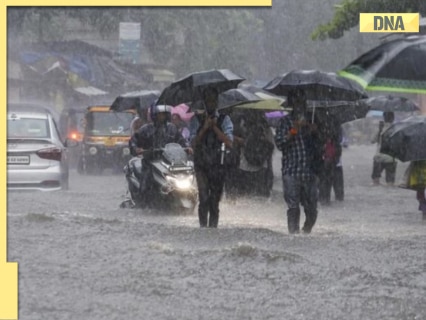
Torrential rains lashed Maharashtra for the second consecutive day on Sunday, causing five deaths and affecting several regions, including Mumbai, Konkan, and Marathwada. More than 11,000 people were shifted to safer locations, with 7,200 from flood-hit Marathwada. The Indian Meteorological Department (IMD has predicted increased rainfall, issuing a red alert for Palghar and parts of Nashik and an orange alert for Thane, Pune, and Raigad for Monday.
Republican governor signs into law Trump-backed congressional redistricting map
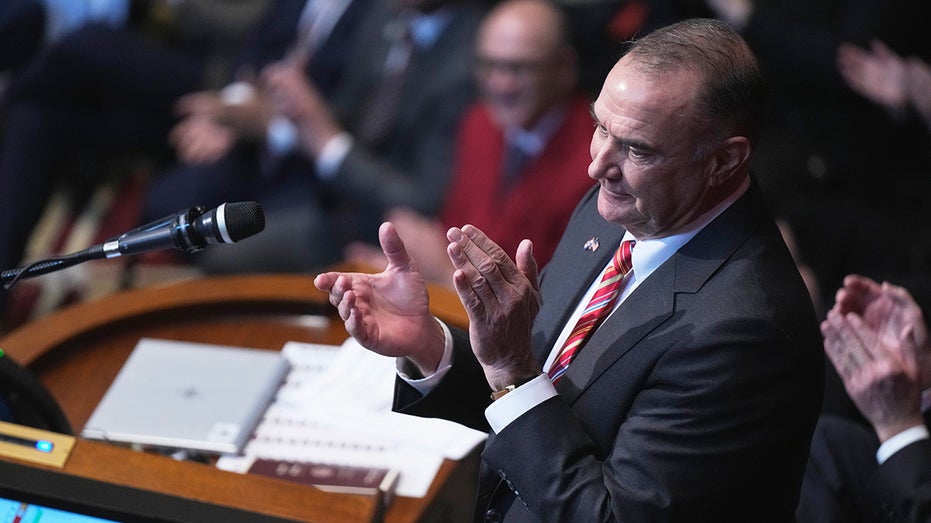
Score another victory for President Donald Trump in the high-stakes political battle between Republicans and Democrats over congressional redistricting. GOP Gov. Mike Kehoe of Missouri on Sunday signed into law a new congressional map, Missouri First, that is likely to hand Republicans an additional seat in the U.S. House of Representatives ahead of next year’s midterms elections. Missouri, once considered a swing state that has dramatically shifted to the right over the past decade and a half, is the latest battleground in the congressional redistricting showdown after the passage of new maps in GOP-dominated Texas and a redistricting push by Democrats in heavily blue California. “I was proud to officially sign the Missouri First Map into law today ahead of the 2026 midterm election,” Kehoe said in a statement. “We believe this map best represents Missourians, and I appreciate the support and efforts of state legislators, our congressional delegation, and President Trump in getting this map to my desk.” TRUMP-BACKED REDISTRICTING PUSH TURNS MIDWESTERN STATE INTO NEXT POLITICAL BATTLEGROUND Trump, in a social media statement following passage in the GOP-dominated state legislature, called the new map “FANTASTIC” and said it “will help send an additional MAGA Republican to Congress in the 2026 Midterm Elections.” The new map targets longtime Democratic Rep. Emanuel Cleaver’s Kansas City-area district by shifting it eastward to include rural right-leaning voters. The new map would likely flip Cleaver’s seat and give Republicans a 7-1 advantage in the state’s House delegation. Cleaver has vowed to take legal action if the new map is signed into law by the governor. “I want to warn all of us that if you fight fire with fire long enough, all you’re going to have left is ashes,” Cleaver said earlier this month as he testified in front of a Missouri Senate committee. And pointing to recent public opinion polling, he called the redistricting plan “immensely unpopular.” And Missouri House Minority Leader Ashley Aune accused Republicans of pushing to “rig our maps and eliminate our representation in Congress.” ABBOTT CLEARS FINAL REDISTRICTING HURDLE AS TEXAS SENATE PASSES NEW TRUMP-APPROVED MAP Kehoe’s announcement teeing up the special session came hours after Republican Gov. Greg Abbott of Texas signed into law a redistricting bill passed by the Republican supermajority in the state legislature that aims to create up to five right-leaning congressional districts at the expense of current Democrat-controlled seats in the reliably red state. The efforts in Missouri and Texas are part of a broad effort by the GOP to pad its razor-thin House majority to keep control of the chamber in the 2026 midterms, when the party in power traditionally faces political headwinds and loses seats. Trump and his political team are aiming to prevent what happened during his first term in the White House, when Democrats reclaimed the House majority in the 2018 midterm elections. Democrats are fighting back against the rare, but not unheard-of mid-decade redistricting. State lawmakers in heavily blue California have approved a special ballot proposition this November to obtain voter approval to temporarily sidetrack the state’s nonpartisan redistricting commission and return the power to draw the congressional maps to the Democrat-dominated legislature. The effort in California, which aims to create five more Democratic-leaning congressional districts and counter the shift in Texas, is being spearheaded by two-term Gov. Gavin Newsom, who is seen as a likely 2028 Democratic presidential contender. With Democrats currently needing just a three-seat pickup in next year’s midterms to win back the House majority, Republicans in Indiana, South Carolina, Florida, Kansas and Nebraska are mulling their own GOP-friendly redistricting plans ahead of the 2026 elections. And right-leaning Ohio is under a court order to draw new maps ahead of the midterms. Democrats, as they push back, are looking to New York, Illinois and Maryland in the hopes of creating more left-leaning congressional seats. In Illinois and Maryland, where governors J.B. Pritzker and Wes Moore are discussing redistricting, Democrats hope to pick up to three more left-leaning seats. And Democrats could pick up a seat in Republican-dominated Utah, where a judge recently ordered the GOP-controlled legislature to draw new maps after ruling that lawmakers four years ago ignored an independent commission approved by voters to prevent partisan gerrymandering.
Oregon sues over Trump admin’s ‘war-ravaged Portland’ National Guard troop deployment
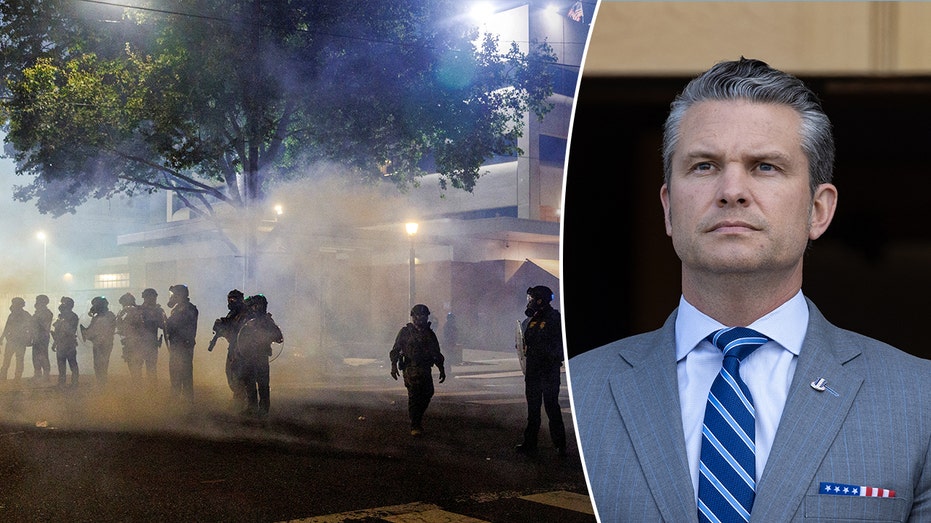
The state of Oregon filed a lawsuit Sunday to block President Donald Trump’s plan to deploy 200 National Guard troops to Portland. The suit was announced by Oregon Attorney General Dan Rayfield within hours of Gov. Tina Kotek receiving a memo from Department of War Secretary Pete Hegseth, in which he authorized the troop deployment for 60 days. According to the order seen by Fox News Digital, the federally controlled Oregon National Guard would be stationed in Portland to protect federal property “where protests are occurring or likely to occur.” Kotek, Portland Mayor Keith Wilson, and Rayfield, all Democrats, responded by jointly filing the challenge in federal court, arguing the administration’s move is “unlawful” and unnecessary. DC ATTORNEY GENERAL SUES TRUMP OVER NATIONAL GUARD ‘INVOLUNTARY MILITARY OCCUPATION’ “Oregon communities are stable, and our local officials have been clear: we have the capacity to manage public safety without federal interference,” Rayfield said in a statement. On Saturday, Trump posted on Truth Social that he had directed Hegseth to send “all necessary Troops to protect war-ravaged Portland, and any other ICE facilities under siege from attack by Antifa and other domestic terrorists.” Kotek also said Saturday she had spoken directly with the president before Sunday’s order and had urged him not to send in troops. “Our city is a far cry from the war-ravaged community he has posted on social media,” Kotek told reporters at a news conference at Tom McCall Waterfront Park. “There is no insurrection, there is no threat to national security and there is no need for military troops in our major city,” she added. PORTLAND MAYOR WARNS CITY TO FIX HOMELESS PROBLEM BEFORE TRUMP ‘DEPLOYS BULLDOZERS’ Despite those objections, federal agents began arriving in Portland over the weekend, with one clash already reported outside an Immigration and Customs Enforcement facility. Mayor Wilson condemned the arrival of National Guard troops. “We did not ask for them to come. They are here without precedent or purpose,” he said. Sen. Jeff Merkley, D-Ore., urged demonstrators to avoid confrontations with federal agents. “Their goal is to create an engagement that will lead to conflict,” he said. TRUMP VOWS ‘FULL FORCE’ AS HE PLANS TO SEND TROOPS TO PORTLAND AMID ANTI-ICE PROTESTS The lawsuit follows a similar case filed by California in June, after the administration sent troops to Los Angeles. “This will only serve to divide us as a nation and community under the guise of caring about public safety,” Rayfield said. “The number of necessary troops is zero.” “As standing policy, the Department does not comment on active litigation. We have no comment on this nor the Oregon ARNG deployment at this time,” a Department of War spokesperson told Fox News Digital. Fox News’ Jacqui Heinrich contributed to this report.