

RJD’s Tejashwi Yadav or NDA’s Nitish Kumar: Who is the preferred CM? This is what exit polls say

Bihar exit polls 2025 have predicted a major win for the BJP led NDA alliance and for Nitish Kumar to continue his long ruling streak of being the Chief Minister of one of the most crucial election states. Some polls also suggest Tejashwi Yadav has strong chances to become Bihar’s CM.
Delhi Red Fort blast: Did suspects detonate explosives by mistake? Report says…

Multiple raids on terror suspects near the national capital and across the country as well as the recovery of over 2,900 kilograms of explosives material may have compelled the suspects to relocate, sources cited in the report said.
Bihar Exit Polls 2025: Janshakti Janata Dal founder Tej Pratap Yadav to win? Exit polls say…
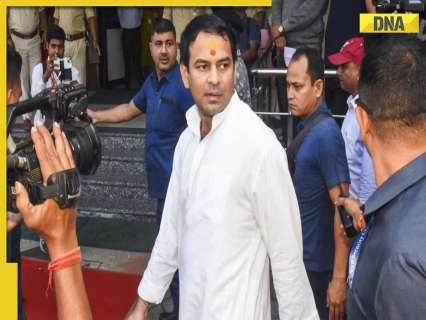
As polling in Bihar for the 2025 assembly elections nears a conclusion, all eyes are on the exit polls. The Bihar assembly election 2025 was held in two phases – November 6 and 11 – with the counting scheduled for November 14.
Pro-gambling interests struggling to gain foothold in Texas after Senate special election loss
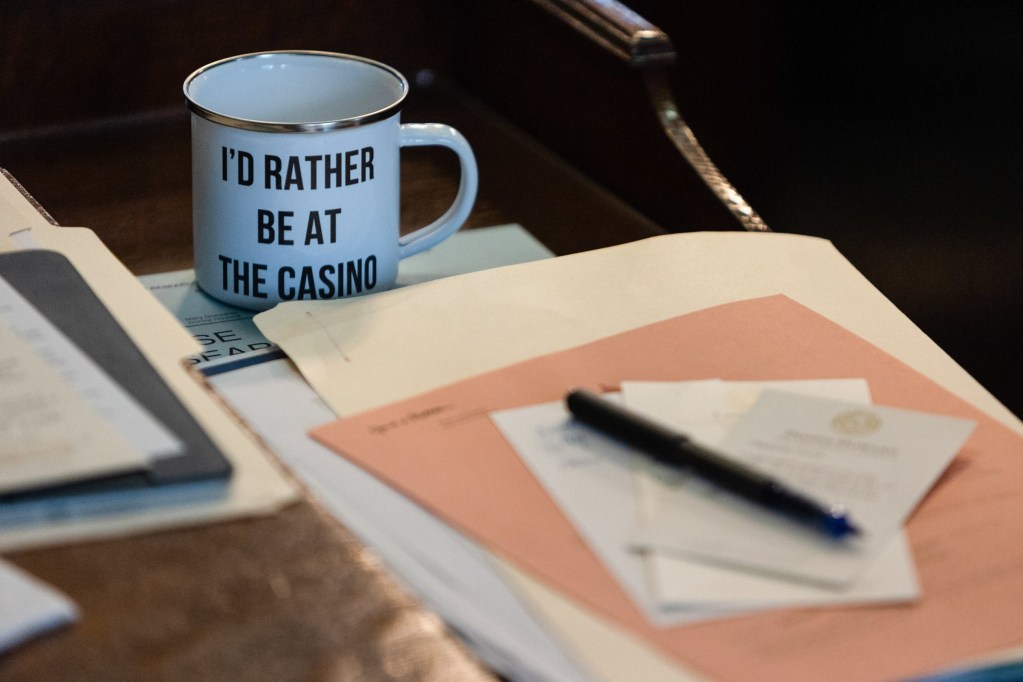
John Huffman was the best-funded candidate in the Senate District 9 special election thanks to casino interests, but failed to make the runoff. Gambling proponents still have millions more to spend on Texas races.
The number of whooping cough cases in Texas is the highest it’s been in 11 years

The state has recorded more than 3,500 cases of whooping cough so far this year, 10 times the number in 2023.
Cash-strapped Texas city defies AG warning not to raise taxes

Citing a new state law, Attorney General Ken Paxton told four cities to cancel planned tax hikes. But La Marque leaders say their tax increase is critical to keeping the city afloat financially.
U.S. Rep. Jodey Arrington, who carried Trump’s tax and spending megabill, is retiring
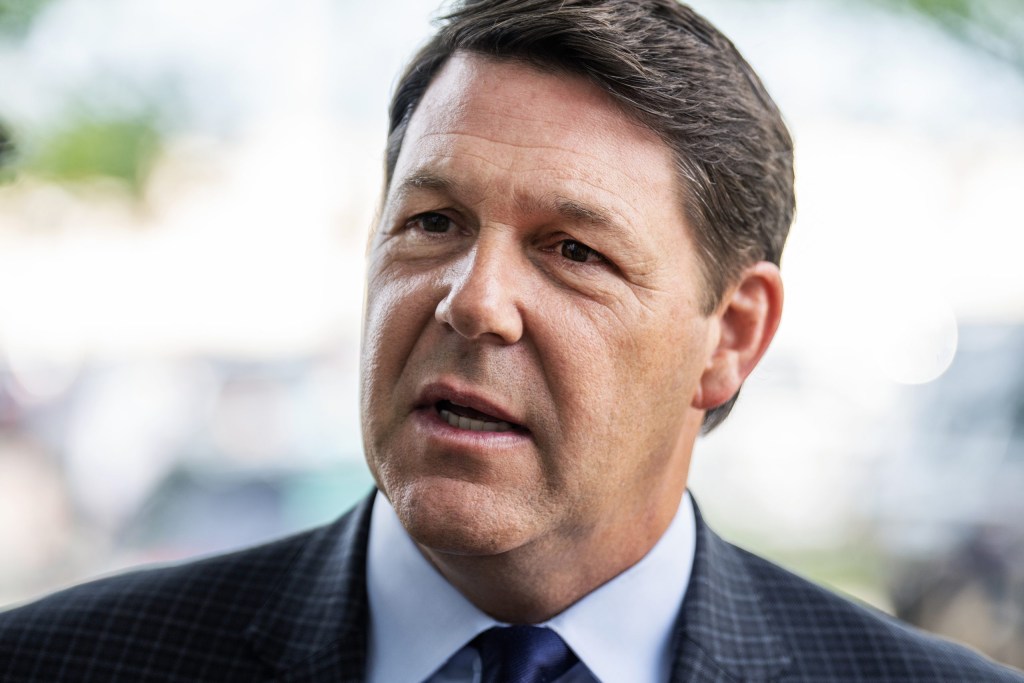
The Lubbock Republican was first elected in 2016 and currently chairs the U.S. House Budget Committee.
Trump lays wreath at Tomb of the Unknown Soldier at Arlington National Cemetery on Veterans Day

President Donald Trump participated in a wreath-laying ceremony Tuesday at Arlington National Cemetery to commemorate Veterans Day and honor the nation’s fallen service members. He was joined by Vice President JD Vance and Veterans Affairs Secretary Doug Collins. The president is scheduled to deliver remarks. This is a developing news story; check back for updates.
Democrats, left empty-handed in shutdown, turn fury on Schumer

Frustration is boiling over among Democratic ranks against Senate Minority Leader Chuck Schumer, D-N.Y., after walking away from the longest government shutdown on record largely empty-handed. Some argue that Schumer squandered key leverage and failed to steer his caucus through the chaos to victory. “I think that people did what they could to get us out of the shutdown, but what has worked in the past isn’t working now,” Sen. Elissa Slotkin, D-Mich., said. “And so, we need to meet the moment, and we’re not doing that.” Slotkin, like others in the Senate Democratic caucus, “wanted something deliverable on the price of healthcare.” The core of their shutdown strategy was to force Republicans and President Donald Trump to make a deal on expiring Obamacare subsidies, but that didn’t happen. SENATE VOTE TO END GOVERNMENT SHUTDOWN IGNITES DEMOCRAT CIVIL WAR Sen. Bernie Sanders, I-Vt., argued that getting rid of Schumer would be difficult. “Chuck Schumer is part of the establishment,” Sanders told MSNBC. “You can argue, and I can make the case, that Chuck Schumer has done a lot of bad things, but getting rid of him — who’s going to replace him?” Other Democrats weren’t so resigned. Graham Platner, a Democratic Senate candidate running to replace Sen. Susan Collins, R-Maine, placed the collapse of Senate Democrats’ unified front squarely on leadership. “The Democratic Party at the leadership level has become entirely feckless,” Platner said in a video posted by Our Revolution, a political action organization started as an offshoot of Sanders’ presidential campaign. “What happened last night is a failure of leadership in the most clear terms,” he said after the Senate passed the bipartisan deal Monday, sending it to the House. “Sen. Schumer is the minority leader. It is his job to make sure his caucus is voting along the lines of what’s going to be good for the people of the United States. He could not maintain that.” Schumer and congressional Democrats walked away from the shutdown stalemate in the Senate largely empty-handed, save for some victories on ensuring furloughed federal workers would receive back pay, the reversals of firings made by the Trump administration during the shutdown and future protections for workers. Still, they fell far short of their goal to extend the expiring subsidies, which are set to sunset at the end of this year. Those subsidies, initially passed as an emergency response to COVID-19 in 2021, were always supposed to be temporary. But Democrats fear that their sudden expiration could leave millions of policyholders with substantially higher premiums overnight if allowed to expire. But as mounting pressure grew — and no sign of Republicans wavering on the subsidies — eight Democrats voted to put the government on the path to reopening. To some onlookers, Schumer had held the party line for as long as possible. SENATE DEMOCRATS EYE EXIT FROM RECORD-BREAKING SHUTDOWN AS PRESSURE INTENSIFIES Sen. Catherine Cortez Masto, D-Nev., one of the eight Democrats who voted with Republicans to reopen the government, said she respected Schumer’s leadership. “He’s done a good job,” Masto said. “He kept us in the loop and was open to our conversations.” Sen. Chris Murphy, D-Conn., argued that the problem wasn’t Schumer, it was his colleagues. “Sen. Schumer didn’t want this to be the outcome, and I pressed hard for it not to end like this,” Murphy said. “He didn’t succeed, let’s not sugarcoat that. But the problem is, the problem exists, inside the caucus. The caucus has to solve it.” Republicans, however, spent much of the shutdown arguing that Schumer had waged the shutdown to appease his base — a base that had wanted to see some sort of resistance to Trump. “This is how it always would end,” Sen. Ted Cruz, R-Texas, said on Monday evening. “Chuck Schumer has a political problem. He’s afraid of being primaried from the left. And so, the Democrats inflicted this shutdown on the American people in order to prove to their radical left-wing base that they hate Donald Trump.” “I think a lot of Americans have suffered as a result of this political stunt,” Cruz added. SCHUMER’S SHUTDOWN SCHEME EXPLAINED: DEMS DOUBLE DOWN ON OBAMACARE CREDITS AS STANDOFF DRAGS ON On the other hand, many Democrats made it clear they believed Schumer had failed to effectively mount resistance to Trump’s agenda on healthcare. CNN data analyst Harry Enten compiled polls dating back to 1985 comparing the popularity of Democratic leaders among Democratic voters. Schumer, he found, was the least popular of them all. “Chuck Schumer — his days are over. If he cannot keep his caucus together, he needs to go,” Sunny Hostin, a co-host of “The View,” told audiences on Monday. “Chuck Schumer has not met this moment, and Senate Democrats would be wise to move on from his leadership,” Rep. Mike Levin, D-Calif., said. California Gov. Gavin Newsom summed up his thoughts in a one-word post to X. “Pathetic,” Newsom said.
Red state judge chooses new congressional map in fight that could reshape House control
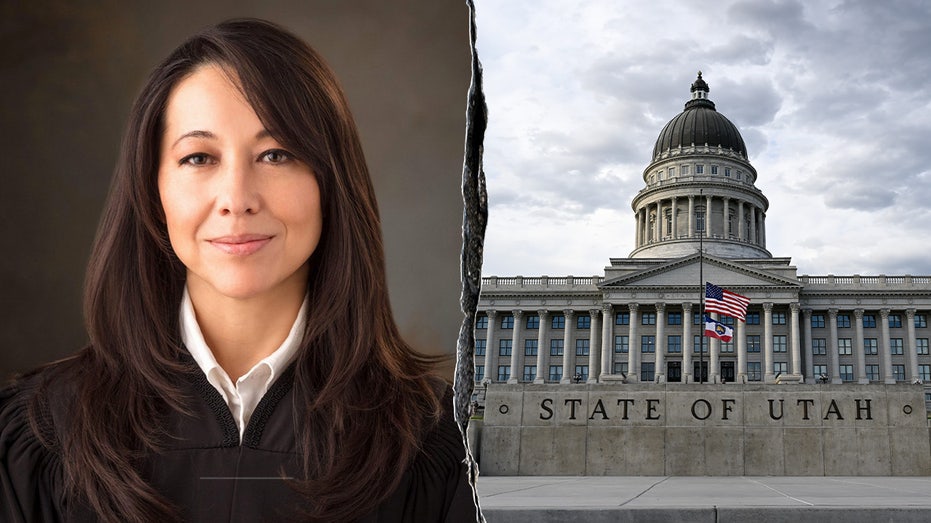
In a blow to Republicans, a Utah district judge rejected a congressional district map drawn up by the state’s GOP-dominated legislature and instead approved an alternate that will create a Democratic-leaning district ahead of the 2026 midterm elections. Republicans currently control all four of the red state’s congressional districts, but Utah District Judge Dianna Gibson ruled late Monday that a map drawn up by GOP lawmakers “unduly favors Republicans and disfavors Democrats.” Utah is the latest battlefield in the high-stakes redistricting showdown between President Donald Trump and Republicans versus Democrats to shape the midterm landscape in the fight for the House majority. The faceoff over redistricting in Utah, a state Trump carried by nearly 22 percentage points in last year’s presidential election, was triggered by a lawsuit by the League of Women Voters of Utah and Mormon Women for Ethical Government, which prompted Gibson to throw out the state’s current congressional map. NEWSOM TAKES VICTORY LAP AFTER LANDSLIDE REDISTRICTING VICTORY IN CALIFORNIA Gibson’s move required state lawmakers to draw a new map, which the legislature approved last month. The judge had ordered lawmakers to draw a map in compliance with a 2018 ballot measure approved by Utah voters that reformed redistricting standards, in order to prevent the drawing of districts to favor a political party, which is a practice known as gerrymandering. Gibson rejected the Republican lawmakers’ map and instead ruled in favor of one of two presented by the plaintiffs. It keeps nearly all of heavily populated Salt Lake County in one congressional district. The current congressional map divides the Democratic-dominated county among all four of the state’s districts. The judge had said she would rule by Monday, which was the day Utah Lt. Gov. Deidre Henderson said any new congressional map must be in place to be used in next year’s elections. Democrats have not controlled a congressional seat in Utah since the current map went into effect at the beginning of the decade. “The DNC applauds the decision to choose a fair, impartial map that reflects the diversity and ideological makeup of the state. Utah Republicans gerrymandered the maps because they knew they were losing power in the state. Republicans doubled down when they chose to submit another gerrymandered map, but today, they were once again thwarted by impartial Courts,” Democratic National Committee (DNC) Chair Ken Martin argued in a statement. And Martin vowed that “Democrats will continue to fight for fair maps in Utah, regardless of what Donald Trump and Utah Republicans try next.” TRUMP-BACKED REDISTRICTING PUSH TURNS MIDWESTERN STATE INTO NEXT POLITICAL BATTLEGROUND Republicans, who have argued that Gibson does not have legal authority to enact a map not approved by the legislature, criticized the ruling. “Judge Gibson has once again exceeded the constitutional authority granted to Utah’s judiciary. After stretching the law to justify taking control of redistricting, she has now rejected Map C — the only option that respected the Legislature’s constitutional role — and imposed a map of activists who are not accountable to Utahns,” Utah Republican Party chair Robert Axson argued. And Axson charged, “This is not interpretation. It is the arrogance of a judge playing King from the bench.” The ruling in Utah comes six days after California voters overwhelmingly passed Proposition 50, a ballot initiative which will temporarily sidetrack the left-leaning state’s nonpartisan redistricting commission and return the power to draw the congressional maps to the Democrat-dominated legislature. That is expected to result in five more Democratic-leaning congressional districts in California, which would counter the passage earlier this year in the reliable red state of Texas of a new map that aims to create up to five right-leaning House seats. “California stepped up. Now, we are taking this fight across the country — helping Democrats in other states push back against Trump’s election rigging,” California Gov. Gavin Newsom said in a statement to Fox News Digital last week, as he pointed to the push by Trump and Republicans for rare mid-decade redistricting. It’s part of a broad effort by Trump’s political team and the GOP to pad the party’s razor-thin House majority to keep control of the chamber in the 2026 midterms, when the party in power traditionally faces political headwinds and loses seats. Missouri, North Carolina, and Ohio have drawn new maps as part of the president’s push. Trump is aiming to prevent what happened during his first term in the White House when Democrats reclaimed the House majority in the 2018 midterm elections. Illinois and Maryland, two blue states, and Virginia, where Democrats control the legislature, are moving towards redistricting or are seriously considering, as are the red states of Indiana, Kansas, and Florida.