

Suspect in Charlie Kirk’s murder linked to scene by DNA, FBI chief says
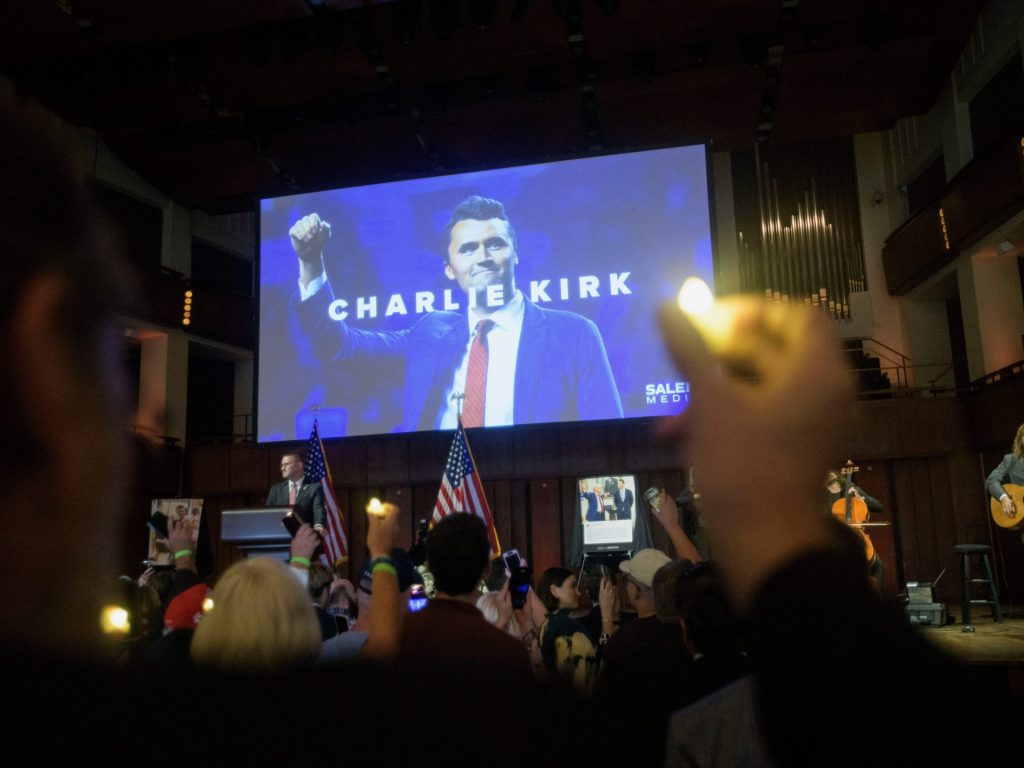
DNA evidence links the suspect in the assassination of the conservative American activist Charlie Kirk last week to the scene of the crime, the director of the FBI has said. DNA from a towel and a screwdriver recovered from the crime scene both match Tyler Robinson, FBI Director Kash Patel said on Monday. Recommended Stories list of 4 itemsend of list Robinson, 22, was arrested by police on Thursday after a 33-hour manhunt for the killer. “I can report today that the DNA hits from the towel that was wrapped around the firearm and the DNA on the screwdriver are positively processed for the suspect in custody,” Patel said in an interview on Fox News’s Fox & Friends. Patel said Robinson had also expressed his desire to “take out” Kirk in a text exchange with another person, and had written a note detailing his plans to commit the crime. Patel said the note had been destroyed, but investigators recovered forensic evidence of its existence at the home of Robinson and his romantic partner, who prosecutors have said has been cooperating in the investigation. “We have evidence to show what was in that note, which is… basically saying… ‘I have the opportunity to take out Charlie Kirk, and I’m going to take it’,” he said. Kirk, the CEO and cofounder of conservative youth activist organisation Turning Point USA and a close ally of US President Donald Trump, was shot dead last Wednesday during a speaking event at a university in Utah. The killing of Kirk, a polarising figure who was lionised by conservatives and reviled by liberals, has provoked condemnation across the political spectrum, while drawing attention to deep political divisions in the United States and raising fears of further political violence. Advertisement The murder has also prompted calls for retribution among the political right, including from Trump, who has promised to use the power of the federal government to crack down on left-wing networks that he claims are driving violence. On Monday, Trump said his administration was looking into bringing racketeering charges against left-wing groups believed to be funding agitators, and favoured designating the loose-knit antifascist group Antifa as domestic terrorists. In an appearance as guest host of Kirk’s podcast, Vice President JD Vance threw his support behind a grassroots online campaign to get people who celebrated Kirk’s death fired, urging listeners to “call them out” and “call their employer.” Numerous employees across the US have been fired or put on leave over their social media commentary about Kirk’s death, not all of whom celebrated or justified the assassination. Washington Post columnist Karen Attiah said on Monday that she had been fired over her social media posts about Kirk. In a column on Substack, Attiah said she had been terminated for “speaking out against political violence, racial double standards, and America’s apathy toward guns.” Attiah included a number of past posts about political violence in her column, only one of which mentioned Kirk specifically. That posted misquoted Kirk as saying that black women “do not not have the brain processing power to be taken seriously.” Kirk’s actual comments specifically referred to the intelligence of four black women, including former first lady Michelle Obama and Supreme Court Justice Ketanji Brown Jackson. Trump’s pledge to crack down on what he says is left-wing extremism has raised fears that his administration may seek to use Kirk’s murder as a pretext to stifle legitimate dissent. Responding to a claim by Vance that “most of the lunatics” in US politics reside on the far-left, Democratic lawmaker Greg Casar accused the Trump administration of weaponising concerns about political violence against its opponents. “He cannot be allowed to use the horrible murder of Charlie Kirk as a pretext to go after peaceful political opposition,” Casar, who represents a Texas district in the US House of Representatives, said in a statement. High-profile acts of political violence have targeted figures on both the left and right of US politics in recent years. They include the killing of a Democratic state lawmaker and her husband in Minnesota in June, two assassination attempts on Trump during the 2024 presidential campaign, and a 2022 hammer attack on the husband of Democratic former House Speaker Nancy Pelosi. Advertisement Experts say that politically motivated attacks and threats are on the rise in the US. More than 250 incidents of threats and harassment against local officials were reported in the first half of 2025, a 9 percent increase from the previous year, according to the Bridging Divides Initiative at Princeton University. While little information has been released about Robinson’s suspected motive so far, Patel on Monday affirmed an earlier assertion by Utah Governor Spencer Cox that the suspect espoused left-wing views. “His family has collectively told investigators that he subscribed to left-wing ideology, and even more so in these last couple of years,” Patel said. Adblock test (Why?)
Nepal, Bangladesh, Sri Lanka: Is South Asia fertile for Gen Z revolutions?
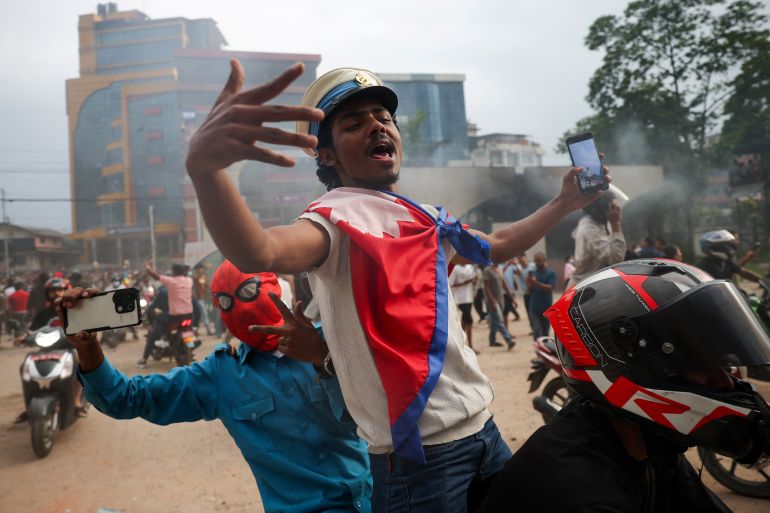
New Delhi, India — The rattle of iron gates sounded like drumbeats as the crowd surged forward. A sea of bodies stormed through the barricades, which had stood as sentinels of power barely hours ago. The hallways of the house of the country’s leader echoed with the thunder of muddy footsteps. Some smashed windows and artefacts, others picked up luxury bedsheets or shoes. The building and its plush interiors had been symbols of crushing authority, impenetrable and out of reach for the country’s teeming millions. Now, however, they briefly belonged to the people. This was Nepal last week. It was also Sri Lanka in 2022, and Bangladesh in 2024. As Nepal, a country of 30 million people sandwiched between India and China, now plots its future in ways alien to traditional electoral democracies, the spate of youth-led protest movements that have toppled governments one after the other in South Asia has also sparked a broader question: Is the world’s most densely populated region Ground Zero for Gen Z revolutions? “It’s certainly very striking. There’s this kind of new politics of instability,” said Paul Staniland, an associate professor of political science at the University of Chicago, whose research focuses on political violence and international security in South Asia. On Thursday, some 10,000 Nepali youth, including many in the diaspora, voted for an interim prime minister not through physical or electoral ballots, but through an online poll on Discord, a platform primarily used by gamers. Nepal, where three days of protests against corruption and nepotism turned violent, with a crackdown by security forces leading to the death of more than 70 people, has announced new elections in March. Advertisement But the protests, which forced Prime Minister KP Sharma Oli to resign days after he had mocked the Gen Z origins of the agitators, have already shown that in nation after nation in South Asia, increasingly frustrated young people are grabbing power and declaring themselves boss when they feel betrayed by political systems out of tune with their demands. This is a dramatic shift for South Asia, a region that has long been home to major political protests, but rarely ones where regimes are overthrown, Staniland told Al Jazeera. “This is a very different kind of orientation from a world that has military coups, or the main form of political conflict is something else,” he added, referring to the ways political crises in the region have previously often played out. Each of the protest movements – in Sri Lanka, Bangladesh and Nepal – was rooted in specific histories and was triggered by events unique to that country. Yet, analysts say, there is a common thread that runs through the rage that exploded in these countries: a generation that is refusing to live with broken promises, and the factors driving them. These movements, experts say, also appear to be learning from each other. From Colombo to Dhaka to Kathmandu: The backdrop The Gen-Z protests in Kathmandu kicked off after the government banned social media platforms, citing misuse and the failure of the platforms to register with regulators. But the grievances ran much deeper: inequality, corruption and nepotism were the major triggers for young people in a country where remittances sent home by Nepalis abroad represent a third of the nation’s economy. Thousands of teenagers hit the streets, many still in school uniforms. More than 70 people were shot dead, and hundreds more were injured. But the violence unleashed on protesters by security forces only aggravated the crisis. Some demonstrators torched the parliament, while others set the houses of other political parties, some leaders, and even Nepal’s largest media house on fire. Protesters also broke into Oli’s house, ransacking it. Oli resigned a day later. It was very different in Bangladesh in 2024. There, it began with a student-led campaign against discriminatory job quotas. But by the summer, after a series of police crackdowns on mostly peaceful protesters killed hundreds of civilians, the movement’s character shifted to a broad coalition demanding an end to Prime Minister Sheikh Hasina’s long hardline government. Protests had a loose leadership structure: student leaders issued ultimatums and lists of demands to the government, and opposition figures provided support. Everything Hanisa’s government did – from brutal assaults on student agitators to telecommunications blackouts – only aggravated the crisis. Ultimately, on August 5, 2024, the prime minister quit, escaping to close ally India by helicopter. Advertisement Two years before the upheaval in Bangladesh, Sri Lanka had its own moment. There, the protests were a response to an economic collapse as Sri Lanka defaulted on its debt. By March 2022, daily life had become dire: 12-hour power blackouts, miles-long queues for fuel and cooking gas, and inflation above 50 percent. Sri Lanka’s “Aragalaya” movement, which stands for “The Struggle” in Sinhala, was born. Youth activists set up a protest camp they called “GotaGoGama” (“Gotta Go Village”), in front of Colombo’s Presidential Secretariat. It was a reference to President Gotabaya Rajapaksa, whose family had governed the country for 15 of the previous 18 years. The site became a hub of rallies, art performances and speeches. In mid-July, Rajapaksa fled the country after his residence was overrun by demonstrators. Demonstrators capture footage on their mobile phones outside the Parliament complex, during a protest against the killing of 19 people, after anticorruption protests and during a curfew in Kathmandu, Nepal, September 9, 2025 [Adnan Abidi/Reuters] ‘Dissonance was too high’ To Meenakshi Ganguly, deputy Asia director of Human Rights Watch, the overthrow of powerful governments by youth-led movements in the three countries has common foundations: unaddressed socioeconomic disparities and corruption by an entrenched political elite that left them disconnected from the challenges of younger generations. Many in Gen Z have experienced two economic recessions in their lifetimes: in 2008-09 and then in the wake of COVID-19. Ganguly said that the generation had also two formative years in isolation, cut off from their peers physically, though those pandemic years also amplified their use of digital platforms to unprecedented
Madhya Pradesh: Two killed after truck runs over pedestrians in Indore, catches fire
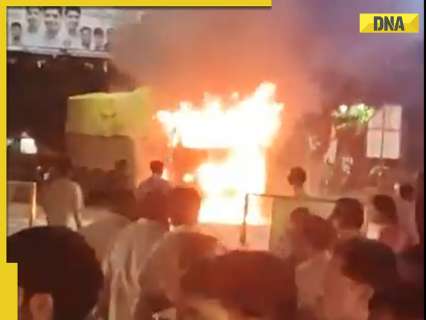
Police said the driver was highly inebriated and lost control of the vehicle, which led to this accident.
Smriti Irani issues BIG statement on PM Modi: ‘Anybody who says they’re close to him…’
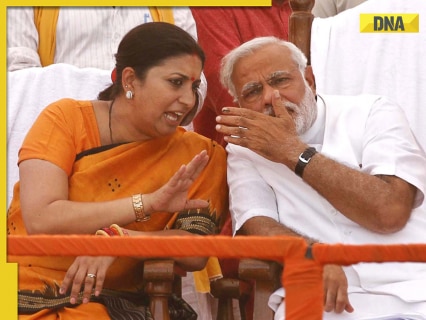
Irani also reflected on her own political journey including her ministerial roles, her time working directly under the PM, and credited him with giving her those chances. But again, she doubled down, those opportunities were about performance and service, not personal closeness. Read on for more.
India-US trade talks to resume today amid tariff war as Washington’s top negotiator arrives in New Delhi
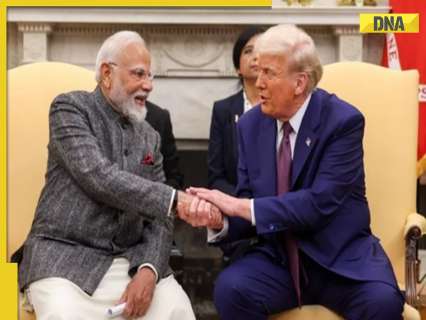
The move highlights a reversal in bilateral ties and raises hopes for a breakthrough on a free trade agreement that was put in jeopardy by the punitive tariffs imposed by US President Donald Trump on India for purchasing Russian oil.
Uttarakhand: Cloudburst triggers flash floods in Dehradun, 2 people missing; rescue operation underway
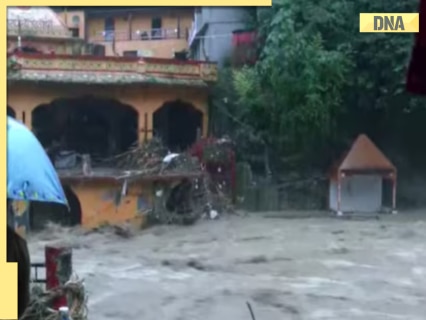
A cloudburst hit the Sahasradhara area in Dehradun late Monday night, causing widespread damage. According to officials, the flash flood brought massive debris into the main market, damaging two to three big hotels and destroying around 7-8 shops.
Delhi BMW crash: Accused woman driver sent to 2-day judicial custody, court issues notice on bail plea

Duty Judicial Magistrate First Class Akanksha Singh remanded Gaganpreet Kaur, who is to be produced before the court on September 17.
Major reshuffling in Madhya Pradesh, 18 IAS officers transferred across key departments; check details
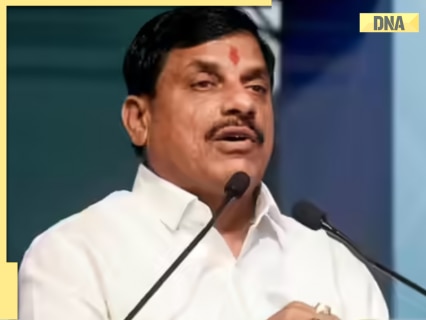
The move is seen as part of a broader effort to enhance administrative efficiency and ensure better delivery of public services across Madhya Pradesh.
Faculty, advocacy groups fear Texas A&M firing threatens academic freedom
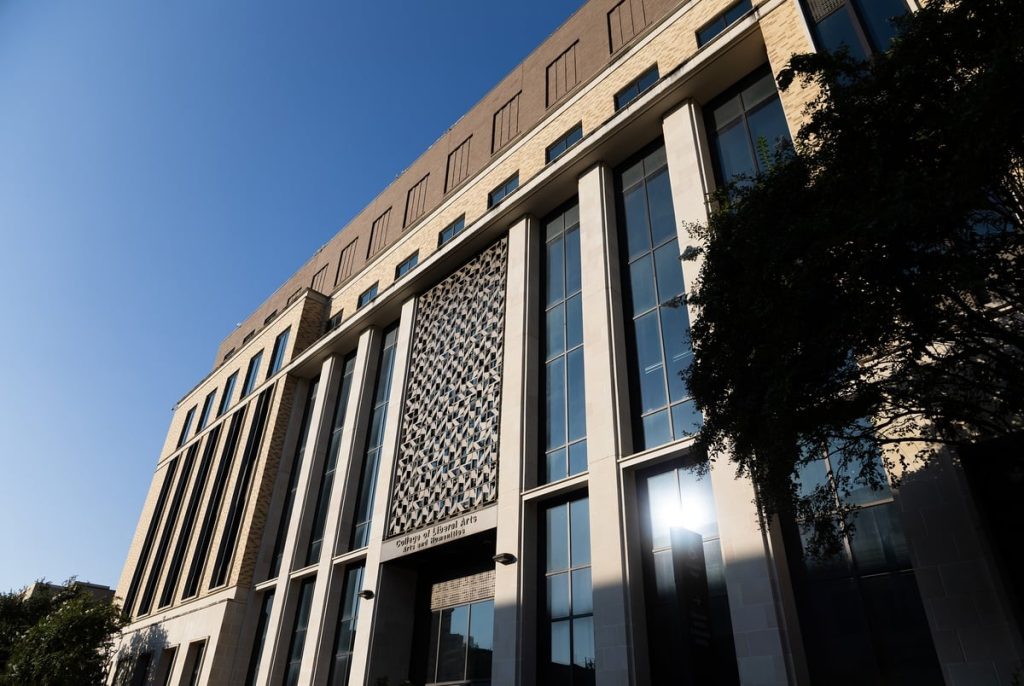
The firing happened over two years after Texas A&M stressed its support for academic freedom and amid a changing higher education landscape.
Roughly 180 complaints filed against Texas teachers for alleged comments on killing of Charlie Kirk
Several school districts have already taken disciplinary action against staff for comments made about the Christian conservative activist’s death.