

No Dry Day in Delhi on Holi 2026 as govt permits liquor shops to stay open

As per an order issued by the Delhi government in January, the liquor shops in the national capitals will remain open on Holi 2026.
US-Iran War: Fuel prices hike in India? 25 days of crude oil, refined oil stock; Here’s all you need to know

The Petroleum Ministry has said it is continuously monitoring the evolving situation, and all necessary steps will be taken in order to ensure the availability and affordability of major petroleum products in the country.
Delhi CM Rekha Gupta inaugurates Flower Festival 2026, 15,500 flowers of 48 varieties on display

The festival features a range of floral installations, including tray gardens, landscape gardens, large hanging baskets, terrariums, Eastern and Western floral arrangements, floral figures shaped like animals and birds, colourful floral boards, and specially designed pyramid.
Texas primary election results for U.S. Senate, attorney general and more

Follow The Texas Tribune’s coverage of election results for the 2026 primaries for U.S. Senate, U.S. House, the Texas Legislature and more.
When will Texas primary results come in? Here’s how the process unfolds.
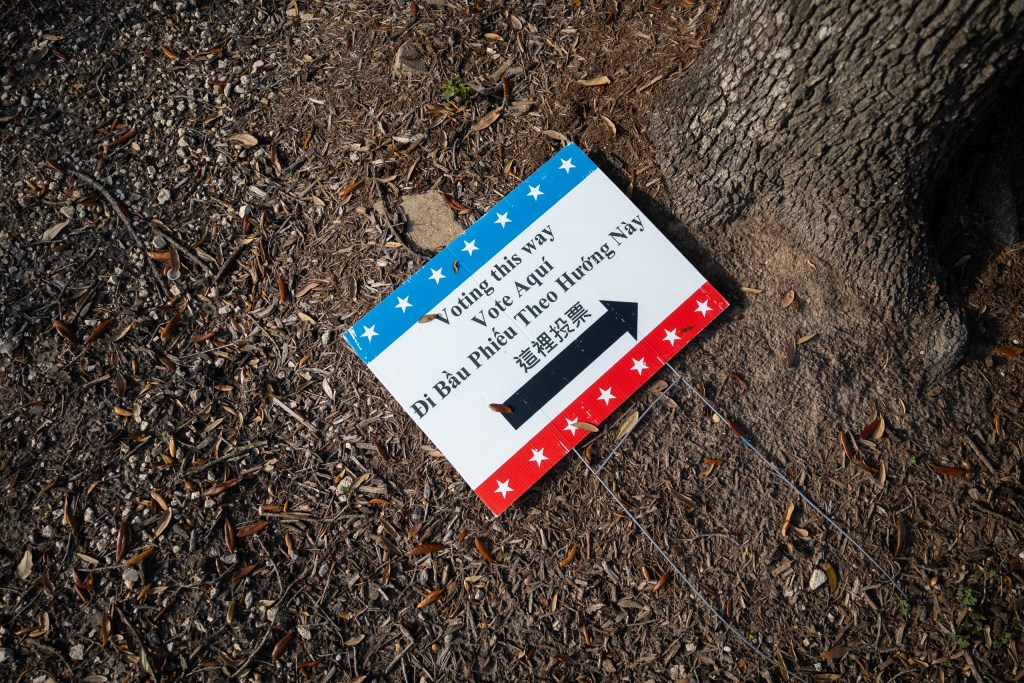
Results from early voting should start rolling out after polls close at 7 p.m. It will be hours before all races are called.
Polls close today in the Texas primaries. Here are 5 things to watch.

This Tuesday, Tribune reporters are watching two blockbuster senate primaries, an open attorney general seat, and more high-stakes, competitive races up and down the Texas ballot.
Trump floods Texas primaries with his endorsements, testing limits of political reach
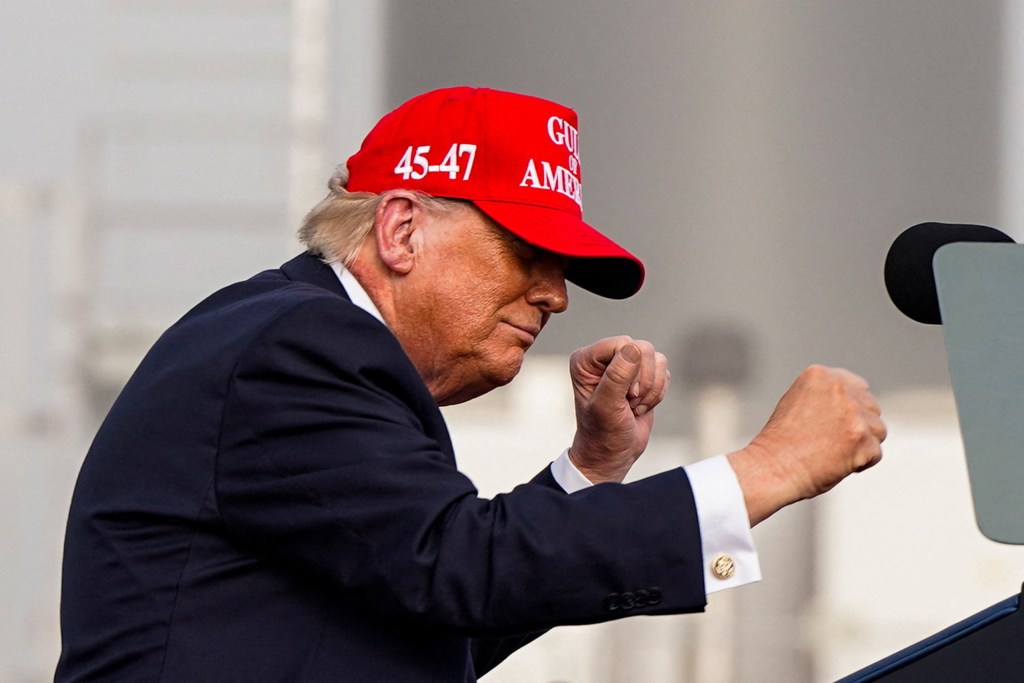
While he has stayed out of some blockbuster contests, the president has otherwise spread his endorsement generously in Texas. The strategy has helped him form politically beneficial alliances in the past.
New satellite images show fires, naval base damage across Iran after US-Israeli strikes
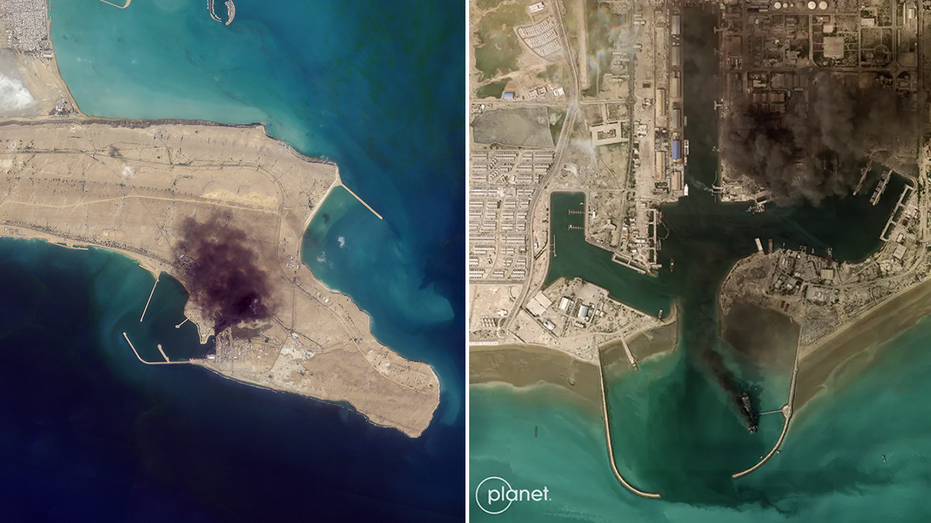
New satellite images offer a stark look at the devastation inside Iran after U.S.-Israeli strikes, while also revealing the damage left behind by Tehran’s retaliatory attacks across the region. According to U.S. Central Command, which oversees American military operations across the Middle East, U.S. forces struck more than 1,250 targets during the first two days of Operation Epic Fury. Planet Labs satellite imagery captured burning ships and damaged facilities at the Konarak base in southern Iran, as well as significant destruction at Iran’s naval headquarters in Bandar Abbas on the Persian Gulf, reflecting the scale of the strikes on military infrastructure. FIRES RAGE AT IRAN’S BANDAR ABBAS NAVAL HEADQUARTERS, STRAIT OF HORMUZ TRAFFIC STALLED Imagery from Vantor shows the Choqa Balk drone facility in western Iran was hit, along with damage to other key military and strategic sites targeted in the U.S.–Israeli strike campaign. Radar systems at the Zahedan air base in eastern Iran — near the country’s borders with Pakistan and Afghanistan — were also struck. The two facilities are about 800 to 900 miles apart, underscoring the broad reach of the coordinated strikes. Additionally, satellite imagery from Planet Labs shows thick smoke plumes rising above Tehran, signaling explosions and fires inside the Iranian capital. The smoke underscores how the conflict has moved beyond isolated military sites and into the heart of Iran’s political center. TRUMP PLEDGES TO ‘AVENGE’ FALLEN US SERVICE MEMBERS AS TENSIONS WITH IRAN INTENSIFY Iran responded with missile and drone strikes of its own, expanding the conflict across the region. Satellite images reveal damage to the port city of Sharjah in the United Arab Emirates. The city of Sharjah is the third most populous after Dubai and Abu Dhabi. The Jebel Ali Port, the region’s largest maritime hub, was also targeted, underscoring how the retaliation extended beyond military sites to key infrastructure. The U.S. has warned that further retaliation could follow, as both sides signal they are prepared for additional rounds of strikes. Pentagon officials said U.S. forces in the region remain on high alert and have publicly cautioned that any new attacks on U.S. citizens would prompt a forceful response. With damage now visible from western Iran to the Persian Gulf, the coming days could determine whether the confrontation stabilizes — or spirals into a wider regional war.
Trump criticizes Biden for transferring weapons to Ukraine but insists US is ‘stocked’ to win
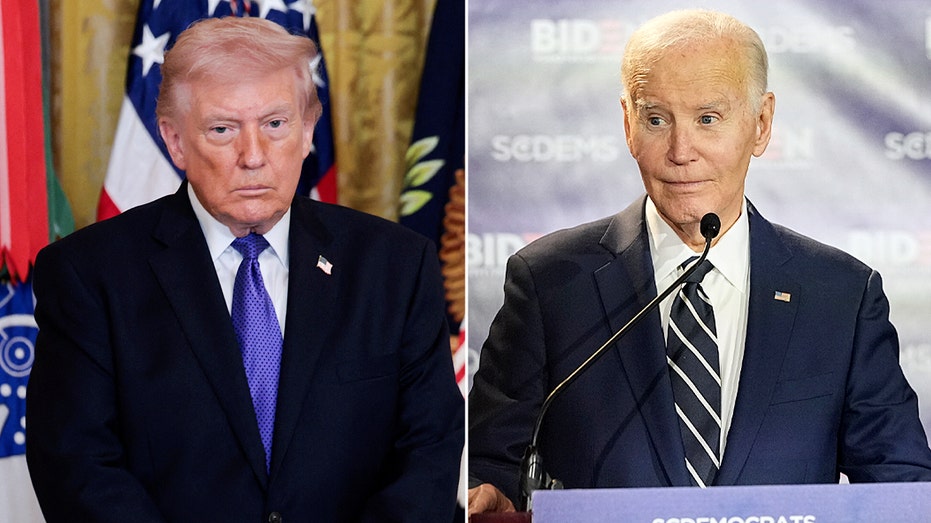
President Donald Trump on Monday accused former President Joe Biden of failing to replenish U.S. weapons stockpiles, though insisted that the U.S. is still “stocked” to win as Operation Epic Fury continues to devastate Iran. U.S. munitions at the medium and upper medium grades have “never been higher or better,” Trump said on Monday in a post on his Truth Social platform. He added that “we have a virtually unlimited supply of these weapons.” “Wars can be fought ‘forever,’ and very successfully, using just these supplies (which are better than other countries (sic) finest arms!),” the president’s post read. But Trump noted that while the U.S. has a “good” supply of the highest munitions grade, it is “not where we want to be.” TRUMP SAYS US MISSION IN IRAN IS ‘AHEAD OF SCHEDULE,’ VOWS TO ‘EASILY PREVAIL’ OVER REGIME “Much additional high grade weaponry is stored for us in outlying countries,” the post read. “Sleepy Joe Biden spent all of his time, and our Country’s money, GIVING everything to P.T. Barnum (Zelenskyy!) of Ukraine – Hundreds of Billions of Dollars worth – And, while he gave so much of the super high end away (FREE!), he didn’t bother to replace it.” The U.S. delivered billions of dollars in aid to Ukraine since Russia launched its full-scale invasion in February 2022, with Biden approving an additional $500 million of military aid in a security package rushed out the door just days before Trump’s second term began. “Fortunately, I rebuilt the military in my first term, and continue to do so,” Trump added. “The United States is stocked, and ready to WIN, BIG!!!” “Their air defense, Air Force, Navy, and Leadership is gone,” he wrote later. “They want to talk. I said ‘Too Late!’” HEGSETH LAYS OUT ‘CLEAR’ 3-PART MISSION AGAINST IRAN, SAYS WAR ‘IS NOT ENDLESS’ The U.S. and Israel launched Operation Epic Fury on Saturday morning, a joint military campaign that officials say targeted Iranian leadership and key military installations. Earlier Monday, Trump declared that the operation in Iran is “ahead of schedule,” stating that many of the regime’s military leaders were eliminated in about an hour. “We have the strongest and most powerful, by far, military in the world, and we will easily prevail,” the president said. “We’re already substantially ahead of our time projections, but whatever the time is, it’s okay. Whatever it takes.” Trump said that the operation is projected to last four to five weeks, noting that “we have capability to go far longer than that.” “We also projected four weeks to terminate the military leadership,” Trump added. “And as you know, that was done in about an hour. So we’re ahead of schedule there by a lot.”
Americans in more than a dozen Middle East nations urged to flee
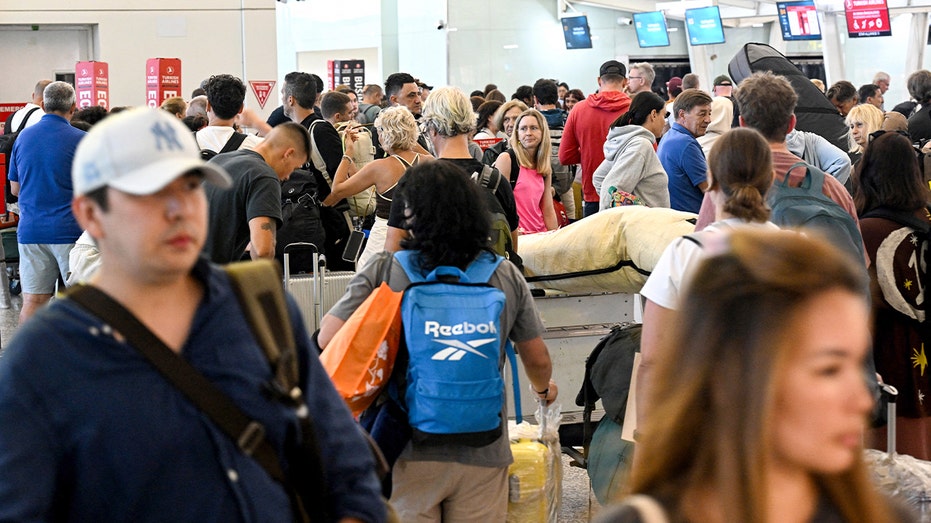
The State Department on Monday urged Americans to depart immediately from more than a dozen countries across the Middle East, warning of “serious safety risks” as the Iran war intensifies. Assistant Secretary of State for Consular Affairs Mora Namdar said U.S. citizens should leave from Bahrain, Egypt, Iran, Iraq, Israel, the West Bank and Gaza, Jordan, Kuwait, Lebanon, Oman, Qatar, Saudi Arabia, Syria, the United Arab Emirates and Yemen. The department said Americans who need help arranging departure via commercial means can contact the State Department 24/7 at +1-202-501-4444 from abroad or +1-888-407-4747 from the U.S. and Canada. The travel push was amplified by the State Department’s official travel account, which urged Americans abroad to enroll in the Smart Traveler Enrollment Program (STEP) at step.state.gov to receive the latest security updates from their nearest U.S. embassy or consulate. IRAN’S SECURITY CHIEF ACCUSES TRUMP OF ‘ISRAEL FIRST’ POLICY, ‘DELUSIONAL FANTASIES’ IN REGION Officials have warned that conditions in the region remain volatile and that security situations can change quickly as fighting tied to the Iran conflict continues. The warnings come days after the United States launched Operation Epic Fury, striking command-and-control centers, Iranian air defense capabilities, missile and drone launch sites. In a Feb. 28 Worldwide Caution security alert, the State Department said Americans worldwide, and especially those in the Middle East, should exercise increased caution, monitor local security alerts and expect potential travel disruptions, including periodic airspace closures. DHS REMAINS UNFUNDED AS IRAN SLEEPER CELL FEARS SPIKE NATIONWIDE AMID SECURITY WARNINGS The evacuation push follows a cascade of security alerts issued by U.S. embassies across the region since Saturday, many ordering or recommending Americans to shelter in place. At least nine U.S. missions, including Bahrain, Iran, Kuwait, the United Arab Emirates, Saudi Arabia, Iraq, Jordan, Qatar and Israel, have issued repeated shelter-in-place directives or advisories over the past several days. NETANYAHU INSISTS US AND ISRAEL’S STRIKES ON IRAN WON’T LEAD TO ‘ENDLESS WAR’ In multiple cases, embassy personnel and their families were ordered to remain at home, with Americans urged to stay in secure structures away from windows and be prepared for incoming missiles or drones. In Saudi Arabia, the embassy in Riyadh closed Tuesday after two Iranian drones struck the building, prompting expanded shelter-in-place orders for Jeddah, Riyadh and Dhahran. No injuries were reported.