

COVID cash meant to get kids back on track took surprising detour in blue-state school district

Hundreds of thousands of dollars in pandemic-era federal relief funding, including money intended to help students recover from learning loss, instead went toward “anti-racism” training for teachers and administrators in Albuquerque Public Schools. The district approved $336,500 in American Rescue Plan funds in 2021 for training tied to the People’s Institute for Survival and Beyond (PISAB), while accounting records obtained by America First Legal show APS ultimately spent nearly $700,000 on the training program. School district officials told Fox News Digital they could not confirm the spending or how much came from federal COVID relief funds because they did not have immediate access to the records. PISAB, which has received grants from George Soros’ Open Society Foundations, has distributed training materials instructing “White folks” to “learn how [they] became white” and defining race as a “specious classification of human beings created by Europeans (whites)” to assign human worth and social status and maintain “power and privilege.” GEORGIA DISTRICT QUIETLY TRAINED TEACHERS TO BLAME ‘WHITENESS,’ ‘DECOLONIZE’ UNDER FEDERAL CRACKDOWN: REPORT At APS, the programming included “Community Conversations,” an introductory course centered on “core equity and anti-racism principles,” as well as “Introduction to Undoing Racism” and a multi-day “Undoing Racism” workshop. The training was delivered through the Anti-Racism Training Institute of the Southwest (ARTI), which had a 23-year relationship with PISAB. The effort reached hundreds of district employees after initially focusing on school leadership. During the 2020-21 school year, APS principals and assistant principals participated in “Community Conversations,” a course ARTI “specifically designed” for the district which incorporated PISAB’s organizing principles. By July 2022, at least 721 APS staff members, ranging from teachers to senior district officials, had attended an ARTI training, according to records obtained by AFL. “Leftist groups infiltrate schools because they know that they will have the opportunity to shape and control children’s minds and social behavior,” Bobby Crossin, counsel at America First Legal, said in a statement. “Here, the Albuquerque Public Schools took money intended by Congress to help students harmed by government lockdowns, and spent it on critical race theory indoctrination sessions.” EXCLUSIVE: SPLC’S ‘FAR-LEFT’ ‘ANTI-RACISM’ CURRICULUM FOUND IN CLASSROOMS AS EARLY AS KINDERGARTEN: WATCHDOG Julie Levin, senior counsel at America First Legal, said the group’s concerns centered in part on the use of pandemic relief money at a time when schools were trying to help students recover from COVID-era disruptions. “You had all of this money that Congress was giving to school districts to get children back on track after the COVID pandemic,” Levin told Fox News Digital. “Instead of using that money to help the students, they were using it to pay for these anti-racism trainings.” “What was happening was taxpaying dollars were being used to pay for training sessions that were supposed to be espousing anti-racism, but were actually being used to indoctrinate the teachers and administrators with respect to racism,” Levin continued. The records show APS had even bigger plans for the program, proposing nearly $1 million in DEI training through 2024 that would reach nearly 2,000 people each year. District officials later considered extending the effort beyond employees and directly to students. In fall 2022, APS officials proposed adding “a student component to our equity/anti-racism model,” which would have involved 20 to 30 students per school at up to 10 middle and high schools, according to internal memos obtained by AFL. TRUMP ADMINISTRATION TOUTS ‘HARD RESET’ FOR AMERICAN SCHOOLS, VOWS TO PUT PARENTS ‘BACK IN CHARGE’ The proposal envisioned first introducing participating students to “foundational equity/anti-racism principles” before having them develop projects of their own. APS, however, told Fox News Digital the student component was never implemented. The district’s relationship with ARTI continued after the student proposal. In 2023, ARTI provided APS with a $27,000 estimate for in-person “Undoing Racism” training. APS defended its use of PISAB and ARTI trainings, saying the programs were intended to help improve student outcomes. “We haven’t received criticism about this,” a spokesperson for the district wrote in an email to Fox News Digital. “But generally speaking, we used the program to help with attendance and academic achievement for students.” The training highlighted in Albuquerque is also part of a greater effort, according to Levin, who said PISAB continues to offer classes in cities including Seattle, Washington, D.C., Atlanta and Brooklyn, “The People’s Institute to this day is offering these classes throughout the United States,” Levin said. “All you have to do is go to their website and see that month by month there’s the calendar of these training classes that they are offering either directly in person, virtually, or through third parties.” “America First Legal will continue exposing where public-school dollars are being diverted away from our children’s education toward ideological programs that divide Americans by race and reshape our schools around an insidious political agenda,” Levin said. Fox News Digital reached out to PISAB for comment.
Dem House candidate settles yearslong $55K debt fight with former mother-in-law weeks before election
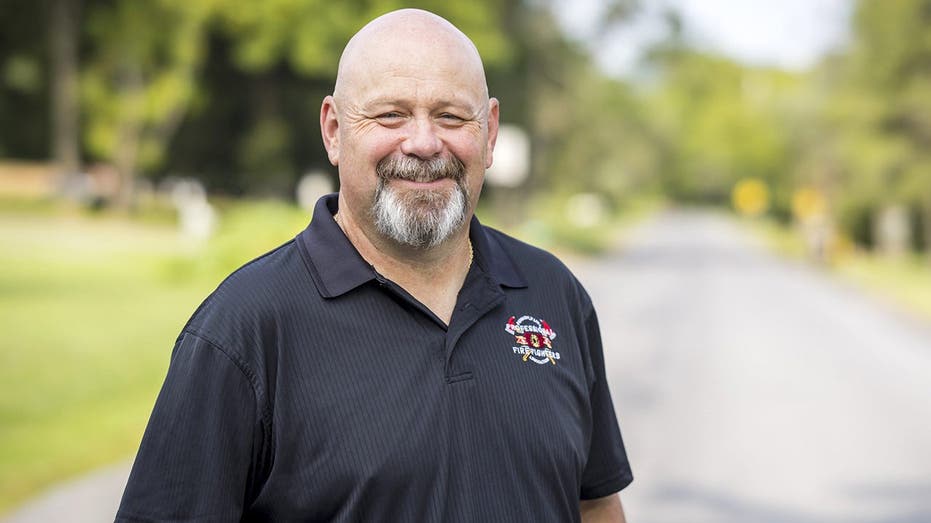
Bob Brooks, a Democratic candidate for Congress in Pennsylvania’s 7th Congressional District, settled a long-standing financial disagreement with his former mother-in-law earlier this month. According to court filings, Brooks and Carol Wiley, the mother of his former wife, Jennifer Brooks, have settled a dispute surrounding a $55,500 debt he incurred in 2004. The judgment finalizes the family dispute that entered the public eye amid one of the most competitive congressional races in the country as Brooks looks to unseat Rep. Ryan Mackenzie but leaves behind questions of how he managed to close out the saga. FIREFIGHTERS UNION BOSS WINS HOTLY-CONTESTED DEM PRIMARY IN A KEY PENNSYLVANIA SWING DISTRICT Although statements from his lawyers hinted at some form of payment, it’s unclear whether Brooks paid the original amount — and tens of thousands more in interest — or what the terms of the agreement were. When asked about the case, Brooks’ campaign declined to fill in the picture. “This old family dispute has officially been resolved by an agreement between the two parties. Bob is glad that this personal matter was resolved amicably and is now behind him and his family. Out of respect for everyone involved, we won’t be commenting further,” Ryan Moore, an attorney for Brooks, said in a statement to Fox News Digital. Brooks’ case began in 2008 when Wiley claimed that he had never paid her and her husband $55,500 for a subdivision of land they had transferred to Brooks in 2004. According to court filings, the two parties had agreed that Brooks would eventually pay back the amount. “In 2008, at the request of Michael Wiley, Carol Wiley had a promissory note drafted which memorialized Defendants’ debt, and provided that Defendants were jointly and severally liable to pay Carol Wiley $55,500 at 6.5% interest, in 120 monthly payments of $630.19, beginning July 1, 2008. On July 12, 2008, Wiley and Defendants executed the promissory note in the presence of a notary,” a 2021 filing reads. But, even after the creation of the note — and the penalties that it outlined if Brooks failed to hold up his end of the contract — the money never came. BERNIE-BACKED DEM’S PRO-GUN CLINT EASTWOOD POST, KAEPERNICK CRITIQUE SPURS APOLOGY IN BATTLEGROUND RACE “Defendants never made any of the payments prescribed in the promissory note,” the filings state. As a result of having breached their contract, Brooks was required to pay $130,386, according to the terms of the note. But Brooks pushed back on the verdict, arguing that the notary had run its course, that a statute of limitations prevented it from being binding almost 15 years after its creation. Additionally, he argued that because he hadn’t received anything new when he signed the 2008 promissory agreement, it lacked consideration, a legal component that indicates an exchange of value. Despite his arguments, the court sided with Wiley. “The absence of consideration does not render an agreement unenforceable where the agreement contains an express statement of the signatories’ intent to be bound,” the court ruled. Reacting to the case, at least one Republican onlooker blasted Brooks’ record. “Scumbag Bob Brooks tried to rip his family off and then lied about it because he cares about one thing: enriching himself. If Books is willing to go this far to screw over his own family, imagine what he would do to Pennsylvanians if he gained power,” Reilly Richardson, a spokesperson for the National Republican Congressional Committee, said in a statement to Fox News Digital. BERNIE-BACKED DEM’S PRO-GUN CLINT EASTWOOD POST, KAEPERNICK CRITIQUE SPURS APOLOGY IN BATTLEGROUND RACE Having cleared the state’s Democratic primary, Brooks now heads to the Nov. 3 general election.
‘Fur Lives Matter’ case turns heads as DOJ’s ‘Fraud Week’ targets taxpayer swindlers
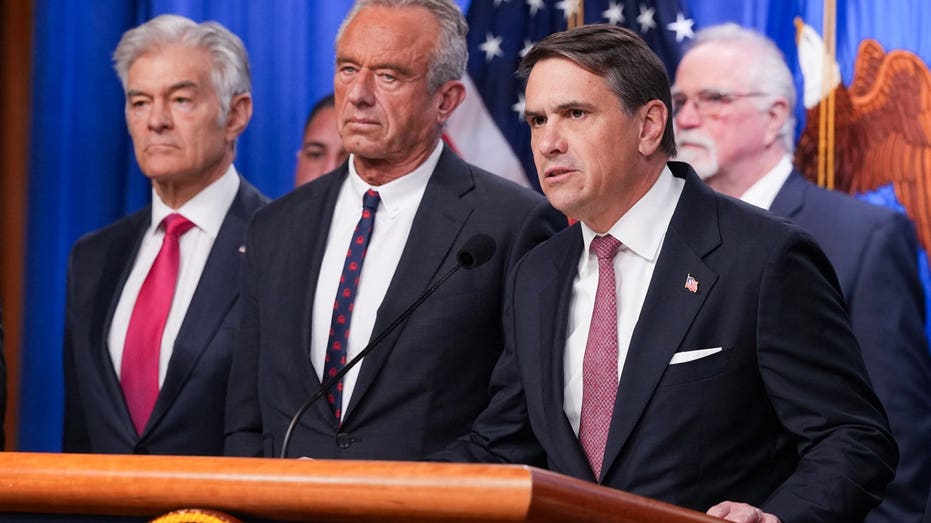
A nationwide business-aid fraud crackdown — highlighted by a bizarre Missouri scheme involving alleged stolen corporate identity — is among the enforcement actions being highlighted during the federal push dubbed “Fraud Week.” The announcement is part of the Department of Justice’s National Fraud Enforcement Division’s nationwide summer surge. It netted more than 160 criminal defendants and approximately $245 million in intended losses to taxpayers, according to DOJ, as the agency announced busts from Los Angeles to Philadelphia. “This is the problem of our day,” said U.S. Attorney Matt Price of the Western District of Missouri, whose office was one of 44 involved in the greater “Heartland Fraud Surge” that encompassed June through Sept. 1. “And this is a response to what happened over the previous four years,” WHITE HOUSE PUSHES ‘WATERSHED’ FRAUD-FIGHTING REFORM IN CONGRESS AS VANCE CONVENES TASK FORCE “After 9/11, there was a huge lean-in, [an] all-of-government approach to national security issues,” Price said, comparing the Bush-era interagency pivot to terror threats with the coordinated response to the current push against fraud in taxpayer-funded programs. Price headlined the extensive Small Business Administration (SBA) and COVID-19-related fraud probes under division chief Colin McDonald. In the “Fur Lives Matter” case, a Missouri man allegedly claimed to operate 19 separate businesses, including some focused on pet care like “Fur Lives Matter,” “Fur Lives Matter LLC,” “Chows & Pals” and “God’s Chow Chow.” MINNESOTA FRAUD MASTERMIND GETS NEARLY 42 YEARS IN PRISON IN MASSIVE $250M ‘FEEDING OUR FUTURE’ SCHEME There was one glaring problem: “Fur Lives Matter” was a real company in another state — and prosecutors say it had no connection to Gray. Using “Fur Lives Matter” and the other purported companies, Jamie Gray allegedly sought to fraudulently obtain nearly $56 million in Paycheck Protection (PPP) and Economic Injury Disaster (EIDL) funds from the Small Business Administration through 29 applications. BRAZEN SOCIAL MEDIA FRAUD SCHEMES WREAK HAVOC AS TRUMP OFFICIAL ISSUES STARK WARNING FOR ‘FRAUDFLUENCERS’ Most cases involved entirely fictitious businesses, and only “Fur Lives Matter” was operational at the Feb. 15, 2020, eligibility cutoff. “Gray effectively stole this company’s identity,” the DOJ said in a statement, alleging the legitimate business had no knowledge of him and that his claims about ownership, employees, revenue and operations were fabricated. Gray nevertheless received about $820,000 in SBA funds, prosecutors said. The case stood out even among a summer surge of alleged fraud schemes for its unusual details. JUDGE SENTENCES FEEDING OUR FUTURE FRAUDSTERS WHO FAKED RUNNING CHILD NUTRITION SITE “If you screwed the American taxpayer, the federal government is now going to say you’re cut off, no more,” Vice President JD Vance said this week on the matter of the larger administration crackdown. “You shouldn’t be applying anymore, and if you do apply, you’re no longer able to get those benefits.” VANCE-LED TASK FORCE CUTS OFF $1.4B FROM HOME HEALTH, HOSPICE PROVIDERS SUSPECTED OF FRAUD Price said the effort is expanding beyond Operation No Doze, the SBA-focused enforcement action conducted as part of the broader Heartland Fraud Surge. His office and Missouri Gov. Mike Kehoe, along with other state officials, have also launched Operation Show-Me the Money, a new state-federal effort targeting fraud in state benefit programs. REPUBLICANS DECLARE WAR ON ‘ORGANIZED THEFT’ WITH GOVERNMENT FRAUD CRACKDOWN “No fraud is too small to prosecute, but leveraging all state resources in the state of Missouri from the top down [is believed to be] a first-of-its-kind collaboration between the state and the feds, working to identify and prosecute this type of fraud,” he said Saturday. Price also credited SBA Administrator Kelly Loeffler with “leading from the front” as the agency is suspending suspected fraudulent borrowers and sending demand letters seeking repayment. SIGN UP TO GET THE POLITICS NEWSLETTER He said the Heartland Surge depicts a new approach to countering fraud, characterizing the Biden administration’s attempts to recoup lost dollars as a “pay and chase” model. Attorney General Todd Blanche has instructed prosecutors to charge fraud cases of all sizes, in that the smaller cases send the message to bigger scofflaws that, no matter the amount of money involved, “if you ripped off the American taxpayer… we will find you, we will identify you, we will hunt you down, we’ll prosecute you,” said Price.
No Aadhaar Biometric? No subsidised LPG from Oct 1; How to authenticate at home using app

Biometric Aadhaar authentication will be mandatory for subsidised LPG starting October 1, 2026. A total of 27.43 crore or 89.9%, of consumers have completed the authentication process. Those who do not authenticate will receive LPG at market price without any subsidy.
Justice Department charges 16 across multiple states with alleged illegal voting, election crimes
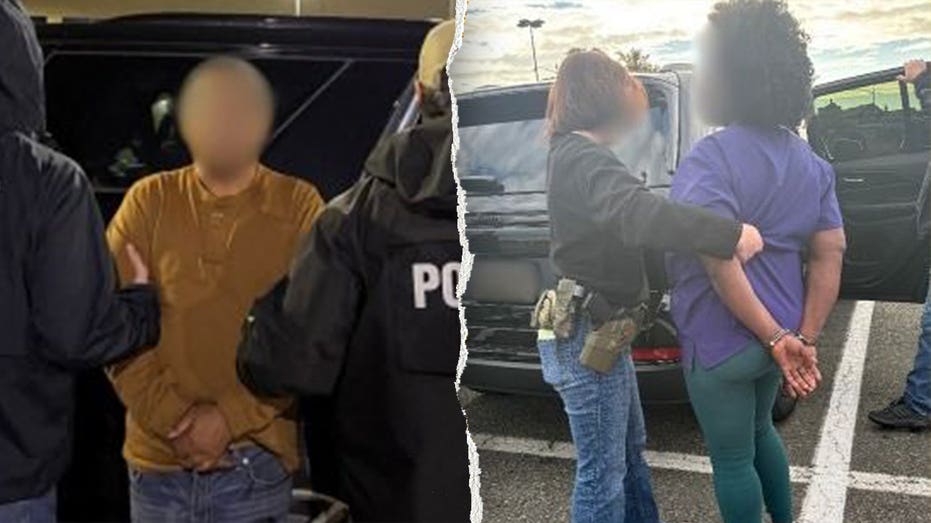
The Department of Justice (DOJ) announced charges against 16 people in multiple states in connection with alleged illegal voting, voter registration and other election-related crimes, including cases involving noncitizens accused of casting ballots in federal elections. DOJ followed the announcement with a warning on social media, saying some of those charged allegedly voted in the 2022 and 2024 elections, and warning others against attempting to illegally participate in U.S. elections. “Let this be a warning to ANYONE trying to cheat and undermine our elections,” the DOJ wrote. “Spread the word!” According to DOJ, eight non-citizens residing in Texas were charged, while the other cases involved defendants in Idaho, Georgia, Massachusetts, Wisconsin, New Jersey and Michigan. SKID ROW FORGERIES, ILLEGAL VOTES AND A MAYORAL CANDIDATE: ELECTION FRAUD CASES PILE UP NATIONWIDE The allegations include noncitizens voting in federal elections, false claims of U.S. citizenship to register or vote, and false statements related to naturalization. During the investigations, the DOJ said authorities also uncovered alleged passport and identification fraud, wire fraud and firearm-related offenses. The cases are part of a broader Trump administration enforcement effort targeting alleged illegal voting and election-related crimes. WATCH: ILLEGAL ALIEN BUSTED IN BATTLEGROUND STATE AFTER ALLEGEDLY COMMITTING VOTER FRAUD In Georgia, DOJ said Analiea Milliscent Eccles, a Venezuelan national and DACA recipient, voted nine times between 2008 and 2024. She was charged with voting as a noncitizen and falsely claiming U.S. citizenship to vote. Avila Gomez, a Mexican national residing in Idaho, is accused of falsely claiming U.S. citizenship to register to vote and then voting in May 2022 and November 2024. The indictment also includes wire fraud, passport, identification-document and firearm-related charges. DOJ said Santana Coulibaly, a lawful permanent resident in New Jersey, registered to vote in 2016, voted in federal elections in 2018 and 2020 and submitted a provisional ballot in the 2024 presidential election. She also faces allegations involving statements made in her naturalization applications. Assistant Attorney General Colin M. McDonald of the DOJ’s Fraud Division told Fox News that the Trump administration has now charged 50 non-citizens with illegal voting. ICE ARRESTS PERUVIAN NATIONAL ACCUSED OF ILLEGALLY VOTING IN 2024 ELECTION AS DHS CITES SIMILAR CASES “America’s elections are for Americans,” McDonald said. In a separate interview, Department of Homeland Security (DHS) Secretary Markwayne Mullin said a broader investigation was underway. Mullin said officials have more than 1,620 open cases and have made 151 arrests. He also said authorities are looking into more than 300,000 suspected cases, a figure he said continues to grow. ILLEGAL IMMIGRANT ARRESTED IN INDIANA FOR ALLEGEDLY VOTING IN FEDERAL ELECTION: DHS Mullin asserted that “every single vote that was at the hands of an illegal [immigrant], canceled out a citizen that was legally registered and able to vote.” “One is too many, but the fact that we have 300,000 cases we’re looking into right now and 1,620 cases that are under investigation, and 151 arrests is unacceptable,” Mullin said. The Justice Department noted that the charges announced Friday are accusations and that all defendants are presumed innocent unless proven guilty beyond a reasonable doubt.
NORAD F-16 intercepts aircraft that violated restricted airspace over Camp David with Trump present: officials

A NORAD F-16 fighter jet intercepted an aircraft that violated restricted airspace over the area of Camp David Saturday morning while President Donald Trump was there, according to officials. There is a permanent no-fly zone over Camp David in Maryland, with additional restrictions when the president is there. NORAD dispensed flares during the intercept to get the pilot’s attention and was able to safely escort the aircraft out of the area, the Defense Visual Information Distribution Service (DVIDS) said in a release. NORAD F-16S INTERCEPT MULTIPLE AIRCRAFT VIOLATING TEMPORARY FLIGHT RESTRICTIONS OVER NEW JERSEY “Should NORAD aircraft intercept a general aviation aircraft, the pilot should immediately come up on frequency 121.5 or 243.0 and turn around to reverse course until receiving additional instructions on one of those frequencies,” the release said. NORAD F-16S INTERCEPT MULTIPLE AIRCRAFT VIOLATING FLIGHT RESTRICTIONS OVER NEW JERSEY Turmp left for Camp David Friday evening. “Pilots! @NORADCommand fighter aircraft intercepted an aircraft violating restricted airspace over Thurmont, MD, resulting in flares being deployed,” the First Air Force, part of NORAD, wrote on X Saturday. “Make sure to check NOTAMs before takeoff to ensure you have current information about TFRs in your area. Stay Safe, Fly Informed!” A plane was last intercepted over Camp David in June when Trump was staying there. That pilot was also safely escorted away.
Trump announces new ‘AI Force,’ vows to protect industry as AI czar announcement nears

President Donald Trump announced Saturday that he is creating an AI Force and plans to name an artificial intelligence czar as his administration pushes to accelerate the growth of AI in the U.S. Trump said in a lengthy Truth Social post that his administration would resist efforts to restrict the rapidly developing technology while using the existing criminal and civil justice systems to address potential wrongdoing. “We will not in any way hinder or stifle the Growth of this incredible Industry,” the post said. “Rather, we will cherish it, help it, and watch over it, as it grows!” GOP LAWMAKERS SMELL SOMETHING ELSE BEHIND BIG TECH’S AI DOOMSDAY WARNINGS: ‘SOMETHING ELSE GOING ON’ Trump added that the government would also be “looking for BAD” and said existing criminal and civil laws could be used to address problems with the technology. “For this purpose, I am forming the AI Force, much like I did Space Force, which has been a tremendous SUCCESS, in my First Term,” the president’s post continued. “To that end, I will be announcing, in the near future, the AI ‘Czar’ — Only High I.Q. individuals need apply!” Trump did not provide details about the structure, authority or membership of the proposed AI Force or identify potential candidates to serve as its czar. POWERFUL COLD WAR-ERA TOOL TRUMP COULD USE IN AN AI EMERGENCY IS SET TO EXPIRE IN DECEMBER Trump’s announcement comes as lawmakers grapple with whether and how to regulate the rapidly developing technology. Some Republicans have questioned calls for additional government oversight, while others have pushed for safeguards after AI industry leaders raised concerns about increasingly capable models. Earlier this week, Trump joined the debate by rejecting calls for additional government regulation of the industry, arguing that restrictions could hinder the U.S. in its competition with China. In Saturday’s post, Trump compared criticism of AI and data centers to several other political controversies and argued that opposition to data center construction had largely failed. RAND PAUL CLASHES WITH FELLOW REPUBLICAN OVER AI ‘KILL SWITCH’ AS SENATE GRAPPLES WITH ‘TERMINATOR’ FEARS Trump also predicted that AI could eventually account for as much as 25% of U.S. gross domestic product, though he did not cite a source for the estimate. “AI is the next Industrial Revolution, or Internet, but will be even larger and more impactful, possibly as much as 25% of our Country’s GDP,” he wrote. “We are leading China, and the rest of the World, and I intend to keep it that way!” In a separate Truth Social post, Trump asked people to choose within the post on what to call AI. “Many people think that the words “Artificial Intelligence” are inaccurate, and very ineloquent, relative to AI, or Artificial Intelligence. A far more elegant and accurate description of this new phenomena would be Superior Intelligence (SI) or, Extreme Intelligence (EI) or, Supreme Intelligence (SI),” he wrote. “This is a Poll, and I would appreciate everybody voting! Which is the best name for this ever growing “Revolution?” President DONALD J. TRUMP”
LA homelessness fraud cases expose deeper problem than stolen millions, oversight hawk warns

Federal charges alleging that millions of dollars were siphoned from Los Angeles homelessness programs are exposing what one lawmaker told Fox News Digital is a deeper failure in the way Washington funds and measures such programs. The latest cases out of Los Angeles fuel the concern of Rep. Michael Cloud, R-Texas, that not only are corrupt providers stealing taxpayer money, but that the programs aren’t meeting their goal of getting people off the streets. “The only people really getting upward mobility in these programs, it would seem, is the people running the programs,” Cloud told Fox News Digital after a House Oversight hearing examining federally funded homelessness programs in Los Angeles, Seattle and elsewhere. “And that’s not really what the program’s supposed to be about.” LA REAL ESTATE VET COMES AT MAYOR BASS WITH RECEIPTS OVER DAMNING HOMELESSNESS REPORT: ‘SHE DOESN’T GET IT’ Federal prosecutors charged three defendants Wednesday in separate homelessness fraud cases involving alleged misuse of taxpayer funds, including money allegedly spent on a nightclub and adjacent bingo hall and bribes allegedly tied to fake housing referrals. Los Angeles’ homelessness agency paid one of the suspect nonprofits more than $75 million, according to federal prosecutors, leading Cloud to seek out the real culprits blazing the money trail. WHITE HOUSE PUSHES ‘WATERSHED’ FRAUD-FIGHTING REFORM IN CONGRESS AS VANCE CONVENES TASK FORCE Cloud said the fraud itself is only one piece of a broader problem and that the system appears to reward spending and program activity without adequately measuring lasting outcomes. Government too often judges success by “how much money we send out the door” instead of whether the spending is “actually helping people” or whether safeguards are in place to ensure taxpayer dollars are being used properly, Cloud said, describing the system as having been “incentivized for fraud.” “We’ve got to take those incentives out and get back to making sure that all these programs have incentives for oversight and that the dollars are managed well.” LETITIA JAMES FACES SCRUTINY AFTER NEW YORK CITY SPENDS $81,700 PER HOMELESS PERSON AMID SHELTER SCANDALS Some programs can keep a person “kind of in a cycle of dependency so that the program manager has job security, in a sense, and gets to live off the government dime,” Cloud said. “You [are seeing], as we begin to look into waste, fraud and abuse, why is it that these Democrat-led states are saying, ‘No, we don’t want the controls in place,’” he said, pointing to Los Angeles Mayor Karen Bass’ decision to step down from the LAHSA commission. Los Angeles is not alone, he said, citing what has been called the feds’ “Housing First” philosophy, generally prioritizing placing homeless in housing with less immediate regard for sobriety, mental health treatment or overall stabilizing services. WATCH: DR. OZ SAYS NEWSOM, OTHER BLUE STATES HAVE TURNED MEDICAID FRAUD INTO A ‘FEATURE’ Cloud did not use the term “housing first” during the interview, but he described the concern behind that critique, arguing that some homelessness programs define success in ways that leave people dependent on government rather than moving toward independence. Housing First is distinct from HUD’s “Continuum of Care” framework, which is the local funding and coordination structure through which nonprofit providers, state and local governments and other organizations receive federal homelessness money. WALZ ADMINISTRATION IGNORED FRAUD WARNINGS AS BILLIONS VANISHED, HOUSE OVERSIGHT REPORT ALLEGES In Los Angeles, LAHSA leads the local Continuum of Care, which HUD says received nearly $1 billion in taxpayer dollars over the previous five years. Under Secretary Scott Turner, HUD moved to suspend LAHSA this year, citing alleged failures involving financial management, internal controls and safeguards against conflicts of interest. LAHSA has challenged the federal action in court. “The ‘housing first’ experiment failed Americans by warehousing the vulnerable without results,” Turner said in June when HUD announced a $4.04 billion Continuum of Care funding opportunity. SIGN UP TO GET THE POLITICS NEWSLETTER “This ideology promised to end homelessness. Instead, billions of taxpayer dollars were spent while homelessness increased to record levels.” That funding will focus on organizations aiding treatment and recovery, while setting aside $1.3 billion for new projects prioritizing transitional housing and supportive services and adding measures intended to prevent fraud, waste and abuse.
IIT Bombay student death: What really happened after the ChatGPT exam incident?

An IIT Bombay student died by suicide after being found using ChatGPT during an exam, sparking protests on campus. Know the whole matter.
IIT Bombay student found dead in hostel: Parents blame institute, says he was tortured

Second-year IIT Bombay student Sahil Wakode was found dead in his hostel room after he was caught using a mobile phone during an exam.