
Irish presidential election: Who is running and what’s at stake?
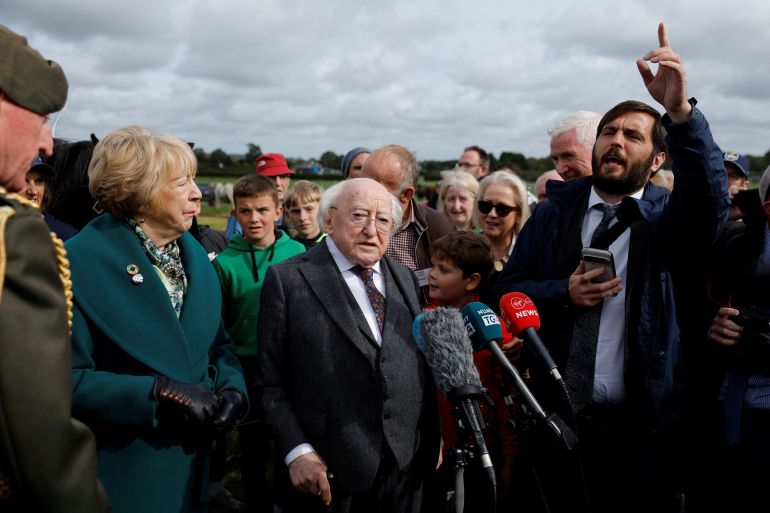
Voters in Ireland will head to the polls on Friday to elect a new president for a seven-year term. While the Irish presidency is a mostly ceremonial role, this election takes place amid a historic shift towards a more polarised political system, Barry Colfer, director of research at Dublin’s Institute of International and European Affairs, told Al Jazeera. Since the establishment of the Irish Free State in December 1922 and the subsequent end of the Irish Civil War in May 1923, Irish politics, unlike in other European countries, have not been drawn along left-right lines, he said. “What we’re seeing today for the first time in Irish history is a presidential election between objectively left-wing and right-wing candidates.” This change has become more apparent in recent years. In the 2020 general election, left-wing nationalist party Sinn Fein – the former political wing of the Irish Republican Army – won the most first-preference votes for the first time since the country’s founding, bringing an end to the traditional two-party dominance of the centre-right parties Fianna Fail (FF) and Fine Gael (FG). By the end of the voting process, Sinn Fein had 37 seats, finishing close to neck-and-neck with FF at 38 and FG at 35. There are 174 seats in Dail Eireann (Irish for Ireland’s lower house of parliament) in total, with 88 needed to form a government. The two previously dominant parties’ origins date back to the Irish Civil War and its aftermath, with FG’s forerunner supporting the Anglo-Irish Treaty, which granted the country partial independence, and FF opposing it. Advertisement For the first time in their history, FF and FG were forced to enter into a formal coalition government with the Green Party in 2020 to be able to form a government. Following the 2024 election, they partnered with independents instead of the Greens. President Michael D Higgins at the Irish National Ploughing Championships in Screggan, Ireland, September 16, 2025 [Clodagh Kilcoyne/Reuters] Who serves as president of Ireland, and what do they do? The presidency has a relatively limited political role, comparable to that of monarchs in other countries, said Gail McElroy, a professor of political science at Trinity College Dublin. It is “seen as a unifying role beyond politics”. The president represents Ireland abroad and hosts visiting heads of state and other dignitaries at the official presidential residence, Aras an Uachtarain, in Dublin’s Phoenix Park. The president is, above all, responsible for ensuring that the Irish Constitution is followed. After the presidency was established in 1938, one year after the current Bunreacht na hEireann (Irish constitution) was adopted, it was generally held by a statesman with a long affiliation to one of the two main political parties. For instance, Eamon de Valera, one of the leading political figures during Ireland’s War for Independence and founder of FF, served as taoiseach (prime minister) from 1937 to 1948, 1951 to 1954 and from 1957 to 1959, and then as the country’s third president from 1959 to 1973. The election of Mary Robinson, Ireland’s first female president, in 1990 “marked a watershed moment”, McElroy told Al Jazeera. The election of Robinson, who had been nominated by the Labour Party and the Workers’ Party, and also received official support from the Green Party, transformed the presidency from a largely symbolic, conservative office into one with more significant diplomatic influence. Her presidential campaign had included a commitment to expand the role of the president into a more active one focused on social issues and to foster an image of a “new Ireland”. Before becoming president, she had served as a senator in Seanad Eireann (Irish senate) from 1969 to 1989, and been a member of the Dublin City Council from 1979 to 1983. During her time in office, she signed two significant bills that she had fought for throughout her political career: a 1992 bill to fully liberalise the law on the availability of contraceptives, and a 1993 bill fully decriminalising homosexuality. She also signed the legalisation of divorce into law in 1996. Advertisement As president, Robinson also took significant steps to foster an atmosphere of reconciliation between Ireland and the United Kingdom. She made history by being the first Irish president to meet a British monarch, then Queen Elizabeth II, in an official capacity. She also controversially met and shook hands with Gerry Adams, then the leader of Sinn Fein, a significant move towards dialogue at a critical time in the Northern Ireland peace process. And finally, Robinson used her presidential platform to advocate for human rights worldwide, notably becoming the first head of state to visit Somalia in 1992 following the civil war and famine, drawing international attention to the country’s humanitarian crisis. Mary McAleese, the first person born in Northern Ireland to serve as president, held the office from 1997 to 2011 – like Robinson, during pivotal years for the Northern Ireland peace process that culminated in the 1998 Good Friday Agreement ending the three-decade conflict that had begun in the late 1960s in Northern Ireland, known as The Troubles. Her emphasis on reconciliation culminated in a historic state visit to Ireland by Queen Elizabeth II. Michael D Higgins, president since 2011, has stretched the conventions of his office with, at times, strong criticism of government policy on both domestic and foreign policy issues, particularly regarding the country’s housing crisis and longstanding policy of military neutrality. Higgins has also been a vocal supporter of the Palestinian cause, in line with the overwhelming majority of the Irish public, and has been unequivocal in calling for a permanent ceasefire since the start of Israel’s war on Gaza. The Irish government has been one of the most critical voices of Israel within the European Union, supporting South Africa’s genocide case at the International Court of Justice (ICJ) in The Hague. Higgins has described Israel’s war on Gaza as the “incredible destruction of an entire people” and echoed the Irish government in calling it a breach of international law. At times, Higgins has
Israeli airstrikes target multiple areas across Lebanon
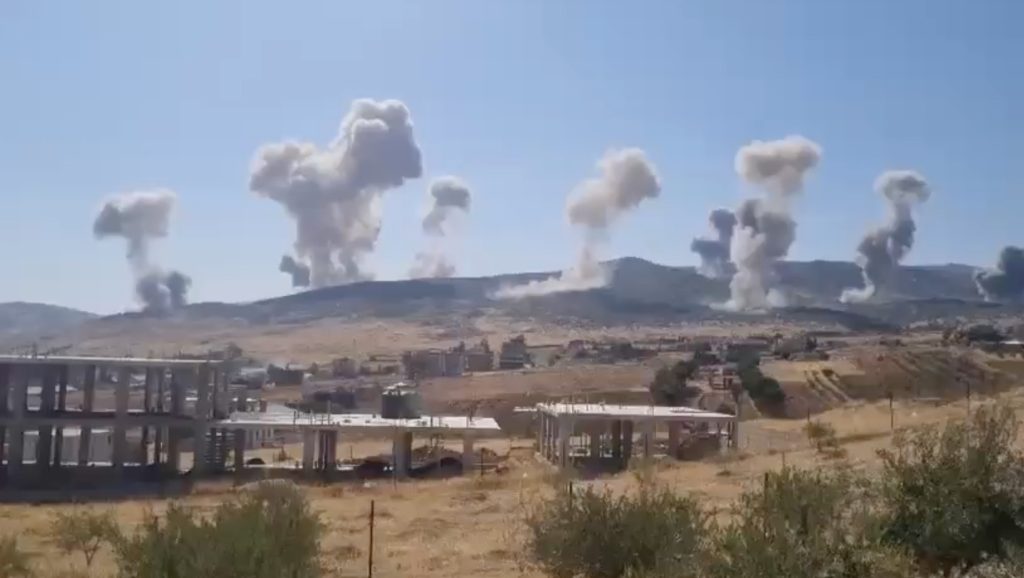
NewsFeed Israeli airstrikes have targeted multiple areas in eastern and southern Lebanon, claiming to hit Hezbollah targets. Israel has been carrying out regular attacks on Lebanon despite a nearly year-old ceasefire between it and Hezbollah. Published On 23 Oct 202523 Oct 2025 Click here to share on social media share2 Share Adblock test (Why?)
Will Trump’s sanctions against Russian oil giants hurt Putin?
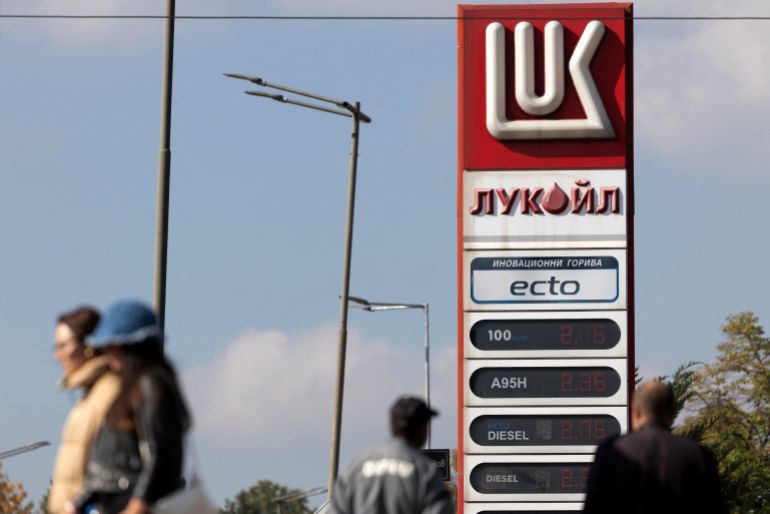
Washington has announced new sanctions against Russia’s two largest oil companies, Rosneft and Lukoil, in an effort to pressure Moscow to agree to a peace deal in Ukraine. This marks the first time the current Trump administration has imposed direct sanctions on Russia. Speaking alongside Nato Secretary-General Mark Rutte in the Oval Office on Wednesday, US President Donald Trump said he hoped the sanctions would not need to be in place for long, but expressed growing frustration with stalled truce negotiations. Recommended Stories list of 4 itemsend of list “Every time I speak to Vladimir [Putin], I have good conversations and then they don’t go anywhere. They just don’t go anywhere,” Trump said, shortly after a planned in-person meeting with his Russian counterpart, Vladimir Putin, in Budapest was cancelled. Trump’s move is designed to cut off vital oil revenues, which help fund Russia’s ongoing war efforts. Earlier on Wednesday, Russia unleashed a new bombardment on Ukraine’s capital, Kyiv, killing at least seven people, including children. US Treasury Secretary Scott Bessent said the new sanctions were necessary because of “Putin’s refusal to end this senseless war”. He said that Rosneft and Lukoil fund the Kremlin’s “war machine”. A Lukoil petrol station in Sofia, Bulgaria, on October 23, 2025 [Stoyan Nenov/Reuters] How have Rosneft and Lukoil been sanctioned? The new measures will freeze assets owned by Rosneft and Lukoil in the US, and bar US entities from engaging in business with them. Thirty subsidiaries owned by Rosneft and Lukoil have also been sanctioned. Advertisement Rosneft, which is controlled by the Kremlin, is Russia’s second-largest company in terms of revenue, behind natural gas giant Gazprom. Lukoil is Russia’s third-largest company and its biggest non-state enterprise. Between them, the two groups export 3.1 million barrels of oil per day, or 70 percent of Russia’s overseas crude oil sales. Rosneft alone is responsible for nearly half of Russia’s oil production, which in all makes up 6 percent of global output. In recent years, both companies have been hit by rolling European sanctions and reduced oil prices. In September, Rosneft reported a 68 percent year-on-year drop in net income for the first half of 2025. Lukoil posted an almost 27 percent fall in profits for 2024. Meanwhile, last week, the United Kingdom unveiled sanctions on the two oil majors. Elsewhere, the European Union looks set to announce its 19th package of penalties on Moscow later today, including a ban on imports of Russian liquefied natural gas. How much impact will these sanctions have? In 2022, Russian oil groups (including Rosneft and Lukoil) were able to offset some of the effects of sanctions by pivoting exports from Europe to Asia, and also using a “shadow fleet” of hard-to-detect tankers with no ties to Western financial or insurance groups. China and India quickly replaced the EU as Russia’s biggest oil consumers. Last year, China imported a record 109 million tonnes of Russian crude, representing almost 20 percent of its total energy imports. India imported 88 million tonnes of Russian oil in 2024. In both cases, these are orders of magnitude higher than before 2022, when Western countries started to tighten their sanctions regime on Russia. At the end of 2021, China imported roughly 79.6 million tonnes of Russian crude. India imported just 0.42 million tonnes. Trump has repeatedly urged Beijing and New Delhi to halt Russian energy purchases. In August, he levied an additional 25 percent trade tariff on India because of its continued purchase of discounted Russian oil. He has so far demurred from a similar move against China. However, Trump’s new sanctions are likely to place pressure on foreign financial groups which do business with Rosneft and Lukoil, including the banking intermediaries which facilitate sales of Russian oil in China and India. “Engaging in certain transactions involving the persons designated today may risk the imposition of secondary sanctions on participating foreign financial institutions,” the US Treasury Department’s press release on Wednesday’s sanctions says. Advertisement As a result, the new restrictions may force buyers to shift to alternative suppliers or pay higher prices. Though India and China may not be the direct targets of these latest restrictions, their oil supply chains and trading costs are likely to come under increased pressure. “The big thing here is the secondary sanctions,” Felipe Pohlmann Gonzaga, a Switzerland-based commodity trader, told Al Jazeera. “Any bank that facilitates Russian oil sales and with exposure to the US financial system could be subject.” However, he added, “I don’t think this will be the driver in ending the war, as Russia will continue selling oil. There are always people out there willing to take the risk to beat sanctions. “These latest restrictions will make Chinese and Indian players more reluctant to buy Russian oil – many won’t want to lose access to the American financial system. [But] it won’t stop it completely.” According to Bloomberg, several senior refinery executives in India – who asked not to be named due to the sensitivity of the issue – said the restrictions would make it impossible for oil purchases to continue. On Wednesday, Trump said that he would raise concerns about China’s continued purchases of Russian oil during his talk with President Xi Jinping at the 2025 Asia-Pacific Economic Cooperation summit in South Korea next week. Rosneft’s Russian-flagged crude oil tanker Vladimir Monomakh transits the Bosphorus in Istanbul, Turkiye, on July 6, 2023 [Yoruk Isik/Reuters] Have oil prices been affected? Oil prices rallied after Trump announced US sanctions. Brent – the international crude oil benchmark – rose nearly 4 percent to $65 a barrel on Thursday. The US Benchmark, West Texas Intermediate, jumped more than 5 percent to nearly $60 per barrel. Pohlmann Gonzaga, however, predicted that the “market will correct from this 5 percent over-jump. You have to recall that sentiment in energy markets is still negative due to the gloomy [global] economic backdrop.” Adblock test (Why?)
Massive fire at JMS Business Centre in Mumbai, several stranded on top floor
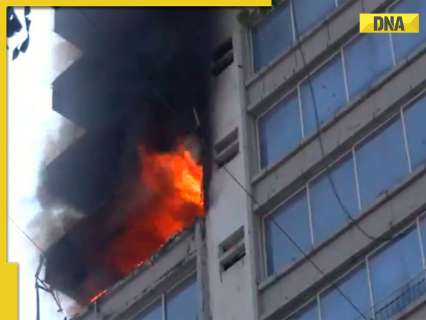
A massive fire broke out at the JMS Business Centre in the Jogeshwari West area of Mumbai on Thursday, officials said.
Who were four most-wanted gangsters of Sigma gang, killed in encounter in Delhi? Planned to plot ‘major strike’ ahead of Bihar elections

Four most wanted gangsters of ‘Sigma and Company’ gang were encountered in a joint operation carried out by Delhi Police Crime Branch and Bihar Police. The shootout took place around 2:20 am in Bahadur Shah Marg in Rohini.
DNA Verified: Indian Army to raise Agniveer retention rate to 75%? Know the truth behind viral claim
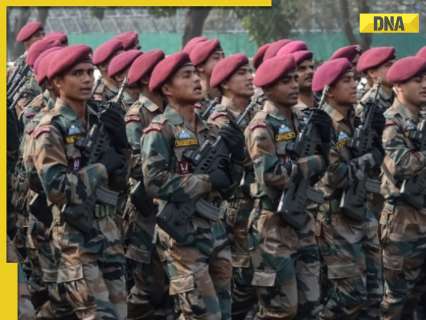
After completing their engagement period, Agniveers will be offered an opportunity to apply for enrolment in the permanent cadre.
No NDA CM face yet? INDIA bloc chief ministerial candidate Tejashwi Yadav makes BIG claim, ‘Truth is BJP will not make Nitish Kumar…’
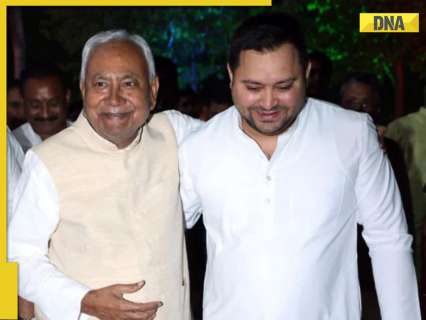
The Mahagathbandhan alliance in Bihar has finally announced RJD leader and former Deputy CM Tejashwi Yadav as its Chief Ministerial face. He said, ‘The truth is that the BJP will not make Nitish Kumar ji the Chief Minister.’
BAD News For Pakistan, China: India to boost air defence system, to buy missiles worth Rs 100000000000 from Russia, know details here
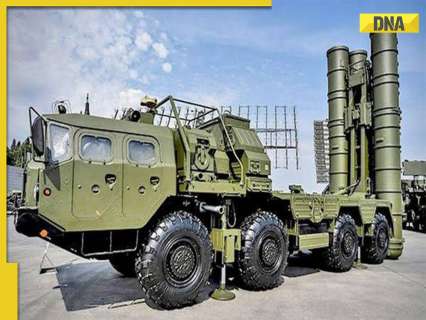
The Indian side is also looking to add more S-400 squadrons to its inventory and is asking Russia to supply the remaining two squadrons of the missile systems, of which three have already been inducted and operationalised. Read here to know more about this deal.
How a passenger’s 23-year fight proved Air India’s negligence over contaminated food, awarded compensation of Rs…
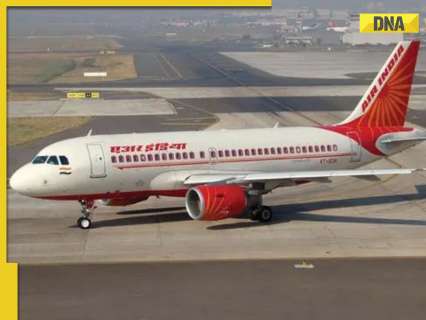
A passenger won a 23-year-old legal fight against Air India. He filed a complaint with the airlines due to the contaminated food he was served which him unwell after which he slapped a legal notice to the airlines. The court held it responsible after finding negligence ordering for compensation.
Bihar Election 2025: Who is Mukesh Sahani? VIP party chief picked Mahagathbandhan’s Deputy CM face
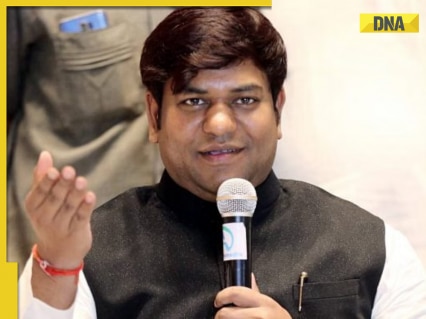
The announcement was made on Thursday at a press conference, where Tejashwi Yadav was confirmed as the coalition’s CM candidate. Sahani’s elevation within the opposition bloc is significant as he represents the Extremely Backward Class or the EBC. Read on to know more about him.