

Conservative activist slams Cracker Barrel; company left reeling after logo redesign
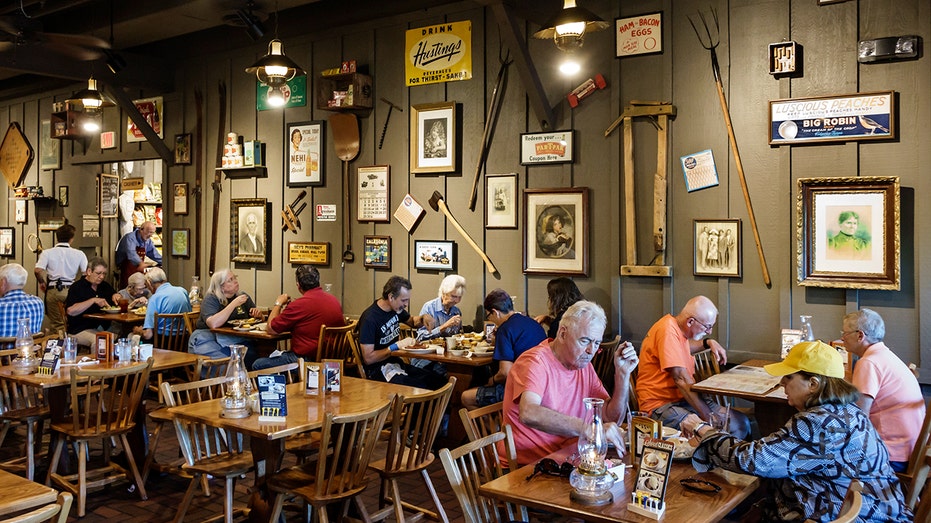
Anti-woke crusader Robby Starbuck released a devastating video takedown of Cracker Barrel‘s leadership, making the case that the restaurant’s logo and decor change are the culmination of a years-long campaign to cater to the far Left and abandon the values of its middle-America customer base. Starbuck, who has brought major companies including John Deere, Target, and Harley-Davidson to heel by exposing their woke policies, described Cracker Barrel’s logo makeover as going from “old American nostalgia” to something “cold, dead, lifeless and modern” in a 15-minute video. He said that, while the Cracker Barrel brand is often associated with American tradition, the company is “infested with left-wing activists who are more interested in safe spaces, pronouns and virtue signaling than they are in their customers.” In his video, Starbuck highlights Cracker Barrel’s support for LGBTQ+ organizations and events, such as Nashville Pride, River City Pride and the Human Rights Campaign (HRC). CRACKER BARREL CEO SERVES UP LEFTOVER CORPORATE BRANDING TO UNHAPPY CUSTOMERS He also noted that the company displayed rocking chairs with rainbow colors and LGBTQ+ insignia. The company even went so far as to place one in its Tennessee corporate office. Rocking chairs are practically synonymous with Cracker Barrel, with the restaurant’s long porches lined with them at locations nationwide. “The fact that it’s located there is important to this story because what’s happened here is a microcosm of the parasitic operating procedure of left-wing activists,” Starbuck said. “They don’t just wanna force their soulless, godless, hedonistic vision of the future onto blue hellscapes that their party controls. “No, it’s much more important to them that they shove it down into your towns, into your kids’ schools and into your way of life. So, sticking a pro-trans rocking chair into their headquarters in a predominantly conservative town is exactly the type of thing they revel in doing.” Starbuck then pointed to the company’s involvement with HRC and participation in the Out and Equal Workplace Summit. For the Out and Equal conference, Cracker Barrel made rocking chairs in every color of the rainbow, representing the LGBTQ+ flag. Out and Equal even gave Cracker Barrel an award for having 2018’s top LGBTQ+ Employee Resource Group (ERG). CRACKER BARREL DISMISSES CRITICS AS ‘VOCAL MINORITY’ WHILE RIVAL RESTAURANT ADDS TO BACKLASH The restaurant chain previously participated in HRC’s Corporate Equality Index, which measures “corporate policies, practices, and benefits pertinent to lesbian, gay, bisexual, transgender, and queer employees,” according to the organization’s website. A company’s score on the index is determined by how inclusive HRC judged it to be toward LGBTQ+ employees. Cracker Barrel told Fox News Digital on Friday that it “has not participated in the Human Rights Campaign Index or had any affiliation with HRC in several years.” Two Cracker Barrel employees are called out by name in Starbuck’s video, Steve Smotherman and Rachel CampBell. Smotherman was the head of management training and development at Cracker Barrel for 15 years, Starbuck asserted, showing a screenshot that appeared to be from LinkedIn. Smotherman, who eventually left Cracker Barrel for Out and Equal, serves on HRC’s Business Advisory Council in Washington, D.C. DEMOCRATIC PARTY, GAVIN NEWSOM JOIN ONLINE ROASTING OF NEW CRACKER BARREL LOGO Starbuck describes Smotherman as “the archetype activist employee that fueled the rise of DEI in corporate America.” He also slammed CampBell, a manager of training and development at Cracker Barrel, for publicly expressing excitement over the company’s rainbow pride rocking chairs. “And it’s important to note all of this because these types of employees play a critical role in turning companies away from the values of their customers and moving the companies toward wokeness,” Starbuck said. CRACKER BARREL EXECUTIVE INSISTS RESTAURANT REMODELS ARE ‘WHAT THE GUESTS ASKED FOR’ Gilbert Dávila, a member of Cracker Barrel’s board of directors, was also referenced in Starbuck’s video. Dávila, who joined Cracker Barrel’s board in 2020, has worked at several major companies, including Disney, Coca-Cola and Procter & Gamble. He’s also the co-CEO of DMI Consulting, which looks to “infuse cultural relevance and creativity into every solution.” Starbuck asserted that Dávila, and others like him are responsible for the “woke advertising push” seen over the last few years. In the end, Starbuck emphasizes that the controversy around Cracker Barrel’s logo change is about more than the removal of a man in his chair leaning on a barrel. “It’s very, very important to understand that the Cracker Barrel story is not about a logo. It’s not at all about a logo, it is about a country, it is our heritage, and it is a culture. It’s about a power structure built to tell us that we are somehow backwards, embarrassing or bigoted,” Starbuck said. “A conservative can’t give their money to Cracker Barrel. A Christian cannot give their money to Cracker Barrel, and so we won’t,” he added. As Starbuck sees it, the Cracker Barrel debacle is a win-win for conservatives, saying that the company will either have to double down and lose customers or revert back to its 1977 logo to retain its customer base. Fox News Digital’s Brian Flood and Nikolas Lanum contributed to this report. Cracker Barrel did not respond Fox News Digital’s request for comment in time for publication.
Gianno Caldwell mulls Senate bid as Chicagoans are ‘begging for change’ on crime woes

Republican public safety advocate Gianno Caldwell is mulling a bid for the open Illinois Senate seat in 2026 amid growing conversations about crime in America’s cities. Earlier this month, Caldwell was the keynote speaker at the Illinois Republican Party’s Republican Day event at the state fair, where he touted his record on law and order. Caldwell’s brother, Christian, was killed in 2022 in a Chicago drive-by shooting at the age of 18. “I’ve been about this fight for many years, public service. I’ve worked in every level of government that you can imagine, and certainly I think there’s time for a law-and-order U.S. Senate candidate to come to the forefront in Illinois,” said Caldwell, a Fox News contributor and founder of the Caldwell Institute for Public Safety. CHICAGO BRACES FOR DEADLY JULY 4 WEEKEND AS FOX NEWS ANALYST TAKES ACTION IN BROTHER’S UNSOLVED MURDER “My brother’s legacy has become my mission and to save lives,” Caldwell said. “And if that’s something that I can continue in a U.S. Senate seat, that’s worth considering for the many lives that have been lost and the legacies that need to be furthered in the state of Illinois and my home city of Chicago.” Caldwell’s hometown of Chicago is getting renewed attention as President Donald Trump wants to take National Guard and federal agent deployment to lower crime nationwide after the takeover of policing in Washington, D.C. Both cities have dealt with violent crime woes, which have led to teens and children dying in numerous tragic cases. TRUMP HINTS AT FEDERAL CRACKDOWN IN CHICAGO AMID ANTI-CRIME PUSH IN DC “My brother’s murder was something that I thought needed to have a conversation to address what has been going on in Chicago,” Caldwell said. “So, this impacted me in a very deep and personal way. And when I think about what President Trump is doing by saying, ‘Look, we’re doing this in D.C. already. We want to take this to other places around the country. I applaud him. Why? Because people have been begging for change in the City of Chicago.” Caldwell spoke even as a backlash has grown from Democrats who have said that the heavy law enforcement presence in the nation’s capital is over the top. “American soldiers and airmen policing American citizens on American soil is #UnAmerican,” Mayor Muriel Bowser posted to X last week. RAHM EMANUEL ON POTENTIAL 2028 WHITE HOUSE RUN: ‘I HAVE SOMETHING I THINK I CAN OFFER’ Sen. Dick Durbin, D-Ill., is retiring in 2026, busting the race wide open on both sides of the aisle. “The decision of whether to run for re-election has not been easy. I truly love the job of being a United States senator. But, in my heart, I know it’s time to pass the torch. So, I am announcing today that I will not be seeking re-election at the end of my term,” Durbin, 80, said in an April video.
Israeli military uproots thousands of Palestinian olive trees in West Bank
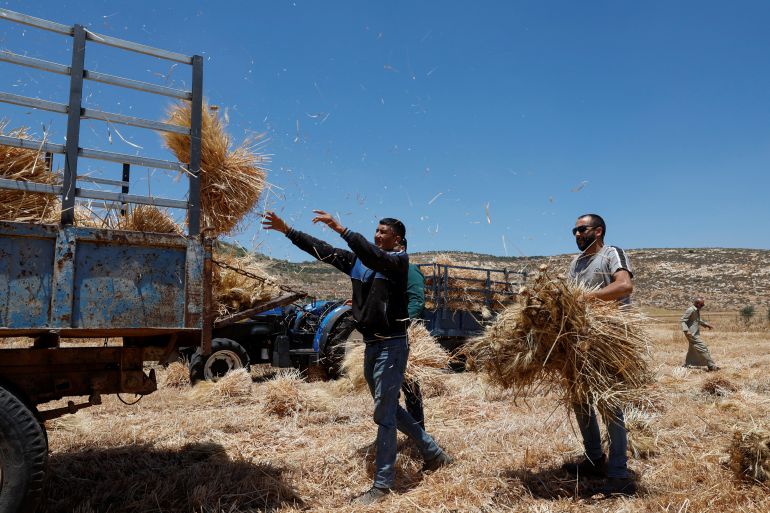
Israeli destruction in al-Mughayyir near Ramallah is part of push to forcibly displace Palestinians, researcher says. The Israeli military has destroyed about 3,000 olive trees in a village near Ramallah in the occupied West Bank, the head of the local council says, as Palestinians face a continued wave of violence across the territory in the shadow of Israel’s war on Gaza. The Israeli military issued an order on Saturday to uproot olive trees in a 0.27sq-km (0.1sq-mile) area in al-Mughayyir, a village of about 4,000 residents northeast of Ramallah. The army justified the measure by saying the trees posed a “security threat” to a main Israeli settlement road that runs through the village’s lands. The destruction was carried out as al-Mughayyir has been under lockdown since Thursday after an Israeli settler said he was shot at in the area. The deputy head of the village council, Marzouq Abu Naim, told Palestinian news agency Wafa that Israeli soldiers had stormed more than 30 homes since dawn on Saturday, destroying residents’ property and vehicles. For decades, the Israeli military has uprooted olive trees – an important Palestinian cultural symbol – across the occupied Palestinian territory as part of the country’s efforts to seize Palestinian land and forcibly displace residents. The West Bank also has seen a surge in Israeli military and settler violence since Israel launched its war on Gaza in October 2023, and tens of thousands of Palestinians have been forced out of their homes. Palestinian men collect wheat after an attack by Israeli settlers in al-Mughayyir in May [File: Mohammed Torokman/Reuters] More than 2,370 Israeli settler attacks against Palestinians have been reported across the area from January 2024 to the end of July this year, according to the latest figures from the United Nations Office for the Coordination of Humanitarian Affairs (OCHA). Advertisement The highest number of attacks – 585 – was recorded in the Ramallah area, followed by 479 in the Nablus region in the northern West Bank. At least 671 Palestinians, including 129 children, also have been killed by Israeli forces and Israeli settlers across the West Bank in that same time period, OCHA said. The Israeli military did not immediately respond to Al Jazeera’s request for comment on Saturday on the uprooting of the olive trees in al-Mughayyir. Hamza Zubeidat, a Palestinian researcher, said the destruction is part of Israel’s “continuous” effort to force Palestinians off their lands. “We have to be clear that since 1967, Israel is still implementing the same plan of evicting the Palestinian population from the countryside and the cities of the West Bank. What’s going on right now is just a continuous process of this eviction of Palestinians. It’s not a new Israeli process,” Zubeidat told Al Jazeera. He noted that al-Mughayyir has a long agricultural history and, like other villages in the West Bank, relies almost entirely on agriculture and livestock as its main source of income. “This area where more than 3,000 olive trees [were] uprooted is one of the most fertile areas in this part of the Ramallah area,” Zubeidat explained. “Uprooting trees, confiscated water springs, blocking and preventing Palestinians from accessing their farms and water sources means more food and water insecurity.” Adblock test (Why?)
Ukraine’s Zelenskyy urges Global South to pressure Russia to end war

Ukrainian leader calls for wider international support to get Russia to negotiating table amid faltering peace efforts. Ukrainian President Volodymyr Zelenskyy has called on countries in the Global South to support diplomatic efforts to push Russia to agree to end its war with Ukraine. In a social media post following talks with his South African counterpart Cyril Ramaphosa on Saturday, Zelenskyy stressed that the conflict “must be brought to an end” and that “the killings and destruction must be stopped”. “I reaffirmed my readiness for any format of meeting with the head of Russia,” the Ukrainian leader said, referring to Russian President Vladimir Putin. “However, we see that Moscow is once again trying to drag everything out even further. It is important that the Global South sends relevant signals and pushes Russia toward peace.” The comments come as a renewed diplomatic effort, spearheaded by United States President Donald Trump with support from European countries, to push Moscow to end its war in Ukraine has appeared to stall. On Friday, Trump expressed frustration with Moscow over the lack of progress in efforts to negotiate a peaceful settlement to end the war, despite his recent meeting with Putin in Alaska. The US president renewed a threat that he would consider imposing sanctions on Russia if there was no momentum within the next two weeks. Trump has been trying to arrange a summit between Putin and Zelenskyy, which has long been sought by the Ukrainian leader, to discuss an end to the war. But on Friday, Russian Foreign Minister Sergey Lavrov said there were no plans for such a meeting. Lavrov said in an interview with NBC’s “Meet the Press” programme that Putin had made clear he was ready to meet Zelenskyy, provided there was a proper agenda for such a session, something the Russian foreign minister said was lacking for now. Advertisement “Putin is ready to meet with Zelenskyy when the agenda would be ready for a summit. And this agenda is not ready at all,” Lavrov said. Amid the push for a diplomatic resolution, fighting has continued to grind on the battlefield. Russia’s Ministry of Defence said in a statement on Telegram on Saturday that its forces in eastern Ukraine had taken two villages in the Donetsk region, Sredneye and Kleban-Byk. That followed the capture of three other villages in the region a day earlier. The capture of Kleban-Byk would represent further progress towards Kostiantynivka – a key town on the road to Kramatorsk, where a major Ukrainian logistics base is located. Adblock test (Why?)
This is what happens when money dies
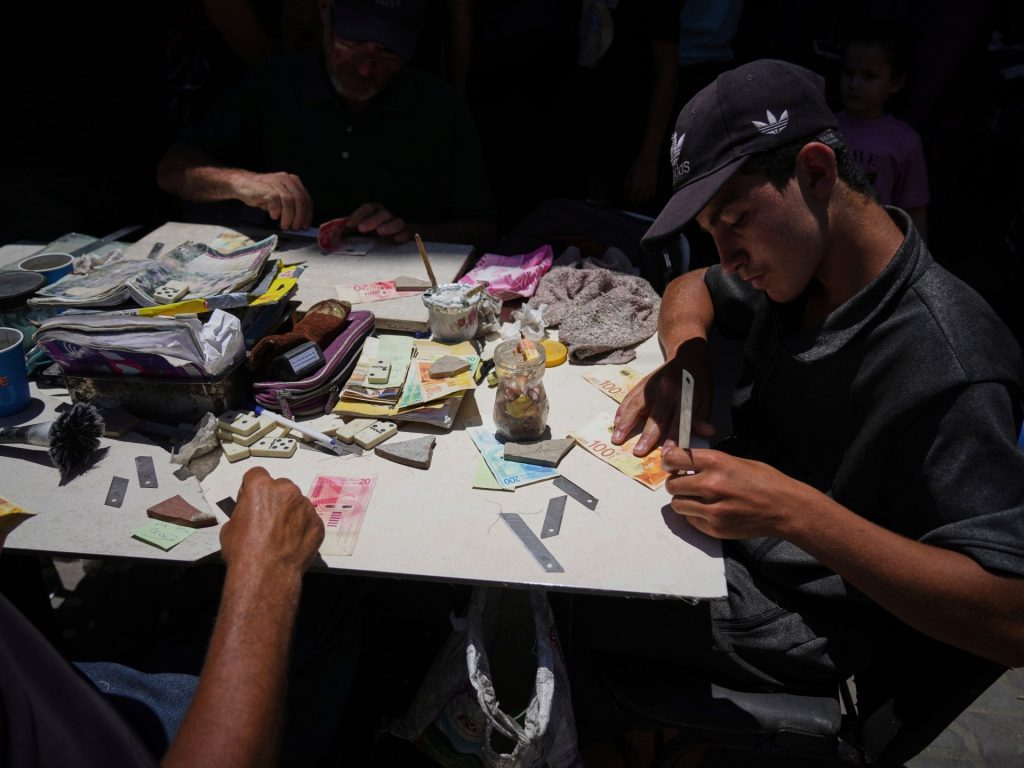
You try to buy a kilo of flour in Gaza. You open your wallet; what’s inside? A faded 10-shekel note, barely held together by a strip of tape. No one wants it; it is all rubbish now. The 10-shekel note, normally worth about $3, was once the most commonly used bill in daily life. Now, it is no longer in circulation. Not officially—only practically. It has been worn out beyond recognition. Sellers will not accept it. Buyers cannot use it. There is no fresh cash. No replenishment. Other banknotes are following the fate of the 10 shekels, especially the smaller ones. If you pay with a 100-shekel note for an 80-shekel purchase, the seller will likely be unable to return the remaining 20 due to the poor physical state of the banknotes. Many notes are torn or taped together, and entire stalls now exist just to repair damaged currency so it can be used again. Anything is better than nothing. But the disintegration of banknotes is not the only problem we have in Gaza. Civil servants have gone months without pay. NGOs are unable to transfer salaries to their employees. Families cannot send remittances. What once supported Gaza’s financial structure has vanished. There is no mention of when it will return. Just silence. Money is stuck. Trapped behind closed systems and political barriers. If you manage to obtain money from outside sources — perhaps from a cousin in Ramallah or a sibling in Egypt — it comes at a cost. A brutal one. If you get sent 1,000 shekels ($300), the agent will hand you 500. That’s right, the commission rate on cash withdrawals in Gaza is now 50 percent. Advertisement There are no banks to offer such withdrawals or oversee transfers. The signs are still there. Bank of Palestine. Cairo Amman Bank. Al Quds Bank. But the doors are shut, the windows are dusty, and the inside is empty. No ATMs work. There are only brokers, some with connections to the black market and smugglers, who are somehow able to obtain cash. They take huge cuts to dispense it, in exchange for a bank transfer to their accounts. Every withdrawal feels like theft disguised as a transaction. Even so, people continue to use this system. They have no choice. Do you have a bank card? Great. Try using it? There is no power. There’s no internet. No POS machines. When you show your card to a seller, they shake their head. People print screenshots of account balances that they cannot access. Some walk around with expired bank documents, hoping someone will think they’re “good enough” as a pay guarantee. Nobody does. There are a few sellers who accept so-called “digital wallets”, but those are few, and so are people who have them. In Gaza today, money you can’t touch is equivalent to no money at all. And so people have to resort to other means. At the market, I saw a woman standing with a plastic bag of sugar. Another was holding a bottle of cooking oil. They did not speak much. I just nodded. Traded. Left. This is what “shopping” in Gaza looks like right now. Trade what you’ve got. A kilo of lentils for two kilos of flour. A bottle of bleach for some rice. A baby’s jacket for several onions. There is no stability. One day, your item will be worth something. The next day, nobody wants it. Prices are guesses. Value is emotional. Everything is negotiable. “I traded my coat for a bag of diapers,” my uncle Waleed, a father of twins, told me. “He looked at me as if I were a beggar. I felt like I was giving up a part of my life.” This is not a throwback to simpler times. This is what happens when systems disappear. When money dies. When families are forced to sacrifice dignity for survival. People don’t just suffer—they shrink. They lower their expectations. They stop dreaming. They stop planning. What future can you plan when you can’t afford tomorrow? “I sold my gold bracelet,” Lina, my neighbour by tent, told me. “It was for emergencies. But now, every day is an emergency.” Gaza’s economy did not collapse due to bad policy or internal mismanagement. It was broken on purpose. The occupation has not just blocked goods entering Gaza; it has also blocked currency and with it, any sense of financial control. It has destroyed the banking system. It has made liquidity a weapon. Advertisement Cutting off Gaza’s money is part of a larger siege. There is no need to fire a bullet to destroy a people. Simply deny them the ability to live. You can’t pay for bread, for water, for medicine, so how do you sustain life? If this trend continues, Gaza will be the first modern society to completely return to barter. There are no salaries. There is no official market. Only personal trades and informal deals. And even those will not last forever. Because what happens when there is nothing left to trade? If this isn’t addressed, Gaza will be more than just a siege zone. It will be a place where the concepts of money, economy, and fairness will die forever. The views expressed in this article are the author’s own and do not necessarily reflect Al Jazeera’s editorial stance. Adblock test (Why?)
Animal activists hold protest at Delhi’s Rohini ABC centre over alleged cruelty to stray dogs, protestors demand…
This came after the Supreme Court on Friday revised its earlier August 11 order on stray animals and ordered their release following sterilisation and immunisation.
Bharatiya Antariksh Station: Launching India’s Future in Space Innovation
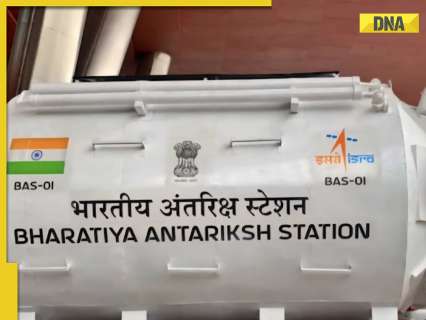
On Friday 22nd August 22nd August, ISRO unveiled a model of the Bharatiya Antariksh Station (BAS) module during the National Space Day celebrations. India plans to launch the first BAS module by 2028, joining the small group of nations that run their own space laboratories in orbit.
On National Space Day, ISRO chief V Narayanan’s BIG announcement on Chandrayaan-4
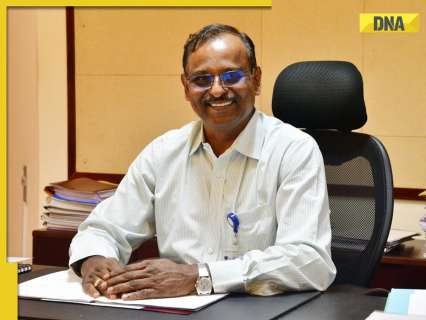
The ISRO chief emphasised that by the year 2035, India will establish the “Bhartiya Space Station” whose first module will be lifted off in the year 2035. He stated that India will land on the moon by the year 2040, which will make India’s space program the top among all other countries in world.
Jaishankar slams US tariffs based on Russian oil purchase: ‘Arguments that have been used to target India…’
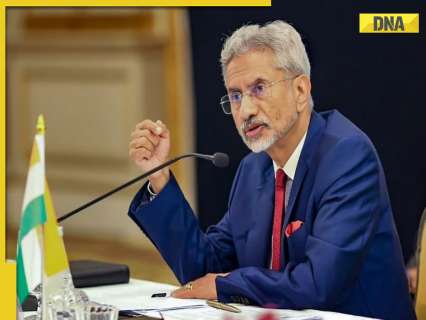
Jaishankar also argued that the tariff issue was being wrongly presented as an “oil dispute.” He noted that the same criticism levelled at India for purchasing Russian energy had not been applied to larger importers, such as China and European nations.
Days after Trump’s tariff announcement, India makes BIG move as it suspends all…

Days after the United States announced a 50 percent levy on Indian goods, the Department of Posts on Saturday, i.e., August 23, announced a temporary suspension of all postal services to the United States from August 25.