

Badminton star PV Sindhu describes frightening moments at Dubai Airport amid Israel-Iran war, says ‘Explosion close to…’

India’s badminton star PV Sindhu was stranded at Dubai Airport after US-Israel strikes on Iran disrupted Gulf airspace. She described a tense moment near an explosion and confirmed she and her team were relocated to a secure area.
Iran Ayatollah Ali Khamenei Killed: Protest erupts in Jammu and Kashmir as Shia muslims carries black flags, Ayatollah potraits, mourning chants on Srinagar streets, WATCH
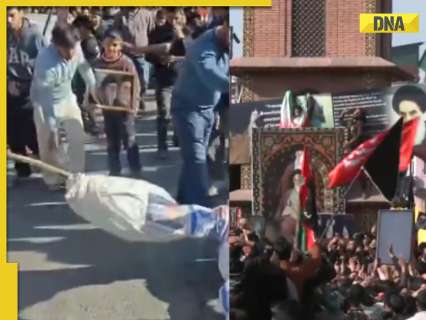
After Iran’s Supreme Leader Ayatollah Ali Khamenei was killed in Israeli and US strikes, hundreds of Kashmiri Shia Muslims on Sunday staged a protest raising anti-US and anti-Israel slogans in Srinagar, The protesters condemned the killing by a peaceful demonstartion. WATCH.
Dems’ potential 2028 hopefuls come out against US strikes on Iran
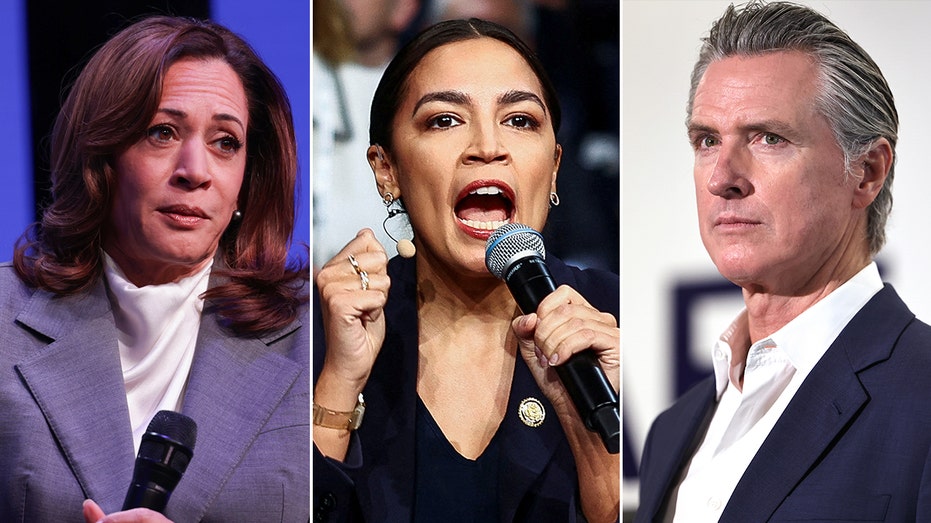
Some of the top rumored Democratic potential candidates for president in 2028 are showing a united front in opposing U.S. strikes on Iran, with several high-profile figures accusing President Donald Trump of launching an unnecessary and unconstitutional war. Former Vice President Kamala Harris said Trump was “dragging the United States into a war the American people do not want.” “Let me be clear: I am opposed to a regime-change war in Iran, and our troops are being put in harm’s way for the sake of Trump’s war of choice,” Harris said in a statement Saturday following the joint U.S. and Israeli strikes throughout Iran. “This is a dangerous and unnecessary gamble with American lives that also jeopardizes stability in the region and our standing in the world,” she continued. “What we are witnessing is not strength. It is recklessness dressed up as resolve.” FROM HOSTAGE CRISIS TO ASSASSINATION PLOTS: IRAN’S NEAR HALF-CENTURY WAR ON AMERICANS California Gov. Gavin Newsom delivered some of his sharpest criticism during a book tour stop Saturday night in San Francisco, accusing Trump of manufacturing a crisis. “It stems from weakness masquerading as strength,” Newsom said. “He lied to you. So reckless is the only way to describe this.” “He didn’t describe to the American people what the endgame is here,” Newsom added. “There wasn’t one. He manufactured it.” Newsom is currently promoting his memoir, “Young Man in a Hurry,” with recent and upcoming stops in South Carolina, New Hampshire and Nevada — three key early voting states in the Democratic presidential calendar. Earlier in the day, Newsom said Iran’s “corrupt and repressive” regime must never obtain nuclear weapons and that the “leadership of Iran must go.” “But that does not justify the President of the United States engaging in an illegal, dangerous war that will risk the lives of our American service members and our friends without justification to the American people,” Newsom wrote on X. California is home to more than half of the roughly 400,000 Iranian immigrants in the United States, including a large community in West Los Angeles often referred to as “Tehrangeles.” DEMOCRATS BUCK PARTY LEADERS TO DEFEND TRUMP’S ‘DECISIVE ACTION’ ON IRAN Rep. Alexandria Ocasio-Cortez, D-N.Y., a leading progressive voice and “Squad” member, accused Trump of dragging Americans into a conflict they did not support. “The American people are once again dragged into a war they did not want by a president who does not care about the long-term consequences of his actions. This war is unlawful. It is unnecessary. And it will be catastrophic,” Ocasio-Cortez said. “Just this week, Iran and the United States were negotiating key measures that could have staved off war. The President walked away from these discussions and chose war instead,” she continued. “In moments of war, our Constitution is unambiguous: Congress authorizes war. The President does not,” she said, pledging to vote “YES on Representatives Ro Khanna and Thomas Massie’s War Powers Resolution.” Illinois Gov. JB Pritzker, another Democrat often mentioned as a potential 2028 contender, also criticized the strikes and accused Trump of ignoring Congress. “No justification, no authorization from Congress, and no clear objective,” Pritzker wrote on X. “Donald Trump is once again sidestepping the Constitution and once again failing to explain why he’s taking us into another war,” he continued. “Americans asked for affordable housing and health care, not another potentially endless conflict.” “God protect our troops,” Pritzker added. Pennsylvania Gov. Josh Shapiro focused his criticism on war powers, arguing Trump acted outside constitutional guardrails. “In our democracy, the American people — through our elected representatives — decide when our nation goes to war,” Shapiro said, adding that Trump “acted unilaterally — without Congressional approval.” JONATHAN TURLEY: TRUMP STRIKES IRAN — PRECEDENT AND HISTORY ARE ON HIS SIDE “Make no mistake, the Iranian regime represses its own people … they must never be allowed to possess nuclear weapons,” he said. “But that does not justify the President of the United States engaging in an illegal, dangerous war.” Shapiro added that “Congress must use all available power” to prevent further escalation. Former Transportation Secretary Pete Buttigieg also accused Trump of launching a “war of choice.” “The President has launched our nation and our great military into a war of choice, risking American lives and resources, ignoring American law, and endangering our allies and partners,” Buttigieg wrote on X. “This nation learned the hard way that an unnecessary war, with no plan for what comes next, can lead to years of chaos and put America in still greater danger.” Buttigieg has been hitting early voting states, stopping in New Hampshire and Nevada in recent weeks to campaign for Democrats ahead of the 2026 midterm elections. Sen. Ruben Gallego, D-Ariz., who has been floated as a rising national figure within the party, said he lost friends in Iraq to an illegal war and opposed the strikes. “Young working-class kids should not pay the ultimate price for regime change and a war that hasn’t been explained or justified to the American people. We can support the democracy movement and the Iranian people without sending our troops to die,” Gallego wrote on X. Fox News’ Daniel Scully and Alex Nitzberg contributed to this report.
Sustained war with Iran could drain US missile stockpiles, test escalation control
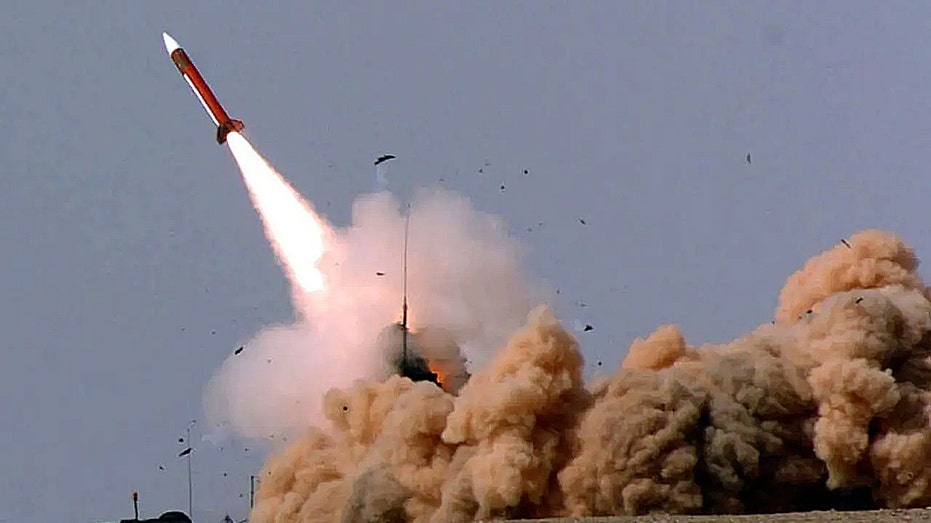
As coordinated U.S. and Israeli strikes on Iran continue, current and former defense officials say that while a limited strike lasting several days is feasible, sustaining a broader confrontation — one involving potentially hundreds of incoming missiles — is far more complicated. The U.S. and Israel undertook a mission known as Operation Epic Fury, targeting Iranian leadership and military sites Saturday. Its duration is still unclear, but the campaign may go on for days, according to U.S. officials. Sustaining operations beyond the initial window presents a more complex challenge — one shaped by a “zero-sum” competition for missile defense inventories between the Middle East and Europe. Officials and analysts warn that certain U.S. missile and air-defense interceptor inventories have been severely drawn down by the relentless pace of recent operations. The strategic dilemma for the Pentagon is that the systems required to shield U.S. bases from Iranian retaliation are the same ones being depleted by the defense of Ukraine and the ongoing protection of Israel. TRUMP ISSUES STERN IRAN WARNING AS TEHRAN ANGRILY REACTS TO SPEECH AMID MUTED WORLD REACTION Iran already has fired counterattacks near U.S. positions in Bahrain, Qatar, the United Arab Emirates, Kuwait and Jordan, with several host governments saying their air defense systems intercepted incoming projectiles. No U.S. service member fatalities or injuries have been reported as of Saturday, a U.S. official told Fox News Digital. U.S. authorities have not publicly released casualty figures or formal damage assessments. During the intense June 2025 Iran–Israel conflict, U.S. forces fired more than 150 Terminal High Altitude Area Defense Interceptors — roughly a quarter of the total global inventory — and a large number of ship-based standard missiles to protect allies, according to published defense assessments. This shortfall largely is attributed to the dual pressure of supplying Ukraine against Russian cruise missiles and the surge of batteries to the Middle East. Replenishing these high-end systems can take more than a year, analysts say, because production lines are optimized for peacetime and cannot be surged overnight. Independent groups have noted the U.S. currently produces roughly 600–650 Patriot PAC-3 MSE missiles annually, reflecting recent contracts to boost production capacity. Analysts say that in a high-intensity war with a near-peer adversary like Iran — where multiple interceptors are often used to defeat a single incoming missile — even a year’s worth of production could be consumed in a matter of weeks, especially after recent drawdowns in Ukraine and the Middle East. “The Department of War has everything it needs to execute any mission at the time and place of the president’s choosing and on any timeline,” Chief Pentagon spokesman Sean Parnell said in response to readiness questions. Retired Air Force Gen. Charles Wald, former deputy commander of U.S. European Command, said the United States retains the ability to surge conventional strike munitions into the region and draw from prepositioned stocks if a campaign is ordered. “From a conventional munition standpoint, we can always fly in more weapons from around the world,” Wald told Fox News Digital. “There are a lot of weapons stored there with this type of mission in mind.” The greater concern, he acknowledged, lies on the defensive side. “The issue will be defensive weapons — Patriot, SM-3, and the Arrow system in Israel,” Wald said. “You can never have enough defense.” Regional analysts caution that in a sustained missile exchange, interceptor inventories — not offensive strike weapons — could become the binding constraint. “There is a limit to how many THAAD missiles can be used,” Israeli defense analyst Ehud Eilam said. “These are not systems you can reproduce overnight.” Iran is believed to possess between 1,500 ballistic missiles and 2,000 ballistic missiles, as well as drones and shorter-range rockets capable of striking U.S. bases and Gulf energy infrastructure. Several experts also pointed to the psychological impact of recent U.S. operations. The swift Operation Absolute Resolve in Venezuela in January 2026 and summer 2025’s 12-day exchange with Iran have reinforced confidence in American military capability. However, one former defense official cautioned that success in these tightly scoped missions can create a false sense of momentum toward action in far more complex scenarios. TRUMP SAYS IRAN HAS 15 DAYS TO REACH A DEAL OR FACE ‘UNFORTUNATE’ OUTCOME “Iran is a very different problem,” the official said — a large, heavily armed state with extensive missile forces and regional proxy networks that would not resemble a short, surgical operation. Wald acknowledged that risk. “You don’t want to get people so confident that you don’t consider the risks. It’s not going to be as clean or pure as, say, Venezuela was, or the 12-day war.” Even as the strikes continue, officials warn that retaliation from Iran and its network of allied militias could broaden the conflict. Iran’s ballistic missiles and drones — coupled with allied groups in Iraq, Lebanon and Yemen — already have prompted missile salvos against U.S. bases and Gulf partners, according to defense reporting. Experts say the 2025 conflict underscored how quickly escalation can test both defensive systems and political will. “Once these things break, you own what follows,” one former official said, underscoring the risk that missiles and proxy actions could quickly widen a limited U.S. strike. Wald warned that even a successful military phase would not eliminate the political uncertainty. “Bombing Iran is not going to do regime change,” he said, emphasizing that air power can degrade capability but cannot guarantee a stable political outcome. Beyond the immediate exchange, officials say the economic consequences could prove just as consequential. Roughly one-fifth of the world’s oil supply transits the Strait of Hormuz, and even limited disruption could send global energy markets sharply higher. For Washington, the strategic calculus extends beyond the Middle East. China remains the primary long-term competitor, with the war in Ukraine already consuming significant resources. A sustained regional conflict would draw on naval assets and air-defense systems that planners must also consider for potential future contingencies in Taiwan or North Korea. Officials familiar with internal
From hostage crisis to assassination plots: Iran’s near half-century war on Americans
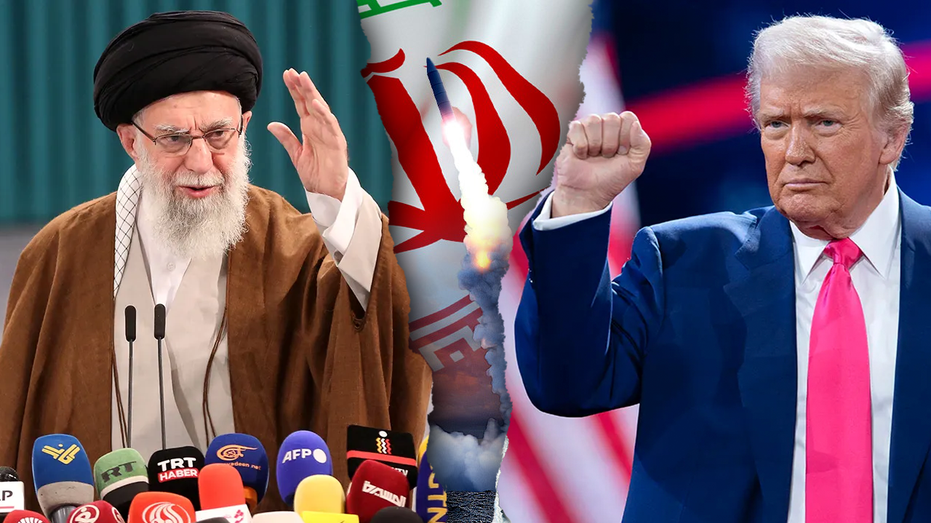
After radical students overthrew Iran’s shah in 1979 and took hostages in the U.S. embassy, the Middle Eastern nation became a strident and blood-soaked adversary of what its new Islamic fundamentalist dictatorship has long called the “Great Satan.” Since then, Tehran has sponsored terrorism around the globe, including targeting the U.S. in multiple, high-profile instances. Former Reagan Justice Department chief of staff Mark Levin said Sunday there are at least 44 examples of Iran targeting Americans either directly or indirectly. “The Iranian-Nazi regime… [has] murdered more than 1,000 Americans [and] relentlessly pursued nuclear weapons to use against us — they are genocidal warmongers,” said Levin, an author, attorney and Fox News Channel host. The stage for Iran’s transformation from ally to enemy of the U.S. was set in the 1960s, when Shah Mohammed Reza Pahlavi began clashing with influential Islamic cleric Ruhollah Khomeini. The monarch infuriated the theocrat by liberalizing the national constitution to allow faiths other than Islam to be sworn into office on holy books of their choice. Khomeini’s rhetoric from France, where he was exiled, intensified during the period known as the White Revolution, including misogynistic and xenophobic sermons and demands that Pahlavi be ousted. With Pahlavi as a U.S.-aligned leader, this marked an early instance of antagonism by proxy. As protests engineered by Khomeini broke out in fall 1978, the shah declared martial law, and military police fired on a massive crowd of protesters. Pahlavi and Empress Farah Pahlavi soon fled on a “vacation” to Egypt but never returned. By February 1979, Khomeini returned to Tehran with significant sectarian support. Carter national security advisor Zbigniew Brzezinski — the father of “Morning Joe” host Mika Brzezinski — coined the term “arc of crisis” and advanced an ultimately failed “Green Belt” strategy that supported an arc of largely unstable but fundamentalist regimes across the Middle East that were also viewed as oppositional to the Soviet Union. Brzezinski’s envisioned buffer strategy soon collapsed when Khomeini proved to be just as anti-American as anti-Soviet. In October 1979, after months of debate over whether to admit him to the U.S. amid the new turmoil in Iran, President Jimmy Carter relented and permitted the cancer-stricken shah to seek medical care in New York. That November, the group “Muslim Student Followers of the Imam’s Line” stormed the U.S. embassy, beginning 444 days of captivity for 52 American hostages. The U.S. severed diplomatic ties the following April, and one rescue mission failed and left several U.S. service members dead. The shah died that summer in Egypt, leaving Khomeini in full control of the government. In what was seen as the final offense to Carter, Iran suddenly released the hostages minutes into President Ronald Reagan’s administration on Jan. 20, 1981. On July 5, 1982, the years-long saga known as the Lebanon hostage crisis began with the systematic abductions of foreigners, including Americans, by Hezbollah and Iranian proxies in the Mideast country, according to United Against a Nuclear Iran. That group, founded by former Florida Gov. Jeb Bush and former Ambassador Mark Wallace, maintains a comprehensive history of Iranian aggression on its website and is a nonpartisan policy organization formed to combat the threats posed by the Islamic Republic. During the Lebanon hostage crisis, several victims spent years imprisoned by Hezbollah, where they were forced to undergo psychological and medical torture, including CIA Beirut Station Chief William Buckley, who was not related to the National Review founder of the same name. Buckley was tortured for months by Dr. Aziz al-Abub, a Lebanese Hezbollah psychiatrist and medical expert who reportedly forced him to take phenothiazines and experimented on him to induce interrogation and make an example of him to the West. Buckley reportedly died in custody amid these experiments on June 3, 1985. The CIA later memorialized him on its wall in Langley, Virginia, and Obama-era Director John Brennan said in a 2014 statement that “we remember Bill not for the manner in which he died but for the legacy he left behind. From his time as an Army lieutenant colonel to his tenure with the Agency, Bill inspired those around him to do great things despite often dangerous conditions.” The agency later caught up with the figurehead of the Hezbollah-linked Islamic Jihad terrorist group — carrying out what the Washington Institute described as a rare contemporary CIA assassination nearly 25 years later. Imad Mughniyeh’s group had announced Buckley’s execution in October 1985, but the actual date was determined later, with allegations that he died not from execution but from the side effects of the medical torture he endured. Former hostage David Jacobsen told the institute that Buckley was often sick and delirious in his cell and ultimately died “drowning in his own lung fluids” after a bout of torture. David Dodge, then-president of the American University in Beirut, was also kidnapped for about a year, and U.S. journalist Terry Anderson was held in captivity for more than six years. On April 18, 1983, an Iran-backed group seen as the predecessor to today’s Lebanese Hezbollah bombed the U.S. embassy in Beirut, killing 63 people, including 17 Americans. That October, a suicide truck bomb linked to Iran hit a U.S. Marine barracks in Lebanon, killing 241 service members, in what remains the deadliest single day for the Corps since Iwo Jima. According to the MEMRI translation of Khomeini’s representative to Lebanon, Sayyed Issa Tabatabai’s interview with the IRNA: “I quickly went to Lebanon and provided what was needed in order to [carry out] martyrdom operations in the place where the Americans and Israelis were.” He added, “The efforts to establish [Hezbollah] started in [Lebanon’s] Baalbek area, where members of [Iran’s] Islamic Revolutionary Guards Corps (IRGC) arrived. I had no part in establishing the [political] party [Hezbollah], but God made it possible for me to continue the military activity with the group that had cooperated with us prior to the [Islamic] Revolution’s victory.” The MEMRI report continued, “It is noteworthy that the part of the interview in which
New Yorkers protest US strikes on Iran
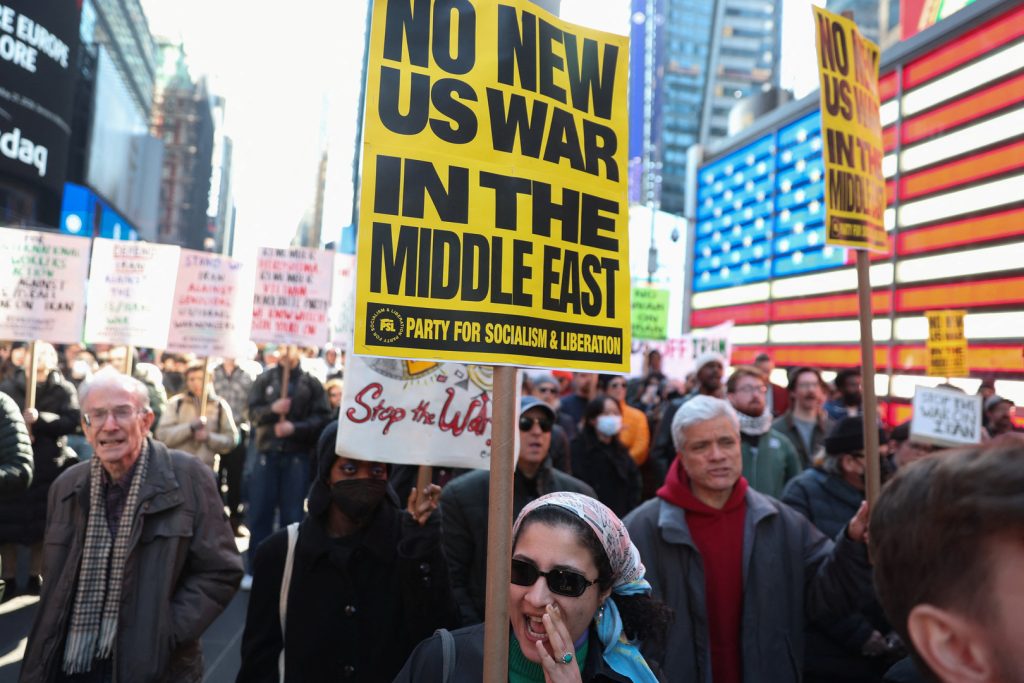
NewsFeed New York City residents converged on Times Square on Saturday hours after US President Donald Trump ordered a wave of deadly strikes on Iran. Mayor Zohran Mamdani called the strikes “a catastrophic escalation in an illegal war of aggression”. Published On 1 Mar 20261 Mar 2026 Click here to share on social media share2 Share plus2googleAdd Al Jazeera on Googleinfo Adblock test (Why?)
US strikes on Iran lead to renewed demands for war powers legislation

Democratic lawmakers have largely condemned the strikes on Iran, emphasizing the lack of congressional approval. Listen to this article Listen to this article | 3 mins info Published On 1 Mar 20261 Mar 2026 Click here to share on social media share2 Share plus2googleAdd Al Jazeera on Googleinfo Lawmakers from the Democratic Party have condemned the US attacks on Iran as a “dangerous” and “unnecessary” escalation, and called on the Senate to immediately vote on legislation that would block the president’s ability to take further military action without congressional approval. Senator Tim Kaine, a member of the Senate Armed Services and Foreign Relations Committees and the primary author of the war powers resolution, called President Donald Trump’s order to attack Iran a “colossal mistake”. Recommended Stories list of 3 itemsend of list “The Senate should immediately return to session and vote on my War Powers Resolution to block the use of US forces in hostilities against Iran,” Kaine said in a statement on Saturday. “Every single Senator needs to go on the record about this dangerous, unnecessary, and idiotic action.” House of Representatives Minority Leader Hakeem Jeffries echoed Kaine, saying that House Democrats are committed to forcing a floor vote on a measure to restrict Trump’s war powers regarding Iran. “Donald Trump failed to seek Congressional authorisation prior to striking Iran. Instead, the President’s decision to abandon diplomacy and launch a massive military attack has left American troops vulnerable to Iran’s retaliatory actions,” he said in a statement. “The Trump administration must explain itself to the American people and Congress immediately.” The push for a legislative check on Trump’s executive power has gained significant bipartisan momentum in the Senate, of which the Republican Party maintains a slim majority. Advertisement Senate Minority Leader Chuck Schumer demanded on Saturday that Congress be briefed immediately about the Iran attacks, including an all-senators classified session and public testimony, criticising the administration for not providing details on the threat’s scope and immediacy. “The administration has not provided Congress and the American people with critical details about the scope and immediacy of the threat,” he said in a statement. Senator Mark Warner, vice chairman of the Senate Select Committee on Intelligence, described the strikes in a statement posted on X as “a deeply consequential decision that risks pulling the United States into another broad conflict in the Middle East”. He questioned the urgency and intelligence behind the attack, warning of repeating “mistakes of the past”, like the Iraq war. “The American people have seen this playbook before – claims of urgency, misrepresented intelligence, and military action that pulls the United States into regime change and prolonged, costly nation-building,” he said. Not just Democrats While the push to curb executive military authority is largely driven by the Democratic caucus, a growing contingent of Republican lawmakers has signalled a rare break from the White House to join the effort. Republican representative Thomas Massie, one of the most outspoken critics, described the strikes as “acts of war unauthorised by Congress”. “I am opposed to this War. This is not America First,” he wrote on X. In the Senate, Republican Senator Rand Paul, who also co-sponsored the war powers resolution, said his opposition to the war is based on constitutional principles. “My oath of office is to the Constitution, so with studied care, I must oppose another Presidential war,” he said on X. Adblock test (Why?)
Netanyahu’s war? Analysts say Trump’s Iran strikes benefit Israel, not US
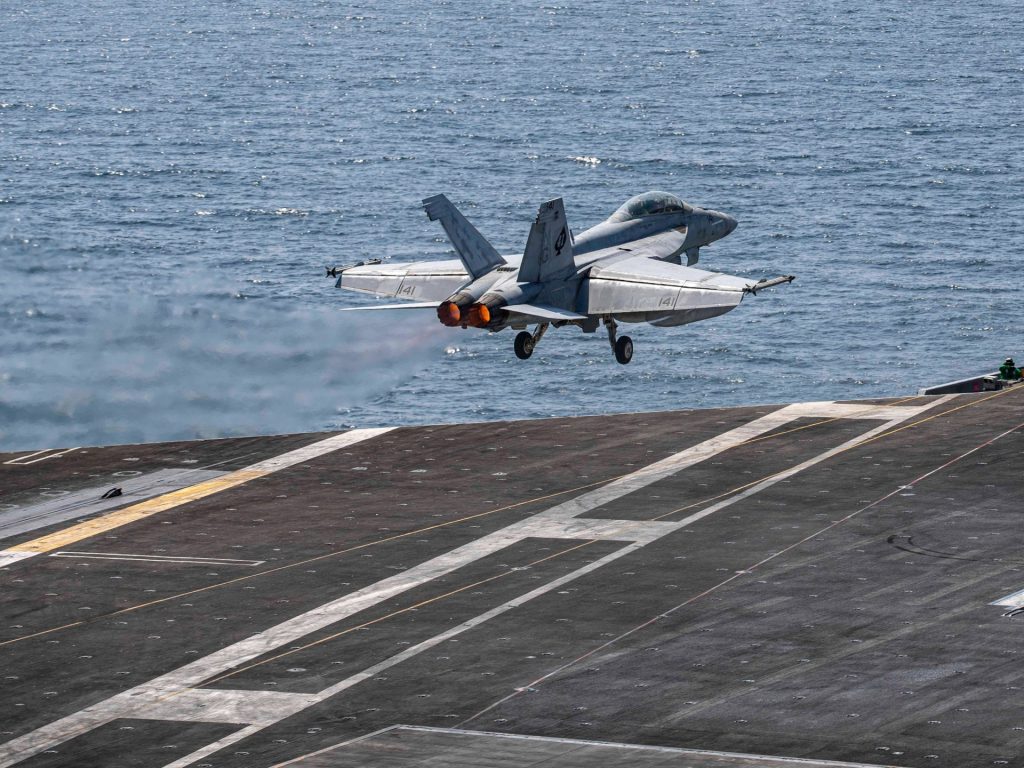
President Donald Trump stood in front of regional leaders during a visit to the Middle East in May and declared a new era of US foreign policy in the region, one that is not guided by trying to reshape it or change its governing systems. “In the end, the so-called nation-builders wrecked far more nations than they built, and the interventionists were intervening in complex societies that they did not even understand themselves,” the US president said in rebuke of his hawkish predecessors. Recommended Stories list of 3 itemsend of list Less than a year later, Trump ordered an all-out assault on Iran with the stated goal of bringing “freedom” to the country, borrowing language from the playbook of interventionist neoconservatives, like former President George W Bush, whom he spent his political career criticising. Analysts say the war with Iran does not fit with Trump’s stated political ideology, policy goals or campaign promises. Instead, several Iran experts told Al Jazeera that Trump is waging a war, together with Israel, that only benefits Israel and its prime minister, Benjamin Netanyahu. “This is, once again, a war of choice launched by the US with [a] push from Israel,” said Negar Mortazavi, a senior fellow at the Center for International Policy in Washington, DC. “This is another Israeli war that the US is launching. Israel has pushed the US to attack Iran for two decades, and they finally got it.” Mortazavi highlighted Trump’s criticism of his predecessors, who had waged regime-change wars in the region. “It is ironic, because this is a president who called himself the ‘president of peace‘,” she told Al Jazeera. History of warnings of the Iranian ‘threat’ Netanyahu, who promoted the 2003 US invasion of Iraq, has been warning for more than two decades that Iran is on the cusp of acquiring nuclear weapons. Advertisement Iran denies seeking a nuclear bomb, and even Trump administration officials have acknowledged that Washington has no evidence that Tehran is weaponising its uranium enrichment programme. After the US bombed Iran’s main enrichment facilities in the 12-day war in June last year – an attack that Trump says “obliterated” the country’s nuclear programme – Netanyahu pivoted to a new supposed Iranian threat: Tehran’s ballistic missiles. “Iran can blackmail any American city,” Netanyahu told pro-Israel podcaster Ben Shapiro in October. “People don’t believe it. Iran is developing intercontinental missiles with a range of 8,000km [5,000 miles], add another 3,000 [1,800 miles], and they can get to the East Coast of the US.” Trump repeated that claim, which Tehran has vehemently denied and has not been backed by any public evidence or testing, in his State of the Union address earlier this week. “They’ve already developed missiles that can threaten Europe and our bases overseas, and they’re working to build missiles that will soon reach the United States of America,” he said of the Iranians. Trump has been building the case for a wider war with Iran since the June conflict, repeatedly threatening to bomb the country again. But the US president’s own National Security Strategy last year called for de-prioritising the Middle East in Washington’s foreign policy and focusing on the Western Hemisphere. Meanwhile, the US public, wary of global conflict after the wars in Iraq and Afghanistan, has also been largely opposed to new strikes against Iran, public opinion polls show. Only 21 percent of respondents in a recent University of Maryland survey said they favoured a war with Iran. The first day of the war saw Iran fire missiles against bases and cities that host US troops and assets across the Middle East in retaliation for the joint US-Israeli strikes, plunging the region into chaos. Trump acknowledged that US troops may suffer casualties in the conflict. “That often happens in war,” he said on Saturday. “But we’re doing this not for now. We’re doing this for the future. And it is a noble mission.” ‘Ignoring the vast majority of Americans’ The Trump administration had appeared to step back from the brink of conflict earlier this month by engaging in diplomacy with Tehran. US and Iranian negotiators held three rounds of talks over the past week, with Tehran stressing that it is willing to agree to rigorous inspections of its nuclear programme. Omani mediators and Iranian officials had described the last round of negotiations, which took place on Thursday, as positive, saying that it yielded significant progress. Advertisement The June 2025 war, initiated by Israel without provocation, also came in the middle of US-Iran talks. “Netanyahu’s agenda has always been to prevent a diplomatic solution, and he feared Trump was actually serious about getting a deal, so the start of this war in the middle of negotiations is a success for him, just like it was last June,” Jamal Abdi, the president of the National Iranian American Council (NIAC), told Al Jazeera. “Trump’s embrace of regime change rhetoric is a further victory for Netanyahu, and loss for the American people, as it suggests the US may be committed to a long and unpredictable military boondoggle.” While announcing the strikes on Saturday, Trump said his aim is to prevent Iran from “threatening America and our core national security interests”. But US critics, including some proponents of Trump’s “America first” movement, have argued that Iran – more than 10,000km (6,000 miles) away – does not pose a threat to the US. Earlier this month, US Ambassador to Israel Mike Huckabee told conservative commentator Tucker Carlson that “if it were not for Iran, there wouldn’t be Hezbollah; we wouldn’t have the problem on the border with Lebanon”. Carlson said, “What problem on the border with Lebanon? I’m an American. I’m not having any problems on the border with Lebanon right now. I live in Maine.” On Saturday, Congresswoman Rashida Tlaib stressed that the US public does not want war with Iran. “Trump is acting on the violent fantasies of the American political elite and the Israeli apartheid government, ignoring the vast majority of Americans who say loud
Texas Democrats prepare to decide party’s future after divisive, epic Senate primary
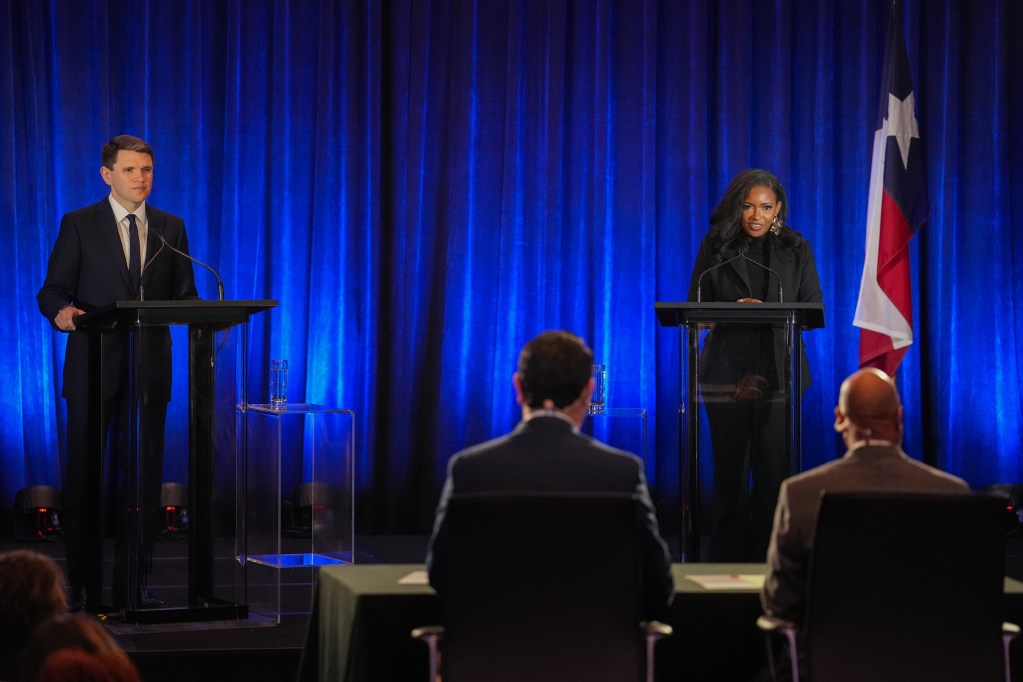
Jasmine Crockett and James Talarico face off in the state’s first blockbuster Democratic primary in decades. The race will likely conclude Tuesday, with the outside chance of a runoff.
Mamdani’s response to Trump’s Iran strike sparks conservative backlash: ‘Rooting for the ayatollah’
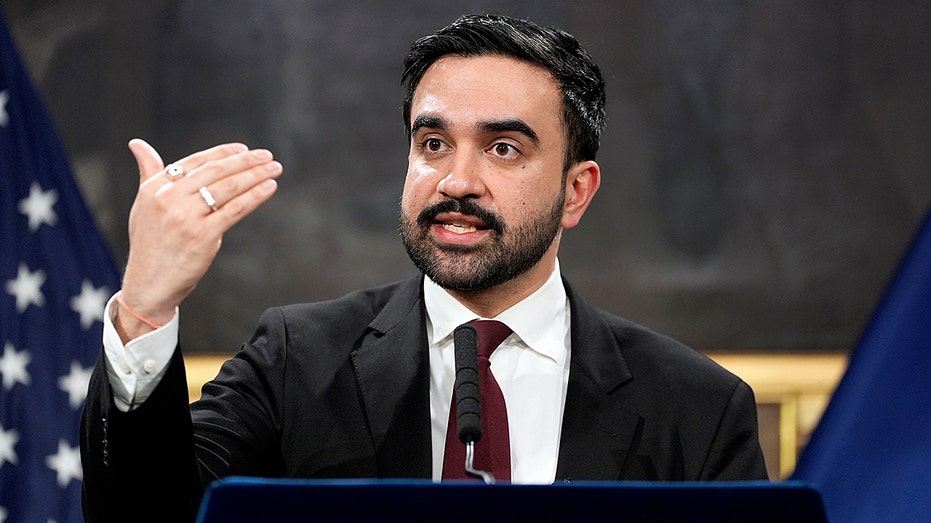
New York City’s socialist Mayor Zohran Mamdani is facing blowback from conservatives on social media over his post condemning the U.S. attack on Iran that led to the killing of Iran’s supreme leader, Ayatollah Ali Khamenei. On Saturday, as a joint strike on Iran by the United States and Israel was developing, Mamdani blasted the Trump administration’s decision in a post on X that has been viewed roughly 20 million times. “Today’s military strikes on Iran — carried out by the United States and Israel — mark a catastrophic escalation in an illegal war of aggression,” Mamdani wrote. “Bombing cities. Killing civilians. Opening a new theater of war. Americans do not want this. They do not want another war in pursuit of regime change.” OMAR, SQUAD LASH OUT AT TRUMP IN RESPONSE TO IRAN STRIKE: ‘ILLEGAL REGIME CHANGE WAR’ Mamdani said Americans prefer “relief from the affordability crisis” before speaking directly to Iranians in New York City. “You are part of the fabric of this city — you are our neighbors, small business owners, students, artists, workers, and community leaders,” Mamdani said. “You will be safe here.” The post was quickly slammed by conservatives on social media making the case that Mamdani’s response appeared sympathetic to Iran’s brutal regime and pointing to his lack of public reaction to the Iranian protesters killed in recent years. “Comrade Mayor is rooting for the Ayatollah,” GOP Sen. Ted Cruz posted on X. “They can chant together.” OBAMA OFFICIAL WHO BACKED IRAN DEAL SPARKS ONLINE OUTRAGE WITH REACTION TO TRUMP’S STRIKE: ‘SIT THIS ONE OUT’ “Do u say anything pro American ?” Fox News host Brian Kilmeade posted on X. “do u know any Iranians – ? they hate @fr_Khamenei they celebrate his death, you should be celebrating his death ! hes killed thousands of American’s and just killed 30k Iranians, did u even say a word about that? You are an embarrassment !! Please quit.” “I don’t feel safe in New York listening to someone like you, Mamdani, who sympathizes with the regime that killed more than 30,000 unarmed Iranians in less than 24 hours,” Iranian American journalist Masih Alinejad posted on X. “We Iranians do not allow you to lecture us about war while you had nothing to say when the Islamic Republic shot schoolgirls and blinded more than 10,000 innocent people in the streets. You were busy celebrating the hijab while women of my beloved country Iran were jailed and raped by Islamic Security forces for removing it. “And NOW you find your voice to defend the regime? No. I will not let you claim the moral high ground. The people of Iran want to be free. Where were you when they needed solidarity?” “How is it that you can’t differentiate between good and evil?” Billionaire hedge fund manager Bill Ackman posted on X. “Why is this so hard for you?” “It takes a particular kind of audacity, or ignorance, for a city mayor to appoint himself the conscience of American foreign policy while his constituents step over garbage on their way to work,” GOP Rep. Nancy Mace posted on X. “History will not remember his bravery. It will not remember him at all.” “Iranian New Yorkers are thrilled today and see right through you,” Republican New York City Councilwoman Vickie Paladino posted on X. “When Kuwait, Saudi Arabia, Qatar, Turkey, UAE, Bahrain all support today’s operation eliminating world’s #1 sponsor of terror, but New York City’s Mayor @ZohranMamdani is shilling for Iran,” Republican New York City Councilwoman Inna Vernikov posted on X. Fox News Digital reached out to Mamdani’s office for comment. Shortly after Mamdani’s post, it was announced by President Trump and Israeli officials that the military operation resulted in Khamenei’s death. Israeli leaders confirmed Khamenei’s compound and offices were reduced to rubble early Saturday after a targeted strike in downtown Tehran. “Khamenei was the contemporary Middle East’s longest-serving autocrat. He did not get to be that way by being a gambler. Khamenei was an ideologue, but one who ruthlessly pursued the preservation and protection of his ideology, often taking two steps forward and one step back,” Behnam Ben Taleblu, senior director of FDD’s Iran program, told Fox News Digital.