
Trump says government shutdown layoffs are ‘up to’ Dems as standoff continues

President Donald Trump on Sunday placed the blame squarely on Democrats for the government shutdown, which is expected to trigger sweeping layoffs across the federal workforce. Trump told reporters before boarding Marine One that the looming layoffs are “up to them,” referring to Democrats who voted against a bill to fund the government and avert the shutdown. The federal government shut down at 12:01 a.m. ET on Wednesday, forcing agencies to send home workers in roles not considered essential. SHUTDOWN EXPLAINED: WHO WORKS, WHO DOESN’T AND HOW MUCH IT COSTS These furloughs are temporary; once Congress resolves the standoff, employees typically return to work and receive back pay. As a result, past government shutdowns have been more political theater than economic shock, with markets and jobs rebounding quickly. This time, however, the Trump administration has warned that some furloughed workers may not return, turning a routine disruption into a potential blow to an already fragile labor market. SHUTDOWN FIGHT CASTS A SHADOW OVER JOBS AS TRUMP PREPARES FOR LARGEST FEDERAL RESIGNATION IN US HISTORY Washington, D.C., home to a large share of federal employees, has been hit especially hard after Elon Musk’s Department of Government Efficiency (DOGE) advisory board pushed for layoffs earlier this year. On Tuesday, when asked how many federal workers could be laid off, Trump told reporters at the White House, “We may do a lot,” saying Democrats have made little progress to end the stalemate. At the same time, the administration is preparing to oversee what could become the largest mass resignation in U.S. history, with more than 100,000 federal employees scheduled to leave under its deferred resignation program. National Economic Council director Kevin Hassett said Sunday on CNN’s “State of the Union” that layoffs will start “if the president decides that the negotiations are absolutely going nowhere.” He said he’s hopeful “we can get the Democrats to see that it’s just common sense to avoid layoffs like that.” If Democrats are “reasonable once they get back into town on Monday,” Hassett added, then Trump will see “no reason for those layoffs.”
Moldova’s vote is one more sign of Russia’s weakness in its ‘near abroad’
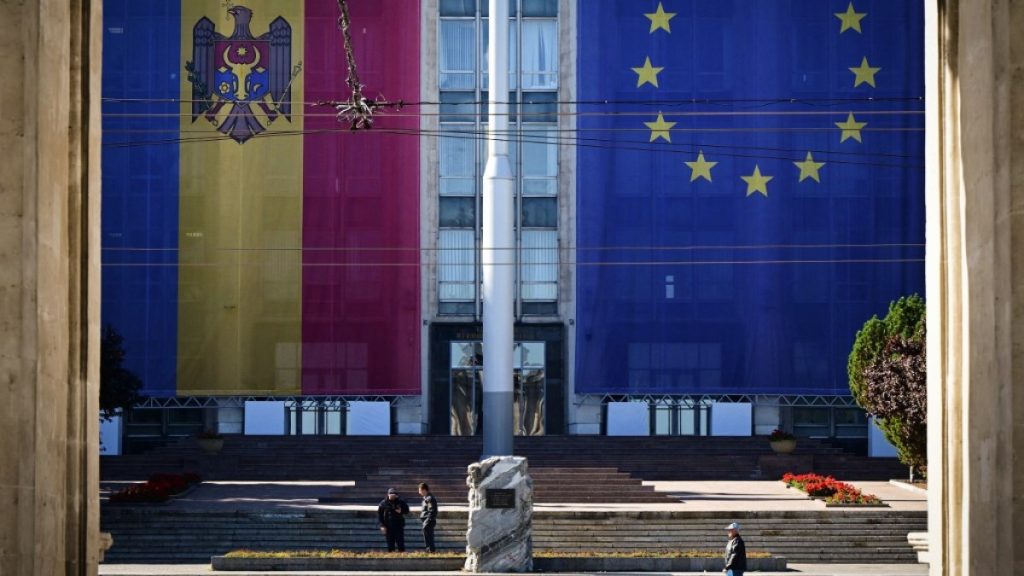
On September 28, the governing pro-European Party of Action and Solidarity (PAS) in Moldova emerged victorious in the general election. It not only defeated the Russia-friendly Patriotic Electoral Bloc (PEB) but also confirmed a new geopolitical trend. Across post-Soviet Eurasia, Russia is losing ground amid the continuing Russian aggression against Ukraine. Paradoxically, Moscow launched the large-scale invasion of its neighbour in 2022 to assert primacy over what it calls its “near abroad”. More than three years later, it is painfully obvious that the strategy has failed. Countries and leaders, whether democrats or old-school autocrats, are turning away from Moscow. In Moldova, the stellar result for PAS defied predictions of a tight race. In the run-up to the elections, pro-Russian forces under the umbrella of PEB appeared to have momentum. Society was evenly split and economic uncertainty weighed on Moldova. However, the tide turned in late summer with old tensions between parties within the PEB resurfacing. Concerted Russian efforts to sway the elections through information ops on social media – depicting PAS as a Western puppet threatening to drag the country into war against Russia and playing on fears of an economic downturn and annexation by Romania – backfired. The Central Electoral Commission was given a reason to ban two overtly pro-Russian parties over allegations of illegal financing. The government also secured the extradition from Greece of fugitive oligarch Vladimir Plahotniuc, accused of playing a key role in the theft of $1bn from Moldovan banks. Advertisement The drama energised the Moldovan diaspora in the West, a strong supporter of the European Union. As a result, PEB and other opposition parties did well only in their strongholds in the Gagauz region of northern Moldova and Transnistria. PAS lost nearly 3 percent of its votes compared with 2021 but still came out on top with 50.2 percent vs 24.4 percent for PEB. Had Russia refrained from interfering, Moscow-friendly forces probably would have stood a better chance of challenging PAS. The opposition missed an opportunity to make the elections about the economy and good governance. The moment it became about the EU vs Russia, PAS was at an advantage. The party could claim credit for bringing Moldova closer to membership, having secured the opening of accession talks in June 2024 – a rather popular move. Almost two-thirds of Moldovans are in favour of joining the EU, which is highly unsurprising, given the role it plays as the country’s top trading partner and main destination for its exports. The pro-EU orientation of the population is irreversible, and even if PEB comes to power, it is unlikely to change course dramatically. The move away from Russia is visible in the South Caucasus too. Armenia, which was historically highly dependent on Moscow’s strategic and economic aid, has reoriented itself westwards. Moscow abysmally failed to back its ally as Azerbaijan regained full control over the disputed region of Nagorno-Karabakh in 2022. The defeat created space for Armenian President Nikol Pashinyan to actually engage with both Azerbaijan and Turkiye. Currently, a peace treaty between Baku and Yerevan is in the works as United States President Donald Trump is eager to see it across the finish line so he can claim credit. In February 2024, Armenia suspended its participation in the Russian-dominated Collective Security Treaty Organisation. It also deepened security and defence cooperation with France. For its part, Azerbaijan has had heightened tensions with Russia twice in recent years – in 2024 over a downed passenger jet over the Caspian Sea and this summer over the arrests of Azerbaijani nationals in the Russian city of Yekaterinburg, which escalated into a major crisis. Russia used to project regional influence by being the arbiter between Armenia and Azerbaijan. Now it has somehow managed to alienate both countries, while Turkiye and the US have stepped in to fill the vacuum. In the South Caucasus, only Georgia appears to be leaning towards Moscow. But that is largely because the governing Georgian Dream party and its informal leader, the billionaire Bidzina Ivanishvili, have clashed with the EU over their tilt towards authoritarianism. Yet Georgia has not given up on the EU; it has just rejected its demands for democratisation, which under Trump’s influence have diminished in value anyway. Rather than tie itself fully to Russia, Tbilisi is trying to juggle among Europe, the US and, of course, China. Advertisement “Multivectoring” has long been popular in Central Asia too. There, the Ukraine war has also put governments on alert of Russian encroachment and given them an extra incentive to turn to China as a counterweight. Beijing has been enlarging its economic footprint in the region. It is the top investor in Central Asia and its share in the overall trade of the five Central Asian countries combined has gone up from 17.7 percent in 2020 to 24.1 percent in 2024 with Turkmenistan (55 percent) and Kyrgyzstan (35 percent) ahead of the pack. China has also stepped up diplomacy: The inaugural China-Central Asia summit took place in Xi’an in May 2023. The follow-up in Astana in June this year saw the signing of a treaty on “permanent good-neighbourliness, friendship, and cooperation”. Beijing also focused on an increased role in the realm of security, traditionally an area reserved for Russia, including antiterrorism, border security and transnational crime. From the perspective of the regional states, this partnership could prove useful in fending off domestic challenges. The old adage about Russia providing the muscle and China providing the cash is not accurate any more. Russia is obviously not happy, but it has been cornered, given its dependence on China, which has grown exponentially as a result of the war in Ukraine and the Western sanctions that followed. Putin’s presence at the military parade in Beijing on September 3 celebrating the 80th anniversary of the victory in World War II and elevating the Chinese role in the conflict is another example of how asymmetric the relationship has become. The leaders of the five Central Asian countries as well as Belarus
Video: Here’s how Syria is electing its first post-Assad parliament

NewsFeed Syria is holding its first indirect parliamentary election since the ouster of longtime ruler Bashar al-Assad. Al Jazeera’s Osama Bin Javaid is in Damascus and explains how the process will work. Published On 5 Oct 20255 Oct 2025 Click here to share on social media share2 Share Adblock test (Why?)
Why is ADL, the Jewish advocacy group, receiving blowback from MAGA?

The Anti-Defamation League (ADL) has become the target of a sustained right-wing backlash after the US-based Jewish advocacy group included an organisation founded by slain right-wing figure Charlie Kirk in its online database on extremism. The blowback escalated sharply on Wednesday after FBI Director Kash Patel announced that the bureau would sever ties with the ADL, accusing the prominent advocacy group of spying on Americans. Tech billionaire Elon Musk’s post calling the ADL a “hate group” set off a firestorm of criticism online, forcing the group to scrap the “Glossary of Extremism and Hate”, which contained more than a thousand entries on groups and movements with connections to hateful ideologies. But that has not subdued the backlash from conservatives – the base of the governing Republican Party. So, what’s ADL’s online database, and why has it triggered MAGA (Make America Great Again) rage? And how has the nonprofit, which backed the crackdown on pro-Palestine campus protests by the administration of US President Donald Trump, ended up ruffling feathers across the political spectrum? What is ADL? The ADL is one of the oldest and most influential Jewish advocacy groups in the United States. It was founded in 1913 by members of the B’nai B’rith – Hebrew for “Sons of the Covenant”, a Jewish fraternal organisation – to counter anti-Semitism and prejudice against Jews. The group, which calls itself “a global leader in combating antisemitism”, started with its original mission, “to stop the defamation of the Jewish people and to secure justice and fair treatment to all”. Advertisement Over time, the ADL grew into a national force with branches spread across the country. It works closely with law enforcement agencies to train officers on identifying bias-motivated violence. It also develops programmes and resources on anti-Semitism and the Holocaust, partnering with schools, universities and communities. Its monitoring of right-wing racist and anti-LGBTQ+ extremism also allowed it space within the US’s liberal Jewish community. Since its inception, the ADL has argued that anti-Zionism could lead to anti-Semitism. But in the past couple of decades, the nonprofit has been pushing to adopt the International Holocaust Remembrance Alliance (IHRA) definition of anti-Semitism, which conflates some criticism of Israel with anti-Semitism. The ADL has also backed a controversial resolution passed by the US Congress that defined anti-Zionism as anti-Semitism. The ADL is a well-resourced civil society group, with around $163m in revenue last year alone. Elon Musk gestures at the podium inside the Capital One Arena during the second inauguration of US President Donald Trump, in Washington, DC, the United States, January 20, 2025 [Mike Segar/Reuters] What caused the backlash against ADL? The recent backlash was triggered after several influential right-wing social media accounts began posting screenshots of the ADL’s entry on Kirk’s organisation, Turning Point USA, in its “Glossary of Extremism”. Kirk, who is credited with galvanising young voters for Trump, was assassinated last month. Though Turning Point USA was not listed as an “extremist organization”, the nonprofit had documented incidents where its leadership and affiliated members had made “racist or bigoted comments”. ADL’s entry on “Christian Identity” – which the nonprofit identified as an extremist theology that promotes white supremacy – also drew widespread criticism from right-wing influencers. The ADL has long positioned itself as a nonpartisan watchdog. But conservatives have increasingly argued that it has become politically aligned with progressive causes, including the group’s partnerships with social media companies in moderating hate-speech policies. Jonathan Greenblatt, the ADL’s CEO, has been accused of “weaponising anti-Semitism” to attack critics of liberal policies and of conflating right-wing populism with hate speech in the past. In the weeks following Kirk’s assassination, the US has seen a wave of right-wing backlash against public figures who criticised him, with several commentators and journalists facing professional repercussions – including the brief suspension of a television show by comedian Jimmy Kimmel and the firing of Washington Post columnist Karen Attiah. Advertisement What was in ADL’s online database? The ADL “Glossary of Extremism and Hate” was an online, searchable database launched in March 2022 by the organisation’s Center on Extremism. After the backlash from right-wing influencers, mostly from the MAGA camp, the ADL quietly moved to retire its database from the public. The database contained more than 1,000 entries providing overviews and definitions of terms, symbols, slogans, tactics, publications, groups, and individuals associated with various extremist ideologies, hate movements, and related activities. The resource covered a broad spectrum, including white supremacism, anti-Semitism, anti-Muslim bigotry, and extremism on the far right and far left. The glossary reportedly included groups like the Proud Boys, the Nation of Islam, the Oath Keepers, and others. The ADL, in its statement, argued that “an increasing number of entries in the Glossary were outdated”, and “a number of entries [were] intentionally misrepresented and misused”. The organisation further said that it wanted to focus on exploring “new strategies and creative approaches to deliver our data and present our research more effectively”. The list is no longer publicly available on ADL’s site, and the original URL now redirects to the organisation’s home page. Tech billionaire Elon Musk’s post calling the ADL a ‘hate group’ set off a firestorm of criticism online. Musk, who helped with Donald Trump’s campaign, has since fallen out with the US president [File: Nathan Howard/Reuters] How did Musk get into this? The online smear campaign gained traction on Sunday night after billionaire Elon Musk started interacting with posts targeting the ADL. Musk, who has more than 227 million followers on X, said, “The ADL hates Christians, therefore it is is [sic] a hate group.” The ADL’s operations encourage murder, Musk said in another reply to a post on X, formerly Twitter, which he bought in 2022 after paying $44bn. Musk’s attacks on the ADL still came as a shock to some. ADL’s Greenblatt has, in fact, praised Musk several times, including in 2023 for saying that X would block use of the pro-Palestinian slogan “from the river to the sea”. That applause reportedly led to the
Cough Syrup Row: Massive protest erupts in MP, Rajasthan; protestors demand resignation of…

Concurrently, in Jaipur, Congress workers held banners with the slogan, “Nakli dawa band karo, doshiyo ke khilaaf karwayi karo, BJP sarkaar jawaab do”.
Darjeeling: Mamata Banerjee issues advisory for tourists stranded in flood-hit region: ‘Stay put where…’

West Bengal Chief Minister Mamata Banerjee stated that she was “deeply worried” that several areas in both North Bengal and South Bengal have been flooded due to sudden heavy rains and assured that all necessary assistance would be sent to the affected families immediately. In a post shared on X, West Bengal CM said, “I am deeply worried and concerned that several areas in both North Bengal and South Bengal have been flooded due to sudden huge rains within a few hours last night as well as due to the rush of excessive river waters in our State from outside.”
Election Commission issues BIG statement on Bihar elections: ‘Citizens still have time to…’

Chief Election Commissioner (CEC) Gyanesh Kumar held a press conference in state capital Patna on Sunday. This comes after the poll body conducted the controversial SIR exercise in Bihar. Read on to know more on this.
20 injured after stones thrown at Durga idol immersion in Maharashtra’s Buldhana, security tightened, several detained, WATCH

At least 20-25 people were injured after stone pelting at Durga idol immersion procession in Maharashtra’s Buldhana district. The incident reportedly took place in Bawanbir village of Sangrampur tehsil.
Bihar Election 2025: EC caps 1200 voters at each polling booth; check key changes

At the presser, Chief Election Commissioner Gyanesh Kumar said each polling station will have a maximum of 1,200 voters for all elections starting from the Bihar polls. The step is being taken to avoid overcrowding at poll booths. Read on to know more on this.
Bihar Assembly Elections 2025: When will state undergo polls? Here’s what ECI said

The electoral battle in Bihar is largely anticipated to be a direct contest between the ruling National Democratic Alliance (NDA), led by Chief Minister Nitish Kumar, and the Mahagathbandhan, spearheaded by the Rashtriya Janata Dal (RJD).