

Fox News Poll: A Senate battle looms in Michigan
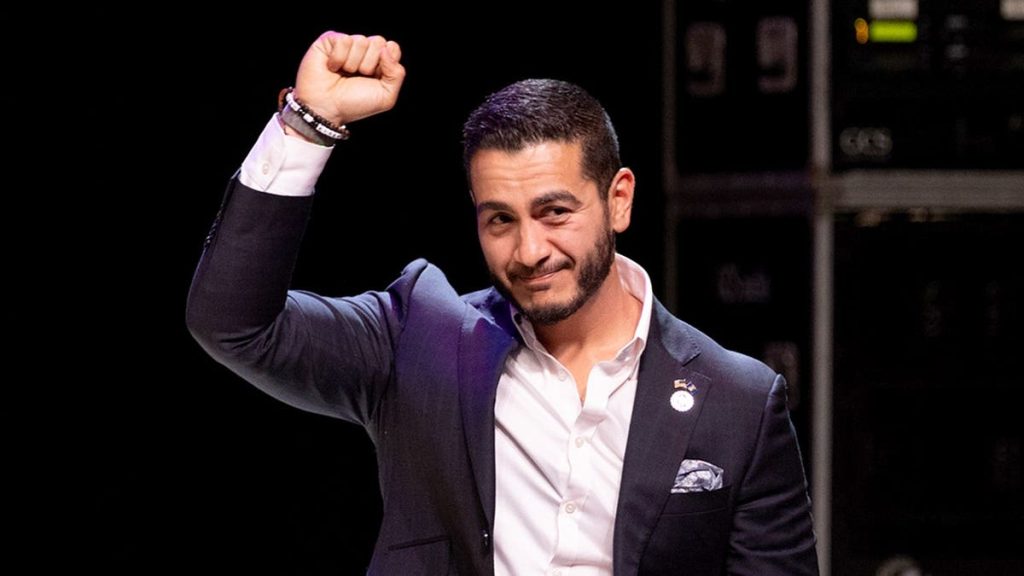
In Michigan, while more Democrats than Republicans are concerned about their candidates’ ideological views, Democrats are also more engaged and enthusiastic about the upcoming election, setting up a battle in the Wolverine State. After a heated Democratic primary, progressive Abdul El-Sayed secured the Senate nomination and will face Republican Mike Rogers this fall as Democrats try to retake the Senate. According to a Fox News survey of Michigan registered voters, Rogers has the edge in the race with 51% to El-Sayed’s 47%, within the survey’s margin of sampling error. FOX NEWS POLL: NEW MATCHUP, SAME RESULT: MAINE SENATE RACE STAYS LOCKED Rogers’ edge comes mostly from greater party unity among Republicans. Nearly all Republicans (96%), including both MAGA (99%) and non-MAGA Republicans (89%), back Rogers. Only a week after winning the primary race, 9 in 10 Democrats (91%) and nearly all Democratic Socialists of America (DSA) supporters (98%) back El-Sayed, but that falls to 69% among non-DSA Democrats and independents. The small subgroup of independents narrowly favors Rogers. El-Sayed’s coalition includes liberal voters, Black voters, urban residents and women with a college degree. Rogers’ most loyal groups are conservatives, White evangelical Christians, rural voters and White men without a degree. Men favor Rogers by 11 points (44% El-Sayed vs. 55% Rogers), while women are split (49-48%). President Donald Trump won the Wolverine State in 2016 and 2024, each time by less than 2 points, while former President Joe Biden won by nearly 3 points in 2020. El-Sayed is underperforming with Black voters, women and suburban voters compared with former Vice President Kamala Harris in the 2024 presidential election. Rogers similarly trails Trump’s 2024 support among voters under age 30 and independents. That’s according to the 2024 Michigan Fox News Voter Analysis (FNVA). Voter enthusiasm for their candidate is evident on both sides. About three-quarters of each candidate’s supporters are certain they will stick with their choice this fall, and about two-thirds say their support is mainly for their candidate rather than against his opponent. FOX NEWS POLL: GOP DIVISIONS SHAPE TEXAS SENATE RACE El-Sayed leads among the most engaged voters with an 11-point advantage among those extremely interested in the election, a 7-point lead among those extremely motivated and a 4-point edge among definite voters (10-out-of-10 likelihood). Moreover, more Democrats than Republicans are extremely interested (+15 points), motivated to vote (+11) and certain they will cast a ballot this November (+7). More than half the electorate is concerned El-Sayed’s positions on the issues are too extreme (54%) and that Rogers is too close to Trump (51%). Voters on both sides of the aisle share concerns about their candidate’s ideological positioning. Twice as many Democrats are concerned El-Sayed is too extreme (30%) as Republicans are that Rogers is too close to Trump (14%). By a 10-point margin, more independents are concerned about Rogers’ ties to Trump than El-Sayed’s issue positions (58% vs. 48%). Trump’s favorable rating is underwater by 19 points in Michigan (40% favorable, 59% unfavorable). Both Senate candidates also have negative ratings, with El-Sayed (-13 points) faring worse than Rogers (-6). The two major political parties are viewed negatively. The Republican Party has a -12 net favorable rating while the Democratic Party is at -13. “The energy is on the left in Michigan, as it is throughout the country, and that should help with turnout,” said Republican pollster Daron Shaw, who helps conduct Fox News polls with Democrat Chris Anderson. “But El-Sayed’s nomination path highlighted party rifts. He needs to reassure a wide range of Michigan Democrats — including Reagan Democrats, Jewish voters and Black voters — that he will serve their interests rather than pursue an extremist agenda.” The MAGA movement is viewed more favorably than the DSA by 10 points (40% vs. 30%). However, more voters have strongly unfavorable views of MAGA than DSA (45% vs. 37%). Inflation is the top issue in the Michigan Senate race at 38%, and economic anxiety remains palpable, with 4 in 10 saying they are falling behind financially. Other voter priorities are immigration/border security and healthcare (14% each) and political divisions (11%). El-Sayed stays competitive thanks to voters who prioritize inflation (+10 points), healthcare (+47) and political divisions (+5), while most immigration voters prefer Rogers (+82). Those who say they are falling behind financially also back El-Sayed by 24 points. By an 11-point margin, Michiganders oppose the U.S. continuing to provide military aid to the Israeli government (44% favor vs. 55% oppose). Those favoring aid back Rogers by 45 points, while those opposed prefer El-Sayed by 29 points. Turning to the governor’s race … With Democratic Gov. Gretchen Whitmer term-limited, Michigan’s gubernatorial seat is up for grabs. The Fox News poll finds Democrat Jocelyn Benson has the advantage over Republican John James by 5 points in the governor’s contest (52% vs. 47%). The results fall within the survey’s margin of sampling error. Compared with El-Sayed, Benson draws greater support among non-DSA Democrats and independents: 81% favor Benson in the governor’s race vs. 69% for El-Sayed in the Senate race. There is some ticket-splitting with Rogers’ backers nearly three times as likely to cross over for Benson as El-Sayed supporters are to back James (14% vs. 5%). CLICK HERE FOR CROSSTABS AND TOPLINE Overall, about 1 in 5 Benson supporters and 1 in 4 James supporters say they may still change their mind and back someone else. Benson’s net personal favorable rating is +7 (49% favorable, 42% unfavorable), while James is at -3 (41% favorable, 44% unfavorable). Conducted Aug. 6-10, 2026, under the joint direction of Beacon Research (D) and Shaw & Company Research (R), this Fox News Poll includes interviews with a sample of 1,006 Michigan registered voters randomly selected from a statewide voter file. Respondents spoke with live interviewers on landlines (103) and cellphones (654) or completed the survey online after receiving a text message (249). Results based on the full sample have a margin of sampling error of ±3 percentage points. Sampling error for results among subgroups is
Fox News Poll: Economic anxiety and candidate concerns define Ohio Senate race
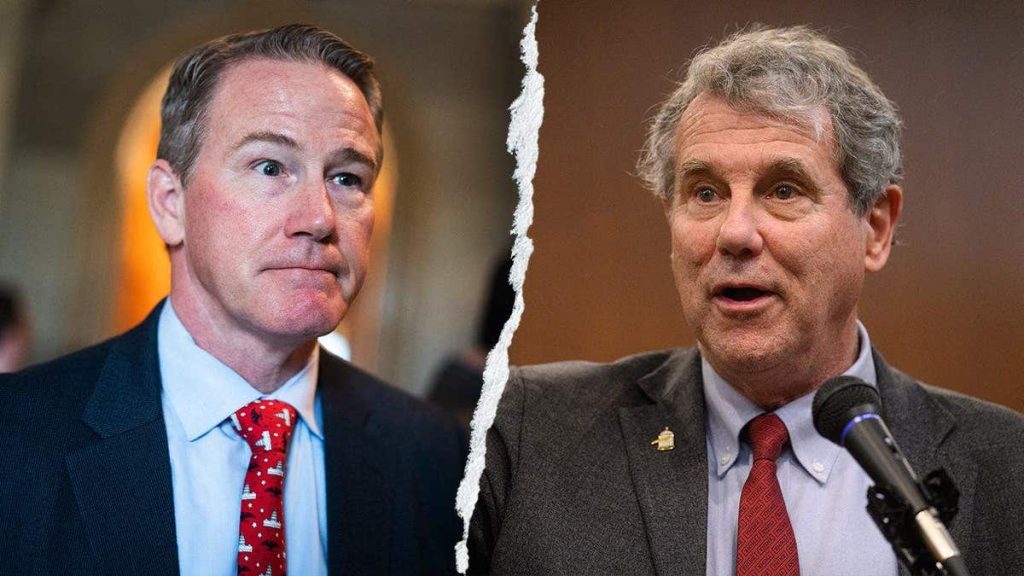
Financial unease and voter concerns over Republican incumbent Senator Jon Husted’s ties to the president are driving the dynamics in the Ohio Senate contest between Husted and former Democratic Senator Sherrod Brown. Brown seeks to regain his Senate seat by challenging Husted, who was appointed in 2025 after JD Vance became vice president. Brown narrowly lost his seat to Bernie Moreno in 2024. Underpinning the electorate’s mood is frustration with the cost of living. A new Fox News survey of Ohio registered voters finds inflation dominates their priorities, with 40% saying it is their top issue, far outranking healthcare, immigration, and political divisions. In 2020, 28% of Ohioans described their family’s financial situation as “falling behind.” Now, that’s up to 38% — and those voters favor Brown by 40 points. Donald Trump won Ohio by 11 points in 2024. Still, a vulnerability for Husted is his connection to Trump, as 51% are concerned that he’s too close to the president. That’s up 5 points from 46% who felt that way about Husted in June. Plus, fewer voters, 44%, are worried Brown is too closely tied to the Democratic Party establishment. FOX NEWS POLL: NEW MATCHUP, SAME RESULT: MAINE SENATE RACE STAYS LOCKED These headwinds are directly fracturing party lines, with Republican defections to Brown undercutting Husted’s built-in advantage in a state where more voters identify as Republican than Democrat. While 87% of Republicans favor Husted, fully 97% of Democrats back Brown. The Democrat also draws 11% crossover support from Republicans overall and 25% among non-MAGA Republicans. Two-thirds of independents also favor Brown. All those factors help Brown remain 8 points ahead of Husted in the race for Ohio’s Senate seat, 53% to 45%, a margin unchanged since June. FOX NEWS POLL: GOP DIVISIONS SHAPE TEXAS SENATE RACE Brown’s lead expands to 10 points (54-44%) among those who rate their certainty to vote as a 10 out of 10, and to 15 points (57-42%) among those saying they are extremely motivated to vote. In addition, those most motivated to turn out this year — liberals, voters with a college degree, and supporters of the Democratic Socialists of America — prefer their former Senator. Brown has significant advantages among liberals (+88 points), urban voters (+37), those in union households (+31), voters under age 45 (+17), women (+16), and college graduates (+9). Husted is favored among conservatives (+65 points), White evangelical Christians (+42), White men without a college degree (+17), rural residents (+12), and married voters (+6). Meanwhile, Brown has the most positive personal rating of the candidates tested (51% favorable, 47% unfavorable), while ratings for Husted are 10 percentage points underwater (43% favorable, 53% unfavorable). Part of Brown’s advantage is driven by affinity, as 67% of his supporters say their vote is mainly for him rather than in opposition to Husted. Among those favoring Husted, 58% say they are motivated to vote for him, not against Brown. Even so, the prospect of a shift is real, as one in five who are backing Brown and one in four supporting Husted say they could change their candidate preference before casting a ballot. Dissatisfaction with the party organizations and national figures is widespread. Majorities of Ohioans hold unfavorable views of the Democratic Party (57%) and the Republican Party (54%), as well as Trump (56%), the MAGA movement (57%), and the Democratic Socialists of America (54%). Views of Vance are divided, 47% favorable and 50% unfavorable. In the Ohio governor’s race, Republican Vivek Ramaswamy receives 50% to Democrat Amy Acton’s 48%. That’s a small shift since June, when Acton was ahead by 1 point. Most supporters of both Acton (78%) and Ramaswamy (80%) have a high degree of certainty that they’ll stick with their candidate choice. Fourteen percent of those favoring Brown in the Senate contest cross party lines to back Ramaswamy for governor, while 6% of Husted supporters prefer Acton, the Democrat. Views of Ramaswamy are divided: 46% favorable, 44% unfavorable, mostly unchanged since June. Forty-three percent have a favorable opinion of Acton, but her negative rating stands at 47%, up from 37% in June. CLICK HERE FOR CROSSTABS AND TOPLINE Conducted August 6-10, 2026, under the joint direction of Beacon Research (D) and Shaw & Company Research (R), this Fox News Poll includes interviews with a sample of 1,008 Ohio registered voters randomly selected from a statewide voter file. Respondents spoke with live interviewers on landlines (78) and cellphones (694) or completed the survey online after receiving a text message (236). Results based on the full sample have a margin of sampling error of ± 3 percentage points. Sampling error for results among subgroups is higher. In addition to sampling error, question wording and order can influence results. Sources for developing weight targets include the most recent American Community Survey, Fox News Voter Analysis, and voter file data. Weights are generally applied to age, race, education, and area variables to ensure the demographics of respondents are representative of the registered voter population. Results among subgroups are only shown when the sample size is at least N=100. Fox News’ Victoria Balara contributed to this report.
Election ‘human error’ delays key primary results in latest voting mishap to hit blue states
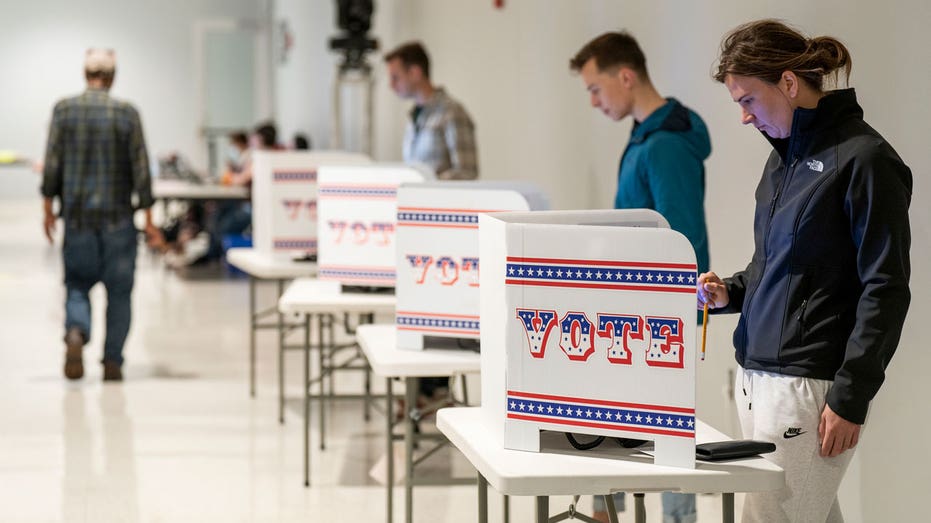
Milwaukee’s election results from Tuesday’s primary were delayed because of a “human error” when five of nine USB flash drives did not download election results, prompting critics to call it a showing of “complete incompetence.” The error effectively stalled the results of the closely watched Democratic gubernatorial primary between Milwaukee County Executive David Crowley and Francesca Hong. The delay came amid heightened scrutiny of election administration in Democratic-led jurisdictions, where recent ballot and reporting errors have drawn criticism and, in some cases, investigations from Republican lawmakers. “We’re all human, and humans can make errors,” Paulina Gutiérrez, executive director of the Milwaukee Election Commission, said during a midnight news conference. The error delayed the county’s election results by an hour as Gutiérrez and Milwaukee Election Commission staffers returned to Central Count with a police escort to retrieve the remaining voting data. HASAN PIKER WARNS ‘THE KNIVES WILL BE OUT’ AFTER SOCIALIST FRANCESCA HONG FALLS IN WISCONSIN UPSET “So, basically what we need to do is go back to the operations center, and we’re going to download out five of those machines (and) the results and make sure that’s not the audit log,” Gutiérrez said during the news conference. “So, have the reports printed from the first download. We’re going to reprint and start the process so that we can compare those results.” The Milwaukee Election Commission said in a news release that the audit log, which documents activity on the tabulator, was downloaded rather than the election results. “The issue delayed the reporting of Milwaukee’s results, but it did not affect the results,” the press release stated. “The election results remained intact and unchanged on the tabulators. No ballots were lost or changed, or needed to be recounted or retabulated.” Gutiérrez said there were no issues with the voting machines themselves but confirmed to a reporter that a wrong button was pushed when downloading the data. In an interview with Votebeat, Gutiérrez said the time it took to download results from the tabulators varied. She said that while the standard time frame was 10 minutes, some tabulators completed the downloads in three minutes. MARYLAND BALLOT BLUNDER SPARKS HOUSE GOP PROBE AHEAD OF PRIMARY “The fact that this happened five times seems more like a training issue,” former Milwaukee Election Commissioner Claire Woodall told Votebeat. “Was this person trained on how to export results? Are they familiar with the machines and how you export results?” The error meant that 15,000 votes had yet to be counted at that point. NBC News’ Steve Kornacki buried his face in his hand after learning of Milwaukee’s error on live TV. “We’re kind of indefinitely waiting for them to get their act together here,” Kornacki said. “We waited 90 minutes for them. They did this whole procession, and then we find out there’s nothing on the sticks.” HOUSE PANEL DEMANDS CLASSIFIED BRIEFINGS ON NONCITIZEN VOTING, ALLEGED CHINESE ELECTION INTERFERENCE After the remaining election data was properly downloaded after 1 a.m., Milwaukee County Clerk George Christenson addressed reporters and emphasized the importance of being transparent with the public. “At the end of the day, what’s important is that we’re transparent, that the results are secure and that we’re open and honest,” Christenson said, “And that’s what the City of Milwaukee election director did. She came up here, and she explained it, went back, got the results, brought it back to us, and we got everything right.” Despite the transparency, critics did not hold back. “Complete incompetence at the facility isn’t helping anything here,” Republican state Rep. Scott Krug wrote on X. “This was human error that could have easily been double checked before leaving the facility. More than one answer to the problem not one silver bullet” SIGN UP TO GET THE POLITICS NEWSLETTER The Milwaukee error follows other election administration problems in various blue states. New Jersey recently disclosed that a software error improperly registered roughly 6,600 people who had indicated they were not U.S. citizens, with fewer than 400 later casting ballots. In Oregon, officials said DMV errors resulted in 1,945 people being registered without providing proof of eligibility, 44 of whom voted. And a Connecticut judge ordered a new Democratic mayoral primary in Bridgeport after finding evidence of absentee ballot violations cast the original result into doubt. This is also not the first “human error” involving the Milwaukee Election Commission. During the 2024 presidential election, election officials recounted 31,000 absentee ballots because staffers did not lock tabulator doors. The error delayed results from 105,000 absentee ballots. During the 2020 presidential election, Milwaukee Election Commissioner Claire Woodall left one of the 12 flash drives containing election results at Central Count, delaying the reporting of roughly 169,000 absentee ballots. Wisconsin Election Commission spokesperson Emilee Miklas said while errors may happen, Wisconsin’s election integrity is secure. “Wisconsin elections are safe, secure and accurate due to multiple checks and balances. While human mistakes can happen, Wisconsin’s election system, which includes layers of oversight at the local and state level, ensures things are caught and corrected,” Miklas said in a statement to Fox News Digital. The race between Crowley and Hong was officially called at 2:34 a.m. Wednesday, with Crowley winning by 0.5%.
World War II Memorial on National Mall vandalized with pink spray paint; fountain overflowing with bubbles

WASHINGTON — The World War II Memorial on the National Mall was vandalized Thursday, and a fountain was found overflowing with bubbles, the latest incident in which prominent monuments have been targeted in the nation’s capital. U.S. Park Police were on site and blocked off the area. “Clean hands, dirty money,” letters in bright pink spray paint said. WHO IS DAVID HEARN? US OLYMPIAN WHO DENIES VANDALIZING REFLECTING POOL AFTER VIRAL ARREST “The vandalism that occurred is an utter disgrace and will not be tolerated,” a Department of the Interior spokesperson told Fox News Digital. “Our U.S. Park Police are on the scene, and the investigation is ongoing. The public should know we will find the person responsible for this disgusting act.” The agency noted that the memorial honors the armed forces and the more than 400,000 Americans who died fighting in World War II. WATCH: TRUMP REVEALS FLASHY NEW COLOR FOR NATIONAL MALL’S REFLECTING POOL MAKEOVER An Army veteran who arrived at the memorial told Fox News Digital she was looking forward to seeing it and was “offended” by the act of vandalism. “It just makes me absolutely irate,” Debra Mortensen said. “I was offended because people fought and died for our country, and it’s dishonoring our country and all we’ve been through.” Fox News Digital has reached out to the U.S. Park Police and the National Park Service. No information about a potential suspect was released. In 2016, the memorial was vandalized by someone protesting the controversial Dakota Access Pipeline. A vandal spray-painted the North Dakota section of the memorial with the phrase “#NoDAPL.” The memorial was closed for several months earlier this year for a $4 million renovation project upgrading the fountains and lighting, FOX DC reported. It reopened in May. In addition to the war memorial, other monuments on the National Mall have been targeted recently. In June, separate red markings of “8647,” a political slogan and protest symbol used against President Donald Trump, were found on the Washington Monument, and damage was reported at the Lincoln Memorial Reflecting Pool.
Resurfaced assault report puts Dem Senate nominee in GOP crosshairs: ‘Graham Platner 2.0’
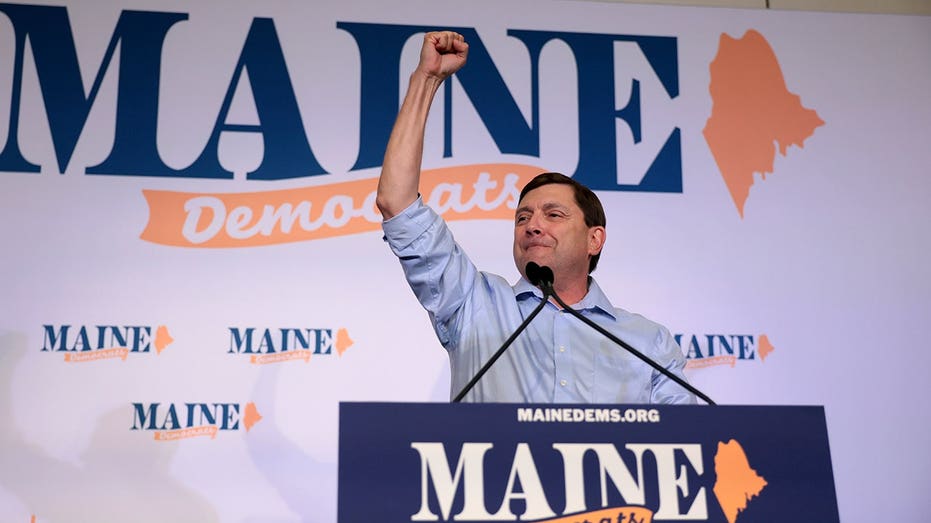
Republicans are targeting Democratic Senate nominee Troy Jackson after a newly resurfaced 1988 police record detailed accusations that he assaulted a man and pushed his longtime partner during a late-night confrontation in Fort Kent, Maine. Jackson, a one-time logger and a former state Senate president, was chosen a couple of weeks ago by Maine Democrats to replace embattled oysterman Graham Platner, who won the June Democratic Senate nomination in a landslide before imploding and dropping out of the race last month amid rape allegations that he denied. Jackson is challenging longtime Republican Sen. Susan Collins in a high-stakes race that’s among a dozen that will determine if the GOP holds onto its slim Senate majority. MAINE DEMOCRATS CROWN TROY JACKSON AS PLATNER REPLACEMENT FACES INTENSE SCRUTINY Collins is the only GOP incumbent running for re-election in a state President Donald Trump lost in the 2024 election. A Fox News poll in Maine released on Wednesday indicated Jackson holding a slight two-point edge over Collins, which was within the survey’s sampling error. “Troy Jackson is Graham Platner 2.0: Violent and unhinged,” the Republican National Committee charged in a social media post. Meanwhile, the National Republican Senatorial Committee, referring to Senate Democratic Leader Sen. Chuck Schumer and Democratic Senatorial Campaign Committee chair Sen. Kirsten Gillibrand, wrote on X, “Is this incredibly disturbing report of violence and abuse not enough for you to drop Troy Jackson?” WHAT THE NEW FOX NEWS POLL IN MAINE’S CRUCIAL SENATE RACE SHOWS The Bangor Daily News reported that the police report accused Jackson of assaulting another man during a late-night brawl on March 12, 1988. The brawl was over Jackson’s longtime partner Lana Pelletier, who, according to records, is also his second cousin. Jackson and Pelletier share two adult children. The police report indicates that Pelletier told officers at the time that Jackson “pushed her around,” a statement she now denies making. According to the report, the then-19-year-old Jackson went to a home in Fort Kent, Maine around 2 a.m. After the occupant of the house told Jackson to go away, the report says the future state lawmaker “kicked the door in” and grabbed his rival by the throat before punching him in the face, causing the victim’s glasses to leave a cut. The report added that a friend broke up the ensuing fight. DEMOCRATS STAND BY JACKSON AFTER LATEST CONTROVERSY Jackson said in a statement obtained by Fox News Digital, “Nearly forty years ago, when I was 19 years old, I got into a fight with another man. I took responsibility for it then, and I take responsibility for it now.” “But let me be clear: I have never been violent with my partner Lana, or any other woman. This happened nearly four decades ago, and I assure Mainers this incident in no way reflects the man I am today or the life I’ve led in the years since,” the Democratic Senate nominee added. Pelletier told Fox News Digital in a statement, “I do not remember making the statements attributed to me and they are not accurate. This is the first time I have seen this report from 40 years ago. Troy and I have built a life and family together and I know the person he has been through the decades since, both as a caring partner and father.” “I understand Maine voters want to learn about Troy as he seeks to represent them but personal attacks on my family are unacceptable,” she added. “In the 40 years since he made a mistake as a 19-year-old kid, Troy has grown to be a passionate advocate for Mainers and dedicated his life to making things better for our state while Susan Collins has been in Washington enriching herself at our expense.” WHO’S UP AND WHO’S DOWN: CHECK OUT THE FOX NEWS POWER RANKINGS ON THE MIDTERM ELECTIONS Meanwhile, the Jackson campaign told Fox News Digital that Troy “acknowledges going to the residence and getting into a physical confrontation with another man. The case was resolved with a $50 fine.” On Thursday, the conservative-leaning Maine Wire reported that a man from Allagash, Maine, who says he’s known Jackson for decades alleged that he witnessed Jackson strike Pelletier, in a separate incident, years ago. Jackson, who hails from the remote northern tip of Maine, is a one-time conservative Republican who became a Democrat over two decades ago. As he quickly became the front-runner in the abbreviated race to replace Platner, he faced a slew of reports over his alleged temper and workplace conduct, as well as reported claims of mortgage improprieties and other potential liabilities, including his past strict anti-abortion stance. Asked by Fox News Digital last month about any vetting concerns, Jackson said, “I think a lot of this obviously is Sen. Collins trying to make sure she win can the election on a really bad record. But, for me, I’ve been in the legislature for 20 years. I do believe I’ve been vetted, I’ve been tested. People know exactly what I’m fighting for. I have their back. And they know they can trust me.” SIGN UP TO GET THE POLITICS NEWSLETTER The scrutiny and negative reports are raising concerns by some in the party that Democrats landed another unvetted nominee after the Platner implosion. “This is a bit of a rocket vetting process,” a Democratic strategist who works on Senate races who asked to remain anonymous to speak more freely, told Fox News Digital. “Maine Democrats have made their choice, and they’re just going to have to ride with it.” The NRSC, in a series of social media posts directed at Democratic senators and Senate nominees who have endorsed Jackson since he landed the nomination, ask if those politicians will “call on Troy Jackson to drop out?” DEMOCRACY ’26: STAY UP TO DATE WITH THE FOX NEWS ELECTION HUB Jackson, who unsuccessfully ran for the Democratic gubernatorial nomination, campaigned alongside Platner during the primary. And he quickly made the case that he was the best
SC questions FSSAI for not putting warning labels of salt, sugar, saturated fats on packaged foods, warns of passing order

SC slammed FSSAI for delaying warning labels on packaged foods high in sugar, salt and fat. Court gave 2 weeks to decide, citing consumer and children’s health.
Akali Dal chief Sukhbir Badal attacked by Nihang Sikh at gurudwara in Maharashtra’s Nanded
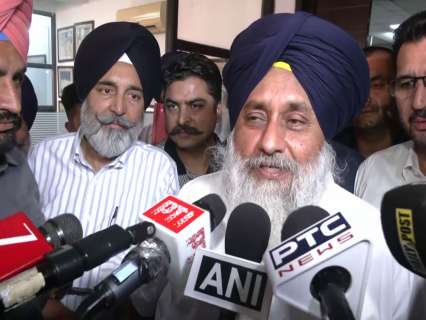
Badal sustained an injury to his right arm and has since been shifted to the Yashosai Hospital in Nanded, while police have taken the attacker into custody.
Ex-TMC MLA Nirmal Ghosh arrested in Odisha over ‘hurried cremation’ of RG Kar rape and murder victim
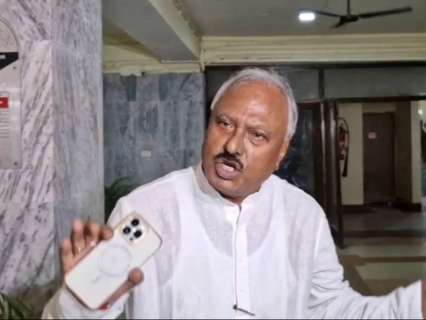
Former TMC MLA Nirmal Ghosh was arrested in Odisha on Thursday over the alleged “hurried cremation” of the RG Kar doctor raped and murdered in Kolkata in 2024. Ghosh faces charges of destroying evidence and conspiracy.
PM Modi calls Sukhbir Badal’s wife to inquire about SAD chief’s health after ‘kirpan attack’ in Nanded
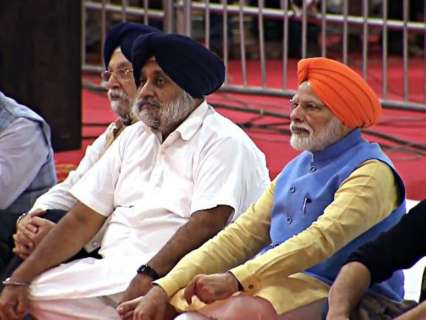
According to sources, PM Modi spoke to Harsimrat Kaur Badal and enquired about Sukhbir Badal’s health after the SAD chief was attacked by a Nihang inside the gurdwara premises in Nanded.
Air India makes dope test mandatory for all pilots after Phuket-Delhi pilot tested positive for marijuana

The airline said the tests will be conducted during training at the Gurugram Academy, after flights at Flight Briefing Centres and Air India offices, and at designated sites at pilots’ respective bases.